

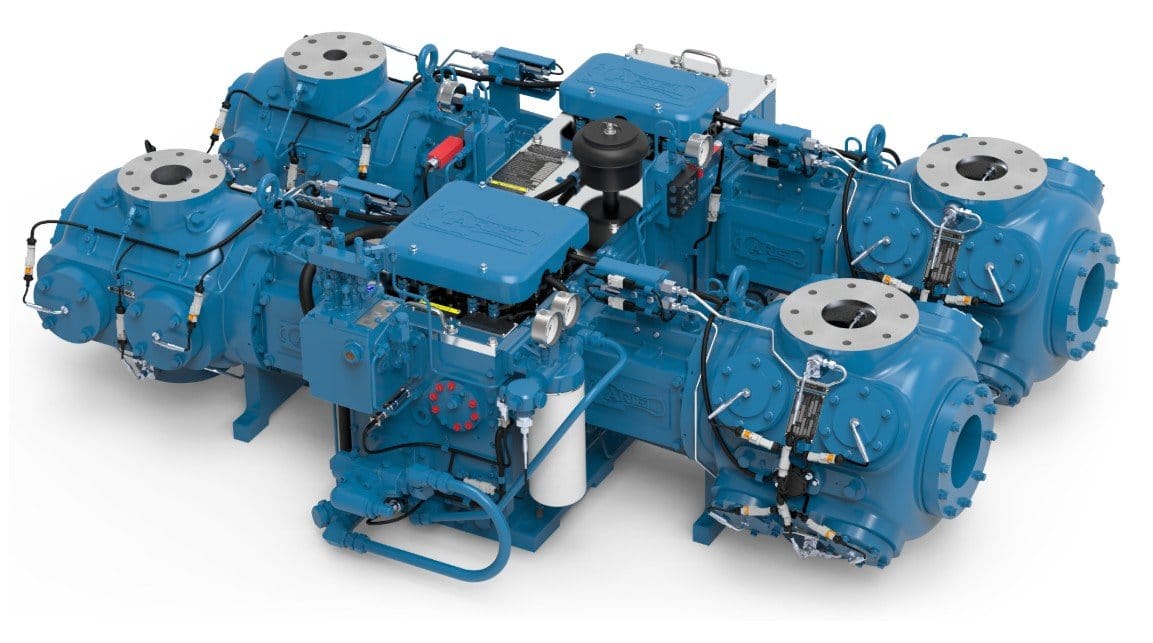
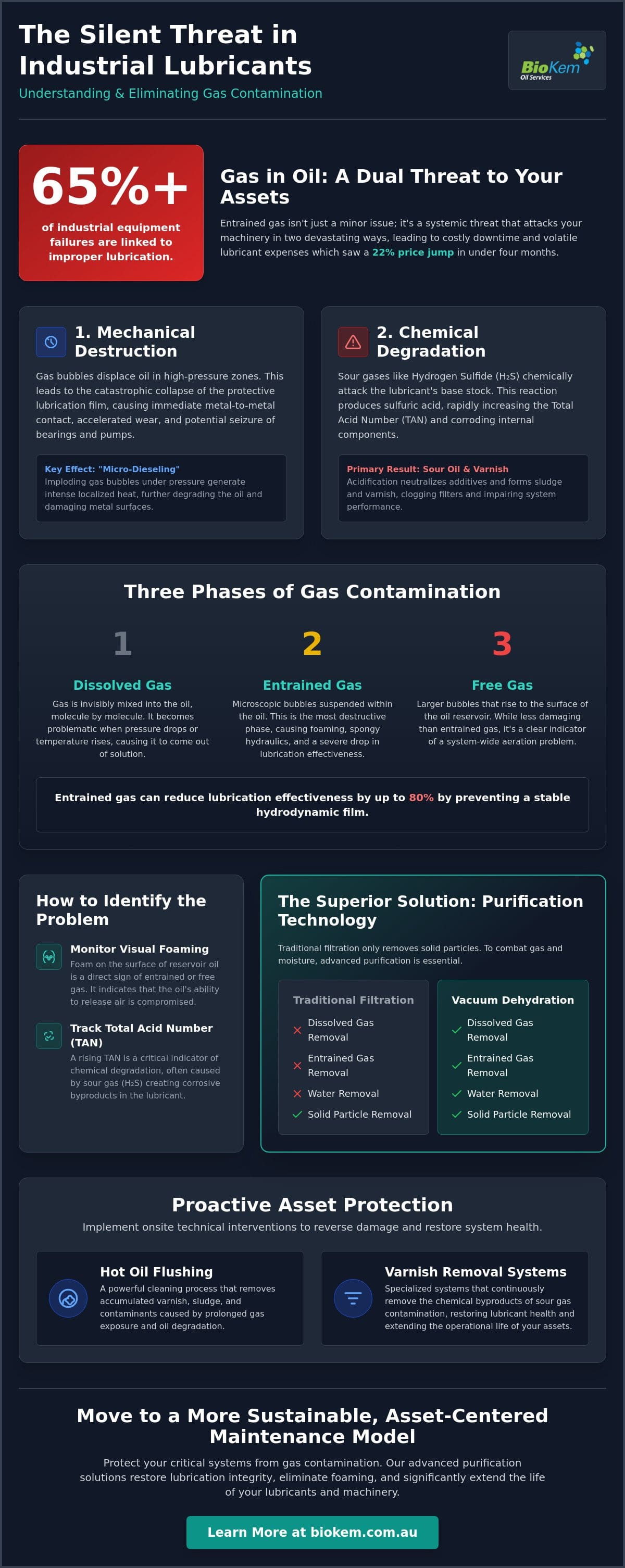
With over 65% of industrial equipment failures linked to improper lubrication, the presence of air and hydrogen sulfide isn’t just a minor nuisance. It’s a systemic threat. Gas in oil acts as a dual-threat that mechanically destroys the lubrication film and chemically degrades the base stock through sour acidification. If you’re managing critical systems, you’ve likely felt the pressure of unscheduled downtime and the volatile 2026 lubricant market, where prices jumped 22% in less than four months. The removal of entrained gas from lubricants – sour oil is no longer a secondary maintenance task; it’s a vital strategy for asset preservation and environmental responsibility.
You shouldn’t have to choose between high operational costs and equipment reliability. We’ll show you how to master the technical strategies for eliminating entrained gases and managing sour oil contamination to protect your industrial assets. This article explores advanced purification methods like vacuum dehydration and varnish mitigation. These solutions restore lubrication film strength, eliminate foaming, and significantly extend the life of expensive synthetic lubricants. By the end, you’ll understand how to move your operation toward a more sustainable, asset-centered maintenance model that meets modern regulatory standards.
Key Takeaways
- Differentiate between dissolved, entrained, and free air to accurately diagnose how sour gases like H2S degrade your system’s base stock.
- Understand the “micro-dieseling” effect and how gas bubbles cause the catastrophic collapse of lubrication films in high-pressure environments.
- Implement effective diagnostic strategies for the removal of entrained gas from lubricants – sour oil by monitoring visual foaming and Total Acid Number.
- Evaluate the mechanical advantages of Vacuum Dehydration Oil Purification Systems over traditional filtration for the extraction of dissolved process gases.
- Learn how onsite technical interventions like Hot Oil Flushing can eliminate gas-induced varnish and restore the operational life of your industrial assets.
Understanding Entrained Gas and Sour Oil in Industrial Lubricants
Gas contamination in industrial lubricants manifests in three distinct phases: dissolved, entrained, and free air. While free air typically settles on the surface and escapes through reservoir vents, entrained gas consists of microscopic bubbles suspended within the fluid. This condition is particularly volatile in systems dealing with sour gas, where hydrogen sulfide (H2S) and other reactive process gases infiltrate the oil supply. The presence of these gases represents a fundamental chemical shift in the lubricant’s composition rather than a simple physical mixture.
The “sour” designation refers to the presence of sulfur compounds that are highly corrosive and reactive. When H2S enters the lubricant, it doesn’t just remain a suspended gas. It attacks the base stock and additive packages, leading to rapid acidification and a significant reduction in load-carrying capacity. This chemical reality makes the oil a liability to the machinery it’s intended to protect, necessitating a proactive approach to the removal of entrained gas from lubricants – sour oil.
To better understand the complexities of managing corrosive gases in industrial settings, watch this technical overview:
The Physics of Aeration: From Dissolved to Entrained
Hydrocarbon-based lubricants naturally hold a specific volume of gas in a dissolved state, a phenomenon governed by Henry’s Law. This principle states that the amount of dissolved gas is proportional to the partial pressure of that gas above the fluid. When pressure drops or temperature rises suddenly, this dissolved gas evolves into entrained bubbles. In sour environments, traditional defoaming additives often fail. The chemical interaction with sulfur compounds can neutralize these additives, leaving the system vulnerable to chronic aeration. Data suggests that entrained gas can reduce lubrication effectiveness by up to 80% by preventing the formation of a stable hydrodynamic film.
Sour Gas Contamination in Compression Systems
In reciprocating and centrifugal compressors, process gas ingress often occurs at the seals or through blow-by. When H2S enters the lubricant, it initiates reactions that produce sulfuric acid and other corrosive byproducts. This condition is a primary driver for the removal of entrained gas from lubricants – sour oil. Unlike standard aeration, sour contamination requires specialized handling due to its toxicity and the rapid rate of varnish formation. OSHA sets a ceiling limit of 20 ppm for H2S exposure, highlighting the safety risks involved when these gases are released from the oil during maintenance. Managing these risks requires integrating a varnish removal system to address the chemical degradation caused by prolonged gas exposure.
The Destructive Effects of Gas Contamination on Machinery
Entrained gas acts as a contaminant that physically displaces the oil needed for lubrication. In high-pressure zones like bearings and gears, these bubbles collapse and destroy the protective hydrodynamic film. This leads to immediate metal-to-metal contact and accelerated wear. When the oil is “sour,” this mechanical failure is compounded by chemical aggression. The removal of entrained gas from lubricants – sour oil is critical to prevent these systemic failures before they lead to catastrophic pump or bearing seizure.
The system-wide consequences of gas contamination are severe. Aerated oil has a lower bulk modulus, making hydraulic responses erratic and spongy. In control systems, this leads to sticking valves and governor instability. Additionally, entrained gas reduces the thermal conductivity of the fluid. This causes oil coolers to operate with diminished efficiency, leading to higher reservoir temperatures that further drive oxidation and oil degradation.
Cavitation and Component Erosion
Cavitation occurs when entrained bubbles pass from a low-pressure area to a high-pressure zone. The resulting implosion generates localized shockwaves that pit and erode metal surfaces. Forensic analysis often reveals these as distinct “frosted” or “pitted” patterns on bearing shells. Micro-dieseling is a localized high-temperature combustion event within oil bubbles. This process creates carbonaceous soot and accelerates the darkening of the fluid, often referred to as carbonisation.
Varnish Formation and Additive Drop-out
The chemical synergy between aeration and sour gas is particularly damaging. Hydrogen sulfide reacts with the lubricant’s additive package, causing rapid antioxidant depletion. This leaves the base oil defenseless against oxidation. The resulting polar insoluble contaminants eventually precipitate as varnish on cool surfaces. For operators of power generation equipment, this is a critical concern for EHC fluids and phosphate ester stability. Understanding the Hydrogen Sulfide hazards to both machinery and personnel is essential for safe maintenance.
Effective management requires more than just topping up the reservoir. Proactive varnish mitigation is often necessary to clean the internal surfaces once gas-induced oxidation has taken hold. This ensures the removal of entrained gas from lubricants – sour oil doesn’t just stop the damage but begins the restoration process for the entire lubrication circuit.
Diagnostic Methods: Identifying Sour Gas and Aeration Issues
Early detection of gas ingress is paramount to preventing the mechanical and chemical degradation discussed previously. Visual indicators provide the first line of defense. Chronic foaming on the reservoir surface or a cloudy, opaque appearance in a sight glass often points to entrainment. While standard oil darkening is expected over time, rapid carbonisation resulting in a “burnt” odor suggests micro-dieseling. These symptoms signal that the removal of entrained gas from lubricants – sour oil is no longer optional but an immediate operational requirement.
Laboratory analysis offers a more granular view of the oil’s chemical health. Monitoring the Total Acid Number (TAN) is essential, as the ingress of hydrogen sulfide leads to the formation of acidic byproducts that corrode yellow metals. Elemental sulfur analysis can confirm the presence of process gas, even before physical properties like viscosity shift significantly. Onsite diagnostic tools allow technicians to identify insoluble contaminants and varnish precursors that standard filtration might miss, providing a real-time snapshot of fluid stability.
Interpreting ISO 4406 cleanliness codes requires caution in aerated systems. Laser particle counters often misinterpret microscopic gas bubbles as solid particulate matter, leading to falsely elevated counts. If a system suddenly shows a spike in the 4-micron and 6-micron channels without a corresponding change in pressure differential across filters, entrained gas is the likely culprit. This diagnostic nuance is critical for accurate asset management and avoiding unnecessary maintenance actions.
Specialised Oil Analysis for Sour Oil
For complex compression systems, Gas Chromatography (GC) identifies the specific constituents of the contaminating process gas. This helps maintenance teams pinpoint whether the leak is coming from primary or secondary seals. Additionally, Filter Ferrogram Analysis is invaluable for identifying the morphology of wear particles. It distinguishes between normal abrasive wear and the corrosive wear associated with sour gas. Monitoring viscosity is also vital; while oxidation typically thickens oil, the absorption of dissolved hydrocarbon gases can actually dilute the lubricant, reducing its load-bearing capacity.
The Bubble Release Test (ASTM D3427)
The ASTM D3427 test measures a lubricant’s ability to separate from entrained air. New high-performance oils typically shed gas within minutes, but sour contaminants rapidly degrade this property. The presence of polar contaminants from sour gas increases bubble retention time by reducing the surface tension at the gas-liquid interface. When an in-service oil sample fails to meet its original air release specifications, it indicates that the additive package is depleted. This failure confirms that the removal of entrained gas from lubricants – sour oil requires external intervention rather than relying on the oil’s natural de-aeration properties.
Removal Technologies: Vacuum Dehydration vs. Traditional Filtration
Standard mechanical filters are engineered to remove solid particulate matter through pore-size exclusion. They’re fundamentally incapable of addressing dissolved or entrained gases. Because gas bubbles are compressible and often microscopic, they simply pass through the filter media along with the lubricant. The removal of entrained gas from lubricants – sour oil necessitates a transition from mechanical filtration to advanced purification technologies that leverage the physical properties of the contaminants themselves.
Vacuum Dehydration Oil Purification Systems (VDOPS) represent the industry standard for this challenge. Unlike traditional methods, VDOPS utilizes a controlled vacuum environment to alter the boiling point of volatile contaminants. By reducing the internal pressure within a vacuum chamber, water and dissolved process gases can be liberated at temperatures far below their normal boiling points. This process is essential for maintaining the chemical integrity of the oil, as it avoids the thermal degradation associated with excessive heating. Maintaining temperatures between 45°C and 60°C ensures optimal gas release without triggering further oxidation.
The VDOPS Mechanism Explained
The efficiency of a VDOPS unit relies on maximizing the surface area of the oil. This is achieved through thin-film evaporation, where the oil is dispersed over specialized internal elements. As the oil flows in a thin layer, entrained bubbles and dissolved gases are exposed to the vacuum, allowing them to escape the fluid matrix. While centrifugal separators rely on density differences to pull free air and water from the oil, they’re often insufficient for the microscopic entrainment found in sour systems. VDOPS provides a more comprehensive solution by addressing the gas at a molecular level, effectively stripping out the corrosive elements that mechanical force can’t reach.
Addressing Sour Gas with Chemical Filtration
Sour oil presents unique chemical challenges that vacuum alone might not fully resolve. When hydrogen sulfide has already begun to acidify the lubricant, ion-exchange resins are employed to neutralize these acids and restore the Total Acid Number (TAN). Specialized active filtration media can also target sulfur-based oxidation products that contribute to varnish. Integrating high-performance Filters S.p.A. products ensures that the gas-liquid separation is handled by components designed for the rigors of process gas environments. These systems often utilize nitrogen stripping to safely displace sour gas constituents while maintaining a dry, inert environment within the reservoir.
If you’re seeing signs of gas-induced degradation, it’s time to act before component wear becomes irreversible. Explore our specialized Vacuum Dehydration equipment options to restore your lubricant’s health onsite.
Strategic Solutions: BioKem’s National Onsite Technical Interventions
Addressing gas contamination requires a transition from reactive maintenance to a strategic, asset-based approach. BioKem provides the technical framework necessary for the effective removal of entrained gas from lubricants – sour oil across the Australian industrial sector. By deploying advanced purification hardware directly to the site, we eliminate the need for costly fluid replacement. This is particularly vital in the 2026 market, where lubricant prices have risen by 22% in just a few months. Reclaiming your existing fluid is a financial and operational priority.
When sour gas ingress has already compromised the system’s internal cleanliness, a standard oil change is insufficient. We perform comprehensive Hot Oil Flushing to dislodge and remove the varnish and carbon deposits that gas-induced oxidation leaves behind. This process ensures that the new or purified oil isn’t immediately contaminated by residual polar compounds. It restores the system to a baseline of hydrodynamic film stability, protecting critical bearings and seals from premature wear.
Project-Based Onsite Purification
For large-scale turbine and compressor reservoirs, we lead technician-driven interventions that focus on long-term ecological health. Our teams deploy high-capacity VDOPS units to extract dissolved process gases and moisture without interrupting your production schedule. We verify the success of every intervention with onsite laboratory reporting, ensuring that TAN levels and air release properties meet original equipment manufacturer specifications. Reclaiming sour oil instead of treating it as hazardous waste significantly reduces your facility’s environmental footprint. It’s a responsible alternative to the traditional, synthetic cycle of disposal and replacement.
Equipment Hire and Distribution
Maintaining system integrity during emergency gas contamination events requires immediate access to specialized hardware. We provide national equipment hire for vacuum dehydrators and oil filtration systems tailored for sour environments. Through our partnership as the Australian distributor for Filters S.p.A. products, we supply high-performance separation technology designed for the rigors of the oil and gas industry. Our hire options include technical support and training for your onsite teams. This ensures the removal of entrained gas from lubricants – sour oil is handled with precision, even in remote locations. We anchor global scientific standards in a dependable, localized context to keep your critical assets operational and compliant.
Securing Your Industrial Assets through Advanced Purification
Managing the chemical volatility of sour oil is a critical responsibility for modern industrial operators. As established, the ingress of hydrogen sulfide and process gases creates a corrosive environment that standard filters cannot mitigate. The successful removal of entrained gas from lubricants – sour oil requires a shift from standard filtration to precision technical interventions. By utilizing specialized VDOPS technology, you can achieve 99% gas and water removal, effectively restoring the oil’s hydrodynamic film and protecting your machinery from micro-dieseling and cavitation.
BioKem stands as a reliable partner in this process. We serve as the sole Australian distributor for Filters S.p.A., providing national technical support to ensure your critical assets remain operational. Our onsite services prioritize long-term ecological health by reclaiming contaminated oil instead of disposing of it as hazardous waste. This approach provides a clear return on investment while meeting the stringent regulatory standards of the energy sector.
Don’t wait for component failure to take action. Contact BioKem Oil Services for expert onsite gas removal and sour oil purification and restore the reliability of your lubrication systems today. We’re ready to help you navigate these complex technical challenges with confidence.
Frequently Asked Questions
What is the difference between entrained gas and foaming in lubricants?
Foaming occurs on the oil’s surface, while entrained gas consists of microscopic bubbles suspended throughout the fluid’s volume. While foam is often a cosmetic issue in the reservoir, entrained gas is far more destructive because it enters the high-pressure zones of bearings and pumps. This internal aeration leads to the mechanical failures and film collapse discussed in previous sections.
Can sour oil be safely re-used after vacuum dehydration?
Sour oil can often be safely re-used provided the base stock hasn’t undergone irreversible thermal or chemical degradation. The removal of entrained gas from lubricants – sour oil through vacuum dehydration extracts the reactive gases and moisture that drive acidification. Once the Total Acid Number is stabilized and the air release properties are restored, the oil can continue to serve as a high-performance lubricant.
How does hydrogen sulfide (H2S) affect the Total Acid Number (TAN) of oil?
Hydrogen sulfide reacts with moisture and the lubricant’s additive package to form acidic byproducts, which directly increases the Total Acid Number (TAN). A rising TAN indicates that the oil is becoming corrosive to yellow metals and other system components. Regular oil analysis is required to monitor this trend and trigger purification before the acidification becomes terminal.
Why does entrained gas cause my oil temperature to rise?
Entrained gas causes oil temperatures to rise because air is a poor conductor of heat compared to liquid oil. When bubbles are present, the fluid’s ability to transfer heat to the oil coolers is significantly reduced. Additionally, the micro-dieseling effect generates localized high-temperature combustion events that contribute to the overall thermal load of the system.
Is vacuum dehydration effective for removing all types of process gases?
Vacuum dehydration is highly effective for removing most volatile process gases by lowering their boiling points within a controlled chamber. This technology works on the principle of mass transfer, allowing gases like methane, ethane, and hydrogen sulfide to be stripped from the oil matrix. For highly reactive or complex gas mixtures, nitrogen stripping is often used alongside vacuum to enhance the extraction process.
How often should I test for entrained gas in high-speed turbine systems?
High-speed turbine systems should ideally be tested for entrained gas and air release properties on a quarterly basis. If your system has a history of seal issues or operates in a sour gas environment, monthly testing may be necessary to prevent sudden lubrication film collapse. Monitoring these trends allows for proactive maintenance rather than reactive repairs after a failure occurs.
What are the first signs that process gas is leaking into my lubrication system?
The first signs of process gas leakage include a noticeable darkening of the oil, persistent surface foaming, and a distinct sulfurous odor. You may also observe erratic hydraulic responses or a sudden spike in the ISO 4406 cleanliness codes if your particle counter is misinterpreting bubbles as solids. These symptoms indicate that the removal of entrained gas from lubricants – sour oil is required to protect your assets.
Can I use standard oil filters to remove gas bubbles?
Standard oil filters cannot remove gas bubbles because they’re designed to capture solid particulate matter through pore-size exclusion. Gas bubbles are compressible and can easily pass through the filter media regardless of the micron rating. Specialized technologies like vacuum dehydration are the only reliable way to separate suspended and dissolved gases from the oil.