

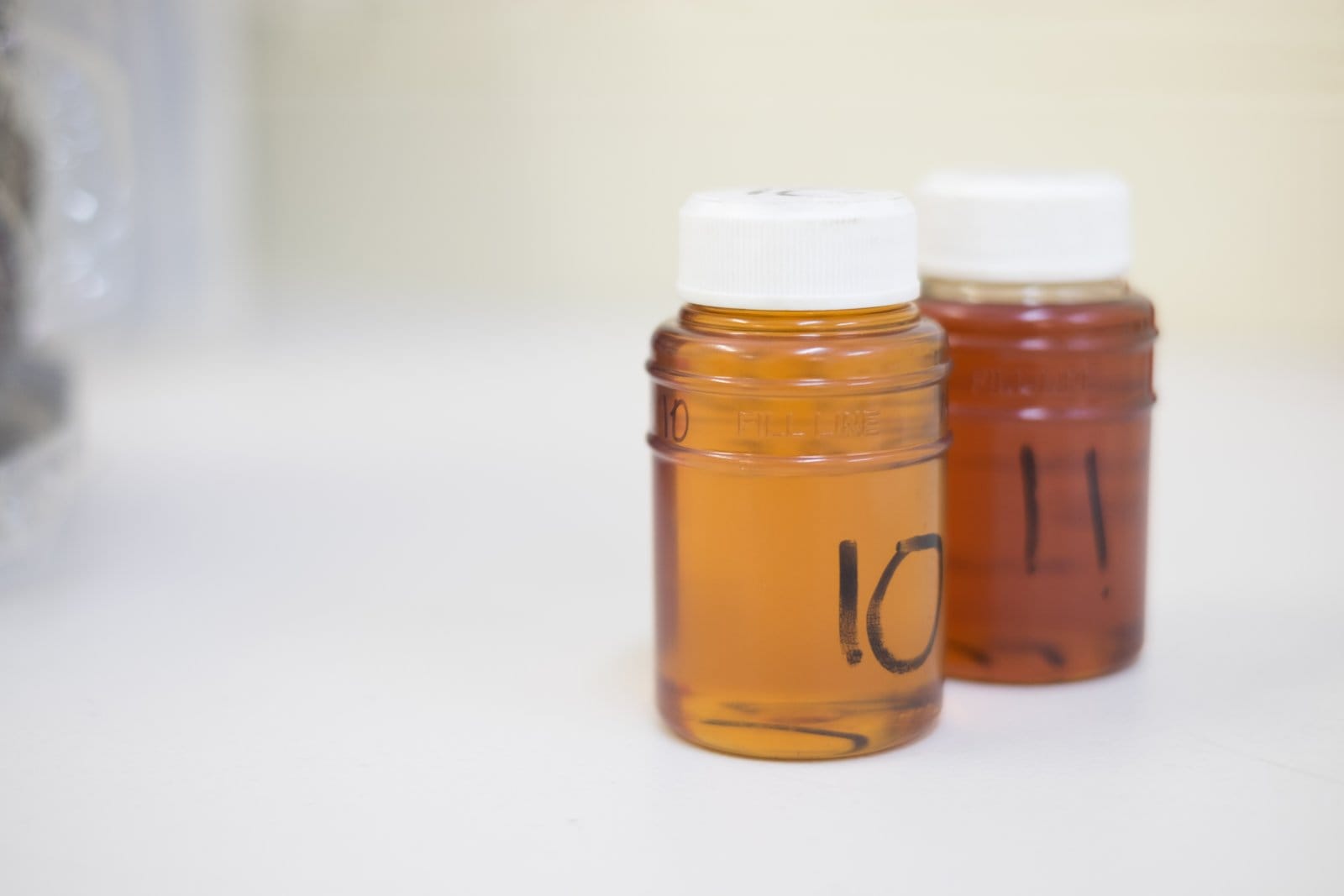
How to increase the longevity of your lube oil comes down to controlling contamination, water, heat and air, and using the lubricant suited to the equipment. Avoiding these stressors helps limit oxidation, hydrolysis, foaming and other conditions that can reduce oil performance and affect machinery.
It’s easy to focus on the oil itself, but storage, handling and operating conditions also affect its service life. This article explains what to avoid and how water separation, oxidation, hydrolysis, foam and air release affect lubrication. You’ll also learn why cleanliness, temperature control and using the right lubricant matter for reliable equipment operation and responsible oil use.
Key Takeaways
- Prevent water ingress and maintain oil cleanliness to support effective water separation and help protect equipment from corrosion.
- Manage heat and oxygen exposure, which can drive oxidation, thicken oil and contribute to sludge formation.
- Consider how viscosity, temperature and contamination affect air release, since excess air can cause foam and disrupt lubrication.
- When deposits or contamination affect system cleanliness, BioKem Oil Services’ Hot Oil Flushing can help clean oil circuits as part of a maintenance approach.
Water separation and demulsibility
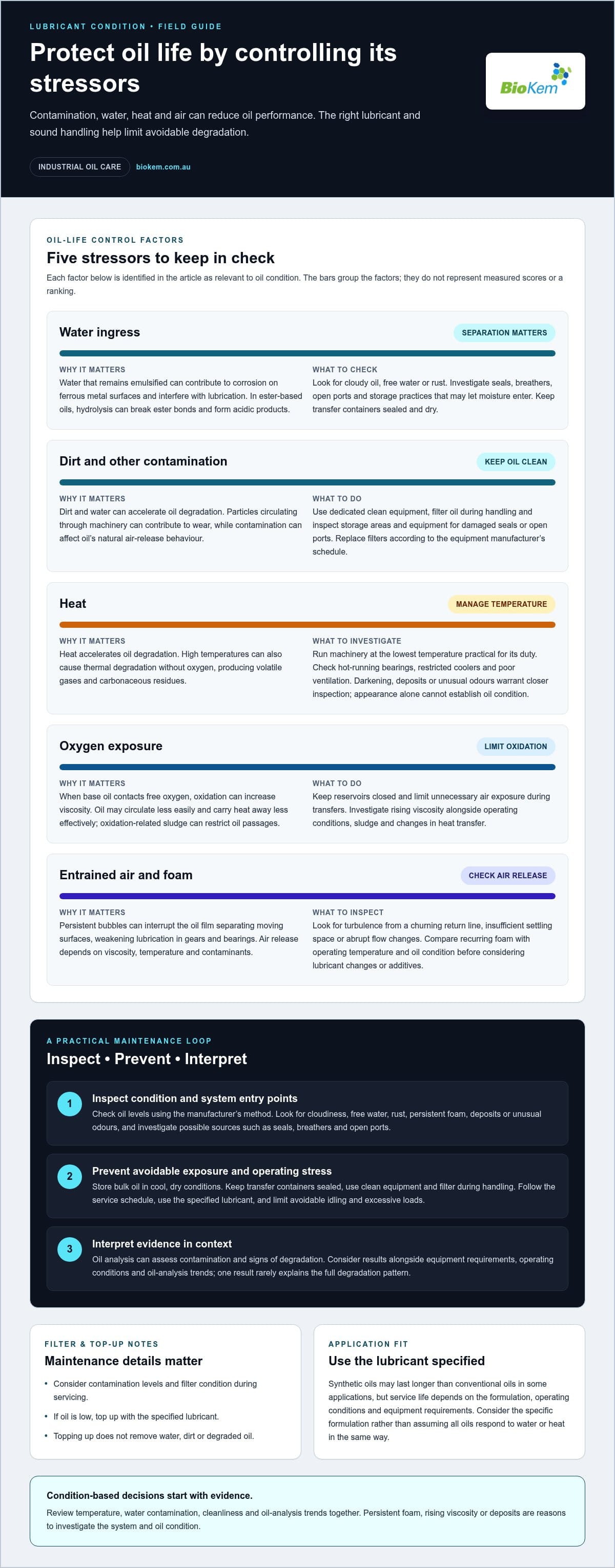
Demulsibility is an oil’s ability to separate from water. If water remains emulsified, it can contribute to corrosion on ferrous metal surfaces and interfere with lubrication. Water separation is especially important in humid operating environments. Check for cloudy oil, free water or rust, then investigate seals, breathers and storage practices that may allow moisture to enter.
Keep transfer containers sealed and dry, use dedicated clean equipment, and filter oil during handling. Dirt and water contamination can accelerate oil degradation, so inspect storage areas and equipment for damaged seals or open ports. For contamination linked to microbial activity, microbial contamination in lube oil is a related concern.
Synthetic oils may last longer than conventional oils in some applications, but service life depends on the formulation, operating conditions and equipment requirements. In Australia, the cost depends on the oil’s grade, brand and quantity purchased.
Filters capture particles that can circulate through machinery and contribute to wear. Replace filters according to the equipment manufacturer’s maintenance schedule, and consider contamination levels and filter condition during servicing.
Check oil levels regularly using the manufacturer’s method. If levels are low, top up with the specified lubricant. Keep in mind that topping up does not remove water, dirt or degraded oil.
Oil analysis can assess contamination and signs of degradation, helping determine whether oil remains suitable for use. Interpret the results in light of the equipment’s requirements and operating conditions.
Follow the service schedule, use the specified lubricant, and limit avoidable idling and excessive loads. These steps reduce unnecessary stress on engine oil.
Australian heat can raise operating temperatures, while dust may enter through damaged seals or during handling. Towing adds operating load, so monitor oil condition and follow the manufacturer’s maintenance schedule closely.
Chemical stability and resistance to oxidation and hydrolysis
Oxidation begins when base oil contacts free oxygen. It can increase viscosity, making it harder for the lubricant to circulate through clearances and carry heat away from components. Keep reservoirs closed, limit unnecessary air exposure during transfers, and investigate rising viscosity in the context of operating conditions. Oxidation-related sludge can restrict oil passages and reduce heat transfer.
Heat accelerates oil degradation. Run machinery at the lowest temperature practical for its duty, and investigate hot-running bearings, restricted coolers or poor ventilation. High temperatures can also cause thermal degradation without oxygen, producing volatile gases and carbonaceous residues. Darkening, deposits or unusual odours can signal a need for closer inspection, but appearance alone cannot establish oil condition.
Hydrolysis is a separate chemical process in which water reacts with susceptible lubricant components and changes their properties. In ester-based oils, it can break ester bonds and form acidic products. These changes may reduce the oil’s protective ability over time and contribute to corrosion. Minimise water exposure and consider the specific formulation rather than assuming all oils respond in the same way.
Use the manufacturer’s specified lubricant and keep bulk oil in cool, dry storage. Review operating temperature, water contamination and oil-analysis trends together; one result rarely explains the full degradation pattern. Silicone seals, glycerin and other chemical ingredients have different functions across industrial and personal-care products, so don’t apply assumptions from one context to another. A condition-based maintenance solution starts with evidence, not a longer interval by default. For help interpreting degradation concerns, discuss oil condition and maintenance needs.
The effects can go beyond restricted flow or reduced cooling. Oxidation-related sludge may promote foam and emulsification and contribute to machine seizures and breakdowns. These risks make it important to investigate sludge alongside changes in viscosity and heat transfer. Oxidation occurs when base oil contacts free oxygen, and increased viscosity is one possible effect.
Foaming and air release
Foam forms when excess air becomes trapped in lubricating oil. Persistent bubbles can interrupt the oil film that separates moving surfaces, increasing friction and weakening lubrication in gears and bearings. Foam in a reservoir is more than a surface issue: it may indicate that the oil and system are not managing air effectively. Watch for persistent foam during normal operation.
Air release is an oil’s ability to shed entrained air after circulation. It depends on viscosity, temperature and contaminants. Oil that is too viscous for the operating conditions may release air more slowly, while contamination can affect the oil’s natural behaviour. Compare foaming with operating temperature and oil condition before changing the lubricant or adding additives.
System design and operating conditions matter too. A return line that churns oil, insufficient settling space in a reservoir or an abrupt change in flow can introduce or retain air. Inspect the return path and reservoir for turbulence, then check that the specified lubricant suits the equipment’s operating requirements. Avoid adding anti-foam additives without identifying the cause, as they do not correct air ingress or poor circulation.
Water and oxidation products can contribute to foaming, so assess foam alongside oil cleanliness and condition. Water-based lubes and other personal lubricants serve different functions; their slippery feel, condom compatibility and ingredients have no bearing on industrial oil selection. There’s no basis here to connect lubricant foam with cancer. If persistent foam is affecting equipment performance, discuss oil foaming and air-release concerns with a specialist.
Excess air in lubricant can cause foaming and interfere with effective lubrication of gears and bearings. Treat recurring foam as a potential lubrication concern, not merely a cosmetic issue.
BioKem Oil Services: Hot Oil Flushing
BioKem Oil Services provides Hot Oil Flushing to address contamination and deposits in lubrication circuits. Consider it when oil analysis, operating observations or maintenance findings show that system cleanliness needs attention. Flushing can help remove contaminants from oil circuits, supporting cleaner operation before fresh or reconditioned oil returns to service.
The right response depends on the equipment’s condition and needs. Oil Analysis can assess fluid condition, while Vacuum Dehydration addresses water contamination and Varnish Mitigation targets varnish-related issues. Each option addresses a different cause of oil deterioration, so identifying the issue helps guide maintenance.
For guidance on Hot Oil Flushing and lubrication oil condition, contact BioKem Oil Services.
Turn Oil Condition Insights Into Your Next Maintenance Decision
To increase the longevity of your lube oil, connect oil-condition findings with a maintenance plan for the equipment. This helps teams focus on the source of a problem and choose an appropriate response, rather than relying on routine oil replacement alone.
BioKem Oil Services provides Hot Oil Flushing, Varnish Mitigation and Vacuum Dehydration for different oil-system maintenance needs. The right approach depends on the condition identified and the equipment involved. Matching the response to the issue supports more deliberate oil use and helps avoid unnecessary intervention.
Discuss your equipment’s lubrication concerns and maintenance priorities with BioKem Oil Services. Contact BioKem Oil Services to talk through a practical next step and keep your maintenance decisions moving forward.
Frequently Asked Questions
What should I avoid in a lubricant?
Avoid using lubricant with the wrong viscosity, mixing incompatible oils or introducing dirt during transfers. For industrial equipment, increasing the longevity of your lube oil starts with matching the lubricant to the manufacturer’s specification and keeping storage containers, funnels and transfer equipment clean. Avoid over-lubricating bearings too, as excess lubricant can create heat and interfere with effective lubrication.
What causes engine oil to degrade and lose its lubricating properties?
Heat, oxygen, water and contaminants can change oil chemistry and performance. To increase the longevity of your lube oil, compare oil-analysis results with maintenance records, top-ups and changes in operating conditions. For example, a sudden change in oil condition after maintenance may help identify an introduced contaminant or developing equipment issue.
What are the risks of extending oil change intervals beyond the manufacturer’s recommendation?
As oil degrades, it can lose protective performance, increasing the risk of wear, restricted oil passages and equipment damage. Extending an oil-change interval without evidence may also allow contamination or deposits to build up. Follow the equipment manufacturer’s schedule, and use oil-analysis trends as supporting information rather than assuming they justify a longer interval.

Article by
James McAllister
James McAllister is an industry professional with BioKem Oil Services, specialising in lubrication reliability, oil filtration, contamination control and asset performance. Drawing on BioKem's extensive field experience across turbines, compressors, hydraulic systems and critical rotating equipment, James writes practical, insight-driven articles that help maintenance and reliability teams improve equipment performance, extend asset life and reduce operational risk.