

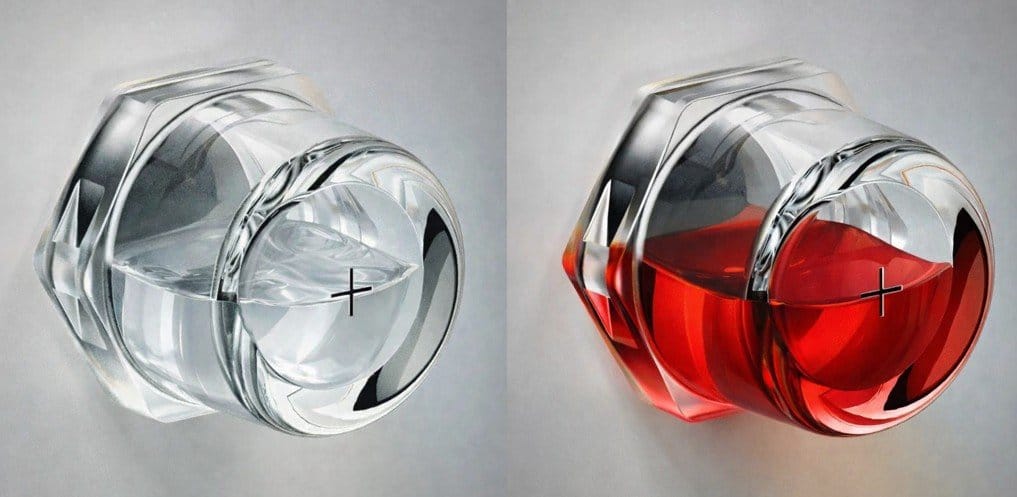
Between 70% and 80% of all rotating equipment failures stem from fluid contamination, yet the destructive particles grinding away dynamic oil films are completely invisible to the naked eye. In typical plant environments, unstructured visual checks leave maintenance teams second-guessing what they see. When daily walkdowns reveal cloudy, dark, or stratified lubricant, systematic oil sight glass contamination monitoring serves as an essential front-line sentry for asset health. It’s frustrating when shift teams can’t definitively agree whether a milky sight glass signals benign air entrainment or destructive water ingress.
This guide enables you to master visual oil sight glass inspection techniques, helping you isolate free moisture, solid debris, and varnish formation before catastrophic component wear takes hold. You’ll discover how to establish standardized inspection criteria across shifts, bridge the diagnostic gap between daily walkdowns and laboratory oil analysis, and implement practical remediation workflows such as vacuum dehydration to protect your critical machinery.
Key Takeaways
- Standardised oil sight glass contamination monitoring acts as a vital front-line sentry, helping operators spot free water separation, sediment, and gross contamination before component wear escalates.
- Differentiate accurately between harmless surface aeration and destructive moisture emulsions to prevent unnecessary shutdowns or overlooked bearing failure risks.
- Understand the physical limits of visual inspection, acknowledging that severe abrasive wear occurs well below the 40-micron human optical detection threshold.
- Establish structured daily walkdown routines that inspect quiescent sight bowls before start-up to eliminate subjective interpretation across shifting maintenance teams.
- Map visible contamination triggers to concrete remediation pathways, deploying industrial vacuum dehydration and advanced filtration to restore fluid health without wasteful oil dumping.
Fundamentals of Oil Sight Glass Contamination Monitoring in Critical Machinery
Visual fluid inspection provides instantaneous feedback on lubricant health, serving as a critical frontline diagnostic bridge between scheduled laboratory oil sample cycles. Operating critical rotational plant without continuous visual indicators leaves asset managers blind to sudden, severe ingress events. Systematic oil sight glass contamination monitoring acts as a continuous sentry, enabling reliability teams to spot free moisture separation, fluid darkening, and gross debris accumulation long before hydrodynamic fluid films collapse into boundary friction. Under API Standard 610 recommendations for wet-sump pumps, capturing physical contaminants at the lowest reservoir points prevents premature bearing wear and catastrophic equipment trips.
Sight Glass Configurations and Optical Mechanics
Traditional flat two-dimensional bullseye indicators offer restricted viewing angles and frequently obscure fluid clarity under typical ambient plant lighting. Modern three-dimensional columnar designs engineered from high-clarity polymers deliver complete 360-degree viewing geometry. A properly positioned industrial sight glass enables technicians to evaluate oil coloration, clarity, and foaming tendencies using directed white light. Changes in fluid refractivity immediately reveal light-scattering emulsions and suspended microscopic insolubles that would otherwise remain unnoticed against opaque steel reservoir walls.
The Role of Gravity Separation in Diagnostic Hardware
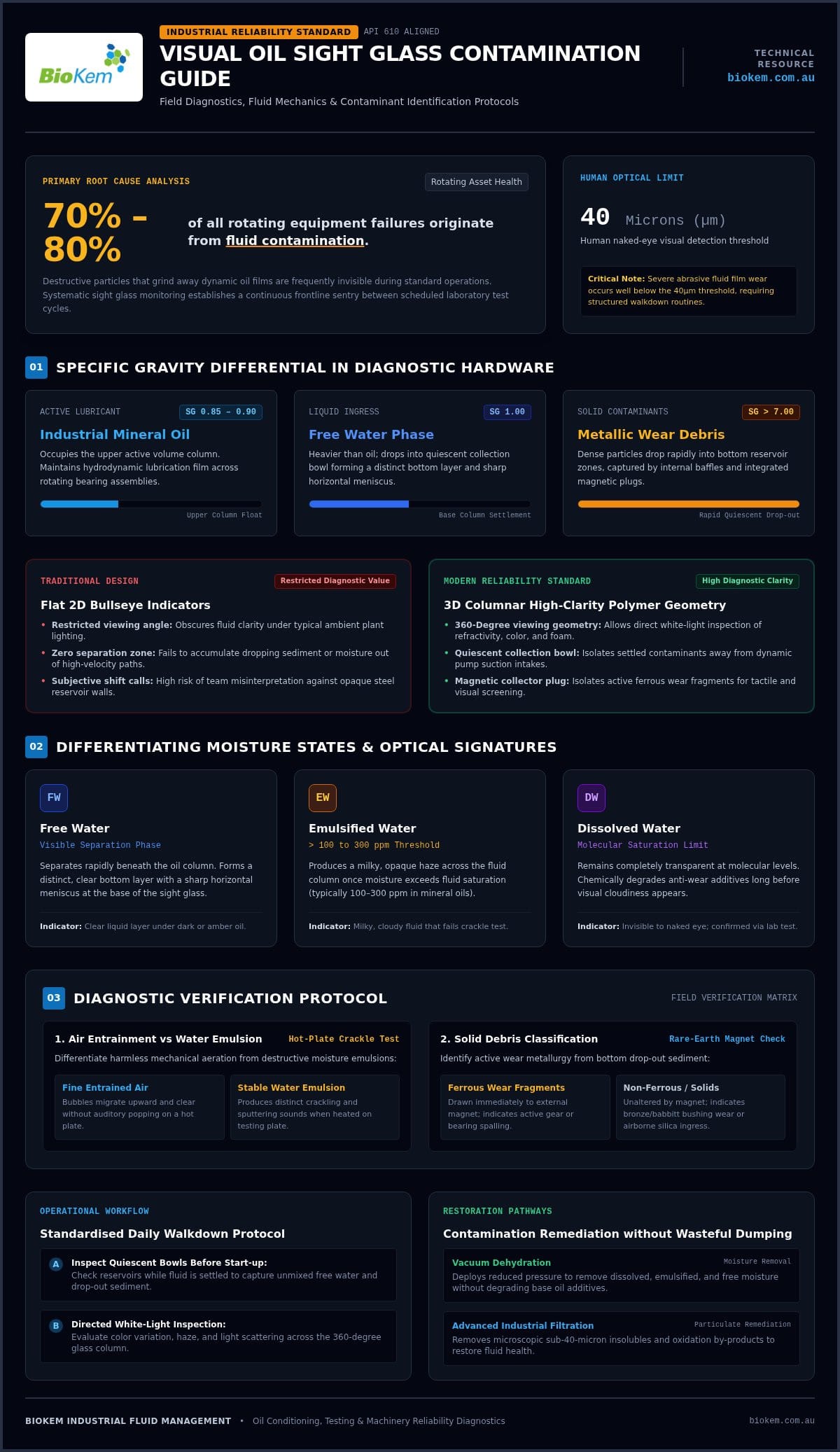
Diagnostic collection hardware leverages differential specific gravity to separate and retain contaminants out of the active lubrication stream. While typical industrial mineral lubricants have a specific gravity between 0.85 and 0.90, free water sits at 1.0, and metallic wear debris exceeds 7.0. Positioning collection bowls at low-velocity drain manifolds allows gravity separation to work effectively:
- Vertical collection columns accumulate water and dense solids in quiescent zones away from dynamic pump suction intakes.
- Internal baffle geometry isolates drop-out sediment from primary flow turbulence, preventing re-entrainment into the system.
- Integrated magnetic collector plugs attract active ferrous wear fragments, isolating them for tactile screening before secondary component damage spreads.
Standardising these visual indicators transforms passive level ports into reliable diagnostic assets. Rather than waiting weeks for laboratory reports, operators gain immediate physical cues that validate day-to-day fluid cleanliness across changing operating shifts.
Interpreting Visual Contamination Symptoms: Water, Debris, and Oxidation
Accurate visual diagnosis demands separating transient operational symptoms from permanent chemical degradation. Effective oil sight glass contamination monitoring relies on clear diagnostic decision trees rather than guesswork. When an operator observes changes in fluid clarity or colour, immediate physical verification confirms whether the root cause stems from water ingress, particulate contamination, or thermal breakdown.
Differentiating Water States: Free, Emulsified, and Dissolved
Water exists in industrial lubricants in three distinct phases, each presenting unique optical characteristics:
- Free Water: Separates rapidly into a distinct, clear bottom layer beneath the oil column, forming a sharp horizontal meniscus.
- Emulsified Water: Produces a milky, opaque haze across the fluid column once moisture exceeds fluid saturation (typically 100 to 300 ppm in mineral oils). An onsite visual hot-plate crackle test readily differentiates stable water emulsions from fine entrained air bubbles, as air clears upward without sound.
- Dissolved Water: Remains completely transparent at molecular levels, chemically degrading anti-wear additives long before visual turbidity appears.
Visual Signatures of Solid Contaminants and Wear Debris
Solid particulate settlement patterns reveal critical failure mechanisms inside rotating assets. Heavy metallic particles rapidly drop into collection bowls, where an external rare-earth magnet diagnostic check identifies active ferrous spalling versus non-ferrous bronze or babbitt wear. Conversely, airborne environmental silica deposits as fine, irregular, tan-coloured sediment. Because catastrophic wear debris can circulate before crossing visual thresholds, logging particulate accumulation provides the immediate trigger to arrange specialist wear debris analysis before bearing races fail completely.
Recognising Oxidation By-Products, Sludge, and Varnish Formations
Thermal degradation alters the chemical structure of base oils, leaving unambiguous optical evidence on internal hardware surfaces. Micro-dieseling, localized hot spots, and antioxidant depletion generate soft contaminants that manifest as golden-brown or amber coatings inside inspection glasses. As degradation accelerates, insoluble polar species agglomerate into sticky, tar-like sludge that coats lower collection manifolds and blinds sensitive valve clearances. Tracking these colour shifts against the ASTM D1500 scale gives teams early warning of severe chemical breakdown. When visual checks reveal recurring dark sediment or phase separation that threatens your ISO 4406 cleanliness code targets, you can contact BioKem to discuss field diagnostics and engineered purification options before forced outages occur.
Operational Limits of Visual Monitoring: Beyond Human Optical Acuity
Visual fluid evaluation provides immediate operational feedback, but relying solely on sight creates a dangerous false sense of security. The unaided human eye can only resolve individual particles down to approximately 40 to 50 microns under clean industrial lighting. In contrast, the critical dynamic oil films within journal bearings and high-speed rolling elements operate at clearances between 0.1 and 5 microns. Lubricants that appear crystal clear and pristine through a sight bowl can still harbour millions of destructive, silt-sized abrasive particles per millilitre. Routine oil sight glass contamination monitoring must therefore function as an early warning screening tool rather than a replacement for quantitative analytical testing.
The Sub-Visible Clearance Gap and Abrasive Wear
Catastrophic wear occurs silently inside the sub-visible clearance gap. When hard particulate contaminants match dynamic film clearances, typically in the 2 to 15 micron band, they bridge the lubricating boundary between rolling elements and raceways. This interaction triggers aggressive three-body abrasive wear, micro-fatigue, and surface gouging without scattering enough incident light to appear cloudy. Maintaining genuine oil contamination control requires pairing visual hardware with calibrated automatic particle counters and regular laboratory sampling.
Correlating Visual Cues with Formal ISO 4406 Cleanliness Codes
A sample that looks visually bright can easily exceed OEM cleanliness limits, carrying an elevated ISO 4406:2021 code such as 21/19/16. Because the ISO scale is logarithmic, each single-number increase signifies a doubling of particle concentration per millilitre. Visual inspection reveals only late-stage gross drop-out, missing the rapid accumulation of fine wear precursors:
- Sub-40 Micron Silt: Suspended silicates and fine iron oxides remain invisible to human sight while steadily scouring servo-valves and hydraulic actuators.
- Dissolved Moisture Saturation: Lubricating oil remains optically transparent up to its saturation point, requiring ASTM D6304 Karl Fischer titration to quantify moisture down to 10 parts per million before free water splits out.
- Sub-Micron Varnish Precursors: Soft degradation products pass through sight glasses undetected until heavy plating darkens internal viewports.
Treat visual oil sight glass contamination monitoring as your daily frontline sentry. When sight indicators stay clear, rely on scheduled laboratory analysis and calibrated diagnostic instrumentation to manage microscopic fluid purity. For facilities looking to maintain rigorous measurement standards across their testing hardware, Zenith Sales & Calibrations Pty Ltd provides professional calibration solutions to guarantee operational accuracy. If visual changes appear, trigger immediate investigation before mechanical failure occurs.
Standardised Daily Inspection Protocols and Sampling Best Practices
Inconsistent walkdown routines lead to subjective interpretation between operating shifts. Establishing a repeatable four-step procedure for oil sight glass contamination monitoring turns everyday visual rounds into actionable condition data. By formalising inspection sequences, site teams can identify moisture separation and solid wear debris early, standardising records across every operating roster.
Pre-Operational Walkdown and Illumination Methodology
A rigorous walkdown protocol must follow a strict physical order to ensure optical accuracy:
- Step 1: Inspect Quiescent Bowls Before Start-up: Examine bottom sediment and water bowls while machinery is cold and offline. Overnight shutdown periods permit gravity settling of free water and dense particulate, making drop-out visible before dynamic oil flow re-entrains it.
- Step 2: Directed High-Intensity LED Illumination: Direct an LED penlight through the sight tube at 45-degree and 90-degree angles. This back-scatter lighting highlights subtle colloidal haze, dissolved moisture hazing, and tiny reflective wear flecks that ambient overhead lighting misses. Check fluid levels against distinct cold-quiescent and hot-running level markings.
- Step 3: Evaluate Magnetic Collector Plugs: Inspect the core of bottom drain plugs. Accumulations of metallic fines or slivers confirm ferrous fatigue, isolating active machine wear from non-magnetic atmospheric dust.
- Step 4: Execute Clean Purging: Slowly open spring-loaded drain valves to purge separated water and settled sediment directly into a clean glass container. Document the volume evacuated before resealing the port.
Purging Contaminants and Drawing Representative Samples
Purging a sight glass is essential to clear separated waste, but drawing routine laboratory samples from a static sight bowl produces heavily distorted data. Stagnant fluid, accumulated sediment, and moisture pooling create extreme false-positive spikes. Always pull quantitative condition monitoring samples from primary dynamic sampling valves installed upstream of return filters while the machine runs at normal operating temperature.
Ensure sight glass breather ports and pressure-equalisation lines remain clear of external build-up. Blocked vent lines induce false level readings or cause reservoir vacuum conditions that pull in ambient humidity. If your inspection rounds uncover chronic water separation, dark particulate accumulation, or recurrent foaming across shifts, speak with BioKem to implement structured contamination control protocols and secondary fluid analysis.
Remediation Pathways: Responding to Sight Glass Contamination Triggers
Recognising fluid contamination in a sight bowl is only half the battle. When routine oil sight glass contamination monitoring flags milky emulsification, amber surface plating, or sediment accumulation, maintenance teams can’t simply rely on recurring petcock draining. Purging a couple of decilitres from a bottom sediment bowl provides brief visual relief, but it leaves thousands of litres of compromised lubricant circulating through critical plant. Sustainable asset reliability demands systematic fluid restoration that eliminates the underlying contamination without the economic and environmental waste of premature oil dumping.
Targeting Water Ingress with Industrial Vacuum Dehydration
Persistent turbidity or recurring free water pooling indicates system-wide moisture exceeding saturation levels. Manual draining clears free water at the sump bottom, yet it leaves hundreds of parts per million of dissolved moisture actively degrading structural additives. Deploying skid-mounted vacuum dehydration oil purification systems resolves this challenge by stripping dissolved, emulsified, and free water down below 50 ppm. Operating under low-temperature vacuum boiling conditions, these systems vapourise entrained gases and moisture without subjecting base oils to destructive thermal stress. Continuous offline kidney-loop dehydration cleanses the complete reservoir while rotating assets remain fully operational.
Eradicating Varnish and Silt via High-Velocity Flushing
When inspection viewports reveal dark amber stains or tar-like sludge rings, soft oxidation contaminants have saturated the lubricant matrix. To halt varnish formation before it causes servo-valve stiction and bearing overheating, targeted remediation is essential:
- Resin-Based Varnish Mitigation: Deploying specialised ion-exchange and resin absorption media strips sub-micron degradation precursors from the lubricant before they precipitate onto metal surfaces. Operating the largest high-temperature Varnish Removal Systems in the region, BioKem removes dissolved oxidation by-products directly from hot operating fluid.
- High-Velocity Hot Oil Flushing: For systems carrying heavy silt settlement or undergoing major overhauls, high-flow flushing skids create turbulent fluid dynamics that mechanically dislodge adhering scale and particulate from internal pipework.
- ISO 16889-Certified Filtration: High-efficiency particulate polishing captures abrasive wear debris down to micron levels far beyond the reach of human sight.
Integrating these proven remediation workflows with daily visual rounds elevates basic inspections into a comprehensive proactive maintenance strategy, keeping critical rotational machinery protected across Australian industrial sites. When planned overhauls or sudden faults require broader asset condition assessments, partnering with Zenith Rental provides Australian facilities with on-demand access to advanced industrial and power testing equipment.
Transforming Visual Diagnostics into Plant-Wide Fluid Reliability
Structured oil sight glass contamination monitoring bridges the critical gap between daily field walkdowns and quantitative laboratory analysis. While human vision catches immediate operational symptoms like free water separation and gross silt drop-out, lasting machinery health depends on addressing microscopic wear and dissolved moisture before dynamic clearances degrade. Moving from reactive reservoir draining to systematic fluid restoration preserves baseline lubricant chemistry, cuts waste, and protects rotational plant against sudden mechanical failure.
Drawing on over 70 years of combined industry experience across technical staff, BioKem delivers rapid Australia-wide service coverage for plant shutdowns, vacuum dehydration, and turnkey fluid decontamination. Backed by a proven safety record of Zero Lost Time Injuries (LTI) since establishment in 2012, our technicians resolve complex contamination events without compromising production schedules. Connect with BioKem’s engineering team today to turn frontline visual inspections into a resilient, high-performance lubrication management program.
Frequently Asked Questions
Can an oil sight glass detect dissolved water in industrial lubricants?
No, an oil sight glass cannot detect dissolved moisture. Dissolved water is held in chemical solution at the molecular level, remaining optically clear until relative humidity exceeds the fluid’s saturation point. While effective oil sight glass contamination monitoring exposes free and emulsified water, measuring dissolved moisture requires laboratory testing such as ASTM D6304 Karl Fischer titration to identify moisture levels down to parts-per-million accuracy.
What is the difference between an oil level gauge and a contamination sight glass?
A standard level gauge simply indicates the volumetric fluid height in a sump. In contrast, a contamination sight glass or bottom sediment and water (BS&W) bowl features a 360-degree clear viewing chamber positioned at the lowest reservoir point. This geometry isolates quiescent zones to trap dropping water and dense wear solids, turning a basic level check into an active diagnostic inspection tool.
How often should operators inspect and drain bottom sediment sight bowls?
Inspect bottom sediment bowls daily during pre-operational walkdowns while the machinery is cold and settled. Draining should occur whenever separated water or dark particulate accumulates in the lower collection basin. Routine oil sight glass contamination monitoring ensures operators evacuate corrosive water pockets promptly, preventing settling contaminants from re-entering active fluid circulation when equipment restarts.
Why does oil look cloudy in the sight glass but test clear on a hot plate?
Cloudiness without moisture crackle indicates entrained air rather than water contamination. Extremely fine micro-bubbles scatter light, mimicking a milky water emulsion. When applied to a hot plate heated above 135 degrees Celsius, entrained air gently vents without the characteristic sputtering, crackling, or popping that water droplets produce. This quick check prevents maintenance teams from misdiagnosing mechanical aeration as seal failure.
Can you draw an official oil analysis sample directly from a sight glass drain?
Never draw compliance or trend-monitoring oil samples from a static sight glass drain. Sediment bowls function as stagnant contaminant traps, concentrating settled wear debris, oxidation sludge, and free water. Sampling from this petcock creates severe false positives in particle counts. Always pull representative analytical fluid from a dedicated dynamic sampling port installed upstream of return line filters while the system runs.
What does black sediment at the bottom of an oil sight glass indicate?
Black sediment indicates either fine ferrous wear debris or advanced thermal oil degradation. Running a rare-earth magnet beneath the bowl immediately distinguishes between the two: magnetic particles will track the magnet, confirming mechanical component fatigue. Non-magnetic black sludge indicates severe micro-dieseling, thermal cracking, or aggregated oxidation insolubles that demand urgent varnish mitigation and secondary filtration.
How do you clean an oil sight glass stained with varnish deposits?
Isolate and vent the sight glass assembly before removing the bowl during scheduled maintenance. Clean heavy varnish plating using an approved industrial solvent or citrus-based degreaser paired with a soft lint-free cloth. Avoid abrasive pads or harsh chlorinated compounds, which scratch synthetic polymer viewports and impair optical clarity. If heavy brown lacquer recurs rapidly, investigate system-wide lubricant varnish levels.

Article by
James McAllister
James McAllister is an industry professional with BioKem Oil Services, specialising in lubrication reliability, oil filtration, contamination control and asset performance. Drawing on BioKem's extensive field experience across turbines, compressors, hydraulic systems and critical rotating equipment, James writes practical, insight-driven articles that help maintenance and reliability teams improve equipment performance, extend asset life and reduce operational risk.