

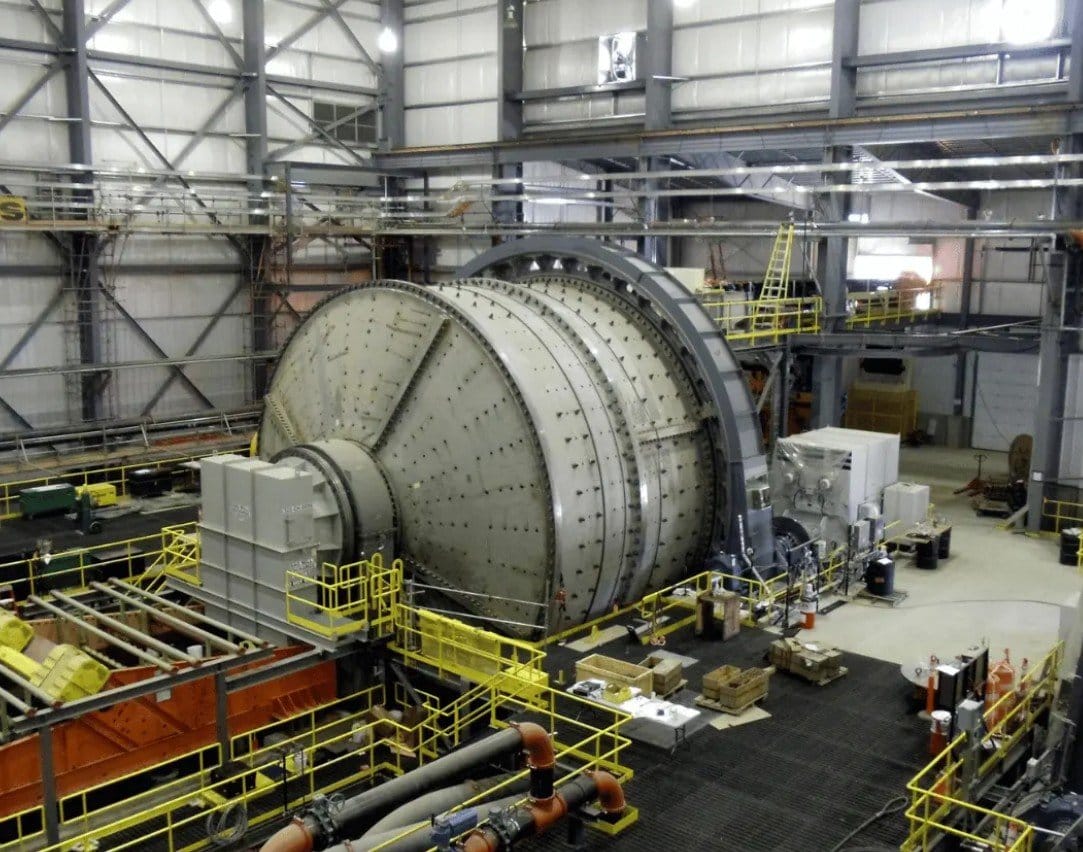
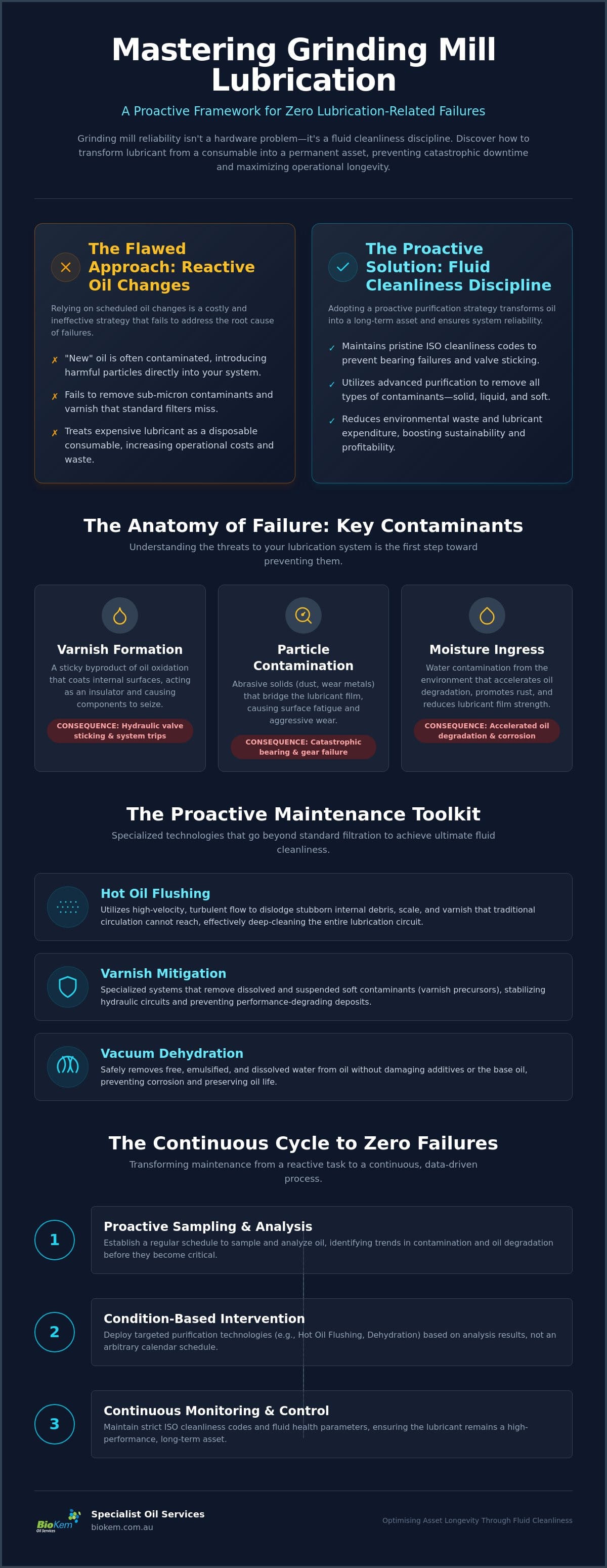
Grinding mill reliability is not a hardware problem; it is a fluid cleanliness discipline that requires proactive purification rather than simple filtration. Many operators view lubricant as a consumable to be replaced, yet the most efficient facilities treat it as a permanent asset. Effective Ball & Sag Mill lubrication system maintenance is the only way to prevent the varnish-related valve sticking and bearing overheating that lead to catastrophic downtime.
It’s a challenge every maintenance manager faces: balancing the rising cost of oil replacement against the need for pristine hydraulic circuits. You understand that maintaining strict ISO cleanliness codes is essential for operational longevity and regulatory compliance. This guide provides the technical framework to help you master your lubrication systems, ensuring you achieve zero lubrication-related failures while reducing environmental waste. We will examine the latest ISO 12924:2023 standards, precise pressure requirements for automatic systems, and how advanced methods like vacuum dehydration and varnish mitigation provide a more sustainable path to asset health than traditional oil changes.
Key Takeaways
- Understand why standard oil changes fail to address sub-micron contaminants and why “new” oil often requires purification before it’s fit for service.
- Implement a technical framework for Ball & Sag Mill lubrication system maintenance that prioritizes fluid cleanliness to prevent catastrophic bearing failures.
- Learn how hot oil flushing utilizes high-velocity turbulent flow to dislodge stubborn internal debris that traditional filtration cannot reach.
- Discover how varnish mitigation and vacuum dehydration stabilize hydraulic circuits by removing soft contaminants and entrained moisture.
- Establish a proactive sampling and analysis schedule that transforms oil from a consumable waste product into a high-performance, long-term asset.
The Critical Role of Lubrication in Ball & SAG Mill Reliability
The grinding mill lubrication system functions as the lifeblood of the mineral processing circuit. It’s not merely a secondary support mechanism; it’s the primary safeguard for the most expensive mechanical assets on a mine site. For those seeking a technical foundation on What is a Ball Mill?, it’s essential to recognize that these massive rotating drums rely on a microscopic film of oil to survive. When this film fails, the consequences are immediate and severe. A trunnion bearing failure in a large SAG mill doesn’t just result in a repair bill; it can cost millions in lost production and weeks of unscheduled downtime.
A robust system integrates high-pressure lift pumps, low-pressure cooling circuits, and precision-engineered trunnion bearings. The fundamental goal of Ball & Sag Mill lubrication system maintenance is to maintain a specific lubricant film thickness. This barrier must be significantly larger than the size of suspended contaminants. If particle contamination isn’t controlled, these solids bridge the oil gap, leading to surface fatigue and catastrophic metal-on-metal contact.
To better understand the mechanical complexities involved in mill maintenance, watch this video showing the lapping process of a girth gear and pinion:
Understanding Ball vs. SAG Mill Lubrication Requirements
Ball mills and SAG mills operate under distinct load profiles that dictate their lubrication demands. SAG mills often handle larger, more erratic feed sizes, which creates significant impact loads on the bearings. Many modern mills utilize variable speed drives to optimize throughput, but this requires the lubrication system to be highly responsive. As the rotational speed changes, the system must maintain precise pressure to ensure the trunnion remains supported. While smaller units might rely on hydrodynamic lubrication, where the rotation itself generates the oil film, larger mills require constant hydrostatic lift to prevent bearing damage during startup and low-speed operation.
Common Failure Modes in Grinding Mill Lubrication
Mining environments present a constant struggle against abrasive dust and moisture ingress. These contaminants accelerate oil degradation and wear. Thermal degradation is another significant risk; when bearings operate under extreme loads without adequate heat dissipation, the oil oxidizes rapidly. This chemical breakdown leads to varnish formation, a sticky byproduct that coats internal surfaces. Varnish is particularly dangerous because it causes hydraulic valves to stick, leading to sudden system trips. BioKem Oil Services provides specialized varnish removal systems as a critical proactive measure to ensure these soft contaminants don’t compromise the entire circuit.
Contamination Dynamics: Why Standard Oil Changes Are Not Enough
Relying on oil changes as a primary strategy for Ball & Sag Mill lubrication system maintenance is a common but flawed approach. Many operators assume that drummed oil is pristine. In reality, “new” oil frequently arrives with particulate levels that exceed the strict ISO cleanliness codes required for high-pressure trunnion bearings. Without pre-filtration, adding this oil introduces contaminants directly into the system. BioKem Oil Services recommends viewing fluid health through a “Contamination Control Balance Sheet.” If the rate of contaminant ingression from the environment exceeds the rate of removal by your filtration system, the asset is in a state of technical insolvency. True asset longevity requires a proactive purification strategy that addresses contaminants at the sub-micron level before they can cause damage.
Standard bypass filtration often falls short in high-flow mining environments. These filters only process a small fraction of the total volume, allowing the majority of the fluid to circulate abrasive particles through critical contact zones. Effective contamination control requires a system-wide approach that targets both hard and soft pollutants. By treating the lubricant as a high-value asset rather than a consumable, operations can avoid the “death by a thousand cuts” caused by microscopic wear debris.
The Impact of Particulate Contamination
ISO 4406 codes categorize particle counts at 4, 6, and 14 microns. In grinding mills, even microscopic particles create a destructive chain reaction of wear. One hard particle trapped in a trunnion bearing clearance generates three or more new abrasive fragments through three-body abrasion. This geometric progression of debris quickly overwhelms standard filters. In a SAG mill, particulate contamination is not just a maintenance issue; it is a direct threat to structural integrity. For engineers following detailed maintenance and installation procedures, initial and ongoing fluid cleanliness sets the stage for years of reliable operation.
Water and Varnish: The Silent Killers
Moisture ingress is an unavoidable reality in many processing plants. Water reduces lubricant film strength and acts as a catalyst for oxidation. This chemical degradation begins with soluble precursors that eventually precipitate into hard, sticky deposits known as varnish. Varnish coats internal surfaces, increases friction, and causes critical hydraulic valves to seize. Once varnish takes hold, standard filtration cannot remove it. Integrating a varnish removal system provided by BioKem Oil Services is essential to strip these soft contaminants from the oil and the metal surfaces. If you’re seeing persistent valve sticking or rising bearing temperatures, conducting a professional filter ferrogram analysis with BioKem Oil Services can identify specific wear modes before they lead to a total system trip.
Proactive Maintenance Technologies: Hot Oil Flushing and Varnish Mitigation
Advanced Ball & Sag Mill lubrication system maintenance moves beyond the limitations of static filtration by employing high-energy decontamination methods. While standard operational flow is often laminar, it isn’t sufficient to remove the deep-seated contaminants that settle in dead legs and low-velocity zones of the lubrication circuit. The technical teams at BioKem Oil Services prioritize hot oil flushing as the definitive method for ensuring a system is truly clean before it supports millions of dollars in rotating assets.
The success of this process hinges on the Reynolds Number. To effectively dislodge contaminants, the fluid must reach a state of high-velocity turbulent flow, typically requiring a Reynolds Number greater than 4,000. This turbulence creates a scouring action on the internal pipe walls, lifting heavy particulates and scale that would otherwise remain dormant until a vibration or pressure surge releases them into the trunnion bearings. By integrating specialist oil filters during this phase, we capture debris that standard system filters are never designed to handle. This approach transforms the lubrication circuit from a potential source of failure into a certified clean environment.
The Hot Oil Flushing Process for Mills
The technical execution of a flush follows a rigorous sequence to ensure total system integrity. First, critical components like the trunnion bearings are bypassed to prevent debris from entering the bearing house during the cleaning phase. The oil is then heated to reduce viscosity, which allows for higher flow velocities and better particle suspension. Throughout the procedure, technicians from BioKem Oil Services use paddle flushing screens to monitor contamination levels in real-time. These screens provide a physical verification of cleanliness that digital sensors might miss. Once the screens remain clear under turbulent conditions, the system receives final certification, providing peace of mind after a major overhaul or component replacement.
Strategic Varnish Mitigation
Varnish cannot be flushed out with velocity alone; it requires a chemical and thermal strategy. While reactive maintenance teams wait for a valve to stick before taking action, strategic varnish mitigation from BioKem Oil Services removes both soluble and insoluble precursors from the fluid. This process restores the oil’s capacity to hold contaminants in solution, effectively cleaning the internal metal surfaces of the mill’s hydraulic circuit. This doesn’t just prevent downtime; it restores the efficiency of heat transfer systems by removing the insulating layer of varnish from cooler cores. The result is a more stable operating temperature and a significantly extended life for both the lubricant and the mill bearings.
Establishing a World-Class Lubrication Maintenance Schedule
A world-class maintenance schedule is the difference between a mill that survives and one that thrives. Effective Ball & Sag Mill lubrication system maintenance relies on a structured cadence of sampling and inspection. We recommend monthly oil sampling for critical trunnion systems, though high-load environments may require bi-weekly checks. Monitoring the right parameters allows you to detect chemical changes before they manifest as mechanical failures. Adopting a proactive maintenance strategy shifts the focus from repairing broken hardware to managing fluid health, which significantly improves long-term ROI.
Consistency in your sampling point is vital for data accuracy. Always take samples from the same location, preferably downstream of the pump but upstream of the filter, while the system is at operating temperature. This ensures the sample reflects the actual condition of the oil circulating through the bearings. By establishing a baseline for your specific mill, you can identify deviations early and intervene before a minor contamination issue turns into a total plant shutdown.
Oil Analysis and Interpretation
Interpreting lab data requires more than just looking at status lights. You must track trends in four essential areas. Viscosity indicates the oil’s ability to maintain a load-bearing film. Total Acid Number (TAN) measures oxidation levels. Water content must stay below 500 ppm to prevent hydrogen embrittlement. Elemental analysis detects wear metals like copper or lead, signaling trunnion bearing distress. For greased components, ensure compliance with the ISO 12924:2023 quality standards. When anomalies appear, a filter ferrogram provides a microscopic view of wear particles, helping you distinguish between normal “break-in” wear and catastrophic fatigue. For immediate onsite verification, patch test kits allow your crew to visually confirm ISO cleanliness codes without waiting for lab results.
Filtration and Breather Management
The hardware protecting your oil is as important as the oil itself. High-performance filtration, such as the Filters S.p.A. range, ensures that even sub-micron contaminants are captured before they reach trunnion surfaces. In the dusty or humid environments typical of mine sites, desiccant breathers are mandatory. These units strip moisture and fine particulates from the air entering the reservoir as the oil level fluctuates. To maintain real-time oversight, the particle pal range provides live digital tracking of ISO codes and water saturation. This data-driven approach allows you to verify that system pressures remain within the optimal 2,800 to 3,500 psi range during operation. If you need to upgrade your current monitoring capabilities, explore our full range of specialist oil filters and analysis tools to secure your asset’s future.
Optimising Asset Longevity with BioKem’s Specialist Oil Services
Mastering Ball & Sag Mill lubrication system maintenance requires more than just high-quality filters; it demands a partnership with specialists who understand the intersection of mechanical reliability and chemical stability. BioKem provides this niche authority. We help mining operations transform their lubrication programs from a source of high-volume waste into a streamlined, high-uptime asset. By treating oil as a permanent resource through purification rather than a consumable, we significantly reduce your operation’s carbon footprint. This approach aligns with the industry projection that by 2026, over 40% of new lubricant formulations will incorporate renewable or low-emission components.
Our commitment to sustainability is balanced by a quiet confidence in our technical capabilities. We don’t just supply products; we engineer solutions that ensure your trunnion bearings and hydraulic circuits remain in peak condition. This results in zero lubrication-related failures and a measurable extension of asset life, allowing your team to focus on production targets rather than unscheduled repairs.
Why Technical Expertise Matters
Engaging non-specialist contractors for critical mill flushing or varnish mitigation introduces unnecessary risk. General maintenance crews often lack the specialized machinery required to reach the turbulent flow velocities necessary for a certified clean. BioKem’s onsite technicians bring deep expertise in oil contamination control, ensuring every bypass and flush meets the most stringent international standards. For sites managing emergency failures or short-term project needs, our industrial oil filtration equipment hire services provide immediate access to world-class purification technology without the capital expenditure of a permanent installation.
The Future of Mill Lubrication
The mining sector is moving toward a future defined by real-time fluid health monitoring and permanent, closed-loop purification. BioKem leads this transition in the Australian mining sector by implementing smart lubrication systems that integrate IoT sensors to track ISO cleanliness and moisture levels 24/7. This proactive stance ensures you remain ahead of evolving 2026 EPA regulations regarding PFAS and industrial wastewater discharge. Furthermore, implementing variable-frequency drive pumps in your lubrication system can reduce power consumption by 30 to 45% compared to fixed-speed units, supporting both your operational efficiency and ESG goals.
Our promise is one of technical authority and environmental responsibility. We provide the specialized framework needed to eliminate downtime and protect the ecological health of your site. Contact BioKem today for a comprehensive system audit and a tailored Ball & Sag Mill lubrication system maintenance plan that secures your site’s operational future.
Securing the Future of Your Grinding Circuit
Achieving zero lubrication-related failures requires a fundamental shift in perspective. True reliability isn’t found in a drum of new oil; it’s built through a disciplined approach to fluid health and proactive purification. By mastering Ball & Sag Mill lubrication system maintenance, you move beyond the cycle of reactive repairs and toward a model of technical asset longevity. This transition reduces operational waste and ensures your trunnion bearings remain supported by pristine lubricant films even under the most demanding mining loads.
BioKem stands as your technical partner in this journey. As the sole Australian distributor for Filters S.p.A. and a provider of comprehensive NATA-aligned oil analysis, we offer the specialized expertise required to protect your most critical assets. Our onsite teams deliver high-velocity hot oil flushing and advanced varnish mitigation to restore system integrity and stabilize heat transfer. To begin your transition toward a more sustainable and reliable operation, consult with BioKem’s technical experts for a system audit. Your path to maximum uptime starts with a commitment to fluid excellence.
Frequently Asked Questions
How often should a Ball or SAG mill lubrication system be flushed?
Flushing is mandatory during initial commissioning and following any major component replacement or overhaul. Most proactive mining operations schedule a high-velocity flush every three to five years as part of a deep decontamination cycle. This frequency ensures that internal scale and built-up particulates are removed from dead legs before they can migrate into trunnion bearings. Regular flushing is a cornerstone of effective Ball & Sag Mill lubrication system maintenance.
What is the ideal ISO 4406 cleanliness code for grinding mill bearings?
The technical target for high-pressure trunnion bearings is typically an ISO 4406 code of 16/14/11 or better. Maintaining this level of cleanliness ensures that the size and concentration of particles remain significantly smaller than the lubricant film thickness. If your particle counts exceed these levels, you’re at a higher risk of three-body abrasion and premature surface fatigue on critical bearing faces.
Can varnish mitigation be performed while the mill is in operation?
Yes, varnish mitigation is typically performed as a kidney-loop process while the mill remains in full production. These systems work by continuously processing a portion of the oil to remove soluble and insoluble contaminants. This approach prevents varnish from precipitating onto internal surfaces and sticking to hydraulic valves, ensuring the system stays stable without requiring a costly shutdown for cleaning.
What are the first signs of lubrication system failure in a SAG mill?
The primary indicators of distress include rising trunnion bearing temperatures and erratic hydraulic valve behavior. You may also observe increased vibration levels or a darkening of the oil, which suggests rapid oxidation or varnish formation. Monitoring these early signs allows your team to intervene with oil analysis or vacuum dehydration before the system reaches a critical trip point.
How does hot oil flushing differ from a standard oil change?
A standard oil change only replaces the fluid, leaving behind heavy contaminants and scale attached to the internal pipework. Hot oil flushing uses high-velocity turbulent flow, reaching a Reynolds Number over 4,000, to physically scour the internal surfaces of the lubrication circuit. It’s a comprehensive decontamination process that ensures the entire system, not just the oil, is certified clean.
Why is moisture ingress so damaging to mill lubrication systems?
Water is a catalyst for oxidation and significantly reduces the lubricant’s load-carrying capacity. Even low levels of moisture can lead to hydrogen embrittlement, which causes microscopic cracking in trunnion bearings under heavy loads. Maintaining water levels below 500 ppm is essential. If moisture levels spike, vacuum dehydration is the most efficient method for restoring the oil’s dielectric and lubricating properties.
What is the role of a Ferrogram in mill maintenance?
A Ferrogram is a specialized diagnostic tool used to analyze wear particles under a microscope. By examining the morphology and composition of these particles, technicians can identify specific wear modes, such as fatigue or abrasive wear. This level of detail goes beyond standard elemental analysis, providing a clear picture of the actual mechanical condition of the trunnion bearings and gears.
Is it better to hire or buy oil filtration equipment for periodic maintenance?
Equipment hire is often the most cost-effective solution for periodic maintenance or major shutdowns. It provides access to the latest high-capacity purification technology without the capital expenditure or the burden of long-term maintenance. Hiring also ensures you have the specific machinery required for the task, whether it’s a high-flow flushing rig or a specialized varnish mitigation unit, tailored to your site’s immediate needs.