

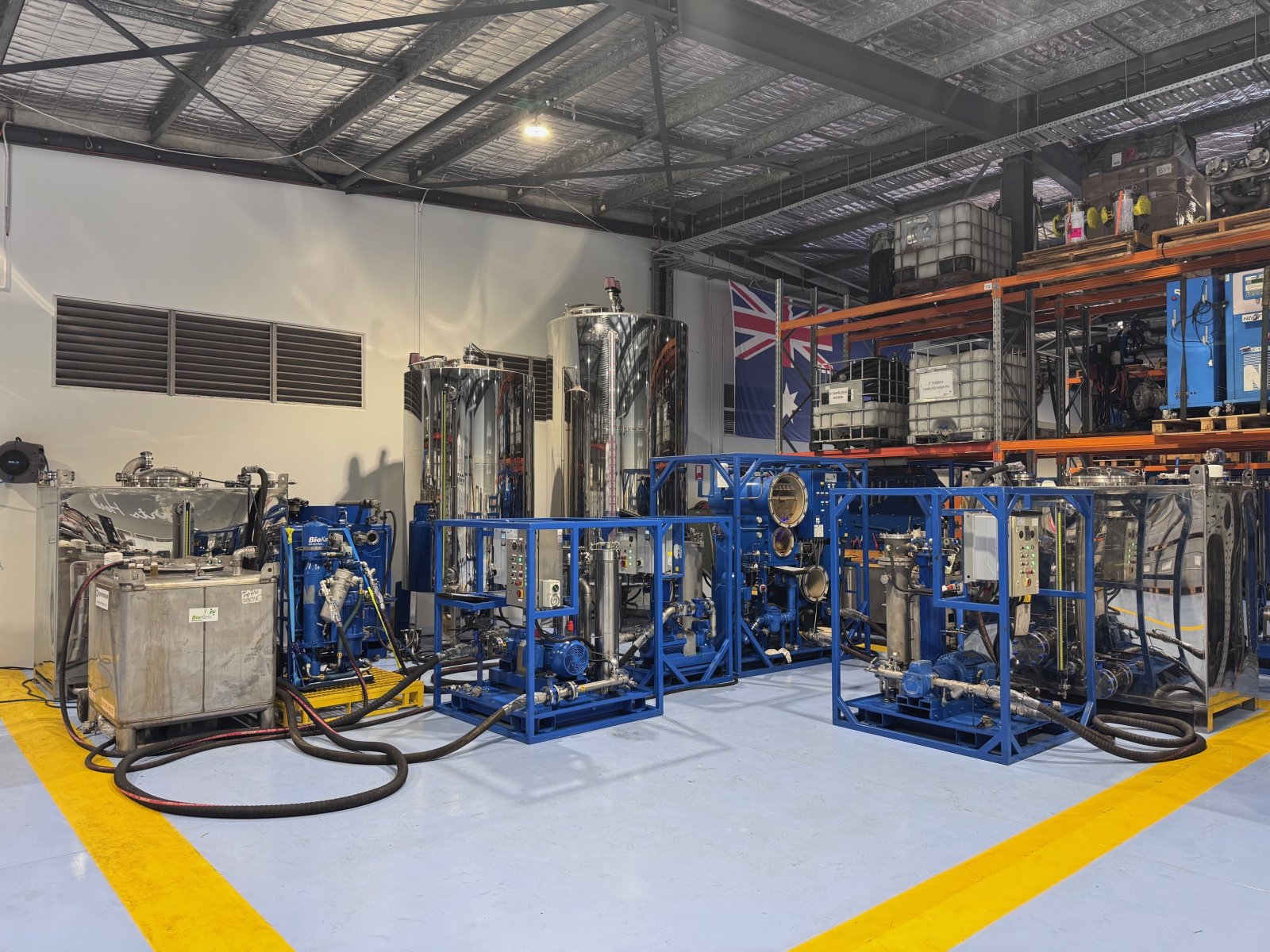
A pipe can look clean and still contain contamination that threatens equipment at start-up. Pre-commissioning hot oil flushing circulates heated oil through a system to dislodge and capture contaminants such as mill scale, welding slag, moisture and debris before operation. It’s used to prepare piping and lubrication circuits for commissioning.
Keeping contaminants away from bearings and seals helps protect critical equipment. Effective flushing also requires a plan for the material it removes: used flushing oil and spent filters need responsible handling. This guide explains how pre-commissioning hot oil flushing works, what it removes, how cleanliness is assessed and what to consider when managing waste in Australia.
Key Takeaways
- Understand where oil flushing fits in preparing hydraulic, turbine, compressor and gearbox lubrication systems for commissioning.
- Learn how cleanliness checks can help assess whether a system is ready for operation.
- See why disposal planning should account for both used flushing fluid and spent filters.
- Recognise how flushing support can help address contamination and moisture concerns during equipment preparation.
What is Pre-Commissioning Oil Flushing?
Pre-commissioning hot oil flushing circulates heated oil through piping to dislodge and remove contamination before start-up. It prepares lubrication and hydraulic circuits for cleanliness assessment and acceptance against project requirements.
Lubrication and Hydraulic System Applications
Typical systems include turbine lubrication, compressor lube oil, gearbox lubrication and hydraulic circuits. The actual equipment and circuit layout determine which lines are flushed and how cleanliness is assessed. A system drawing helps identify connected reservoirs, branches and machine inlets. Separate oil-condition concerns, such as microbial contamination in lube oil, may also need attention.
System Layout and Component Isolation
Review piping drawings and identify sensitive components before circulation. Bypass critical machine internals, including bearings, seals and control components, while directing oil through the target pipework. Install temporary connections and filtration as specified in the approved procedure. Preparation also includes planning site access, utilities, safety systems, permits, fire protection and clear emergency routes.
System Restoration and Oil Charging
After the system meets cleanliness requirements, stop circulation and remove temporary loops, hoses and screens. Restore the permanent piping arrangement, reinstall components and filters, and inspect connections for leaks or introduced debris. Charge the system with the specified oil, then confirm the correct flow path and operating condition before commissioning. Record restoration checks and deviations in the project documentation.
Flushing Method Comparisons and Procedures
Hot oil flushing circulates oil to carry loosened contamination into filters. Chemical cleaning uses cleaning agents; water flushing uses water, while air blowing uses moving air to clear loose material. The appropriate method depends on the system, the contaminants and the project procedure.
A typical sequence is to review drawings, isolate sensitive components, prepare bypasses and connect the flushing equipment. Circulate oil under the conditions specified in the procedure, monitoring filters and cleanliness results. Then stop, inspect and restore the system. The project’s acceptance criteria determine when flushing is complete.
Contaminants removed during pre-operational oil cleaning
Circulating oil carries loosened contamination towards filtration. Pre-operational cleaning targets mill scale, welding slag, moisture and debris left in piping or reservoirs. Removing these materials helps limit their movement into bearings and seals when equipment begins operating.
For Australian projects, cleanliness requirements are defined by project specifications and the needs of the equipment. ISO 4406:2021 provides a coding method for solid-particle contamination in hydraulic fluids. ISO 12669 provides a method for determining the required cleanliness level for an individual hydraulic or lubrication system. Neither standard sets one universal target for every system.
Temperature, circulation, pressure and flow requirements should suit the oil and system. Technical guidance recommends flushing oil at 5°C above normal operating temperature while remaining below the oil’s permissible limit. One example gives normal oil temperature as approximately 45-50°C and flushing temperature as 55-60°C. Flow and pressure targets depend on the project duty and approved procedure.
Acceptance criteria should state the required cleanliness level and how results will be assessed. ISO 4406 and NAS 1638 are used as oil-cleanliness acceptance criteria in flushing-course material, but the project specification governs the applicable target. Verification methods include online particle counting, bottle sampling, patch testing, screen inspection, filter-element inspection and laboratory analysis. Polished metal screens and particle counters can assess flushing cleanliness; filter differential pressure also helps track cleaning progress.
Clear acceptance criteria make results easier to document and review. For help relating oil-cleanliness requirements to a flushing scope, discuss your project requirements.
Environmental disposal of flushing fluids and filters
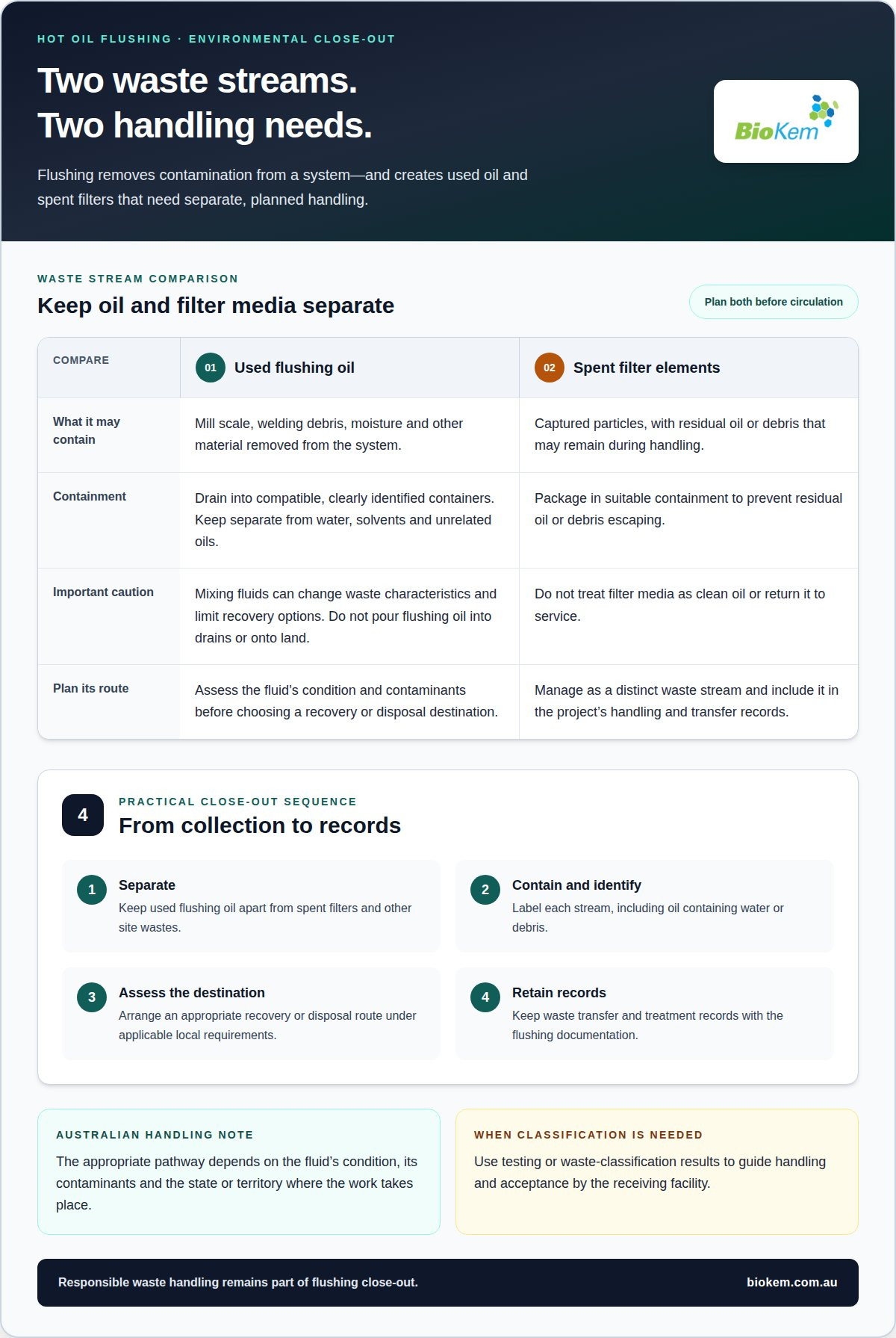
Flushing produces two distinct waste streams: used oil and spent filter elements. The oil may contain mill scale, welding debris, moisture and other material removed from the system. Filter media captures particles, so it should not be treated as clean oil or returned to service. Plan how to contain and manage both streams before circulation begins.
After flushing, drain the oil into compatible, clearly identified containers. Keep it separate from other fluids, including water, solvents and unrelated oils, because mixing can change its waste characteristics and limit recovery options. Package spent filters in suitable containment to prevent residual oil or debris escaping during handling. Do not pour flushing oil into drains or onto land.
The appropriate Australian disposal or recovery pathway depends on the fluid’s condition, its contaminants and the state or territory where the work takes place. Assess the waste before choosing its destination. If testing or waste classification is required, use the results to guide handling and acceptance by the receiving facility. Keep records of each waste stream, its destination and transfer details.
A practical close-out sequence is:
- Separate used flushing oil from spent filters and other site wastes.
- Contain and identify each stream, including oil containing water or debris.
- Arrange an appropriate recovery or disposal route under applicable local requirements.
- Retain waste transfer and treatment records with the flushing documentation.
Heating oil during flushing doesn’t remove the need for responsible waste management; it can still contain captured contaminants. For support planning a flushing project and its environmental handling, discuss your flushing requirements.
BioKem Oil Services: Hot Oil Flushing
BioKem Oil Services provides hot oil flushing to prepare lubrication and hydraulic systems for commissioning. This service is relevant when newly installed or modified pipework needs cleaning before equipment enters operation, or when a project requires flushing support alongside commissioning or shutdown activities.
The work circulates oil through the intended system and assesses cleanliness against project acceptance criteria. The system layout, isolated components, oil condition and specified requirements shape the flushing approach. If the project also involves varnish or moisture concerns, Varnish Mitigation and Vacuum Dehydration can address those separate oil-condition needs.
For details about hot oil flushing and filtering, review how the service relates to your system and commissioning scope. To discuss your requirements, contact BioKem Oil Services.
Set Up Your Commissioning Plan
Use the transition from construction to operation to coordinate cleanliness and waste handling in one plan. Before work begins, align the flushing scope with the system layout, project acceptance criteria, site procedures and intended waste pathway. This gives the commissioning team a clear basis for sequencing the work and recording decisions. For industrial facilities integrating smart systems and robotics alongside mechanical commissioning, ednexautomation.ai offers valuable insights into modern industrial automation solutions.
Pre-commissioning hot oil flushing is most useful when its purpose, boundaries and acceptance measures are defined before circulation begins. BioKem Oil Services can support the flushing scope and related oil-condition needs, including Varnish Mitigation and Vacuum Dehydration.
Share your project requirements and discuss the next step with BioKem Oil Services. A clear plan helps your team move towards commissioning with confidence.
Frequently Asked Questions
What Information Does an Oil Flushing Provider Need?
To define the flushing scope, a provider needs system drawings, equipment details, the oil specification and project acceptance requirements. Information about pipework boundaries, branches, sensitive components and access points helps determine the setup. Share site interfaces, available utilities, safety procedures and waste-handling arrangements too. For example, a turbine circuit with a bypass needs a different setup from an isolated hydraulic line.
Why Can a New Industrial System Already be Contaminated?
New equipment can contain residues from fabrication, transport, storage and installation. Cutting and welding can leave particles in pipework; open connections can admit dust, and assembly may introduce sealant or gasket fragments. A new system’s appearance does not establish its internal cleanliness. Reviewing construction and preservation records can help identify contamination risks before the equipment enters service.
What is pre-commissioning hot oil flushing and when is it required?
Pre-commissioning hot oil flushing circulates heated oil through selected system pipework before equipment is commissioned. It is used when project requirements call for internal cleanliness to be assessed before operation, particularly after major pipe fabrication and closure of system openings. The flushing scope should follow the approved procedure, system boundaries and acceptance criteria, not appearance alone.
What equipment and piping systems typically require hot oil flushing before commissioning?
Typical applications include turbine lubrication circuits, compressor lube oil systems, gearbox lubrication lines and hydraulic systems. The key question is which connected pipework must be cleaned before commissioning, not simply whether the asset is new. Branches, dead legs and connections to sensitive equipment affect the scope. System drawings help identify the circulation route and components that need isolation. When mechanical maintenance or bore refurbishment is required on this heavy machinery alongside fluid system preparation, repairbores.com offers professional line boring and bore welding tools.
How is flushing cleanliness measured and accepted, including filter mesh and particle counts?
Cleanliness is assessed against the project’s acceptance criteria using methods such as particle counting and screen inspection. Particle counters quantify solid contamination, while a mesh screen can reveal visible debris collected during circulation. ISO 4406:2021 codes particle contamination in hydraulic fluids; it doesn’t set one target for every system. The specified limit and assessment method should match the equipment and project requirements.

Article by
James McAllister
James McAllister is an industry professional with BioKem Oil Services, specialising in lubrication reliability, oil filtration, contamination control and asset performance. Drawing on BioKem's extensive field experience across turbines, compressors, hydraulic systems and critical rotating equipment, James writes practical, insight-driven articles that help maintenance and reliability teams improve equipment performance, extend asset life and reduce operational risk.