

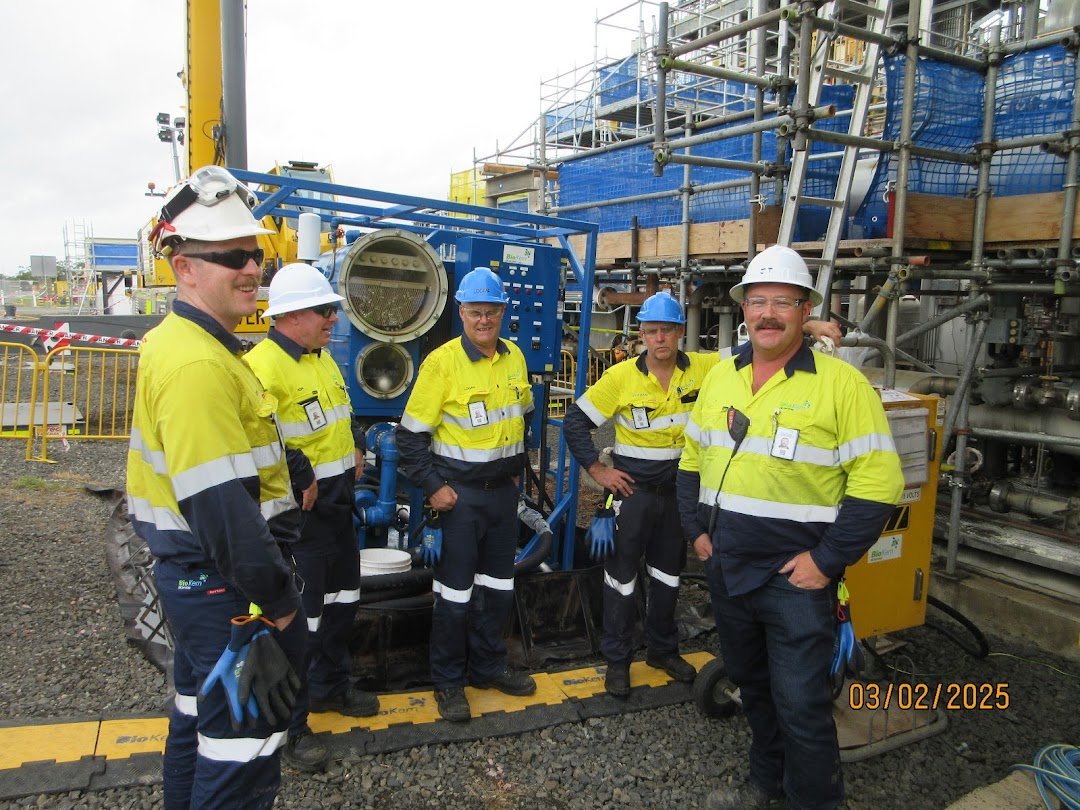
Oil that looks clean can still carry contaminants that affect hydraulic equipment. Hydraulic oil purification methods remove particles and other contaminants from the fluid; a hydraulic oil purification machine can use a 3-stage filtration process to remove water, gas, impurities and sludge so the oil can be reused. Mechanical filtration uses physical barriers to capture particles, while other treatment processes can target water and sludge.
Choosing between hydraulic oil purification methods matters because each treats different contaminants and suits different operating conditions. This guide explains what oil filtration does, how purification equipment works, and how return-line, pressure and offline filters differ. It also covers hydraulic and lubricating oil purification, showing how contamination control supports equipment reliability and can reduce used-oil waste. You’ll learn what each method does and how filtration fits into effective oil care.
Key Takeaways
- Learn how purification equipment separates particles, water and other contaminants, and why treatment needs differ across industrial applications.
- Understand how return-line, pressure and offline filters work, so you can see which part of a hydraulic system each method treats.
- See how oil analysis and cleanliness monitoring help guide decisions about filtration, oil condition and reuse.
- Explore when hot oil flushing, varnish mitigation or vacuum dehydration can address specific oil and equipment challenges.
What is a Hydraulic oil purification machine?
A hydraulic oil purification machine cleans circulating oil by removing contaminants such as particles, water, gas and sludge. Some systems use a 3-stage filtration process, with stages selected to suit the oil and contamination.
Comparing Filtration Performance and Tradeoffs
Filtration performance depends on the contaminants being removed and the operating conditions. Mechanical filtration captures particles; centrifugal separation targets debris and sludge, while vacuum treatment addresses water. Mining machinery, marine systems and power-generation equipment have different operating demands, so treatment needs vary. Choose a method by identifying the contaminant, required cleanliness and system flow. In Australia, environmental requirements depend on the state or territory and waste classification; filtration alone does not determine disposal eligibility.
Full-Flow and Kidney-Loop Filtration
Full-flow filtration sends circulating system oil through a filter, while an offline kidney-loop treats a smaller portion separately. Full-flow treatment filters oil as it moves through the system, so the filter must suit the flow rate and operating pressure. An offline unit operates independently of the main circuit, treating oil gradually. Its effectiveness depends on factors such as flow, vibration, filter integrity, dirt-holding capacity and particle-capture efficiency.
Coarse, Fine, and Polishing Stages
Coarse filtration catches larger debris first; finer filtration captures smaller particles, and polishing provides a final treatment stage. This sequence can reduce the contaminant load on fine filter media and support oil purity. Vacuum dehydration removes water by exposing oil to reduced pressure, which allows water to separate from the fluid. Lubrication oil purification can combine filtration with vacuum treatment when water contamination is part of the problem.
Return-line, pressure and offline filters
Filter location determines which oil flow passes through the element and which components it protects. Selection also depends on flow, pressure and the required particle-capture performance.
Filter Types and Locations
Return-line filters clean oil before it flows back into the hydraulic tank; pressure filters sit after the pump. Offline filters process a smaller portion of system oil in a separate loop. Each position has a distinct role: pressure filtration protects downstream components, return filtration catches contaminants coming back from the circuit, and offline treatment provides additional cleaning without filtering the full system flow.
Filter Structure and Operation
A hydraulic filter element uses media to capture particles as oil passes through. Its effectiveness depends on particle-capture efficiency, dirt-holding capacity and structural integrity. Flow rate, vibration and differential pressure at the installation point also affect performance. A filter that cannot retain captured contamination, or is installed where flow conditions are unsuitable, may not provide effective filtration.
Beta Ratios and Filter Efficiency
A Beta ratio compares particles entering a filter with particles passing through it at a stated size. For example, β10 = 1000 means the filter captures 99.9% of particles 10 microns or larger. A Beta Ratio of 200 or higher is recommended for critical hydraulic circuits. These values help compare measured particle capture, rather than relying on a filter’s nominal micron rating alone.
Choosing Filter Fineness
Hydraulic systems commonly use filter cell sizes from 3 to 40 microns, with the choice shaped by component sensitivity, oil viscosity and contamination. Elements rated at 1, 3 or 6 microns need attention because viscous additives and contaminants can block the media. Filter performance is evaluated using the multi-pass test in ISO 16889. For support with hydraulic filtration requirements, discuss the system’s operating conditions.
Hydraulic and lubricating oil purification
Hydraulic and lubricating oils need treatment suited to the contaminants present. Particle removal, water separation and contamination prevention each support cleaner industrial oil and help reduce waste.
Methods for Purifying Hydraulic Oil
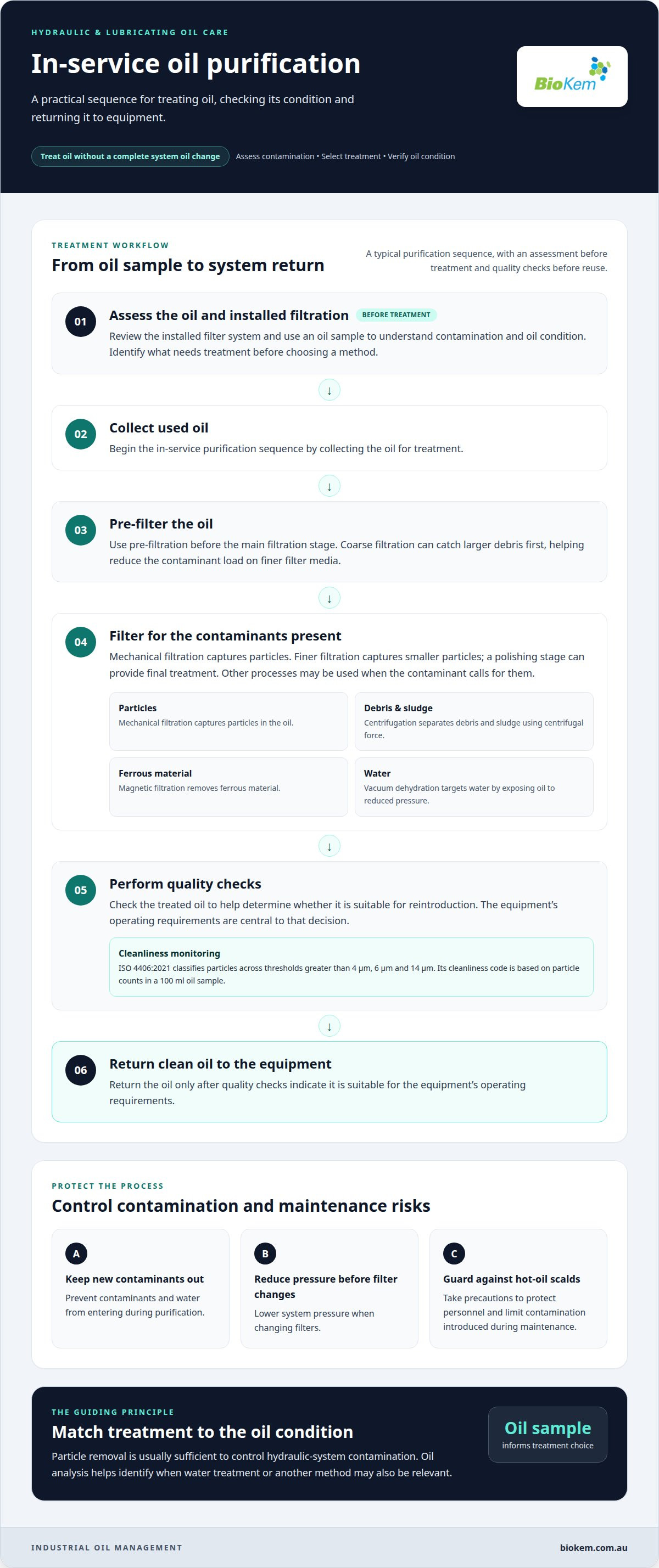
Mechanical filtration captures particles, while centrifugation separates debris and sludge using centrifugal force. Magnetic filtration removes ferrous material; vacuum dehydration targets water. Particle filtration is usually sufficient to control hydraulic-system contamination, but oil analysis helps identify when other methods are relevant. ISO 4406:2021 classifies particles across thresholds greater than 4 µm, 6 µm and 14 µm. Its cleanliness code is based on particle counts in a 100 ml oil sample, giving maintenance teams a consistent way to track changes.
Safe In-Service Purification Steps
In-service purification treats oil without requiring a complete system oil change. A typical sequence is to collect used oil, pre-filter it, filter it, perform quality checks, then return clean oil to the equipment. Before treatment, assess the installed filter system and use an oil sample to understand contamination and oil condition. Prevent new contaminants and water from entering during the process. When changing filters, reduce system pressure and guard against hot-oil scalds. These precautions protect personnel and limit contamination introduced during maintenance. Quality checks help determine whether treated oil is suitable for reintroduction, with the equipment’s operating requirements central to that decision.
For hydraulic or lubricating oil that needs a structured cleaning plan, discuss your oil purification requirements.
BioKem Oil Services
BioKem Oil Services helps Australian operators assess oil condition and select suitable treatment for hydraulic and lubricating systems. Oil analysis can identify contamination or degradation concerns and inform whether filtration or another intervention is appropriate. Depending on the issue, options include vacuum dehydration for water contamination, varnish mitigation for varnish-related problems, and hot oil flushing to clean system surfaces and pipework.
These services address different oil and equipment challenges, so treatment should match the identified condition and the system’s operating needs. Oil analysis can also help assess treatment results and guide ongoing maintenance decisions. Contact BioKem Oil Services to discuss your oil purification requirements.
Plan the Next Oil-Care Decision
Base the next maintenance decision on the oil’s condition and the equipment’s operating needs. Tracking recurring contamination can help show whether the response should focus on water, varnish or cleaning system surfaces. This gives maintenance teams a practical way to connect oil treatment with asset care, rather than treating purification as an isolated task.
Choosing between hydraulic oil purification methods starts with understanding what the oil analysis shows and what the system needs. BioKem Oil Services offers Hot Oil Flushing, Varnish Mitigation and Vacuum Dehydration to address distinct oil and equipment challenges. The appropriate treatment depends on the issue being addressed and the system’s condition. Contact BioKem Oil Services to discuss your oil treatment needs and take a considered next step towards reliable equipment operation.
Frequently Asked Questions
What is Oil Filtration?
Oil filtration is the physical or mechanical removal of contaminants as oil passes through filter media or separation equipment. Visible debris, for example, may indicate a need to capture particles, while water requires a different treatment approach. Identifying the contaminant first helps match the process to the oil’s condition and the equipment’s operating needs.
How do kidney-loop filtration systems remove particles from hydraulic oil?
A kidney-loop system draws oil from a reservoir, passes it through an external filter unit, then returns the treated oil. The media captures particles as the oil circulates. This arrangement can suit equipment that needs ongoing cleaning without routing its entire system flow through the treatment unit. It complements the filters already protecting hydraulic components.
How can dissolved and free water be removed from hydraulic oil?
Among hydraulic oil purification methods, vacuum dehydration targets water by using reduced pressure to separate moisture from oil. Centrifugal separation can remove free water alongside solids. The distinction matters because free water may form a separate phase, while dissolved moisture remains within the oil. Oil analysis can help identify contamination and assess treatment results.
How can varnish, sludge, and oxidation by-products be removed from hydraulic oil?
Suitable treatment depends on whether contaminants are suspended particles, sludge or oxidation products. Filtration captures particles, while centrifugation separates sludge; chemical filtration can transform some contaminants to make them easier to remove. Varnish mitigation addresses varnish-related concerns. Oil analysis helps characterise oil condition and inform treatment selection, rather than relying on particle filtration alone.
How do hydraulic oil filtration and purification methods compare in effectiveness and cost?
Comparing hydraulic oil purification methods means matching treatment to the contaminant: particle filters capture solids, vacuum dehydration targets water, and centrifugation separates sludge and free water. Effectiveness also depends on oil condition, system operation and treatment scope. Cost depends on the case and is provided after a quote request; key factors include equipment requirements, oil volume and contamination type.

Article by
James McAllister
James McAllister is an industry professional with BioKem Oil Services, specialising in lubrication reliability, oil filtration, contamination control and asset performance. Drawing on BioKem's extensive field experience across turbines, compressors, hydraulic systems and critical rotating equipment, James writes practical, insight-driven articles that help maintenance and reliability teams improve equipment performance, extend asset life and reduce operational risk.