

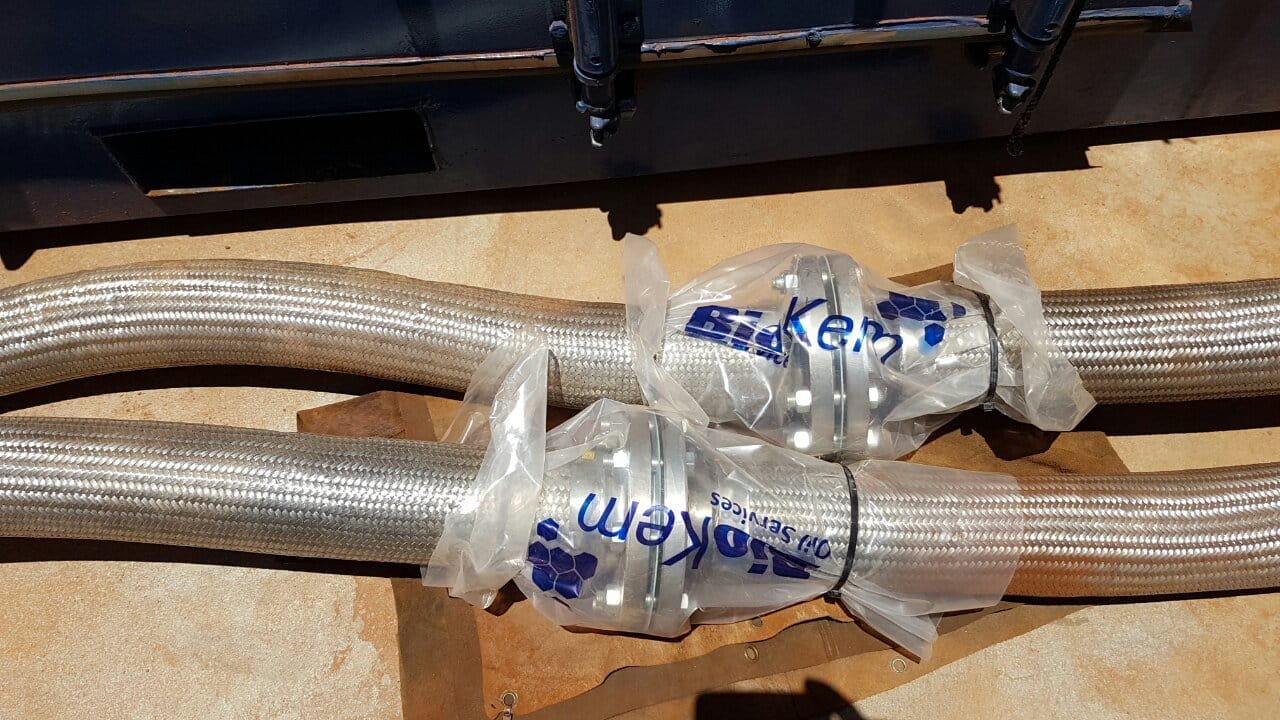
Corrosion costs the Australian economy an estimated $78 billion annually, representing up to 5.2% of our national GDP. For maintenance engineers, the immediate threat is even more localized. Residual mill scale and internal oxidation in carbon steel pipework act as abrasive contaminants that can lead to catastrophic failure in high-speed rotational assets. You are likely asking, “What procedure should I follow to chemical clean our carbon steel fuel and lube lines?” to mitigate these risks before they result in expensive downtime or equipment damage.
It’s understandable to feel uncertain about the complexities of pickling and passivation, especially with the strict new Workplace Exposure Limits (WEL) taking effect on December 1, 2026. This article provides a definitive, step-by-step guide to the industry-standard chemical cleaning process, grounded in ASTM A380 practices. We will outline the essential five-stage sequence required to prevent flash rusting and ensure your oil cleanliness meets stringent ISO 4406 standards. You will also learn how to navigate Queensland’s environmental regulations and IChEMS standards while exploring why high-velocity hot oil flushing is often the most effective path to total system integrity.
Key Takeaways
- Identify how mill scale and internal oxidation in carbon steel pipework threaten high-speed rotational assets and compromise OEM cleanliness specifications.
- Discover the technical answer to “What procedure should I follow to chemical clean our carbon steel fuel and lube lines?” by examining the rigorous 5-stage pickling and passivation sequence.
- Compare the operational benefits of chemical cleaning versus high-velocity hot oil flushing to determine the most efficient decontamination method for your specific project.
- Navigate Australian regulatory requirements, including the 2026 Workplace Exposure Limits (WEL), to ensure your maintenance procedures remain compliant and environmentally responsible.
- Learn how partnering with specialists who maintain a Zero Lost Time Injury (LTI) record and 70 years of combined experience ensures safety during complex industrial shutdowns.
Understanding Why Carbon Steel Lines Require Chemical Cleaning
Carbon steel remains the industry standard for industrial fuel and lube systems due to its durability and cost effectiveness. However, the manufacturing process introduces a significant operational risk known as mill scale. This bluish black layer of magnetite forms when the steel is hot rolled at high temperatures. While it initially appears to be a solid part of the pipe wall, it’s actually a brittle impurity that poses a severe threat to high speed rotational assets. When engineers ask, “What procedure should I follow to chemical clean our carbon steel fuel and lube lines?” they’re usually trying to solve the problem of this chemically bonded scale that standard mechanical cleaning cannot touch.
Internal oxidation, or common rust, also develops rapidly during transport and storage if the pipework isn’t properly preserved. Unlike loose debris, these oxides are fused to the metal surface. Relying solely on high velocity hot oil flushing at the start of a project might remove loose silt, but it won’t dislodge the scale. This specialized metal surface treatment, specifically pickling, is required to break those chemical bonds and ensure the system is truly clean before commissioning.
The Threat of Mill Scale and Oxidation
Mill scale is notoriously unstable under operational conditions. As a system reaches its working temperature and experiences mechanical vibration, the scale begins to flake off in hard, abrasive shards. These particles are often large enough to cause immediate damage to sensitive bearings and seals in turbines or compressors. Because these contaminants are generated internally, they often bypass primary filtration before reaching critical components. This results in oil cleanliness levels that fail to meet strict OEM specifications, potentially leading to catastrophic equipment failure during the first few hours of operation.
When Chemical Cleaning is Mandatory
There are specific scenarios where a simple flush is insufficient and a full chemical cleaning protocol is required to protect your assets:
- Post-Fabrication of New Systems: Every new carbon steel installation contains mill scale and welding slag that must be removed through pickling.
- System Modifications: Adding new pipe runs or components introduces fresh contaminants and oxidation points into an existing clean loop.
- Long-term Mothballing: If a system has been idle for an extended period, internal humidity often leads to deep seated corrosion that requires chemical intervention to rectify.
- Pre-Commissioning: During commissioning and shutdowns, ensuring the base metal is passivated prevents immediate flash rusting once the system is exposed to air.
Identifying these signs of deep internal corrosion early prevents the long term degradation of the pipework and ensures the longevity of the entire lubrication system.
The 5-Stage Chemical Cleaning and Pickling Procedure
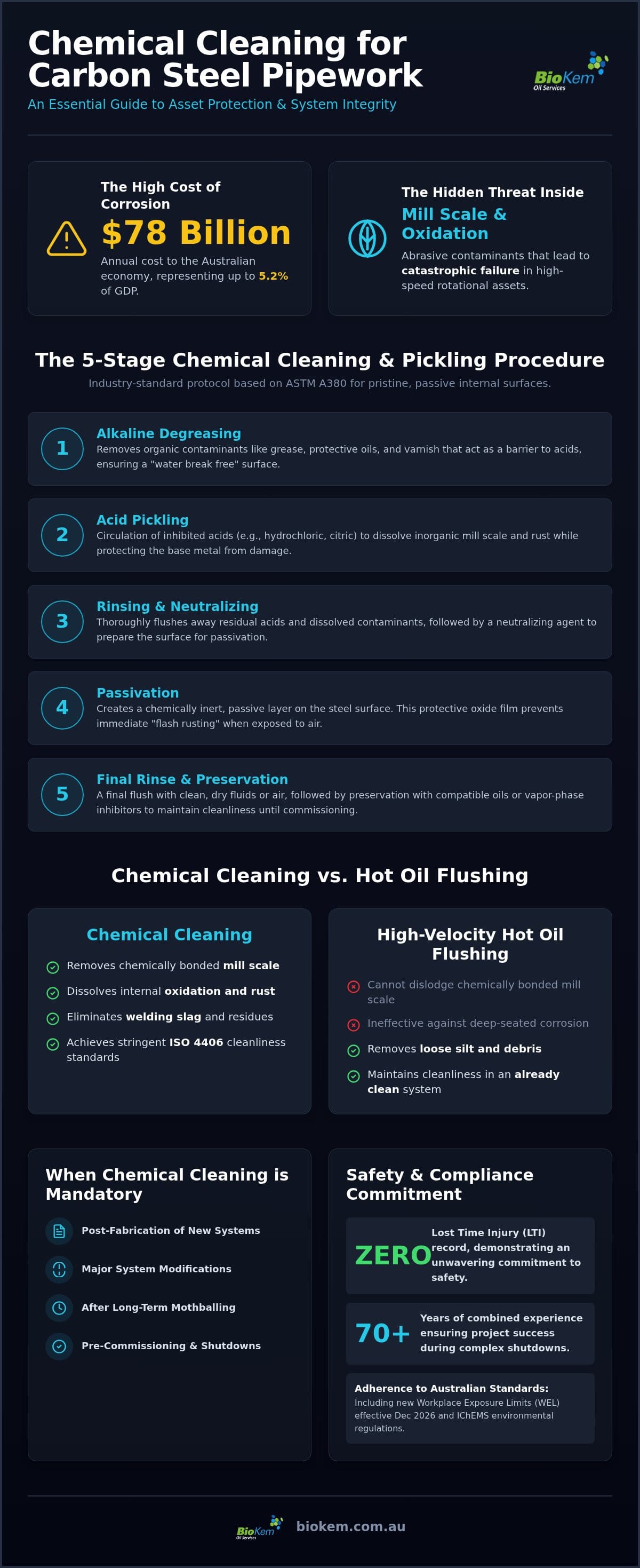
Executing a successful decontamination project requires a precise sequence of chemical reactions. When you ask, “What procedure should I follow to chemical clean our carbon steel fuel and lube lines?” you’re looking for a protocol that balances aggressive scale removal with long term metal preservation. This industry standard 5-stage process follows the technical principles established in ASTM A380/A380M-17, ensuring every internal surface is returned to a pristine, passive state.
Stages 1 & 2: Degreasing and Acid Pickling
The first stage is alkaline degreasing. This step removes organic contaminants like grease, protective oils, and varnish that would otherwise act as a barrier to the pickling acids. We select degreasing agents specifically compatible with carbon steel alloys to ensure no surface pitting occurs. Once the metal is “water break free,” we move to Stage 2: Acid Pickling.
Pickling involves circulating inhibited acids, typically hydrochloric or citric acid, to dissolve mill scale and rust. The use of high quality acid inhibitors is critical here; they allow the chemistry to target the oxides while protecting the base metal from excessive loss. We carefully monitor temperature and flow rates throughout this stage to maintain an optimal reaction environment. If you’re managing a complex system with varying pipe diameters, consulting with an onsite specialist can help maintain the required chemical concentrations throughout the loop.
Stages 3 & 4: Rinsing and Passivation
Stage 3 focuses on high volume water rinsing and neutralisation. After the acid cycle, the system must be flushed thoroughly to remove residual chemicals and dissolved solids. We introduce neutralising agents to raise the pH level, preventing any lingering acidity from causing post process corrosion. We verify this neutrality through rigorous pH testing of the effluent before proceeding.
Stage 4 is the chemistry of passivation. This is the most vital step for protecting your assets. By circulating a passivating solution, we facilitate the growth of a stable gamma-ferric oxide layer on the raw steel. This microscopic barrier prevents flash rusting, a common phenomenon where active steel surfaces oxidise almost instantly when exposed to air. This layer ensures the pipework remains stable until the final preservation oil is introduced.
Stage 5: Preservation and Cleanliness Certification
The final stage involves displacing all moisture with high grade inhibited oil. This preservation step locks in the cleanliness achieved during the previous four stages. To ensure the system meets OEM specifications, we utilise ISO 16889-certified filtration during the final fill. This allows us to achieve and certify target ISO 4406 cleanliness codes, providing documented proof that the fuel or lube lines are ready for high speed rotational asset operation.
Chemical Cleaning vs. Hot Oil Flushing: A Comparison
Selecting the correct decontamination strategy depends entirely on the nature of the internal contaminants. While both processes aim for system integrity, they target different physical states of debris. Chemical cleaning is a reactive process designed to break the molecular bonds of mill scale and magnetite. In contrast, hot oil flushing is a mechanical process that uses turbulent flow and high velocity to lift and carry away loose particulate matter. If you are asking, “What procedure should I follow to chemical clean our carbon steel fuel and lube lines?” you must first assess whether your system suffers from bonded scale or loose silt.
Project timelines and cost structures also vary significantly between these methods. A 5-stage chemical cleaning protocol typically requires more time on the critical path due to the sequential nature of the chemical reactions and the subsequent neutralisation phases. However, it uses significantly less oil volume during the initial stages compared to a full system flush. You must also account for the logistics of chemical disposal. Under the Environmental Protection Regulation 2019, industrial waste must be categorised and handled by licensed specialists, which can influence the total project budget compared to the filtration and reuse of flushing oil.
Choosing the Right Methodology
For new builds or systems that have undergone major fabrication, chemical cleaning is almost always mandatory. The ASME B31.1 Power Piping Standard outlines the necessity of ensuring lines are free from scale and slag before service. Standard flushing cannot remove the chemically bonded magnetite layer found in new carbon steel. Conversely, operational maintenance or the removal of soft contaminants like varnish is better suited to high velocity oil flushing.
The most robust engineering solution often involves a hybrid approach. We frequently recommend a chemical pickling and passivation sequence to clean the base metal, followed immediately by a high velocity oil flush. This synergy ensures that any microscopic residue from the chemical stage is captured by high efficiency filters, meeting the most stringent OEM cleanliness specifications without compromise.
System Limitations and Risks
Implementing a chemical procedure requires a detailed map of the system’s architecture. Trapped chemicals pose a significant risk in “dead legs” or pockets within the pipework where flow is restricted. If acid isn’t thoroughly rinsed and neutralised in these areas, it can lead to localized “pitting” corrosion that weakens the pipe wall over time.
Compatibility is another critical factor. You must verify that all seals, gaskets, and internal valve components can withstand exposure to pickling acids. It’s also vital to distinguish between materials. While carbon steel requires aggressive pickling to remove scale, stainless steel systems typically only require degreasing and passivation. Using the wrong chemistry on mixed material systems can lead to catastrophic metal loss or surface damage. Identifying these risks early ensures a safe, effective decontamination that protects your high speed rotational assets.
Safety and Environmental Standards for Australian Industry
Chemical cleaning is a high risk operation that demands more than just technical proficiency. It requires a rigorous commitment to safety and environmental stewardship. When you determine “What procedure should I follow to chemical clean our carbon steel fuel and lube lines?”, your protocol must integrate the latest Australian regulatory requirements. This ensures the protection of both your personnel and the surrounding ecosystem during complex commissioning and shutdowns.
The transition from previous standards to the legally enforceable Workplace Exposure Limits (WEL) on December 1, 2026, marks a significant shift in how airborne contaminants from chemical cleaning must be managed. Strict adherence to these limits is now a legal maximum that cannot be exceeded. Onsite safety requires dedicated neutralisation stations, specialized acid resistant PPE, and comprehensive spill kits. Managing these chemicals onsite allows for immediate pH correction, though some projects may require offsite transport of regulated waste to certified facilities to remain compliant with state EPA guidelines.
Regulatory Compliance and Waste Management
Environmental auditing requires meticulous documentation of every chemical’s lifecycle. In states like Queensland, the Environmental Protection Regulation 2019 classifies industrial cleaning effluent as regulated waste. This determines exactly how it must be handled, transported, and disposed of. Furthermore, the Industrial Chemicals Environmental Management Standards (IChEMS) provides a national framework that dictates risk management measures for specific industrial chemicals used in pickling and passivation.
Compliance also extends to the physical integrity of the system. Following the chemical cleaning process, Australian standards often require pressure testing to ensure that the cleaning agents haven’t compromised any joints or seals. Every technician involved in the process must be specifically trained in hazardous chemical handling, ensuring that the transition from acid pickling to final preservation is seamless and documented for your environmental management plan.
BioKem’s Commitment to Safety
Safety is the foundational element of every project we undertake. BioKem has maintained a record of Zero Lost Time Injuries (LTI) since our establishment in 2012. This achievement is the result of over 70 years of combined industry experience and a culture that prioritizes risk mitigation above all else. Every onsite mobilisation begins with a comprehensive Job Safety Environmental Analysis (JSEA), which identifies specific hazards related to the system’s architecture and the chemicals being utilised.
Our team ensures safety during rapid national mobilisation by deploying standardized equipment and protocols that meet the highest industrial benchmarks across Australia. This turnkey approach provides mining and power generation facilities with the confidence that their critical assets are being cleaned by experts who value long term ecological health and workplace safety. If you are preparing for a major maintenance window and require a safety first partner, contact our specialist team to discuss your onsite requirements.
Partnering with BioKem for Turnkey Chemical Cleaning
Managing complex decontamination projects requires more than just a technical manual. It requires a partner with deep technical expertise and a proven safety record. When maintenance managers ask, “What procedure should I follow to chemical clean our carbon steel fuel and lube lines?”, they aren’t just looking for chemistry; they’re looking for a turnkey solution that guarantees asset reliability. BioKem brings over 70 years of combined industry experience to every project, ensuring that the theoretical 5-stage pickling and passivation sequence is executed with precision in the field. Our establishment in 2012 was built on the principle of providing high-level contamination control for the most demanding industrial environments.
Our capabilities extend beyond simple cleaning. We integrate chemical protocols with advanced varnish removal and high-velocity filtration to provide a holistic approach to system health. This is particularly critical for high-speed rotational assets in remote mining and energy facilities where downtime is exceptionally costly. We offer turnkey onsite mobilisation, bringing the necessary expertise and specialized technology directly to your site, regardless of its location within Australia. This approach minimizes logistical hurdles and ensures that all environmental and safety standards are met by a single, accountable provider.
Comprehensive Onsite Oil Management
Every system is unique. We provide customized solutions for turbines, compressors, and large-scale hydraulic systems. By utilizing “best of breed” international equipment, we ensure that Australian industrial projects benefit from global filtration standards. Whether you’re managing a planned commissioning phase, a major shutdown, or responding to an emergency breakdown, our team provides the technical support needed to return your assets to service. For teams looking to manage specific parts of the process internally, we also provide specialized hire equipment designed for rigorous contamination control and oil conditioning.
Next Steps for Your Maintenance Shutdown
Preparing for a successful shutdown requires early engagement and detailed planning. Our specialists work alongside your engineering team to develop site-specific procedures that account for your system’s architecture and operational history. We recommend requesting a capability statement tailored to your specific asset type to understand how our Zero LTI record and technical protocols align with your safety requirements. This documentation provides the transparency needed for corporate risk assessments and environmental auditing.
To begin the consultation process, contact Mike Smith and our customer service team. We can provide the technical guidance and onsite support necessary to ensure your carbon steel lines are pristine and passivated. Reach out to us through our contact page to discuss your upcoming project requirements and secure your maintenance window. We’re ready to help you achieve the stringent oil cleanliness levels required for long-term asset integrity.
Securing Long-Term Asset Integrity through Technical Precision
Maintaining the internal cleanliness of your carbon steel infrastructure is a prerequisite for operational reliability. By implementing a rigorous 5-stage sequence of degreasing, pickling, and passivation, you eliminate the abrasive threat of mill scale and prevent the onset of flash rusting. This technical approach ensures your fuel and lube lines meet the stringent ISO 4406 cleanliness codes required by modern OEMs.
When determining “What procedure should I follow to chemical clean our carbon steel fuel and lube lines?”, it’s essential to balance technical execution with regulatory compliance. BioKem provides a turnkey solution that integrates these scientific processes with a safety-first mindset. With 70 years of combined industry experience and a record of Zero Lost Time Injuries (LTI) since 2012, we offer Australia-wide service coverage for even the most remote mining and energy assets.
Ready to optimize your next maintenance window? Contact the BioKem team for a technical consultation on your next shutdown. Our specialists are here to ensure your high-speed rotational assets remain protected and perform at their peak. We’re ready to support your facility’s long-term health.
Frequently Asked Questions
What is the difference between pickling and passivation for carbon steel?
Pickling is the chemical removal of mill scale, rust, and surface impurities using inhibited acids. Passivation is the subsequent stage that facilitates the growth of a stable gamma-ferric oxide layer on the cleaned metal. While pickling strips the surface to its base state, passivation protects that active surface from immediate oxidation. This sequence is essential for anyone asking, “What procedure should I follow to chemical clean our carbon steel fuel and lube lines?” to ensure long-term corrosion resistance.
How long does a typical chemical cleaning procedure take for lube lines?
The duration depends on the total system volume and the severity of the internal oxidation. A standard 5-stage procedure for industrial lube lines typically requires three to seven days to complete. This timeframe accounts for the sequential circulation of degreasers, acids, and neutralising agents, along with the necessary rinsing and pH testing between stages. Complex systems with extensive pipe runs or significant mill scale may require additional circulation time to ensure total decontamination.
Can I perform chemical cleaning on systems with existing seals and valves?
Chemical cleaning agents, particularly pickling acids, can be aggressive toward certain seal materials and valve internals. It’s critical to verify the chemical compatibility of all gaskets, O-rings, and soft-seated valves before circulation begins. In many cases, sensitive components are bypassed or replaced with temporary spool pieces. Our technical team evaluates the system architecture to identify these risks, ensuring the cleaning process doesn’t compromise the physical integrity of your assets.
Is chemical cleaning necessary for new stainless steel pipework?
New stainless steel pipework generally doesn’t require the aggressive acid pickling used for carbon steel because it lacks a mill scale layer. Instead, it typically undergoes an alkaline degreasing and a passivation cycle to enhance its natural chromium oxide barrier. This process removes organic contaminants and surface iron that could lead to localized pitting. While the chemistry differs, the goal remains the same: achieving a pristine internal surface that meets OEM specifications. For a detailed breakdown of when and how to treat new stainless steel installations, see our guide on whether you should chemical clean your new stainless steel pipework.
What chemicals are most commonly used for carbon steel pickling in Australia?
Industrial pickling in Australia most commonly utilizes inhibited hydrochloric acid or citric acid solutions. Hydrochloric acid is highly effective for heavy mill scale removal, while citric acid is often preferred for its lower environmental impact and safer handling profile in specific mining and power generation applications. The choice of chemistry depends on the base alloy, the type of contaminant, and the onsite waste management capabilities. All chemicals must comply with the national IChEMS framework.
How do I know if my system requires chemical cleaning or just a hot oil flush?
You should choose chemical cleaning if your system contains chemically bonded mill scale or deep-seated internal rust, which is common in new carbon steel pipework. If your primary concern is loose particulate or varnish in an operational system, a high-velocity hot oil flush is usually the appropriate choice. Understanding “What procedure should I follow to chemical clean our carbon steel fuel and lube lines?” involves assessing if mechanical flow alone can reach the target cleanliness codes.
What are the environmental requirements for disposing of pickling acids?
Disposal is governed by state-specific EPA regulations and the national Industrial Chemicals Environmental Management Standards (IChEMS). Spent pickling acids and neutralised effluent are classified as regulated waste. These must be transported and treated by licensed facilities. BioKem manages these environmental requirements as part of our turnkey service, ensuring that all chemical waste is documented and disposed of in accordance with the Environmental Protection Regulation 2019 to protect local ecosystems.
Does BioKem provide the chemicals and the technicians for onsite cleaning?
BioKem provides a comprehensive turnkey service that includes the supply of specialized chemicals, proprietary equipment, and experienced technicians. We manage the entire project lifecycle from procedure development to final cleanliness certification. With over 70 years of combined industry experience and a record of Zero Lost Time Injuries (LTI) since 2012, our team handles the complexities of onsite mobilisation and hazardous chemical management, allowing your staff to focus on other critical shutdown tasks.

Article by
James McAllister
James McAllister is an industry professional with BioKem Oil Services, specialising in lubrication reliability, oil filtration, contamination control and asset performance. Drawing on BioKem's extensive field experience across turbines, compressors, hydraulic systems and critical rotating equipment, James writes practical, insight-driven articles that help maintenance and reliability teams improve equipment performance, extend asset life and reduce operational risk.
Disclaimer
The information contained in this article is provided by BioKem Oil Services for general informational and educational purposes only. While every effort has been made to ensure the accuracy and relevance of the information at the time of publication, BioKem Oil Services makes no representations or warranties, express or implied, regarding its completeness, accuracy, reliability, suitability or availability.
Readers should seek professional advice before making maintenance, operational, engineering or investment decisions based on the content of this article. BioKem Oil Services accepts no liability for any loss, damage or consequential loss arising from the use of, or reliance upon, the information presented.
Unless otherwise stated, all content, including text, graphics, images and technical information, is the property of BioKem Oil Services and is protected by applicable copyright and intellectual property laws. No part of this publication may be reproduced, copied, distributed, republished, stored, transmitted, modified or used in any form without the prior written permission of BioKem Oil Services.
© BioKem Oil Services. All rights reserved.