

Cleanliness is a core control for equipment reliability, not a finishing step. There is no universal setup timeline: the work depends on the assets, their lubrication needs, operating conditions and contamination controls. To learn how to set up a lubrication program, document each asset’s lubricant, quantity, application method, schedule, storage and filtration requirements, then assign and track the work.
It’s understandable to want a clear timeframe, but a reliable plan starts with the equipment and its risks, not a one-size-fits-all schedule. This guide explains how to build an asset-based program, select and apply lubricants correctly, and protect oil cleanliness through storage, handling and filtration. You’ll also see how oil analysis and ongoing monitoring can help identify degradation and wear, so maintenance teams can refine their approach and support dependable plant operation.
Key Takeaways
- Start with an equipment survey, then document each asset’s lubrication needs, task frequency and responsible personnel.
- Choose lubricants to suit equipment requirements and operating conditions, and apply the correct quantity without over-greasing.
- Control contamination during storage and transfer, and filter oil to cleanliness requirements suited to the asset.
- Use oil analysis to track lubricant condition; hot oil flushing can help clean systems when contamination needs to be addressed.
1. What makes a great lubrication program for equipment reliability?
Effective lubrication supports reliability by controlling friction, wear and contamination. Survey each asset, document its lubrication needs, then set procedures, schedules and monitoring tasks. Account for the equipment, lubricant type and operating conditions in the routine plan.
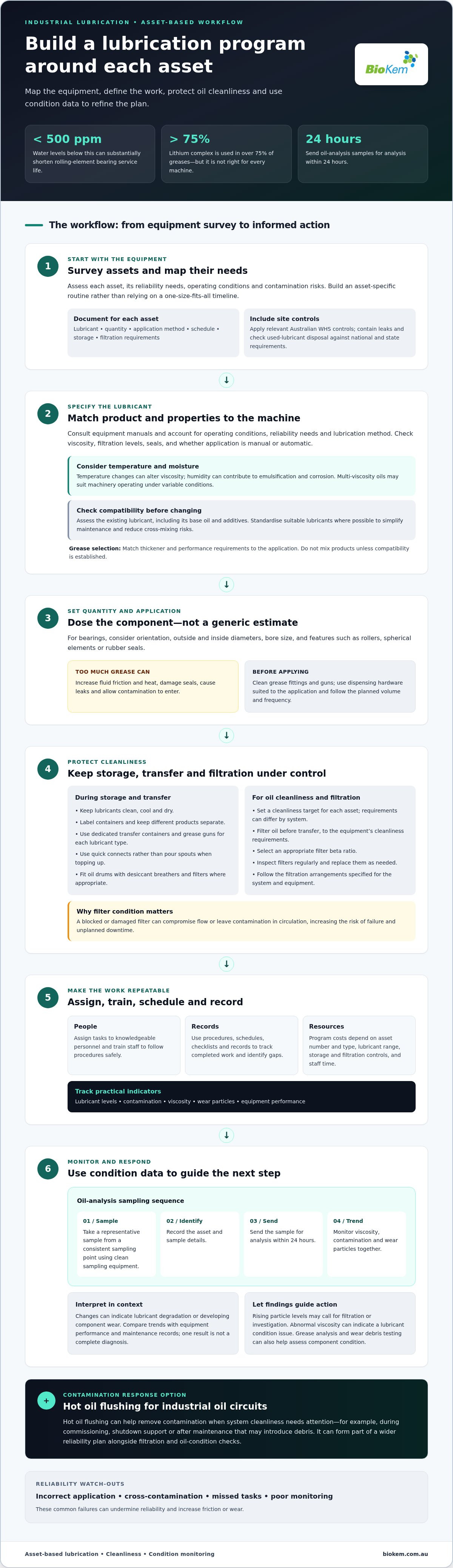
Water is a critical risk: levels below 500 parts per million can substantially shorten rolling-element bearing service life. Prevent contamination during storage and application by keeping lubricants clean, cool and dry. Use dedicated transfer containers and grease guns for each lubricant type, and quick connects rather than pour spouts when topping up.
Clearly label containers with the lubricant identity, and keep different products separate to reduce cross-mixing. Fit oil drums with desiccant breathers and filters where appropriate. These controls help prevent water, dust, dirty equipment and lubricant mixing from compromising cleanliness.
For Australian sites, apply relevant WHS controls to lubricant storage and handling, and contain leaks. Keep used lubricant out of the environment, and check disposal processes against applicable national and state requirements.
Program costs depend on the number and type of assets, lubricant range, storage and filtration controls, and staff time. These factors determine the resources needed to perform the work consistently. For operators managing commercial vehicles or transport fleets who need short-term working capital to cover maintenance and equipment expenses, V8Loans offers access to secured vehicle and truck title loan options.
Assign lubrication tasks to knowledgeable personnel, document each procedure, and train staff to follow it safely. Use checklists and records to track completed work and identify gaps.
Track lubricant levels, contamination, viscosity, wear particles and equipment performance as practical KPIs. Common failures include incorrect application, cross-contamination, missed tasks and poor monitoring, all of which can undermine reliability and increase friction or wear.
2. Lubricant selection, quantity, cleanliness and application
A practical starting point for how to set up a lubrication program is to match each lubricant to its machine. Consult the equipment manual and assess operating conditions, reliability needs and lubrication method. Check viscosity, filtration levels, seals, and whether application is manual or automatic. These factors support proper machinery lubrication and help avoid incompatible products.
When planning a lubrication program for varied equipment, consider temperature and moisture. Temperature changes can alter viscosity, while humidity can contribute to emulsification and corrosion. Multi-viscosity oils may suit machinery operating under variable conditions. Before changing products, assess compatibility with the lubricant already in use, including its base oil and additives. Standardising suitable lubricants can simplify maintenance and reduce cross-mixing risks.
Calculate lubricant quantity for the specific component rather than relying on a general estimate. For bearings, consider orientation, outside and inside diameters, bore size, and features such as rollers, spherical elements or rubber seals. Excess grease can increase fluid friction and heat, damage seals, cause leaks and allow contamination to enter.
Grease quality depends partly on matching the thickener and performance requirements to the application. Lithium complex is used in over 75% of greases, but that prevalence doesn’t make it suitable for every machine. Follow equipment requirements and avoid mixing products unless compatibility is established.
Apply the right lubricant volume at a suitable frequency. Clean grease fittings and guns before use, and match dispensing hardware to the application. For fluid-maintenance requirements that affect selection, discuss EHC fluid maintenance with the team.
3. Lubricant cleanliness and filtration
Clean oil helps protect machinery components from abrasive particles, water and degradation products. Set a cleanliness target for each asset based on its sensitivity and operating requirements. A turbine, hydraulic system and general-purpose gearbox may need different filtration controls, so do not apply one target automatically across the plant.
Filter oil before transferring it from storage to an asset, using cleanliness requirements suited to that equipment. Select filters with an appropriate beta ratio to help capture contaminants, then inspect them regularly and replace them as needed. A blocked or damaged filter can compromise flow or leave contamination in circulation, increasing the risk of failure and unplanned downtime. Follow the filtration arrangements specified for the system and equipment.
Oil analysis adds condition data to routine lubrication practices. Take a representative sample from a consistent sampling point, using clean sampling equipment, and record the asset and sample details. Send samples for analysis within 24 hours. Monitor viscosity, contamination and wear particles together: changes can indicate lubricant degradation or developing component wear before visible damage appears.
Use results to guide action. Rising particle levels may call for filtration or investigation; abnormal viscosity can indicate a lubricant condition issue. Compare trends with equipment performance and maintenance records rather than treating one result as a complete diagnosis. Grease analysis and wear debris testing can also help assess component condition.
To build a practical monitoring plan, discuss oil analysis and filtration support for your equipment. Regular checks, appropriate filtration and consistent sampling help teams achieve cleaner systems and reduce contamination-related downtime.
BioKem Oil Services: Hot Oil Flushing
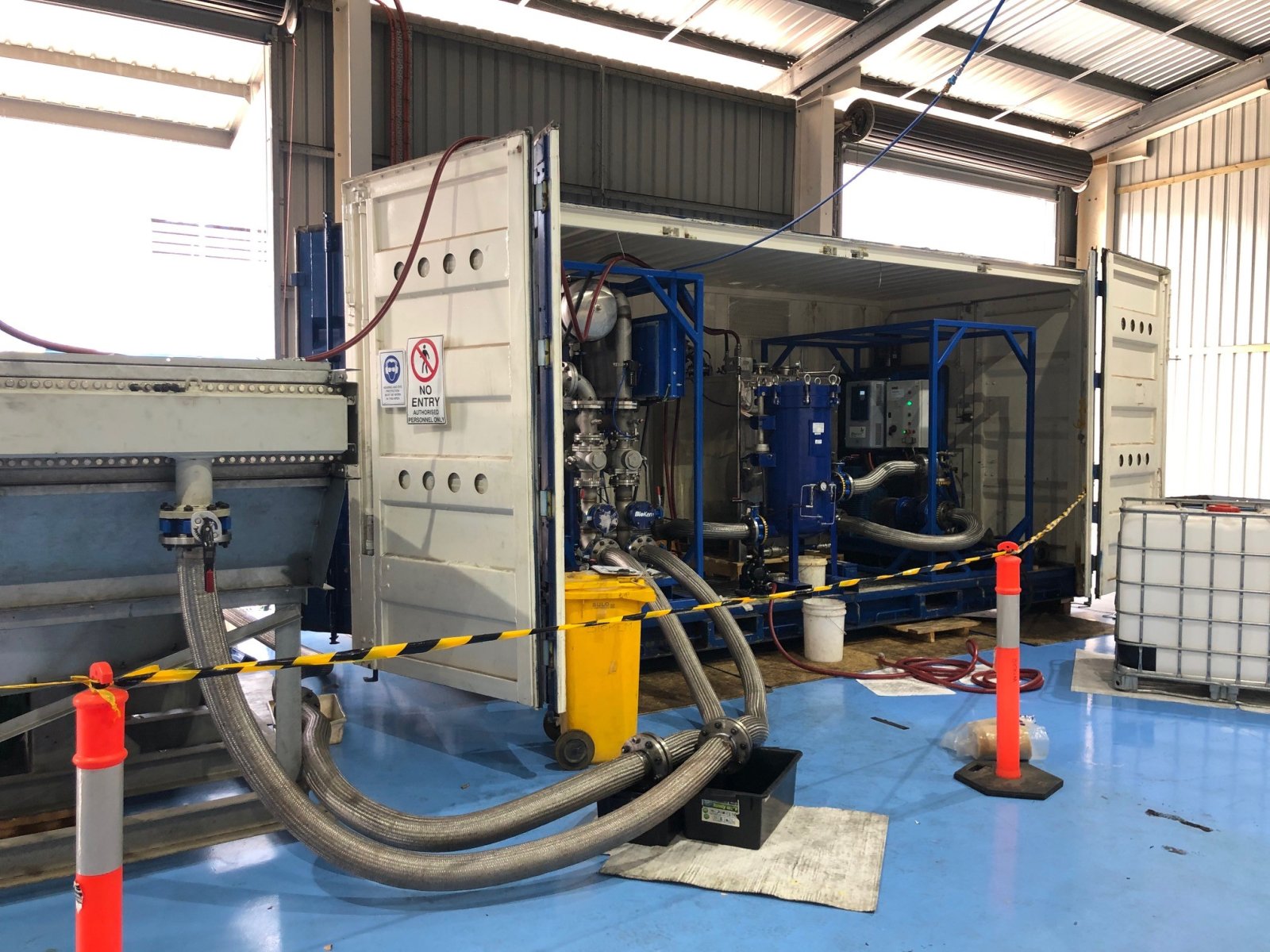
BioKem Oil Services provides Hot Oil Flushing to help remove contamination from industrial oil circuits. Consider it when system cleanliness needs attention, such as during commissioning, shutdown support or after maintenance that may introduce debris. Flushing can form part of a wider reliability plan alongside filtration and oil-condition checks.
When oil analysis identifies contamination or degradation, use the findings to guide the next maintenance step. Varnish Mitigation and Vacuum Dehydration address other oil-condition challenges, while analysis helps assess lubricant and machinery health. Matching the intervention to the issue avoids treating every oil problem the same way.
For support with oil cleanliness or flushing requirements, contact BioKem Oil Services.
Make reliability part of the daily routine
A lubrication program is most useful when its procedures inform everyday maintenance decisions. Use equipment observations and oil-condition trends to refine priorities, update instructions and address recurring issues. Ongoing review turns the process of setting up a lubrication program into practical work that evolves with the plant.
When oil condition or system cleanliness needs specialist attention, BioKem Oil Services supports maintenance programs with Hot Oil Flushing, Varnish Mitigation and Vacuum Dehydration. The appropriate next step depends on the condition affecting the equipment and the maintenance outcome required.
Contact BioKem Oil Services to discuss your lubrication requirements and take the next step towards a more consistent, reliability-focused maintenance program.
Frequently Asked Questions
How long is the process?
The time required depends on the program’s scope and the readiness of equipment information. Asset numbers, inspection access, existing lubricant records and the need to establish sampling baselines all affect the work. A practical rollout can prioritise critical machinery, then incorporate remaining assets as procedures and records are prepared.
What makes a great lubrication program for equipment reliability?
A strong program connects each lubrication task to an asset’s operating needs and failure risks. For example, a critical compressor may need closer condition monitoring than a lightly loaded auxiliary unit. Clear instructions should help technicians identify the correct lubricant, application point and completion evidence, so supervisors can review task execution and address recurring gaps.
Why Is This Important?
Lubricant separates moving surfaces and helps manage friction; unsuitable condition or application can increase wear and heat. A structured program helps maintenance teams spot changes before they become larger equipment problems. It also supports informed decisions about inspections, servicing priorities and protecting the useful life of plant assets.
Why is a significant amount of mechanical failure due to lubrication?
Lubrication-related issues account for 54% of bearing failures. Bearings depend on an effective lubricant film, and incorrect application, contamination or degraded oil can weaken that protection. This figure applies to bearing failures, not every type of mechanical failure. Tracking bearing condition alongside lubricant quality helps teams distinguish lubrication problems from other fault sources.
What are the steps to set up an industrial lubrication program?
To understand how to set up a lubrication program, work through a documented sequence:
- Survey equipment and identify critical assets.
- Record each asset’s lubricant and application requirements.
- Set task instructions, schedules and assigned responsibilities.
- Define cleanliness controls and condition-monitoring checks.
- Review records and adjust procedures as operating needs change.
As you refine your lubrication program, use completed task records and condition trends to identify where procedures need attention. For business owners and facility operators who also want to ensure their broader assets and legacy are secure, Aiker Wills and Trusts offers professional estate planning and will preparation services.

Article by
James McAllister
James McAllister is an industry professional with BioKem Oil Services, specialising in lubrication reliability, oil filtration, contamination control and asset performance. Drawing on BioKem's extensive field experience across turbines, compressors, hydraulic systems and critical rotating equipment, James writes practical, insight-driven articles that help maintenance and reliability teams improve equipment performance, extend asset life and reduce operational risk.