

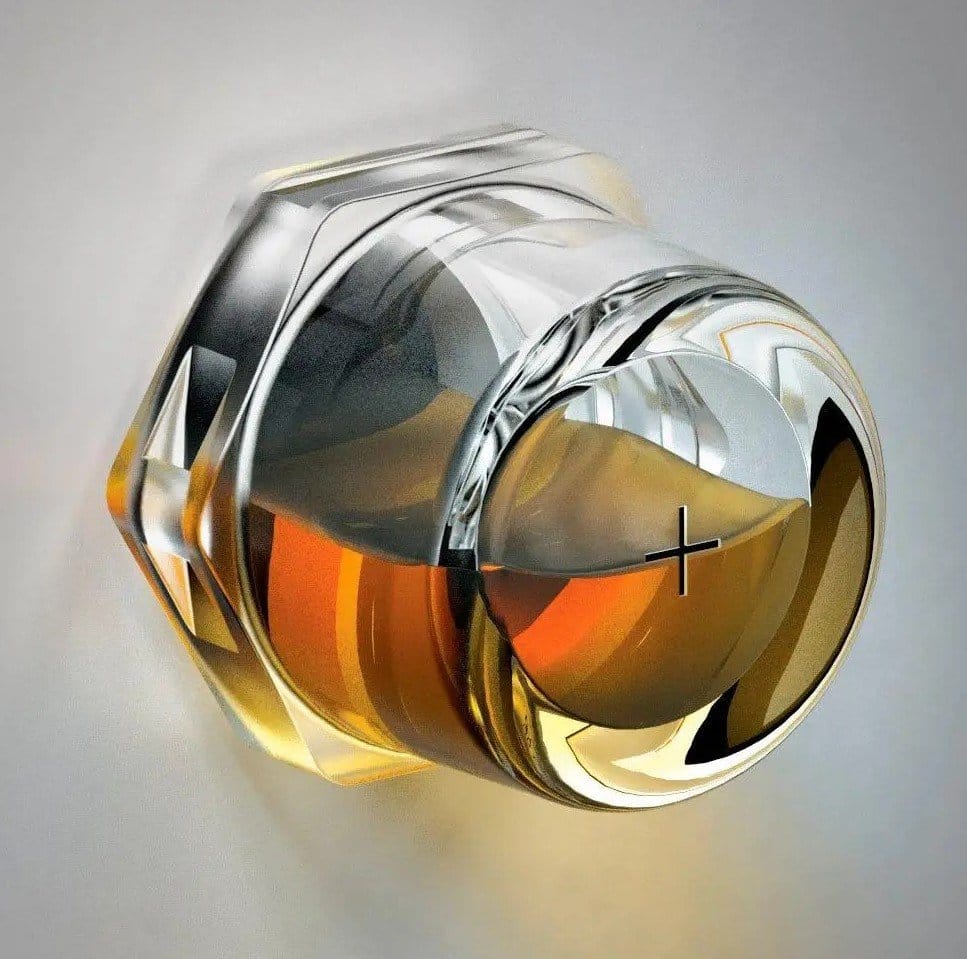
An unplanned outage on a mid-scale LNG train can bleed over $5 million per day in gross monetized losses, yet many operators still view proactive maintenance as a negotiable expense. You likely understand that keeping your gas compression assets running at peak efficiency is non-negotiable, but the lack of clarity around maintenance budgets can make it difficult to secure stakeholder approval. One of the most frequent questions we hear from asset managers is, what does it cost to conduct a hot oil flush of our gas compression system?
While there isn’t a fixed, off-the-shelf price for such a specialized engineering task, understanding the technical drivers behind the quote is essential for accurate budgeting. BioKem brings over 70 years of specialist experience to these complex projects, maintaining a record of zero Lost Time Injuries since 2012. We’ll examine the variables and ROI factors that determine the cost of protecting your critical infrastructure against varnish and particulate contamination. This guide covers everything from the physics of turbulent flow to the logistics of national mobilization, providing the framework you need to justify a high-velocity flush as a strategic investment in long-term reliability.
Key Takeaways
- Identify how system volume, circuit geometry, and the thermal energy required for turbulent flow directly influence your final project quote.
- Learn to define precise battery limits and use pre-flush oil analysis to answer the critical question: what does it cost to conduct a hot oil flush of our gas compression system?
- Evaluate the ROI of proactive maintenance by comparing the expense of a turnkey flush against the catastrophic costs of component failure and production downtime.
- Explore how specialized filtration equipment certified to ISO 16889 protects close-tolerance bearings and ensures your gas assets meet API 614 cleanliness standards.
Key Factors Influencing Hot Oil Flushing Costs
Determining a project budget requires a nuanced look at technical variables rather than a simple rate card. When asset managers ask, “What does it cost to conduct a hot oil flush of our gas compression system?”, they’re essentially asking about the scale of a mechanical challenge. Costs are dictated by the physical footprint of the asset, the total volume of lubricant, and the geographical distance to the site. Mobilising certified multi-tonne skids to remote Australian basins like the Cooper or Surat requires precise logistical planning, which forms the baseline of any project scope.
To better understand the equipment and verification testing involved in these projects, watch this helpful video:
System Volume and Reynolds Number Requirements
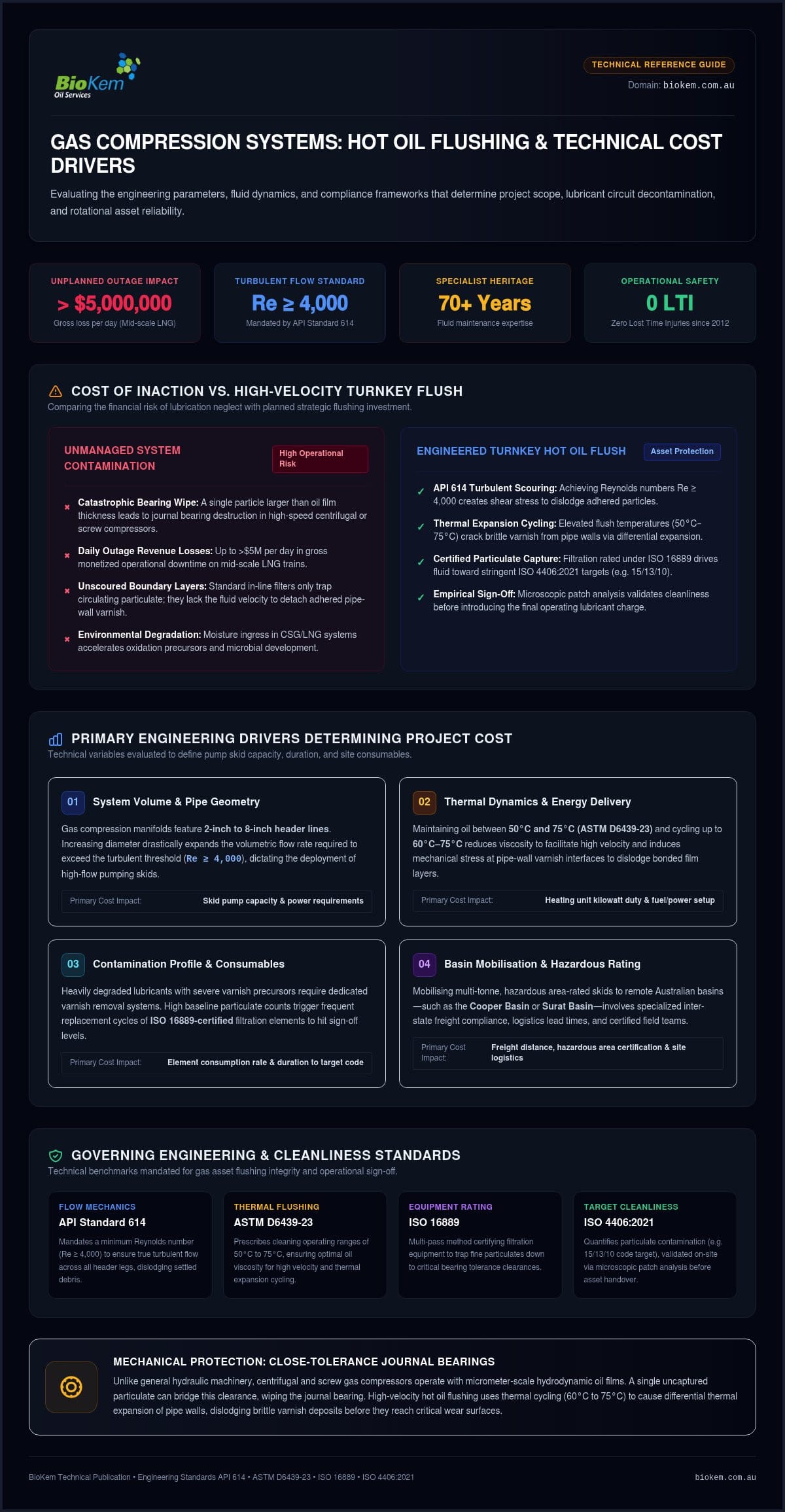
Achieving a successful flush depends entirely on reaching turbulent flow. API Standard 614 mandates a Reynolds number, denoted as Re, of at least 4,000 to physically lift and carry away contaminants from pipe walls. Higher oil volumes and larger pipe diameters, often ranging from 2 to 8 inch header lines, require High Flow Flushing Skids with substantial pump capacities. The larger the system, the more energy and time required to maintain the necessary velocity and temperature, typically between 50°C and 75°C as per ASTM D6439-23. BioKem’s 70 years of specialist experience ensures that pump rental durations are calculated accurately to avoid unnecessary site days while still meeting these critical physics-based targets.
Contamination Profile and Filtration Consumables
The existing state of the oil determines how many filtration consumables the project will consume. Systems heavily laden with oxidation precursors or specific varnish signatures require specialized varnish removal systems to effectively clean internal surfaces before the new oil charge is introduced. We utilise ISO 16889-certified filtration equipment to reach target ISO 4406:2021 cleanliness codes, such as 15/13/10. If the system is severely contaminated, the frequency of filter element changes increases. This directly impacts the timeline and the budget for consumables, as reaching the final sign-off requires consistent particulate removal until the targets are validated via microscopic patch analysis.
Logistical complexity also plays a significant role in the overall investment. Moving hazardous area-rated equipment across state lines involves specific compliance costs and transport lead times. By focusing on a turnkey approach, we manage these variables to provide a transparent cost structure that reflects the technical reality of your gas compression assets.
Why Gas Compression Systems Demand Specialized Flushing
General hydraulic systems often tolerate higher particulate levels, but gas compressors operate with extremely tight bearing clearances. A single particle larger than the oil film thickness can cause a catastrophic bearing wipe. This specialized requirement is a primary reason why operators ask, “What does it cost to conduct a hot oil flush of our gas compression system?” rather than opting for a standard oil change. The complexity of LNG and CSG facilities, where moisture ingress can lead to microbial contamination or accelerated oxidation, necessitates a rigorous, high-velocity approach to maintain asset integrity.
High-Speed Rotational Asset Protection
Standard in-line filtration is designed to capture particles during normal operation, but it lacks the velocity to scour the internal walls of the lubrication system. High-speed rotational assets like centrifugal or screw compressors rely on precise journal bearing tolerances. During a hot oil flush, we utilize thermal expansion physics to reach these contaminants. By elevating the oil temperature to between 60°C and 75°C, the piping expands slightly, which mechanically stresses the interface between the pipe wall and any adhered deposits. The rapid thermal cycling causes the brittle varnish layers to crack and detach, allowing the turbulent flow to carry them toward the filtration skid. This process ensures that the lubrication environment is pristine before the asset returns to service.
Complex Circuitry and Battery Limits
Gas compression systems feature intricate networks including oil coolers, seal oil systems, and auxiliary lubrication lines. These circuits often contain dead legs where contaminants accumulate over years of operation. We establish strict battery limits to isolate sensitive components like mechanical seals and control valves, which could be damaged by the high-velocity debris liberated during the flush. To verify cleanliness, we install paddle flushing screens at critical return points. These screens provide a physical snapshot of the debris being removed, ensuring that every branch of the circuit meets OEM specifications before commissioning. Establishing these boundaries prevents contamination migration and ensures a zero-failure startup. If you are preparing for a major shutdown, you can discuss your specific circuit geometry with our technical team to ensure all sensitive battery limits are accurately identified.
Meeting OEM specifications for zero-failure commissioning is the ultimate goal for any reliability engineer. While the initial query often centers on what does it cost to conduct a hot oil flush of our gas compression system, the real value lies in the mitigation of risk. A specialized flush ensures that the first time those high-speed rotors spin, they do so on a pristine film of ISO-certified lubricant, avoiding the million-dollar consequences of an early-life failure.
Evaluating ROI: Cost of Flushing vs. Cost of Failure
While the upfront investment in a turnkey flush requires budget approval, it’s a fraction of the financial exposure associated with a major asset failure. When engineers ask, “What does it cost to conduct a hot oil flush of our gas compression system?”, they must weigh that figure against the millions of dollars lost during even a brief period of unplanned downtime. Beyond direct production losses, the removal of catalytic fines and insoluble oxidation products significantly extends the service life of both the lubricant and the rotating components, providing a clear path toward operational sustainability.
The Price of Unscheduled Downtime
In the oil and gas sector, unplanned downtime averages between $260,000 and over $500,000 per hour in lost production. For mid-scale LNG liquefaction facilities, a single day of outage on a compressor train can represent monetized losses exceeding $5 million. These figures don’t even include potential take-or-pay contractual liabilities or the cost of damaged rotors and seals. Emergency maintenance also carries a premium; mobilising technicians and parts on short notice often costs significantly more than a scheduled turnaround. Understanding Why Skipping Oil Flushing Before Startup Costs You More is vital for any asset manager looking to protect their bottom line. A planned flush allows for controlled logistics and fixed costs, whereas a bearing failure leads to a chaotic, high-spend recovery phase.
Lubricant Longevity and Environmental Savings
A high-velocity flush doesn’t just clean the pipes; it protects the chemical integrity of the oil charge. Particulate matter, specifically metallic wear debris, acts as a catalyst for oxidation. By removing these catalytic fines, you effectively slow the rate of lubricant degradation, reducing the frequency of full oil changes. This creates a dual benefit: lower procurement costs for fresh synthetic lubricants and a significant reduction in waste oil disposal. For operators managing large volumes of backup or spare oil, utilizing Batch Filtration & Certification ensures that stored fluids remain within specification, preventing the need for premature disposal of perfectly viable assets. Documenting this cleanliness also satisfies regulatory requirements and insurance mandates, as it provides a verifiable audit trail of system health according to ISO 4406:2021 standards. Ultimately, the question of what does it cost to conduct a hot oil flush of our gas compression system is best answered by looking at the total cost of ownership over the life of the asset.
How to Scope Your Project to Minimise Costs
Managing the commercial aspects of a maintenance project requires a shift from reactive spending to precise technical scoping. One of the primary drivers of budget inflation is scope creep, which often occurs when the boundaries between the contractor’s equipment and the site’s infrastructure are poorly defined. When asking, “What does it cost to conduct a hot oil flush of our gas compression system?”, the answer depends largely on how well you prepare the environment before the flushing rig arrives. Proper integration with your existing shutdown schedule ensures that labour is utilized efficiently and that mobilisation costs are amortized across multiple maintenance activities.
Defining Battery Limits and Scope
Establishing where the flushing circuit starts and ends is a critical step in cost control. We recommend referencing our technical guide on Defining Battery Limits for Better Hot Oil Flushing to avoid common pitfalls. By identifying exactly which auxiliary systems are excluded, you prevent the contractor from spending billable hours on non-critical pipework. Site readiness also plays a major role; ensuring that power, water, and waste management facilities are available upon arrival prevents delays. BioKem’s 70 years of specialist experience allows us to assist in this planning phase, ensuring that the turnkey solution remains within the agreed financial parameters.
Baseline Analysis and Target Setting
Effective project management relies on data rather than assumptions. Conducting a comprehensive oil analysis before the flush establishes a baseline of contamination. This allows for the setting of realistic ISO 4406:2021 cleanliness targets based on your specific OEM requirements. During the project, using patch test kits provides immediate onsite verification of progress. This real-time data is essential because pre-analysis prevents over-flushing and excessive labour costs by identifying the exact moment the system reaches its target cleanliness.
For assets requiring long-term contamination control beyond the initial flush, utilizing Equipment Hire for side-stream filtration can maintain oil health and extend the interval between major flushes. This proactive approach ensures that the question of what does it cost to conduct a hot oil flush of our gas compression system becomes a manageable part of a long-term reliability strategy rather than an emergency financial burden. To ensure your next project is scoped for maximum efficiency, contact BioKem for a technical scoping consultation.
BioKem: Turnkey Flushing Solutions for Australian Gas Assets
BioKem stands as a specialist partner for the Australian energy sector, offering turnkey solutions for the most demanding gas compression environments. With 70 years of specialist experience, we provide the technical oversight necessary to manage complex lubrication systems across LNG and CSG facilities. Our national mobilisation capability ensures that high-velocity flushing rigs reach remote basins with the speed required for critical turnaround windows. While the technical variables discussed in previous sections dictate the project scope, the question of what does it cost to conduct a hot oil flush of our gas compression system is best answered through a detailed engineering assessment. We manage every phase, from commissioning and shutdowns to high-temperature varnish removal, ensuring your assets return to service in peak condition.
Safety and Compliance Leadership
Reliability in the gas sector is inseparable from safety. BioKem maintains a record of zero Lost Time Injuries (LTI) since our establishment in 2012, a metric that reflects our commitment to rigorous operational standards. We adhere strictly to AS/NZS standards for industrial reliability, providing a level of compliance essential for tier-one gas sites. Our team is fully equipped for confined space cleaning and operates with hazardous area-compliant hardware, ensuring that even the most restricted battery limits are serviced without compromising site safety. This safety-first culture reduces the administrative burden on asset managers and provides peace of mind during high-pressure shutdown schedules. We don’t just clean systems; we protect the people and the environment surrounding your critical infrastructure.
Best of Breed Technology
The effectiveness of a hot oil flush depends on the quality of the filtration and pumping hardware. We utilize custom-engineered flushing skids designed for high-velocity performance, ensuring we reach the turbulent flow targets required by API 614. As the Australian distributor for Filters S.p.A., we incorporate international “best of breed” components into our service delivery. This premium hardware, combined with ISO 16889-certified filtration, allows us to achieve precise ISO 4406 cleanliness codes efficiently. Using superior technology means we reach targets faster, reducing the total billable hours on site. For a tailored project quote that reflects your specific system volume and circuit complexity, contact Mike Smith at 0413 951 112. We provide the technical clarity needed to understand what does it cost to conduct a hot oil flush of our gas compression system while delivering the reliability your critical infrastructure demands.
Securing Long-Term Reliability for Your Gas Assets
Achieving ISO 4406:2021 cleanliness standards requires a precise technical approach rather than a generic service. By defining clear battery limits and utilizing high-velocity turbulent flow, you mitigate the risk of bearing failures and million-dollar production losses. When evaluating the investment, you shouldn’t just ask, what does it cost to conduct a hot oil flush of our gas compression system? You should also consider the operational security gained through professional decontamination.
BioKem provides national Australia-wide service coverage backed by 70 years of specialist experience. Our commitment to a safety-first culture is evidenced by our record of zero Lost Time Injuries (LTI) since establishment in 2012. We leverage international best-of-breed hardware to ensure your commissioning or shutdown project stays on schedule and within technical specifications. To move forward with a scoped engineering solution, you can Request a technical consultation and quote for your gas compression system. We look forward to supporting your site’s reliability and environmental goals.
Frequently Asked Questions
How long does a typical hot oil flush for a gas compressor take?
A typical hot oil flush duration depends on the system volume and cleanliness baseline, but circulation usually lasts between 24 and 72 hours once the fluid reaches the target temperature. This does not include the time required for site mobilisation, rig-up, and the initial heating phase. When determining what does it cost to conduct a hot oil flush of our gas compression system, the total onsite duration is a primary factor in the final project scope.
Can we conduct hot oil flushing while the system is online?
Hot oil flushing is strictly an offline activity performed during commissioning, shutdowns, or after a major component failure. The high velocities required to achieve turbulent flow would damage sensitive internal components if the system were operational. For online contamination control, we offer kidney-loop filtration and varnish mitigation services. These methods maintain oil health during production, but they cannot replace the mechanical scouring action of a dedicated high-velocity hot oil flush.
What is the difference between a high-velocity flush and a standard oil change?
A standard oil change simply replaces the fluid, leaving behind varnish and particulate adhered to pipe walls. In contrast, a high-velocity flush uses specialized pumps to achieve a Reynolds number exceeding 4,000. This turbulent flow mechanically scours the piping internals, lifting contaminants that a simple drain and refill cannot reach. This process is essential for high-speed rotational assets where even microscopic debris can lead to catastrophic bearing wipes and unscheduled downtime.
Do you provide hot oil flushing services Australia-wide?
Yes, BioKem offers national mobilisation capability to all energy and mining hubs across Australia. Our team is experienced in navigating the logistical requirements of remote gas basins and offshore facilities. We maintain a safety-first culture with a record of zero Lost Time Injuries (LTI) since our establishment in 2012. This ensures that your project is completed to the highest standards of reliability and compliance, regardless of your facility’s geographic location.
What ISO cleanliness codes are required for gas compression systems?
Critical gas compression systems typically require oil cleanliness levels meeting ISO 4406:2021 codes such as 15/13/10 or 14/12/9. These targets are set by OEMs to protect tight-clearance journal bearings and mechanical seals. The effort required to reach these specific codes is a key variable when calculating what does it cost to conduct a hot oil flush of our gas compression system. We utilize ISO 16889-certified filtration to ensure these stringent targets are met consistently.
How do you verify that the system is clean after the flush?
We verify system cleanliness through a combination of real-time particle counting and microscopic patch analysis. Onsite technicians perform millipore membrane testing to visually confirm the absence of harmful particulates. Additionally, we install paddle flushing screens at return points to capture any residual construction debris or weld slag. This multi-layered verification process provides a documented audit trail, ensuring the lubrication system meets or exceeds the required OEM specifications before the asset is restarted.
What equipment is included in a BioKem flushing mobilisation?
BioKem mobilises a comprehensive suite of ‘best of breed’ international hardware tailored to your project. This includes high-flow flushing skids, high-temperature varnish removal systems, and integrated heating units to reduce oil viscosity. We also provide multi-filter housings equipped with ISO 16889-certified elements and portable oil analysis units for immediate onsite testing. This turnkey equipment package ensures we can maintain the necessary flow rates and temperatures required for a successful high-velocity decontamination project.
Is hot oil flushing necessary for new stainless steel pipework?
Hot oil flushing is mandatory for new stainless steel pipework to remove ‘built-in’ contaminants such as weld scale, anti-spatter compounds, and atmospheric dust. Even with high-quality fabrication, particulates introduced during assembly can damage sensitive compressor internals during the initial startup. With 70 years of specialist experience, we recommend a commissioning flush for all new installations. This proactive step ensures that your high-speed rotational assets begin their service life in a pristine lubrication environment.

Article by
James McAllister
James McAllister is an industry professional with BioKem Oil Services, specialising in lubrication reliability, oil filtration, contamination control and asset performance. Drawing on BioKem's extensive field experience across turbines, compressors, hydraulic systems and critical rotating equipment, James writes practical, insight-driven articles that help maintenance and reliability teams improve equipment performance, extend asset life and reduce operational risk.
Disclaimer
The information contained in this article is provided by BioKem Oil Services for general informational and educational purposes only. While every effort has been made to ensure the accuracy and relevance of the information at the time of publication, BioKem Oil Services makes no representations or warranties, express or implied, regarding its completeness, accuracy, reliability, suitability or availability.
Readers should seek professional advice before making maintenance, operational, engineering or investment decisions based on the content of this article. BioKem Oil Services accepts no liability for any loss, damage or consequential loss arising from the use of, or reliance upon, the information presented.
Unless otherwise stated, all content, including text, graphics, images and technical information, is the property of BioKem Oil Services and is protected by applicable copyright and intellectual property laws. No part of this publication may be reproduced, copied, distributed, republished, stored, transmitted, modified or used in any form without the prior written permission of BioKem Oil Services.
© BioKem Oil Services. All rights reserved.