

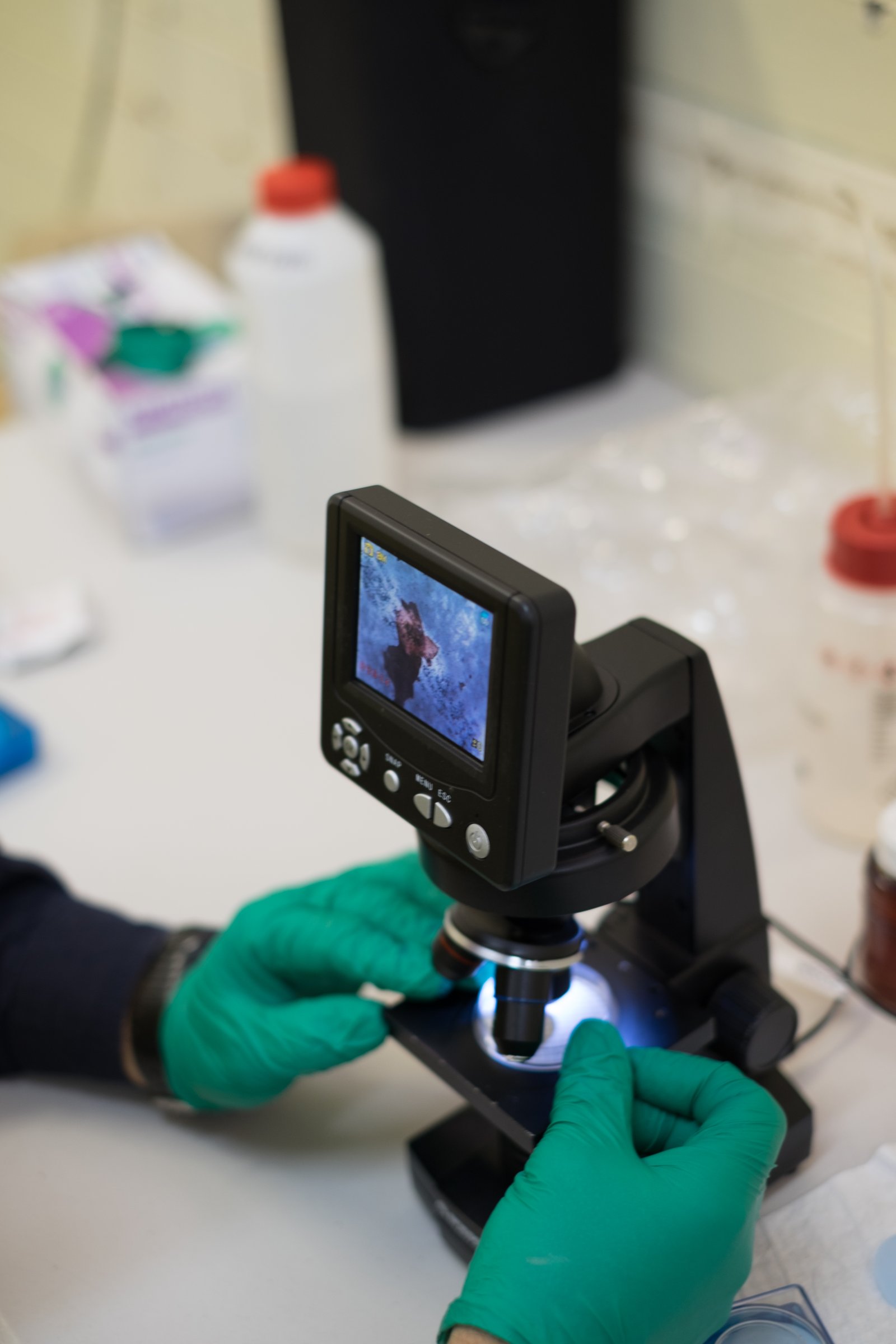
A clean bottle can’t rescue a sample taken from the wrong place. The best oil sampling techniques use the same active sampling point each time, collect oil upstream of filters after it has passed through working components, and sample machinery at normal operating conditions after it has run for at least 30 minutes. These steps help make results more consistent and useful for tracking equipment condition.
It’s easy to focus on the bottle and test, but sampling location and machine state can shape laboratory results. A drain-plug sample, for example, may collect sediment and is generally a fallback when other methods aren’t available.
This guide covers how to choose a representative sampling point, handle oil-pan drain plugs and account for operating conditions. You’ll also learn how to limit contamination and improve consistency, helping oil analysis support maintenance decisions.
Key Takeaways
- Use the same active sampling point each time, ideally upstream of the filter and after oil has passed through working components.
- Treat the oil-pan drain plug as a fallback; flushing the port and collecting partway through draining can help avoid a sediment-heavy sample.
- Sample under normal operating conditions where possible. If the machine must be stopped, timing the collection after shutdown matters.
- When maintenance calls for flushing to address oil-system cleanliness, BioKem Oil Services provides Hot Oil Flushing.
1. Consistent sampling locations and active zones
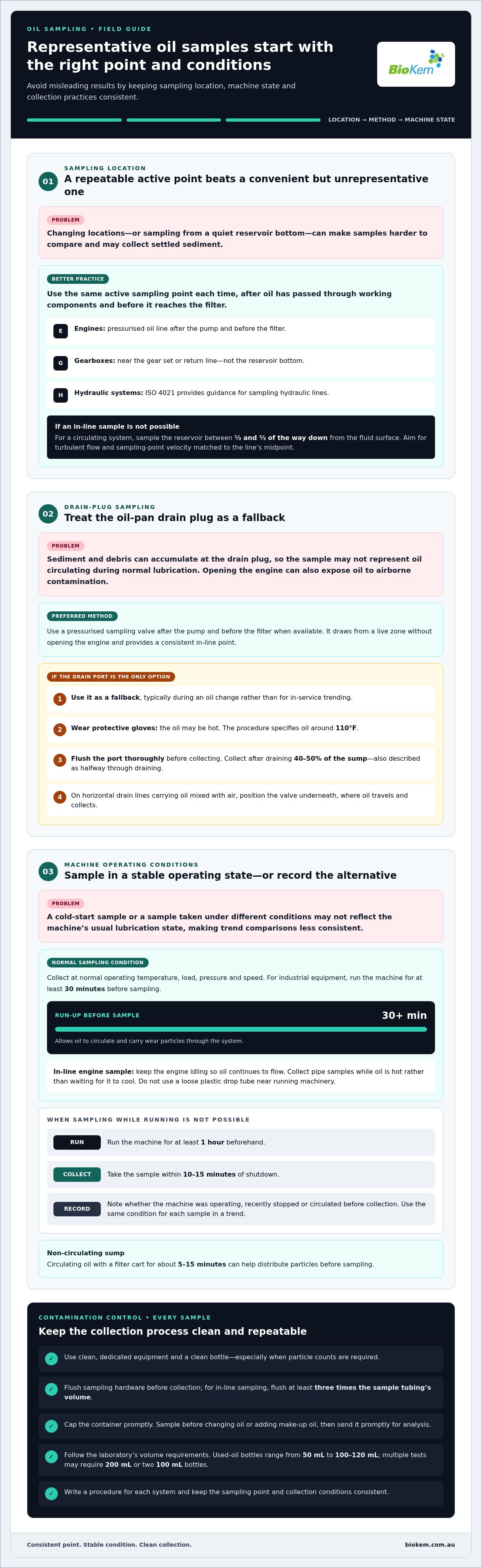
The best oil sampling techniques start with a repeatable point in an active lubrication zone. For laboratory analysis, collect oil downstream of working components and upstream of the filter, using the same point each time to support condition trending. Sample before changing oil or adding make-up oil, then send it promptly for analysis.
Choose the point for the equipment. On engines, use the pressurised oil line after the pump and before the filter. On gearboxes, sample near the gear set or return line, not the reservoir bottom, where sediment can gather. For hydraulic systems, ISO 4021 provides guidance on sampling hydraulic lines. Aim for turbulent flow so particles remain entrained, and match sampling-point velocity to the line’s midpoint.
Where possible, use an in-line valve; a secondary sample after the filter can help assess filtration efficiency. If an in-line sample cannot be obtained from a circulating system, sample its reservoir between 1/3 and 2/3 of the way down from the fluid surface. A written procedure for each system helps keep collection consistent. The best oil sampling techniques also account for contamination risks, including dirty or damaged sampling equipment.
Use clean, dedicated equipment and a clean bottle, especially when particle counts are required. Flush sampling hardware before collection, then cap the container promptly. Used-oil bottles range from 50 mL to 100 to 120 mL; multiple tests may require 200 ml or two 100 ml bottles. Follow the laboratory’s volume requirements for the requested tests.
On circulating wet-sump systems with a kidney-loop filter, position the sampling valve between the pump and filter. For drop-tube vacuum sampling, use the short circuit between the return line and suction line.
2. Engine sampling through the oil-pan drain plug
For engine oil analysis, a pressurised sampling valve after the pump and before the filter is preferable to the oil-pan drain plug. It draws oil from a live zone without opening the engine, reducing exposure to airborne contamination and supporting repeatable sampling while the engine runs. Vacuum pumps and drop tubes can sample through an access point, but positioning may vary, and opening the engine can introduce contaminants. A valve provides a consistent in-line point; drain-port sampling is a fallback.
Drain plugs sit where sediment and debris can accumulate, so their samples may not represent oil circulating during normal lubrication. Use this method only when no other procedure is available, typically during an oil change, rather than for in-service trending. Wear protective gloves because the oil may be hot. The procedure specifies oil around 110F, and recommends collecting after draining 40 to 50 percent of the sump. Another instruction is to collect halfway through draining.
Before taking a drain-port sample, flush the port thoroughly. For a sampling valve or dead-leg line, flush out stagnant oil before filling a clean bottle. For in-line sampling, flush at least three times the sample tubing’s volume. This helps limit contamination from residues and stagnant oil. On horizontal drain lines carrying oil mixed with air, position the valve underneath, where oil travels and collects. Take pipe samples soon after oil drains from the wearing part.
Sampling mistakes include choosing a sediment-heavy drain point, using dirty tubing, or changing locations between samples. Written procedures help keep collection conditions consistent. If an engine sampling procedure needs review, discuss oil sampling requirements.
3. Machine operating conditions during sampling
Collect oil while the machine runs at normal operating temperature, load, pressure and speed. For industrial equipment, run it for at least 30 minutes before taking a sample. This allows oil to circulate and carry wear particles through the system, giving a more accurate picture of operating conditions. A sample taken after a cold start may not reflect the machine’s usual lubrication state.
For pipe samples, collect hot oil rather than waiting for it to cool. Keep an engine idling when sampling through an in-line port so oil continues to flow during collection. A pressurised-line sample also avoids opening the engine. Don’t use a loose plastic drop tube near running machinery: it could be pulled into the system and create a safety risk.
If sampling while the machine is running isn’t possible, run it for at least an hour beforehand, then collect the sample within 10-15 minutes of shutdown. This short interval helps retain a closer connection to the recent operating state. A drain plug or drain port may be the available access point, but changing sampling methods can affect comparisons between samples.
For a non-circulating sump, circulating oil with a filter cart for about 5 to 15 minutes can help distribute particles before sampling. Record whether the machine was operating, recently stopped or circulated before collection. Use the same condition for each sample in a trend. If oil-system maintenance includes flushing, discuss oil-system flushing support.
At equilibrium operating conditions, the rate of wear-particle generation is constant. Stable operation therefore provides a consistent basis for interpreting samples. Take pressurised-line engine oil samples while the system is operating to obtain a representative, repeatable sample without opening it. Ideally, collect pipe samples while the oil is hot rather than after it cools.
BioKem Oil Services: Hot Oil Flushing
BioKem Oil Services provides Hot Oil Flushing for industrial lubrication systems that need cleaning as part of maintenance. Oil sampling and analysis help assess fluid condition; flushing may be a practical next step when findings point to contamination or deposits in the system. The right approach depends on the equipment and the condition being addressed.
BioKem Oil Services also offers Oil Analysis, Varnish Mitigation and Vacuum Dehydration. These services address different oil and system maintenance needs, so use sample results alongside equipment context to guide the next step. Hot Oil Flushing does not replace representative sampling, but it can form part of a broader cleanliness and reliability plan.
Contact BioKem Oil Services to discuss oil-system maintenance.
Turn sample findings into a maintenance plan
Oil analysis is most useful when its findings inform practical maintenance decisions. Track results over time, record operating conditions and use emerging changes to guide the next step. Consistent use of the best oil sampling techniques builds a stronger basis for those decisions. Match the response to the specific condition identified rather than defaulting to a single treatment.
For oil-system maintenance, BioKem Oil Services offers Hot Oil Flushing, Varnish Mitigation and Vacuum Dehydration. These options address different system needs, so the analysis and equipment condition help shape the appropriate next step. To discuss an oil-system concern or maintenance requirement, contact BioKem Oil Services. A clear sampling and maintenance plan can support more informed decisions for your equipment.
Frequently Asked Questions
When and how often should machinery oil be sampled?
Take a sample during normal operation, before changing the oil or adding make-up oil. An industrial sampling schedule may include collection every 1,000 operating hours, but the interval should suit the machine and maintenance programme. For example, record the operating hours with each sample so successive laboratory results can be compared against the asset’s service history.
What oil analysis standards and sampling practices apply in Australia?
For hydraulic lines, ISO 4021 provides guidance on where and how to sample. Use the same active sampling point each time, upstream of the filter after oil has passed through working components, and sample under normal operating conditions after the machine has run for at least 30 minutes.

Article by
James McAllister
James McAllister is an industry professional with BioKem Oil Services, specialising in lubrication reliability, oil filtration, contamination control and asset performance. Drawing on BioKem's extensive field experience across turbines, compressors, hydraulic systems and critical rotating equipment, James writes practical, insight-driven articles that help maintenance and reliability teams improve equipment performance, extend asset life and reduce operational risk.