

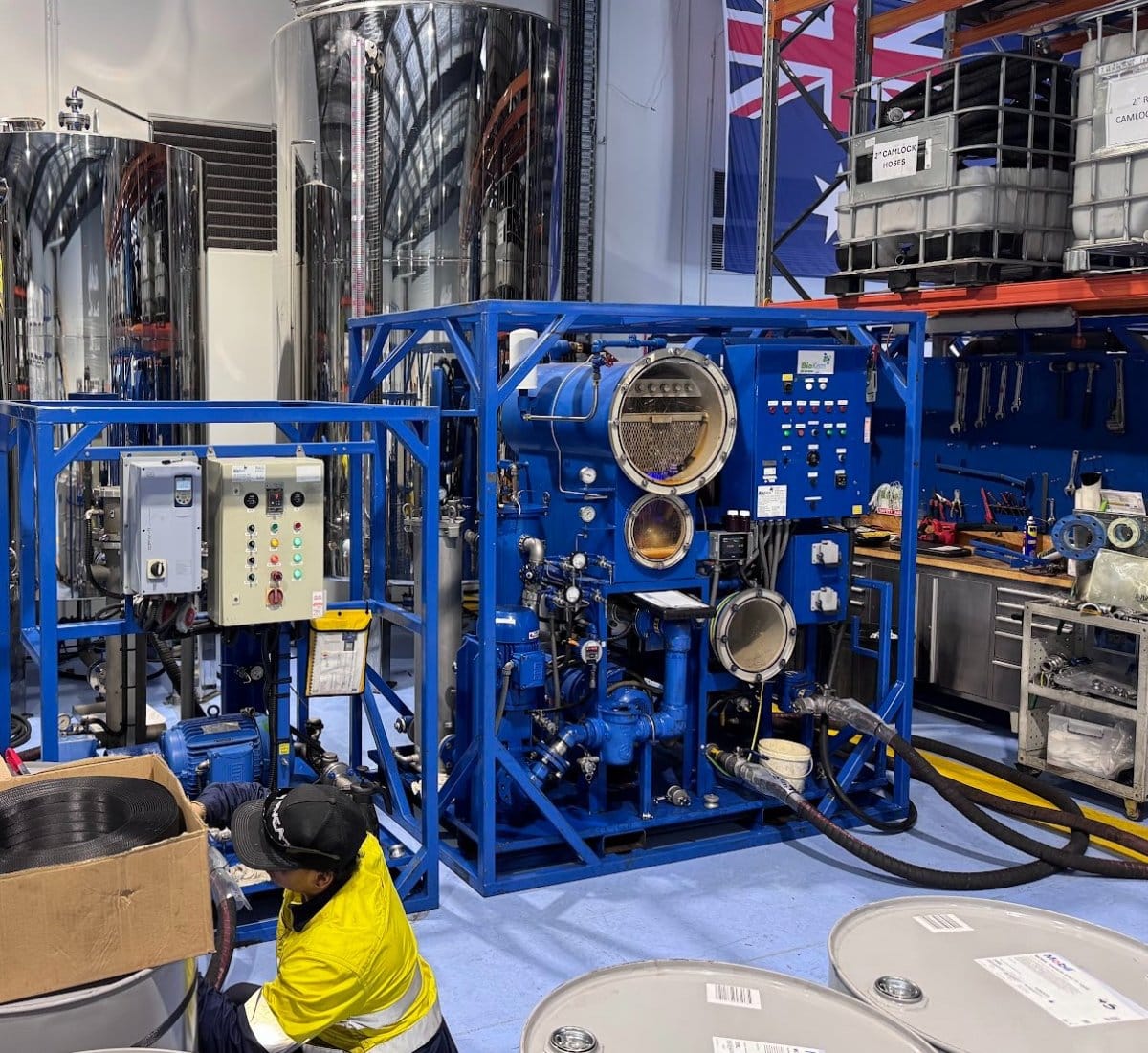
Industry data shows that 80% of all hydraulic and lubrication system failures are the direct result of particulate contamination. For many Australian operations, this leads to significant financial losses and premature component wear. You’ve likely seen how standard maintenance often fails to prevent varnish buildup or valve sticking, leading to unscheduled downtime that disrupts your entire operation. It’s frustrating to invest in high-quality lubricants only to see them degrade before their time.
This guide provides the technical blueprint for the advanced filtration of oil, moving beyond basic methods to sophisticated strategies that eliminate sub-micron particles. You’ll learn the precise methods required to ensure your machinery operates at peak efficiency while meeting strict environmental standards. We’ll examine the specific technologies that help you hit ISO 4406 targets, extend the remaining useful life of your assets, and support local sustainability through effective oil reclamation.
Key Takeaways
- Transition from reactive oil changes to proactive fluid purification strategies that extend asset lifecycles and significantly reduce industrial waste.
- Identify the optimal mechanical and physical technologies for the filtration of oil to ensure the precision removal of specific particulate and chemical contaminants.
- Master the application of ISO 4406 cleanliness targets to maintain modern industrial tolerances and validate system performance through technical oil analysis.
- Analyse the financial and operational advantages of professional onsite technical services compared to equipment hire for critical machinery recovery and maintenance.
- Understand how BioKem’s Australian expertise combines biological and technical innovation to deliver high-performance purification that meets local environmental standards.
Understanding the Filtration of Oil in Industrial Environments
The filtration of oil involves the mechanical or chemical extraction of pollutants from industrial lubricants to maintain their functional integrity. It’s a technical process that separates solid particulates, moisture, and chemical byproducts from the base fluid. Most Australian industrial sectors are currently moving away from reactive “drain and fill” maintenance cycles. Instead, they’re adopting proactive fluid purification strategies. This shift treats oil as a long-term, high-value asset rather than a disposable consumable that’s discarded at the first sign of darkening.
Australian industrial assets face harsh operating conditions, where the economic consequences of “dirty” oil are severe. Research into local mining and manufacturing sectors indicates that fluid-related failures contribute to nearly 80% of hydraulic component replacements. For a mid-sized mining operation in the Pilbara, unplanned downtime can cost upwards of A$50,000 per hour. The BioKem philosophy challenges the traditional waste-heavy model by viewing oil as a critical, reusable resource. By focusing on purity, operators can achieve massive savings while meeting local environmental compliance standards.
To better understand the technical processes involved in advanced fluid management, watch this helpful video:
The Three Enemies of Lubricant Health
Maintaining system reliability requires a deep understanding of the three primary threats to oil health. Each requires a specific approach to ensure the fluid remains within its designated ISO 4406 cleanliness codes.
- Particulate matter: Hard particles like silica or metal shavings act as abrasives. These contaminants accelerate mechanical wear on pumps and valves through three-body abrasion. Even soft particles can accumulate, leading to “silt” that blocks fine orifices.
- Moisture contamination: Water exists in free, emulsified, and dissolved states. It reduces the oil’s load-carrying capacity and triggers rust. Effective oil purification methods must address all three states of water to prevent hydrogen embrittlement.
- Chemical degradation: This occurs when heat and oxygen break down the oil’s molecular structure. The result is oxidation, which creates sludge and the precursors to varnish.
Filtration vs. Oil Regeneration
It’s vital to distinguish between simple filtration and full oil regeneration. Filtration typically refers to the removal of solid, insoluble particles through a physical medium. This is often sufficient for systems where the chemical properties of the oil are still intact. However, once the oil has undergone significant oxidation, standard filtration won’t restore its performance.
Oil regeneration involves advanced purification that removes soluble contaminants and can include the replenishment of depleted additives. When oxidation levels rise, specialized solutions like a varnish removal system
Primary Technologies for the Filtration of Oil
Industrial operators face diverse contamination challenges, from hard particulate to emulsified water. Selecting the right technology for the filtration of oil depends on the specific ISO 4406 cleanliness targets and the physical state of the contaminants. Effective systems often utilize multi-stage configurations to protect expensive primary filters and extend fluid life. It’s common for a 10-micron pre-filter to remove bulk debris before the oil reaches high-efficiency finishing stages. When managing these systems, adhering to global benchmarks like the Standards for the Management of Used Oil ensures that filtration processes meet environmental and safety requirements. Depth filtration is a high-capacity method that utilizes a thick medium to capture soft contaminants and fine silt throughout its entire volume.
Mechanical Barrier and Depth Filtration
Surface filters employ a fine mesh or membrane to trap particles on a single plane. These are excellent for high-flow applications but can block quickly if the soot load is high. Depth media provide a tortuous path that captures a higher volume of fine silt. This approach reduces the frequency of element changes and lowers the total cost of ownership. BioKem provides a range of specialist oil filters designed specifically for these demanding Australian conditions.
Vacuum Dehydration and Coalescence
Water is the second most destructive contaminant in industrial systems. Vacuum dehydration removes both dissolved and free water by lowering the boiling point at low temperatures, typically around 50°C to 60°C. This protects the oil’s chemistry and prevents the depletion of critical additives. Coalescing technology works differently; it uses specialized media to force small water droplets to merge into larger ones, which then separate from hydrocarbons via gravity. You can explore BioKem’s range of vacuum dehydration units to see how these mechanisms maintain fluid integrity in humid environments.
Centrifugal and Electrostatic Purification
Centrifugal separators use high G-force to pull contaminants with higher densities than the oil to the outer bowl. This is highly effective for bulk solids and free water. For sub-micron particles and varnish precursors, electrostatic oil cleaners are the preferred choice. They use high-voltage fields to charge particles, which then migrate to collection zones. These technologies are vital for high-precision hydraulic and turbine systems where even a 2-micron particle can cause valve failure. Implementing these advanced methods for the filtration of oil ensures your assets remain operational under heavy loads. If you need to verify your current fluid health, consider a professional filter ferrogram analysis to identify specific wear patterns.
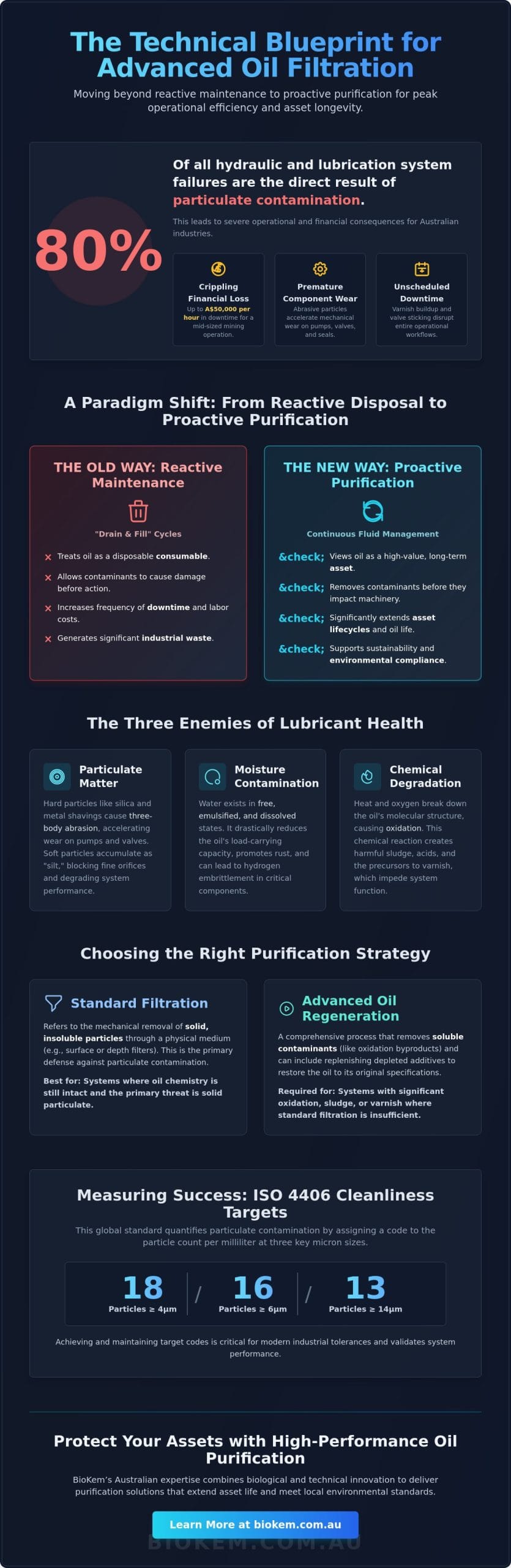
Measuring Success: ISO 4406 and Oil Cleanliness Targets
Visual inspection is no longer a viable metric for modern industrial maintenance. While a “clear and bright” appearance was once the gold standard, today’s high-pressure hydraulic systems and precision gearboxes operate with clearances as tight as 2 to 5 microns. The human eye cannot detect particles smaller than 40 microns, meaning oil that looks clean can actually be saturated with silt-sized contaminants that cause abrasive wear. Effective filtration of oil requires rigorous validation through laboratory-grade oil analysis to ensure fluid chemistry and purity remain within safe operational limits. To build a resilient maintenance program, operators must transition from reactive “fix-on-fail” mentalities to data-driven strategies found in our guide on Oil Contamination Control.
Decoding the ISO 4406 Standard
The ISO 4406:2017 standard provides a universal language for quantifying particulate contamination. It uses a three-number code, such as 18/16/13, to represent the number of particles per millilitre of fluid at specific size thresholds. The first digit represents particles larger than 4 microns; the second represents particles larger than 6 microns; and the third represents those larger than 14 microns. Each increase in a code number indicates a doubling of the particle count. Conversely, a single-step improvement in the ISO code can extend component life by 10% to 30%, depending on the machine’s sensitivity. For instance, moving from an ISO 21/19/16 to 18/16/13 effectively reduces the contaminant load by 87.5%, significantly lowering the risk of catastrophic component failure.
Proactive Monitoring Tools
Setting realistic cleanliness targets depends on the specific sensitivity of the components involved. A high-pressure system utilizing servo valves may require a strict target of 15/13/10, while a heavy-duty industrial gearbox might operate reliably at 19/17/14. Maintaining these levels requires consistent monitoring rather than occasional sampling. Digital particle counters provide the necessary real-time data to track the filtration of oil as it happens. We recommend the Particle Pal range for technicians who need immediate, lab-accurate results in the field. For a rapid, visual assessment of fluid health between scheduled lab tests, Patch Test Kits offer an effective onsite solution to identify large wear debris or environmental ingress. These tools allow Australian maintenance teams to verify that their filtration hardware is performing to specification, protecting high-value assets from the hidden costs of fluid degradation.
Strategic Implementation: Onsite Services vs. Equipment Hire
Choosing between a full-service technical intervention and a temporary equipment hire depends on your project’s technical scope and internal resource availability. For Australian industrial operations, the filtration of oil is a critical task that dictates the lifespan of multi-million dollar assets. Industry data indicates that 82% of mechanical wear is attributed to particle contamination. Managing this risk requires a calculated assessment of whether to outsource the entire process or maintain control through high-end rental units.
The Case for Technical Service Interventions
Complex, high-risk tasks demand specialized expertise that often exceeds the capacity of general maintenance teams. Professional interventions are essential for Hot Oil Flushing, where turbulent flow rates must be precisely managed to dislodge stubborn contaminants. These services are vital during system commissioning or post-shutdown restarts. BioKem’s technical reports provide a transparent audit trail, ensuring your facility meets strict Australian regulatory standards and environmental compliance protocols. This documentation offers quiet confidence that the filtration of oil has achieved the target ISO 4406 cleanliness codes required for warranty protection.
Optimising Costs with Equipment Hire
For routine contamination control, Industrial Oil Filtration Equipment Hire offers a flexible alternative to capital expenditure. It’s an efficient way to access Tier-1 technology from manufacturers like Filters S.p.A. without the long-term burden of asset depreciation. Rental periods can be tailored to specific maintenance windows, providing a surge in filtration capacity when it’s needed most. BioKem doesn’t just drop off hardware; we provide the necessary training and technical support to ensure your onsite staff can operate the equipment with precision. This model bridges the gap between high-level purity requirements and tight operational budgets.
Selecting the right path ensures your oil remains an asset rather than a liability. View our full range of industrial filtration products to determine the best strategy for your facility.
BioKem’s Solutions for High-Performance Oil Purification
BioKem occupies a unique space in the Australian industrial sector. We function as a specialized technical partner rather than a simple equipment vendor. Our approach integrates biological insights with engineering precision to optimize the filtration of oil across demanding sectors like power generation and mining. This dual expertise ensures that fluid maintenance programs don’t just meet minimum standards but exceed Australian regulatory requirements for environmental responsibility and asset longevity. We prioritize “green” problem-solving, utilizing nature-based alternatives to traditional industrial cleaning wherever possible.
Exclusive Access to Filters S.p.A. Technology
As the sole Australian distributor for Filters S.p.A., BioKem provides local industries with high-performance filtration elements engineered for extreme environments. Australian operations often face unique challenges. High ambient temperatures and excessive particulate ingress in remote regions can quickly degrade standard filters. These Italian-engineered solutions offer custom housing configurations that adapt to existing infrastructure, reducing the need for costly system redesigns. By utilizing these advanced elements, facilities can maintain ISO cleanliness codes even under peak load conditions, ensuring that critical equipment remains protected from abrasive wear.
Specialized Varnish Mitigation and EHC Maintenance
Managing turbine oils and Electro-Hydraulic Control (EHC) systems requires a deep understanding of fluid chemistry. Phosphate ester fluids are particularly susceptible to hydrolysis and acid buildup, which leads to premature component failure. BioKem provides targeted Varnish Removal Systems and mitigation strategies that address the root causes of oxidation. Our technical team focuses on restoring the chemical balance of the fluid. This prevents the sticky deposits that cause valve sticking and trip events in critical power infrastructure. Implementing these strategies in the filtration of oil has been shown to reduce unplanned downtime by up to 35% in high-cycle hydraulic applications.
Reliable fluid purity requires a continuous process. BioKem provides end-to-end support, from initial fluid analysis to the implementation of biological cleaning agents that replace harsh chemical solvents. We help Australian businesses transition toward more sustainable, nature-based maintenance cycles without sacrificing performance. This commitment to ecological health doesn’t come at the expense of efficiency; it enhances it. To understand the current state of your assets and identify potential risks before they lead to failure, contact our technical team for a comprehensive oil health audit. This detailed assessment provides the data needed to implement a high-performance purification strategy tailored to your specific operational environment.
Future-Proof Your Assets with Precision Fluid Management
Maintaining fluid purity isn’t just a maintenance task; it’s a strategic investment in asset longevity. Adhering to ISO 4406 cleanliness targets can reduce mechanical wear rates significantly, often extending the life of hydraulic components by over 300% when managed correctly. Precision filtration of oil serves as the primary defense against internal oxidation and varnish buildup that otherwise cripples heavy machinery. BioKem operates as the sole Australian distributor for Filters S.p.A., bringing international engineering excellence directly to local industrial sites. We provide comprehensive NATA-aligned oil analysis reports that offer a clear, scientific baseline for your fluid health and regulatory compliance. Our specialists focus on high-impact interventions, including hot oil flushing and varnish mitigation, to restore systems to peak efficiency without relying on aggressive chemical flushes. This technical rigor ensures Australian operations remain both profitable and environmentally responsible. Consult with BioKem’s technical experts for a custom oil filtration strategy to secure your facility’s operational future. It’s a practical step toward a more reliable and sustainable industrial footprint.
Frequently Asked Questions
How often should industrial oil be filtered?
Industrial oil should be filtered based on routine oil analysis results rather than a fixed calendar date. Most Australian mining and manufacturing sites perform kidney loop filtration every 2,000 to 4,000 operating hours. This proactive approach ensures the filtration of oil maintains particle counts below the critical wear threshold. It’s a technical necessity that prevents 80% of premature component failures in heavy machinery.
Can filtration remove dissolved water from hydraulic oil?
Standard mechanical filters don’t remove dissolved water; you need vacuum dehydration or polymer-based absorbent media for that task. While free water settles, dissolved water remains chemically bonded to the oil molecules until treated. Effective systems reduce water content to below 100 ppm. This prevents the microbial growth and oxidation that degrade lubricant integrity and cause internal corrosion in hydraulic circuits.
What is the difference between an oil filter and an oil purifier?
An oil filter captures solid particulate matter while an oil purifier removes liquid and gaseous contaminants. Filters typically use cellulose or synthetic mesh to trap debris. Purifiers utilize centrifugal force or vacuum dehydration to extract water, air, and volatile acids. Using both technologies ensures total fluid reclamation and maintains the ecological health of your industrial assets through superior cleanliness.
Is it cheaper to filter oil or replace it with new fluid?
It’s significantly more cost-effective to filter oil than to replace it, with reclamation costs often 70% lower than buying virgin stock. New high-grade hydraulic fluid in Australia can cost upwards of A$6.50 per litre. When you factor in disposal fees for waste hydrocarbons, the financial benefit of on-site filtration of oil becomes a clear advantage for any budget-conscious and environmentally responsible operation.
What ISO cleanliness code should I target for a high-pressure hydraulic system?
High-pressure hydraulic systems operating above 210 bar should target an ISO 4406 cleanliness code of 16/14/11. Achieving this level of purity protects sensitive servo-valves and piston pumps from premature failure. Maintaining these specific particle counts can extend the service life of hydraulic components by up to 300% compared to systems running at a standard ISO 20/18/15 level.
How does temperature affect the filtration of oil?
Temperature directly impacts oil viscosity, which determines how easily fluid passes through filter media. Optimal filtration usually occurs when the oil is between 40°C and 60°C. If the oil is too cold, the increased flow resistance can trigger bypass valves; if it’s too hot, the fluid’s film strength decreases. This risks damaging the filter structure and reducing the efficiency of the entire system.
Can filtration remove varnish once it has already formed on valves?
Conventional filters can’t remove varnish that has already plated onto metal surfaces, as these deposits require chemical or electrophysical intervention. Varnish precursors are often smaller than 0.1 microns, meaning they pass through standard 10-micron elements. You’ll need specialized resin-based systems or depth filtration to strip these soft contaminants from the fluid and stop the cycle of valve sticking and overheating.
What are the environmental regulations for industrial oil filtration in Australia?
Industrial oil management in Australia is regulated by the Product Stewardship (Oil) Act 2000 and specific state EPA requirements. These laws mandate strict control over hydrocarbon disposal and encourage the use of eco-friendly reclamation practices. Failure to comply with the Protection of the Environment Operations (POEO) Act can result in corporate fines exceeding A$1,000,000 for serious environmental breaches in New South Wales.