

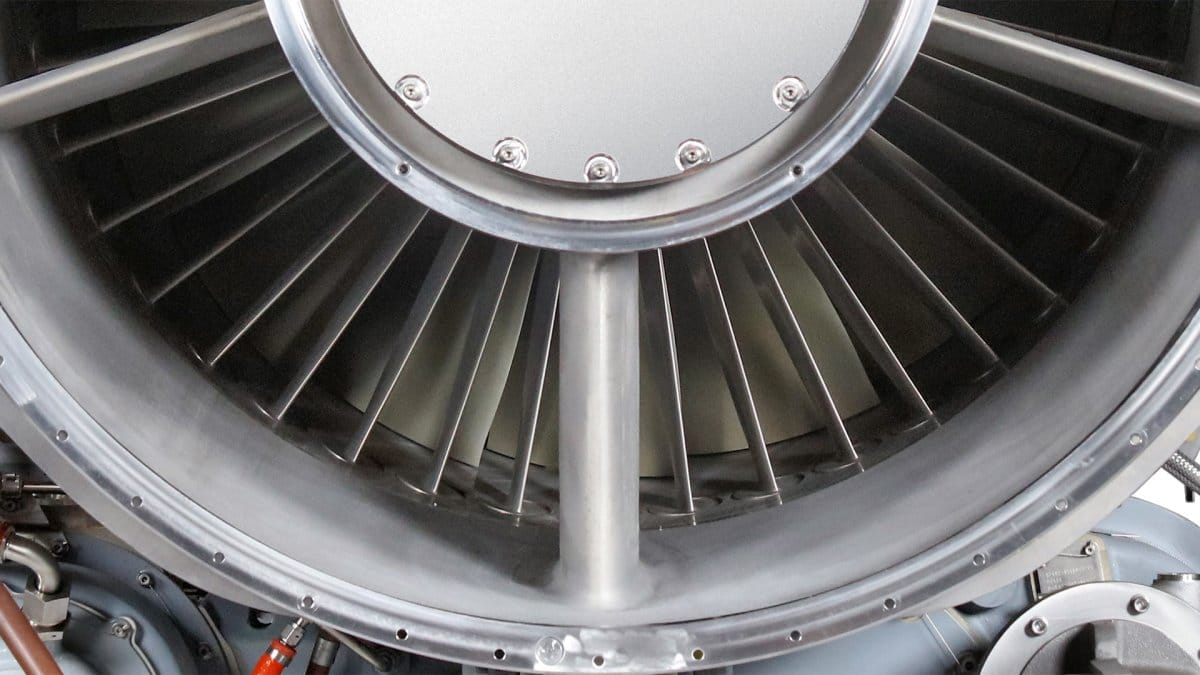
With over 1,200 units in operation and a fleet reliability exceeding 99 percent, the GE LM6000 is a marvel of aeroderivative engineering. However, its 36 million operating hours prove that even the most robust systems are vulnerable to microscopic particulate contamination. You understand that maintaining this performance requires more than routine care. It demands precision execution during outages to prevent unscheduled downtime and turbine damage. Following GE LM6000 TLO/GLO oil flushing technical procedure TP7703 is the essential baseline for protecting your turbine lube oil and mineral lube oil systems from these risks.
We’ve developed this professional technical guide to help you execute the TP7703 Rev. 1.1 procedure to exact OEM standards. You’ll learn how to achieve target ISO 4406 cleanliness codes by integrating high-velocity hot oil flushing with proactive varnish mitigation. This approach ensures compliance with the Australian “Managing risks of hazardous chemicals in the workplace” Code of Practice while minimizing your total outage duration. We’ll outline the specific steps for flushing the Fin-Fan Lube Oil Cooler and the critical verification processes required for long term system health.
Key Takeaways
- Master the specific preparatory steps for following GE LM6000 TLO/GLO oil flushing technical procedure TP7703 to maintain your turbine’s high reliability.
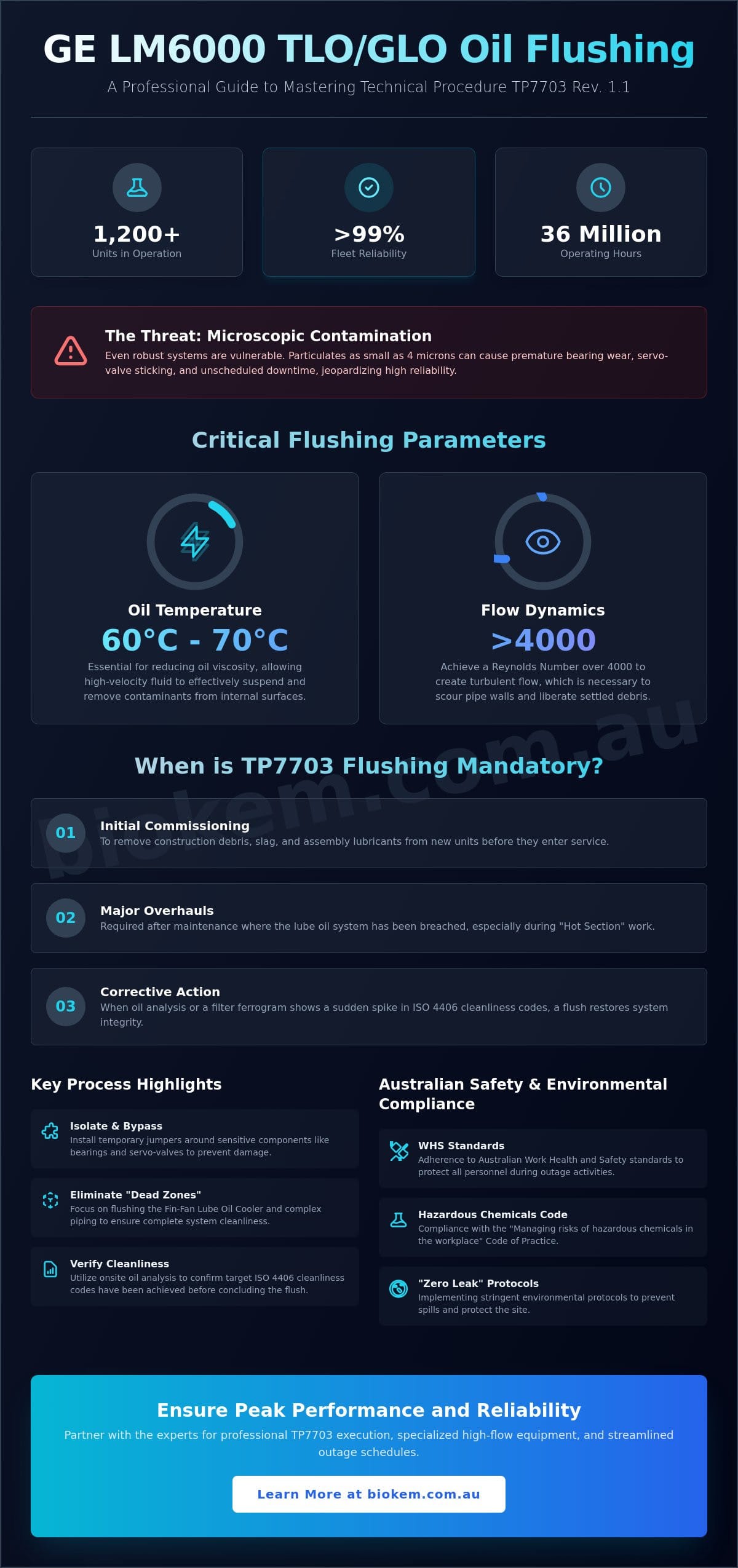
- Learn why maintaining precise oil temperatures between 60°C and 70°C is essential for the effective suspension and removal of system contaminants.
- Identify techniques to eliminate “dead zones” in Fin-Fan coolers to ensure every part of the lubrication system meets ISO 4406 cleanliness codes.
- Ensure your maintenance activities comply with Australian WHS standards and environmental “Zero Leak” protocols to protect both staff and the site.
- Discover how specialized high-flow equipment and onsite oil analysis can streamline your outage schedule and improve operational outcomes.
Understanding the GE LM6000 TLO/GLO Flushing Requirements
Following GE LM6000 TLO/GLO oil flushing technical procedure TP7703 is a mandatory step for operators who prioritize long term asset health. This specific technical procedure, currently identified as Rev. 1.1, provides the engineering framework for cleaning the Turbine Lube Oil (TLO) and Generator Lube Oil (GLO) systems. In the Australian power sector, the LM6000 serves as a critical peaking and mid-merit asset. Because it’s a high-performance gas-turbine engine, its internal components are significantly more sensitive to particulate matter than traditional heavy-duty frames. Maintaining the fleet-wide reliability of over 99 percent requires a disciplined approach to lubrication hygiene.
To better understand the broader implications of improper flushing techniques, watch this helpful video:
While the Main Lube Oil (MLO) system often receives the most attention, the TLO and GLO circuits require dedicated protocols. These systems lubricate the most thermally stressed and high-speed components of the turbine. If you bypass these requirements, micro-particulates as small as 4 microns can lead to premature bearing wear or servo-valve sticking. This isn’t just a theoretical risk. It’s a leading cause of unscheduled downtime in aeroderivative fleets. You can mitigate these risks through professional hot oil flushing that adheres strictly to GE’s technical mandates. Following GE LM6000 TLO/GLO oil flushing technical procedure TP7703 ensures that even the smallest “dead zones” in the piping are cleared of debris.
The Critical Nature of Aeroderivative Lubrication
The LM6000 operates in an environment of extreme heat and rotational speeds that demand absolute oil purity. This aircraft-engine heritage means bearing clearances are exceptionally tight. Traditional contaminants like carbon soot, metallic wear debris, and atmospheric dust can quickly bridge these gaps. In TLO circuits, high temperatures can also trigger oil oxidation. This leads to varnish formation that traditional filters won’t catch, necessitating advanced mitigation strategies during the flushing process.
When is TP7703 Mandatory?
Adhering to the TP7703 procedure is required during several key lifecycle stages. It’s essential after the initial commissioning of a new unit to remove construction debris like slag or assembly lubricants. You must also perform this flush during major overhauls, specifically after “Hot Section” maintenance where the lube oil system has been breached. Finally, if a filter ferrogram or oil analysis shows a sudden spike in ISO 4406 cleanliness codes, a corrective flush is the only way to restore system integrity.
Technical Breakdown: Executing the TP7703 Procedure
Executing the TP7703 procedure requires a disciplined approach to fluid dynamics and system isolation. Before the first pump starts, you must ensure the turbine reservoir is manually cleaned and all sensitive components are isolated from the flushing loop. This preparation phase is the most critical step in following GE LM6000 TLO/GLO oil flushing technical procedure TP7703. You’ll need to install temporary bypass jumpers around bearings and servo-valves to prevent the very contaminants you’re trying to remove from causing damage during the process. The goal is to create a closed loop that includes the reservoir, the Fin-Fan Lube Oil Cooler, and the main piping headers.
To successfully dislodge sub-micron particles and settled debris, the flushing oil must achieve turbulent flow. This is defined by a Reynolds Number greater than 4000. Achieving this state is impossible at ambient temperatures because the oil’s viscosity is too high. You must maintain the oil temperature between 60°C and 70°C throughout the duration of the flush. This temperature range reduces viscosity sufficiently to allow high-velocity oil to scour the internal pipe walls. For a comprehensive understanding of these principles, the ASTM D6439 Flushing Guide provides the industry standard framework for gas turbine lubrication maintenance.
The Flushing Circuit Setup
Setting up the circuit involves more than just connecting hoses. You’ll need to install high-capacity external filtration units capable of handling the high flow rates required for turbulence. These rigs should be positioned to pull from the lowest point of the reservoir and return through the main supply headers. Identifying the correct sample extraction points is vital. These should be located at the furthest point from the pump and at the return line to the reservoir to ensure you’re capturing a representative profile of the entire system’s cleanliness.
Monitoring and Validation Steps
Validation begins with the use of paddle flushing screens equipped with 100-mesh stainless steel inserts. These screens act as a physical “go/no-go” gauge for larger debris. Once the screens remain clear after a 4-hour high-velocity run, you can move to finer verification. We recommend using patch test kits for immediate onsite visual analysis of the oil. Final cleanliness is only achieved when the oil meets the specific ISO 4406 codes defined in the TP7703 Rev. 1.1 documentation. If your internal team lacks the specialized rigs for this task, exploring professional equipment hire options can ensure you meet these stringent OEM requirements without capital investment.
Critical Success Factors for Fin-Fan Cooler Flushing
The Fin-Fan cooler represents the most significant technical challenge within the TLO/GLO circuit. Its internal architecture consists of hundreds of small-diameter tubes that naturally resist high-velocity flow. While your external pumps might generate high flow in the main headers, these cooler bundles often harbor “dead zones.” In these areas, oil velocity drops below the threshold required to keep particulates in suspension, allowing debris to remain trapped even after hours of flushing. Successfully following GE LM6000 TLO/GLO oil flushing technical procedure TP7703 requires specific strategies to overcome these stagnant regions and ensure the entire cooler is verified clean.
We employ thermal shocking techniques to dislodge stubborn contaminants from the cooler’s internal surfaces. By rapidly cycling the oil temperature between 40°C and 70°C, we create differential thermal expansion between the metal tubes and the adhered debris. This mechanical stress breaks the bond of scale and varnish, allowing the turbulent oil to sweep them into the filtration circuit. This process is far more effective than a constant-temperature flush. It’s also essential to integrate varnish removal systems during this phase. Chemical degradation products often plate out on the cooler’s cool surfaces, and mechanical flushing alone won’t remove these sticky sub-micron layers.
Varnish Mitigation within TP7703
Standard mechanical flushing often fails to address the soluble varnish precursors that reside in the oil. These precursors are polar molecules that traditional filters cannot capture. Using specialised depth filtration during the flush allows for the removal of these chemical contaminants before they can reform into solid deposits. Varnish accumulation in the TLO system causes “phantom” trips in LM6000 units by creating microscopic delays in servo-valve response times that the control system interprets as a mechanical failure.
Advanced Filtration Selection
Achieving the stringent ISO 4406 14/12/9 cleanliness levels required by GE necessitates a move beyond standard industrial components. Comparing standard filters vs. specialist oil filters highlights the importance of high beta-rated elements that maintain efficiency under high-velocity conditions. If your oil analysis indicates water levels exceeding 200 ppm, we recommend integrating vacuum dehydration into the loop. This ensures that following GE LM6000 TLO/GLO oil flushing technical procedure TP7703 results in a system that’s both physically clean and chemically stable, ready for immediate high-load operation.
Safety and Environmental Compliance in Australian Operations
Executing high-velocity maintenance requires more than just technical precision; it demands strict adherence to Australian regulatory frameworks. When following GE LM6000 TLO/GLO oil flushing technical procedure TP7703, operators must align their onsite activities with the “Managing risks of hazardous chemicals in the workplace” Code of Practice, which has been in effect since 1 January 2012. This alignment ensures that the physical risks of handling synthetic lubricants are mitigated through engineered controls and robust administrative protocols. Professional hot oil flushing services in Australia play a vital role here, providing the specialized equipment and certified personnel necessary to maintain critical power infrastructure without compromising site safety.
Environmental protection is equally paramount. We operate under a “Zero Leak” philosophy, which dictates that every drop of hydrocarbon must be accounted for during the flushing process. This is particularly critical during reservoir transfers or when installing temporary bypass jumpers. Waste oil management isn’t just about disposal; it’s about following state-specific environmental regulations to ensure flushing fluids are recycled or treated at licensed facilities. Adhering to these standards prevents long term ecological damage and ensures your facility remains in full compliance with the National Environment Protection Measures (NEPM).
Pressure and Temperature Hazards
High-velocity flushing creates unique “Line-of-Fire” hazards that are often overlooked during standard maintenance. Technicians must be equipped with specialized PPE designed to withstand 70°C synthetic lubricants in the event of a hose failure or seal leak. Before the flush begins, every temporary jumper and external hose must undergo a documented integrity test at 1.5 times the maximum operating pressure. This preventive step is non-negotiable for protecting personnel from high-pressure injection injuries or thermal burns during the turbulent flow phase of the procedure.
Environmental Stewardship
Preventing hydrocarbon release requires a proactive containment strategy. We utilize secondary containment berms for all external flushing rigs and filtration units to capture potential drips before they reach the ground. BioKem’s commitment to nature-based solutions extends to microbial contamination control, ensuring that any biological growth within the oil system is addressed through eco-friendly bioremediation techniques rather than harsh chemical biocides. This approach maintains the balance between industrial efficiency and ecological health. If you’re planning an upcoming outage, you can request a site-specific safety and environmental plan that meets all Australian regulatory requirements.
Partnering with BioKem for Professional TP7703 Execution
Partnering with BioKem ensures that the theoretical requirements of the TP7703 procedure are translated into measurable onsite results. Many general contractors lack the specific hardware required to generate the necessary turbulence in aeroderivative circuits. Our fleet of specialized high-flow flushing rigs is engineered specifically for these high-velocity demands. Following GE LM6000 TLO/GLO oil flushing technical procedure TP7703 is not just about moving oil; it’s about managing the complex fluid dynamics of a 2000 LPM system while maintaining absolute filtration integrity. We bring a level of technical precision that matches the aeroderivative’s own engineering standards, ensuring your asset’s 36 million hour operating legacy continues without interruption.
Specialised Flushing Rigs and Hardware
Our hardware suite includes 2000 LPM flushing units that comfortably exceed the velocity targets set by GE. We integrate Filters S.p.A. technology to ensure that even under extreme flow rates, particulate capture remains consistent. Because every LM6000 site has unique piping configurations, we provide custom manifold and jumper fabrication to ensure a leak-free interface with your TLO and GLO circuits. This bespoke approach eliminates the risks of improper bypasses discussed in previous sections. If your internal maintenance team prefers to self-perform, our industrial oil filtration equipment hire service provides access to this same tier of professional hardware, supported by our technical advisory.
The Path to a Successful Outage
Efficiency during an outage is measured by the speed at which you reach the target ISO code. Following GE LM6000 TLO/GLO oil flushing technical procedure TP7703 to the letter requires constant monitoring of fluid health. We utilize onsite oil analysis and real-time particle counting to eliminate the delays associated with offsite laboratory testing. This immediate feedback loop allows us to stop flushing the moment the system is clean, significantly reducing your total outage window. At the conclusion of each project, we provide a comprehensive technical report. This documentation is essential for maintaining GE warranty compliance and provides a baseline for your proactive contamination control program. Our local expertise ensures that your 99 percent reliability target is protected by a partner who understands the Australian regulatory landscape. Consult with BioKem for your next LM6000 TLO/GLO flush.
Securing Your GE LM6000 Reliability Targets
Achieving a fleet-wide reliability exceeding 99 percent requires a commitment to technical precision that matches the aeroderivative’s own design. We’ve explored how maintaining oil temperatures between 60°C and 70°C and achieving turbulent flow are non-negotiable for system cleanliness. You now understand that addressing “dead zones” in Fin-Fan coolers and integrating varnish mitigation are the keys to preventing “phantom” trips and bearing failure. Following GE LM6000 TLO/GLO oil flushing technical procedure TP7703 Rev. 1.1 ensures your maintenance activities meet stringent OEM standards and Australian WHS regulations.
As the sole Australian distributor for Filters S.p.A. products, we provide the specialized 2000 LPM rigs and high-beta filtration needed for these critical circuits. It’s our priority to offer comprehensive onsite oil analysis and technical reporting to document your compliance with GE warranty requirements. This data-driven approach removes the guesswork from your outage schedule and protects your long term asset health. Contact BioKem for Specialist GE LM6000 Flushing Services to ensure your next turbine intervention is executed with technical authority and environmental responsibility. Your turbine’s operational future depends on the purity of its lubrication today.
Frequently Asked Questions
What is the primary difference between GE TP7702 and TP7703?
TP7702 covers the general flushing of the gas turbine lube oil system, while TP7703 is the specific technical procedure for flushing the Fin-Fan Lube Oil Cooler. These procedures are often performed in tandem during a major outage but require different bypass configurations. Using the correct document ensures that the cooler’s internal tube bundles receive the dedicated high-velocity attention they require to meet OEM cleanliness standards.
How long does a typical TP7703 TLO/GLO flush take to complete?
Most TP7703 flushing operations conclude within 24 to 48 hours of active circulation once the system reaches operating temperature. This timeframe excludes the initial setup of bypasses and the time required to heat the oil to the 60°C target. If the system has high levels of varnish or particulate, the duration may extend. Real-time particle counting is used to determine the exact moment target ISO codes are achieved.
Can I use standard hydraulic oil filters for a GE LM6000 flush?
Standard filters are insufficient for the extreme flow rates and pressures encountered during an LM6000 flush. You must use specialist oil filters with high beta ratings to capture sub-micron particles effectively. Standard elements may bypass or fail structurally when subjected to the 2000 LPM flow rates needed for turbulent flow. We utilize Filters S.p.A. technology to ensure filtration integrity remains constant throughout the high-velocity procedure.
What ISO 4406 cleanliness code is required for LM6000 turbine oil?
The target cleanliness for the GE LM6000 is typically ISO 14/12/9. This is significantly cleaner than standard industrial equipment requirements. Because aeroderivative turbines use aircraft-style bearings with very tight tolerances, even particles as small as 4 microns can cause surface damage. Achieving this level of purity is the primary objective when following GE LM6000 TLO/GLO oil flushing technical procedure TP7703 during a scheduled maintenance outage.
Why is turbulent flow necessary for following TP7703?
Turbulent flow is essential to provide the mechanical energy needed to lift heavy particulates off the pipe walls. Following GE LM6000 TLO/GLO oil flushing technical procedure TP7703 requires reaching a Reynolds Number exceeding 4000. In laminar flow, the oil moves in smooth layers, leaving a stagnant boundary layer where debris stays trapped. Turbulence breaks this layer, ensuring all contaminants are carried into the filtration loop for removal.
What happens if the Fin-Fan cooler is not properly bypassed or flushed?
Failing to flush the Fin-Fan cooler properly creates a reservoir of hidden contaminants that will eventually migrate into the turbine bearings. This often leads to “phantom” trips where the control system detects microscopic delays in servo-valve response. Without proper bypasses and high-velocity flow, the cooler acts as a trap for debris, which can reduce the cooling efficiency of the system and lead to high-temperature alarms during peak operation.
Does BioKem provide the jumpers and bypasses required for the LM6000?
We supply all necessary jumpers, manifolds, and high-pressure hoses required for a successful LM6000 intervention. Our equipment is specifically selected to withstand 70°C temperatures and the high pressures associated with 2000 LPM flow rates. This custom hardware ensures that sensitive turbine components are safely isolated while the flushing circuit remains secure. This approach supports our “Zero Leak” philosophy and ensures compliance with Australian WHS workplace safety regulations.
How does temperature affect the success of a hot oil flush?
Temperature directly influences the oil’s viscosity, which is the key to achieving turbulent flow. At 60°C to 70°C, the oil becomes thin enough to move at the high velocities required by the TP7703 procedure. High temperatures also help to expand the metal piping slightly and loosen adhered varnish or scale. This thermal effect, combined with high-velocity scouring, is the most effective method for restoring the internal cleanliness of the TLO and GLO systems.