

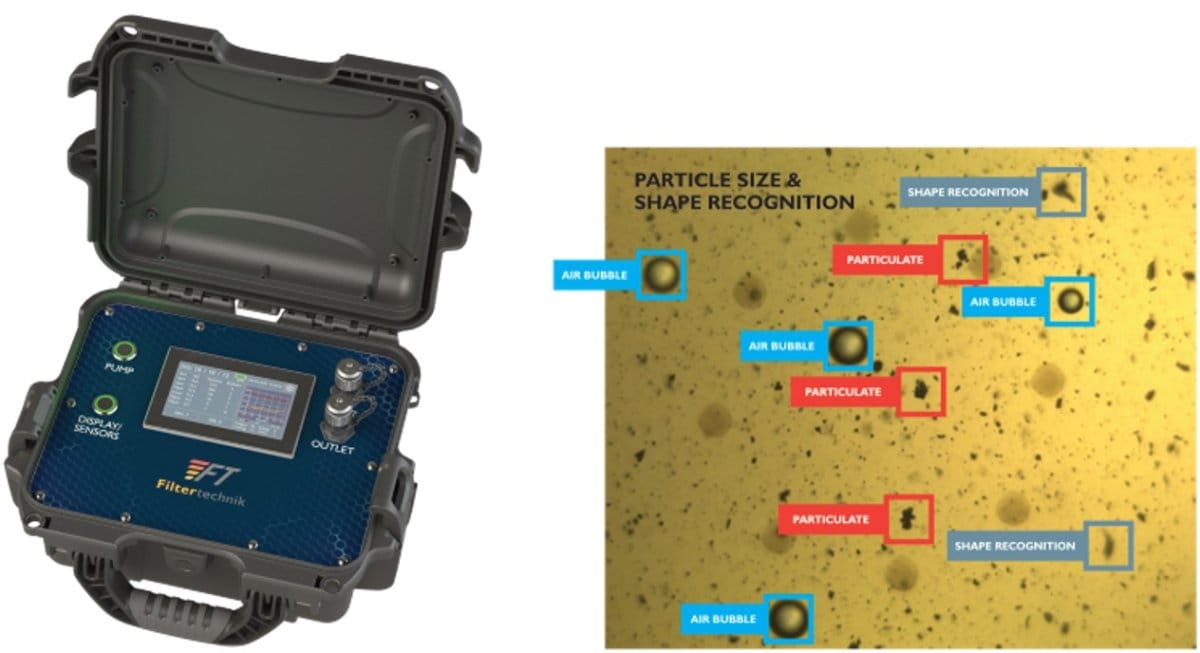
What if the “contamination” triggering your latest maintenance alert is actually nothing more than trapped air? For maintenance teams managing high-stakes hydraulic systems, the frustration of inaccurate onsite readings is a constant challenge. You understand that waiting days for laboratory results isn’t a viable strategy for preventing downtime, yet standard laser counters often struggle with aeration or high-viscosity fluids up to 2,400cSt. This gap in reliability is exactly why Filtertechnik Particle Pal series units are world class field instruments that provide more than just a count; they provide diagnostic sight.
By reading this guide, you’ll discover how the Particle Pal series, including the latest V4 Plus model, uses digital imaging technology to eliminate “phantom” counts and identify the root cause of wear. We’ll explore how BioKem’s partnership with Filtertechnik brings these modular, world-leading tools to the Australian market. You’ll learn how to generate instant ISO 4406 and ISO 11171 cleanliness reports while distinguishing between fatigue, sliding, and cutting wear at 4 frames per second. This shift from reactive counting to proactive asset management ensures your operations remain both efficient and environmentally compliant.
Key Takeaways
- Learn how digital imaging technology overcomes the limitations of traditional laser counters, so you don’t have to worry about air bubbles or water droplets causing “phantom” particle counts.
- Understand why Filtertechnik Particle Pal series units are world class field instruments through their ability to categorize wear patterns into fatigue, sliding, and cutting categories at 4 frames per second.
- Discover the technical capacity to test high-viscosity oils up to 2,400cSt and live hydraulic systems at pressures reaching 350 bar with specialized adaptors.
- See how onsite ISO 4406 cleanliness reports and historical data trending allow for immediate maintenance decisions that reduce the risk of catastrophic asset failure.
- Explore the benefit of local expertise through BioKem, providing national support and calibration to ensure your oil analysis meets Australian regulatory and environmental standards.
The Critical Role of Real-Time Oil Analysis in Industrial Reliability
Industrial reliability hinges on the microscopic state of lubrication. When hydraulic fluids and oils become compromised, the degradation of internal components accelerates. This often leads to catastrophic failure before symptoms become visible to the naked eye. Traditional Oil analysis relies on offsite laboratory testing, which creates a dangerous lag time between sampling and results. During this window, an asset remains at risk. This is why Filtertechnik Particle Pal series units are world class field instruments; they function as a self-contained, battery-driven laboratory in a suitcase, providing immediate data where it’s needed most.
To better understand how these units operate in the field, watch this helpful video:
Operating these units onsite supports Australian regulatory compliance and environmental standards by reducing the volume of waste oil generated through unnecessary fluid changes. By identifying exactly when oil requires filtration or replacement, operators minimize their environmental footprint while maintaining peak efficiency. BioKem provides these tools to ensure that local industries have access to global standards in fluid management. These units don’t just count particles; they provide a comprehensive snapshot of fluid health, including water content and oil life sensors that report in real time.
The High Cost of Undetected Contamination
Industry data confirms that contaminated oils account for nearly 85% of all mechanical breakdowns. These failures aren’t always sudden; they often stem from microscopic particles that cause fatigue through repeated stress on metal surfaces. Silt and varnish build-up act as a “silent killer” in hydraulic systems, clogging valves and reducing heat transfer efficiency. In 2026, real-time monitoring prevents unscheduled downtime by identifying these contaminants before they can compromise the structural integrity of critical components. Without onsite tools, engineers are essentially flying blind, hoping that their filtration systems are managing the load effectively between laboratory cycles.
Moving from Reactive to Proactive Maintenance
The transition from reactive “run-to-fail” models to proactive asset management requires precision tools. Modern engineers recognize that why Filtertechnik Particle Pal series units are world class field instruments lies in their ability to provide the “diagnostic sight” necessary for data-driven maintenance. In the Australian mining and power generation sectors, this shift toward data-driven decision-making is essential for managing remote assets. By integrating real-time particle counts and moisture levels into maintenance schedules, teams can extend component life and optimize service intervals based on actual fluid condition rather than arbitrary calendar dates. This approach not only saves money but also ensures that critical infrastructure remains online and productive.
Digital Imaging vs. Laser Counting: The World-Class Differentiator
Traditional laser particle counters have long been the industry standard, but they possess a fundamental flaw in field applications: they’re easily deceived. Laser sensors operate via light obscuration, meaning any object that blocks the beam is recorded as a contaminant. This often results in “phantom particle counts” where air bubbles, water droplets, or even anti-foam additives trigger false alarms. For an engineer, these inaccuracies lead to wasted resources and unnecessary maintenance. This technical limitation is a primary reason why Filtertechnik Particle Pal series units are world class field instruments. Instead of relying on shadows, the V3 and V4 models utilize advanced digital imaging to verify the nature of every particle.
By capturing high-resolution images of the fluid stream, these units distinguish between harmful solid contaminants and harmless entrained air. This clarity allows maintenance teams to adopt a more sophisticated predictive maintenance model, where decisions are based on visual evidence rather than sensor interference. Moving beyond simple light-blocking technology ensures that your cleanliness reports reflect the true state of your lubricants, protecting both your assets and your operational budget.
Demystifying the CMOS Digital Imaging Process
The Particle Pal Pro V3 and Plus V4 leverage high-speed CMOS cameras to process thousands of microscopic objects. The V4 model specifically captures data at 4 frames per second, allowing for real-time analysis of the fluid’s profile. Unlike laser counters that struggle with opaque or heavy fluids, these digital imaging units handle high-viscosity oils up to 2,400cSt without requiring time-consuming solvent dilution. This capability is critical for testing gear oils and heavy hydraulic fluids onsite, where immediate accuracy is paramount. Because the system “sees” the particles, it remains immune to the optical distortion caused by water contamination or common chemical additives.
Root Cause Analysis in the Palm of Your Hand
While standard counters only provide an ISO 4406 or ISO 11171 code, digital imaging provides a window into the machine’s internal condition. The software uses shape recognition technology to categorize particulates into fatigue, sliding, or cutting wear patterns. This level of detail allows technicians to pinpoint specific failure modes, such as bearing degradation or gear misalignment, often months before vibration sensors detect a problem. Identifying specific failure modes through shape recognition significantly reduces repair costs by allowing for targeted component replacement instead of full system overhauls. If you’re ready to upgrade your diagnostic capabilities, you can explore the full Filtertechnik Particle Pal range to find the right fit for your facility.
The Particle Pal Series: Comparing the V2, V3, and V4 Models
Selecting the appropriate diagnostic tool requires a clear understanding of your specific fluid environment. Filtertechnik has developed three distinct tiers within the range to address different industrial requirements, from simple fuel transfers to complex high-pressure hydraulic systems. This versatility is a core reason why Filtertechnik Particle Pal series units are world class field instruments. While all models share a commitment to accuracy and durability, the underlying sensor technology varies to match the application’s complexity.
The Particle Pal V2 serves as the robust, entry-level workhorse of the series. It utilizes a precision laser counter, making it ideal for monitoring relatively clean fluids like diesel fuel and light hydraulic oils. With a battery life of up to 6 hours of continuous use, the V2 is a dependable choice for mobile service teams who need to verify cleanliness levels in the field without access to a power grid. However, for more challenging fluids, the series moves into digital imaging territory with the V3 and V4 models.
The Particle Pal Pro V3 remains the flagship unit for complex lubrication systems. It’s specifically engineered to handle high-viscosity oils up to 2,400cSt, a task that frequently causes traditional laser counters to fail. Following the V3 is the Particle Pal Plus V4, the latest evolution in the series. The V4 offers a more compact and lower-cost entry point into digital imaging technology while maintaining the ability to capture data at 4 frames per second. Both digital units provide a comprehensive view of fluid health by reporting to ISO 4406, SAE AS4059, and NAS 1638 standards.
Selecting the Right Instrument for Your Application
Application context is everything. For mining fleets focused on diesel fuel quality, the V2 provides the necessary speed and portability to ensure bulk fuel remains within specification. Conversely, the Pro V3 is essential for power generation facilities managing high-viscosity turbine oils where air entrainment is common. As the official Australian Distributor for Particle Pal Range, BioKem assists partners in matching these technical capabilities to their specific operational challenges, ensuring the chosen kit delivers maximum ROI.
Key Features of the World-Class Field Kit
Each unit is housed in a ruggedized suitcase, designed to withstand the harsh conditions of the Australian outback. Beyond particle counting, the modular design allows for the integration of water-in-oil sensors and oil life indicators, creating a total fluid health monitor. Field technicians benefit from a plug-and-play interface that requires minimal training, allowing for immediate data logging. These units can also be used on live hydraulic systems with pressures reaching 350 bar when equipped with a high-pressure adaptor, providing real-time trending data that integrates directly into your maintenance management software.
Maximising Asset Longevity Through Data Trending and Analysis
A single data point provides a snapshot, but historical trending provides a narrative. For maintenance managers, understanding the rate of change in fluid contamination is often more critical than the absolute count at any given moment. This capacity for longitudinal analysis is a core reason why Filtertechnik Particle Pal series units are world class field instruments. By logging data over months of operation, technicians can identify subtle shifts in particle ingress or wear generation that would otherwise go unnoticed in isolated tests. This integration of diagnostic precision and software intelligence is exactly why Filtertechnik Particle Pal series units are world class field instruments for modern industry.
Integrating this data directly into a Computerised Maintenance Management System (CMMS) allows for a seamless transition from field analysis to work order generation. The on-board asset management tool within the V3 and V4 models helps engineers predict the “remaining useful life” of the oil by monitoring how quickly the fluid is degrading. In one 2025 application, a maintenance team in Western Australia used data trending to identify a 15% increase in metallic particulates over a three-week period. This trend allowed them to detect a failing cylinder seal before it caused a total system bypass, preventing an estimated $45,000 in emergency repair costs and lost production time.
Understanding ISO 4406 Cleanliness Codes in the Field
ISO 4406 codes use three numbers to represent the quantity of particles larger than 4, 6, and 14 microns per millilitre of fluid. For example, a code of 18/16/13 indicates a specific concentration range for each size. Setting realistic cleanliness targets is essential for asset longevity; critical servo-valves may require a 16/14/11 rating, while a basic gearbox might operate safely at 20/18/15. Utilizing patch test kits alongside digital counting provides visual verification of these codes, ensuring your targets reflect the actual operational risk and mechanical requirements.
The Value of Onsite Oil Life Determination
Beyond particles, the Particle Pal series monitors the chemical health of the lubricant. By measuring Tan Delta (dielectric constant), the instrument detects the breakdown of additives and the onset of oxidation. This represents a significant shift toward sustainability. Instead of changing oil based on a fixed 2,000-hour schedule, operators can extend fluid life based on its actual condition. This biological and data-driven approach reduces oil waste by up to 30% in some industrial applications. Additionally, integrated water-in-oil sensors provide immediate alerts to moisture ingress, preventing the corrosion and cavitation that destroy hydraulic pumps. If you want to refine your maintenance strategy, you can view our full range of oil filtration systems to see how we help maintain these high standards.
BioKem: Your National Partner for Filtertechnik Technology
BioKem stands as the specialist Australian distributor for the Filtertechnik Particle Pal range, ensuring that global innovation meets local industrial demand. While the hardware is engineered in the United Kingdom, the practical application in the Pilbara or the Hunter Valley requires a partner who understands Australian conditions. This partnership is a key reason why Filtertechnik Particle Pal series units are world class field instruments for local operators. We don’t just supply equipment; we provide the national technical support, calibration services, and hands-on training necessary to maintain these precision tools. Our team ensures that your onsite technicians are fully competent in interpreting ISO 4406 data and managing the asset-trending software. This end-to-end support model guarantees that the investment in high-end diagnostics translates into measurable reliability improvements.
Equipment Hire vs. Purchase: Which is Right for You?
For many organisations, the decision between capital investment and operational expenditure depends on project scale. Short-term requirements, such as hot oil flushing during a plant commissioning phase, often benefit from our industrial oil filtration equipment hire options. This allows teams to access world-class diagnostics without a long-term capital commitment. Conversely, established reliability programs find high ROI in owning a dedicated Particle Pal for continuous, daily monitoring. BioKem maintains a modern hire fleet equipped with the latest V3 and V4 digital imaging technology, ensuring our clients always have access to the highest diagnostic standards. By providing these flexible pathways, we ensure that even smaller operations can maintain the same cleanliness standards as major mining houses.
Expert Support for Australian Industry
Our reach extends across the mining, energy, and manufacturing sectors, where we bridge the gap between scientific analysis and mechanical maintenance. BioKem technicians frequently deploy Particle Pal units during complex varnish mitigation projects to verify the effectiveness of cleaning agents in real time. This ensures that the biological and technical mechanisms we champion are working as intended. We understand that Australian regulatory standards demand transparency and accuracy in environmental reporting. Our integration of this technology into local service schedules is a primary reason why Filtertechnik Particle Pal series units are world class field instruments that deliver long-term value. This combination of world-class hardware and decades of onsite technical expertise ensures that your contamination control strategy is both effective and sustainable. Contact BioKem today to request a demonstration or quote for the Particle Pal series and secure the diagnostic sight your assets deserve.
Secure the Future of Your Industrial Assets
The shift from reactive sampling to digital “diagnostic sight” represents a fundamental change in how Australian industry manages fluid health. By adopting digital imaging technology, maintenance teams eliminate the guesswork of air bubbles and focus on real-time data that identifies specific wear patterns. These capabilities demonstrate why Filtertechnik Particle Pal series units are world class field instruments for any operation where downtime is not an option. Transitioning to these onsite tools ensures that your maintenance decisions are based on the actual condition of the lubricant rather than outdated calendar schedules.
BioKem supports this transition as the Authorized Australian Distributor for Filtertechnik and the sole distributor for Filters S.p.A. Our specialists integrate these tools into broader reliability programs, including expert hot oil flushing and varnish mitigation projects. Whether you’re managing a remote mining fleet or a metropolitan power station, having laboratory-grade data at your fingertips ensures your assets remain productive and compliant with environmental standards. Take the next step in your proactive maintenance journey. View the full Filtertechnik Particle Pal range and request a quote today. Investing in precision today safeguards your equipment’s longevity for years to come.
Frequently Asked Questions
What is the main difference between the Particle Pal V2 and V3?
The primary difference lies in the sensor technology used for particle counting. The V2 utilizes light obscuration laser technology, while the V3 Pro employs advanced digital imaging. Laser counters are excellent for clear fluids like diesel, but digital imaging is necessary for oils with air entrainment or high viscosity. This technological leap into imaging is a core reason why Filtertechnik Particle Pal series units are world class field instruments for modern maintenance teams who require reliable data in difficult field conditions.
Can the Particle Pal series handle high-viscosity gear oils?
Yes, the Particle Pal series is specifically engineered to manage heavy lubricants. The V3 and V4 models can process high-viscosity gear and hydraulic oils up to 2,400cSt without requiring fluid dilution. This capability ensures that onsite testing remains accurate and efficient, even in demanding industrial environments where standard field counters often struggle. It’s a practical solution for engineers who don’t have time for the complex solvent mixing required by older technologies.
How does the Particle Pal deal with air bubbles in the oil?
Digital imaging technology allows the unit to differentiate between solid contaminants and entrained air. While traditional laser counters record air bubbles as “phantom” particles, the CMOS camera in the V3 and V4 models recognizes the optical signature of a bubble and excludes it from the count. This ensures that your ISO cleanliness reports reflect actual wear particles rather than harmless aeration, providing a level of transparency that laser-only systems simply cannot match.
Does the Particle Pal provide ISO 4406 cleanliness codes?
Every unit in the series provides instant cleanliness reports according to international standards. This includes ISO 4406, SAE AS4059, and NAS 1638. The Particle Pal Plus V4 model also reports to the ISO 11171 standard. These reports allow engineers to verify that their systems meet the specific cleanliness targets required by component manufacturers. Having this data available in the field allows for immediate corrective action, such as starting a filtration cycle or scheduled maintenance.
Is the Particle Pal battery-operated for field use?
All Particle Pal units are fully portable and battery-operated for remote field applications. The V2 model provides up to 6 hours of continuous battery life, making it ideal for long shifts in the Australian outback. The units are housed in a ruggedized, self-contained suitcase that protects the delicate sensors from dust and impact during transport. This design reflects the practical nature of our industrial solutions, ensuring reliability in the most challenging geographical contexts.
Can I use the Particle Pal to test diesel fuel cleanliness?
The Particle Pal series is highly effective for monitoring diesel fuel cleanliness in bulk storage and mobile equipment. The V2 model is a popular choice for mining fleets where verifying fuel quality is essential for preventing injector failure. By providing real-time data, these units help operators maintain peak engine performance and comply with stringent environmental regulations. It’s an essential tool for any “green” problem-solver looking to reduce emissions through better fuel management.
How often does a Particle Pal unit require calibration?
We recommend that Particle Pal units undergo professional calibration every 12 months. This ensures the sensors maintain their accuracy and comply with international reporting standards. BioKem provides national technical support and calibration services within Australia, reducing the downtime associated with sending equipment overseas. Regular servicing also includes software updates to ensure you have access to the latest diagnostic tools and trending capabilities for your asset management program.
What is “shape recognition” in the Particle Pal Pro V3?
Shape recognition is a diagnostic feature that categorizes particulates based on their physical appearance. The digital imaging software analyzes the silhouette of each particle to identify whether it stems from fatigue, sliding, or cutting wear. This level of detail is a major reason why Filtertechnik Particle Pal series units are world class field instruments, as it allows technicians to pinpoint the exact mechanical failure mode occurring inside the system before it leads to a catastrophic breakdown.