

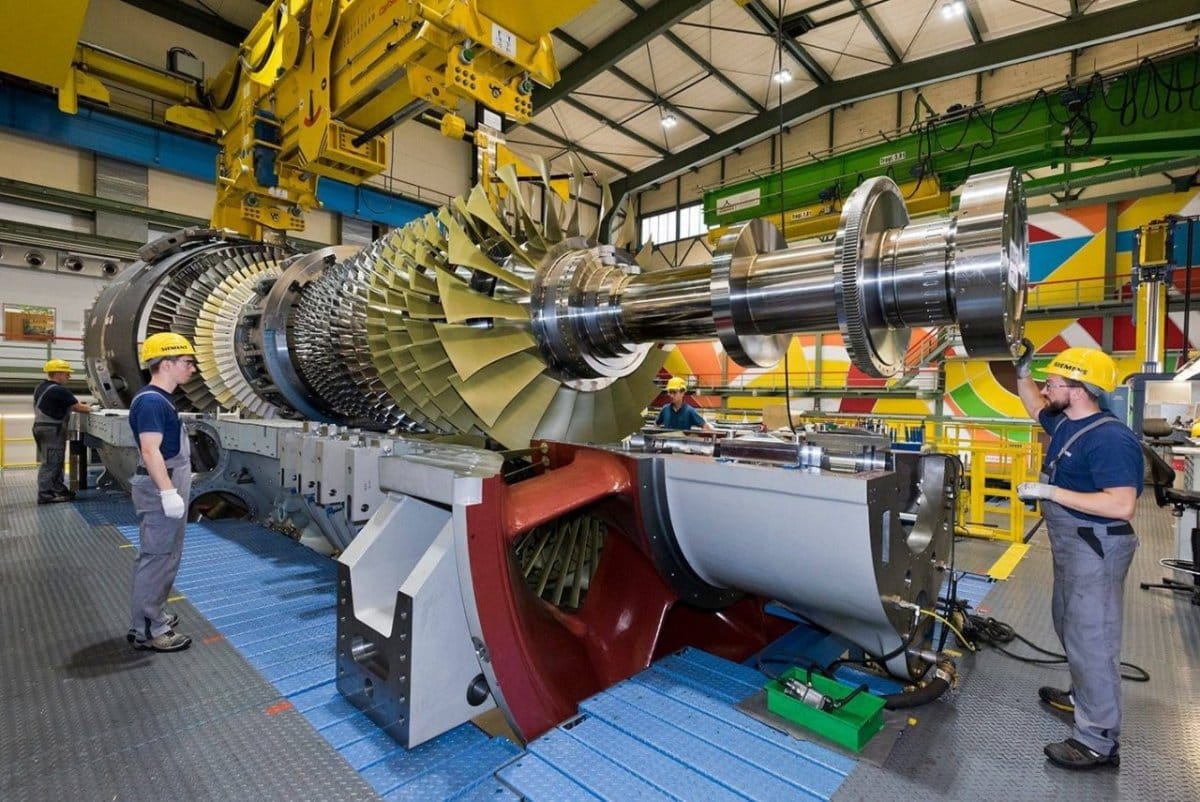
Your vibration sensors might be shouting about a mechanical failure that your lubricant analysis could have whispered months ago. Many reliability teams face the high cost of unscheduled downtime even while following standard maintenance schedules. It’s a common frustration when generic sensors provide confusing data or fail to catch a gear breakdown until the damage is irreversible. Implementing a robust strategy for Condition Monitoring for Rotating Equipment means moving beyond isolated data points to understand the holistic health of your machinery.
In this guide, you’ll learn how to integrate vibration, thermal, and lubricant analysis into a cohesive reliability strategy that eliminates unscheduled downtime and reduces your total maintenance spend. We’ll explore the technical mechanisms behind these monitoring pillars and discuss how to transition from reactive repairs to data-driven, proactive care. This approach supports corporate sustainability by extending the lifecycle of critical assets and reducing industrial waste. By aligning your monitoring protocols with modern standards like the revised IEC 60034-1:2025, you can ensure long-term asset health and operational efficiency.
Key Takeaways
- Shift from reactive to predictive maintenance models to extend the operational life of industrial assets and reduce environmental waste.
- Compare the unique strengths of vibration and lubricant analysis to detect both mechanical faults and the chemical root causes of internal wear.
- Learn how to design a framework for Condition Monitoring for Rotating Equipment that uses Asset Criticality Ranking to focus resources on your most vital machinery.
- Explore specialized monitoring requirements for turbines and gearboxes, with a focus on varnish mitigation and maintaining EHC fluid stability.
- Understand why technical interventions from BioKem Oil Services, such as vacuum dehydration or hot oil flushing, are necessary to convert monitoring data into effective asset recovery.
Defining Condition Monitoring for Rotating Equipment in 2026
Condition monitoring is the systematic collection and analysis of operational data to identify subtle changes in asset health before they escalate into catastrophic failures. In 2026, Condition Monitoring for Rotating Equipment has evolved from a luxury for high-value assets into a baseline requirement for industrial reliability. It relies on the creation of a Digital Twin, which is a virtual model that mirrors the physical asset’s performance in real time. This digital representation allows engineers to simulate various stress scenarios and predict wear patterns with unprecedented accuracy, ensuring that maintenance is performed only when the data dictates it’s necessary.
To better understand how these systems function within a modern facility, watch this technical overview:
The Shift from Reactive to Proactive Maintenance
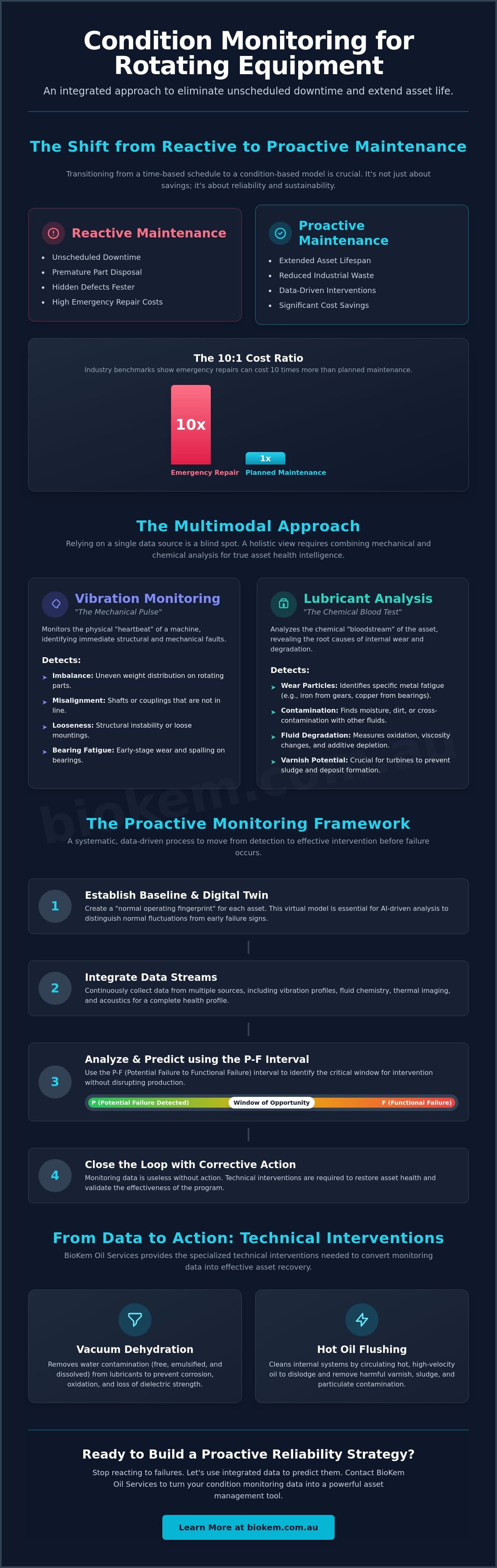
Traditional time-based maintenance often leads to the premature disposal of functional components or allows hidden defects to fester until a shutdown occurs. Transitioning to a condition-based model eliminates this guesswork. Industry benchmarks suggest a 10:1 cost ratio between emergency repairs and planned maintenance. This isn’t just a financial win; it’s an environmental imperative. By monitoring fluid chemistry through detailed oil analysis, facilities can extend lubricant life significantly. This reduces the volume of waste oil and the carbon footprint associated with manufacturing new synthetic fluids. The P-F interval remains the core metric for this strategy. It defines the specific window of opportunity between the first detection of a potential failure and the point of functional failure, allowing teams to intervene without disrupting production.
Key Components of a Rotating Asset Program
A comprehensive program focuses on critical mechanical components such as bearings, shafts, seals, and gears. These parts are the primary points of failure in pumps, turbines, and compressors. Effective Condition Monitoring for Rotating Equipment integrates multiple data streams, including vibration profiles, thermal imaging, acoustics, and fluid chemistry. In the 2026 landscape of AI-driven analysis, establishing an accurate baseline for each asset is non-negotiable. Without a normal operating fingerprint, AI algorithms can’t distinguish between standard operational fluctuations and the early signs of metal fatigue or moisture ingress. This baseline data ensures that every alert is actionable and grounded in the specific mechanical context of the asset.
The Multimodal Approach: Vibration vs. Lubricant Analysis
Relying solely on vibration data is like monitoring a heartbeat without ever performing a blood test. While some industry perspectives suggest that vibration is the primary readable signal for machinery, this narrow view ignores the chemical precursors to mechanical distress. A sophisticated strategy for Condition Monitoring for Rotating Equipment utilizes a multimodal approach. By combining mechanical vibration data with fluid chemistry, you can identify not just when a machine is failing, but exactly why the degradation began. This dual-stream intelligence is the foundation of modern industrial reliability and long-term asset health.
Vibration Monitoring: The Mechanical Pulse
Vibration monitoring remains the standard for identifying immediate physical faults such as imbalance, misalignment, and structural looseness. Reliability engineers often reference the NASA vibration analysis guide to understand how high-frequency signals correlate with early-stage bearing fatigue. While ISO 10816 provides a framework for vibration severity, these standards have practical limitations. They often struggle to provide clear data for slow-rotating equipment or machinery operating under variable speeds where the mechanical signal is inconsistent. In these cases, vibration data might only show a problem once the damage is already severe.
Oil Analysis: The Chemical Early Warning System
Lubricant analysis fills the diagnostic gaps left by mechanical sensors. By monitoring viscosity, oxidation levels, and additive depletion, you can detect the root cause of an impending failure months before a vibration sensor triggers an alarm. For example, varnish precursors often appear in the oil long before they cause valves to stick or bearings to overheat. Utilizing Patch Test Kits allows for immediate onsite assessment, giving your team the ability to visualize contamination levels without the delay of laboratory shipping. This proactive stance prevents the premature failure of gears and bearings, directly supporting your facility’s sustainability goals by reducing component waste.
True reliability is achieved by integrating oil contamination control directly into your mechanical monitoring schedule. When vibration data indicates a slight rise in temperature, a concurrent fluid sample can confirm if the issue is a lubrication breakdown or a physical misalignment. If you suspect internal wear is already occurring, a detailed Filter Ferrogram can provide the microscopic evidence needed to schedule a precise intervention before a catastrophic event occurs. This integrated approach ensures that Condition Monitoring for Rotating Equipment delivers clear, actionable data for every decision you make.
Asset-Specific Monitoring: Turbines, Gearboxes, and Pumps
Effective Condition Monitoring for Rotating Equipment requires a strategy tailored to the specific failure modes of each machine class. A generic monitoring suite isn’t sufficient for the diverse range of assets found in a typical industrial facility. You must match the monitoring frequency and the diagnostic tools to the criticality of the asset. High-consequence machinery, such as power generation turbines, requires continuous, high-fidelity data, while secondary process pumps might only need periodic manual inspections. This targeted approach ensures that your reliability budget is allocated where it can provide the highest return on investment.
Critical Targets for Turbine Reliability
Turbines are exceptionally sensitive to the chemical health of their lubricants. Varnish formation is the primary threat, often leading to servo-valve sticking and catastrophic bearing failure. To maintain operational stability, you must monitor for MPC (Membrane Patch Colorimetry) to predict varnish potential before it deposits on internal metal surfaces. Industrial compliance for critical turbines often targets strict ISO 4406 cleanliness codes, such as 16/14/11, to ensure adequate servo-valve protection. If MPC levels begin to rise, implementing specialized varnish removal systems is the most effective way to recover fluid health without a full oil change. This proactive decontamination extends the lifecycle of EHC fluids and significantly reduces the environmental footprint of your maintenance operations.
Gearbox and Hydraulic System Protection
In gearboxes and high-load hydraulic circuits, moisture ingress and abrasive wear are the leading causes of premature bearing fatigue. Even small amounts of water contamination can reduce bearing life by over 50 percent before the oil even appears cloudy. Utilizing the particle pal range for real-time ISO code tracking provides an immediate alert if a seal fails or if internal metal fatigue begins to accelerate. Unlike standard vibration sensors that might miss slow-speed gear spalling, digital particle counters detect the actual metallic fragments generated during the early stages of wear, allowing for intervention during a scheduled window.
Centrifugal pumps present a unique challenge, as they often fail due to cavitation or seal degradation. While vibration analysis is excellent for identifying shaft misalignment, acoustic emission sensors are superior for detecting the specific high-frequency signatures of cavitation. These bubbles collapsing against the impeller cause localized damage that traditional sensors often miss until the impeller is already compromised. By combining acoustic data with temperature monitoring and seal pressure analysis, you can identify pump distress at the earliest possible stage, preventing fluid leaks and protecting the surrounding environment.
Building a Proactive Condition Monitoring Framework
Constructing a reliable framework for Condition Monitoring for Rotating Equipment requires a structured sequence that transforms raw sensor outputs into actionable maintenance tasks. The first step involves an Asset Criticality Ranking (ACR). This process categorizes machinery based on the severity of impact if it fails, ensuring that monitoring budgets aren’t wasted on non-critical components. Once priorities are set, you must select a balanced sensor suite. A mix of vibration sensors and oil quality monitors provides the multimodal view necessary to catch both mechanical and chemical degradation before they lead to an outage.
Establishing machine-specific baselines is the next critical phase. Generic alarm thresholds often result in nuisance alerts that teams eventually ignore. By capturing the unique operating fingerprint of an asset during healthy operation, AI-driven platforms can accurately identify the earliest deviations. To gain a truly granular view of internal health, schedule a periodic Filter Ferrogram. This analysis identifies the size, shape, and composition of wear particles; it allows you to distinguish between normal break-in wear and active component fatigue.
Data Integration and AI in 2026
The modern reliability landscape has moved away from isolated data silos. Today’s integrated dashboards combine vibration, temperature, and fluid chemistry into a single pane of glass. AI algorithms excel at identifying subtle cross-correlation patterns, such as a slight rise in temperature coupled with specific metallic debris, which a human analyst might overlook. However, sophisticated data is useless without a proactive maintenance strategy. The goal is to close the loop by triggering a corrective work order before the asset reaches its functional failure point.
Sampling and Testing Best Practices
An effective program for Condition Monitoring for Rotating Equipment relies on precise sampling and consistent testing intervals. Consistency is the foundation of trend accuracy. Oil sampling points must be standardized and located in live zones to ensure the fluid is representative of the system’s current state. While offsite laboratory certification provides a historical record, onsite testing allows for immediate tactical decisions. Integrating thermal imaging alongside these fluid checks helps detect hot spots in rotating assemblies that might indicate localized friction or electrical discharge. This comprehensive visibility protects your equipment and prevents the environmental hazards associated with catastrophic mechanical failure.
If you’re ready to move beyond data collection and start recovering asset health, explore our full range of industrial filtration and monitoring solutions.
BioKem Oil Services: Closing the Loop with Corrective Action
Identifying a fault through Condition Monitoring for Rotating Equipment is only half the battle. Data provides the diagnosis, but it doesn’t perform the cure. Without a decisive technical intervention, even the most sophisticated sensors only serve to document an asset’s decline. BioKem Oil Services bridges this gap by providing onsite services that transform diagnostic insights into restorative actions. We specialize in closing the loop between detection and decontamination, ensuring that your machinery returns to its optimal operating state without the need for costly, synthetic component replacements.
When monitoring data reveals high levels of particulate matter or chemical degradation, a standard oil change is often insufficient. Contaminants frequently remain trapped in dead legs or adhered to internal surfaces. We leverage Hot Oil Flushing to achieve the high-velocity, turbulent flow necessary to dislodge these deposits and restore system cleanliness. As the Australian distributor for Filters S.p.A., we provide world-class hardware that maintains these cleanliness levels long after the initial flushing is complete. This combination of specialist service and high-performance hardware creates a sustainable lifecycle for your critical rotating assets.
Restoring Asset Health Post-Detection
Effective corrective action must be as precise as the monitoring that triggered it. If your sensors detect dissolved water, we utilize vacuum dehydration to remove moisture at the molecular level, preventing the hydrogen embrittlement that leads to bearing fatigue. For power generation facilities, BioKem Oil Services focuses on mitigating varnish before it causes a turbine trip. By implementing high-efficiency filtration and specialized varnish removal systems, we help facilities consistently meet their target ISO 4406 cleanliness codes. These interventions don’t just fix a problem; they reinforce the system’s resilience against future contamination.
Technical Partnership for Australian Industry
BioKem Oil Services provides national service coverage, supporting both remote mining operations and metropolitan industrial sites across Australia. We understand that every facility faces unique challenges, from high-dust environments to extreme thermal loads. Our team develops customized filtration and decontamination solutions that align with your specific Condition Monitoring for Rotating Equipment protocols. This partnership ensures that your reliability strategy is supported by technical experts who value long-term ecological health and regulatory compliance. We provide the localized expertise needed to anchor global scientific standards in your specific operational context.
To move your facility from passive monitoring to proactive restoration, enquire about BioKem Oil Services condition monitoring and oil analysis services today.
Advancing Industrial Reliability through Integrated Monitoring
Effective reliability management requires more than just collecting data; it demands a strategic alignment of mechanical and chemical analysis. By integrating vibration profiles with detailed fluid chemistry, you can identify failure precursors months before they manifest as physical damage. This proactive approach supports both operational efficiency and environmental sustainability by extending the life of your critical assets. It doesn’t just protect your machinery; it safeguards your production schedule and reduces industrial waste.
Implementing a comprehensive strategy for Condition Monitoring for Rotating Equipment ensures that every alert leads to a targeted, technical intervention rather than a reactive shutdown. As the authorized Australian distributor for Filters S.p.A., BioKem provides the specialist hardware and onsite technical services needed to restore system cleanliness nationwide. Our advanced laboratory analysis and technical reporting give you the clarity required for informed decision-making. Optimise your rotating equipment reliability with BioKem Oil Services. Transitioning to a data-driven maintenance model is a vital step toward a more resilient and sustainable industrial future.
Frequently Asked Questions
What are the main techniques used in condition monitoring for rotating equipment?
The primary techniques for Condition Monitoring for Rotating Equipment include vibration analysis, lubricant analysis, thermal imaging, and acoustic emission testing. Vibration analysis identifies mechanical faults like misalignment or imbalance. Lubricant analysis provides a chemical blood test to detect additive depletion and internal wear. Thermal imaging identifies friction-related hot spots, while acoustic sensors catch high-frequency signals from bearing fatigue or pump cavitation.
How often should I perform oil analysis on my rotating assets?
Frequency is dictated by your Asset Criticality Ranking (ACR). Critical turbines or primary process pumps typically require monthly or quarterly oil analysis to maintain strict reliability standards. For less vital equipment, biannual sampling is often sufficient to establish trends. Consistent sampling intervals are vital; they allow you to identify subtle deviations in fluid chemistry before they escalate into mechanical failures.
Can vibration analysis detect lubrication-related failures?
Vibration analysis identifies the mechanical symptoms of lubrication failure, such as increased friction or bearing wear, but it rarely detects the root cause. By the time vibration levels rise, physical damage to internal surfaces has usually occurred. Lubricant analysis is superior for early detection. It identifies oxidation, moisture ingress, and varnish precursors long before they manifest as a readable vibration signal.
What is the difference between online and periodic condition monitoring?
Online monitoring provides continuous, real-time data through permanently installed sensors, while periodic monitoring involves manual data collection at set intervals. Online systems are essential for high-criticality assets where failure can occur rapidly. Periodic Condition Monitoring for Rotating Equipment is a cost-effective alternative for secondary assets. It relies on manual oil sampling and vibration routes to track long-term health trends without the higher cost of permanent hardware.
Why is ISO 4406 important for rotating equipment reliability?
ISO 4406 is the foundational international standard for expressing the level of particulate contamination in industrial fluids. For rotating equipment, maintaining specific ISO targets, such as 16/14/11 for turbines, is critical for protecting sensitive components like servo-valves and high-speed bearings. Monitoring these codes allows you to verify the effectiveness of your filtration and ensures that abrasive particles don’t cause premature metal fatigue.
How does condition monitoring contribute to industrial sustainability?
Condition monitoring reduces environmental impact by extending the operational lifecycle of both the machine and its lubricants. By transitioning from time-based to condition-based oil changes, facilities can significantly decrease the volume of waste oil generated. This proactive approach minimizes the need for manufacturing new synthetic fluids and prevents the ecological hazards associated with catastrophic equipment failures and fluid leaks.
What is varnish mitigation and why is it part of a monitoring program?
Varnish mitigation is the process of removing soft contaminants and oxidation byproducts from oil to prevent them from depositing on internal surfaces. It’s a critical part of a monitoring program because standard filters can’t capture these sub-micron precursors. Monitoring for MPC (Membrane Patch Colorimetry) identifies varnish potential early. This allows you to implement specialized removal systems before valves begin to stick or bearings overheat.
Is condition monitoring cost-effective for smaller rotating machines?
Condition monitoring is increasingly cost-effective for smaller assets due to the falling price of wireless MEMS sensors and subscription-based “Monitoring as a Service” models. In 2026, initial implementation costs for many assets range from $500 to $5,000. Preventing a single unscheduled shutdown usually covers these expenses. Even for smaller machines, the data provided by periodic oil analysis offers a high return on investment by extending component life.