

What if the foul, rotten egg odor emanating from your reservoir is actually the smell of your equipment’s impending failure? Many maintenance teams treat microbial contamination in industrial lubricants as a minor nuisance, yet biological growth is a mechanical problem that requires more than just a chemical additive. You’ve likely experienced the frustration of rapidly plugging filters, sticking hydraulic valves, and oil that degrades far earlier than its ISO 4406:2017 cleanliness codes would suggest. It’s a costly cycle that compromises both operational efficiency and your commitment to environmental responsibility.
We understand that maintaining system integrity requires a move away from reactive chemical dosing toward scientific remediation. This article provides the technical expertise you need to identify biological “bugs,” treat existing infestations, and establish a permanent prevention strategy. You’ll learn why mechanical intervention like hot oil flushing is the essential sterilization step for removing stubborn biofilms and how keeping moisture levels below 500 ppm through vacuum dehydration stops growth at the source. We’ll preview the shift from traditional industrial methods to proactive, life-science-oriented solutions that ensure your lubrication systems remain both productive and sustainable over the long term.
Key Takeaways
- Understand that managing microbial contamination in industrial lubricants requires addressing a mechanical problem where bacteria and fungi thrive in reservoirs, leading to microbiologically influenced corrosion.
- Learn to identify early warning signs beyond foul odors, such as the presence of cloudy oil and the formation of protective slime on reservoir surfaces.
- Recognize the limitations of biocides, which kill microbes but leave behind dead biomass that continues to plug filters and restrict critical fluid flow.
- Establish a proactive defense by utilizing vacuum dehydration to eliminate the moisture that microbes require for survival and replication.
- Position hot oil flushing as a critical mechanical intervention to physically strip away biofilms that chemical treatments cannot reach.
What is Microbial Contamination in Industrial Lubricants?
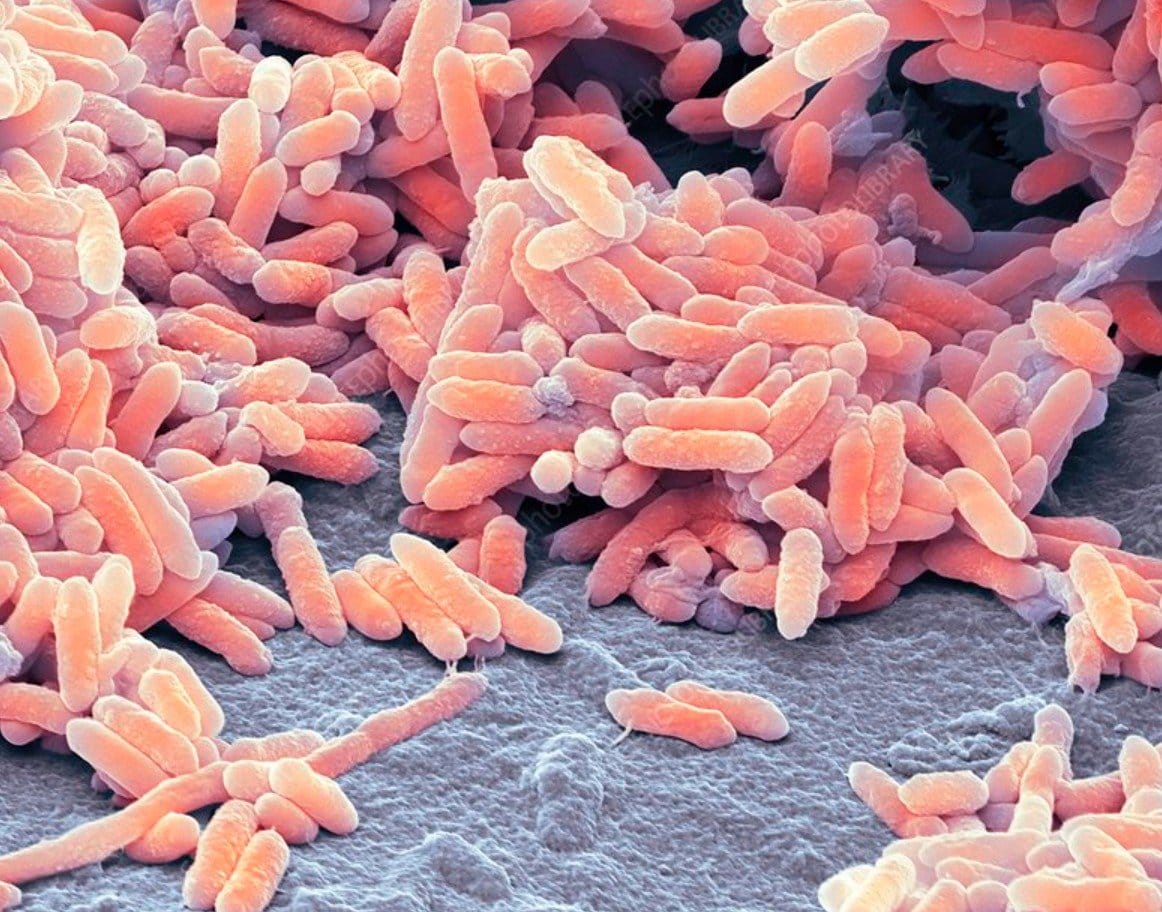
Microbial contamination in industrial lubricants refers to the proliferation of microscopic organisms, specifically bacteria, fungi, and yeast, within a fluid system. While oil is often viewed as a sterile environment, it provides a rich carbon source that many microorganisms can metabolize. This biological activity isn’t just a surface issue; it represents a significant chemical and physical threat to machinery. Even high-temperature systems aren’t immune. Many microbes are thermophilic or reside in cooler stagnant zones, such as reservoir corners or dead-legs, where they can survive and multiply. Without intervention, these colonies form complex structures that compromise fluid performance.
The Biological Players: SRB, GAB, and APB
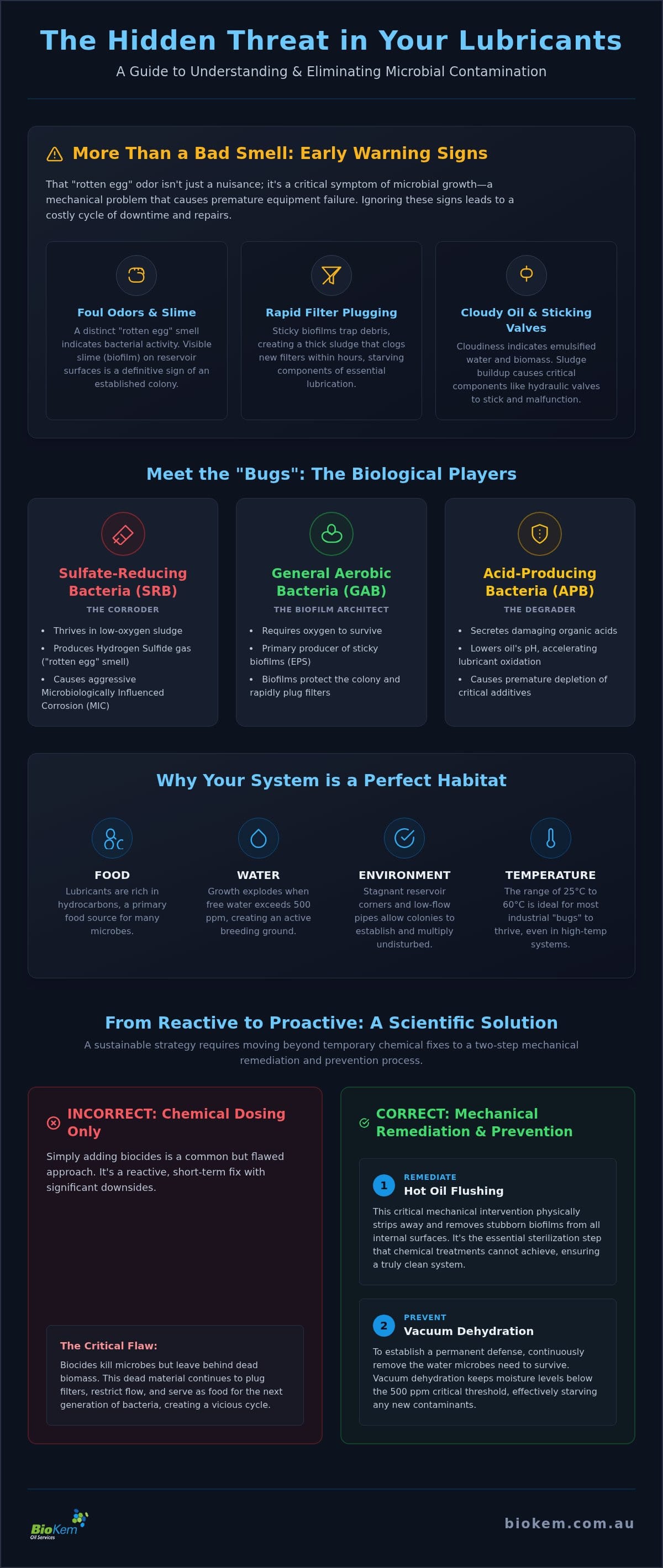
Identifying the specific organisms involved is crucial for effective remediation. Sulfate-Reducing Bacteria (SRB) are among the most destructive. These anaerobic organisms thrive in low-oxygen environments, such as the sludge layer at the bottom of tanks. They produce hydrogen sulfide gas, which creates a distinct “rotten egg” smell and causes microbiologically influenced corrosion (MIC) by attacking metal surfaces directly. General Aerobic Bacteria (GAB) require oxygen and are typically the primary architects of biofilms. These gelatinous structures protect the colony and can rapidly plug specialist oil filters. Acid-Producing Bacteria (APB) secrete organic acids as metabolic byproducts. These acids lower the oil’s pH, which accelerates lubricant oxidation and causes premature additive depletion.
Why Industrial Oils are a Perfect Habitat
Industrial systems offer a stable environment for these organisms to thrive. Lubricants are essentially long-chain hydrocarbons, which serve as a primary food source for many species. However, metabolic activity often remains dormant until a catalyst is introduced: free water. Research indicates that microbial growth becomes a significant risk when water levels exceed 500 ppm. Once moisture is present, the interface between oil and water becomes a highly active breeding ground. Stagnant areas within reservoirs and low-flow piping sections provide the necessary stillness for colonies to establish themselves. While many believe operating temperatures are too high for life, the range between 25°C and 60°C is ideal for most industrial “bugs.” Even in hotter systems, the temperature gradients near tank walls or during shutdown periods offer ample windows for a biological bloom to take hold. Understanding these environmental factors is the first step in managing Microbial Contamination in Industrial Lubricants.
The Operational Risks of Untreated Microbial Growth
The financial consequences of Microbial Contamination in Industrial Lubricants extend far beyond the cost of a replacement drum of oil. Unscheduled downtime and the premature disposal of thousands of liters of fluid represent a massive operational drain. Beyond the equipment, human health is a factor. OSHA documents the Operational Risks of Untreated Microbial Growth, citing how bacterial proliferation in industrial fluids can lead to severe respiratory conditions. For the machinery, the damage begins with the loss of additive effectiveness. Microbes consume esters and other additives, causing viscosity shifts that leave surfaces unprotected during high-load operations. When the protective oil film thins, mechanical wear on bearings and gears accelerates rapidly.
Microbiologically Influenced Corrosion (MIC) represents a unique threat. Unlike standard oxidation, MIC is localized and aggressive. Bacteria, specifically sulfate-reducing varieties, produce hydrogen sulfide as a byproduct. When this gas meets trace moisture, it forms sulfuric acid that eats through steel and copper components. This results in deep pitting and structural failure in reservoirs and piping that often goes unnoticed until a leak occurs. These metabolic acids also lower the oil’s total base number (TBN), stripping away the fluid’s natural ability to neutralize contaminants.
Biofilms and Filter Plugging
Microorganisms survive by secreting Extracellular Polymeric Substances (EPS), which act as a biological glue. This sticky matrix adheres to every internal surface, trapping metal fines and dust to create a thick, abrasive sludge. This leads to a frustrating cycle where filters plug within hours of installation, forcing constant hardware changes without solving the root cause. Biofilms create a physical shield that protects living microbes from standard biocide treatments, preventing the chemicals from reaching the core of the colony. This protective layer ensures that even if you kill the free-floating bacteria, the infestation remains rooted in your system walls.
Lubricant Oxidation and Sludge Formation
Biological activity acts as a catalyst for rapid lubricant oxidation. As microbes metabolize the oil, they release organic acids that trigger the formation of varnish. This byproduct coats sensitive components like servo valves and heat exchangers, leading to sticky operation and reduced cooling efficiency. These contaminants also destroy the oil’s demulsibility, a property measured by ASTM D1401 that allows oil to separate from water. When oil fails to shed moisture, it creates stable emulsions that cause pump cavitation and foam characteristic failures. Monitoring these shifts through professional oil analysis is the only way to catch degradation before it results in catastrophic bearing starvation.
How to Detect Microbial Contamination Early
Identifying the early stages of biological growth requires a combination of sensory awareness and technical diagnostic tools. Because microorganisms are often invisible to the naked eye until a colony is well-established, relying solely on visual inspections is a risky strategy. Odor is your first warning. The presence of sulfate-reducing bacteria (SRB) typically manifests as a pungent, “rotten egg” smell caused by the release of hydrogen sulfide gas. If you notice this scent near your reservoirs, it’s a clear signal that anaerobic activity is occurring in the stagnant zones or sludge layers of your system.
Visual red flags provide further evidence of an infestation. You may observe cloudy or hazy oil, which indicates an emulsion or high concentrations of suspended biomass. In advanced stages, a thick, mayonnaise-like slime often coats reservoir walls and suction strainers. Operational symptoms also offer critical clues. If your maintenance team reports unexpected pressure drops across filters or a noticeable lag in hydraulic valve response, the system is likely struggling with the “glue” effect of extracellular polymeric substances. To understand the full scope of the threat, maintenance professionals must learn How to Detect Microbial Contamination by looking for tramp oils and nutrient sources that fuel these blooms. Regular oil analysis serves as the foundation for catching these shifts before they lead to component failure.
Onsite vs. Laboratory Detection Methods
Field-based screening tools like dip slides offer a quick, cost-effective way to confirm the presence of bacteria and fungi. However, these tests require incubation periods and only capture a small percentage of the total microbial population. For a more precise quantification, laboratory-grade ATP bioluminescence testing provides an immediate measurement of cellular energy within the sample. Maintenance teams can also utilize patch test kits to physically isolate biomass from the fluid. This allows for a visual assessment of the contaminants trapped on the membrane, helping to distinguish between inorganic debris and biological sludge.
Interpreting ASTM Standards for Bio-Testing
Standardized testing protocols are essential for maintaining regulatory compliance and operational reliability. Understanding ASTM D8506-23 is vital for monitoring biodeterioration, as it provides a framework for quantifying the impact of microbes on fluid properties. When routine monitoring reveals a spike in microbial counts or a sharp decline in fluid pH, you must escalate to emergency remediation. In cases where metal wear is suspected alongside biological growth, a filter ferrogram analysis can identify the specific morphology of wear particles. This helps determine if the damage is caused by standard mechanical friction or the aggressive pitting characteristic of microbiologically influenced corrosion. Detecting Microbial Contamination in Industrial Lubricants at this stage is the only way to prevent the transition from a treatable nuisance to a catastrophic system failure.
Remediation: Why You Can’t Just ‘Kill’ Your Way Out
A common misconception in maintenance management is that chemical biocides represent a complete cure for biological growth. This “Biocide Myth” overlooks the physical reality of an infestation. While a biocide may successfully neutralize free-floating organisms, it leaves behind a massive volume of dead biomass. This cellular debris doesn’t disappear; it remains in the fluid as a particulate contaminant that continues to plug filters and restrict flow. Relying solely on chemical “kills” without physical removal is a temporary measure that fails to address the underlying structural problem within the system.
Biofilms create a formidable “shield” effect that complicates remediation efforts. These extracellular matrices are remarkably dense, preventing biocide molecules from penetrating the deeper layers of the colony. Consequently, the core population remains viable and ready to re-colonize the system as soon as chemical concentrations dissipate. To achieve true system sterility and manage Microbial Contamination in Industrial Lubricants effectively, you must transition from chemical dosing to mechanical remediation. Physically stripping these biological anchors from the internal surfaces is the only way to ensure the infestation doesn’t return.
The Hot Oil Flushing Advantage
Mechanical cleaning through hot oil flushing is the essential sterilization step for any contaminated system. This process utilizes high-velocity, turbulent flow to create the mechanical energy required to dislodge stubborn biofilms from pipe walls. Unlike standard circulation, turbulent flow reaches every internal surface, ensuring that no biological pockets remain. To verify the effectiveness of the flush, technicians utilize paddle flushing screens to capture and inspect dislodged debris. This rigorous approach ensures full compliance with ASTM D6439-23 standards, providing documented proof that the system has returned to its required cleanliness baseline.
Tank Cleaning and Final Purification
The reservoir is the most frequent site of re-infection, yet it’s often the most overlooked component during remediation. Comprehensive tank cleaning is mandatory to remove the sludge and “bug” colonies that settle in stagnant corners. Once the physical cleaning is complete, the system requires final polishing to remove any remaining microscopic fragments. Integrating Filters S.p.A. high-performance elements provides the necessary filtration efficiency to capture fine biomass before it can re-establish a colony. If your system is currently struggling with persistent filter plugging, it’s time to move beyond biocides and invest in a professional hot oil flush to restore your operational integrity.
Proactive Prevention: Starving the Bug
Prevention is a more sustainable and cost-effective approach than repeated remediation cycles. If you don’t address the environmental conditions that allow bacteria to thrive, the infestation will inevitably return. Microbial Contamination in Industrial Lubricants thrives on environmental neglect, specifically the presence of moisture and stagnant fluid. By implementing a reliability-centred lubrication strategy, you transition from reactive “firefighting” to a proactive framework that starves microorganisms of the resources they need to replicate. This approach focuses on maintaining the fluid in a clean, dry, and stable state, ensuring long-term asset health and operational continuity.
Removing the Lifeblood: Advanced Water Removal
Moisture is the primary catalyst for biological activity. While standard particulate filters are essential for removing solid debris, they’re often insufficient for managing the dissolved water that fuels microbial metabolism. Once water levels exceed the oil’s saturation point, free water provides the perfect interface for a biological bloom. Utilizing vacuum dehydration is the most effective method for removing both free and dissolved moisture without damaging the oil’s additive package. Maintaining oil at <100 ppm water prevents most microbial blooms by creating an environment too arid for metabolic activity. This level of dryness ensures that even if spores enter the system, they remain dormant rather than colonizing your reservoirs.
Maintaining System Integrity
High-quality filtration and headspace management act as the final barriers against environmental ingress. Every time a reservoir “breathes,” it risks drawing in airborne moisture and fungal spores. Installing high-efficiency desiccant breathers and ensuring all seals are intact is critical for maintaining system integrity. Beyond physical barriers, regular monitoring is essential for early detection. Utilizing the Particle Pal range allows maintenance teams to track ISO cleanliness codes and water content in real time, providing the data necessary to intervene before a minor moisture spike turns into a major infestation. Establishing a formal oil contamination control program ensures that these preventative measures are consistent, measurable, and aligned with your facility’s long-term sustainability goals. By controlling the environment, you effectively eliminate the threat of Microbial Contamination in Industrial Lubricants before it can take root.
Securing Operational Longevity through Mechanical Sterilization
Managing Microbial Contamination in Industrial Lubricants is a commitment to mechanical precision and ecological responsibility. Chemical biocides aren’t a final solution because they fail to address the physical biomass and protective biofilms that compromise your system. Effective remediation requires the removal of these biological anchors through turbulent mechanical cleaning and strict moisture control. By maintaining water levels below critical saturation points, you eliminate the catalyst for metabolic activity and protect your equipment from aggressive corrosion.
BioKem provides the technical expertise needed to reclaim your systems. Our expert technicians perform onsite Hot Oil Flushing using ASTM D6439-23 compliant processes to ensure total system sterilization. As an authorized Australian distributor for Filters S.p.A., we combine high-performance filtration with advanced diagnostic capabilities. Contact BioKem for professional oil analysis and mechanical remediation services to restore your system’s integrity. Taking these proactive steps ensures your facility remains efficient, compliant, and resilient against biological threats.
Frequently Asked Questions
Can microbes really grow in turbine oil if it’s hot?
Microbes can indeed thrive in high-temperature systems like turbines. While the bulk oil temperature may be high, stagnant areas in the reservoir, corners of tanks, and dead-legs often fall within the optimal growth range of 25°C to 60°C. Some thermophilic species also adapt to higher temperatures. These organisms reside in the cooler boundary layers of the system, meaning thermal energy alone isn’t a reliable sterilization method for your lubrication system.
What does microbial contamination in oil smell like?
The most recognizable scent is a pungent, “rotten egg” odor caused by hydrogen sulfide gas. This gas is a metabolic byproduct of Sulfate-Reducing Bacteria (SRB) thriving in anaerobic conditions at the bottom of reservoirs. You might also detect sour, vinegar-like, or musty smells, which indicate the presence of yeast or fungal colonies. These olfactory red flags suggest that Microbial Contamination in Industrial Lubricants has reached a stage where metabolic activity is actively degrading the fluid.
Will adding a biocide fix my plugged filters?
A biocide won’t resolve filter plugging. While these chemicals kill living organisms, they don’t dissolve the existing biomass or the “glue-like” extracellular polymeric substances (EPS) already in the system. The dead microbes remain as particulate matter that continues to blind filter elements. To restore flow and prevent recurring blockages, you must physically remove the biological sludge through mechanical remediation methods like tank cleaning or high-velocity hot oil flushing.
How much water is needed for ‘the bug’ to start growing?
Biological growth typically becomes a significant risk when water levels exceed 500 parts per million (ppm). Microbes require free water to support their metabolic processes, and the interface between oil and water provides an ideal breeding ground. Maintaining moisture levels well below this threshold is essential for prevention. Once water is present, even in trace amounts, it acts as the lifeblood for colonies that eventually lead to widespread Microbial Contamination in Industrial Lubricants.
Is hot oil flushing necessary for every microbial infestation?
Hot oil flushing is the most effective way to ensure total system sterilization. Standard chemical treatments often fail to penetrate the thick, protective biofilms that anchor colonies to pipe walls. High-velocity, turbulent flow physically strips these biological layers away, removing both living and dead biomass. This mechanical intervention is necessary whenever an infestation has resulted in visible slime, recurring filter plugging, or documented microbiologically influenced corrosion within the lubrication circuit.
How often should I test my industrial lubricants for bacteria?
Routine testing should occur at least quarterly as part of a proactive oil analysis program. If your system has a history of moisture ingress or operates in high-humidity environments, you should increase the frequency to monthly screenings. Early detection through ATP bioluminescence or culture tests allows you to intervene before biofilms establish themselves. Regular monitoring ensures that any shift in the biological baseline is caught before it translates into mechanical failure.
Can microbial growth cause permanent damage to my machinery?
Microbial growth causes severe, permanent damage through several mechanisms. Sulfate-reducing bacteria produce acids that cause deep pitting and microbiologically influenced corrosion on metal surfaces. Additionally, the metabolic byproducts accelerate oil oxidation, leading to varnish that sticks critical valves and starves bearings. If left untreated, the resulting loss of additive effectiveness and viscosity changes can lead to catastrophic mechanical wear that requires expensive component replacement and extended unscheduled downtime.
What is the best way to remove water from oil to prevent microbes?
Vacuum dehydration is the superior method for removing moisture and preventing biological blooms. Unlike standard filtration or centrifugal separation, vacuum dehydration removes free, emulsified, and dissolved water by lowering the boiling point of moisture within a vacuum chamber. This allows you to achieve water levels below 100 ppm, effectively starving microbes of the moisture they need to survive. It’s a proactive solution that maintains fluid chemistry while ensuring a sterile environment.