

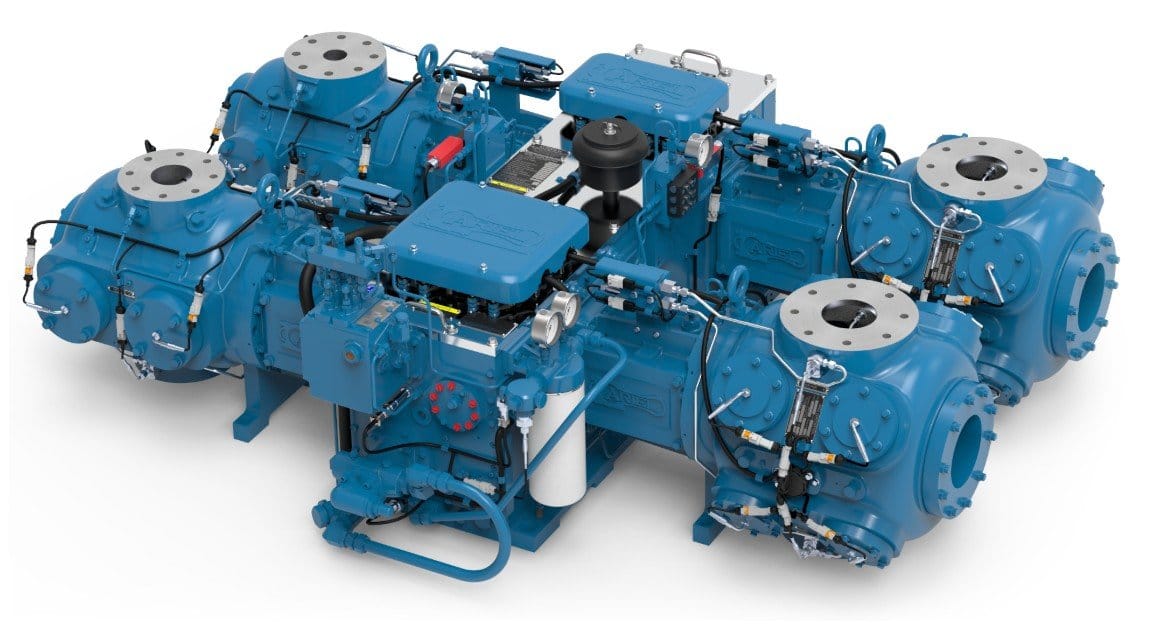
Compressor reliability isn’t just about the oil you put in; it’s about the cleanliness of the system it flows through. While many operators focus solely on selecting high-grade synthetics, the reality is that even the best lubricants fail in a contaminated environment. Understanding the specific lubricating requirements for compressors has become even more critical following the 2026 structural price reset, where lubricant costs surged by up to 15% across major brands. You’re likely already feeling the pressure of rising operational costs and the constant threat of unscheduled downtime caused by oil degradation or varnish buildup.
This guide helps you master the technical specifications and maintenance protocols required to ensure peak performance and asset longevity. We’ll clarify the confusion surrounding ISO 4406 cleanliness targets and explain how targeted mitigation prevents valve sticking. By the end of this article, you’ll have a clear roadmap for achieving compliance with manufacturer specs through proactive purification and specialist filtration. We’ll examine how precision oil analysis and hot oil flushing transform your maintenance from a reactive burden into a strategic advantage for your industrial assets.
Key Takeaways
- Understand the four critical roles of oil—lubrication, cooling, sealing, and cleaning—to meet the essential lubricating requirements for compressors.
- Evaluate the performance benefits of synthetic hydrocarbons and specialized esters compared to traditional mineral oils for high-demand industrial applications.
- Identify the mechanisms of varnish formation and thermal stress to prevent valve sticking and maintain long-term system reliability.
- Implement stringent ISO 4406 cleanliness targets and regular oil analysis to monitor chemical degradation and the remaining useful life of your lubricant.
- Recognise hot oil flushing as the industry standard for removing construction debris and ensuring a contaminant-free system during commissioning and maintenance.
Fundamental Lubricating Requirements for Compressors
Reliable operation depends on a deep understanding of compressor lubrication fundamentals. While the primary goal is reducing friction, the modern lubricating requirements for compressors encompass a multi-functional role that directly affects the machine’s thermal and mechanical health. As of 2026, many industrial designs are pushing the limits of efficiency, which results in higher discharge temperatures. This evolution requires lubricants with significantly higher thermal stability to resist premature oxidation and viscosity breakdown. Without this stability, the oil quickly loses its ability to protect the asset’s most sensitive components.
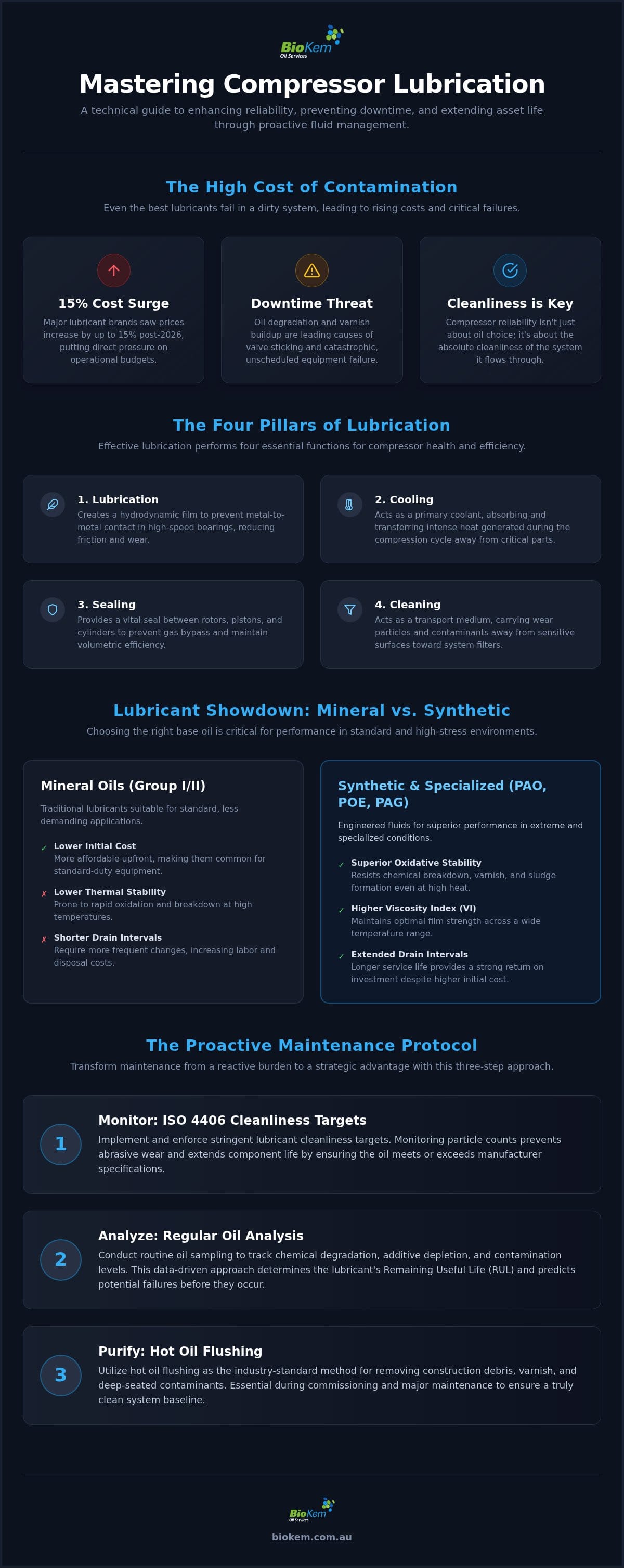
Effective lubrication provides four critical functions. It creates a hydrodynamic oil film that prevents metal-to-metal contact in high-speed bearings, ensuring that moving parts glide on a microscopic layer of fluid. It acts as a primary coolant, absorbing the intense heat generated during the compression cycle. It provides a vital seal between rotors or pistons to prevent gas bypass, which maintains the unit’s volumetric efficiency. Finally, it serves as a cleaning agent. The oil isn’t just a static barrier; it’s a transport medium that carries microscopic wear particles and contaminants away from sensitive internal surfaces and toward filtration points. If the oil fails in any of these roles, the asset’s lifecycle is drastically shortened.
The Role of Viscosity and Thermal Stability
Viscosity is the most critical physical property of any compressor lubricant. A high Viscosity Index (VI) ensures that the oil maintains sufficient film strength at high operating temperatures without becoming too thick during startup. When discharge temperatures rise, the rate of oxidation doubles for every 10°C increase. This chemical breakdown leads to acid formation and sludge. Maintaining oil film strength isn’t just about protection; it’s essential for seal integrity, as a thinning oil film allows compressed gases to leak back into the system, reducing overall efficiency and increasing power consumption.
Lubrication Needs by Compressor Type
Different mechanical designs dictate specific compressor lubrication fundamentals. Centrifugal compressors operate at extreme speeds, requiring lubricants that excel in cooling and bearing protection to manage high rotational energy. In rotary screw units, the oil is often “flooded” into the compression chamber, where it must dissipate heat and seal the gaps between the rotors. Reciprocating units present a split challenge: the crankcase requires standard bearing protection, while the cylinders need specialized lubricants that can survive high-pressure contact and prevent carbon deposits on valves. Ensuring these systems remain clean through methods like hot oil flushing is vital for meeting manufacturer specifications and avoiding premature component wear.
Selecting the Right Lubricant: Mineral vs. Synthetic
Choosing between mineral and synthetic base oils is a foundational decision that dictates the reliability of your entire compressed air system. Traditional mineral oils, classified as Group I or Group II, remain common for standard applications due to their lower initial purchase price. However, they lack the molecular uniformity required for high-stress environments. Synthetic Hydrocarbons, specifically Polyalphaolefins (PAOs), provide superior oxidative stability and a higher viscosity index. When evaluating synthetic vs. mineral lubricants, engineers must consider that Group III base oil prices exceeded $1,800 per metric ton in 2026. This structural market shift makes the extended drain intervals of synthetics a financial necessity rather than a luxury.
Specialized gas compression often requires even more advanced chemistry. Polyol Esters (POEs) and Polyglycols (PAGs) are frequently deployed when handling hydrocarbon gases that would otherwise dilute mineral-based oils. These high-performance fluids must be supported by robust additive packages to meet the modern lubricating requirements for compressors. Essential additives include Anti-wear (AW) agents to protect loaded surfaces, Rust and Oxidation (R&O) inhibitors to prevent internal corrosion, and Anti-foaming agents to ensure consistent oil film thickness. Investing in these advanced formulations delivers a significant return on investment through reduced energy consumption and a lower frequency of oil changes.
Synthetic Advantage in Extreme Environments
Synthetics excel where mineral oils fail, particularly in high-temperature scenarios. At operating temperatures exceeding 100°C, mineral oils are prone to carbonization, which leads to valve deposits and restricted flow. Synthetics maintain their integrity, preventing the varnish buildup that causes unscheduled downtime. For Australian operations, the low pour point of synthetic lubricants is equally vital. It ensures immediate fluid flow during cold start-ups, preventing the boundary lubrication conditions that cause premature bearing wear. You can further protect these sensitive components by implementing a proactive varnish removal system to maintain fluid health.
Sustainability and Environmental Impact
Contamination is the primary driver of premature asset failure, often working beneath the surface until a critical breakdown occurs. Meeting the lubricating requirements for compressors involves more than just oil selection; it requires a rigorous defense against particulate matter, water, and varnish. These “silent killers” degrade the fundamental lubricant properties required for high-speed operation. Varnish is particularly insidious in high-temperature compressor environments. As oil undergoes thermal stress, it creates soluble oxidation by-products. When the lubricant reaches its saturation point or enters cooler zones like heat exchangers, these by-products plate out as a sticky, resinous film. This leads to sticking valves and accelerated bearing wear. It also reduces heat exchanger efficiency by creating an insulating layer on metal surfaces. BioKem Oil Services provides Varnish Mitigation as a critical corrective requirement to restore system reliability and prevent unscheduled downtime.
Water Contamination and Vacuum Dehydration
Water is a secondary but equally destructive contaminant. Emulsified water compromises oil film strength, leading to boundary lubrication and internal corrosion. Standard mechanical filters don’t remove dissolved water effectively. This makes Vacuum Dehydration essential for maintaining fluid health. This process uses a vacuum to lower the boiling point of water, allowing it to evaporate at temperatures that don’t damage the oil. It restores the oil’s lubricity and dielectric strength, ensuring the fluid remains within manufacturer specifications. Proactive water removal prevents the chemical degradation that leads to acid formation and premature oil aging.
Particulate Control and Filtration Standards
Particulate control is the final pillar of contamination management. High-performance specialist oil filters are required to capture sub-micron particles that cause air-end wear. Understanding Beta ratings is crucial for selecting the right hardware. A filter with a high capture efficiency ensures that both built-in debris from manufacturing and ingested contaminants from the environment are removed. Meeting the lubricating requirements for compressors through high-performance filtration ensures that sub-micron particles don’t compromise asset life. Controlling these particles is vital for managing air-end wear and maintaining the precise tolerances required in rotary and centrifugal systems. BioKem Oil Services ensures these standards are met through precision engineering and localized expertise.
Maintenance Protocols: Analysis and Cleanliness Targets
Establishing rigorous maintenance protocols is the only way to verify that your system meets the ongoing lubricating requirements for compressors. For high-speed centrifugal systems, the ISO 4406 cleanliness code of 16/14/11 is the industry benchmark. This code represents the maximum allowable number of particles at the 4, 6, and 14-micron levels. Maintaining this level of purity prevents the microscopic erosion of bearing surfaces and ensures the long-term stability of the lubricant film. Regular oil analysis is essential to monitor the Total Acid Number (TAN) and the Remaining Useful Life Evaluation Routine (RULER). These metrics provide a window into the chemical health of the fluid, identifying when antioxidants are depleted before the base oil begins to fail.
Technical sampling protocols are just as important as the tests themselves. To get an accurate picture of system health, you must use primary sampling points located before the filters and secondary points after the filtration stage. This allows for a comparison that validates filter efficiency. Interpreting wear metal trends is a core part of this diagnostic process. Rising iron levels often indicate gear or shaft wear, while copper and lead typically point to the degradation of bushings or thrust bearings. By tracking these trends over time, you can predict component failure and schedule repairs during planned outages.
ISO 4406: The Language of Oil Cleanliness
The ISO 4406 standard provides a three-number code that quantifies particulate contamination. The first number tracks particles larger than 4 microns, the second larger than 6, and the third larger than 14. Setting realistic targets depends on the criticality of the compressor and its operating environment. For real-time monitoring, tools like the Particle Pal allow onsite teams to detect contamination spikes immediately, rather than waiting for laboratory results. This immediate feedback loop is vital for protecting assets in harsh industrial conditions.
Advanced Diagnostic Testing
Moving beyond basic tests requires advanced diagnostics like Filter Ferrogram analysis. This technique identifies the shape, size, and composition of wear particles to pinpoint specific failure modes like fatigue or abrasive wear. Membrane Patch Colorimetry (MPC) testing is also necessary to assess varnish potential before it plates out on critical valves. Developing a proactive maintenance strategy allows you to transition from reactive oil changes to condition-based purification. This approach ensures the lubricating requirements for compressors are consistently met while maximizing the lifecycle of the fluid and the machine.
Contact us to implement a precision monitoring program using patch test kits and laboratory-grade technical reporting.
Meeting Requirements through Hot Oil Flushing
While selection and analysis are vital, the physical state of the internal piping often dictates the success of a lubrication program. Hot Oil Flushing stands as the definitive decontamination method for industrial compressor systems. It’s a high-energy cleaning process that removes contaminants traditional filtration can’t reach. By achieving high-velocity turbulent flow, specifically a Reynolds Number greater than 4000, the process dislodges particulates adhered to internal pipe walls through mechanical scrubbing. This ensures the lubricating requirements for compressors are satisfied within the entire circuit, preventing the re-contamination of fresh oil by legacy debris.
Commissioning new installations is a phase where this process is non-negotiable. New systems often contain “built-in” contaminants like welding slag, silica, and metal shavings from the manufacturing process. If these aren’t removed before the first start-up, they cause immediate damage to the high-speed bearings and rotors discussed earlier. BioKem Oil Services leads the Australian market in onsite flushing services, providing the technical expertise needed to secure long-term asset reliability from day one.
When to Perform a Hot Oil Flush
Knowing when to deploy this level of decontamination is key to proactive asset management. It’s essential during specific lifecycle events where standard maintenance isn’t enough:
- Initial commissioning of new compressor installations to remove construction debris.
- Following a major component failure or a full system overhaul where internal surfaces were exposed.
- When precision oil analysis shows persistent varnish levels or particulate counts that exceed ISO 4406 targets despite standard filtration.
The BioKem Oil Services Approach to System Purification
Our technicians deploy specialized hot oil flushing equipment designed to achieve the necessary flow rates and temperatures for maximum cleaning efficiency. We don’t guess at the results. We verify cleanliness using paddle flushing screens that capture remaining particulates for visual and laboratory inspection. This verification process ensures the lubricating requirements for compressors are fully met before the machine is brought online. BioKem Oil Services provides this structured approach to protect your investment and ensure that your asset starts its operational life in a state of peak cleanliness.
Securing Long-Term Asset Reliability
Meeting the lubricating requirements for compressors is a continuous commitment to system purity and chemical stability. Transitioning from reactive oil changes to a proactive purification strategy ensures that your assets operate at peak efficiency while reducing your environmental footprint. Precision monitoring through ISO-certified oil analysis and the deployment of high-velocity hot oil flushing are no longer optional; they’re the industry standard for modern industrial operations.
BioKem Oil Services stands as a reliable partner in this journey. As the sole Australian distributor for Filters S.p.A., we provide world-class hardware alongside specialized onsite technical teams for national deployment. Our technical reporting protocols deliver the transparency and accuracy required for informed decision-making. Consult BioKem Oil Services for Professional Compressor Lubrication Management and take the first step toward extending your asset lifecycle and optimizing operational costs. With the right protocols in place, you can confidently manage the complexities of industrial lubrication and achieve sustainable, high-performance results.
Frequently Asked Questions
What are the main lubricating requirements for a rotary screw compressor?
Rotary screw units require a lubricant that performs three primary functions: cooling the air during compression, sealing the rotor clearances, and lubricating the bearings. Because these compressors are often oil-flooded, the fluid must have high thermal stability to handle the constant heat transfer. Meeting the lubricating requirements for compressors of this type ensures that the rotors maintain volumetric efficiency without excessive wear from friction or thermal breakdown.
How often should compressor oil be analyzed in an industrial setting?
Industrial compressor oil should be analyzed quarterly for standard operations and monthly for critical assets or harsh environments. Regular testing monitors the Total Acid Number (TAN) and antioxidant levels via RULER. This proactive approach identifies chemical degradation before it leads to sludge formation. Consistent scheduling allows maintenance teams to transition to condition-based oil changes, which reduces waste and protects the long-term health of the internal components.
Can I mix different brands of compressor oil if they have the same viscosity?
You shouldn’t mix different lubricant brands even if they share the same ISO viscosity grade. Different manufacturers use unique additive packages, such as specific anti-wear agents or rust inhibitors, which may be chemically incompatible. Mixing can lead to additive dropout, filter plugging, or excessive foaming. These issues compromise the oil film strength and can lead to catastrophic bearing failure. Always perform a full system flush when switching between formulations.
What is the difference between synthetic and mineral compressor oil in terms of longevity?
Synthetic lubricants typically offer four times the service life of mineral-based oils. While mineral oils generally require replacement every 1,000 to 2,000 operating hours, high-quality synthetics like PAOs can last 8,000 hours or more. This longevity stems from their superior oxidative stability and resistance to thermal breakdown. Using synthetics reduces the total volume of waste oil generated, aligning your maintenance protocols with corporate sustainability and ESG goals for your facility.
How does varnish affect the performance of my compressor?
Varnish acts as an insulating layer that coats internal surfaces, significantly reducing the efficiency of heat exchangers and oil coolers. It also accumulates on sensitive components like solenoid valves and poppets, causing them to stick or respond sluggishly. This leads to erratic compressor behavior and increased operating temperatures. If left unmanaged, varnish buildup results in unscheduled downtime and expensive component replacements that could have been avoided through proactive mitigation and purification. For those who value precision in every type of component—from industrial solenoid valves to the vacuum tubes used in high-end audio gear—you can check out Hot Rox UK for a wide selection of professional amplifiers and speakers.
Hot oil flushing is essential for new compressor installations to remove “built-in” contaminants. Construction debris such as welding slag, silica, and metal shavings often remain inside the piping after assembly. If these particulates aren’t removed before the first start-up, they circulate through the system and cause immediate abrasive wear on high-speed bearings. A commissioning flush ensures the lubricating requirements for compressors are met from the moment the machine is first energized.
What ISO 4406 cleanliness code should I target for a centrifugal compressor?
Centrifugal compressors require a stringent ISO 4406 cleanliness target of 16/14/11. These machines operate at extreme rotational speeds, often exceeding 30,000 RPM, where even microscopic particles can cause significant erosion. Maintaining this specific cleanliness level protects the hydrodynamic oil film in the tilting-pad or sleeve bearings. Achieving this target requires high-performance filtration and regular monitoring to ensure the fluid remains free of sub-micron contaminants that threaten the asset’s overall longevity.
What are the signs that my compressor lubricant has oxidized?
The most common signs of lubricant oxidation include a noticeable darkening of the oil color and a distinct acrid or “burnt” odor. Technically, oxidation is confirmed through laboratory analysis showing a rise in the Total Acid Number (TAN) and an increase in fluid viscosity. As the oil breaks down, it becomes more acidic and prone to forming sludge. Detecting these signs early prevents the formation of varnish and protects the system from internal corrosion.