


Did you know that 80% of all hydraulic system failures result directly from fluid contamination? When you pull a sample and see a milky, opaque appearance instead of clear amber, it’s a signal that your system is in immediate danger. Understanding cloudy hydraulic fluid causes is the first step toward preventing catastrophic pump failure and avoiding the high costs of unscheduled downtime. This cloudiness is a technical distress signal that requires a precise diagnostic response rather than a simple guess.
You’re likely wondering if you need to drain the entire reservoir or if a simple filter change will suffice. We understand the pressure to maintain operational efficiency while adhering to strict environmental and regulatory standards. This article will help you identify the exact source of the cloudiness, whether it’s water ingress, entrained air, or chemical degradation. You’ll learn how professional methods like vacuum dehydration and oil analysis can restore your fluid’s integrity, ensuring your system returns to peak reliability without the environmental burden of unnecessary oil disposal.
Key Takeaways
- Distinguish between hazy and milky visual profiles to determine if your system is suffering from water ingress or entrained air.
- Master the technical triggers behind cloudy hydraulic fluid causes, focusing on how emulsified water and microscopic air bubbles bypass standard filtration.
- Understand the mechanical risks of ignoring cloudiness, including the loss of lubricating film strength and the onset of pump cavitation.
- Utilize professional oil analysis as a diagnostic foundation to determine if your lubricant can be salvaged through specialized purification.
- Explore high-efficiency restoration methods like vacuum dehydration and hot oil flushing to maintain operational uptime and environmental responsibility.
Table of Contents
-
The Visual Warning: What Cloudy Hydraulic Fluid Really Means
-
The Industrial Impact: Why Cloudy Leads to Catastrophic Failure
The Visual Warning: What Cloudy Hydraulic Fluid Really Means
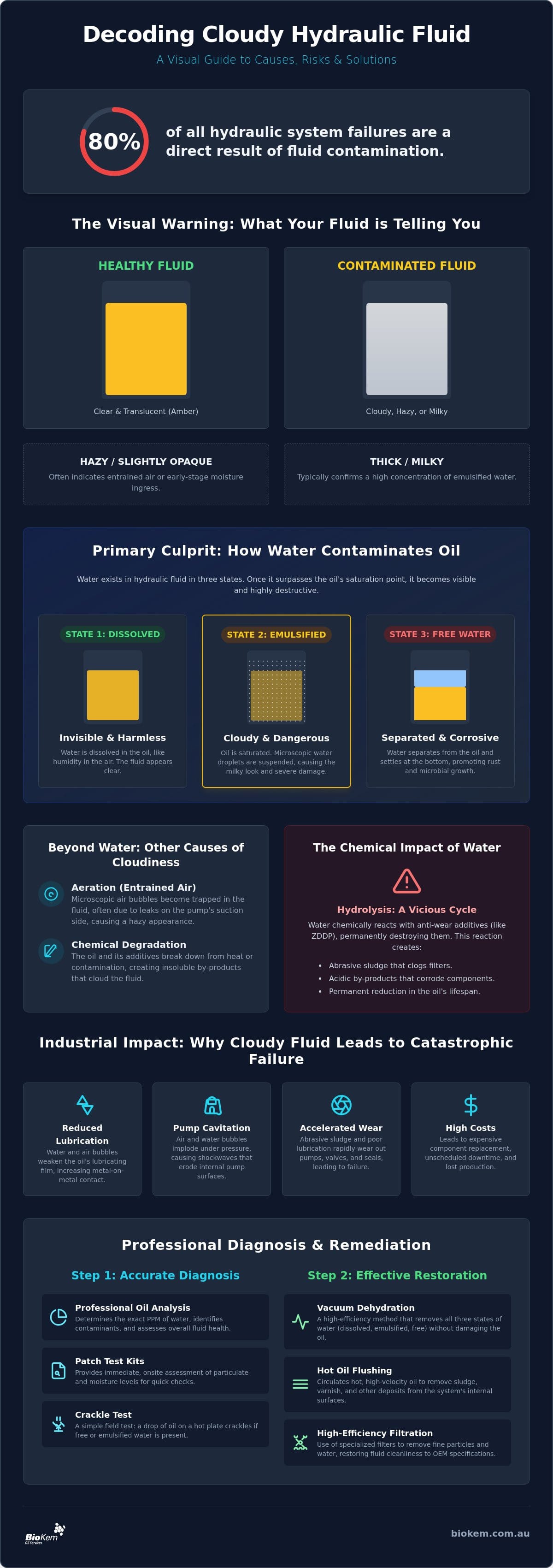
Cloudy hydraulic fluid is the visual manifestation of contaminants that have exceeded the fluid’s saturation point. While healthy Hydraulic fluid should remain clear and translucent, cloudiness indicates that the fluid can no longer hold foreign substances in a dissolved state. This transition is a critical warning. It signifies that the fluid’s lubricating properties are currently compromised, putting your pumps and valves at risk of accelerated wear.
Identifying the specific cloudy hydraulic fluid causes starts with distinguishing between a hazy and milky appearance. A hazy or slightly opaque look often points to entrained air or the early stages of moisture ingress. A thick, milky appearance typically confirms a high concentration of emulsified water. To confirm moisture presence in the field, technicians often use the Crackel Test. By placing a drop of oil on a hot plate, any audible crackling or bubbling confirms that water has surpassed the dissolved state and is actively damaging the system.
To better understand this concept, watch this helpful video:
Oil Saturation and the Clarity Threshold
Oil acts like a sponge, holding a specific amount of water in a dissolved, invisible state. This capacity is measured in parts per million (ppm). The saturation point varies significantly based on the oil type and operating temperature. Mineral oils typically have a lower saturation point than many synthetic alternatives. As temperature increases, the oil’s capacity to hold dissolved water expands. This explains why a system might appear clear while running at operating temperature but turns cloudy once it cools down and the water precipitates out of the solution.
The First Diagnostic Steps
Before initiating remediation, you must capture a representative sample for a formal visual inspection. Utilizing patch test kits allows for an immediate onsite assessment of particulate and moisture levels. Documenting colour and opacity changes in maintenance logs helps track the progression of the contamination. Simultaneously, conduct a physical audit of the reservoir. Check for obvious ingress points such as damaged reservoir lids, worn seals, or saturated desiccant breathers that may be allowing atmospheric moisture to enter the system.
The Primary Culprit: Water Contamination Mechanisms
While visual inspection identifies the problem, understanding the underlying cloudy hydraulic fluid causes requires a look at how water behaves within the lubricant. Water exists in three distinct states: dissolved, emulsified, and free water. Dissolved water is invisible to the naked eye, similar to humidity in the air. However, once the oil reaches its saturation point, the water precipitates into an emulsified state. These microscopic droplets remain suspended in the fluid, scattering light and creating the characteristic milky or cloudy appearance. Free water eventually separates and settles at the bottom of the reservoir, but it’s the emulsified state that poses the most immediate threat to system components.
The presence of water isn’t just a physical contaminant; it’s a chemical catalyst for degradation. Water reacts with common anti-wear additives like Zinc Dialkyldithiophosphate (ZDDP), leading to the formation of abrasive sludge and acidic by-products. This process, known as hydrolysis, permanently alters the chemical structure of the oil. It reduces the fluid’s lifespan and compromises its ability to protect metal surfaces from friction. If you suspect chemical breakdown has already begun, professional hot oil flushing may be necessary to remove the resulting deposits from internal galleries.
External vs. Internal Water Ingress
In the variable Australian climate, condensation is a frequent contributor to fluid cloudiness. Large temperature swings between day and night cause reservoirs to ‘breathe,’ drawing in humid air that condenses on cold internal tank walls. Beyond atmospheric moisture, worn rod seals and damaged hatch gaskets provide direct pathways for environmental water during wash-downs or rain events. The most critical source, however, is often internal. Pinhole leaks in heat exchangers can introduce high volumes of cooling water directly into the high-pressure circuit, leading to rapid and severe emulsification.
The Danger of Emulsification
The stability of an emulsion often depends on the oil’s formulation and the system’s operating conditions. High-shear environments, such as those found within gear pumps or high-velocity valves, act as mechanical mixers that force water and oil into a tight, stable bond. Demulsibility is the fluid’s ability to separate from water under static conditions. While some lubricants are designed to hold water in suspension to prevent it from pooling, most industrial hydraulic oils are formulated for high demulsibility. When these additives fail or are overwhelmed, the resulting cloudiness indicates that the fluid can no longer perform its primary role of lubrication and heat transfer.
Beyond Water: Aeration and Chemical Degradation as Causes
While water is the most prevalent factor, other cloudy hydraulic fluid causes include air entrainment and complex chemical breakdowns. It’s essential to distinguish between a milky appearance, which indicates moisture, and a frothy or foamy texture, which suggests aeration. Entrained air consists of microscopic bubbles trapped within the fluid. Unlike surface foam, which sits atop the reservoir, entrained air remains suspended. These tiny bubbles scatter light and create a hazy or cloudy visual profile that operators often mistake for water contamination. Identifying the correct contaminant is vital, as the remediation for air is entirely different from the methods used to remove water.
Mixing incompatible fluids is another significant yet frequently overlooked trigger for cloudiness. When two oils with different additive packages are combined, a chemical reaction can occur, leading to additive dropout. This reaction creates solid precipitates that cloud the oil and eventually settle as sludge in low-flow areas of the system. This chemical instability doesn’t just affect clarity; it can strip the oil of its protective qualities, leading to accelerated component wear and reduced system efficiency. Monitoring for these chemical changes through regular oil analysis is a critical step in maintaining a healthy, translucent lubricant.
Aeration and Entrained Air
Aeration typically stems from mechanical faults that allow atmospheric air to be drawn into the hydraulic circuit. Common sources include suction line leaks, low reservoir levels, and faulty pump shaft seals. This ingress doesn’t just affect clarity. It compromises system response, leading to spongy hydraulics and erratic actuator movement. To diagnose this, perform a simple settling test. If the cloudiness is caused by entrained air, the microscopic bubbles will eventually rise to the surface and clear, whereas water emulsions will remain opaque. Persistent aeration can lead to micro-dieseling, where air bubbles implode under high pressure, causing localized thermal damage to the oil molecules.
Varnish and Thermal Degradation
Thermal degradation occurs when the fluid is exposed to localized high temperatures, often due to micro-dieseling or restricted flow. This process creates sub-micron soft contaminants known as varnish precursors. Initially, the fluid may only appear slightly darker, but as these precursors accumulate, they create a persistent haze that standard filtration cannot remove. Over time, these contaminants plate out onto internal metal surfaces, causing valves to stick and heat exchangers to lose efficiency. Implementing specialized varnish removal systems is an effective strategy for managing these sub-micron particles and maintaining long-term fluid clarity and system reliability.
The Industrial Impact: Why Cloudy Leads to Catastrophic Failure
The transition from a clear lubricant to an opaque state signals a significant loss in lubricating film strength. While oil is designed to keep metal surfaces separated under high pressure, water and air have virtually no load-carrying capacity. When these contaminants are present, the fluid’s dielectric strength collapses. This leads to boundary lubrication conditions where metal-on-metal contact occurs, causing rapid abrasive wear. Understanding cloudy hydraulic fluid causes is therefore not just a maintenance task; it’s a critical strategy for protecting the physical assets of your operation.
Mechanical destruction often manifests through cavitation. This process occurs when air or water vapor bubbles within the cloudy fluid move from a low-pressure area to a high-pressure zone, such as the discharge side of a pump. These bubbles implode with enough force to blast microscopic pits into hardened steel surfaces. Over time, this erosion destroys pump impellers and housing tolerances, leading to a permanent drop in system pressure. Simultaneously, moisture triggers corrosion in yellow metals like brass and bronze, while precision-machined steel components begin to oxidize, introducing solid rust particles into the sensitive fluid circuit.
The Cost of Inaction
Ignoring cloudy fluid leads to a steep decline in component longevity. Industry research suggests that even 1% water contamination can reduce the service life of a rolling element bearing by up to 75%. Beyond physical wear, compromised fluid creates massive energy inefficiencies. As the fluid loses its integrity, internal leakage increases within pumps and motors, generating excess heat and requiring more power to achieve the same mechanical output. If left unaddressed, the system may suffer a total ‘washout,’ necessitating an intensive hot oil flushing to remove accumulated debris and degraded oil residues.
Additive Depletion and Acid Formation
Water doesn’t just damage hardware; it aggressively attacks the oil’s chemical foundation through water scrubbing. This process strips away vital anti-wear and anti-corrosion additives, leaving the base oil vulnerable to rapid oxidation. As these additives fail, the Total Acid Number (TAN) begins to rise. This increased acidity chemically attacks seal materials, causing them to harden, crack, or leak prematurely. Cloudy oil is often more acidic and chemically aggressive than clear oil. This chemical shift accelerates the degradation of every component it touches, turning a simple contamination issue into a complex reliability challenge.
Professional Remediation: Restoring Fluid Integrity
Once you’ve identified the specific cloudy hydraulic fluid causes, the focus must shift from diagnosis to remediation. Standard particulate filters are designed to capture solid debris, but they’re fundamentally ineffective against dissolved or emulsified water. Relying solely on filter changes won’t clear milky oil. Traditional methods like gravity settling are too slow for modern production schedules, and while centrifugal separation effectively removes free water, it often leaves dissolved moisture behind. For a comprehensive restoration of fluid integrity, vacuum dehydration has emerged as the industry’s gold standard.
A "clean, dry, and cool" philosophy is the foundation of long-term hydraulic health. By maintaining fluid below its saturation point and ensuring operating temperatures remain stable, you prevent the chemical triggers that lead to cloudiness. This proactive approach reduces the environmental footprint of your operation by extending the life of the lubricant and reducing the frequency of oil disposal. It’s a strategy that balances operational uptime with a commitment to ecological responsibility and technical excellence.
Vacuum Dehydration vs. Oil Replacement
Purifying oil onsite offers significant financial and environmental advantages over total fluid replacement. Vacuum dehydration works by creating a vacuum that lowers the boiling point of water to approximately 50 degrees Celsius. This allows moisture to evaporate and be removed as vapor without exposing the base oil to damaging thermal levels. This process successfully addresses all three states of water and removes entrained air simultaneously. For sites requiring temporary support, equipment hire provides a flexible way to deploy high-efficiency dehydration units without a major capital investment.
The Role of Professional Oil Analysis
While visual cues provide the initial warning, a laboratory oil analysis is necessary to confirm the root cause and extent of the contamination. These reports provide precise data on water levels in parts per million and track solid particle counts according to the ISO 4406:2021 standard. Post-remediation analysis confirms that the fluid has returned to its target cleanliness levels and that the additive package remains functional. Establishing a proactive monitoring programme allows you to catch moisture ingress or chemical shifts before cloudiness occurs, ensuring your system remains reliable and efficient throughout its service life.
Securing System Longevity Through Proactive Fluid Management
At BioKem Oil Services, we view fluid clarity as a critical indicator of system health. By correctly identifying cloudy hydraulic fluid causes, you can transition from reactive repairs to a predictive model that prioritizes fluid life extension. It’s a smarter way to operate. Prioritizing advanced purification over the conventional drain-and-fill method supports both your financial objectives and your commitment to sustainable industrial practices; for a similar focus on chemical-free water purity in a residential setting, check out Bionizer.
BioKem Oil Services provides the national reach and technical depth necessary to manage these transitions across Australia. As an authorized distributor for Filters S.p.A. and Swift Filters, we combine high-efficiency hardware with comprehensive, lab-backed oil analysis reports to deliver measurable results. Our onsite specialists are equipped to handle complex contamination, ensuring your lubricants meet or exceed original specifications. Contact BioKem Oil Services for expert oil analysis and vacuum dehydration services to safeguard your equipment and optimize your operational uptime. Restoring system reliability is a manageable goal with the right technical partner.
Frequently Asked Questions
Is it safe to run a hydraulic system with cloudy oil?
No, operating a system with cloudy oil is not recommended. Cloudiness indicates that contaminants have exceeded the fluid’s saturation point, which compromises the lubricating film strength and dielectric properties. Running the equipment in this state leads to accelerated component wear, increased internal heat, and a high risk of catastrophic pump failure.
How can I tell if the cloudiness is caused by air or water?
A simple settling test is the most effective field diagnostic. Fill a clear container with a fluid sample and let it sit undisturbed. If the cloudiness is caused by entrained air, the microscopic bubbles will rise to the surface and the oil will clear from the bottom up. If the sample remains opaque or milky, water emulsification is the confirmed cause.
Can I just use a water-absorbing filter to fix milky oil?
Water-absorbing filters are generally insufficient for restoring milky oil. While these filters can manage trace amounts of free water, they saturate rapidly and cannot address the dissolved or emulsified moisture that characterizes cloudy fluid. Professional vacuum dehydration is necessary to remove moisture at a molecular level and restore the oil’s original clarity.
How much water does it take to make hydraulic oil look cloudy?
The volume required is surprisingly small. In many mineral-based oils, the saturation point is reached at concentrations as low as 200 to 500 parts per million (ppm). This means that even a fraction of a percent of water ingress is enough to trigger a visible change in the fluid’s appearance and compromise its technical performance.
Will heating the oil remove the cloudiness?
Heating provides only a temporary visual fix rather than a technical solution. Raising the temperature increases the oil’s saturation point, allowing it to hold more water in a dissolved, invisible state. However, the moisture remains in the system and will precipitate back into a cloudy emulsion as soon as the fluid cools down during downtime.
What is the best way to prevent water from entering a hydraulic reservoir?
Installing high-quality desiccant breathers is the most effective preventative measure. These units strip moisture from the air before it enters the reservoir during the "breathing" cycles caused by temperature fluctuations. Regularly inspecting rod seals and reservoir gaskets also prevents environmental water ingress during equipment wash-downs or rain events.
Does cloudy oil always need to be replaced?
Most cloudy hydraulic fluid causes can be resolved without replacing the entire oil volume. Professional onsite purification, such as vacuum dehydration, can remove contaminants and restore the fluid to its target ISO cleanliness codes. This approach is more cost-effective and environmentally responsible than disposing of large quantities of otherwise functional base oil.
What are the first signs of hydraulic pump cavitation due to cloudy fluid?
The most common early warning is a distinct change in the pump’s acoustic profile, often described as a high-pitched whining or a sound like "marbles in a jar." You may also notice erratic actuator response or "spongy" controls. These symptoms indicate that air or water vapor bubbles are imploding under pressure, causing physical erosion to the pump’s internal surfaces.