

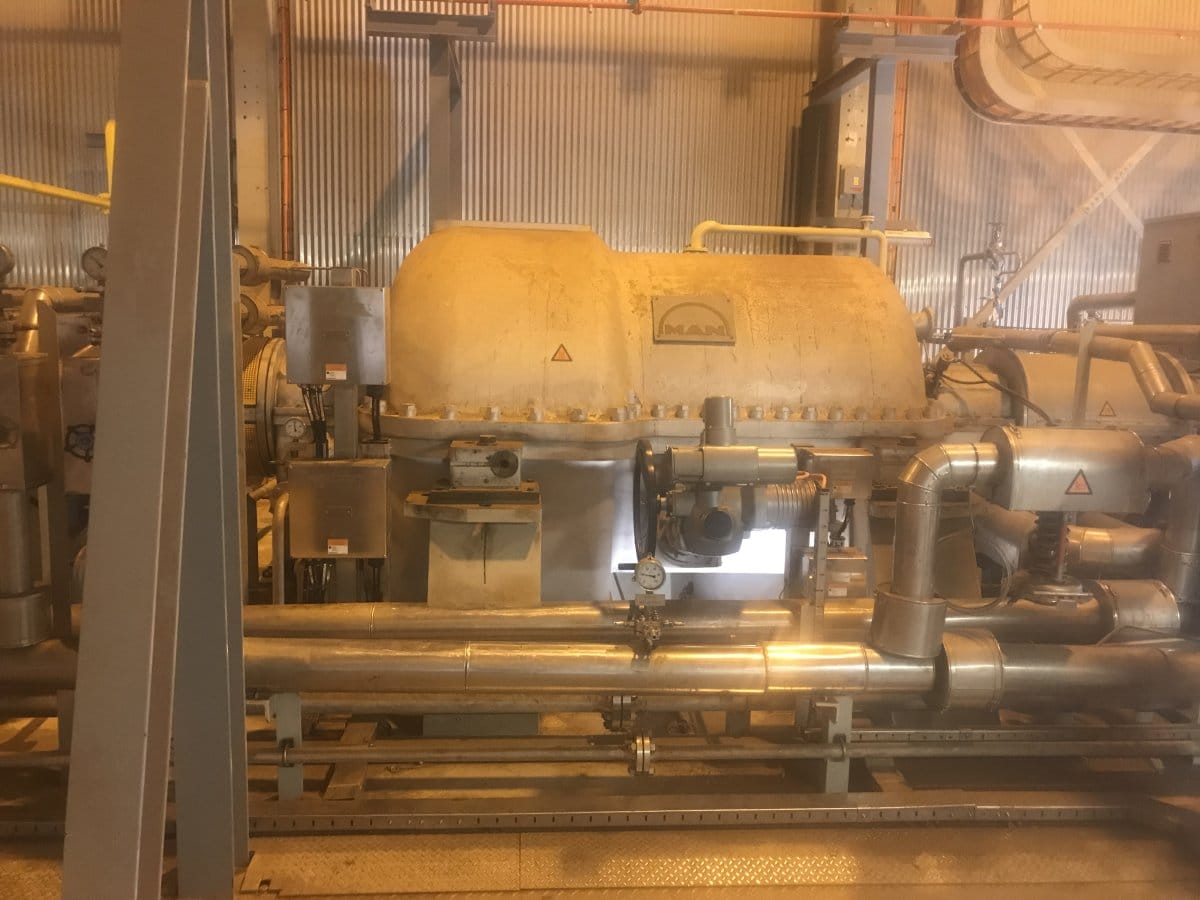
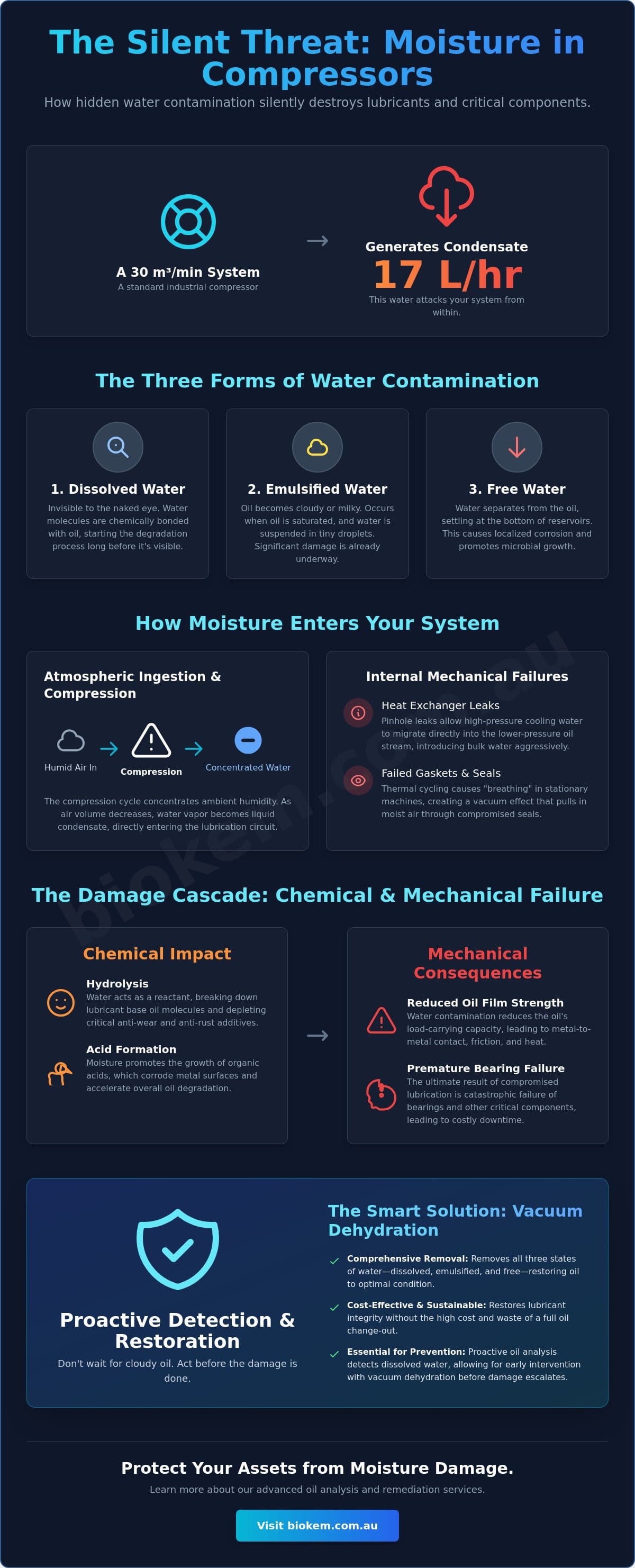
Moisture in industrial compressors acts as a silent chemical catalyst, destroying lubricant integrity and additive packages long before you ever see a speck of physical rust on a bearing. If you’re struggling with high water content in your oil analysis reports, you’re likely witnessing the early stages of Moisture Damage in Compressors: Causes behind this ingress often go overlooked until the damage is irreversible. A single 30 m³/min system can generate 17 liters of condensate every hour under moderate conditions. This volume of water doesn’t just sit there; it actively attacks your critical assets.
It’s frustrating to deal with unscheduled downtime or the high costs of frequent oil changes when you can’t pin down where the ingress is starting. We recognize that a high-water reading on an analysis report is more than a number; it’s a signal of potential bearing failure and operational risk. This article provides the technical insight needed to understand the hidden mechanisms behind moisture ingress and the chemical threats it poses to your lubricants. You’ll learn how to protect your assets and discover cost-effective methods, such as vacuum dehydration, to restore oil quality without the waste of a full change-out.
Key Takeaways
- Learn how the compression cycle concentrates ambient humidity into free and dissolved water, which is the primary driver behind Moisture Damage in Compressors: Causes.
- Understand the chemical process of hydrolysis, where moisture acts as a reactant to break down lubricant base oil molecules and deplete critical additive packages.
- Identify the mechanical risks of water contamination, specifically how it reduces the load-carrying capacity of the oil film and leads to premature bearing failure.
- Discover why proactive oil analysis is essential for detecting dissolved water before visible signs like cloudy oil indicate that significant internal damage has already occurred.
- Explore how vacuum dehydration provides a sustainable and cost-effective method to restore lubricant integrity by removing all three states of water without requiring a full oil change-out.
Table of Contents
-
The Chemical Impact: How Water Degrades Compressor Lubricants
-
Detecting and Monitoring Water Content in Compressor Systems
-
Remediation Strategies: Restoring Oil Integrity with Vacuum Dehydration
The Mechanics of Moisture Ingress in Industrial Compressors
Moisture contamination in industrial systems manifests in three distinct phases: dissolved, emulsified, and free water. Dissolved water is chemically bonded to the oil and remains invisible to the naked eye. Once the oil reaches its saturation point, the water becomes emulsified, creating a characteristic cloudy or milky appearance. Finally, free water separates entirely, settling at the bottom of sumps or reservoirs where it can cause localized corrosion. Understanding Moisture Damage in Compressors: Causes requires a deep dive into how these states fluctuate based on the physical laws of temperature and pressure.
The compression cycle itself is a primary driver of water concentration. As ambient air is drawn into the system, it carries a specific amount of water vapor. When this air is compressed, its volume decreases significantly, but the water mass remains constant. This process dramatically increases the relative humidity within the machine. If the internal temperature falls below the dew point, that vapor transforms into liquid condensate, directly threatening the lubrication circuit. Even systems marketed as "sealed" are vulnerable because they must ingest massive volumes of atmospheric air to operate effectively.
To better understand the mechanical impact of these processes, watch this helpful video:
Atmospheric Ingestion and Compression Dynamics
Standard intake filters are designed to capture solid particulates, but they don’t stop water vapor from entering the screw or piston chamber. The relationship between compression ratios and water concentration is direct; higher pressures lead to higher moisture density. In humid Australian environments, seasonal shifts create volatile conditions where the air’s water-carrying capacity changes rapidly. While a 30 m³/min system can generate approximately 17 liters of condensate every hour, this is merely the baseline. If compressed air dryers aren’t perfectly calibrated to these environmental loads, the excess moisture inevitably finds its way into the oil supply, compromising lubricant film strength.
Heat Exchanger and Seal Failures
While atmospheric air is a constant factor, internal mechanical failures often introduce bulk water more aggressively. Pinhole leaks in water-cooled heat exchangers are a frequent culprit, allowing high-pressure cooling water to migrate into the lower-pressure oil stream. Failed gaskets and seals also create pathways for ingress, especially when thermal cycling is involved. As the compressor shuts down and cools, the internal air contracts, creating a vacuum effect that pulls in moist ambient air. This "breathing" phenomenon ensures that even a stationary machine can accumulate water over time, leading to hidden oxidation and accelerated component wear.
The Chemical Impact: How Water Degrades Compressor Lubricants
Water isn’t just a physical contaminant that sits alongside your oil; it’s an aggressive chemical reactant. When moisture enters a lubrication system, it initiates a process known as hydrolysis. This chemical reaction breaks down the base oil molecules, particularly in high-performance synthetic esters and polyalkylene glycols (PAGs) commonly used in modern industrial compressors. Understanding Moisture Damage in Compressors: Causes means acknowledging that this chemical shift occurs at a molecular level long before visible signs appear. Hydrolysis doesn’t just thin the oil. It permanently alters the fluid’s molecular structure, stripping away its ability to shield critical internal components from friction.
The presence of water also creates an environment where organic acids thrive. These acids attack metal surfaces and accelerate the degradation of the oil itself. Because compressors operate at high temperatures, the combination of heat and water creates a "pressure cooker" effect that speeds up chemical breakdown. This leads to a rapid increase in the oil’s Acid Number (AN), signaling that the lubricant is no longer fit for purpose and is actively becoming corrosive to the system’s internals.
Additive Depletion and Precipitation
Water is highly polar, which means it attracts and holds onto the polar additives found in high-grade compressor lubricants. Critical components like rust inhibitors, anti-wear agents, and demulsifiers are often "washed out" of the oil by excess moisture. This results in additive dropout, where essential chemicals form insoluble particles that clog specialist oil filters and restrict flow through narrow oil passages. Once these additives precipitate, the oil loses its protective qualities. Even if the water is removed later, the oil remains chemically depleted and unable to prevent mechanical damage from water during subsequent operation.
Accelerated Oxidation and Varnish Formation
Moisture acts as a powerful catalyst for oxidation. As the oil oxidizes, it produces soft contaminants that circulate throughout the machine. In the high-temperature environment of a compressor, these contaminants bake onto metal surfaces to form a hard, enamel-like varnish. This residue interferes with heat transfer, reduces clearances in precision components, and can cause valves to seize. Implementing a varnish mitigation strategy is essential for systems that have experienced significant moisture ingress. If your oil analysis reports show rising acidity or signs of dropout, BioKem Oil Services suggests professional hot oil flushing to clean the system and restore operational reliability without the waste of a premature oil change-out.
Mechanical Consequences of Unchecked Moisture Contamination
The shift from chemical degradation to physical mechanical damage is often rapid and unforgiving. Once the lubricant’s molecular structure is compromised by hydrolysis, the fluid can no longer maintain a stable protective barrier between moving parts. This failure is a central component of Moisture Damage in Compressors: Causes often leading to the catastrophic failure of precision-engineered internals. When water enters the high-load zones of a compressor, it displaces the oil film. This leads to a significant reduction in load-carrying capacity. It’s not just a maintenance headache; it’s a fundamental threat to the machine’s structural integrity.
Integrating a rigorous strategy for oil contamination control is the only reliable way to arrest this transition. Without proactive intervention, the silent damage occurring within bearings and rotary screws remains undetected until a total seizure occurs. This mechanical decline is often accelerated by the high pressures and temperatures found in industrial environments, making moisture a primary enemy of operational longevity.
Internal Corrosion and Hydrogen Embrittlement
Rust formation is the most visible consequence of moisture, but its abrasive effects are what truly destroy a system. As water reacts with steel surfaces, it creates iron oxide particles. These particles act as a grinding paste, accelerating wear on every moving part they touch. However, a more insidious threat is hydrogen embrittlement. During the corrosion process, water molecules can release atomic hydrogen, which migrates into the microscopic pores of high-strength metals. This creates internal pressure that leads to sudden, brittle cracking. High-pressure compressor components, such as discharge valves and piston rods, are particularly susceptible to this type of failure, which can occur without any prior warning or visible surface wear.
Loss of Lubricant Film Strength
The physics of lubrication rely on the oil’s ability to remain incompressible under load. When water becomes emulsified, it reduces the effective viscosity and thickness of the oil film. This phenomenon effectively pokes holes in the lubricant barrier, allowing metal-to-metal contact between the rotary screws or within bearing races. The result is a sharp increase in friction. This friction doesn’t just wear down the metal; it generates excessive heat and forces the motor to work harder to maintain output. In industrial settings, this translates directly to higher energy consumption and a significantly shortened mean time between failures. Maintaining dry oil ensures that the lubricant film remains robust enough to handle the extreme pressures inherent in modern compression cycles.
Detecting and Monitoring Water Content in Compressor Systems
Visual inspection is an unreliable metric for system health. By the time a lubricant appears cloudy or milky, it has already surpassed its saturation point and contains significant emulsified water. This delay in detection is a primary reason why Moisture Damage in Compressors: Causes often remains hidden until mechanical wear is advanced. A truly proactive maintenance strategy relies on quantitative data rather than subjective observation. For immediate field assessments, patch test kits serve as an effective screening tool, allowing onsite teams to identify gross contamination before it reaches critical thresholds.
Karl Fischer Titration and Laboratory Analysis
Karl Fischer titration remains the definitive laboratory method for measuring water content with absolute precision. Unlike basic crackle tests, titration quantifies moisture in parts per million (ppm), identifying dissolved water that is invisible to the eye. For high-performance industrial compressors, maintaining water levels below 100 to 200 ppm is generally required to prevent the onset of hydrolysis. Utilizing laboratory oil analysis also allows for the simultaneous tracking of wear metals. This data provides a clear picture of how moisture levels correlate with internal component degradation, helping you verify if environmental ingress or mechanical failure is the root cause.
In-Line Moisture Sensors and Real-Time Monitoring
Real-time monitoring has become a cornerstone of modern asset management. In-line saturation sensors provide continuous feedback on the moisture levels within the lubrication circuit. These devices measure the percentage of water relative to the oil’s saturation point, triggering alerts the moment ingress occurs. This immediate visibility is vital for preventing the "silent" mechanical damage discussed in previous sections. By catching a cooling water leak or seal failure early, operators can schedule maintenance before the fluid’s load-carrying capacity is fully compromised. Integrating this sensor data into broader plant reliability software ensures that moisture levels are tracked as a key performance indicator.
To ensure your critical assets are protected by the highest standard of data, explore our comprehensive oil analysis and monitoring solutions today.
Remediation Strategies: Restoring Oil Integrity with Vacuum Dehydration
When faced with high water content, many operators instinctively move toward a full oil change-out. This approach is often economically and environmentally inefficient. High-performance synthetic compressor lubricants represent a significant capital investment. Discarding thousands of liters of oil simply because it’s "wet" ignores the potential for complete restoration. Professional oil purification offers a sustainable alternative, allowing you to return the fluid to its original specification. By addressing the root Moisture Damage in Compressors: Causes, you can transition from a reactive disposal cycle to a circular maintenance model that extends asset life and reduces hazardous waste volumes.
Vacuum dehydration stands as the most effective remediation method because it removes water in all three states: free, emulsified, and dissolved. While standard filters or centrifuges can manage bulk water, they’re physically incapable of extracting dissolved moisture that has chemically bonded with the oil. For facilities facing sudden ingress, industrial oil filtration equipment hire provides a rapid response solution. This allows for immediate onsite purification, preventing the chemical degradation processes like hydrolysis from becoming permanent.
The Vacuum Dehydration Process Explained
The physics of vacuum dehydration rely on the relationship between pressure and boiling points. By creating a controlled vacuum within a treatment chamber, the boiling point of water is lowered to approximately 50°C. This allows moisture to evaporate and be drawn out of the oil without exposing the lubricant to the extreme temperatures that would cause thermal cracking. This low-temperature approach is vital for protecting the oil’s molecular structure and preserving sensitive additive packages. It’s a precise, non-aggressive method that restores the fluid’s dielectric strength and load-carrying capacity while the machine remains online or during a scheduled outage.
Integrating Purification with Hot Oil Flushing
Dehydration alone may be insufficient if the moisture has already catalyzed the formation of sludge, scale, or varnish. In these instances, the internal surfaces of the compressor and its cooling circuits require deep cleaning. Integrating vacuum dehydration with hot oil flushing ensures that both the fluid and the vessel are restored. High-velocity flushing dislodges insoluble contaminants that have settled in low-flow areas, while the dehydration unit simultaneously strips moisture from the circulating oil. This combined approach is the most reliable way to achieve stringent ISO 4406 cleanliness standards and ensure that the system is free from the residual catalysts that lead to recurring contamination issues.
Securing Compressor Reliability Through Proactive Moisture Management
Identifying the root Moisture Damage in Compressors: Causes is the first step toward preventing catastrophic bearing failure and permanent lubricant breakdown. We’ve detailed how atmospheric ingestion and mechanical leaks introduce water that chemically degrades oil through hydrolysis and additive dropout. Relying on visual inspections often means acting too late; true protection requires quantitative data and advanced remediation techniques that address contamination at the molecular level.
BioKem provides the specialized solutions needed to maintain peak system performance and regulatory compliance. As an authorized Filters S.p.A. distributor, we offer specialist vacuum dehydration equipment hire and onsite technical interventions nationwide. These services allow you to restore oil integrity and remove dissolved water without the environmental burden or high cost of a full system change-out. Protect your assets with BioKem’s expert oil purification services and ensure your industrial operations remain efficient and sustainable. Taking control of your oil health today prevents the costly, unscheduled downtime of tomorrow.
Frequently Asked Questions
How does water get into a sealed compressor system?
Water enters sealed systems primarily through atmospheric ingestion during the compression cycle. Because air filters don’t stop water vapor, humidity is drawn in and concentrated as pressure increases. Internal mechanical failures, such as pinhole leaks in water-cooled heat exchangers or compromised seals, also introduce bulk water. Additionally, thermal cycling during shutdowns creates a vacuum effect, pulling moist ambient air into the system. Identifying these entry points is critical to understanding Moisture Damage in Compressors: Causes.
What are the first signs of moisture damage in compressor oil?
The earliest signs are often chemical rather than visual. A rising Acid Number (AN) indicates oxidation catalyzed by moisture. You might also notice additive dropout, where rust inhibitors or anti-wear agents form insoluble particles that clog specialist oil filters. While a cloudy or milky appearance indicates high levels of emulsified water, these visible changes usually only occur after the oil has reached its saturation point and significant internal degradation has already begun.
Is it better to change the oil or purify it if water is detected?
Oil purification is typically the superior choice for both economic and environmental reasons. High-performance synthetic lubricants are expensive assets that don’t always need disposal after contamination. Vacuum dehydration effectively removes all states of water while preserving the base oil’s integrity. This approach extends lubricant life and reduces hazardous waste volumes. However, if the oil’s additive package is severely depleted or the base oil has undergone significant hydrolysis, a full change-out may be necessary.
What is the difference between free, emulsified, and dissolved water?
These terms describe the physical state of water within the lubricant. Dissolved water is chemically bonded to the oil and remains invisible. Emulsified water occurs when the oil can’t hold any more dissolved moisture, resulting in a cloudy or milky suspension. Free water is fully separated and typically settles at the bottom of the reservoir or sump. Each state poses different risks, but all contribute to Moisture Damage in Compressors: Causes and subsequent mechanical wear.
Can moisture in oil cause varnish in my compressor?
Moisture is a powerful catalyst for the oxidation process that leads to varnish formation. As water reacts with the oil at high temperatures, it creates soft contaminants and organic acids. These byproducts eventually bake onto internal metal surfaces, forming a hard, enamel-like varnish. This residue interferes with heat transfer and can cause precision components like valves to seize. Implementing varnish mitigation strategies alongside moisture removal is essential for restoring long-term system reliability.
How often should I perform oil analysis for moisture in my compressors?
Regularity depends on the criticality of the asset and the environmental conditions of the plant. For most industrial compressors, a quarterly oil analysis is the minimum standard for effective monitoring. However, in high-humidity environments or for mission-critical machinery, monthly sampling is recommended. Consistent testing allows you to establish a baseline and detect moisture ingress early, preventing the transition from dissolved water to more damaging emulsified or free water states.
What is an acceptable level of water in industrial compressor oil?
Acceptable moisture levels vary by compressor type and lubricant chemistry, but most manufacturers recommend staying below 100 to 200 ppm (parts per million). High-performance synthetic oils are particularly sensitive to moisture and may require even lower thresholds to prevent hydrolysis. Once levels exceed 500 ppm, the risk of additive depletion and mechanical wear increases significantly. Always consult your equipment’s technical manual or a lubrication specialist to determine the specific limits for your assets.
Does vacuum dehydration remove the additives from the oil?
Vacuum dehydration is a non-aggressive process that specifically targets water without stripping away essential additives. Because the system operates at lower temperatures under a vacuum, it avoids the thermal stress that could damage the oil’s molecular structure. The process removes water vapor while leaving polar additives like rust inhibitors and anti-wear agents intact. It’s a safe, effective way to restore fluid integrity while maintaining the protective qualities required for high-load compressor operations.