

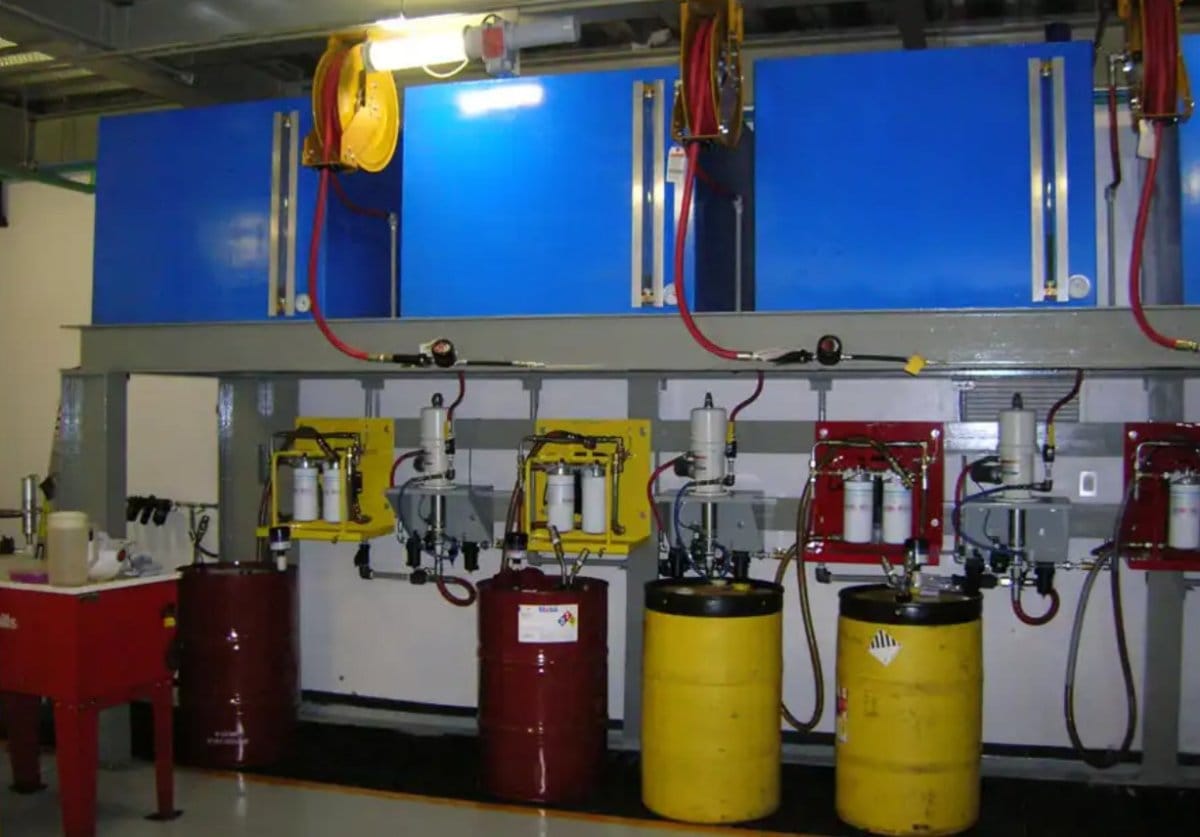
Did you know that inadequate lubrication is responsible for 50% of premature bearing failures across industrial operations? It’s a sobering statistic that highlights how a neglected storage area can silently erode your bottom line. Most maintenance teams view the lube room as a simple utility closet, yet this oversight often leads to contaminated oil and unorganized workspaces that invite cross-contamination. Sorting Out Your Lube Room – Keys to Best Practice Lubrication Storage is about more than just tidiness; it’s the primary filtration stage for your entire facility.
You likely recognize that cleaner lubricants lead to extended asset life and reduced unscheduled downtime, but achieving this requires a structured, scientific approach. This guide transforms your storage space from a messy corner into a world-class reliability hub. We’ll outline how to implement the 5-S framework and ensure your facility remains compliant with Australian Standard AS 1940:2017. By treating lubricants as vital assets rather than consumables, you’ll create a safer, audit-ready environment that prioritizes both operational efficiency and long-term ecological health.
Key Takeaways
- Stop contamination at the source by shifting from passive storage to an active reliability hub that protects oil before it ever reaches your machinery.
- Sorting Out Your Lube Room – Keys to Best Practice Lubrication Storage involves implementing climate controls and sealed dispensing to prevent atmospheric ingress and thermal degradation.
- Streamline operations using the 5-S framework to remove obsolete lubricants and optimize the workspace layout for high-turnover tools and equipment.
- Ensure regulatory compliance and facility safety by correctly calculating bunding capacity and adhering to secondary containment standards under AS 1940.
- Leverage onsite oil analysis and technical services to transition from basic inventory management to proactive, real-time asset health monitoring.
Why Your Lube Room is the Foundation of Asset Reliability
Many facilities treat their lube room as an afterthought, often relegating it to a dark, dusty corner of the plant. This passive approach ignores a critical reality: the lube room is the first stage of your filtration process. Transitioning from a storage closet to a world-class “Reliability Hub” means adopting active management protocols. Sorting Out Your Lube Room – Keys to Best Practice Lubrication Storage begins with understanding that oil is a delicate asset. When storage is neglected, invisible contaminants like microscopic silica and ambient moisture compromise the fluid’s integrity before it ever reaches a machine.
Maintaining specific lubricant properties and functions requires a controlled environment. Even new oil typically fails to meet the ISO 4406 cleanliness codes required by modern, high-pressure hydraulic systems or precision bearings. If your storage practices introduce particles, you are essentially paying to pump sandpaper into your equipment. Beyond the technical benefits, a clean, organized room fosters a culture of precision. It signals to your maintenance team that lubrication is a high-stakes discipline, not a menial chore.
To better understand the layout and flow of a professional setup, watch this helpful video:
The Link Between Storage and Equipment Life
Industry data confirms that inadequate lubrication causes 50% of premature bearing failures. When lubricants are stored in humid or dusty conditions, they suffer from particulate ingress and moisture absorption. This isn’t just a surface issue; moisture leads to premature additive depletion through hydrolysis and accelerated oxidation. Precision Lubrication is the systematic elimination of contamination at every touchpoint, ensuring the fluid remains chemically stable and physically clean throughout its lifecycle.
Moving from Reactive to Proactive Storage
Traditional “lube room sins” often include using wooden shelves that shed fibers, leaving containers open to the atmosphere, or using unwashed funnels. These habits are hallmarks of a reactive mindset that waits for failure to occur. By integrating your storage practices into a proactive maintenance strategy, you shift the focus to prevention. Best practice standards require sealed dispensing systems, climate-controlled environments, and color-coded tools to eliminate cross-contamination. This transition ensures that every drop of oil added to your machinery actually protects it, rather than contributing to its eventual failure.
Environmental Control and Contamination Prevention
The physical environment of your storage facility dictates the chemical stability of your lubricants. Temperature fluctuations are a primary concern; as drums heat and cool, they undergo a “breathing” cycle that draws in moist, contaminated air. Thermal degradation can also occur if lubricants are stored near heat sources, leading to a permanent shift in viscosity and additive performance. Sorting Out Your Lube Room – Keys to Best Practice Lubrication Storage requires a climate-controlled space that maintains a steady, moderate temperature to minimize these risks and prevent the formation of condensation inside containers.
Sealed dispensing systems are essential for maintaining the cleanliness achieved through filtration. These systems replace open-top containers and dirty funnels with closed-loop hardware, creating a protected path from the storage tank to the machine reservoir. To protect bulk storage, desiccant breathers should be installed on every drum and tank. These breathers utilize silica gel to strip moisture and fine-media filters to capture particulates from the air entering the vessel. While adhering to OSHA safety standards addresses the physical risks of flammable liquids, these contamination controls protect the fluid’s technical utility.
Cross-contamination remains a leading cause of lubrication failure in industrial settings. A rigorous colour-coding and tagging system provides a visual failsafe for technicians. By matching the colour on the storage tank to the dispensing container and the machine fill point, you remove the guesswork and prevent the mixing of incompatible chemistries. If you are looking to audit your current setup, BioKem offers specialized filtration hardware to help secure your storage environment against external pollutants.
Managing Moisture and Particulate Ingress
Humidity is a silent killer of industrial fluids, often leading to additive precipitation and the formation of sludge. To combat this, drum storage protocols must be precise. Storing drums horizontally prevents water from pooling on the lid, which is a common ingress point during temperature cycles. If vertical storage is the only option, drum covers should be mandatory to divert water and dust. Utilizing patch test kits provides immediate visual confirmation of oil cleanliness upon delivery, ensuring that you never introduce sub-standard fluid into your clean room environment.
Filtration at the Source
The “Filter In, Filter Out” rule is a cornerstone of lubrication excellence. New lubricants often arrive with particulate counts that exceed the tolerances of sensitive modern machinery. Integrating kidney-loop filtration systems directly into your storage racks allows for continuous purification of your inventory. This proactive oil contamination control ensures that lubricants are service-ready at all times, reducing the burden on your equipment’s primary filters and extending component life significantly.
The 5-S Framework for Lube Room Excellence
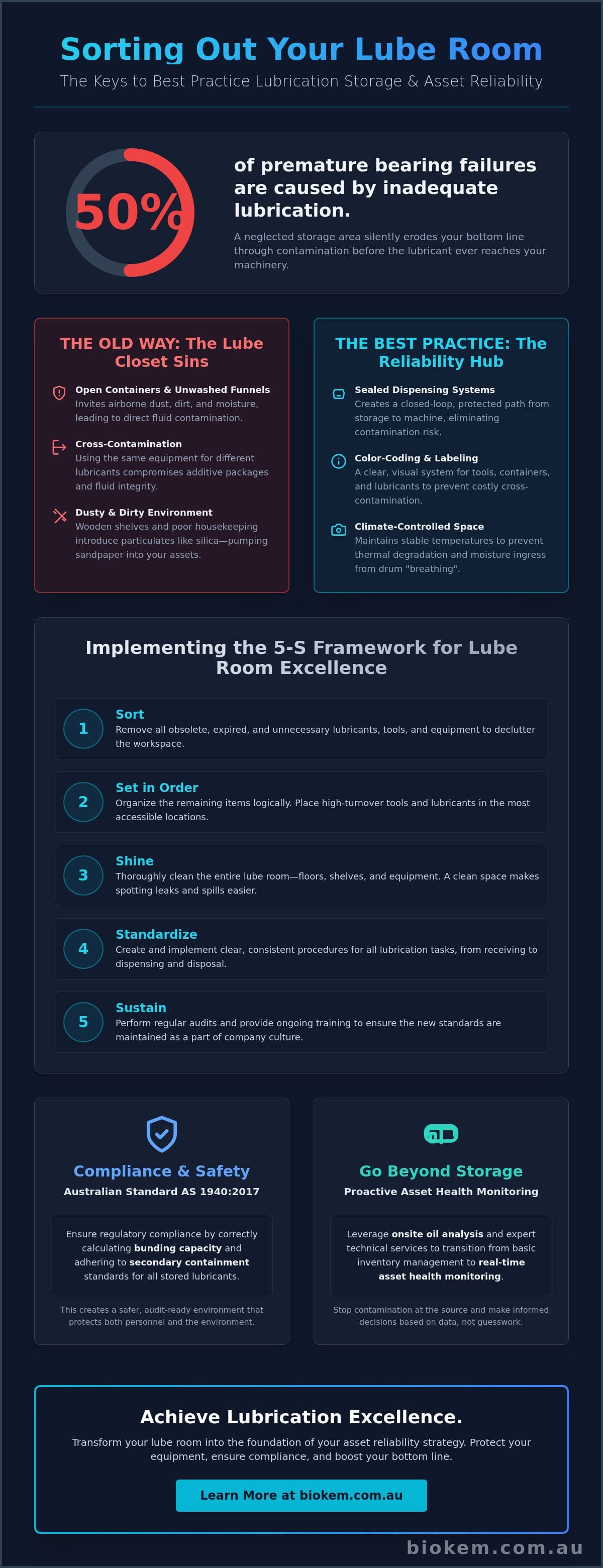
Applying the 5-S methodology is a foundational step in Sorting Out Your Lube Room – Keys to Best Practice Lubrication Storage. This systematic approach transforms a cluttered storage area into a high-performance reliability center. The process begins with Sort, which involves removing obsolete lubricants, contaminated rags, and unnecessary equipment. Adhering to established Chemical Storage Guidelines ensures that incompatible materials are segregated and shelving is structurally sound. By eliminating the “just in case” inventory, you reduce the risk of using degraded or incorrect fluids.
The Straighten phase focuses on ergonomics and workflow. High-turnover lubricants should be positioned for easy access, while heavy drums require dedicated racks that facilitate safe handling. Once the layout is optimized, the Shine step establishes a rigorous cleaning frequency. This isn’t merely for aesthetics; it targets the oil film and dust buildup that can ignite or migrate into open reservoirs. A clean room makes leaks immediately visible, allowing for faster corrective action. Standardise involves creating a Master Lube List and visual workplace standards that ensure every technician follows the same protocols. Finally, Sustain relies on regular audits and KPIs to prevent a slide back into old habits. Research indicates that using CMMS-tracked lubrication routes can lead to a 40% reduction in maintenance costs.
Visual Management and Labelling
Visual cues are the most effective way to prevent human error in a busy industrial environment. Implementing a universal colour-coding system across the entire site creates a common language for maintenance teams. Lube Identification Tags (LIT) should be used to match each storage vessel directly to its corresponding machine fill point. Additionally, clear and legible Safety Data Sheets (SDS) must be available at the point of use. This transparency ensures that technical specifications and safety requirements are always accessible to the personnel handling the fluids.
The 6th S: Safety and Sustainability
In hazardous industrial settings, many organizations add a sixth “S” for Safety. This includes the strategic placement of spill response kits and the installation of eye-wash stations. Sustainability is equally critical; a best-practice lube room must have a defined process for the environmentally responsible disposal of used filters and waste oil. By integrating these safety and ecological standards, you protect both your workforce and the local environment while maintaining regulatory compliance. This structured discipline ensures the facility remains audit-ready and operationally efficient at all times.
Compliance and Safety: Australian Standards for Lube Rooms
In the Australian industrial context, compliance isn’t a suggestion; it’s a legal mandate. Sorting Out Your Lube Room – Keys to Best Practice Lubrication Storage requires strict adherence to AS 1940:2017, the standard for the storage and handling of flammable and combustible liquids. This standard, which includes critical amendments from 2019 and 2021, dictates how facilities must manage the risks associated with bulk oil inventory. A compliant room must feature adequate ventilation to prevent the buildup of hazardous vapours, which can pose both health risks and ignition hazards. Fire protection systems and specific signage, such as ‘No Smoking’ and ‘Danger: Flammable Liquids’ placards, are mandated components that must remain clearly visible at all times.
Secondary containment is the most critical physical requirement for environmental protection. You must calculate bunding capacity to ensure it can hold 110% of the volume of the largest container or 25% of the total volume stored, whichever is greater. This prevents environmental contamination if a tank or drum fails. For sites handling Class 3 flammable liquids, spill response kits are mandatory under the 2017 version of the standard. To ensure your facility meets these rigorous demands while maintaining oil integrity, BioKem provides specialist oil filtration and maintenance services that help keep your workspace clean and audit-ready.
Bunding and Spill Containment
Understanding the 110% rule is vital for meeting local Environmental Protection Authority (EPA) guidelines. While permanent concrete bunds are standard for large bulk tanks, portable polyethylene bunding pallets offer a flexible solution for individual drum storage. These systems must be kept clear of rainwater and debris to maintain their rated capacity. Regularly inspecting these containment areas for structural integrity is a key part of the discipline required to sustain a world-class reliability hub.
Lighting and Ergonomics
Safety also extends to the physical well-being of your technicians and the accuracy of their work. Minimum lighting standards ensure that personnel can accurately read labels, Safety Data Sheets, and sight glasses without strain. Ergonomics play a significant role in reducing workplace injuries; drum lifters and mechanical pump systems should replace manual pouring to minimize handling risks. Clear egress paths must be maintained in accordance with Australian building codes to ensure a safe exit route during any emergency event.
Achieving Lubrication Excellence with BioKem
Establishing the physical infrastructure of a reliability hub is only the first phase of an effective maintenance strategy. Sorting Out Your Lube Room – Keys to Best Practice Lubrication Storage requires a technical partner capable of maintaining these high standards through sophisticated monitoring and purification. BioKem provides the technical expertise necessary to move beyond simple inventory management into the realm of active asset health. Since 70% of lubrication failures are preventable with proper oil analysis programs, our onsite testing services act as a critical diagnostic tool, identifying contamination or chemical degradation before it leads to unscheduled downtime.
To ensure your storage environment remains a source of clean fluid, we utilize high-performance Filters S.p.A. products. These specialist filters are engineered to meet the stringent ISO cleanliness targets required for modern industrial equipment. When you are commissioning new storage racks or upgrading existing bulk tanks, our hot oil flushing services remove the internal scale and debris that often contaminate fresh systems. This rigorous approach ensures that your lubricants remain as pure as the day they were refined, protecting your machinery from the very first fill.
Professional Filtration and Purification
There are instances where bulk oil inventory requires deep remediation due to moisture ingress or varnish formation. BioKem offers specialized purification services, including vacuum dehydration and varnish mitigation, to restore fluid properties without the need for costly disposal. For facilities undergoing short-term remediation or system upgrades, our equipment hire options provide access to industrial-grade filtration hardware without a permanent capital investment. Periodic technical audits ensure your ‘clean’ storage stays clean, maintaining the integrity of your entire lubrication program through every stage of the fluid lifecycle.
Your Partner in Reliability
BioKem is deeply committed to supporting the Australian industry while upholding the highest environmental standards. We understand that regulatory compliance and operational efficiency are inseparable goals. Our consultancy services provide tailored roadmaps for designing and auditing best-practice lube rooms, ensuring your facility remains safe, efficient, and audit-ready. By aligning with a specialist that values long-term ecological health and technical precision, you secure the future of your industrial assets. Contact BioKem for a comprehensive lubrication audit today.
Securing Your Industrial Future Through Lubrication Excellence
Transforming your storage area from a simple utility space into a world-class reliability hub is a strategic investment in asset longevity. By prioritizing environmental controls and strict contamination prevention, you ensure that every drop of oil added to your machinery meets the highest ISO cleanliness standards. Implementing the 5-S framework and adhering to AS 1940:2017 isn’t just about regulatory compliance; it’s about fostering a culture of precision that eliminates the primary causes of equipment failure.
Sorting Out Your Lube Room – Keys to Best Practice Lubrication Storage involves more than just organization. It requires a commitment to technical excellence and environmental responsibility. As the sole Australian distributor for Filters S.p.A. with over a decade of onsite technical experience, BioKem is uniquely positioned to help you achieve these goals. Our team specializes in oil cleanliness and AS 1940 compliance, providing the expertise needed to safeguard your operations and the local environment.
Optimize your lubrication strategy with BioKem’s specialist services.
Taking the first step toward an optimized lube room today will yield significant operational dividends tomorrow. Your machinery and your bottom line will benefit from this proactive shift.
Frequently Asked Questions
What is the ideal temperature for an industrial lube room?
Maintaining a consistent temperature between 15°C and 25°C is ideal for most industrial lubricants. Extreme heat can accelerate thermal degradation and oxidation, while excessive cold may cause additive drop-out or make the fluid difficult to pump. A stable climate prevents the “breathing” cycle in containers that draws in moisture and particulates from the air.
How long can I store industrial oil before it degrades?
Most industrial oils have a shelf life of 12 to 24 months, though specialized synthetic fluids may vary. Base oils are generally stable, but complex additive packages can settle or deplete over time if stored improperly. Implementing a First-In, First-Out (FIFO) inventory system is a vital part of Sorting Out Your Lube Room – Keys to Best Practice Lubrication Storage to ensure older stock is utilized first.
Does AS 1940 apply to all types of industrial lubricants?
AS 1940 applies to flammable and combustible liquids, which covers the vast majority of industrial mineral and synthetic oils. Even lubricants with high flash points are usually classified as combustible liquids under Australian standards. This means they require specific secondary containment, ventilation, and fire safety protocols to remain compliant and safe for the facility.
Why is color-coding so important in lubrication management?
Color-coding provides a visual failsafe that eliminates the risk of cross-contamination. Mixing incompatible lubricants can lead to chemical reactions, foaming, and accelerated component wear. By matching the color on the storage tank to the dispensing tool and the machine fill point, you ensure the correct fluid reaches the correct asset every time.
What are the common signs of a poorly managed lube room?
Visible dust on drum lids, open-top containers, and unlabeled dispensing tools are immediate red flags. Stained floors and a lack of desiccant breathers on bulk tanks also indicate that contamination control isn’t being prioritized. These conditions suggest that “invisible” contaminants are likely compromising the oil before it ever reaches your machinery.
Can I store different brands of the same oil grade together?
You should never mix different brands even if they share the same ISO viscosity grade. Each manufacturer uses a unique blend of additives that may be chemically incompatible with another brand’s formulation. Sorting Out Your Lube Room – Keys to Best Practice Lubrication Storage requires keeping brands segregated to prevent additive clashing or loss of performance.
How often should I perform a patch test on stored lubricants?
Technicians should perform a patch test on every new delivery to verify the oil meets cleanliness specifications before it’s added to your inventory. For lubricants already in storage, quarterly testing provides a reliable baseline for fluid health. This proactive approach ensures that any ingress of moisture or particulates is identified and remediated through filtration immediately.
What is the ‘110% rule’ for spill containment in Australia?
The ‘110% rule’ dictates that a secondary containment system, such as a bund, must be able to hold 110% of the capacity of the largest container within it. This extra 10% provides a safety margin to account for potential splashing, rainwater, or firefighting foam during an emergency. Adhering to this calculation is a key requirement for environmental compliance and site safety.