

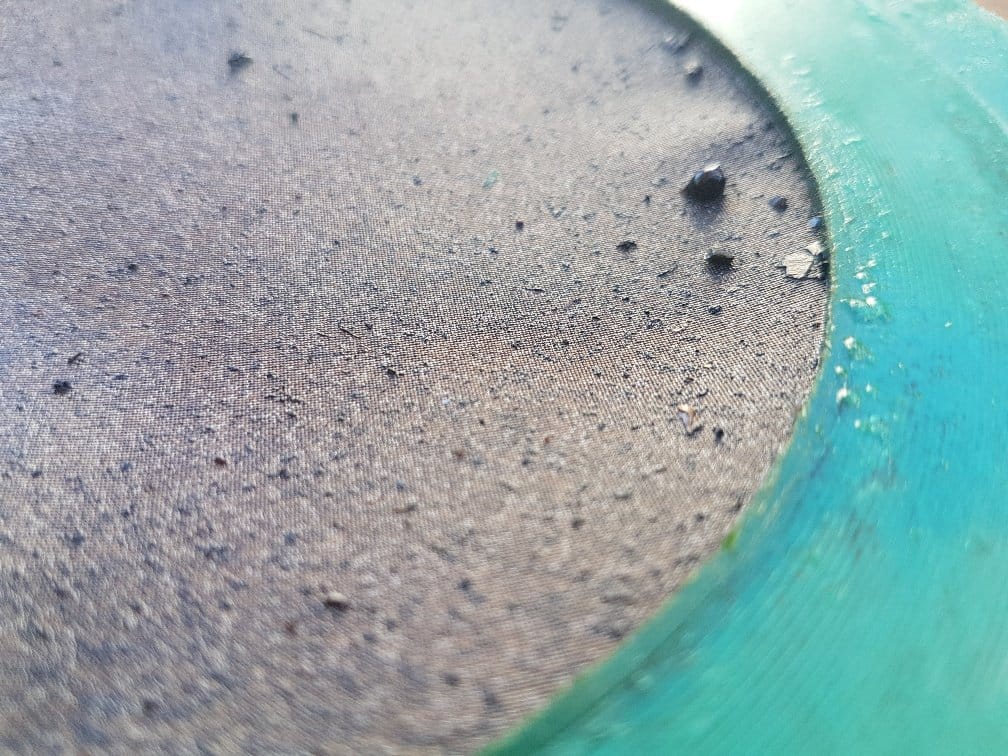
A sample can be compromised before it reaches the laboratory. Dust around a port, reused tubing or an unclean bottle can introduce particles or moisture, so the results may reflect the collection process rather than the oil in service. Avoiding cross contamination during oil sampling protects the evidence behind maintenance decisions.
It’s easy to focus on the analysis itself, but even a capable laboratory can’t undo contamination introduced during collection. Inconsistent methods across assets also make results harder to compare over time. A repeatable approach helps teams collect samples that better represent operating oil and gives analysts useful context.
This guide covers how to prepare sampling equipment, manage the sampling point in line with the asset OEM and site procedure, and seal and label each sample promptly. It also explains what to record, including equipment and oil information, so results can be interpreted with more context. The goal is practical: reduce avoidable contamination and make each sample more useful for condition monitoring.
Key Takeaways
- Understand how contamination can enter during preparation, collection, transfer and handling, and why its source matters when interpreting results.
- Use a consistent process for avoiding cross contamination during oil sampling, with clean, suitable equipment and containers for each sample.
- Follow the asset OEM, site procedure and analysis-provider instructions for sampling-point preparation, container type, sample volume and handling.
- Don’t rely on appearance alone to decide whether an unexpected result reflects collection contamination or an actual oil condition.
- Discuss questionable samples with an analysis provider. BioKem Oil Services offers oil and fuel analysis, including onsite and laboratory-based patch analysis.
Why avoiding cross-contamination during oil sampling matters
Sample contamination is unwanted material introduced during collection, transfer or handling; system contamination is material already present in the operating oil. The distinction matters because an analysis result may reflect the oil’s condition, the sampling process, or both. Avoiding cross contamination during oil sampling helps preserve evidence that maintenance teams can interpret with greater confidence.
A small amount of debris or moisture introduced during collection can affect a result, depending on the test and the material involved. This may complicate comparisons with earlier samples, prompt an unnecessary investigation, or make a genuine change in oil condition harder to assess. Clean collection can reduce this risk, but it can’t guarantee a particular analysis result.
For a short visual overview of keeping oil samples clean, watch this video:
What can contaminate an oil sample?
Potential sources include dirty sampling hardware, tubing or containers reused without suitable cleaning, contact with hands or other surfaces, airborne debris, and moisture. The risks depend on the sampling method, the analysis requested and the work environment. For example, a method using exposed transfer equipment may involve different contact risks from one using a closed sampling point. Follow the asset OEM, site procedure and analysis-provider instructions when selecting sample-contact equipment and containers.
Moisture may be relevant to some investigations, including those concerning microbial contamination in lubricating oil. It isn’t evidence by itself that microbes are present. Learn more about microbial contamination of lube oil as a distinct oil-condition concern.
Why sample integrity matters for equipment decisions
Laboratory or onsite interpretation depends partly on knowing that a sample represents the oil being assessed. If collection introduces material, analysts may have less certainty about whether a finding reflects the system. On the other hand, dismissing a result as contamination without checking the collection history could obscure a real issue. Record how and where the sample was taken, along with any unusual handling conditions, to give the analyst useful context.
For instance, Spectrometric Oil Analysis Program (SOAP) examines metal particles in oil to help detect abnormal wear. Results still need to be considered alongside the sample’s collection history and other relevant condition information. If a sample is questionable, discuss it with the analysis provider before using it to inform maintenance decisions.
Where contamination enters during industrial oil sampling
Contamination can enter at several stages, from preparing tools to transporting a sealed sample. It may come from the operating system or be introduced during sampling. Keeping these sources distinct helps teams investigate results: particles in the oil may reflect system conditions, while debris from a fitting, transfer tool or container can compromise the sample before analysis.
Clean containers alone cannot correct a poor sampling point. A container may be suitable and uncontaminated, yet still hold oil that doesn’t represent the asset’s operating condition. Likewise, a well-chosen point can’t protect a sample if dirty hardware or careless handling introduces unwanted material.
Sampling point and equipment-related risks
Stagnant zones, dead legs, drains and other locations may collect settled material or hold oil that isn’t representative of the active system. They aren’t universal exclusions, because suitability depends on asset design and the purpose of the test. Select the sampling point in line with the asset OEM and site procedure. A dedicated point on an active flow path may be appropriate where specified, but don’t assume one location suits every asset or analysis.
Inspect fittings and sampling hardware before use. Dirt around a port can enter as it’s opened, while residue inside a valve, tubing or other sample-contact equipment may carry over into the bottle. The equipment’s condition matters as much as its cleanliness: worn, damaged or poorly maintained hardware can make collection less controlled. For broader handling context, refer to the API Bulk Oil Handling Guidelines.
Handling and transport after collection
Collection isn’t the only vulnerable stage. Contact with the inside of a container or cap, or with a transfer tool that has touched other surfaces, can introduce material. Keep sample-contact surfaces protected and follow the analysis provider’s requirements for container type and handling. Close and identify the sample promptly. Clear labelling helps prevent mix-ups and preserves context such as the asset identity, sampling point and collection conditions.
Protect the sample during transport and check storage and transport requirements with the analysis provider, as they can vary with the intended test. A repeatable process across preparation, collection, transfer, labelling and dispatch supports better comparisons between samples. That consistency is central to avoiding cross contamination during oil sampling, while careful point selection helps ensure the sample reflects the oil under assessment.
If you need to discuss an oil-sampling or analysis query, contact BioKem about your requirements.
How to tell sampling contamination from an actual oil condition
An unexpected result doesn’t identify its own cause. It may reflect a change within the operating system, material introduced during collection, or both. Appearance can prompt a closer look, but clear, dark, cloudy or visibly dirty oil can’t by itself confirm when or how contamination entered.
Start with the sample’s history. Check the collection point, equipment and container used, handling conditions, and any departures from site procedure. Compare the result with earlier data from the same asset where available, and consider recent operating or maintenance context. These clues help frame the investigation, but they aren’t diagnoses.
| Indicator to review | What it may suggest |
|---|---|
| Uncertain container integrity or contact with unclean equipment | Collection-related contamination is possible; verify the handling history. |
| A result that differs sharply from prior samples | Could reflect a real change, sampling variation or an introduced contaminant; investigate before assigning a cause. |
| A similar trend across samples collected consistently | May support a system-related change, particularly when it aligns with asset context, but still requires technical interpretation. |
| Visible haze, particles or water | Signals a reason to review the sample and oil condition, but appearance alone can’t establish the source. |
Clues that may point to a compromised sample
Review a sample promptly if collection conditions are uncertain, sampling hardware may have been dirty, or the container or cap could have been compromised. Treat an unexplained result as a prompt for confirmation, not proof of a particular cause. If sample integrity is in doubt, ask the analysis provider whether recollection is appropriate and follow site and laboratory guidance. Record the collection method and handling concerns to support that discussion.
When an unexpected result needs further investigation
Where uncertainty remains, consider repeat sampling with a controlled, documented method. Review operating conditions and the sampling point’s history with the relevant technical team, then compare results with earlier data if available. Broader system conditions, including possible microbial contamination of lube oil, may also warrant specialist assessment. Consistent collection supports better interpretation, but avoiding cross contamination during oil sampling can’t replace context or expert analysis.
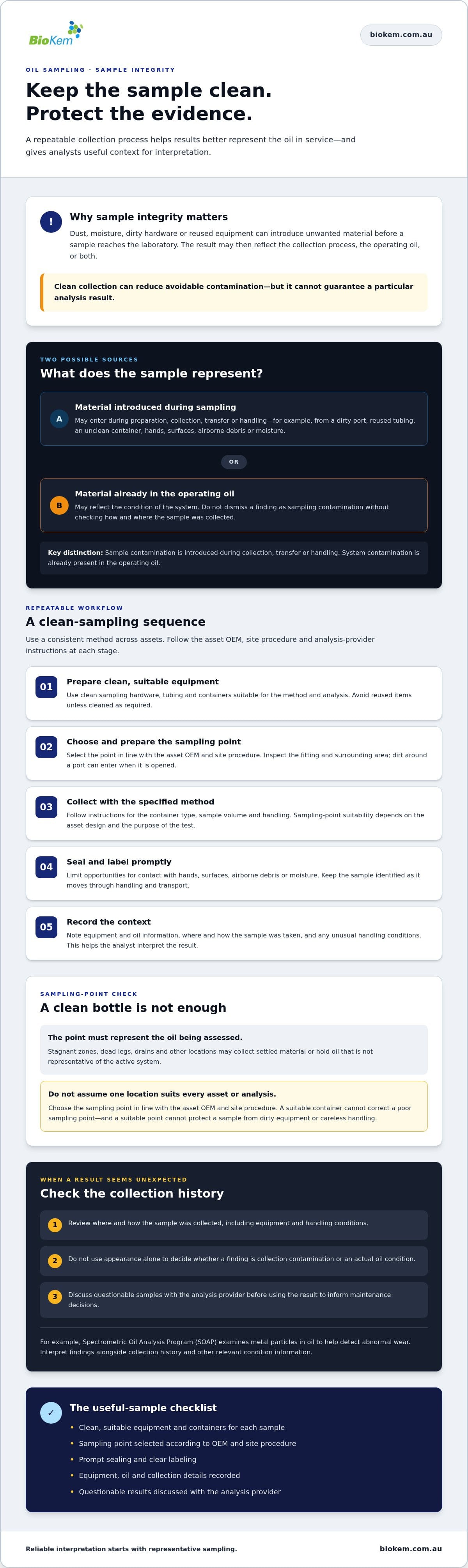
A repeatable workflow for avoiding cross-contamination during oil sampling
Standardise the process across assets, then follow the asset OEM, site procedure and analysis-provider instructions for each sample. Requirements can differ by sampling point and test, so don’t assume one container, volume or preparation method suits every job. Purge or flush a point only when the approved procedure calls for it, and follow the specified method.
Checklist principle: document the sample point, collection conditions and any procedural deviation. This gives the analyst and maintenance team context for interpreting results and comparing samples over time.
Prepare the sampling point and equipment
- Confirm the purpose and method. Check which asset and sampling point are required, what analysis is intended, and which container and sample volume the analysis provider specifies.
- Make the work safe. Follow the asset-specific isolation, access and safety procedures before approaching or opening a sampling point. Don’t bypass site controls to collect a sample.
- Check equipment and containers. Use clean, suitable sample-contact equipment and a container that meets the requirements for the intended analysis. Inspect the container, cap, fittings and transfer tools for dirt, damage, residue or signs of prior use that could compromise the sample.
- Prepare the point as instructed. Clean the surrounding area where the procedure requires it. Purge or flush stagnant oil only in accordance with the approved site or OEM method. Don’t improvise a flush volume or technique.
Collect, seal and document consistently
- Collect without touching contact surfaces. Keep fingers, gloves and other objects away from the inside of the container, cap and any surfaces that will contact the oil. Use the approved transfer method and avoid setting exposed equipment on potentially dirty surfaces.
- Close and identify the sample promptly. Seal it securely and apply the site identification convention so it can be associated with the correct asset and sampling point.
- Complete the record. Capture the asset ID, sampling point, date, relevant operating context and any deviation required by site procedure. Follow the analysis provider’s instructions for handling, storage and transport.
Consistent execution makes avoiding cross contamination during oil sampling a repeatable field practice rather than an individual preference. For help discussing oil analysis or sampling requirements, contact BioKem about your oil analysis needs.
When specialist oil analysis can help validate sampling decisions
Discuss a sample with an analysis provider if the result is unexpected, conflicts with previous data, or was collected under uncertain conditions. Specialist interpretation can help assess what findings may indicate and what information is still needed. It can’t remove contaminants introduced during collection or make an unrepresentative sample representative, so explain any handling concerns.
BioKem provides oil and fuel analysis, including onsite and laboratory-based patch analysis. These services can support the review of sample findings. The discussion is more useful when you share the collection history and relevant asset context, rather than forwarding a result without explanation.
What information helps analysts interpret a sample?
Provide the asset identity, sampling point, oil details and intended analysis, along with the collection method and operating context where available. Note relevant recent maintenance or an oil change if documented. Also explain any departure from site procedure, concern about container integrity, or unusual handling. This context helps guide interpretation, but a diagnosis depends on the sample and an appropriate technical assessment.
How to discuss a questionable sample with a specialist
Summarise what seems uncertain and why. Include how the sample was collected, what equipment and container were used, how it was handled, and whether the result differs from earlier data. Ask whether recollection using a controlled method or additional analysis is appropriate for the specific case. Don’t assume one indicator can establish whether a result reflects sampling or an oil condition.
Good analysis starts with sound collection. A specialist can help interpret available evidence, but avoiding cross contamination during oil sampling depends on the sampling process and its documented controls. To discuss an oil-analysis requirement, contact BioKem about oil analysis.
Make every oil sample count
Reliable analysis starts before a sample reaches the lab. A suitable sampling point, clean sample-contact equipment and containers, careful handling, and clear documentation all help analysts assess whether a result reflects the operating oil or the collection process.
A repeatable approach to avoiding cross contamination during oil sampling also makes results easier to compare and supports informed maintenance decisions. When a result is unexpected or sample integrity is uncertain, share the collection history and asset context with an analysis provider rather than relying on appearance alone.
BioKem provides oil and fuel analysis, including onsite and laboratory-based patch analysis, to support interpretation of sample findings. For guidance on your specific requirement, contact BioKem to discuss your oil analysis requirements. Consistent collection practices and relevant technical context help make each sample more useful.
Frequently Asked Questions
Can a sample container contaminate an oil sample?
Yes. Dirt, moisture, residue or fibres inside a container or on its cap can enter the sample and affect interpretation. Use a clean, suitable container that meets the requirements for the intended analysis, and avoid touching its inside surfaces. Check the container and closure before collection. If you’re unsure whether a container is appropriate or how it should be handled, confirm the requirements with the analysis provider.
How do you prevent cross-contamination when taking oil samples?
Use clean, suitable sample-contact equipment and a container intended for the analysis. Follow the asset OEM and site procedure when selecting and preparing the sampling point, and don’t reuse tubing or tools between assets unless an approved cleaning method allows it. Keep container interiors and caps protected from contact, then seal and label each sample promptly. A repeatable process supports avoiding cross contamination during oil sampling and provides better context for interpretation.
What should I do if I think an oil sample was contaminated?
Tell the analysis provider what raised your concern before treating the result as a reliable picture of the operating oil. Describe the sampling point, equipment and container used, handling history, and any departure from procedure. Ask whether the sample can still be interpreted or whether recollection or additional analysis is appropriate. Follow site and laboratory guidance, and don’t assign a cause based on appearance or one result alone.
Should an oil sampling point be flushed before collecting a sample?
Not automatically. Whether a sampling point needs purging or flushing depends on the asset, sampling method and approved procedure. Follow the asset OEM and site sampling instructions, and confirm any uncertainty with the analysis provider. Don’t apply a generic flush volume or technique without an approved basis. Record any required preparation and note deviations so analysts can consider the collection conditions when interpreting the sample.
Can one sampling tool be used for different oils or assets?
Reusing a tool can carry oil or material from one sample into another. The preferred approach is to use clean, suitable sample-contact equipment for each collection, including new disposable tubing where specified. If a reusable tool is required, use it across samples only when an approved cleaning process is suitable for the equipment and analysis. Follow the site procedure and analysis-provider instructions rather than assuming visual cleanliness is enough to prevent carryover.
How should an oil sample be sealed, labelled, and transported?
Close the container promptly with its suitable cap, avoiding contact with the inside of the container or closure. Label it using the site identification convention, including enough detail to match it to the correct asset and sampling point. Protect the sample during handling and transport. Container type, storage and transport requirements can vary with the analysis, so confirm them with the provider before collection rather than relying on a general rule.
What information should accompany an industrial oil sample?
Include the asset identity, sampling point, oil type or details, collection date and time, and relevant operating conditions. Add the sampling method and note any handling concern or deviation from site procedure. Recent maintenance or an oil change may also help if relevant and documented. These details give the analyst context for assessing the result and comparing it with earlier data, but they don’t replace the sample or a suitable technical interpretation.

Article by
James McAllister
James McAllister is an industry professional with BioKem Oil Services, specialising in lubrication reliability, oil filtration, contamination control and asset performance. Drawing on BioKem's extensive field experience across turbines, compressors, hydraulic systems and critical rotating equipment, James writes practical, insight-driven articles that help maintenance and reliability teams improve equipment performance, extend asset life and reduce operational risk.
Disclaimer
The information contained in this article is provided by BioKem Oil Services for general informational and educational purposes only. While every effort has been made to ensure the accuracy and relevance of the information at the time of publication, BioKem Oil Services makes no representations or warranties, express or implied, regarding its completeness, accuracy, reliability, suitability or availability.
Readers should seek professional advice before making maintenance, operational, engineering or investment decisions based on the content of this article. BioKem Oil Services accepts no liability for any loss, damage or consequential loss arising from the use of, or reliance upon, the information presented.
Unless otherwise stated, all content, including text, graphics, images and technical information, is the property of BioKem Oil Services and is protected by applicable copyright and intellectual property laws. No part of this publication may be reproduced, copied, distributed, republished, stored, transmitted, modified or used in any form without the prior written permission of BioKem Oil Services.
© BioKem Oil Services. All rights reserved.