

A single undefined flange or a missing power outlet can be the difference between a successful maintenance shutdown and a multimillion-dollar repair bill for your critical rotational assets. You already understand that the intense pressure of a scheduled outage often leads to overlooked technical details, which quickly spiral into scope creep and frustrating budget overruns. Determining exactly what battery limits should be established for your hot oil flushing contractor is the most effective way to prevent these setbacks and ensure your equipment meets stringent ISO 4406 cleanliness standards.
By establishing clear physical and operational boundaries, you can safeguard sensitive components like bearings from high-velocity scouring and ensure a seamless division of labor. With over 70 years of combined industry experience, BioKem knows that precision at the planning stage is what delivers a safe, turnkey result without mechanical damage. This guide outlines how to design a safe flushing loop that adheres to OEM specifications, secures necessary site utilities, and protects your long-term operational health. You’ll learn how to define the precise interfaces required to achieve turbulent flow while maintaining zero risk to your high-value infrastructure.
Key Takeaways
- Define precise physical and contractual boundaries where your infrastructure meets the contractor’s equipment to prevent scope creep and budget overruns.
- Protect sensitive rotational assets by identifying the exact locations for bypasses, ensuring high-velocity oil never enters bearings or delicate control valves.
- When deciding what battery limits should be established for your hot oil flushing contractor, create a detailed responsibility matrix for essential site utilities like power and compressed air.
- Establish clear verification criteria and handover protocols to confirm that the system meets ISO 4406 cleanliness standards before restoring normal operations.
- Partner with specialists like BioKem to leverage 70 years of experience in designing safe, turnkey flushing loops that protect your long-term operational health.
Defining Battery Limits: The Foundation of a Successful Hot Oil Flush
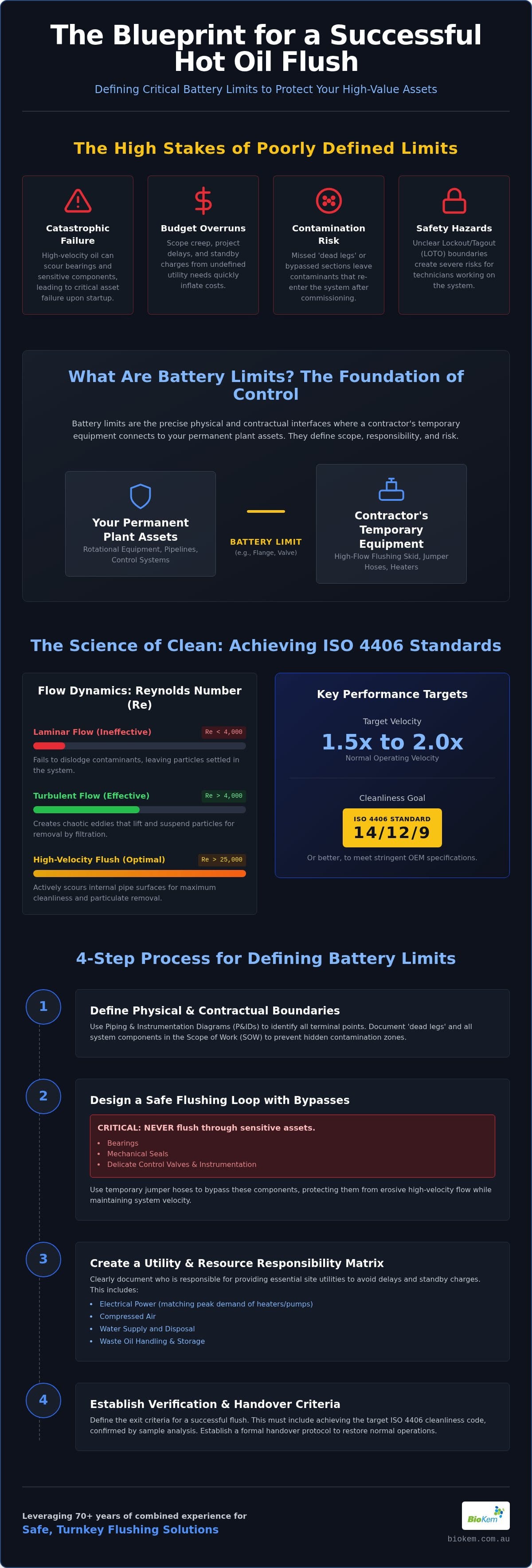
Battery limits represent the precise interface where a contractor’s temporary equipment integrates with your permanent plant assets. In the context of hot oil flushing, these boundaries are both physical and contractual. They dictate who owns the risk at every flange and valve. When asking what battery limits should be established for your hot oil flushing contractor? you must look beyond simple connection points. You’re defining the volume and geometry of the system to ensure the process achieves a Reynolds Number greater than 4,000. Without this threshold, the flow remains laminar, failing to dislodge the particulate matter that threatens your rotating equipment. High-velocity flushing often targets Reynolds Numbers exceeding 25,000 to scour the internal surfaces effectively.
Precision in these definitions protects the site owner from liability and mechanical erosion risks. If a limit is poorly defined, the contractor might inadvertently bypass a critical section of pipework, leaving contaminants behind. Conversely, they might flush through a sensitive component not designed for high-velocity flow. BioKem leverages 70 years of combined experience to help clients establish these boundaries, ensuring that every millimetre of the targeted loop reaches the required cleanliness without risking the integrity of the surrounding infrastructure.
Physical vs. Contractual Boundaries
Identifying terminal points requires a deep dive into the Piping and Instrumentation Diagram (P&ID). The physical limit is typically a specific flange or manifold where the high-flow flushing skid connects. However, the contractual boundary must address ‘dead legs’, which are sections of pipework where oil might stagnate. If these aren’t documented in the Scope of Work (SOW), they become pockets of contamination that can migrate back into the clean system post-commissioning. Clear documentation ensures the contractor is responsible for the entire loop’s integrity, not just the equipment they brought to the site.
The Impact of Poorly Defined Limits
Vague boundaries often lead to mechanical failure. Consider a scenario where a contractor assumes a bearing house is isolated, but an undefined bypass allows high-velocity oil to scour the bearing surfaces. This dislodges debris that causes scoring or catastrophic failure upon startup. Beyond mechanical risks, missing utility interfaces create operational friction. If the contractor arrives and finds the site’s power supply doesn’t match the peak demand of their heating systems, the project stalls. This results in standby charges and delays your commissioning and shutdown support schedule. Finally, undefined Lockout/Tagout (LOTO) boundaries pose a severe safety risk, as technicians might unknowingly work on pressurized or energized sections of the loop.
Physical Battery Limits: Designing the Flush Loop and Bypasses
Designing the physical loop requires a granular understanding of your system’s fluid dynamics. When asking what battery limits should be established for your hot oil flushing contractor? the focus must remain on where temporary jumper hoses will isolate sensitive components. These jumpers are essential because the scouring velocities required to reach an ISO 4406 cleanliness code of 14/12/9 or better can cause severe mechanical erosion in precision parts. You must never flush through bearings, mechanical seals, or delicate control valves. The turbulent flow designed to lift contaminants will inevitably damage these surfaces if they aren’t bypassed correctly.
Bypassing Critical Assets
The technical justification for using jumper hoses is twofold: protecting the asset and maintaining velocity. To achieve a Reynolds Number greater than 4,000, or the high-velocity target of 25,000, the oil must move at 1.5 to 2.0 times its normal operating velocity. Components like bearings create significant flow restriction, which drops the velocity and prevents effective cleaning. Detailed planning for these bypasses is covered in our Hot Oil Flushing: Guide to Flushing Bearing Circuits. For large-diameter reservoirs and oil coolers, the battery limits should specify isolation valves or blanking plates to ensure the flushing fluid scours the piping rather than losing energy in large volumes.
Interface Hardware and Connections
The physical interface is where the project often faces delays. You must specify flange sizes, pressure ratings, and gasket materials that can withstand temperatures between 60°C and 80°C. Using incorrect gaskets at the battery limit can lead to leaks that compromise environmental safety and project timelines. Clear responsibility for providing adapters must be established early. Whether the site team or the contractor provides these fittings, they must be accessible for high-flow flushing skids. Documenting these requirements helps maintain compliance with the Process Safety Management (PSM) standard, ensuring that all temporary modifications to the system are engineered for safety.
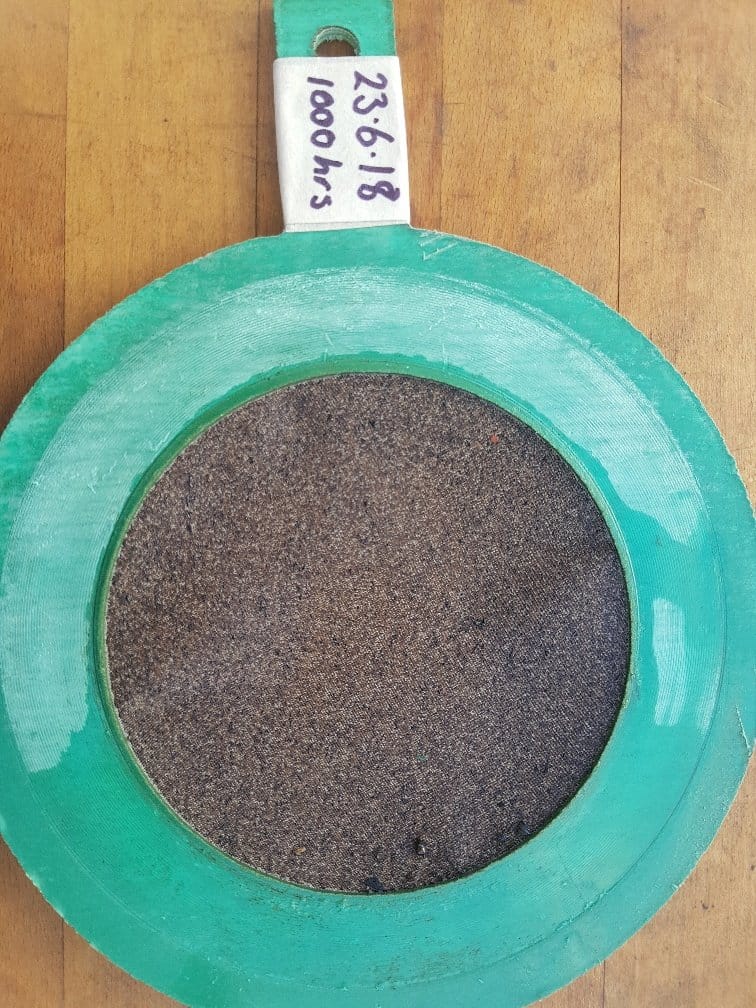
BioKem provides specialized paddle flushing screens and temporary pipework to bridge these limits effectively. If you’re unsure about the optimal connection points for your specific configuration, it’s best to consult with our technical team during the design phase. We ensure that the supply and return points are positioned to eliminate stagnant zones, facilitating a comprehensive clean that meets OEM warranty requirements without risking your rotational infrastructure.
Utility and Resource Interfaces: The Responsibility Matrix
A successful hot oil flush relies on more than just the mechanical connection of hoses and flanges. It requires a synchronized utility interface between the site infrastructure and the contractor’s equipment. When determining what battery limits should be established for your hot oil flushing contractor? the responsibility matrix for site utilities is often the most overlooked component. Failure to define who provides power, air, and waste management leads to immediate project delays and unexpected standby costs. A clear matrix ensures that both parties understand their obligations before the high-flow flushing skids even arrive on site.
Primary Utility Requirements
Heating the flushing fluid to the required 60°C to 80°C range demands significant electrical capacity. You must specify the exact voltage, phase, and peak amperage available at the electrical tie-in points. If the site cannot meet the peak demand of industrial lubricant oil heaters, the contractor may need to provide standalone generator sets. Establishing these utility tie-in points correctly aligns with HSE guidance on plant modification, ensuring that temporary additions to the system don’t compromise site safety or operational stability. Additionally, if the contractor utilizes pneumatic flushing pumps, the site must provide a consistent supply of clean, dry compressed air at the specified pressure and flow rate to maintain turbulent flow.
Waste and Environmental Responsibility
Environmental stewardship is a core pillar of modern industrial operations. The battery limits must explicitly state who is responsible for the disposal of contaminated oil and spent filter elements. BioKem utilizes ISO 16889-certified filtration to maximize the life of the fluid, but eventual waste is inevitable. The contract should define the containment requirements for temporary hoses and skids, including the provision of secondary bunding to prevent spills. Compliance with Australian environmental regulations for industrial waste is mandatory. This includes managing the ‘sweetening’ process, where a portion of the oil is replaced to restore additives, versus a full system replacement. Clearly defining these limits prevents disputes over disposal fees and ensures the site remains compliant with local ecological standards.
Logistical support also falls within this matrix. The site owner typically provides craneage for positioning heavy equipment, scaffolding for accessing high-point vents, and site transport for moving materials. BioKem partners with clients to define these limits during the planning phase, leveraging 70 years of industry experience to identify potential bottlenecks. Whether you require a full turnkey solution or prefer to manage certain utilities internally through equipment hire, a robust responsibility matrix is the only way to protect your budget and your timeline.
Operational Handover and Verification Criteria
The transition from a high-velocity flush to standard operational status requires a clearly defined ‘Point of Acceptance’. This is the moment where the system is officially declared clean and the battery limits shift from the contractor’s control back to the site owner. Determining what battery limits should be established for your hot oil flushing contractor? must include the specific criteria for this sign-off. Without a pre-agreed standard, projects often stall during the final phase, leading to disputes over whether the target cleanliness has been achieved or if the system is ready for oil charge.
Cleanliness Verification Protocols
Verification begins with setting realistic ISO 4406 targets based on OEM specifications. For most rotating equipment, achieving a code of 14/12/9 or better is essential for validating warranties. BioKem utilizes onsite patch analysis to provide immediate feedback during the circulation phase. This allows for real-time adjustments before committing to lab-based testing for final certification. A critical part of this process is the ‘final pass’ filtration. We employ ISO 16889-certified media to ensure the fluid meets the highest standards before the loop is opened. For a comprehensive look at the steps following a flush, refer to our Commissioning Lubrication Systems: A Practical Checklist. Once the target is met, post-flush procedures include the systematic removal of jumper hoses and the careful reinstatement of the permanent pipework.
Safety and Access Boundaries
Operational handover is as much about safety as it is about technical cleanliness. The battery limits must define the ‘Permit to Work’ (PTW) process and the specific inductions required for contractor personnel. In the Australian industrial landscape, strict adherence to site-specific safety protocols is non-negotiable. This includes defining Lockout/Tagout (LOTO) responsibilities. You must determine who holds the master key and how the isolation points will be managed as the system transitions from a temporary flushing loop back to an energized asset.
If the scope involves tank cleaning, confined space entry protocols must be established. BioKem has maintained zero Lost Time Injuries (LTI) since our establishment in 2012 by strictly following these boundaries. We ensure that all personnel are trained for the specific risks associated with oil and fuel vessel cleaning. To ensure your next shutdown follows these rigorous safety and cleanliness standards, contact BioKem’s technical specialists to assist in defining your operational handover criteria.
Partnering with BioKem: Expert Scope and Limit Definition
BioKem positions itself as more than a service provider. We act as a technical partner that bridges the gap between complex engineering requirements and field execution. With over 70 years of combined industry experience, our team understands the specific pressures of Australian industrial environments. When clients ask what battery limits should be established for your hot oil flushing contractor? they’re often looking for a way to minimize site burden while maximizing asset protection. Our record of zero Lost Time Injuries (LTI) since 2012 demonstrates our commitment to safe, responsible operations within these boundaries. We provide national coverage, ensuring that specialized expertise is available for remote mine sites and urban refineries alike.
Tailored Turnkey Solutions
A turnkey approach removes the ambiguity often found at the interface of a project. BioKem manages the entire scope from initial engineering and P&ID review to final verification. This is particularly vital when deploying our high-temperature varnish mitigation systems. As the largest units in the region, these systems require precise limit planning to manage thermal expansion and fluid chemistry safely. By choosing a comprehensive service, you ensure that every jumper hose and utility tie-in is engineered to meet OEM specifications. For a deeper look at our national capabilities, read our Hot Oil Flushing Services Australia: The Definitive Guide. This resource helps you understand how we integrate with your existing maintenance teams to deliver a seamless result.
Equipment Hire and Support
We recognize that some facilities prefer to manage their maintenance limits internally. For these scenarios, BioKem provides specialized equipment hire, including high-flow flushing skids and multi-filter housings equipped with ISO 16889-certified filtration. This isn’t just a rental service. We provide expert consultation to ensure your internal team understands the operational boundaries required for a successful flush. Our status as the Australian distributor for Filters S.p.A. grants our clients access to ‘best of breed’ international hardware, backed by localized technical expertise. We help you select the right pumps and heaters to maintain the required Reynolds Number across your specific battery limits.
Whether you’re planning a major refinery shutdown or a minor equipment overhaul, defining the scope is the first step toward long-term reliability. We encourage you to Contact BioKem Oil Services for a technical scope review. Our specialists will help you determine the exact boundaries needed to protect your rotational assets and achieve zero damage during your next hot oil flush. By partnering with us, you gain a reliable ally committed to solving complex industrial challenges with transparency and efficiency.
Securing Asset Integrity Through Precise Interface Planning
Securing your industrial infrastructure requires more than technical skill. It demands a rigorous approach to planning and boundary definition. By establishing precise physical bypasses and a comprehensive utility responsibility matrix, you eliminate the ambiguity that leads to scope creep and mechanical failure. These boundaries protect sensitive bearings and ensure every section of your lubrication system reaches the required turbulent flow for effective scouring.
Determining what battery limits should be established for your hot oil flushing contractor? is the critical first step in mitigating risk during a shutdown. BioKem supports this process with 70 years of specialist experience and a commitment to safety reflected in our zero Lost Time Injuries (LTI) since 2012. Our use of ISO 16889-certified filtration ensures your fluid meets the most stringent OEM warranty requirements without compromise.
Properly defined limits transform a complex maintenance task into a predictable, turnkey success. If you’re preparing for an upcoming outage, we’re ready to help you map out a safe and efficient flushing loop. Request a Technical Consultation for Your Next Flush and ensure your critical assets remain protected for the long term.
Frequently Asked Questions
What are typical battery limits for a hot oil flushing project?
Typical battery limits encompass the specific flanges or manifolds where the contractor’s high-flow flushing skids connect to the permanent plant pipework. These boundaries define the volume of oil, the length of the piping loop, and the isolation points for sensitive assets. Establishing these limits ensures the contractor is accountable for the cleanliness of a specific circuit while the site maintains control over the surrounding infrastructure.
Who is responsible for providing the jumper hoses and adapters?
Responsibility for interface hardware is defined in the project’s responsibility matrix. While BioKem often provides specialized jumper hoses and paddle flushing screens as part of a turnkey solution, the site team may be responsible for providing specific adapters or flange modifications. Clearly documenting who provides these components prevents project delays during mobilization. It’s essential to confirm that all hardware meets the required pressure and temperature ratings.
Can I flush through the turbine bearings if I use fine filters?
You should never flush through turbine bearings, regardless of the filter quality. The high velocities and turbulent flow required to dislodge contaminants can cause irreparable mechanical erosion to precision bearing surfaces. Even with ISO 16889-certified filtration, the scouring action of the fluid itself poses a risk. Jumper hoses must be used to bypass these critical assets, ensuring the process scours the piping without damaging rotational internals.
What utilities does a flushing contractor normally require on-site?
A flushing contractor typically requires access to high-voltage power for heating systems, compressed air for pneumatic tools, and occasionally water for cooling. When asking what battery limits should be established for your hot oil flushing contractor? you must include these utility tie-in points. If the site cannot provide the necessary amperage for integrated heaters, the contractor may need to deploy standalone generators to maintain fluid temperatures between 60°C and 80°C.
How do I define the cleanliness target for the contractor?
Cleanliness targets are established based on OEM specifications, usually expressed as ISO 4406 codes such as 14/12/9. These targets should be documented in the Scope of Work to provide a clear point of acceptance. BioKem utilizes onsite patch analysis and lab-based testing to verify these levels. Defining the verification method early ensures that both parties agree on when the system is officially clean and ready for operational handover.
What happens if the site utility (like power) fails during the flush?
If a site utility fails, the flushing process stops, which can lead to temperature drops and the settling of contaminants. The contract should specify how standby time is managed and the protocols for restarting the loop. Maintaining thermal cycles is critical for effective cleaning, so power failures often require the system to be reheated before the flush can resume its scouring velocity. This highlights the importance of reliable utility interfaces.
Who is responsible for the disposal of the flushing oil?
Responsibility for waste disposal, including contaminated oil and spent filter elements, must be explicitly stated in the battery limits. While BioKem focuses on maximizing fluid life through advanced filtration, the eventual disposal of industrial waste must comply with Australian environmental regulations. Often, the site owner manages the disposal via their existing waste streams, but the contractor must ensure proper containment and bunding while the oil is under their control.
Do I need to chemical clean the pipework before the hot oil flush?
Chemical cleaning is not always mandatory but may be required if the system has significant scale or heavy varnish buildup that hot oil alone cannot dislodge. Determining what battery limits should be established for your hot oil flushing contractor? often involves an initial oil analysis to check for these conditions. If chemical cleaning is performed, the system must be thoroughly neutralized and dried before the hot oil flush begins to prevent chemical contamination.

Article by
James McAllister
James McAllister is an industry professional with BioKem Oil Services, specialising in lubrication reliability, oil filtration, contamination control and asset performance. Drawing on BioKem's extensive field experience across turbines, compressors, hydraulic systems and critical rotating equipment, James writes practical, insight-driven articles that help maintenance and reliability teams improve equipment performance, extend asset life and reduce operational risk.
Disclaimer
The information contained in this article is provided by BioKem Oil Services for general informational and educational purposes only. While every effort has been made to ensure the accuracy and relevance of the information at the time of publication, BioKem Oil Services makes no representations or warranties, express or implied, regarding its completeness, accuracy, reliability, suitability or availability.
Readers should seek professional advice before making maintenance, operational, engineering or investment decisions based on the content of this article. BioKem Oil Services accepts no liability for any loss, damage or consequential loss arising from the use of, or reliance upon, the information presented.
Unless otherwise stated, all content, including text, graphics, images and technical information, is the property of BioKem Oil Services and is protected by applicable copyright and intellectual property laws. No part of this publication may be reproduced, copied, distributed, republished, stored, transmitted, modified or used in any form without the prior written permission of BioKem Oil Services.
© BioKem Oil Services. All rights reserved.