

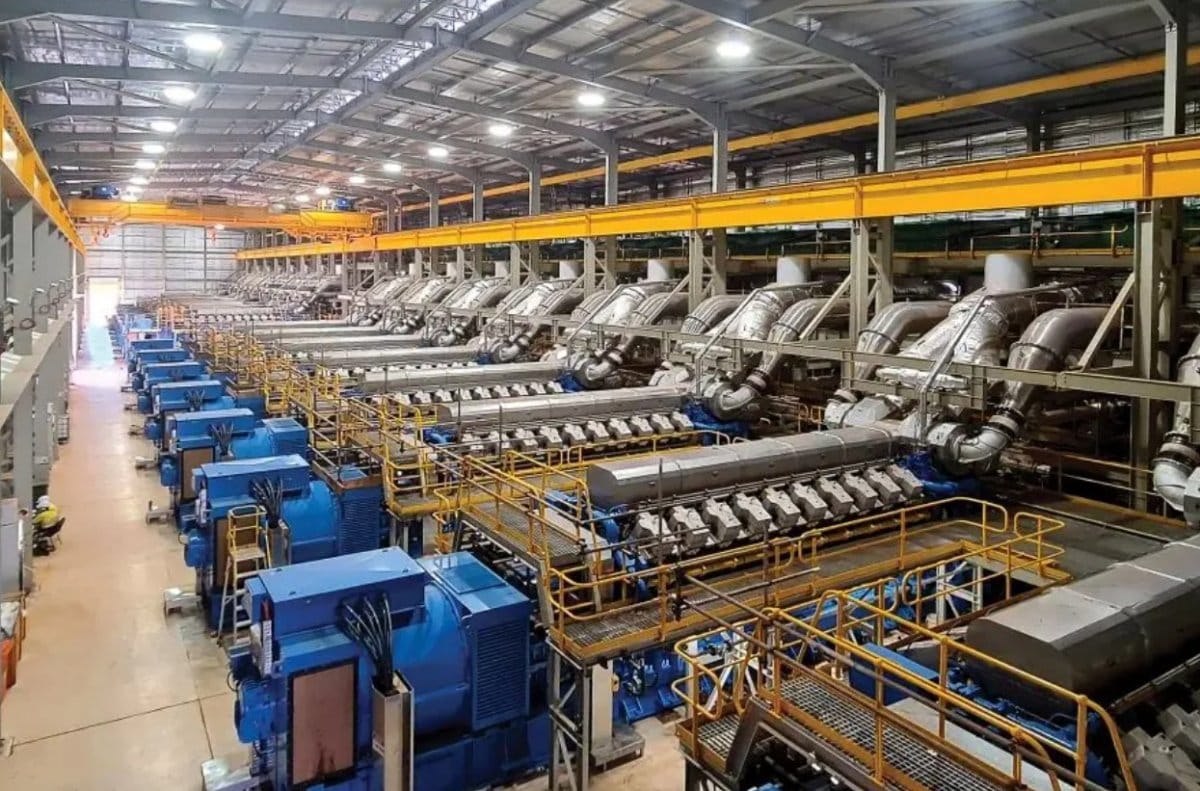
Data without a technical intervention strategy is simply a digital record of an impending failure. While many facilities have invested in advanced sensors, they still suffer from the $2.3 million hourly cost of unplanned downtime because they lack a clear response framework. Adopting predictive maintenance lubrication isn’t just about watching a dashboard; it’s about shifting from inefficient, time-based oil changes to condition-based precision. You likely feel the pressure of rising labor rates and the environmental weight of premature component disposal.
We understand that managing critical assets requires more than just reactive repairs or rigid schedules that ignore actual fluid health. This article provides a clear framework to help you transition to data-driven strategies that extend component life and lower your total cost of ownership. We’ll explore the latest ISO 12940:2026 standards for grease stability and how to integrate specialized services like varnish mitigation to turn your monitoring data into measurable reliability. By the end, you’ll know how to align your maintenance response with the technical demands of 2026 industrial standards.
Key Takeaways
- Transition from rigid, time-based schedules to condition-based logic to eliminate unnecessary lubricant disposal and reduce operational waste.
- Implement predictive maintenance lubrication by combining real-time sensor data with laboratory oil analysis to identify microscopic wear patterns before they trigger catastrophic failure.
- Protect critical asset components and extend the service life of seals and bearings by maintaining precise fluid chemistry and cleanliness.
- Execute technical responses to data anomalies through specialized interventions such as Varnish Mitigation and Vacuum Dehydration to restore system reliability.
- Improve your facility’s ESG outcomes by minimizing environmental impact through reduced oil consumption and enhanced machinery efficiency.
What is Predictive Maintenance Lubrication?
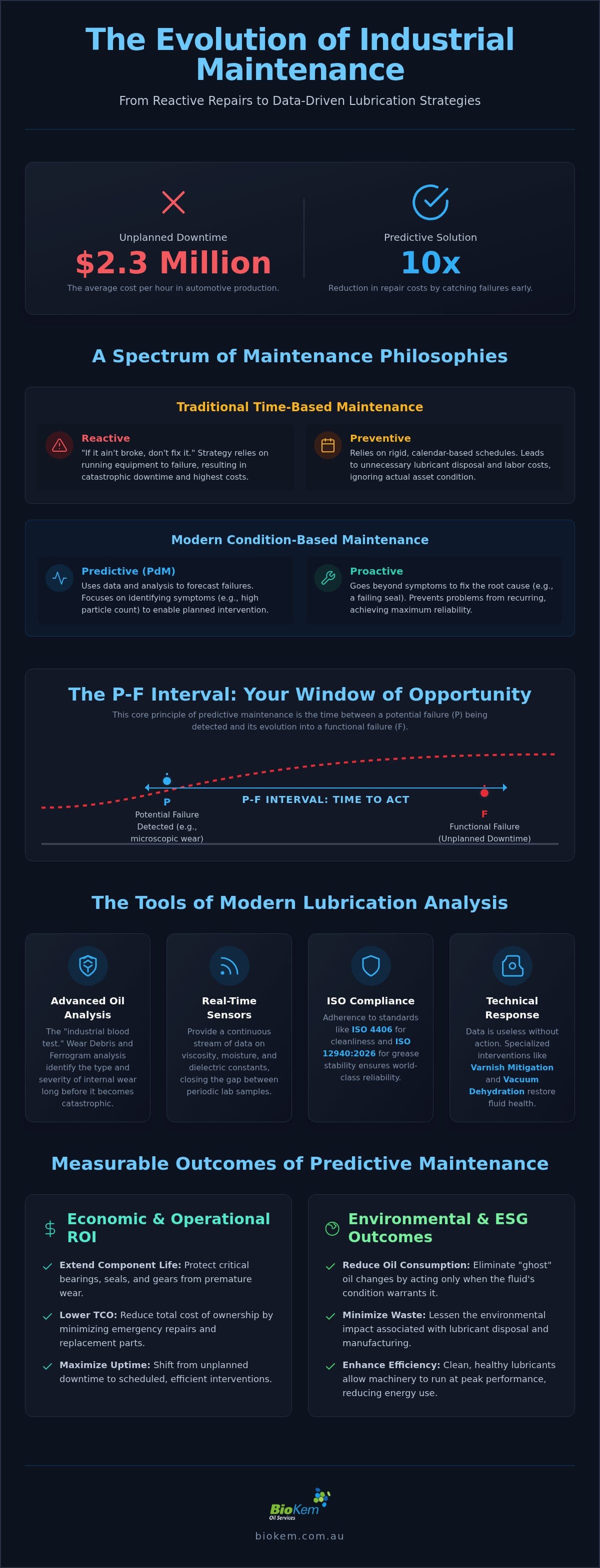
Predictive maintenance (PdM) is a condition-based methodology that utilizes real-time data and advanced laboratory analysis to forecast equipment failure before it occurs. Unlike traditional preventive maintenance, which relies on rigid, calendar-based intervals regardless of the lubricant’s actual state, predictive maintenance lubrication focuses on the health of the fluid as a proxy for the machine’s internal condition. The global market for oil condition monitoring has reached USD 1.99 billion in 2026, reflecting a massive industry pivot toward data-centric reliability. This growth is fueled by the realization that unscheduled downtime in sectors like automotive production can cost as much as $2.3 million per hour.
To better understand how these different maintenance philosophies interact and impact your operations, watch this technical breakdown:
In 2026, basic viscosity checks are no longer sufficient to meet modern reliability standards. New international benchmarks, such as ISO 12940-1:2026 and ISO 12940-2:2026, now provide rigorous methods for evaluating the roll stability of lubricating grease under both dry and wet conditions. This shift toward high-precision data allows facilities to eliminate “ghost” oil changes, which saves significant costs and reduces the environmental footprint associated with excessive oil waste and disposal.
The P-F Interval in Lubricated Systems
The core objective of predictive maintenance lubrication is identifying the P-F Interval. This represents the time between the point where a potential failure (P) is first detectable and the moment of functional failure (F). In lubricated systems, early warning signs often manifest as microscopic wear debris or subtle chemical shifts long before physical vibrations or heat are detectable by human senses. Wear debris analysis, including Ferrogram analysis, plays a critical role in extending this window. By examining the morphology and composition of particles, technicians can pinpoint whether wear is due to adhesion, abrasion, or fatigue. Catching a failure at the “P” point can reduce repair costs by approximately 10x compared to reactive, emergency fixes.
Predictive vs. Proactive: Clearing the Confusion
It’s common to confuse predictive and proactive strategies, but they serve different roles in an asset management framework. Predictive maintenance finds the symptom, such as a high particle count or rising moisture levels. Proactive maintenance fixes the root cause, such as a failing breather or a degraded seal that allows ingress. A world-class reliability program requires both methodologies to work in tandem. While predictive tools alert you to an emerging problem, designing a proactive maintenance strategy ensures the underlying environmental or mechanical stressors are permanently mitigated to prevent the symptom from returning.
The Tools of Predictive Lubrication: Analysis & Monitoring
Effective predictive maintenance lubrication relies on high-fidelity data to bridge the gap between observation and action. Oil analysis serves as the industrial “blood test,” revealing microscopic shifts in fluid chemistry and particulate contamination before they manifest as mechanical failure. In 2026, the technology used to capture this data has evolved significantly. While the global oil condition monitoring market is valued at USD 1.99 billion, the real value lies in how facilities integrate real-time hardware with deep laboratory diagnostics. High-end multi-parameter sensors, often costing between $800 and $2,500, now allow for continuous tracking of viscosity, dielectric constants, and moisture levels, providing a steady stream of data that periodic sampling might miss.
Cleanliness reporting remains anchored in the ISO 4406 standard. This code quantifies the number of particles per milliliter of fluid across three size ranges: 4, 6, and 14 microns. A single shift in these digits can represent a doubling of the contaminant load, which directly correlates to accelerated component wear. To gain a deeper understanding of these patterns, technicians utilize analytical ferrography. This process separates wear debris from the lubricant, allowing for a microscopic examination of particle shape and composition. Identifying “spiral” particles signals severe sliding wear, while “spheres” often indicate the early stages of rolling element bearing fatigue.
Onsite vs. Laboratory Analysis
Modern reliability programs balance the speed of onsite tools with the precision of offsite labs. For immediate results, the Particle Pal range provides real-time ISO cleanliness codes and water-in-oil saturation levels. This is ideal for routine checks or verifying the success of a filtration project. However, critical assets require the exhaustive detail of a Filter Ferrogram, which provides a permanent visual record of wear debris. Establishing a baseline is vital; your first five samples are the most important as they define the “normal” operating signature of the machine, making future anomalies easier to spot. If you’re unsure which monitoring frequency fits your equipment, you can explore our technical hardware options to find a tailored solution.
Key Metrics for Predictive Success
To move beyond basic monitoring, facilities must track specific chemical and physical markers:
- Elemental Analysis: Using spectroscopy to detect wear metals like copper, lead, or tin, which points to specific failing components such as bushings or bearings.
- Varnish Potential (MPC): Membrane Patch Colorimetry is essential for high-speed turbines where subtle temperature changes cause soft contaminants to precipitate as varnish.
- Moisture Detection: Water is a primary catalyst for oxidation and acid formation. While some systems tolerate minor humidity, reaching 500ppm is often a tipping point that triggers rapid oil degradation and hydrogen embrittlement in steel components.
Economic Impact: ROI of Condition-Based Lubrication
Organizations often view lubrication as a recurring operational expense. However, predictive maintenance lubrication transforms this perspective by treating fluid health as a high-yield asset. By shifting to condition-based intervals, facilities eliminate “ghost” oil changes, which are scheduled replacements of perfectly viable fluid. This reduces lubricant procurement costs and the labor required for unnecessary intervention. Organizations that transition to these predictive models typically reduce overall maintenance costs by 25% to 30%, as they stop discarding expensive synthetic oils that still possess full additive packages.
Beyond oil savings, the real ROI lies in component longevity. Maintaining optimal fluid chemistry prevents the chemical degradation of seals and the abrasive wear of bearings. Varnish is a particularly expensive silent killer in high-speed systems. When soft contaminants precipitate onto valve surfaces, they cause “stiction,” leading to erratic machine behavior or complete trips. In high-output sectors, these sticking valves can result in millions of dollars in lost production before the root cause is even identified. By monitoring varnish potential early, you protect the mechanical integrity of the entire system.
Environmental outcomes are now central to corporate strategy. Reducing waste oil disposal directly supports ESG targets by minimizing the volume of hazardous materials transported and processed. This creates a circular economy within the plant where oil is purified and reused rather than replaced, aligning financial performance with ecological responsibility.
Calculating the Cost of Failure
To quantify ROI, one must look beyond the price of the lubricant. Direct costs include replacement parts and emergency labor, while indirect costs encompass lost production, safety risks, and secondary damage to adjacent machinery. A single $50 oil sample can prevent a $500,000 gearbox failure by identifying early wear particles before they trigger a chain reaction of destruction. This disparity between the cost of the data and the cost of the catastrophe is the strongest argument for a robust monitoring program.
Equipment Hire as a Strategic Cost Saver
Not every predictive alert requires a permanent hardware purchase. Utilizing industrial oil filtration equipment hire allows facilities to address short-term contamination events or varnish spikes without a significant capital expenditure (CAPEX). This approach is particularly effective for testing predictive theories or scaling a maintenance response during a planned shutdown. Hire options allow you to access advanced vacuum dehydration or high-flow filtration units only when the data indicates they’re needed, keeping maintenance budgets lean while maintaining peak asset reliability.
The Predictive Response: From Data to Action
A successful predictive maintenance lubrication program is defined by the speed and accuracy of the technical response it triggers. Once a data anomaly is detected, the process follows a structured sequence to restore asset health without requiring a total system teardown. This structured flow ensures that data isn’t just observed but utilized to achieve measurable reliability outcomes. The framework involves four critical steps:
- Step 1: Identify the anomaly. Sensors or routine sampling flag a deviation from the established baseline, such as a sudden spike in particle counts or a drop in additive levels.
- Step 2: Root cause analysis. Technicians determine if the issue is external, such as water ingress through a faulty breather, or internal, such as accelerated bearing wear due to misalignment.
- Step 3: Select the intervention. Deploy specialized, non-invasive hardware like vacuum dehydration or varnish mitigation to treat the fluid in-situ while the machine remains operational or during a short window.
- Step 4: Verify the result. Conducting a post-service oil analysis ensures the system has returned to its target cleanliness and chemical stability, restoring the reliability expected from a predictive maintenance lubrication strategy.
Mitigating Varnish and Oxidation
When MPC (Membrane Patch Colorimetry) levels rise, it indicates that the oil is nearing its saturation point and is ready to precipitate soft contaminants onto internal surfaces. Standard mechanical filters often fail to capture sub-micron varnish precursors because these polar molecules remain dissolved in the oil at operating temperatures. Implementing a Varnish Removal System is essential to strip these precursors from the fluid. By maintaining low MPC levels, you prevent the formation of sticky deposits that lead to valve stiction and heat exchanger efficiency loss. Proper temperature control also plays a vital role, as excessive heat accelerates the oxidation process that feeds varnish formation.
Precision Cleaning with Hot Oil Flushing
High particle counts or the presence of wear debris often indicate that contaminants have settled in the stagnant zones of your pipework. Hot Oil Flushing addresses these predictive alerts by utilizing high-velocity turbulent flow. By achieving a high Reynolds number, the fluid creates enough kinetic energy to dislodge built-up scale and debris that regular laminar flow would leave behind. This process is critical before a restart, ensuring that the system is chemically and physically clean. If your latest analysis indicates a critical contamination level, you can request a technical consultation for Hot Oil Flushing to clear your system before it leads to a functional failure.
BioKem Oil Services: Your Partner in Predictive Excellence
As industrial systems become more complex, the gap between data collection and technical execution often becomes a point of failure. BioKem Oil Services bridges this gap by acting as the technical partner that executes the “Response” phase of your predictive maintenance lubrication strategy. We bring specialized machinery and laboratory-grade diagnostics directly to your site, ensuring that predictive insights are immediately converted into asset reliability. Our approach centers on the belief that a world-class maintenance program is only as effective as the purification and mitigation steps that follow the initial data alert.
Our role as the sole Australian distributor for high-performance Filters S.p.A. products provides our clients with access to international-standard hardware designed for the most demanding environments. We specialize in the maintenance of complex systems, including EHC fluid maintenance and the management of phosphate ester fluids. These specialized fluids require precise chemical balancing and moisture control to prevent acid buildup and servo-valve erosion. By anchoring global scientific standards in a dependable, localized context, BioKem Oil Services ensures Australian industrial operators meet both their production targets and their environmental obligations.
The BioKem Oil Services Advantage
The strength of our service lies in our highly trained technicians who possess deep experience across the mining, power generation, and manufacturing sectors. We don’t just provide generic filtration; we develop customized solutions utilizing Swift Filters to meet the specific micron ratings and flow requirements of your critical machinery. Our “Cleanliness First” philosophy governs every intervention, ensuring that all industrial lubricants are returned to or exceed their original manufacture specifications. This commitment to fluid purity directly supports the extended P-F intervals discussed earlier in this guide, providing you with a larger window for planned maintenance.
Get Started with a Lubrication Audit
Transitioning to a mature predictive maintenance lubrication program begins with a clear understanding of your current baseline. BioKem Oil Services conducts comprehensive lubrication audits to assess your maintenance maturity and identify high-risk assets that would benefit most from condition-based monitoring. During this process, we help you develop a tailored predictive sampling schedule that aligns with current international standards. Whether you require a temporary equipment hire for a specific contamination event or a long-term national onsite service contract, our team is ready to assist. Contact us today for a national onsite service consultation to secure the longevity and efficiency of your critical industrial infrastructure.
Securing the Future of Industrial Reliability
The transition to predictive maintenance lubrication represents a fundamental shift in how we approach industrial reliability. It’s no longer enough to simply monitor data points. Success in 2026 requires a technical partner capable of executing precise interventions like Varnish Mitigation and Hot Oil Flushing when the data signals a risk. By integrating real-time sensors with expert laboratory analysis, you can eliminate the high costs of unscheduled downtime and significantly reduce your facility’s environmental footprint.
BioKem provides the localized expertise and specialized hardware necessary to bridge the gap between predictive data and operational excellence. As the sole Australian distributor for Filters S.p.A., we offer national onsite technical support to ensure your systems remain clean and efficient. Optimise your asset reliability with BioKem’s expert oil services and transform your maintenance strategy into a profit center. Taking these proactive steps today ensures your machinery operates at peak performance for years to come.
Frequently Asked Questions
What is the most important test in predictive maintenance lubrication?
Analytical ferrography is widely considered the most critical test for identifying early failure modes. While standard oil analysis tracks fluid health, ferrography examines the specific shape and composition of wear particles. This allows technicians to distinguish between normal rubbing wear and severe fatigue. By identifying these microscopic signatures early, you can schedule technical interventions long before mechanical damage becomes visible or audible.
How often should oil samples be taken for a predictive program?
Sampling frequency depends on the criticality of the asset and its operating environment. For high-criticality machinery in mining or power generation, monthly sampling is the industry standard for 2026. Less critical systems may only require quarterly checks. Many facilities now supplement these periodic lab tests with real-time sensors to ensure there are no data gaps between scheduled samples.
Can predictive maintenance eliminate the need for oil changes?
It doesn’t eliminate oil changes entirely, but it significantly extends the interval between them. By using predictive maintenance lubrication to monitor fluid health, you only change the oil when the data indicates the additive package is depleted or contamination is unmanageable. This shift from time-based to condition-based changes reduces lubricant consumption and supports corporate sustainability targets by minimizing hazardous waste.
What is the difference between oil analysis and vibration analysis?
Oil analysis evaluates the chemical state of the lubricant and the presence of microscopic wear debris, often providing the earliest possible warning of a problem. Vibration analysis detects physical imbalances and mechanical defects once they’ve begun to affect the machine’s movement. Using both tools together provides a comprehensive view of asset health, with oil analysis typically identifying issues earlier in the P-F interval.
How much does it cost to implement a predictive lubrication program?
The cost of implementation varies based on the sophistication of the hardware chosen. In 2026, standard single-parameter sensors are priced between $150 and $400 for volume purchases. Premium multi-parameter sensors that integrate particle counting and moisture sensing range from $800 to $2,500 per unit. These investments are generally offset by a typical 25% to 30% reduction in overall maintenance costs.
What industries benefit most from predictive lubrication?
Industries with high-output production lines and expensive downtime benefit most from these strategies. Power generation, mining, and automotive manufacturing are primary examples. Similarly, in the aviation sector, ensuring fluid quality and compliance is paramount; platforms like JetFuel Oil Mandate help operators streamline fuel procurement and inventory to maintain high safety standards. In the automotive sector, where an idle line can cost $2.3 million per hour, the ability to predict and prevent a single gearbox or turbine failure provides an immediate and massive return on investment.
Is real-time oil monitoring better than laboratory testing?
Real-time monitoring and laboratory testing are complementary rather than competing technologies. Real-time sensors act as a 24/7 early warning system, flagging sudden spikes in moisture or temperature. Laboratory testing, such as Ferrogram analysis, provides the deep diagnostic detail needed to understand exactly why a component is failing. A robust reliability strategy uses sensors for continuous trending and lab analysis for precise root cause identification.