

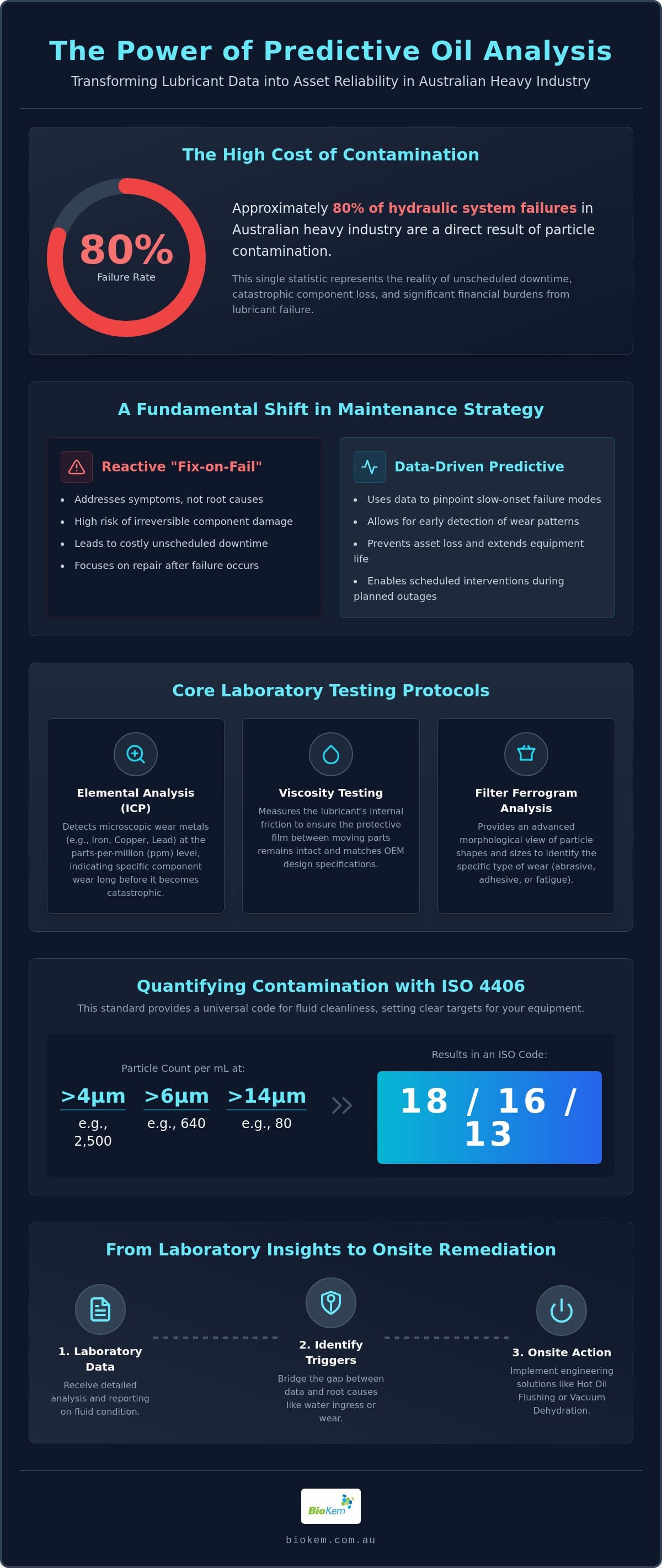
Approximately 80% of hydraulic system failures in Australian heavy industry are a direct result of particle contamination. For many maintenance managers, this statistic isn’t just a number; it represents the reality of unscheduled downtime and the financial burden of lubricant failure. You’ve likely dealt with the frustration of inconsistent sampling results or lab reports that offer plenty of data but no clear path forward. Finding a reliable oil analysis laboratory australia is the first step in moving beyond reactive repairs toward a model of technical precision and environmental responsibility.
We understand that your goal is to protect high-value assets while maintaining strict regulatory compliance. This guide demonstrates how professional laboratory analysis converts raw lubricant data into a strategic asset management tool. You’ll discover how to achieve extended equipment life and early detection of catastrophic wear patterns. We will outline the essential transition from traditional maintenance to proactive monitoring, providing you with a roadmap for operational reliability and a clear return on your maintenance investment.
Key Takeaways
- Transition from reactive “fix-on-fail” methods to a data-driven predictive maintenance strategy to prevent unscheduled downtime and asset loss.
- Understand how to interpret core testing protocols, including elemental analysis for microscopic wear metals and viscosity testing for structural lubricant integrity.
- Discover how a professional oil analysis laboratory australia utilizes ISO 4406 standards to quantify particle contamination and set realistic cleanliness targets.
- Establish robust monitoring programs by creating baseline data and training personnel in contamination-free sampling techniques to ensure data accuracy.
- Identify the specific triggers that bridge the gap between laboratory data and onsite engineering actions like hot oil flushing or vacuum dehydration.
The Role of an Oil Analysis Laboratory in Australian Industry
In the context of Australian heavy industry, The Role of Oil Analysis serves as a critical diagnostic bridge between raw operational data and long-term mechanical reliability. A professional oil analysis laboratory australia functions as a specialized intelligence center, identifying microscopic indicators of wear and chemical degradation before they manifest as physical failures. By 2026, the industrial sector has moved beyond viewing lubricant monitoring as a routine check; it’s now an essential pillar of a data-driven predictive maintenance strategy.
To better understand how real-time insights are transforming this field, watch this helpful video:
The economic impact of these laboratory insights is profound, directly reducing the Total Cost of Ownership (TCO) by preventing catastrophic component loss and optimizing lubricant drain intervals. Beyond financial metrics, this approach aligns with Australian sustainability targets by minimizing waste oil generation and extending the functional life of synthetic and mineral lubricants. It’s a shift that values long-term ecological health alongside operational efficiency, ensuring that industrial processes remain both profitable and responsible.
Predictive Maintenance vs. Reactive Repair
Waiting for visible signs of contamination or heat-induced varnish is a high-risk strategy that often leads to irreversible component damage. Reactive repairs focus on the symptom, whereas trending data from a laboratory allows engineers to pinpoint slow-onset failure modes like additive depletion or water ingress. Predictive maintenance in the Australian mining sector is the systematic use of lubricant health data to schedule interventions during planned outages, ensuring that machinery remains operational throughout the production cycle.
Protecting Critical Assets Across National Industries
Critical infrastructure, including steam turbines, high-pressure hydraulic systems, and industrial compressors, requires precise fluid cleanliness to function within design specifications. In sectors like power generation and resources, the cost of unscheduled downtime can escalate into millions of dollars per day. BioKem Oil Services supports these national industries by providing the technical expertise needed to interpret complex lab results and implement onsite remediation. By utilizing specialist hardware and engineering-led solutions, we ensure that equipment stays within the strict ISO 4406 cleanliness targets required by modern OEMs.
Core Laboratory Testing Protocols for Lubricant Health
The technical precision of an oil analysis laboratory australia relies on a suite of standardized protocols designed to extract specific mechanical and chemical insights from a small fluid sample. These tests aren’t merely administrative requirements. They are forensic investigations into the health of your industrial equipment. Elemental Analysis via Inductively Coupled Plasma (ICP) is the cornerstone of this process, detecting microscopic wear metals at the parts-per-million (ppm) level long before physical damage becomes audible or visible.
Elemental Analysis and Wear Metal Detection
Interpreting wear metal concentrations requires an understanding of metallurgy and system design. High iron levels often indicate gear or bearing wear, while elevated copper and lead can signal the degradation of bushings or thrust washers. It’s vital to distinguish between normal “break-in” wear, which is expected in new machinery, and accelerated catastrophic failure patterns. For a more granular view of particle shapes and sizes, utilizing a Filter Ferrogram provides advanced morphology that identifies the specific type of wear, such as abrasive, adhesive, or fatigue-related particles.
Viscosity testing remains the most critical physical assessment. If a lubricant’s internal friction doesn’t match the OEM design specifications, the protective film between moving parts collapses. This leads to boundary lubrication conditions and rapid heat generation. Similarly, moisture and water contamination represent a hidden threat to bearing life. Even small amounts of dissolved water can reduce bearing longevity by up to 75% due to hydrogen embrittlement and accelerated oxidation.
Monitoring Chemical Health: TAN, TBN, and Oxidation
A sophisticated oil analysis laboratory australia will also track chemical degradation through metrics like the Total Acid Number (TAN) and Total Base Number (TBN). TAN is a primary indicator of fluid aging, measuring the concentration of acidic byproducts that lead to corrosion and varnish. TBN is essential for engine oils, representing the alkalinity reserve available to neutralize combustion acids. Adhering to ISO 4406 Standards and Oil Cleanliness ensures that these chemical markers are viewed alongside particle counts for a holistic health profile.
Oxidation is frequently described as the silent killer of turbine oil performance. It triggers a chain reaction that consumes additives and forms sludge, eventually coating heat exchangers and valves. If your laboratory reports indicate a sharp rise in oxidation or a significant drop in viscosity, it may be time to consider hot oil flushing to restore system cleanliness and protect your assets from long-term damage.
ISO 4406 Standards and Oil Cleanliness Metrics
Operational reliability hinges on a precise understanding of the ISO 4406:2021 standard. This three-digit code quantifies the concentration of particles larger than 4μm, 6μm, and 14μm per milliliter of fluid. It’s vital to recognize the logarithmic nature of this scale. An increase of just one number in the code represents a doubling of the particle concentration. For example, moving from a code of 18 to 19 means your oil is twice as dirty. A professional oil analysis laboratory australia provides these metrics to help you set specific cleanliness targets based on the sensitivity of your components. Aligning these results with Australian Heavy Vehicle Maintenance Standards ensures that your fleet and stationary assets meet both safety and performance benchmarks.
Standard visual inspections are often misleading. Oil can look clear to the naked eye while harboring millions of silt-sized particles that cause valve sticking and accelerated pump wear. These “invisible” contaminants act as a grinding paste, eroding internal surfaces and shortening component life. For immediate visual verification in the field, many engineers integrate Patch Test Kits into their routine. This allows for a quick qualitative assessment between comprehensive laboratory reports, ensuring that contamination events don’t go unnoticed for weeks.
Cleanliness Targets for Hydraulic and Turbine Systems
Hydraulic and turbine systems are exceptionally sensitive to particle contamination. While new oil from a drum often arrives with a cleanliness level of 21/19/16, most Australian OEMs require a much cleaner target of 16/14/11 for optimal performance. Meeting these targets can extend component fatigue life by two to three times. To maintain these levels between laboratory visits, utilizing the Particle Pal range allows for real-time, field-based monitoring of particle counts and moisture levels.
Identifying Varnish and Sludge Precursors
Standard particle counting has limitations, particularly when detecting sub-micron varnish and sludge precursors. These soft contaminants are often too small for traditional laser counters but can cause catastrophic governor or valve failure. An oil analysis laboratory australia utilizes Membrane Patch Colorimetry (MPC) to identify these precursors by measuring the color intensity of a filtered sample. If MPC results indicate a high risk of deposit formation, implementing Varnish Removal Systems is a necessary remediation strategy to restore system stability and prevent unplanned outages.
Implementing a National Oil Condition Monitoring Program
Establishing a robust monitoring program across multiple sites requires a structured approach that moves beyond ad-hoc sampling. A centralized strategy ensures that every piece of critical machinery, from remote mining excavators to urban power turbines, receives the same level of technical scrutiny. By partnering with a specialized oil analysis laboratory australia, maintenance managers can standardize their data collection and response protocols. This consistency is the foundation of a reliable “Data to Action” pipeline, where laboratory insights lead directly to onsite engineering results.
Successful implementation follows a logical five-step sequence:
- Step 1: Establishing Baselines: Record the initial chemical and physical state of the lubricant for every critical compartment.
- Step 2: Personnel Training: Ensure all staff understand contamination-free sampling techniques and utilize professional labeling solutions from DymoOnline to ensure clear sample identification and data integrity.
- Step 3: Frequency Calibration: Determine sampling intervals based on asset criticality, environmental severity, and OEM recommendations.
- Step 4: Report Interpretation: Define clear thresholds for ‘Alert’ status, which requires increased monitoring, and ‘Action’ status, which demands immediate intervention.
- Step 5: Closing the Loop: Document all maintenance actions taken in response to lab results to verify the effectiveness of the remediation. For those who maintain physical record-keeping and audit trails, Mega Office Supplies provides the A4 paper and stationery needed to support onsite compliance.
Best Practices for Representative Oil Sampling
The accuracy of your oil analysis laboratory australia results depends entirely on the quality of the sample provided. Samples must be taken from active flow zones, such as a primary return line or a dedicated sampling valve, to ensure the fluid is representative of the oil currently protecting the components. Environmental contamination must be strictly avoided; even a few seconds of exposure to dust or rain can trigger a false alarm in the laboratory. Sampling from a drain port is often misleading because it captures stagnant contaminants and settled sludge that don’t reflect the true condition of the circulating oil.
Trending and Benchmarking for Long-Term Success
A single laboratory report is merely a snapshot in time. The real value of a monitoring program lies in multi-year data trending, which allows you to identify subtle shifts in wear patterns or additive depletion before they reach critical levels. Benchmarking your fleet against national industry standards in 2026 provides a competitive edge, allowing you to optimize lubricant life and minimize environmental waste. This structured approach transforms maintenance from a cost center into a strategic asset management tool. To begin optimizing your system reliability, explore our specialized patch test kits for immediate onsite verification.
BioKem Oil Services: From Laboratory Insights to Onsite Remediation
The true value of a partnership with an oil analysis laboratory australia is realized when technical data translates into engineering interventions. While many laboratories conclude their service with the delivery of a digital report, the BioKem Oil Services approach bridges the gap between identification and remediation. When a report indicates a critical breach of cleanliness targets or a dangerous spike in wear metals, the focus must shift immediately to onsite corrective actions. This “Data to Action” pipeline ensures that your lubricant monitoring program produces a tangible return on investment through improved asset reliability.
When laboratory results reveal high particle counts or significant debris in high-pressure systems, triggering a Hot Oil Flushing project is often the most effective way to remove contaminants and restore the system to OEM specifications. Similarly, when reports identify high dissolved or emulsified water content, vacuum dehydration units are deployed to remove moisture without affecting the oil’s chemical properties. Maintaining these results requires high-performance hardware. As the sole Australian distributor, we utilize Filters S.p.A. products to ensure long-term fluid stability and cleanliness across critical compartments.
Integrated Fluid Management Solutions
BioKem Oil Services utilizes lab data to customize onsite filtration and purification projects, ensuring that the remediation strategy matches the specific contamination profile identified in the lab. Working with a single partner for both analysis and system cleaning eliminates the communication lag that often occurs between third-party labs and maintenance contractors. This integrated approach has proven successful in large-scale turbine systems, where reducing varnish through specialized mitigation techniques prevents governor valve sticking and extends the functional life of the lubricant. It’s a comprehensive method that values long-term ecological health by reducing the need for premature oil changes.
Equipment Hire for Immediate Contamination Control
When laboratory results indicate an “Action” status, immediate intervention is required to prevent catastrophic failure. In these scenarios, deploying specialized machinery through our equipment hire service allows for rapid contamination control without the need for immediate capital expenditure. Whether you require a short-term hire to resolve a specific contamination event or a long-term filtration strategy to support ongoing reliability, having the right hardware available is essential. For more information on selecting the correct units for your site, refer to our Industrial Oil Filtration Equipment Hire Guide. By closing the loop between laboratory insights and onsite action, you transform your oil analysis program into a powerful tool for industrial excellence.
Advancing Operational Excellence with Data-Driven Insights
Transitioning from a reactive model to a predictive strategy is essential for protecting high-value industrial assets. By implementing precise ISO 4406 monitoring and advanced chemical integrity checks, organizations can identify microscopic wear patterns before they result in catastrophic failure. This proactive approach not only extends equipment life but also supports regional sustainability goals by minimizing lubricant waste. Partnering with a specialized oil analysis laboratory australia establishes a dependable “Data to Action” pipeline, moving beyond simple reporting into technical remediation and system stability.
BioKem Oil Services serves as a reliable partner in this process, acting as the Sole Australian Distributor for Filters S.p.A. and providing niche expertise as Advanced Ferrogram & Varnish Analysis Specialists. Our capabilities bridge the gap between diagnosis and results through comprehensive onsite remediation services. We’re committed to helping you transform raw data into a strategic asset management tool that delivers a clear return on investment. Take the first step toward superior mechanical reliability today. Request a Professional Oil Analysis Consultation and discover how our integrated fluid management solutions can safeguard your operations. We look forward to supporting your journey toward technical precision and operational longevity.
Frequently Asked Questions
How often should I send oil samples to a laboratory?
Sampling intervals should be determined by asset criticality and the severity of the operational environment. For high-priority systems like turbines or primary hydraulics, monthly sampling is the industry standard to establish reliable data trends. Less critical equipment may only require quarterly analysis. Consistently sending samples to an oil analysis laboratory australia ensures that any deviation from baseline health is detected before it leads to unscheduled downtime.
What is the difference between onsite and laboratory oil analysis?
Onsite analysis provides immediate, qualitative data such as particle counts and moisture presence for rapid decision-making in the field. In contrast, a professional laboratory offers forensic depth through elemental analysis (ICP), viscosity measurements, and chemical assessments like TAN or TBN. While onsite tools are excellent for daily monitoring, laboratory analysis remains the definitive method for identifying specific wear modes and additive depletion levels.
Can an oil analysis laboratory detect water in my hydraulic system?
Yes, laboratory analysis utilizes precise methods like Karl Fischer titration to detect both dissolved and free water in hydraulic systems. Detecting water early is vital because even small concentrations can reduce bearing life by up to 75% through hydrogen embrittlement and accelerated oxidation. If high levels are identified, BioKem can implement vacuum dehydration to remove moisture and restore system stability without damaging the lubricant’s chemical structure.
Why is my ISO 4406 cleanliness code increasing despite new filters?
An increasing particle count despite new filtration often indicates internal component wear or that filters are being bypassed due to high differential pressure. It’s also common for “new” oil from drums to have a cleanliness code of 21/19/16, which is significantly dirtier than the 16/14/11 target required by most OEMs. Utilizing specialist oil filters and ensuring proper system breathers can help stabilize these metrics and protect sensitive valves.
How long does it typically take to receive an oil analysis report in Australia?
Most industrial facilities in Australia receive their comprehensive laboratory reports within two to five business days of sample receipt. This timeframe allows for the complex sequence of spectrochemical and physical testing required for an accurate diagnosis. Rapid turnaround is essential for maintaining the “Data to Action” pipeline, allowing maintenance teams to schedule remediation or filtration before the next production cycle begins.
What are the signs that my turbine oil is developing varnish?
Turbine oil varnish is typically indicated by a rising Membrane Patch Colorimetry (MPC) value or visible deposits on valve stems and heat exchangers. Operational signs include erratic governor behavior or increased bearing temperatures. Because standard particle counters often miss sub-micron varnish precursors, a specialized oil analysis laboratory australia must perform MPC testing to quantify the risk of sludge formation and trigger necessary varnish mitigation.
Does BioKem provide onsite sampling support as part of their laboratory services?
BioKem provides comprehensive onsite technical support, including professional sampling to ensure data integrity and prevent environmental contamination during the process. Beyond just analysis, our team assists in interpreting reports and implementing necessary remediation like hot oil flushing or vacuum dehydration. This integrated approach ensures that laboratory insights lead directly to improved mechanical reliability and extended asset life for national infrastructure.
What specific wear metals indicate bearing failure in a compressor?
Bearing failure in industrial compressors is usually signaled by elevated levels of lead, tin, copper, or aluminum, depending on the specific bearing metallurgy. Iron and chromium may also increase if the wear has progressed to affect the shafts or cylinders. Identifying these metals at the parts-per-million level allows engineers to schedule bearing replacements during planned maintenance rather than reacting to a catastrophic mechanical seizure.

Article by
James McAllister
James McAllister is an industry professional with BioKem Oil Services, specialising in lubrication reliability, oil filtration, contamination control and asset performance. Drawing on BioKem's extensive field experience across turbines, compressors, hydraulic systems and critical rotating equipment, James writes practical, insight-driven articles that help maintenance and reliability teams improve equipment performance, extend asset life and reduce operational risk.