

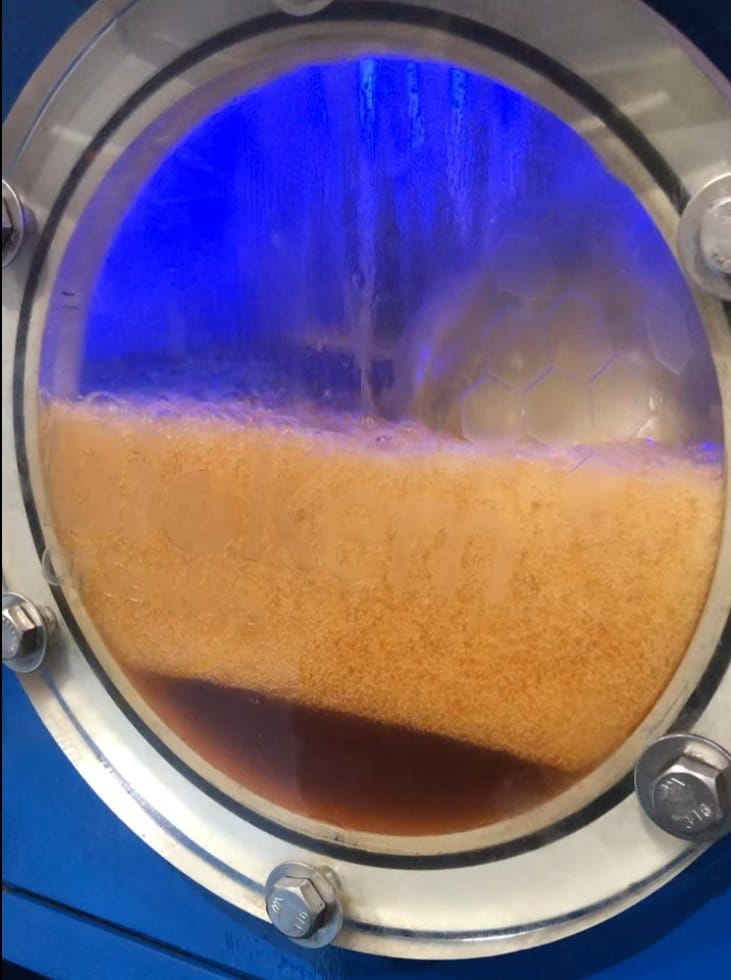
Foaming is not merely a surface-level nuisance; it is a critical system health indicator signaling that your mechanical integrity or chemical balance is compromised. When bubbles spill from a reservoir or cause cavitation in high-speed gears, the immediate question is: what causes foaming in lube oil? You likely recognize the frustration of unscheduled downtime and the invisible risk of reduced film thickness that accelerates component wear. It’s easy to confuse surface foam with air entrainment, yet the distinction is vital for maintaining your machinery’s lifespan.
This article provides the technical clarity needed to identify the mechanical and chemical triggers behind these issues. We will examine the latest ASTM D892-25 testing standards and explore how precision interventions like oil analysis, vacuum dehydration, and hot oil flushing can restore your system’s stability. By understanding these mechanisms, you can protect your industrial assets and ensure compliance with evolving environmental and operational benchmarks. The goal is to move beyond temporary fixes and implement sustainable, data-driven solutions for long-term equipment health.
Key Takeaways
- Distinguish between surface foam and entrained air to accurately diagnose risks to lubrication film thickness and component wear.
- Identify what causes foaming in lube oil by auditing mechanical ingress points such as suction line leaks and turbulent reservoir levels.
- Learn how chemical contaminants like water and incompatible additives destabilize oil surface tension, necessitating specialized purification.
- Leverage standardized ASTM D892 and D3427 testing through professional Oil Analysis to quantify foaming tendency and air release rates.
- Discover how technical solutions like Vacuum Dehydration and Hot Oil Flushing effectively restore lubricant health and protect industrial assets.
Understanding Lube Oil Foaming: A Critical Reliability Warning
Lube oil foaming represents a critical breach in system reliability. It’s defined as a stable dispersion of air bubbles that accumulate on the fluid’s surface because the bubbles don’t rupture quickly enough. Identifying what causes foaming in lube oil is essential for any proactive maintenance strategy. It’s a leading indicator that signals either chemical contamination or a mechanical misalignment within the lubrication circuit. When foaming occurs, the fluid’s ability to protect internal components drops significantly, creating a cascade of operational risks.
To better understand the mechanics of this phenomenon and its impact on your machinery, watch this helpful video:
Foam vs. Air Entrainment: Why the Difference Matters
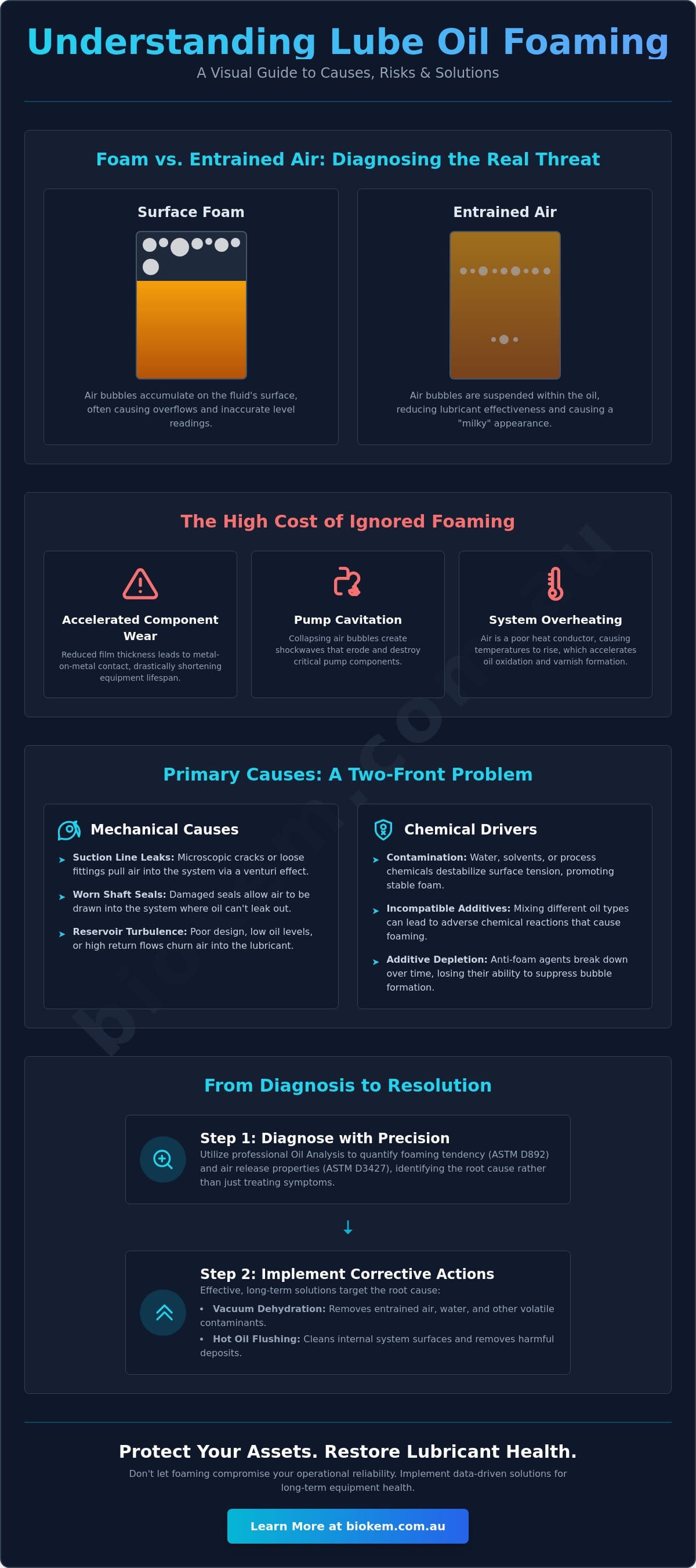
Surface foam and entrained air present different challenges for industrial operators. Surface foam often leads to inaccurate oil level readings and can cause lubricant to overflow from breathers. This creates environmental hazards and wastes expensive fluids. Conversely, entrained air remains suspended within the oil body. This trapped air reduces the bulk modulus of the fluid, leading to “spongy” hydraulic responses and a phenomenon known as micro-dieseling. During micro-dieseling, the rapid compression of air bubbles causes localized temperature spikes that char the surrounding oil. You can perform a simple bottle test for a quick field check. If the oil looks opaque or milky and doesn’t clear rapidly, you’re likely dealing with entrained air rather than just surface foam. Understanding what causes foaming in lube oil starts with identifying which of these two states is dominant.
The Cost of Ignored Foaming in Industrial Systems
Ignoring these signs often leads to expensive and avoidable failures. Foaming significantly impairs the lubrication film, the microscopic layer of oil that keeps metal surfaces apart. When this film is replaced by air, friction increases and components wear down rapidly. Pump cavitation is another major risk. As air bubbles collapse under high pressure, they send shockwaves that pit and erode metal parts, eventually destroying pump internals. Beyond mechanical damage, foaming reduces the fluid’s ability to transfer heat. This causes the system to run hotter, which further accelerates oil oxidation and varnish formation. While a specialized antifoaming agent can help manage surface tension, it’s often a temporary mask for deeper issues. Professional oil analysis and corrective measures like hot oil flushing are necessary to remove contaminants and restore the system to its design baseline.
Mechanical Causes: How Air Enters the Lubrication System
While chemical degradation is a frequent culprit, mechanical ingress is often the foundational answer to what causes foaming in lube oil. Mechanical foaming occurs when air is physically entrained into the lubricant at a rate that exceeds the fluid’s natural de-aeration capacity. This isn’t just a surface issue; it represents a physical breach in the closed-loop system where atmospheric air becomes a destructive contaminant. When air is forced into the oil stream, it compromises the fluid’s bulk modulus, leading to erratic system behavior and potential mechanical failure.
Suction line leaks are among the most prevalent mechanical triggers. Even microscopic cracks or slightly loose fittings on the intake side of a pump can create a venturi effect. As the lubricant moves at high velocity, it pulls in ambient air, which is then immediately pressurized and dispersed into the oil stream. Verify all suction side fittings are airtight to eliminate the most common mechanical foaming trigger. Additionally, worn shaft seals or packing act as induction points, allowing air to bypass the system’s intended boundaries during operation. These tiny openings might not leak oil outward, but the vacuum created by the pump pulls air inward with surprising efficiency.
Turbulence and Reservoir Design Faults
The design of the oil reservoir plays a decisive role in air management. Baffle plates are essential because they force the oil to follow a specific path, providing the necessary residence time for air bubbles to rise and rupture before the fluid is recirculated. In high-flow industrial systems, insufficient residence time prevents this natural release, leading to a cumulative buildup of entrained air. As noted in the Lubricant Foaming and Aeration Study, the physical configuration of the system significantly influences how air interacts with the fluid’s surface tension and bulk properties.
Improper oil levels also contribute to a “churning” effect. Low levels can cause vortexing at the pump inlet, while overfilling allows rotating components like crankshafts or gears to strike the oil surface. This mechanical agitation acts like an eggbeater, whipping air into the lubricant. Similarly, return lines that discharge above the fluid level create excessive splashing and turbulence. If you suspect that accumulated debris or varnish in your reservoir is contributing to these flow issues, professional hot oil flushing can restore the internal cleanliness required for proper de-aeration.
Pump and Seal Integrity
Pump inlet conditions are critical for preventing aeration. If the oil level is too close to the suction pipe, a vortex can form, drawing a continuous stream of air directly into the pump. This not only causes foam but leads to immediate pump cavitation and mechanical damage. Worn mechanical seals are equally problematic. When seals fail, they no longer maintain the pressure differential required to keep air out. Regularly auditing these mechanical components ensures that the root cause of aeration is addressed rather than simply treating the symptoms with additives. Identifying what causes foaming in lube oil from a mechanical perspective is the first step toward long-term asset protection.
Chemical Drivers: Contamination and Additive Depletion
Chemical shifts are often the subtle, underlying answer to what causes foaming in lube oil. While mechanical ingress introduces air, chemical imbalances ensure that air stays trapped. Water contamination is a primary driver of this phenomenon. Even small amounts of moisture reduce the oil’s surface tension, which stabilizes the bubble walls and prevents them from rupturing. This creates a persistent layer of foam that resists natural dissipation, leading to the overflow and lubrication issues previously discussed.
Cross-contamination introduces a “detergent effect” that frequently catches maintenance teams off guard. Mixing incompatible lubricants or failing to remove cleaning agents after a tank service can introduce polar compounds. These compounds act much like soap, drastically increasing the fluid’s foaming tendency. Solid particulates, such as fine dust or wear metals, further exacerbate the issue by acting as nucleation sites. These microscopic particles provide a physical surface for air bubbles to form and grow, which accelerates the aeration process within the system’s high-flow zones.
A common but dangerous mistake in industrial maintenance is falling into the “Additive Trap.” Many operators believe that adding more silicone-based defoamant will automatically solve the problem. However, if misapplied, excessive defoamant can actually increase air entrainment. At high concentrations, these additives can stabilize smaller bubbles within the oil body, making it significantly harder for the fluid to de-aerate. It’s a delicate chemical balance that requires precision and laboratory confirmation rather than bulk additive supplementation.
The Role of Surface Tension and Polar Contaminants
Oxidation by-products, often the precursors to varnish, alter the oil’s chemistry by increasing its polarity. These degraded molecules are attracted to air-liquid interfaces, which strengthens the bubble structure and prevents air from escaping. Grease contamination from over-lubricated bearings can also migrate into the oil system, introducing thickeners that impair the oil’s ability to shed air effectively. Interestingly, “over-filtering” with the wrong media can be counterproductive. High-efficiency filters not designed for specific additive packages can inadvertently strip out large-molecule anti-foam agents, leaving the oil defenseless against aeration despite the fluid appearing clean.
Lubricant Oxidation and Thermal Breakdown
High operating temperatures accelerate the rate of chemical degradation and thermal breakdown. As oil ages, its molecular structure breaks down, and its inherent ability to manage air diminishes. Thermal stress creates a self-reinforcing cycle where the oil becomes more prone to foaming, which then reduces cooling efficiency and leads to further oxidation. Utilizing BioKem Oil Services’ oil analysis services allows you to monitor these chemical shifts and detect the presence of polar contaminants before they manifest as catastrophic mechanical failure. Identifying these drivers early ensures that your lubricant maintains its designed performance and protects your industrial assets from the hidden costs of chemical instability.
Diagnosing Foaming via Professional Oil Analysis
Professional oil analysis provides the empirical data necessary to resolve operational uncertainty. While visual inspection confirms the presence of bubbles, determining what causes foaming in lube oil requires standardized laboratory protocols. The primary benchmark is ASTM D892-25, which was updated in January 2025. This test measures both foaming tendency, the initial volume of foam produced, and foaming stability. We define foaming stability as the time required for foam to collapse after aeration stops. A system with high tendency but low stability might be manageable, but high stability indicates a chemical environment where bubbles are dangerously resilient.
Beyond surface foam, ASTM D3427 evaluates the air release properties of the lubricant. This is critical for identifying entrained air issues that lead to pump cavitation. We also utilize ISO 4406 particle counting to detect solid contaminants. Fine particulates often serve as nucleation sites that accelerate bubble formation. To quantify moisture levels that stabilize these bubbles, we employ the Water-by-Karl-Fischer method. This level of precision ensures that maintenance decisions are based on chemical facts rather than trial-and-error additive supplementation. It’s the only way to accurately assess if your lubricant’s additive package is still performing its intended role.
Interpreting Laboratory Reports for Root Cause Analysis
Effective root cause analysis depends on differentiating between a dirty oil problem and a spent additive problem. If the ASTM D892 results show poor stability but the oil is chemically clean, the anti-foam additives have likely been depleted or stripped by improper filtration. Conversely, the presence of wear metals in elemental analysis suggests that foaming has already begun to compromise component surfaces. High levels of iron or copper often point to accelerated wear in gears or bearings, indicating that the lubrication film is failing. This data allows for a structured response that addresses the specific chemical or mechanical trigger identified.
Onsite Testing and Patch Kits
For immediate field assessments, patch test kits from BioKem Oil Services offer a reliable visual confirmation of solid contaminants. These kits allow operators to see the particulate load that may be driving aeration before a formal laboratory report arrives. Simple bottle tests also provide a preliminary look at air release rates. If the oil remains cloudy for an extended period after agitation, it’s a clear sign of entrained air. When these onsite indicators suggest severe contamination, we recommend escalating to a full laboratory analysis to identify the specific wear modes present. Understanding what causes foaming in lube oil at the molecular level is the first step toward restoring system health.
Protect your machinery from foam-induced wear by scheduling a comprehensive Oil Analysis with BioKem Oil Services to pinpoint the exact source of your system’s instability.
Corrective Actions: Purification, Flushing, and Mitigation
Resolving what causes foaming in lube oil requires a dual strategy. It must address both mechanical ingress and chemical instability. Treating symptoms with surface additives doesn’t protect industrial assets from long-term wear. The first priority is to eliminate mechanical air induction. You must seal suction line leaks and optimize reservoir levels to prevent turbulence. Once mechanical integrity is restored, the focus shifts to purifying the lubricant and the system internals to remove the polar contaminants that stabilize foam.
Vacuum Dehydration is a highly effective method for removing water and entrained gases. This process doesn’t damage the oil’s additive package. By utilizing a vacuum to lower the boiling point of water, moisture flashes off as vapor at safe operating temperatures. This is critical. Moisture reduces surface tension, making bubbles more resilient. Removing these contaminants restores the fluid’s bulk modulus and prevents spongy hydraulic responses. It’s a precise, sustainable alternative to bulk oil replacement.
System Restoration via Hot Oil Flushing
Many operators believe a standard oil change is the best solution for foam-prone systems. It isn’t. Industry data suggests that approximately 15% of degraded oil remains trapped in dead zones, piping, and cooler headers after a drain. This residual fluid carries the same polar contaminants and oxidation by-products that caused the initial foaming. It quickly re-contaminates the new oil charge. Hot oil flushing scours these internal surfaces at high velocities. It removes the sludge and varnish that stabilize foam. This ensures the system meets ISO 4406 cleanliness targets before assets restart.
Advanced Purification and Varnish Removal
Chronic foaming is frequently a symptom of advanced oil oxidation and varnish formation. Utilizing varnish removal systems restores the oil’s chemical balance. These systems extract the polar precursors that traditional filters can’t capture. For continuous protection, kidney-loop filtration provides ongoing air and moisture removal. In emergency scenarios where foaming threatens immediate downtime, consulting with a specialist for industrial oil filtration equipment hire provides the rapid purification needed. Identifying and correcting what causes foaming in lube oil ensures regulatory compliance. It maintains the long-term ecological health of your industrial environment.
Securing Industrial Reliability Through Technical Expertise
Addressing the root of what causes foaming in lube oil requires a transition from reactive maintenance to precision engineering. While earlier sections highlighted the risks of cavitation and chemical degradation, the ultimate goal is achieving a stable, air-free lubrication circuit. Relying on temporary additive fixes often masks systemic issues that require a more robust approach. By leveraging the diagnostic and purification methods discussed, you ensure that your assets operate within their designed performance parameters.
BioKem Oil Services provides the technical expertise and equipment necessary to safeguard your industrial assets. As the sole Australian distributor for Filters S.p.A. Products, we offer specialized solutions including hot oil flushing and comprehensive varnish mitigation. Our team delivers comprehensive onsite technical interventions nationwide to ensure your systems meet the highest cleanliness standards. Contact BioKem Oil Services for expert oil analysis and purification services to eliminate foaming today. You can protect your machinery and maintain operational efficiency with a data-driven approach to fluid health.
Frequently Asked Questions
Is foaming in lube oil always a bad sign?
Yes, visible foaming is a leading indicator that your system’s mechanical integrity or chemical balance is compromised. It signals that the lubricant can no longer manage air effectively, which threatens lubrication film thickness and component cooling. While minor surface bubbles might seem harmless, they often precede pump cavitation and overflow events that lead to unscheduled downtime.
Can I just add more anti-foam additives to fix the problem?
No, adding bulk defoamants without professional analysis can actually worsen the situation. Excessive silicone additives can stabilize smaller bubbles within the oil body, making it significantly harder for the fluid to de-aerate. You should always identify what causes foaming in lube oil through laboratory testing before attempting to adjust the chemical balance with supplemental additives.
What is the difference between foaming and air entrainment?
Surface foam consists of air bubbles that accumulate on top of the fluid, while air entrainment involves bubbles suspended within the oil body. Surface foam often causes reservoir overflows and breather issues. Entrained air is typically more destructive because it reduces the fluid’s bulk modulus, leading to spongy hydraulic responses and micro-dieseling within high-pressure zones.
How does water contamination cause oil to foam?
Water reduces the oil’s surface tension, which stabilizes the walls of air bubbles and prevents them from rupturing. This creates a persistent foam layer that resists natural dissipation. Removing moisture through vacuum dehydration is essential to restore the fluid’s ability to shed air and maintain its designed surface tension for long-term equipment protection.
Can high oil temperatures cause foaming?
Yes, high operating temperatures accelerate oil oxidation and the formation of polar compounds like varnish. These oxidation by-products act as surfactants that stabilize foam bubbles on the surface. Additionally, the thermal breakdown of the base oil reduces its inherent ability to release entrained air, creating a self-reinforcing cycle of heat and increased aeration.
Will a simple oil change fix a foaming issue?
A standard oil change is often insufficient because approximately 15% of the old, contaminated fluid remains in the system’s dead zones and coolers. This residual oil quickly re-contaminates the new charge. To fully resolve the issue, a professional hot oil flushing is required to remove the internal sludge and varnish that stabilize foam within the circuit.
What industrial tests are used to measure oil foaming?
The primary industry standard is ASTM D892-25, which measures both foaming tendency and foaming stability at multiple temperatures. Other critical tests include ASTM D3427 for air release properties and ISO 4406 for particle counting. These tests provide the empirical data needed to determine what causes foaming in lube oil within your specific industrial application.
Can over-filtering my oil cause it to foam?
Yes, using the wrong type of high-efficiency filtration media can inadvertently strip out large-molecule anti-foam additives. This leaves the oil chemically defenseless against air ingress. It’s vital to use specialist oil filters that are compatible with your lubricant’s specific additive package to ensure cleanliness without compromising the fluid’s physical performance.