

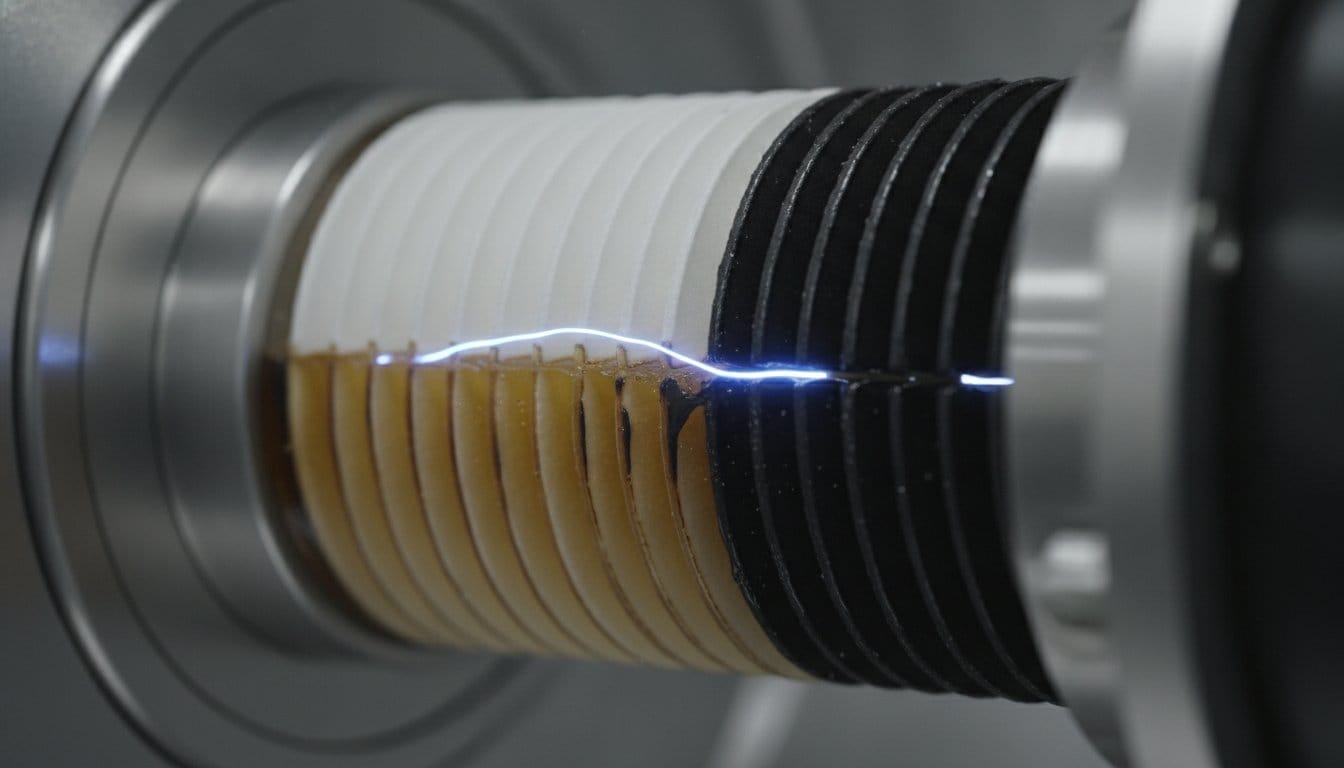
Could your high-performance synthetic lubricant be the hidden source of micro-fractures in your filtration system? While Group III and IV base oils offer exceptional thermal stability, their highly refined nature often results in a dielectric strength that invites trouble. When the conductivity of oils drops below 400 pS/m, the risk of electrostatic discharge (ESD) increases significantly. This “silent pulse” within your machinery can lead to unexplained varnish buildup and charred filter elements that traditional maintenance schedules often overlook.
You likely prioritize oil purity to protect your turbine and hydraulic assets, yet the relationship between electrical properties and chemical stability remains a common point of confusion. This article clarifies how conductivity serves as a vital indicator for system reliability and prevents the spark-induced degradation that compromises equipment life. We’ll explore the technical link between low conductivity and varnish formation, the impact of 2026 PFAS regulations on lubricant formulations, and the monitoring strategies required to maintain operational integrity in a shifting regulatory environment.
Key Takeaways
- Identify the operational risks of electrostatic discharge (ESD) and how low-conductivity fluids trigger internal sparking that compromises filter integrity.
- Understand how the conductivity of oils fluctuates based on base oil refining levels and temperature changes within your hydraulic or turbine systems.
- Learn to utilize oil analysis as a proactive diagnostic tool by focusing on long-term trends rather than single-point measurements.
- Discover how targeted interventions like hot oil flushing and varnish mitigation effectively remove carbon soot and chemical byproducts caused by low-conductivity issues.
What is the Conductivity of Oils? Defining the Fundamentals
Understanding the conductivity of oils is fundamental to maintaining machinery health. It’s defined as the measure of a lubricant’s ability to conduct an electrical current, expressed in picosiemens per metre (pS/m). While many operators view industrial oil as a simple barrier against friction, its electrical properties dictate how it behaves under high pressure and flow. If the oil doesn’t move electrons effectively, static charges build up within the system, leading to potentially catastrophic discharges.
Most lubricants act as insulators. This property is why Transformer oil is used in high-voltage equipment to prevent arcing and provide cooling. However, in a hydraulic or turbine system, too much insulation is a liability. A minimum conductivity threshold is required to dissipate static electricity safely to the ground. Without this, the oil’s chemical stability is threatened as internal discharges begin to break down the hydrocarbon chains, forming the precursors to varnish.
To better understand this concept, watch this helpful video:
Electrical vs. Thermal Conductivity
Differentiating between these two metrics is vital for reliability. Thermal conductivity measures how well a fluid transfers heat from hot components to a cooler. This is critical for cooling efficiency in mineral oils. Electrical conductivity focuses on charge dissipation. In high-temperature industrial environments, these properties interact. As temperatures rise, the conductivity of oils generally increases because the fluid’s viscosity drops, allowing ions to move more freely. Engineers prioritize electrical conductivity because it correlates directly to component damage risks and the formation of carbon soot.
Common Units and Standards
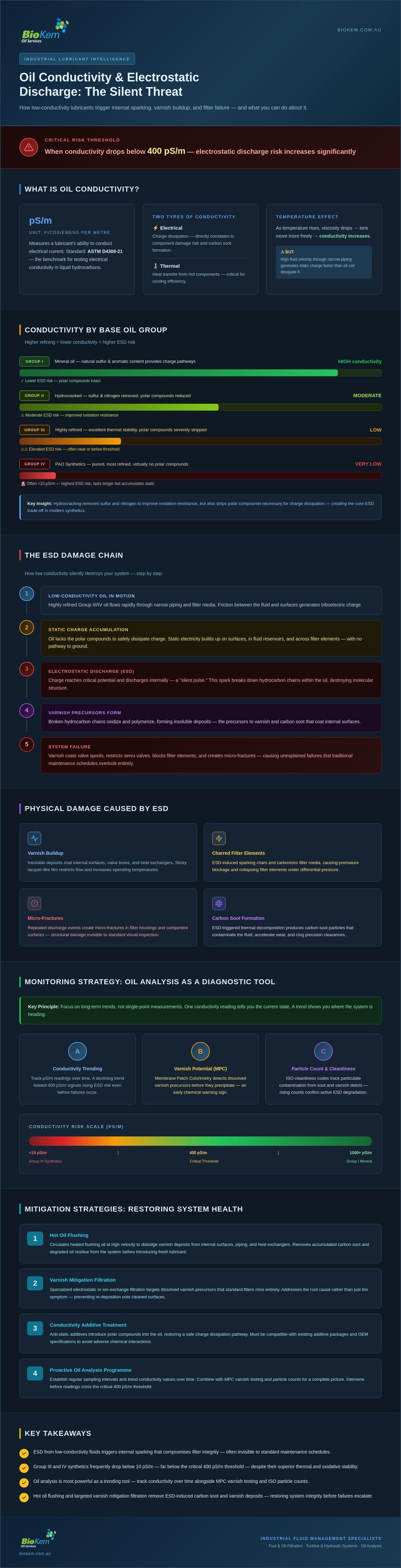
The industry standard for measuring this property is picosiemens per metre (pS/m). For precise assessments, engineers rely on the ASTM D4308-21 standard, which is the current benchmark for testing the electrical conductivity of liquid hydrocarbons. Base oil refining levels play a massive role here. Group I oils typically have higher natural conductivity due to their sulfur and aromatic content. In contrast, highly refined Group II and Group III oils, along with Group IV synthetics, often have extremely low conductivity, frequently dropping below 10 pS/m. This lack of a pathway for electrons leads to the electrostatic issues common in modern, high-performance systems.
Factors Influencing the Conductivity of Industrial Oils
The conductivity of oils is a dynamic property. It changes based on chemical composition and environmental stressors. While the base stock provides the foundation, factors like temperature and contamination levels dictate how the fluid handles electrical charge in real-time. Understanding these variables is the first step in preventing the silent damage caused by static accumulation.
Base Oil Chemistry
Refining processes have shifted the industry toward Group II and Group III base oils. These fluids undergo extensive hydrocracking to remove impurities like sulfur and nitrogen. While this process improves oxidation resistance and thermal stability, it also strips away polar compounds. These compounds are necessary for charge dissipation. This NIST study on lubricant properties highlights how the physical structure of different oils affects their performance. Pure synthetic lubricants, particularly Group IV polyalphaolefins, often exhibit the lowest conductivity levels. This trade-off means that while the oil lasts longer, it’s more susceptible to static accumulation. It creates a higher risk for electrostatic discharge in precision systems.
Temperature and Fluid Velocity
Temperature plays a decisive role in electrical behavior. As a lubricant heats up, its viscosity decreases. This allows ions and particles to move with less resistance. This molecular mobility typically results in an increase in conductivity. However, the benefits of higher temperature are often offset by fluid velocity. When low-conductivity oil moves quickly through narrow piping or tight filter media, the friction between the fluid and the surface generates a static charge. If the charge builds faster than the oil can dissipate it, sparking occurs.
Additives like zinc dialkyldithiophosphate (ZDDP) and other anti-wear agents are polar by nature. They naturally increase the conductivity of oils. When these additives deplete through normal operation or oxidation, the oil becomes more resistive. This shift is often subtle but significant. Monitoring these changes helps reliability engineers predict when a lubricant is nearing the end of its functional life. It’s not just about the presence of the oil; it’s about the chemical health of the additive package.
Maintaining a reliable system requires more than just checking the oil level. Contaminants like moisture or metallic wear debris can artificially inflate conductivity readings. This often masks the depletion of vital anti-wear additives. As these additives are consumed, the oil’s ability to manage electrical potential drops even further. Implementing a detailed oil analysis program allows you to track these trends before they manifest as equipment failure. If you’re noticing unexplained soot or varnish, a professional varnish removal system can help restore the chemical balance of your fluid.
The Risks of Low Conductivity: Electrostatic Discharge (ESD)
Low conductivity isn’t just a chemical footnote; it’s a mechanical threat. When the conductivity of oils falls below critical levels, the fluid loses its ability to bleed off static electricity. This charge accumulates as the oil flows through the system, eventually seeking the path of least resistance through a discharge event. In high-flow hydraulic circuits, this phenomenon is particularly aggressive. The fluid essentially acts as a moving battery, storing energy until it reaches a point of saturation.
These discharges occur most frequently at narrow orifices, valve interfaces, or filter media. The result is more than just a momentary spark. It causes physical pitting on metal surfaces and creates localized hotspots that literally burn the oil. This “micro-dieseling” effect is a primary catalyst for the rapid formation of sludge and varnish. Once this chemical degradation begins, it creates a self-sustaining cycle of equipment wear and fluid breakdown that standard maintenance often fails to stop.
Electrostatic Sparking in Filters
Operators often report hearing rhythmic clicking sounds near filter housings. These are the audible signatures of electrostatic sparking. High-efficiency glass fibre filters are particularly susceptible because they generate high friction as oil passes through the dense media. Upon inspection, these filters often show scorched patches or pinhole burns. Managing this requires a combination of proper grounding and the installation of specialist oil filters designed to dissipate charge without sacrificing filtration efficiency. Ignoring these signs leads to filter element collapse and the release of captured contaminants back into the system.
The Link to Oil Degradation
A single spark event can reach temperatures exceeding 10,000°C. This extreme heat causes the thermal cracking of oil molecules. The process generates sub-micron carbon soot that is far too small for traditional filters to capture. Because these particles are so fine, they remain suspended in the fluid, leading to rapid darkening and a sharp increase in total acid number (TAN). This degraded fluid then deposits as a sticky film on cooler surfaces. This varnish buildup is notoriously difficult to remove and directly impacts the reliability of sensitive components like servo valves and heat exchangers. Monitoring the conductivity of oils allows you to identify the risk of this thermal cracking before the soot begins to saturate your system.
Monitoring and Analysis: Using Conductivity as a Diagnostic Tool
Data without context is often misleading in the industrial sector. A single conductivity test provides a snapshot, but it doesn’t reveal the underlying health of your fluid or its long-term stability. To truly understand system reliability, you must treat the conductivity of oils as a dynamic variable rather than a fixed specification. The real value lies in trend analysis. By tracking how conductivity fluctuates over months of operation, you can identify the subtle onset of additive depletion or chemical degradation before it manifests as a mechanical failure.
Establishing a baseline is the essential first step. When you monitor these levels regularly, a sudden drop becomes a clear diagnostic signal. This typically indicates that polar anti-wear additives are being consumed or that the oil is undergoing thermal stress. Integrating these metrics into a proactive maintenance strategy allows your team to shift from reactive repairs to predictive asset management. Monitoring also helps you adhere to the latest industry standards, such as the IEC 60422 Edition 5.0 published in February 2024, which provides updated guidance on supervising and maintaining insulating oils in electrical equipment.
Advanced Oil Analysis Techniques
While conductivity measurements identify the risk of electrostatic discharge, they don’t always show the physical damage already present. For a complete diagnostic picture, you should combine conductivity tests with Membrane Patch Colorimetry (MPC). This combination is the gold standard for varnish detection. While conductivity tells you if the oil is likely to spark, MPC measures the actual concentration of varnish precursors. Utilizing patch test kits allows you to visualize insoluble contaminants and carbon soot that standard laboratory reports might miss. This dual approach ensures you aren’t just treating the symptoms of low conductivity but addressing the chemical root causes of fluid breakdown.
Onsite vs. Laboratory Testing
Speed is often critical when you suspect an active ESD issue. Onsite testing provides immediate feedback on whether your oil has dropped below the 400 pS/m threshold where sparking becomes likely. This allows for rapid intervention, such as adjusting flow rates or checking grounding straps. However, onsite data should always be supported by deep laboratory ferrography. BioKem’s specialized oil analysis provides actionable insights for national industrial sites by identifying specific wear patterns and chemical health markers. This detailed reporting distinguishes between simple electrical issues and complex chemical degradation, ensuring your maintenance actions are precise and effective. Schedule a comprehensive oil analysis to establish your system’s baseline today.
Mitigation Strategies: Restoring System Health
Restoring a system after a conductivity failure requires more than a simple fluid change. While some operators suggest “topping up” additive packages to increase the conductivity of oils, this practice is often dangerous for precision hydraulic circuits. Introducing raw chemical concentrates can lead to additive dropout or the formation of precipitates that rapidly plug fine-tolerance valves. This approach treats the symptom without addressing the sub-micron carbon soot already circulating in the system. A professional restoration focuses on removing the physical legacy of past discharge events while stabilizing the electrical properties of the new charge.
Selecting the correct base oil and additive package for high-flow turbine systems is a balancing act. Highly refined Group II and III oils offer excellent oxidation resistance, but their low natural conductivity necessitates specific hardware or additive considerations. As industry regulations shift toward fluorine-free alternatives in 2026, understanding how these new formulations affect charge dissipation will be critical. Reliability engineers must weigh the benefits of oil purity against the operational risks of electrostatic accumulation to ensure long-term asset health.
System Cleaning and Flushing
Carbon soot and varnish are the physical residues of electrostatic discharge. Because these particles are sub-micron in size, standard filtration often fails to capture them, allowing them to coat internal surfaces. Implementing hot oil flushing is the most effective way to clean a contaminated system. This process utilizes high-velocity, turbulent flow at elevated temperatures to strip deposits from internal galleries and sensitive valves. This ensures that the new oil isn’t immediately compromised by residual chemistry. Once the system is clean, varnish mitigation should be used as a continuous process to manage any future precursors that may form during normal operation.
Proactive Equipment Solutions
Preventing future ESD events involves the strategic application of specialized hardware. Utilizing anti-static filter elements from Filters S.p.A. provides a safe pathway for charge dissipation, even when the conductivity of oils is naturally low. These elements prevent the “clicking” sounds and burnt media associated with discharge. Additionally, vacuum dehydration plays a vital role by removing dissolved water. Moisture is a common contaminant that causes unpredictable fluctuations in electrical readings and accelerates chemical breakdown. By partnering with BioKem experts, you can develop a national-scale lubrication management plan that integrates these technologies into a sustainable, reliable operational framework.
Securing Your System Against Electrostatic Degradation
Managing the conductivity of oils is a fundamental requirement for modern high-performance machinery. You now understand how refined base stocks and high flow rates create an environment susceptible to electrostatic discharge and the subsequent formation of varnish. By shifting from reactive filtration to proactive trend analysis, you can identify these risks before they result in costly downtime or component failure. Maintaining this electrical equilibrium is essential for both operational efficiency and long-term environmental sustainability.
BioKem provides the technical expertise and specialized hardware necessary to stabilize your fluid’s performance. As the sole Australian distributor for Filters S.p.A., we offer anti-static solutions that protect your assets from ESD damage. Our national onsite service capabilities ensure that whether you require precision oil analysis or intensive hot oil flushing and varnish mitigation, your operations remain dependable. We specialize in restoring system health through targeted interventions that traditional maintenance schedules often overlook.
Take the first step toward superior machinery reliability. Contact BioKem Oil Services for Professional Oil Analysis and Varnish Mitigation to ensure your industrial lubricants perform exactly as intended. Protecting your equipment’s longevity starts with understanding the silent pulse of its fluid.
Frequently Asked Questions
What is a good conductivity level for hydraulic oil?
A safe conductivity level for hydraulic oil is generally considered to be above 400 pS/m. When the conductivity of oils falls below this threshold, the risk of electrostatic discharge increases significantly. Highly refined Group II and III oils often exhibit levels below 100 pS/m, making them more susceptible to internal sparking. Regular monitoring ensures your fluid maintains the dielectric strength needed for safe operation without inviting internal discharges.
Can low conductivity cause oil filters to fail?
Low conductivity is a primary cause of filter element failure in high-flow systems. As static charges build up, they eventually discharge as high-energy sparks through the filter media. This sparking creates physical pinholes or scorched patches on glass fibre elements, often accompanied by a rhythmic clicking sound. These micro-fractures compromise the filter’s integrity, allowing captured contaminants to bypass the media and enter sensitive downstream components like servo valves.
Is thermal conductivity the same as electrical conductivity in oil?
Thermal and electrical conductivity are distinct physical properties and shouldn’t be confused. Thermal conductivity refers to the fluid’s ability to transfer heat, which is vital for maintaining system cooling efficiency. Electrical conductivity measures the fluid’s ability to dissipate static charges to prevent sparking. While both are influenced by the oil’s molecular structure, reliability engineers prioritize electrical conductivity for preventing electrostatic discharge and the subsequent chemical degradation of the lubricant.
How does temperature affect the conductivity of mineral oil?
Rising temperatures typically increase the electrical conductivity of mineral oil. As the oil heats up, its viscosity decreases, which reduces the resistance to molecular and ionic movement within the fluid. This increased mobility allows charges to dissipate more easily through the oil. However, you shouldn’t rely on high temperatures to manage low conductivity; excessive heat also accelerates oil oxidation and the formation of harmful varnish precursors.
What causes electrostatic discharge (ESD) in turbine oils?
Electrostatic discharge in turbine oils is primarily caused by friction at high flow rates. When low-conductivity oil flows through narrow piping or high-efficiency filter media, static charges accumulate faster than they can bleed off to the ground. Once the oil reaches its dielectric breakdown point, a high-energy spark occurs. This process is most common in systems using modern, highly refined base stocks that lack the polar compounds needed for charge dissipation.
How can I test the conductivity of my oil onsite?
You can test oil conductivity onsite using portable digital meters specifically calibrated for liquid hydrocarbons. These devices provide immediate pS/m readings, allowing maintenance teams to perform rapid ESD risk assessments without waiting for laboratory results. For the most accurate data, you must test the sample at a stable, controlled temperature. BioKem provides onsite laboratory testing services to help industrial sites establish reliable conductivity trends and proactive maintenance baselines.
Does varnish formation change the conductivity of the oil?
Varnish formation and conductivity share a complex, cyclical relationship. The electrostatic discharges caused by low conductivity lead to thermal cracking, which creates the sub-micron carbon soot that eventually settles as varnish. While the presence of these polar degradation products can sometimes increase conductivity readings, it’s often a sign that the oil’s chemical stability is already failing. Monitoring the conductivity of oils helps you catch the risk before the varnish begins to deposit.
Can I increase oil conductivity by adding specific additives?
Increasing oil conductivity by adding specific polar compounds is technically possible but often unprofessional. Topping up additives in a precision system can cause chemical interference, leading to additive dropout or the formation of sludge. A more reliable strategy involves selecting a lubricant with a robust, pre-formulated additive package. Alternatively, you can install anti-static filter elements to manage charge dissipation mechanically without risking the chemical integrity of your hydraulic or turbine fluid.