

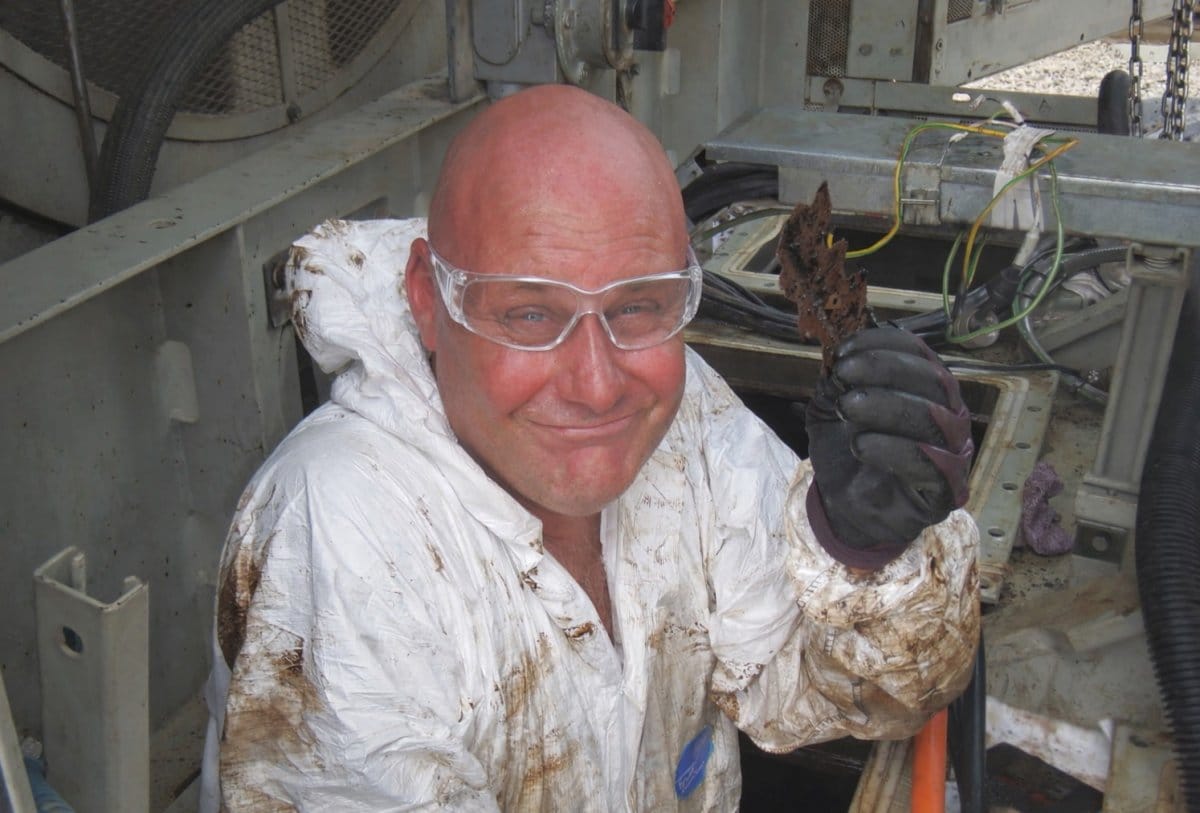
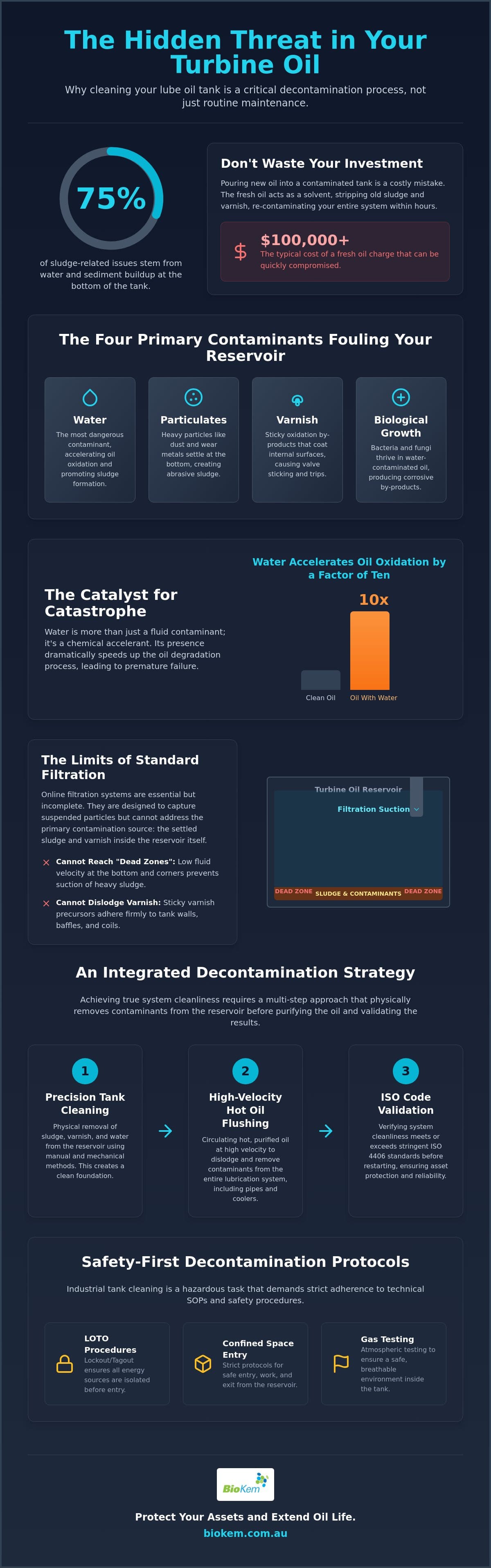
Water in lube oil can accelerate oil oxidation by a factor of ten, yet the most dangerous contaminants often aren’t floating in the fluid; they’re settled at the bottom of your reservoir. If you’re simply replacing fluid without a thorough turbine lube oil tank cleaning, you’re likely pouring fresh investment into a contaminated environment. Most maintenance teams understand the frustration of varnish-induced valve sticking or unscheduled turbine trips that halt production. It’s a costly cycle that often overlooks the technical reality that approximately 75% of sludge-related issues stem from the buildup of water and sediment within the tank itself.
You deserve a lubrication system that meets stringent ISO 4406 standards and protects your critical assets from catastrophic failure. This guide outlines the technical standards and procedural requirements for reservoir decontamination, including the latest 2026 EPA performance standards for stationary combustion turbines. We’ll explore how to achieve a clean, ISO-compliant system through advanced purification methods like vacuum dehydration and hot oil flushing. By the end, you’ll know how to validate cleanliness before restart, ensuring extended oil life and operational reliability for your facility.
Key Takeaways
- Understand why precision turbine lube oil tank cleaning is a fundamental decontamination process rather than a routine maintenance task to prevent the reservoir from becoming a settling pond for heavy particulates.
- Learn to identify the four primary contaminants—water, particulates, varnish, and biological growth—and how thermal degradation compromises your lubrication system’s integrity.
- Discover the strategic decision framework for choosing between manual cleaning, high-velocity flushing, and mechanical filtration based on your specific operational requirements.
- Master the technical SOPs for industrial decontamination, focusing on safety-first protocols including confined space entry, gas testing, and LOTO procedures.
- See how integrating tank cleaning with high-velocity hot oil flushing creates a comprehensive solution that validates system cleanliness and extends asset longevity.
Table of Contents
-
The Critical Role of Turbine Lube Oil Tank Cleaning in Asset Longevity
-
Identifying Contaminants: Why Turbine Reservoirs Become Sludge Traps
-
Manual Cleaning vs. Mechanical Purification: A Strategic Comparison
-
The Technical SOP: Best Practices for Industrial Tank Decontamination
-
BioKem Oil Services’ Integrated Solution: Combining Tank Cleaning with Hot Oil Flushing
The Critical Role of Turbine Lube Oil Tank Cleaning in Asset Longevity
Effective turbine lube oil tank cleaning is a technical necessity that goes far beyond a basic maintenance wipe-down. In any high-performance system, the reservoir serves as a "settling pond" where heavy particulates, water, and oxidation by-products accumulate over time. While the lubricating oil is constantly circulated, gravity ensures that the most damaging contaminants end up at the bottom of the tank. This process forms a thick layer of sludge that remains untouched by standard circulation pumps, creating a permanent source of contamination within the heart of the machine.
Failing to address this hidden reservoir of contaminants has severe financial consequences for industrial operators. It’s common for facilities to invest over $100,000 in a fresh charge of high-quality turbine oil, only to have that new fluid contaminated within hours of startup. This occurs because the fresh oil acts as a powerful solvent, aggressively stripping old sludge and varnish from the tank walls and re-introducing it into the system. Without physical decontamination, the new oil essentially becomes a carrier for the very contaminants you intended to remove.
To better understand the mechanical complexities involved in maintaining these systems, watch this helpful video:
Why Filtration Alone Cannot Decontaminate a Reservoir
Online filtration systems are designed to capture suspended particles during operation, but they have distinct physical limitations when dealing with a fouled reservoir. Large tanks contain significant "dead zones" where fluid velocity is insufficient to pull heavy sediment or settled water into the filtration intake. Additionally, varnish precursors possess a high surface tension that causes them to adhere firmly to internal baffles, cooling coils, and tank walls. Standard mechanical filtration cannot dislodge these sticky layers. The re-contamination cycle occurs when the chemical properties of new oil dissolve these existing deposits, quickly degrading the ISO cleanliness levels of the entire system and wasting the investment in new fluid.
The Impact of Cleanliness on Turbine Reliability
Maintaining a pristine reservoir is directly linked to the prevention of premature bearing wear and the sticking of sensitive servo-valves. These precision components require oil that meets strict ISO 4406 cleanliness codes to function without friction-induced damage. When a tank undergoes professional turbine lube oil tank cleaning, the risk of varnish-induced "trips" is significantly reduced. A clean system ensures that specialized varnish removal systems can operate at peak efficiency rather than being overwhelmed by legacy contaminants. This proactive approach protects the turbine from unscheduled downtime and ensures that the asset remains in peak operational condition for its intended service life.
Identifying Contaminants: Why Turbine Reservoirs Become Sludge Traps
Turbine reservoirs are passive environments that gradually accumulate a complex mixture of pollutants. While the oil flows through high-speed bearings at high velocities, the tank remains relatively still, allowing suspended materials to drop out of the fluid. The result is a dangerous cocktail of water, particulates, varnish, and biological growth. Effective turbine lube oil tank cleaning requires understanding how these elements interact to form the dense sludge that eventually chokes the system and leads to asset failure.
Thermal degradation occurs when oil is exposed to localized hot spots or high operating temperatures. This chemical breakdown creates polar molecules that are no longer soluble in the base oil. Aeration and moisture act as catalysts in this process. When air bubbles are compressed in bearings, the resulting heat triggers micro-dieseling, which accelerates oxidation and transforms the fluid into a more acidic state. Identifying these chemical shifts early through comprehensive oil analysis allows for a more targeted cleaning strategy before the damage becomes irreversible.
Varnish and Oxidation Residues
Varnish is a soft, resinous byproduct of oil oxidation. It typically stays in solution when the oil is at operating temperature but precipitates out as the fluid cools. This is why varnish heavily coats the internal surfaces of the reservoir and internal baffles. This sticky film acts like flypaper, trapping metallic wear particles and atmospheric dust that has bypassed breathers. In Electro-Hydraulic Control (EHC) systems, even microscopic amounts of varnish can cause valve sticking and erratic control, which are primary drivers of unscheduled turbine trips. Physical removal of these residues is the only way to ensure they don’t re-enter the flow during high-temperature operations.
Water Ingress and Microbial Contamination
Water enters the lube oil tank through condensation or turbine gland seal leaks. Once inside, it settles at the bottom because it’s heavier than oil, creating a distinct oil-water interface. This zone is a breeding ground for microbial growth. These organisms consume hydrocarbons and excrete acidic waste, causing localized pitting and corrosion on the reservoir floor. Physical decontamination is the only way to remove this biological sludge once it has taken hold. After the physical clean is complete, utilizing vacuum dehydration is essential to remove any remaining dissolved water that could re-trigger the oxidation cycle and compromise the new oil charge.
Manual Cleaning vs. Mechanical Purification: A Strategic Comparison
Choosing between manual intervention and mechanical purification isn’t a matter of selecting one over the other; it’s about understanding their distinct roles in a total lubrication management strategy. Mechanical filtration and high-velocity flushing are designed to clean the fluid and the piping, respectively. However, turbine lube oil tank cleaning focuses on the vessel itself. Relying solely on filtration to decontaminate a reservoir is like trying to clean a dusty room by only running an air purifier. While the air might get cleaner, the dust on the floor remains, ready to be kicked up at any moment.
A common misconception in power generation is that "clean-looking" oil indicates a clean system. Oil analysis may show acceptable particle counts, but this data only reflects the fluid currently in circulation. It doesn’t account for the kilograms of sludge and oxidized material resting on the reservoir floor. During a major shutdown, the synergy of manual cleaning followed by a high-velocity flush ensures that legacy contaminants are physically removed before they can compromise new fluid. This dual approach provides a validated baseline of cleanliness that mechanical systems can then maintain.
A strategic decision framework helps determine the appropriate intervention level:
-
Manual Cleaning: Required during major overhauls, oil brand changes, or after catastrophic component failures.
-
Mechanical Purification: Best for ongoing moisture removal and varnish mitigation during standard operation.
-
High-Velocity Flushing: Essential for cleaning piping networks after maintenance or before commissioning new equipment.
When Manual Tank Cleaning is Non-Negotiable
Manual intervention becomes essential during several critical scenarios. If a system has suffered a catastrophic component failure, such as a bearing wipe, the resulting metallic debris is often too heavy to be moved by oil flow alone. Changing oil brands also requires a physical clean to prevent additive clashing and compatibility issues. Additionally, technicians must inspect internal tank coatings and baffles for signs of delamination or corrosion. Removing large-scale debris manually prevents the premature blinding of expensive flushing filters, making the subsequent hot oil flushing process much more efficient.
The Role of Mechanical Purification Systems
Once physical decontamination is complete, mechanical systems take over to maintain the "post-clean" state. Vacuum dehydration units are critical for removing dissolved water that manual wiping cannot reach. Varnish mitigation systems then work to keep the oil’s varnish potential low, preventing new resins from adhering to the freshly cleaned walls. Utilizing high-performance Filters S.p.A. technology ensures that the system stays within ISO limits long after the initial cleaning. You can explore a range of specialized BioKem Oil Services products designed to support long-term asset health and environmental sustainability.
The Technical SOP: Best Practices for Industrial Tank Decontamination
A rigorous Standard Operating Procedure (SOP) is what separates a successful turbine lube oil tank cleaning from a superficial maintenance task. Precision decontamination requires a systematic approach that begins long before a technician enters the reservoir. The process must address the removal of heavy sludge and wall-clinging varnish while ensuring that no new contaminants, such as lint or chemical residues, are introduced. By following a structured protocol, operators ensure the internal environment is truly prepared for a fresh oil charge, protecting the system from immediate re-contamination.
The preparation phase involves draining the oil completely and utilizing high-capacity vapor extraction units. These units remove hazardous oil mists and volatile organic compounds that accumulate in the headspace. Once the tank is vented, an initial inspection identifies the specific areas of heavy buildup, such as corners or behind internal baffles. This baseline assessment allows the cleaning team to prioritize the most heavily fouled zones during the physical decontamination phase.
Confined Space and Safety Protocols
Safety is the primary consideration during any reservoir entry. Turbine tanks are classified as confined spaces, requiring strict adherence to Australian standards like AS 2865. Technicians must utilize full safety gear, including harnesses, retrieval lines, and specialized protective suits. Before entry, the system must undergo a verified Lock Out Tag Out (LOTO) procedure to isolate all pumps and heaters. Continuous atmospheric monitoring is mandatory to track oxygen levels and detect the presence of flammable vapors or toxic gases. A dedicated standby person must remain outside the hatch at all times to manage communication and emergency response protocols.
Precision Cleaning Materials and Techniques
Traditional cleaning methods often introduce more problems than they solve. Using sponges or standard rags is strictly prohibited because they leave behind microscopic lint fibers that can blind high-precision filters or cause bearing damage. Instead, technicians use specialized lint-free wipes and rubber squeegees to move heavy sediment toward vacuum extraction points. Unlike outdated methods that suggest using diesel, which is a fire hazard and a chemical contaminant, modern decontamination utilizes approved industrial solvents that are fully compatible with the final turbine oil. Every cleaning agent selected must be chemically neutral to the oil’s additive package to prevent foaming or accelerated oxidation after the restart.
Verification and ISO Cleanliness Targets
The final phase of decontamination involves a multi-stage verification process to ensure the reservoir meets ISO cleanliness targets. Technicians perform a comprehensive visual inspection of all internal baffles, corners, and heating coils to confirm the total removal of varnish and sludge. A visual check is an essential first step, but scientific validation is required for critical assets. Utilizing patch test kits allows for the analysis of surface residues under a microscope to confirm the absence of particulates. Additionally, filter ferrograms are employed to identify the composition of any residual wear particles, providing a clear picture of the system’s mechanical health. To ensure your facility maintains these rigorous standards, contact BioKem Oil Services for professional tank decontamination services.
BioKem Oil Services’ Integrated Solution: Combining Tank Cleaning with Hot Oil Flushing
BioKem Oil Services stands as Australia’s national leader in technical lubrication interventions. We don’t view reservoir decontamination as an isolated task. Instead, we integrate turbine lube oil tank cleaning directly into our hot oil flushing projects. This single-provider approach eliminates the coordination gaps that often occur between separate cleaning and flushing contractors. By managing the entire process, BioKem Oil Services ensures that the reservoir is physically decontaminated before the high-velocity flush begins. This sequence prevents the mobilization of legacy sludge into newly cleaned piping, which is a common failure point in multi-vendor projects. Our methodology ensures the foundation of the system is pristine before fluid treatment commences.
A single-provider model offers more than just logistical simplicity. It provides a clear line of accountability for the final ISO cleanliness results. When our team handles both the manual cleaning and the mechanical purification, we can validate the cleanliness of the reservoir before new oil is introduced. This integrated strategy protects your investment in high-quality lubricants and ensures the turbine is ready for immediate, reliable operation. Specialized technicians from BioKem Oil Services use proprietary equipment to execute these tasks simultaneously, which significantly reduces the total duration of the maintenance outage.
The BioKem Oil Services Onsite Advantage
Our technical teams arrive onsite with proprietary mobile oil purification units designed for rapid deployment across industrial environments. These units work in tandem with our varnish removal systems to treat the entire oil circuit, addressing both the fluid and the internal surfaces. We also offer specialized equipment hire for facilities that need temporary filtration support during complex maintenance windows or commissioning phases. This onsite presence allows technicians from BioKem Oil Services to monitor real-time cleanliness levels using advanced particle counting. By adjusting procedures instantly based on data, we minimize unscheduled downtime for critical power generation assets.
Ensuring Long-Term Reliability Post-Clean
Long-term reliability depends on the strategy implemented after the initial clean is complete. BioKem Oil Services assists clients in designing a proactive maintenance strategy that shifts the focus from reactive repairs to asset longevity. As the authorized Australian distributor for Filters S.p.A., we provide high-performance elements that maintain strict ISO cleanliness targets. These filters offer the sub-micron efficiency required to prevent the accumulation of varnish precursors. This commitment to technical excellence extends the life of your oil, reducing the environmental footprint of your operations by delaying the need for fluid replacement. If you’re ready to optimize your reservoir health, contact BioKem Oil Services for a technical site assessment today.
Securing Your Turbine’s Future Through Precision Decontamination
Maintaining a pristine reservoir isn’t just about appearance; it’s a critical technical requirement for preventing varnish and sludge buildup. By integrating manual cleaning with high-velocity flushing, you eliminate the "dead zones" that standard filtration simply cannot reach. This comprehensive approach ensures your turbine restarts on a validated baseline, protecting both your high-value lubricants and your critical machinery. Investing in professional turbine lube oil tank cleaning ensures that your system restarts on a verified foundation of cleanliness.
BioKem has been a specialist in hot oil flushing and varnish mitigation since 2011. As the sole Australian distributor for Filters S.p.A., we provide the technical expertise and high-performance components needed to maintain ISO-compliant systems. Our team delivers comprehensive onsite technical reports and ISO verification to give you full transparency into your asset’s health. You can turn your lubrication system from a liability into a high-performance asset that supports long-term operational success. Request a Technical Onsite Consultation for Your Turbine Tank Cleaning and take the first step toward guaranteed reliability.
Frequently Asked Questions
How often should a turbine lube oil tank be cleaned?
Cleaning frequency is typically determined by oil analysis results and major outage schedules. While non-mandatory maintenance guidance like UFM 3-460-03 exists, most operators perform a physical clean every five to seven years or during a complete oil brand change. Condition-based monitoring often triggers earlier intervention if varnish potential or particulate counts rise unexpectedly, indicating that the reservoir’s "settling pond" capacity is exceeded.
Can I clean the tank while the turbine is online using filtration?
You can’t physically clean the reservoir while the turbine is online. Offline filtration and varnish mitigation systems can purify the circulating fluid, but they can’t reach the settled sludge and sediment at the bottom of the tank. A true turbine lube oil tank cleaning requires a full system shutdown and oil drainage to allow technicians to manually remove legacy contaminants that would otherwise remain as a source of re-contamination.
What is the best cleaning agent for a turbine oil reservoir?
The best cleaning agents are specialized, non-residual industrial solvents that are chemically compatible with your specific turbine oil. Using diesel or kerosene is prohibited as they pose fire risks and can degrade the additive package of the fresh oil charge. Technicians must select agents that leave zero residue to prevent foaming or accelerated oxidation after the system is refilled and returned to service.
Why is varnish so difficult to remove from tank walls?
Varnish is difficult to remove because it’s a polar, resinous byproduct with high surface tension that causes it to "bake" onto internal surfaces. It often acts as an adhesive, trapping metallic wear particles and atmospheric dust. Because it’s a soft contaminant, standard mechanical filtration isn’t effective at dislodging these layers, requiring physical agitation and specialized chemical solvents for total removal during the decontamination process.
What safety certifications are required for tank cleaning technicians?
Technicians must hold current Confined Space Entry (CSE) certifications and be trained in specialized gas testing and atmospheric monitoring. In Australia, compliance with AS 2865 is mandatory for any personnel entering a reservoir. Additionally, personnel must be proficient in Lock Out Tag Out (LOTO) procedures to ensure all pumps and heating elements are safely isolated before any physical entry occurs.
How long does a typical turbine lube oil tank cleaning take?
A typical cleaning process takes between two and five days, depending on the reservoir’s size and the severity of contamination. This timeframe includes the preparation phase, vapor extraction, manual sludge removal, and the final verification inspection. Integrating this with a hot oil flush may extend the timeline but ensures the highest level of system cleanliness and protects the long-term health of the asset.
Will tank cleaning improve my ISO 4406 oil cleanliness codes?
Yes, tank cleaning is a fundamental step in achieving and maintaining target ISO 4406 cleanliness codes. By removing the settled sediment and wall-clinging varnish, you eliminate the primary source of re-contamination that often degrades new oil. This creates a clean environment where high-efficiency filtration elements can maintain stable particle counts far longer than they could in a fouled reservoir.
What happens if I don’t clean the tank during an oil change?
Skipping the cleaning process during an oil change leads to immediate re-contamination of the fresh fluid. New turbine oil acts as a powerful solvent that strips old sludge and varnish from the tank walls, pulling those contaminants back into circulation. This often results in premature filter blinding, valve sticking, and a significant reduction in the lifespan of the new oil investment, effectively wasting the cost of the replacement fluid.