

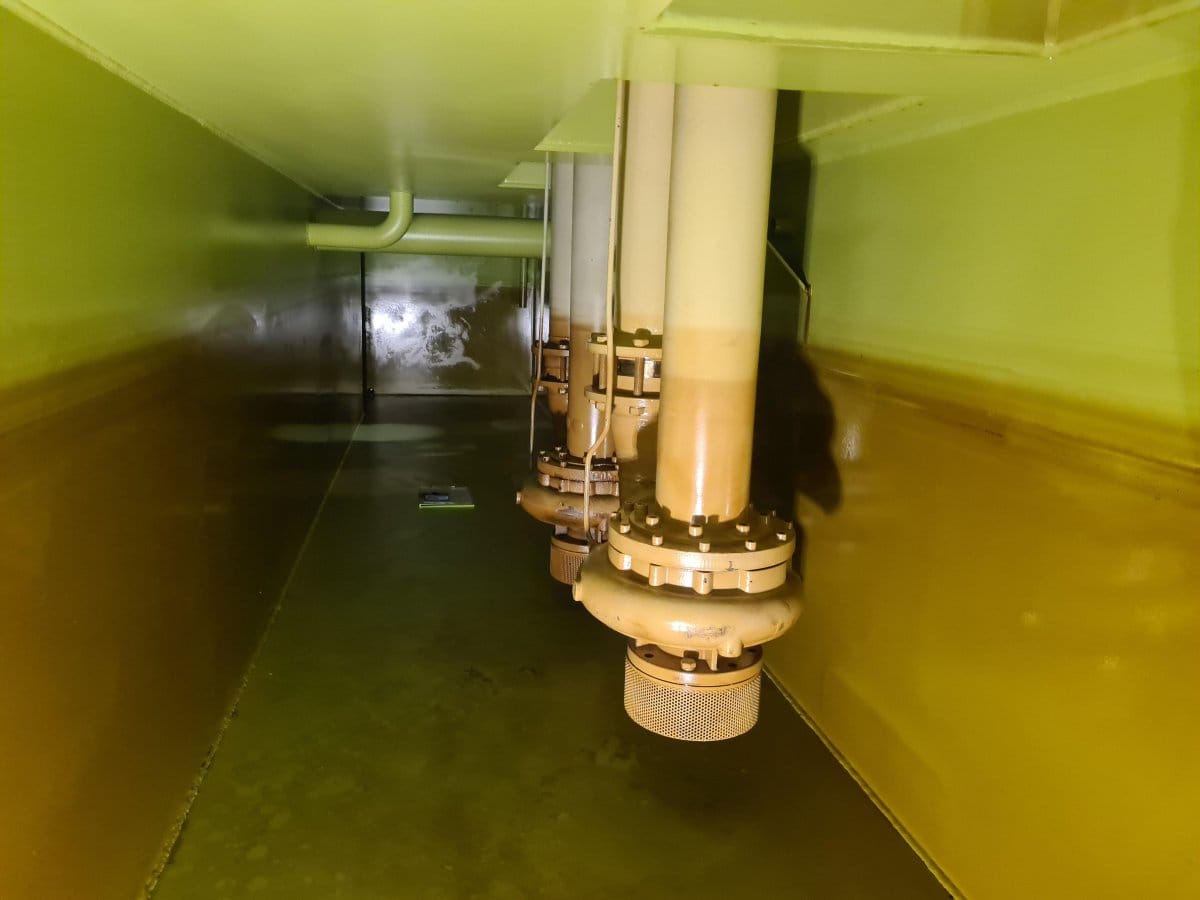
The internal surfaces of your industrial reservoirs are more than just static boundaries; they are active components of your fluid system. When these painted surfaces begin to degrade, they often release microscopic particulates that traditional filtration might miss. You’re likely familiar with the anxiety of seeing unexplained contamination in a laboratory oil report or the fear of a sudden valve failure caused by coating flakes.
This article explains how the condition of internal coatings directly influences oil cleanliness and provides the technical insight needed to prevent coating-related failures. We’ll show you how to identify early signs of degradation and understand the complex chemical interactions between modern oils and industrial coatings. This guide provides a clear path to establishing a proactive maintenance plan that prioritizes system longevity and operational efficiency. By the end, you’ll have the technical knowledge to ensure your tank coatings remain a reliable asset rather than a liability.
Key Takeaways
- Understand why high-quality epoxy systems are the industrial standard for corrosion prevention and internal surface maintenance.
- Learn how to distinguish painted coating debris from metallic wear through microscopic analysis and ISO 4406 cleanliness codes.
- Recognize the operational hazards of coating degradation, including how these contaminants lead to critical valve stiction and actuator failures.
- Implement a proactive five-step monitoring routine to assess the health of internal coatings before they compromise your fluid integrity.
- Discover how specialized hot oil flushing and high-velocity filtration remove sub-micron particulates to restore system reliability after a coating failure.
The Critical Role of Painted Surfaces in Industrial Oil Reservoirs
The internal surfaces of an industrial oil reservoir are often overlooked until a failure occurs. These surfaces rely on specific functional coatings to maintain the chemical and physical stability of the fluid they contain. Without a robust barrier, the raw steel of a tank is vulnerable to the surrounding environment and the aggressive nature of modern lubricants. This is not just about aesthetics; it’s about engineering a clean environment for critical machinery.
In the Australian context, maintaining painted surfaces presents unique challenges. High ambient temperatures and coastal humidity accelerate the degradation of chemical bonds within the coating. When these bonds fail, the resulting debris introduces a primary source of particulate contamination into the system. Establishing coating integrity as a pillar of your asset management strategy is essential for long-term reliability and environmental responsibility.
To better understand how these surfaces are maintained in large-scale operations, watch this video on automated tank coating technology:
Corrosion Protection and System Hygiene
The “headspace” of an oil reservoir, which is the area above the oil level, is a high-risk zone for corrosion. As temperatures fluctuate, moisture condenses on metal, leading to rapid rust formation. These iron oxide particles eventually drop into the oil, bypassing initial filtration and causing abrasive wear on sensitive components. A properly painted interior seals the metal, preventing this oxidation cycle from starting.
Hygiene also plays a role in maintenance efficiency. Smooth, high-performance coatings prevent the adhesion of sludge and varnish precursors. During a standard tank cleaning, a coated surface allows for much faster and more effective removal of contaminants compared to the pitted, porous surface of oxidized raw steel. Unpainted surfaces are a liability because they harbor microscopic debris that is nearly impossible to remove through standard flushing methods.
Common Types of Industrial Coatings used in 2026
By 2026, the industry has shifted toward high-solids epoxy phenolics and specialized polyurethanes designed for constant oil immersion. Epoxy phenolics are the gold standard for oil tanks because of their exceptional cross-linking density and resistance to high-temperature hydrocarbons. These materials provide a barrier that doesn’t leach chemicals into the oil, which is vital for maintaining the additive balance of modern lubricants. This chemical stability is essential for regulatory compliance and operational safety.
Specialized polyurethanes are occasionally used where flexibility is required, but they must be specifically rated for the application. An immersion-grade coating is a material engineered to withstand continuous contact with hydrocarbons without swelling, blistering, or delaminating. Selecting the wrong material can lead to catastrophic system failure if the paint begins to dissolve or flake into the fluid stream. Using the correct technical specifications ensures that your reservoir remains a clean, protective environment for your high-value lubricants.
Detecting and Analyzing Contaminants from Painted Coatings
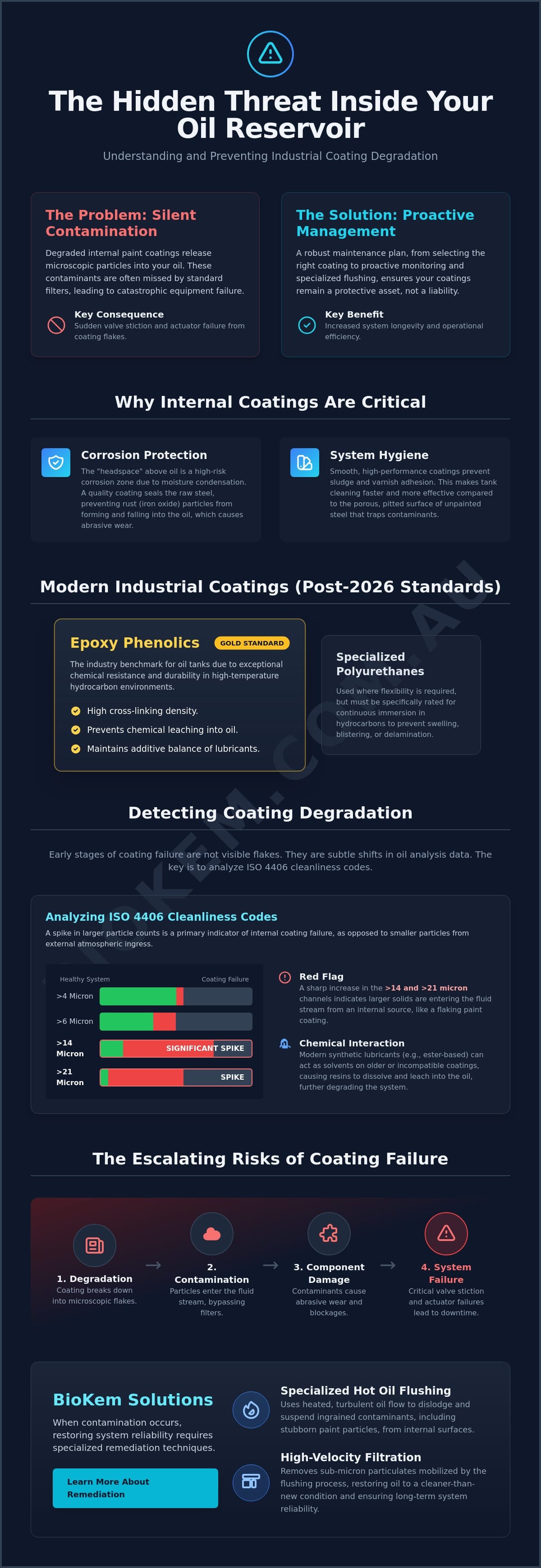
Detecting degradation in painted reservoirs requires a transition from visual observation to forensic data analysis. While a large flake is easy to spot, the early stages of coating failure manifest as subtle shifts in ISO 4406 cleanliness codes. These non-metallic particles typically cause a spike in the >14 micron and >21 micron channels. This indicates that larger solids are entering the fluid stream from an internal source rather than through external atmospheric ingress.
A significant challenge for modern maintenance teams is the chemical interaction between legacy coatings and high-performance synthetic lubricants. Some ester-based fluids or aggressive additive packages can act as solvents if the coating’s cross-linking is insufficient. This results in chemical leaching where the paint’s resins or pigments dissolve into the oil. You might notice unexplained shifts in the oil’s acid number or a darkening of the fluid color before physical chips are even visible to the naked eye. Identifying these chemical signatures early prevents the long-term degradation of the oil’s additive package.
Interpreting Oil Analysis for Coating Debris
Analytical ferrography is the most effective tool for distinguishing between mechanical wear and coating failure. In a filter ferrogram, paint fragments appear as translucent or colored crystalline structures. These are often identified by the presence of titanium dioxide or other pigments that don’t occur naturally in base oils. These fragments are easily differentiated from the jagged, opaque shapes of metallic fatigue wear. If your elemental analysis shows a rise in titanium or zinc without a corresponding increase in known wear metals like iron or chrome, it’s a strong indicator of internal surface degradation. For immediate onsite verification, utilizing patch test kits allows teams to capture and examine visible debris under a field microscope, providing instant confirmation of the contaminant’s origin.
Visual Inspection Protocols for Painted Reservoirs
Physical monitoring remains a critical backup to laboratory data. Coating failures frequently begin in areas of high turbulence or poor initial surface preparation, such as around baffles or suction pipes. Technicians should use high-definition borescopes to look for “blistering,” which are small bubbles indicating fluid has bypassed the painted barrier. Another red flag is “chalking,” where the surface becomes powdery. Chalking is a clear sign that the resin is breaking down, releasing fine particulates directly into the oil. Linking these visual findings to your oil analysis data creates a comprehensive view of asset health, allowing for planned intervention before a catastrophic failure occurs.
The Risks of Coating Failure: Why Degraded Painted Surfaces are Operational Hazards
Many operators dismiss paint flakes as “soft” contaminants that filters will eventually manage. This is a dangerous assumption. Under the extreme pressures found in industrial hydraulic systems, a polymer fragment behaves as a rigid obstruction. It doesn’t compress or dissolve; it lodges. When a painted interior begins to fail, it creates a snowball effect. Fluid turbulence catches the edges of initial micro-cracks, peeling away larger sections of the coating in a rapid, exponential process. This debris often blocks internal oil galleries, which restricts cooling flow and causes localized overheating. This thermal stress further degrades the surrounding oil, creating a cycle of rapid fluid aging and diminished asset life.
The physical presence of these contaminants is only half the battle. As the coating breaks down, it exposes the raw substrate to the fluid. This leads to the very corrosion the coating was intended to prevent. Furthermore, the particulates themselves act as abrasive media. As they circulate through pumps and actuators, they score metal surfaces, creating more metallic wear debris. This secondary contamination often overshadows the original coating failure, making root cause analysis difficult without specialized forensic oil testing. Ensuring your system remains free of these materials is a core requirement for maintaining operational safety and regulatory compliance.
Impact on Sensitive Hydraulic and Turbine Components
Servo valves operate with extremely tight clearances, often between 1 and 5 microns. A single 5mm paint flake, as documented in several industrial case studies, can completely obstruct a control orifice. This leads to immediate system trips, erratic actuator movement, or catastrophic “fail-to-safe” events. Beyond physical blockages, coating debris acts as a nucleation site for turbine oil varnish. These particulates provide a surface for polar oxidation products to cling to, accelerating the transition from soluble to insoluble contaminants that coat internal components and reduce heat transfer efficiency.
Chemical Contamination and Additive Depletion
The risks of a failing painted surface aren’t purely physical. Degraded paint resins can act as catalysts for oxidation, significantly shortening the remaining useful life of the lubricant. In specific scenarios, the chemical components of the failing coating react with metallic additives in the oil to form insoluble soaps. These soaps settle in low-flow areas of the reservoir, further complicating your advanced fluid management strategy. Adhering to rigorous Maintenance Protocols during tank inspections is the only way to ensure these chemical reactions don’t compromise your system’s long-term ecological and operational health.
Maintenance Protocols for Painted Assets and Oil Reservoirs
Effective management of painted reservoirs requires a shift from reactive repairs to a structured technical protocol. Because internal coatings are subject to constant thermal cycling and chemical exposure, their degradation is inevitable but predictable. A rigorous five-step routine ensures that coating health is monitored with the same precision as the oil itself. This routine includes periodic visual mapping via borescope, trend analysis of ISO 4406 cleanliness codes, chemical compatibility reviews between oil additives and resins, physical adhesion assessments during shutdowns, and the implementation of remedial high-velocity filtration to capture early-stage micro-debris.
When an asset overhaul necessitates repainting, the technical success of the new application depends almost entirely on the substrate condition. Industry data indicates that surface preparation accounts for as much as 80% of a coating’s eventual success. Removing all traces of oxidized oil, varnish, and old resin is mandatory to ensure the new immersion-grade epoxy achieves maximum cross-linking and adhesion. Failure to reach the required surface profile often leads to premature delamination, which can occur in as little as 3 to 5 years compared to the 12 to 18 year lifespan of a correctly applied high-performance system.
Proactive Tank Cleaning and Inspection
Inspections should be synchronized with planned shutdowns to minimize operational disruptions. During the “mucking out” phase, it’s vital to use lint-free materials and non-abrasive tools to avoid scratching the existing painted finish, as surface scores become focal points for future corrosion. Utilizing specialized paddle flushing screens during the cleaning process allows maintenance teams to capture and quantify the volume of coating debris present in the reservoir. This data provides a baseline for determining whether the coating requires localized touch-ups or a complete system strip. For a comprehensive restoration of your system’s internal hygiene, consider our professional Tank Cleaning services to ensure every contaminant is removed safely.
Managing Coating Life Cycles
Predicting the remaining useful life of a coating involves monitoring the cumulative thermal stress on the reservoir. High operating temperatures, common in Australian industrial environments, accelerate the embrittlement of epoxy resins. If oil analysis shows a consistent rise in non-metallic particulates despite high-efficiency filtration, the coating is likely reaching the end of its functional life. Integrating these findings into a broader proactive maintenance strategy allows for the scheduled replacement of coatings before they reach the point of catastrophic flaking. This forward-looking approach balances the cost of recoating against the much higher expense of unplanned component failure and production loss.
BioKem Solutions: Remediation for Painted System Contamination
When an internal painted surface fails, the resulting debris doesn’t remain confined to the reservoir. It migrates through pump inlets, control manifolds, and heat exchangers, often settling in low-velocity sections within the pipework. Standard system circulation is rarely sufficient to dislodge these heavy polymer fragments. BioKem provides a comprehensive remediation framework that combines mechanical cleaning with advanced fluid recovery. Our approach ensures that every trace of coating debris is removed, restoring the system to its original technical specification without the need for costly component replacement.
For urgent responses to coating-related failures, our Equipment Hire services provide immediate access to high-capacity filtration units. This allows operators to stabilize fluid cleanliness during an emergency contamination event while a permanent remediation plan is developed. By integrating onsite tank cleaning with technical coating assessments, we help you transition from a state of failure back to reliable, high-performance operation. Our goal is to protect your assets through scientific intervention and precise engineering.
High-Velocity Hot Oil Flushing for Debris Removal
Removing paint chips from complex pipework requires the science of turbulent flow. Standard laminar flow only moves fluid in the center of the pipe, leaving contaminants trapped against the walls. We utilize hot oil flushing to achieve a high Reynolds Number, typically exceeding 4,000. This creates the necessary turbulence to scour internal surfaces and carry heavy particulates back to our high-capacity filtration rigs. Our proprietary flushing units are engineered for the demanding conditions of the Australian industrial sector, providing the thermal and hydraulic energy required to clean systems that standard maintenance pumps can’t reach.
Customized Filtration and Analysis Support
Capturing sub-micron paint particulates requires specialized media that won’t prematurely blind under heavy loading. We deploy Filters S.p.A. high-performance elements, which are specifically chosen for their high dirt-holding capacity and chemical compatibility with industrial lubricants. To verify the success of the remediation, we provide onsite laboratory support to analyze the fluid in real-time. By utilizing the Particle Pal range, our technicians track particulate counts and moisture levels throughout the flushing process. This data-driven approach ensures that the system is only returned to service once it meets the stringent cleanliness standards required for modern industrial assets. This structured flow of identification, mechanical removal, and verified results anchors our commitment to long-term ecological and operational health.
Securing System Reliability through Proactive Surface Management
Maintaining the technical integrity of painted internal surfaces is a fundamental requirement for any high-performance industrial system. We have analyzed how coating degradation introduces harmful particulates, why these contaminants bypass standard filtration, and the specific protocols required to manage these assets effectively. Neglecting the health of your reservoir’s interior leads to accelerated varnish formation and critical component failure. Prioritizing proactive inspections and high-velocity flushing protects both your machinery and the environment from the consequences of catastrophic fluid failure.
BioKem provides the specialized expertise needed to remediate complex contamination events. As the sole Australian distributor for Filters S.p.A., we combine world-class filtration technology with national onsite deployment capabilities. Our specialist technicians are experts in ISO 4406 cleanliness standards and varnish mitigation, ensuring your fluids remain within strict technical specifications. Contact BioKem for expert oil analysis and hot oil flushing services to secure the longevity of your industrial assets. Taking action today prevents the operational hazards of tomorrow.
Frequently Asked Questions
Can I use any industrial paint to coat the inside of an oil reservoir?
No, you must use an immersion-grade coating specifically rated for continuous contact with hydrocarbons and high-temperature lubricants. Standard industrial paints often lack the cross-linking density required for oil immersion. Using an incompatible material can result in the resin softening or dissolving. This leads to catastrophic chemical contamination and a total loss of fluid integrity within your system.
How do I know if the “dirt” in my oil is actually paint chips?
Analytical ferrography is the most reliable method for identifying painted debris in a sample. Unlike metallic wear particles or common atmospheric dust, paint fragments appear as translucent or colored crystalline structures under a microscope. You can also use onsite patch test kits for a quick visual assessment. These kits help you confirm the presence of non-metallic solids before sending samples for deeper laboratory analysis.
Will my standard system filters catch paint flakes before they damage the pump?
Standard filters often fail to protect the pump because most coating degradation occurs within the reservoir, which is upstream of the pump inlet. While return-line filters might catch debris after it has circulated, flakes originating in the tank are often drawn directly into the pump suction. Large flakes can cause immediate cavitation or mechanical damage to gears and vanes before the fluid ever reaches a filter.
Is it possible to repair a painted surface inside a tank without draining the oil?
No, a successful repair requires the oil to be completely drained and the metal substrate thoroughly decontaminated. Proper adhesion for a new painted layer depends on achieving a specific surface profile on the raw metal. Attempting a repair while the tank is wet or oily is technically impossible. It will lead to immediate delamination and introduce even more contaminants into your fluid stream.
What are the main causes of paint delamination in hydraulic systems?
Improper surface preparation and chemical incompatibility are the primary drivers of coating delamination. If the metal wasn’t blasted to the correct profile or if residual oil remained during application, the bond will fail. Thermal cycling and the use of aggressive synthetic lubricants also accelerate this breakdown. These factors weaken the resin matrix, causing the coating to peel away in large, hazardous sections.
How often should the internal painted surfaces of a turbine reservoir be inspected?
You should perform a comprehensive internal inspection during every major planned shutdown, typically every three to five years. However, it’s vital to monitor oil analysis reports quarterly for shifts in ISO 4406 cleanliness codes. If non-metallic particulate counts rise unexpectedly between shutdowns, you should schedule an immediate borescope inspection. This allows you to check for early signs of blistering or flaking without a full system drain.
Can paint contamination cause varnish-like symptoms in my oil?
Yes, degraded paint resins can act as nucleation sites that significantly accelerate the formation of varnish. These microscopic particles provide a surface for polar oxidation products to cling to, eventually forming sticky deposits on valves and sensors. This often makes a system appear to have a standard varnish problem. In reality, the root cause is the chemical and physical breakdown of the internal tank coating.
What should I do immediately if I find large paint flakes in my return filter?
Shut down the system immediately to prevent debris from reaching sensitive control valves or actuators. You must drain the reservoir and perform a professional tank cleaning to remove all loose coating material. Once the tank is secure, a high-velocity hot oil flush is necessary to clear any fragments that have already migrated into the pipework. Taking these steps prevents a single flake from causing a total system failure.