

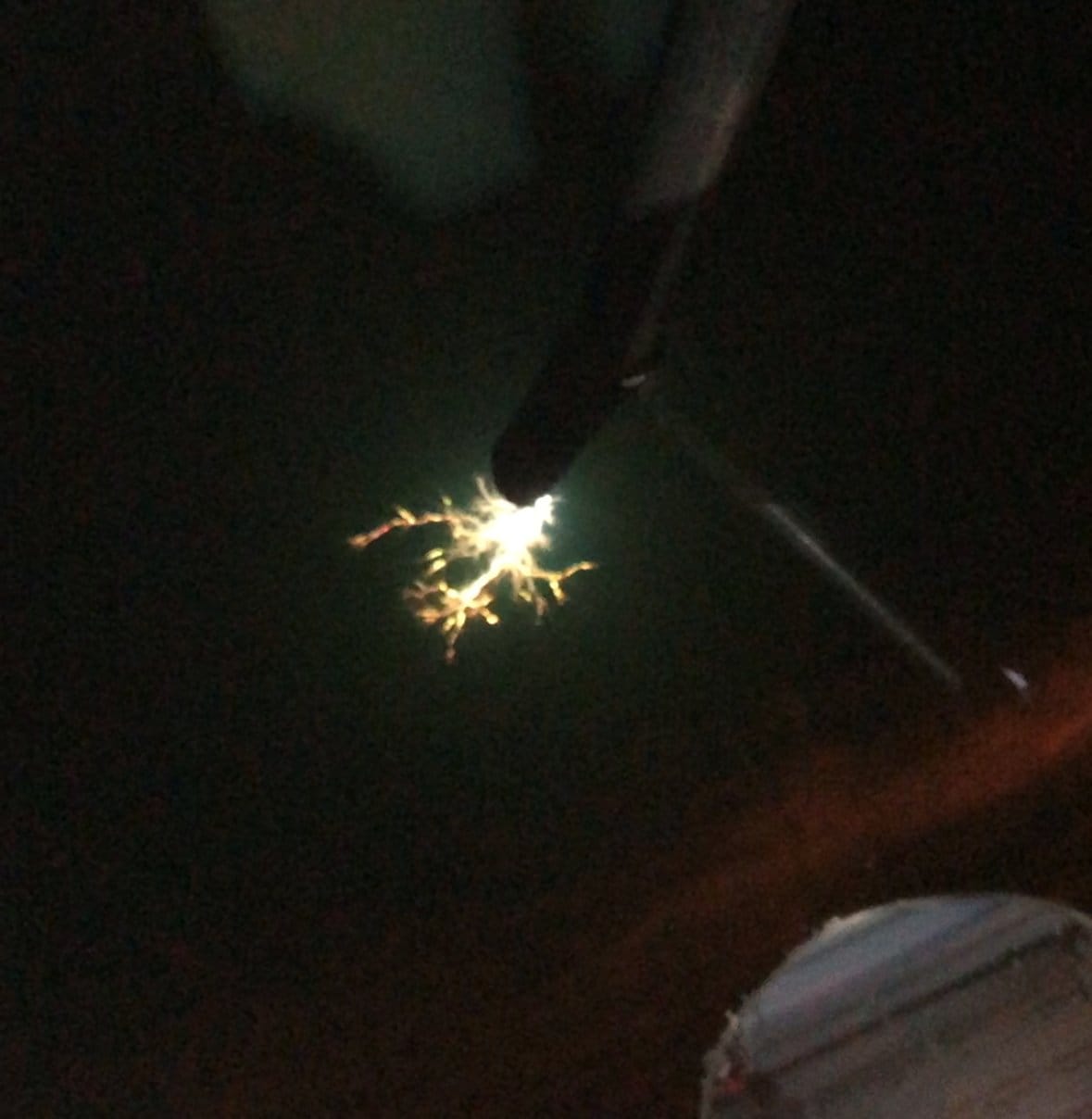
Leading lubricant analysis laboratories have reported a 600% increase in varnish-associated problems over the last decade. It’s a frustrating paradox for many industrial operators; you invest in premium Group II base stocks to ensure longevity, yet you’re still facing unscheduled downtime from sticking servo-valves and scorched filters. This hidden culprit is often ESD Electrostatic Discharge in lubrication systems – damage that manifests as silent, localized "lightning strikes" within your machinery. When high-purity oils flow through modern, synthetic filter media, they can generate massive static charges that eventually arc to grounded surfaces.
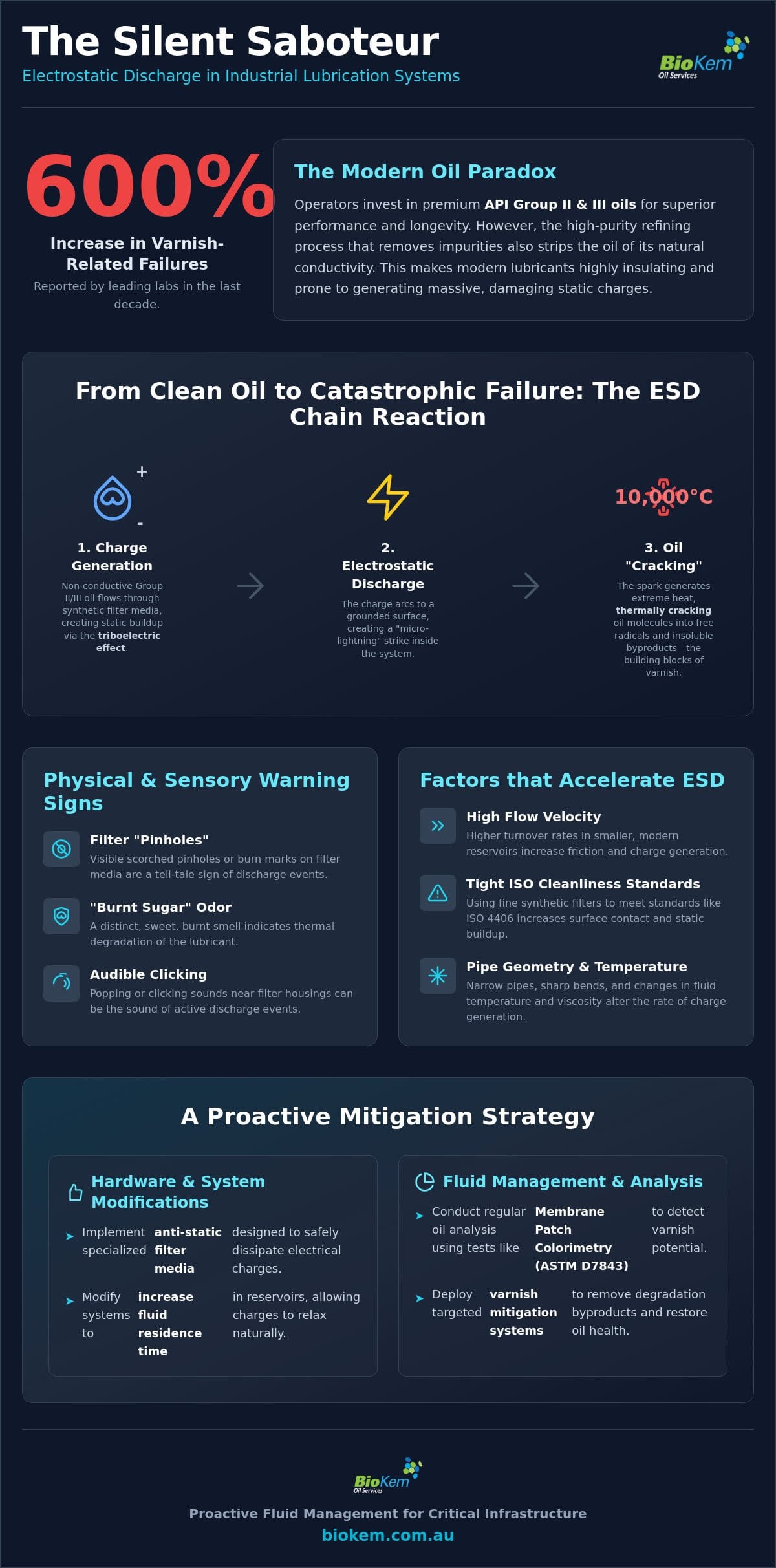
You’ll learn how these discharges create internal temperatures reaching 10,000°C, effectively "cracking" oil molecules to form the building blocks of varnish. We’ll provide a technical roadmap to identify the visual and analytical signs of discharge using industry standards like ASTM D7843 for Membrane Patch Colorimetry. We’ll also preview how to implement a mitigation strategy that balances high-performance filtration with advanced fluid chemistry to protect your critical infrastructure and maintain regulatory compliance. This guide ensures you can move beyond reactive maintenance toward long-term operational health.
Key Takeaways
- Understand why modern Group II and III base oils increase the risk of ESD Electrostatic Discharge in lubrication systems – damage, leading to localized thermal cracking and oil degradation.
- Identify the physical signatures of discharge, including characteristic “pinholes” in filter media and the distinct “burnt sugar” odour of thermally stressed lubricants.
- Learn to detect active ESD events by monitoring for audible clicking near filter housings or inspecting for carbonaceous deposits on internal components.
- Discover technical mitigation strategies, such as the implementation of specialized anti-static filter media and system modifications to increase fluid residence time.
- Explore how a professional approach involving oil analysis and varnish mitigation systems can restore equipment reliability and prevent premature component failure.
Table of Contents
-
The Silent Threat: Understanding ESD in Modern Lubrication Systems
-
Identifying the "Lightning Bolt": Signs of ESD in Your Assets
-
Comprehensive Mitigation Strategies: From Hardware to Chemistry
-
Proactive Fluid Management: BioKem Oil Services’ National Approach to ESD
The Silent Threat: Understanding ESD in Modern Lubrication Systems
Understanding Electrostatic Discharge (ESD) begins with recognizing it as the sudden, uncontrolled flow of electricity between two objects with different electrical potentials. In industrial settings, ESD Electrostatic Discharge in lubrication systems – damage is a physical phenomenon where the lubricant itself acts as the medium for charge accumulation. While static might seem like a minor nuisance in domestic environments, within a high-pressure turbine or hydraulic circuit, it represents a concentrated thermal event. It’s a silent "lightning storm" that occurs inside the oil, often reaching temperatures that exceed the limits of traditional fluid analysis to detect until the system has already begun to fail.
To better understand this concept, watch this helpful video:
Why Modern Oils are More Susceptible to Static
The prevalence of ESD has increased significantly in 2026 due to the industry’s widespread adoption of highly refined API Group II and Group III base oils. These lubricants are engineered for superior oxidation stability and longevity; however, the refining process that makes them effective also makes them dangerous. By removing polar impurities like sulfur, nitrogen, and aromatics, the oil’s natural conductivity is stripped away. Unlike older Group I oils, which could bleed off static charges easily, modern synthetics act as high-performance insulators. When these non-conductive fluids are pushed through tight filtration systems to meet strict ISO 4406 cleanliness standards, the increased surface area contact creates a perfect environment for massive charge buildup. The oil simply can’t dissipate the energy fast enough to prevent a discharge event.
The Triboelectric Effect in Industrial Plumbing
The core mechanism behind this charge generation is the triboelectric effect. This occurs when electrons are transferred between the oil and the internal surfaces of the system, particularly as the fluid slides against synthetic filter media. As the oil flows, it creates what’s known as a "streaming current." Several operational factors accelerate this process:
-
Flow Velocity: Higher turnover rates in smaller, modern reservoirs increase the frequency of charge generation.
-
Fluid Temperature: Changes in viscosity and temperature alter the rate at which charges can move through the fluid.
-
Pipe Geometry: Narrow diameters and sharp bends increase the friction and turbulence that drive electron transfer.
When the voltage differential between the oil and a grounded component, such as a filter housing or a valve body, exceeds the dielectric strength of the fluid, the energy arcs. This arc is the primary source of ESD Electrostatic Discharge in lubrication systems – damage, creating localized hot spots that "crack" the oil’s molecular structure instantly.
Mechanics of Destruction: How ESD Damages Components
When the voltage differential within a lubrication system peaks, the resulting spark is catastrophic on a molecular level. Temperatures at the spark’s core can exceed 10,000°C. This extreme heat causes immediate thermal cracking of the lubricant’s hydrocarbon chains, effectively shattering the molecular stability of your oil. It’s a localized explosion that transforms stable oil molecules into reactive free radicals and sub-micron carbonaceous particles. These insoluble byproducts are the primary drivers of ESD Electrostatic Discharge in lubrication systems – damage, as they don’t just stay in the oil; they begin to coat every internal surface they touch.
The physical evidence is often found on the filter media itself. Operators frequently discover distinct "pinholes" or scorched tracks where the arc has literally burned through the synthetic fibers. This doesn’t just degrade the oil; it compromises the integrity of the filtration system. While following NFPA 77 guidelines for grounding can help manage external hazards, the internal "lightning strikes" require a more sophisticated approach to fluid chemistry and filtration.
Physical Erosion and Component Pitting
ESD isn’t confined to the filter housing. Sparks can jump to the nearest metallic surface, leading to micro-pitting on critical components like bearings and valves. In Electronic Hydraulic Control (EHC) systems, this erosion is particularly dangerous. Even microscopic pits on a servo-valve’s landing can lead to sticking or erratic behavior. Over time, these cumulative discharge events cause structural integrity issues in high-pressure lines, potentially leading to leaks or catastrophic system failure.
The ESD-Varnish Connection
The chemical fallout of ESD is the rapid formation of varnish. The sub-micron particles created during the 10,000°C discharge are too small for standard mechanical filters to capture. These particles circulate through the system, eventually agglomerating into sticky, insoluble films on cooler surfaces like heat exchangers and bearing housings. The resulting chemical shift is a major contributor to ESD Electrostatic Discharge in lubrication systems – damage, accelerating the transition from healthy fluid to a varnish-prone environment. If you suspect your system is suffering from these silent discharges, a professional filter ferrogram analysis can help identify the specific wear patterns and carbonaceous deposits associated with ESD.
Identifying the "Lightning Bolt": Signs of ESD in Your Assets
Detecting the onset of ESD requires a combination of sensory observation and precise analytical testing. While the "lightning strikes" themselves are internal, they leave behind undeniable signatures within the machinery. One of the most immediate indicators is a distinct "burnt sugar" or acrid metallic odour emanating from the reservoir or filter housing. This smell is the olfactory evidence of the high-temperature thermal cracking occurring at the molecular level. Technicians should also listen for a rhythmic clicking or popping sound near filter housings. These sounds are the audible discharge of accumulated static energy arcing to the grounded casing, a clear warning that ESD Electrostatic Discharge in lubrication systems – damage is active.
Understanding the Fundamentals of Electrostatic Discharge is crucial for interpreting these signs correctly. Unexplained spikes in fluid temperature or sudden pressure drops across filter banks often signal that discharge events have already begun to compromise the oil’s chemistry or the filter’s structural integrity. Monitoring these operational variables provides a first line of defense against systemic failure.
Onsite Visual and Auditory Indicators
Primary inspection points include high-velocity control lines, pump outlets, and primary filter banks where fluid friction is highest. When pulling a filter element, look for dark discolouration, localized charring, or "lightning bolt" tracks on the synthetic media. It’s vital to document these "burnt" elements with high-resolution photography, as this serves as critical evidence for insurance or warranty claims. For rapid onsite screening, using Patch Test Kits allows technicians to visualize the presence of sub-micron carbonaceous debris that standard particle counters often miss. This immediate feedback helps determine if a system requires urgent intervention.
Diagnostic Testing and Oil Analysis
When onsite indicators are present, advanced laboratory analysis is the next step to quantify the risk. The Membrane Patch Colorimetry (MPC) test, governed by ASTM D7843, is the industry standard for measuring varnish potential. However, MPC alone doesn’t always pinpoint ESD as the root cause. Utilizing a Filter Ferrogram allows analysts to distinguish between standard metallic wear particles and the unique, spherical carbon particles generated by electrostatic discharge. This distinction is vital for choosing the correct mitigation strategy.
Interpreting particle counts also requires a nuanced approach. ESD events typically create particles in the sub-micron range, often below the 4-micron threshold of standard ISO 4406 reporting. A sudden, unexplained increase in the 4-micron count, despite high-efficiency filtration, is a strong indicator that ESD Electrostatic Discharge in lubrication systems – damage is occurring. This sub-visible debris acts as the precursor to the sticky films that eventually seize servo-valves and coat heat exchangers, necessitating proactive fluid management.
Comprehensive Mitigation Strategies: From Hardware to Chemistry
Mitigating ESD Electrostatic Discharge in lubrication systems – damage requires a transition from reactive component replacement to a holistic engineering strategy. While standard mechanical filters are designed to capture solid contaminants, they often act as the primary generator of static charge due to the friction between non-conductive oil and glass-fibre media. A robust solution addresses the physics of charge generation through hardware upgrades while managing the fluid’s electrochemical properties to ensure long-term stability.
Advanced Filtration Solutions
The most effective first line of defense is the installation of anti-static filter media. Unlike traditional glass-fibre elements, these specialized filters incorporate conductive fibers that provide a safe path for electrons to dissipate before a high-voltage arc can form. As the Australian distributor for Filters S.p.A., we provide access to advanced synthetic media designed specifically to neutralize streaming currents. These elements don’t just protect the oil from thermal cracking; they prevent the physical erosion of the filter itself, ensuring your filtration system maintains its rated ISO cleanliness without becoming a source of contamination.
Operational and Design Adjustments
Hardware changes must be supported by operational adjustments to be truly effective. One critical factor is "relaxation time," which is the duration the oil spends in the reservoir before being recirculated. If a tank is too small for the flow rate, the oil doesn’t have enough time to dissipate its charge naturally. Increasing residence time or reducing flow velocity in high-risk lines can significantly lower the potential for ESD Electrostatic Discharge in lubrication systems – damage. Additionally, operators must ensure all "floating" components, such as internal filter supports and bypass valves, are properly bonded and grounded to the main chassis to prevent isolated charge accumulation.
Fluid temperature also plays a subtle role. Cooler oil is generally more resistive, which can increase the likelihood of static buildup in certain environments. While chemical additives can be used to increase conductivity, they must be applied with extreme caution. Additive clash can lead to unintended consequences, such as impaired air release or reduced demulsibility. For a comprehensive review of your system’s hardware and fluid compatibility, explore our range of specialist oil filters and filtration products designed for modern industrial challenges.
Proactive Fluid Management: BioKem Oil Services’ National Approach to ESD
BioKem Oil Services operates as a national specialist in identifying and remediating ESD Electrostatic Discharge in lubrication systems – damage. While installing anti-static filters is a critical preventive step, it doesn’t address the chemical contamination already present in the circuit. Once a discharge event occurs, the oil’s molecular integrity is compromised, leaving behind sub-micron precursors that standard filtration cannot capture. Our approach combines technical hardware solutions with advanced chemical restoration to ensure your system returns to peak operational health without the need for immediate, synthetic fluid replacement.
The BioKem Oil Services Varnish Removal System
The BioKem Oil Services Varnish Removal System is essential once ESD has contaminated a system. Standard mechanical filters, even those with high efficiency ratings, are ineffective against the polar, insoluble deposits created by 10,000°C sparks. These deposits act as a "chemical glue," seizing servo-valves and insulating heat exchangers, which leads to increased operating temperatures and potential turbine trips. By implementing our Varnish Mitigation technology, we remove these sub-micron contaminants at the molecular level. This process restores the reliability of sensitive EHC components and ensures heat transfer efficiency is maintained, effectively reversing the degradation caused by static events.
Restoring System Cleanliness
Restoring a system after a major ESD event often requires more than just a fluid change. We utilize Hot Oil Flushing to remove the "memory" of discharge damage from internal galleries and dead legs. This high-velocity process is particularly critical for Heat Transfer Systems, where carbonaceous ESD debris can bake onto internal surfaces, creating long-term thermal bottlenecks. Our national deployment of technicians ensures that this level of specialized care is available onsite, regardless of your facility’s location. We bring the equipment and expertise directly to your assets, minimizing downtime while maximizing the effectiveness of the purification process.
To ensure ESD Electrostatic Discharge in lubrication systems – damage doesn’t return, we provide ongoing support through sophisticated Oil Analysis. By monitoring MPC values and using filter ferrograms to detect specific carbonaceous markers, BioKem Oil Services helps you maintain a stable fluid environment. This proactive management strategy protects your assets from the silent threat of static discharge while supporting your site’s commitment to long-term ecological and operational health. Our goal is to move your maintenance program from reactive component replacement to a state of quiet confidence in your system’s reliability.
Securing Your Infrastructure Against Electrostatic Interference
The transition to modern, high-purity lubricants has inadvertently introduced a complex set of physical challenges for industrial operators. Managing ESD Electrostatic Discharge in lubrication systems – damage requires more than just standard filtration; it demands a synergy between advanced hardware and proactive fluid chemistry. By identifying the early auditory and visual markers of discharge, you can intervene before varnish deposits compromise critical servo-valves or heat exchangers. These silent events don’t have to dictate your maintenance schedule or lead to unscheduled downtime.
BioKem Oil Services stands as the sole Australian distributor for Filters S.p.A. Products, providing the specialized anti-static media necessary to neutralize charge at the source. Our national onsite technical support teams offer comprehensive Hot Oil Flushing and Varnish Mitigation services to restore system integrity and remove sub-micron carbonaceous debris. Protecting your assets from these internal "lightning strikes" is essential for long-term operational health and maintaining strict regulatory standards across your facility.
Contact BioKem Oil Services for a national ESD and Varnish audit today to ensure your critical systems remain resilient and efficient. We’re ready to partner with you in maintaining a clean, stable, and sustainable industrial environment through specialized technical expertise and localized support.
Frequently Asked Questions
What exactly is electrostatic discharge in an oil system?
It’s the sudden, uncontrolled flow of electricity between the lubricant and a grounded component. This occurs when the oil accumulates a static charge through friction, especially when passing through non-conductive filter media. When the voltage exceeds the fluid’s dielectric strength, it arcs, creating a high-temperature spark that instantly degrades the oil’s molecular structure.
Why does ESD cause varnish to form so quickly?
ESD causes varnish because the spark’s temperature reaches approximately 10,000°C, which immediately "cracks" oil molecules. This thermal event creates reactive free radicals and sub-micron carbonaceous particles. These insoluble byproducts agglomerate into sticky films that coat internal surfaces, significantly accelerating the varnish formation process compared to standard thermal oxidation.
Can I stop ESD just by grounding my oil tank?
No, grounding the oil tank alone won’t stop internal sparking. While grounding protects personnel from external shocks, it doesn’t address the charge generated within the fluid as it flows through the system. Internal components like filter supports can remain "floating" and accumulate charge, leading to arcs that cause ESD Electrostatic Discharge in lubrication systems – damage regardless of the tank’s ground status.
Are certain types of oil more prone to electrostatic sparking?
Yes, highly refined API Group II and Group III base oils are significantly more prone to sparking. These oils have lower conductivity because polar impurities are removed during the refining process. Without these impurities to help bleed off static energy, the oil acts as an insulator, allowing massive charges to accumulate during high-velocity flow or tight filtration.
How do I know if my filters are being damaged by ESD or just high pressure?
You can distinguish ESD damage by looking for localized burn marks or "pinholes" on the filter media. High-pressure damage typically causes structural deformation, such as pleat bunching or collapsed centers. In contrast, ESD leaves behind scorched tracks or a "burnt sugar" smell, indicating that the damage was caused by thermal arcing rather than mechanical stress.
Does ESD only happen in large turbine systems?
No, it occurs in any high-velocity fluid system using low-conductivity oils. While common in power generation turbines, it’s also found in plastic injection moulding machines, paper mills, and high-pressure hydraulic circuits. Any system that combines modern synthetic lubricants with tight filtration and high flow rates is at risk for ESD Electrostatic Discharge in lubrication systems – damage.
What is the most effective way to test for ESD damage in my oil?
The most effective diagnostic approach is a combination of Membrane Patch Colorimetry (MPC) and a Filter Ferrogram. The MPC test measures the overall varnish potential, while the ferrogram identifies the specific spherical carbon particles produced by electrical arcing. This dual-testing method confirms if the degradation is caused by standard oxidation or electrostatic discharge events.
Can anti-static filters be retrofitted to existing systems?
Yes, anti-static filters can be easily retrofitted into most existing filter housings. These elements are designed to be "drop-in" replacements for standard synthetic or glass-fibre media. By switching to conductive media, you provide a safe pathway for static charges to dissipate, effectively neutralizing the threat of internal sparking without requiring expensive system redesigns.