

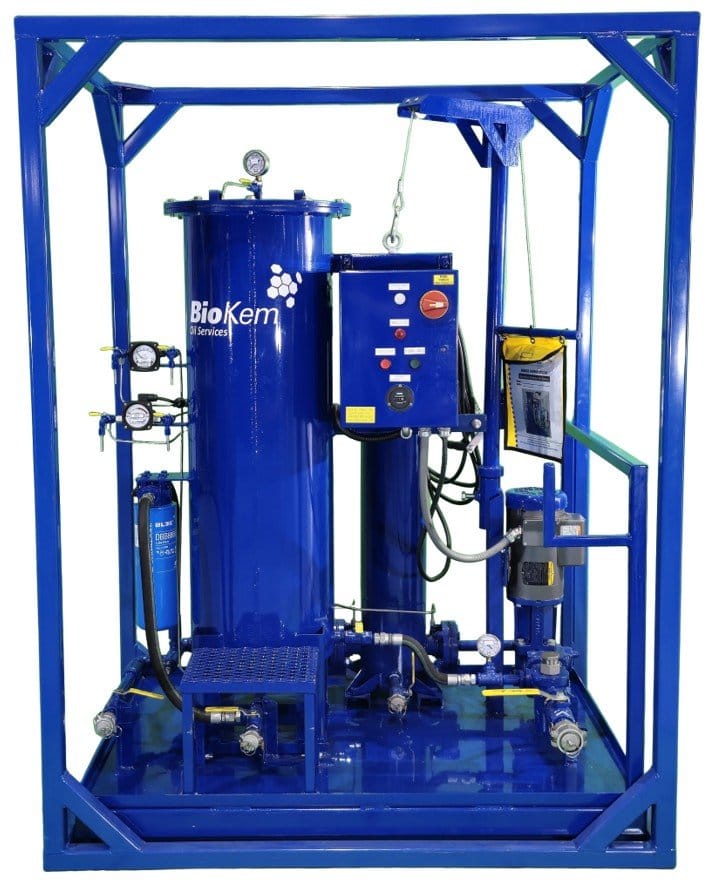
Approximately 80% of hydraulic system failures in Australian heavy industry are a direct result of particle contamination. If you’ve faced unexpected equipment failure due to varnish or particulate buildup, you know that keeping fluids clean is a complex, ongoing challenge. Choosing the correct filter type / or process to filter systems is often the difference between continuous operation and costly, unplanned downtime. It’s understandable to feel frustrated by the high cost of frequent filter element replacements or confusion when deciding between mechanical filters, vacuum dehydration, and varnish mitigation techniques.
This article provides the technical criteria and strategic steps required to select the optimal filtration system for your critical lubrication and hydraulic assets. You’ll learn how to master the selection process to ensure your fluids consistently meet ISO 4406 cleanliness standards. By aligning your filtration technology with specific fluid chemistry and operational demands, you can achieve extended component life and predictable maintenance intervals. BioKem Oil Services outlines the specific mechanisms of various technologies to help you transition from reactive repairs to proactive, environmentally responsible fluid management.
Key Takeaways
- Learn the technical distinctions between inline and kidney-loop filtration to ensure your system effectively removes solid, liquid, and gaseous contaminants.
- Master the variables of fluid viscosity and flow rates when choosing the correct filter type / or process to filter systems to prevent premature bypass and optimize housing size.
- Understand when to deploy vacuum dehydration to eliminate 100% of free water and 90% of dissolved water, safeguarding against varnish and fluid degradation.
- Implement a data-driven 5-step selection process, starting with comprehensive oil analysis to establish baseline ISO 4406 and MPC levels.
- Discover how leveraging specialist oil filters and global technology through BioKem supports long-term equipment reliability and environmental sustainability.
The Fundamentals of Industrial Oil Filtration Processes
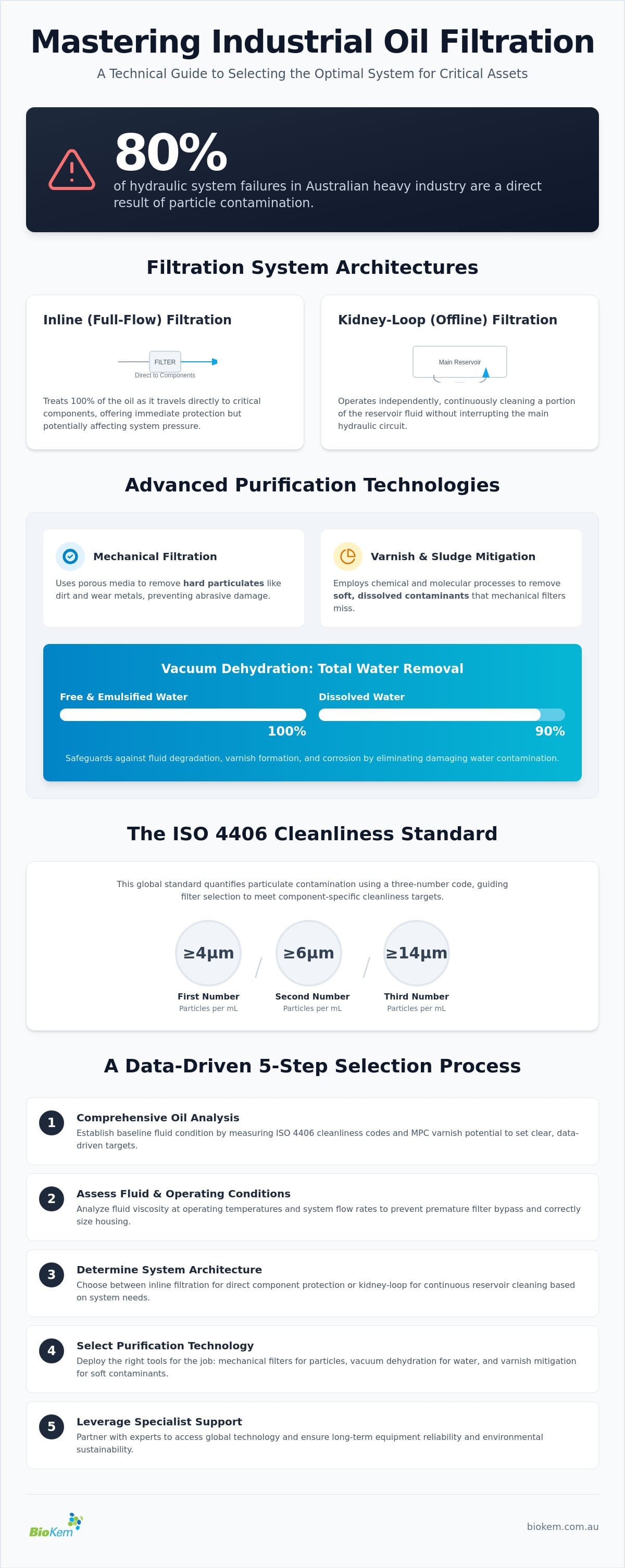
Industrial oil filtration is the systematic removal of solid, liquid, and gaseous contaminants from lubrication and hydraulic fluids. This process is essential for maintaining the chemical integrity of the oil and protecting internal component surfaces from premature wear. The Fundamentals of Industrial Oil Filtration Processes involve more than just trapping dirt; they encompass a strategic approach to fluid health. Choosing the correct filter type / or process to filter systems depends heavily on whether you need a full-flow (inline) or kidney-loop (offline) configuration. Full-flow systems treat the oil as it travels directly to the components, while kidney-loop systems operate independently, continuously cleaning a portion of the reservoir without affecting system pressure.
In 2026, the impact of fluid cleanliness on asset longevity and ROI is undeniable. With approximately 80% of hydraulic system failures in Australian heavy industry linked to particle contamination, a “fix-on-fail” mentality is no longer sustainable. Adopting a Total Contamination Control strategy allows operators to move toward proactive maintenance. BioKem Oil Services supports this transition by focusing on preventing ingress while aggressively removing existing pollutants to extend component life and reduce the frequency of oil changes. By implementing these measures, businesses can significantly lower their environmental footprint by reducing waste oil volume and improving energy efficiency.
To better understand how these designs impact your operations, watch this helpful video:
Mechanical vs. Chemical Filtration
Mechanical filtration is the standard method for removing hard particulates, such as dirt and wear metals, using porous media. This is essential for preventing abrasive wear in high-tolerance machinery. However, modern systems also require chemical and molecular processes to address varnish and acid mitigation. Varnish is a soft contaminant that mechanical filters often miss because it can exist in a dissolved state. For complex turbine or hydraulic systems, combining both methods ensures that both physical particles and chemical degradation products are managed. Utilizing varnish mitigation alongside hot oil flushing through BioKem Oil Services provides a comprehensive solution for critical assets.
The Role of ISO 4406 Cleanliness Codes
ISO 4406 is the global standard for reporting oil cleanliness, utilizing a three-number code to quantify particles at 4, 6, and 14 microns. These codes are vital because they dictate the required efficiency, or Beta rating, of your filter elements. High-sensitivity components like servo valves require much lower ISO codes compared to rugged gearboxes. Choosing the correct filter type / or process to filter systems requires a baseline oil analysis to set realistic cleanliness targets. By matching the filter’s performance to these specific standards, you ensure the fluid remains within the manufacturer’s specified tolerances for optimal performance and reliability.
Criteria for Choosing the Correct Filter Type
Selecting hardware without analyzing fluid conditions is a common error that leads to premature bypass or seal failure. Fluid viscosity at actual operating temperatures is the primary driver for filter housing sizing. If the oil is too thick for the chosen element, the resulting “clean pressure drop” may exceed the bypass valve setting. This allows contaminated oil to circulate freely, defeating the purpose of the installation. Choosing the correct filter type / or process to filter systems requires balancing this flow demand with the physical constraints of the machinery and the chemical nature of the lubricant.
Mineral oils and synthetics interact differently with filter media and internal seals. For instance, phosphate esters used in EHC fluid maintenance require specific materials like Viton to prevent chemical degradation. Environmental factors also dictate hardware choices. Assets in high-moisture or dusty Australian mining sites require robust housings and high-efficiency breathers to prevent the ingress of silica and water. Without addressing these external variables, even the most expensive filter element will fail prematurely. Conducting a thorough oil analysis before purchasing equipment ensures your selection is rooted in data rather than guesswork.
Beta Ratings and Filter Efficiency
Beta ratings are the only reliable measure of a filter’s ability to capture specific particle sizes. A rating of βx[c] = 1000 indicates 99.9% efficiency at a given micron size, whereas nominal ratings are often arbitrary and insufficient for critical assets. Synthetic glass fibre media is generally preferred over cellulose because it offers more consistent pore sizes and higher dirt-holding capacity. When choosing the correct filter type / or process to filter systems, you must ensure the media can handle high differential pressures without shedding fibres or collapsing under load.
Water and Gas Contamination Factors
Water exists in oil in three states: free, emulsified, and dissolved. While standard particulate filters cannot address dissolved water, coalescing elements can remove free water effectively. For systems where water levels must stay consistently below the saturation point, vacuum dehydration is the preferred process. Similarly, aeration and entrained gases can lead to cavitation in hydraulic pumps and accelerated oxidation. Effective filtration must account for these gaseous contaminants to prevent micro-dieseling and maintain the lubricating film’s integrity. For specialized applications, accessing specialist oil filters designed for these specific challenges is essential for long-term reliability.
Comparing Advanced Purification Technologies
Purification goes beyond basic particulate removal by addressing the chemical and moisture-related contaminants that standard filters cannot capture. While particulate filtration remains the industry standard for removing hard wear debris, advanced assets often require more sophisticated interventions. Choosing the correct filter type / or process to filter systems depends on the specific contamination profile of your fluid. For example, centrifugal separation is highly effective for high-speed removal of bulk water and heavy solids in large-scale industrial applications, but it lacks the precision required for sub-micron purification.
Vacuum dehydration is widely considered the gold standard for moisture control. It’s capable of removing 100% of free and emulsified water and up to 90% of dissolved water by creating a vacuum that lowers the boiling point of water. This process is essential for preventing hydrogen embrittlement and oil oxidation. In contrast, varnish mitigation technologies provided by BioKem Oil Services, such as ion exchange or specialized cellulose media, focus on removing soft contaminants. These “soft” particles often pass through standard filters and plate out on cool surfaces, leading to valve sticking and heat exchanger fouling.
When to Use Hot Oil Flushing
The hot oil flushing process is a critical purification step during new equipment commissions or following a major system overhaul. It involves circulating oil at high temperatures and high velocities to achieve a turbulent flow, specifically a Reynolds Number greater than 4000. This turbulence provides the kinetic energy necessary to dislodge internal scale and construction debris that would otherwise remain trapped in the pipework. For a deeper dive into the technical requirements of this procedure, consult The Ultimate Guide to Hot Oil Flushing.
Vacuum Dehydration vs. Coalescing
In high-humidity Australian industrial environments, selecting the right moisture removal method is vital for asset health. Coalescing elements work efficiently for low-viscosity fluids like turbine oils where water is in a free state. However, they struggle with high-viscosity gear oils or fluids where water has become emulsified. Vacuum dehydration is superior in these scenarios because it doesn’t rely on particle size or gravity. While purchasing a vacuum dehydrator is a significant investment, utilizing equipment hire through BioKem Oil Services provides a cost-effective solution for temporary water ingress issues. This allows operators to restore fluid integrity without the long-term capital expenditure of permanent hardware.
A 5-Step Process to Select Your Filtration System
Choosing the correct filter type / or process to filter systems requires a logical progression that moves from data collection to hardware verification. Selecting a system based on price or availability alone often results in inadequate protection for high-value components. By following a structured engineering sequence, you ensure that every dollar spent on filtration contributes directly to asset reliability and reduced operational waste. This method eliminates the guesswork that typically leads to premature element failure or bypassed contaminants.
- Step 1: Comprehensive Oil Analysis — Establish your baseline ISO 4406 cleanliness and MPC varnish levels. You cannot fix what you haven’t measured.
- Step 2: Define the Target State — Set realistic cleanliness goals based on component sensitivity. A servo-controlled hydraulic system requires much tighter tolerances than a standard gearbox.
- Step 3: Evaluate System Constraints — Measure the actual flow rates, operating pressures, and physical space available for installation. These variables dictate whether a full-flow or kidney-loop system is feasible.
- Step 4: Technology Matching — Select hardware, such as high-performance elements from Filters S.p.A., that matches the chemical and particulate profile identified in your analysis.
- Step 5: Implementation and Verification — Install the system and monitor real-time performance using online particle counters to confirm the fluid has reached its target state.
Analysing the Fluid Health First
You should never buy a filter without first conducting a professional oil analysis to understand the specific contaminants present. Relying on visual inspections is insufficient; even oil that looks clear can contain millions of sub-micron particles that cause abrasive wear. Using patch test kits provides immediate onsite visual confirmation of particulate levels, but lab results are necessary to identify varnish potential. Detecting these issues early prevents valve sticking and the chemical degradation of the lubricant. If you’re ready to baseline your system, scheduling an oil analysis is the most effective way to begin your selection process.
Sizing for Long-Term Reliability
The “bigger is better” myth often leads to unnecessary capital expenditure, yet undersized housings result in frequent, expensive element changes. You must balance the physical housing size with the long-term cost of replacement media. This balance is largely dictated by the element’s ability to store pollutants. Dirt holding capacity is the total mass of contaminants an element can retain before reaching terminal pressure drop. By planning for high capacity, you extend the intervals between maintenance, ensuring that choosing the correct filter type / or process to filter systems results in a lower total cost of ownership over the asset’s life cycle.
BioKem’s Strategic Solutions for Australian Industry
BioKem serves as a specialized partner for Australian industry, providing the technical expertise required to maintain critical lubrication and hydraulic assets. Choosing the correct filter type / or process to filter systems involves more than just selecting a part number; it requires a deep understanding of fluid dynamics and contamination chemistry. As the exclusive Australian distributor for Filters S.p.A. products, we provide local access to world-class filtration technology. This partnership ensures that Australian operators can implement high-performance solutions that meet stringent international standards for fluid cleanliness.
Our onsite service capabilities address the most challenging contamination issues, from large-scale hot oil flushing during plant commissioning to targeted varnish mitigation for aging turbine systems. We understand that capital expenditure for permanent hardware isn’t always the optimal path. For short-term projects or emergency purification needs, our flexible equipment hire options allow you to restore system health without long-term financial commitments. This practical approach ensures that choosing the correct filter type / or process to filter systems remains aligned with your specific operational budget and timeline.
Custom Engineering and Product Distribution
BioKem integrates advanced hardware with onsite technical expertise to solve complex industrial challenges. Our distribution of Filters S.p.A. products provides a robust foundation for custom-engineered systems, particularly in demanding applications like EHC fluid maintenance. We offer specialist support for heat transfer systems, where fluid degradation can lead to significant efficiency losses and safety risks. By combining rigorous oil analysis with high-efficiency hardware, we design filtration processes that are tailored to the specific thermal and chemical stresses of your facility.
Maximising Asset Life with BioKem
Extending the service life of industrial lubricants provides a significant environmental benefit by reducing the volume of waste oil generated and lowering the carbon footprint of your maintenance operations. Our focus on sustainability is rooted in the belief that clean oil is a reusable asset rather than a consumable waste product. In recent power generation projects, BioKem successfully reduced unplanned downtime by implementing varnish removal strategies that restored governor valve responsiveness. This proactive approach saved the operator from expensive component replacements and thousands of dollars in lost production. To protect your critical infrastructure, consult with a BioKem technician to design your custom filtration process today.
Secure the Future of Your Industrial Assets
Effective contamination control is a strategic investment in the longevity and efficiency of your heavy machinery. Achieving ISO 4406 standards requires moving beyond generic hardware to a data-driven engineering approach. Choosing the correct filter type / or process to filter systems depends on accurate laboratory analysis and a clear understanding of your fluid’s chemical profile. By addressing both hard particulates and soft varnish, you reduce the risk of catastrophic failure and minimise the environmental impact of frequent oil disposal.
BioKem provides the specialized technical support required to navigate these complex decisions. As the sole Australian distributor for Filters S.p.A., we offer world-class hardware backed by national onsite expertise in hot oil flushing and varnish mitigation. Our team integrates laboratory analysis with practical field experience to ensure your assets remain in peak condition. It’s time to transition from reactive maintenance to a proactive reliability strategy.
Optimise your system reliability with BioKem’s specialist filtration services and ensure your operations stay productive for years to come.
Frequently Asked Questions
How do I know if I need a mechanical filter or a varnish removal system?
You need a mechanical filter to remove hard particulate contamination and a varnish removal system to address soft, sub-micron oxidation products. If your oil analysis shows high ISO 4406 counts, mechanical filtration is the immediate priority. However, if you experience valve sticking despite having clean ISO codes, a high Membrane Patch Colorimetry (MPC) value indicates that varnish mitigation is required to protect your surfaces.
What is the difference between nominal and absolute filter ratings?
Absolute filter ratings indicate a specific, verified efficiency level, typically 99.9% or Beta 1000, while nominal ratings are non-standardized averages. Choosing the correct filter type / or process to filter systems for critical industrial assets requires absolute-rated media. Nominal filters often allow a significant percentage of particles at the rated micron size to pass through, which is unacceptable for high-pressure hydraulic components.
Can I use a water filter for industrial oil applications?
No, you cannot use a water filter for industrial oil applications because the media and seals are not designed for hydrocarbon compatibility. Industrial oils have distinct viscosities and chemical properties that would cause a standard water filter to fail or provide zero protection. Specialist oil filters are engineered to withstand the specific pressures and chemical additives found in lubricants and hydraulic fluids.
How often should I change my industrial oil filter elements?
Filter elements should be changed when the differential pressure reaches the manufacturer’s limit or as dictated by regular oil analysis. Changing elements solely based on time is often inefficient and can lead to unnecessary environmental waste. Monitoring the pressure drop and tracking particulate levels ensures you replace media only when its dirt-holding capacity is fully utilized, maintaining optimal system health.
What ISO 4406 cleanliness code should I aim for in a hydraulic system?
A typical target for high-performance hydraulic systems is ISO 16/14/11, though this varies based on the most sensitive component in the circuit. Systems utilizing servo valves require much cleaner oil than those with simple gear pumps or rugged actuators. Choosing the correct filter type / or process to filter systems involves setting these targets based on the specific clearance tolerances of your internal machinery.
Is it better to hire or buy oil filtration equipment for a one-off clean?
Equipment hire is the more cost-effective choice for one-off cleaning projects, new system commissioning, or emergency water removal. Purchasing permanent hardware is typically reserved for continuous kidney-loop filtration on assets with high environmental ingress rates. Hiring allows you to access advanced technologies like vacuum dehydration without the significant capital expenditure of a permanent installation.
What happens if my oil filter goes into bypass mode?
When a filter enters bypass mode, contaminated oil flows directly into your system without passing through the filtration media. This usually occurs when the element is clogged or the oil is too viscous during a cold start. This state exposes sensitive components to abrasive wear and can lead to immediate equipment failure if not addressed by monitoring differential pressure gauges and alarms.
How does temperature affect the choice of a filtration system?
Temperature significantly impacts oil viscosity, which dictates the flow rate and pressure drop across the filter media. Cold oil is thicker and more likely to trigger a bypass valve; conversely, high temperatures can degrade seals and accelerate the formation of varnish. Your filtration system must be sized for the highest viscosity expected during startup to ensure continuous protection across all operating conditions.