

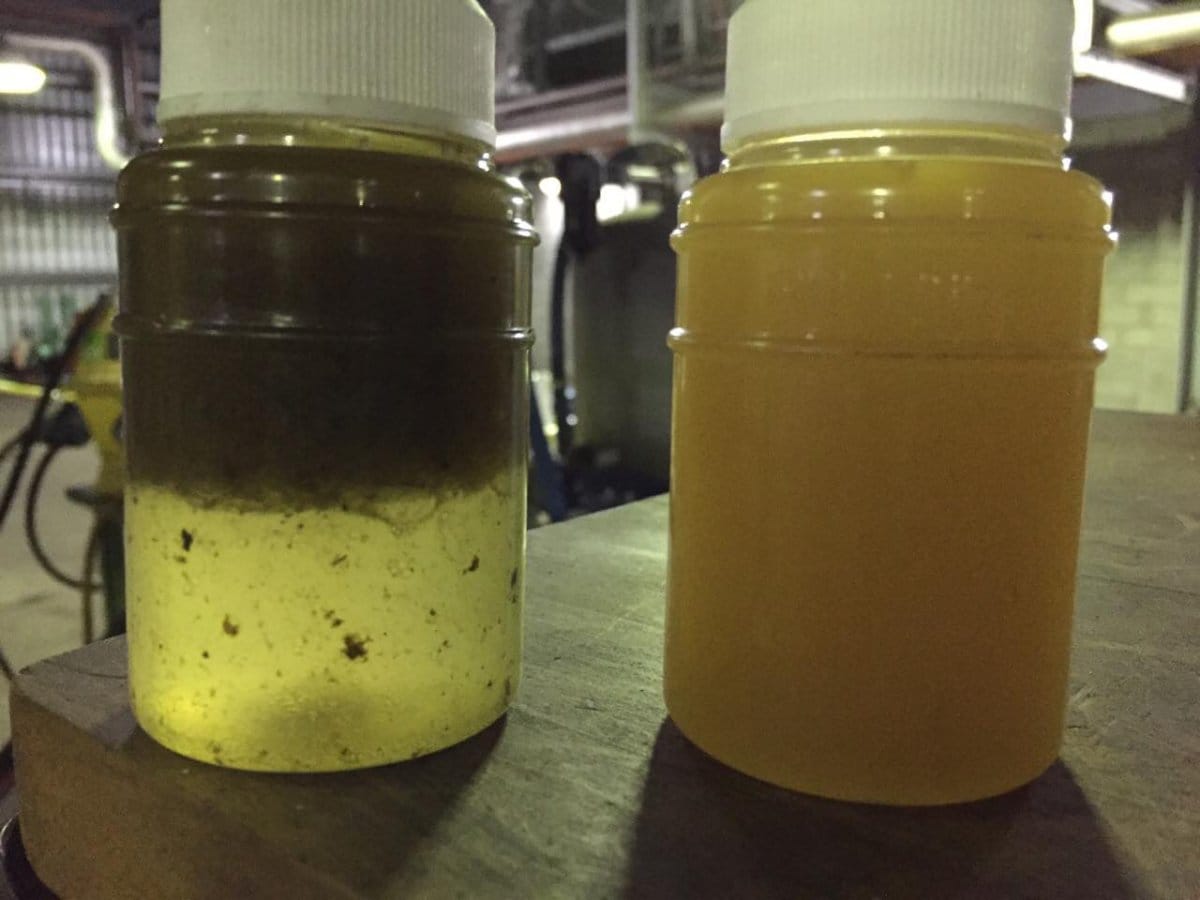
What if the persistent sludge in your hydraulic reservoir isn’t just particulate matter, but a living organism consuming your assets from the inside out? While many operators focus on inorganic particles, the effects on lube oil due to Organic growth are often more destructive and harder to detect. You’ve likely felt the frustration of rapid degradation in expensive lubricant batches or seen unexplained corrosion in your turbine systems despite following traditional filtration protocols. It’s a common challenge in modern industrial environments where even new oil often fails to meet ISO 4406 cleanliness standards upon delivery.
We understand that maintaining system integrity requires a balance of technical precision and ecological responsibility. This article explores how microbial contamination systematically destroys lubricant chemistry and compromises critical mechanical components. You’ll learn how to identify if your contamination is biological and discover professional strategies to remediate these chemical parasites. We’ll provide the insights needed to establish a robust remediation and prevention plan that safeguards both your equipment and your operational efficiency through advanced oil analysis and specialized maintenance protocols.
Key Takeaways
- Understand how bacteria, fungi, and yeast thrive at the water-oil interface, transforming your lubricant into an active biological habitat.
- Learn how microbial activity consumes vital anti-wear and rust-inhibiting additives while increasing the Total Acid Number (TAN).
- Identify the mechanical risks and severe effects on lube oil due to Organic growth, including Microbiologically Influenced Corrosion (MIC) and critical flow restrictions.
- Discover why standard ISO 4406 particle counting often misses soft biological masses and how patch test kits help visualize hidden spores.
- Explore professional remediation strategies like Hot Oil Flushing to physically dislodge stubborn biofilms and restore long-term system integrity.
What is Organic Growth in Lubricating Oils?
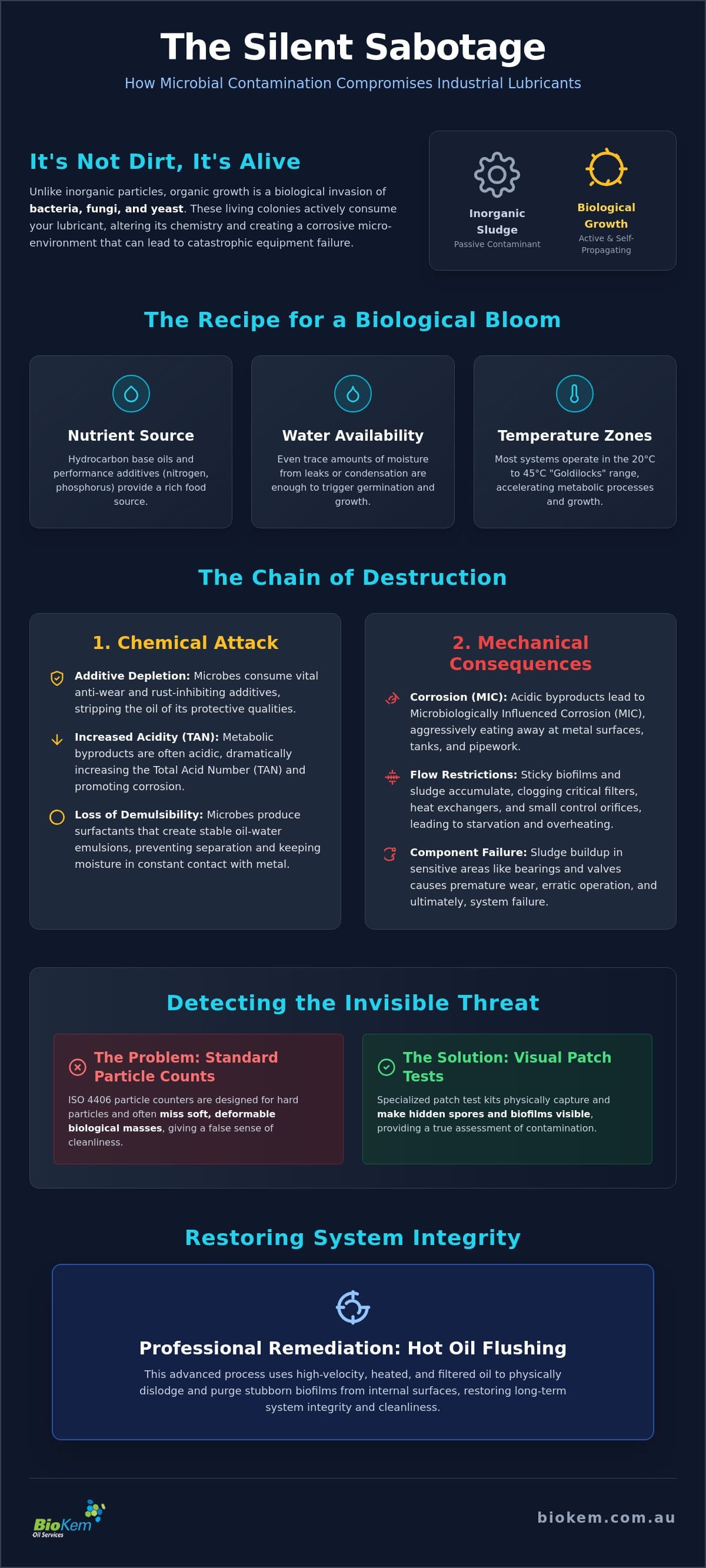
Microbial contamination in industrial lubricants isn’t just a matter of “dirty oil.” It’s a biological invasion. Unlike inorganic particulates like silica or metal shavings, organic growth consists of living colonies of bacteria, fungi, and yeast that actively reproduce within the system. These organisms are often collectively referred to as “the bug,” a term frequently used when discussing the Microbial contamination of fuel. In lubricating systems, these microbes establish their primary habitat at the water-oil interface, where they can access both the nutrients in the oil and the oxygen or moisture in the water. One of the most common and resilient organisms found in these environments is Cladosporium resinae, a fungus that thrives on hydrocarbons.
It’s vital to distinguish biological growth from other contaminants like varnish or standard sludge. Varnish is a non-living byproduct of oil oxidation and thermal degradation. Standard particulate contamination consists of external debris or wear metals. In contrast, the effects on lube oil due to Organic growth are dynamic and self-propagating. These living colonies don’t just sit in the oil; they consume it, altering its chemical profile and creating a corrosive micro-environment that threatens the entire mechanical assembly.
The Three Components of a Biological Bloom
For a biological colony to transition from dormant spores into a full-scale bloom, three environmental factors must align. These conditions turn a stable lubricant into a biological incubator.
- Nutrient source: Hydrocarbon base oils provide a rich carbon source. Additionally, many performance additives contain nitrogen and phosphorus, creating an “all-you-can-eat” buffet for microbial life.
- Water availability: Water is the essential catalyst for life. Even trace amounts of moisture, often introduced through reservoir breathing or cooling leaks, are enough to trigger germination at the interface layer.
- Temperature zones: Most industrial systems operate within a “Goldilocks” range of 20°C to 45°C. This warmth accelerates metabolic processes and cell division, leading to rapid biomass accumulation.
Signs You Have a Biological Problem
Early detection is difficult because microbes are microscopic, but their waste products and colonies eventually become visible. One of the first physical signs is the appearance of slimy, stringy deposits or a “mayonnaise” consistency in the oil. These biofilms are often dark or discoloured and can be easily visualized using specialized patch test kits during routine inspections.
Beyond visual cues, olfactory signals are a strong indicator. As anaerobic bacteria thrive in low-oxygen areas of the tank, they produce hydrogen sulphide, resulting in a distinctive rotten egg or “dirty sock” smell. Operationally, you’ll notice rapid filter blinding. If you’re replacing filters far more frequently than your maintenance schedule dictates, or if you see erratic pressure drops across heat exchangers, it’s likely that the effects on lube oil due to Organic growth are physically obstructing your fluid paths.
How Microbial Contamination Degrades Oil Chemistry
Microbial colonies don’t just occupy space within a reservoir; they act as chemical predators. This metabolic activity represents some of the most insidious effects on lube oil due to Organic growth. As these organisms proliferate, they secrete enzymes that break down the molecular structure of the base oil through enzymatic oxidation. This process doesn’t just darken the oil; it fundamentally alters its lubricating properties, turning a high-performance fluid into a chemically unstable medium that can no longer support industrial loads.
One of the most critical chemical shifts involves the loss of demulsibility. In a healthy system, oil and water should separate quickly. However, microbes produce biological surfactants during their life cycle. These surfactants act as emulsifiers, binding water and oil together so tightly that standard centrifugal or gravitational separation becomes impossible. This permanent emulsion keeps moisture in constant contact with metal surfaces, accelerating internal damage. For a deeper technical perspective on managing these environments, the industry often looks to Industrial Microbial Control strategies to maintain fluid longevity.
Additive Depletion and Fluid Instability
Performance additives are the primary targets for microbial consumption. Bacteria and fungi specifically seek out sulphur and phosphorus, which are foundational elements in anti-wear (AW) and extreme pressure (EP) additive packages. When microbes “eat” these additives, the oil loses its film strength and load-carrying capacity. Furthermore, the consumption of antioxidants leaves the base oil defenseless against thermal stress, leading to a rapid decline in oxidation stability. This targeted depletion means your oil may fail long before its projected service life, regardless of how clean it looks to the naked eye.
The Creation of Biosludge and Varnish
The degradation of oil chemistry concludes in the formation of biosludge. This isn’t standard debris; it’s a complex matrix of dead biomass, extracellular polymeric substances (EPS), and oxidation products. This biological “glue” traps inorganic particles and chemical varnish, creating a sticky residue that adheres to valves and sensors. It’s a synergetic failure where biological activity accelerates chemical varnish formation. To effectively clean a system, professional varnish mitigation must address this biological root cause rather than just treating the surface-level symptoms. Regular oil analysis is essential to monitor these shifts, and a professional Filter Ferrogram can help identify the exact nature of the sludge before it leads to a total system seizure.
Mechanical Consequences and Asset Failure Risks
While much of the literature surrounding hydrocarbon contamination focuses on environmental leaks, the internal “toxicity” to steel components is the primary threat to operational uptime. The physical presence of biomass creates a range of mechanical hazards that transcend simple fluid degradation. One of the most severe effects on lube oil due to Organic growth is the systematic restriction of fluid pathways. Biofilms adhere to the internal walls of oil galleys and heat exchangers, reducing the effective diameter of these conduits and compromising cooling efficiency. This thermal insulation effect prevents heat transfer, leading to elevated operating temperatures that further accelerate oil oxidation.
The physical manifestation of this growth is most visible during filter plugging events. Approximately 80% of hydraulic system failures stem from contamination, and biological masses present a unique challenge for standard filtration. Unlike hard particulates, “soft” biological contaminants deform under pressure, deeply embedding themselves into filter media. This leads to rapid pressure spikes and frequent unscheduled downtime. Utilizing specialist oil filters can help manage the immediate load, but without addressing the underlying growth, filter replacement remains a temporary fix for a systemic biological issue.
Microbiologically Influenced Corrosion (MIC)
Microbiologically Influenced Corrosion (MIC) acts as a silent killer within turbine and hydraulic systems. Anaerobic bacteria, such as sulphate-reducing bacteria (SRB), thrive in the low-oxygen environments beneath established biofilms. These organisms produce sulphuric acid as a metabolic byproduct, which is released directly onto the metal surface. Because this acid is trapped under the biological layer, it cannot be neutralized by the oil’s remaining alkalinity. This leads to severe pitting corrosion, where the damage is localized and deep, often compromising the structural integrity of reservoirs and piping before any external symptoms appear. Biofilm attachment also destroys the protective oxide layers that naturally form on metal surfaces, leaving them vulnerable to rapid atmospheric corrosion.
The Risk to High-Precision Components
High-precision components like servo valves operate with clearances as small as 1 to 5 microns. The introduction of sticky biosludge into these tolerances leads to valve stiction and erratic system response, often causing total machine trips. Similarly, high-speed bearings rely on a consistent, laminar flow of clean lubricant. When biomass restricts flow, the system may enter a bypass state, allowing unfiltered oil to circulate and resulting in bearing starvation. The loss of film strength, a direct result of the effects on lube oil due to Organic growth, ensures that metal-to-metal contact occurs, significantly accelerating wear rates. This combination of physical blockage and lost lubricity creates a feedback loop of mechanical failure that standard maintenance routines often fail to interrupt.
Detecting and Monitoring Biological Activity
Standard ISO 4406 particle counting is the bedrock of fluid cleanliness monitoring, but it possesses a significant blind spot when it comes to biological mass. Laser-based counters are calibrated to detect hard, reflective particles like silica or steel. In contrast, microbes and biofilms are “soft” contaminants that often deform as they pass through sensors or remain transparent to the laser. This results in artificially low particle counts that mask the true extent of the infestation. To truly understand the effects on lube oil due to Organic growth, you must look beyond the numbers and utilize visual diagnostic tools.
Using patch test kits allows technicians to physically capture biological fibers, spores, and slime on a membrane. When viewed under a microscope, these organic structures are unmistakable compared to metallic wear. For real-time data, ATP (Adenosine Triphosphate) monitoring provides an immediate measurement of microbial energy, offering a “living” count of activity. While field-based dip slides are useful for quick screening, they often require 48 to 72 hours for incubation. Formal laboratory culture tests, such as those following ASTM D8506 for turbine oils, remain the gold standard for identifying specific bacterial or fungal strains that may be resistant to standard treatments.
Advanced Oil Analysis Protocols
A comprehensive monitoring program should integrate Filter Ferrogram analysis. This technique allows for the microscopic examination of debris trapped in filters, providing a clear distinction between mechanical wear and biological sludge. Monitoring the Total Acid Number (TAN) and pH levels serves as an indirect indicator of microbial metabolism; as “the bug” consumes additives, it releases acidic waste that lowers the fluid’s pH. Regular water-in-oil testing is also essential. Identifying the source of moisture ingress is the first step in eliminating the habitat required for organic growth.
Sampling Best Practices for “The Bug”
Effective detection depends entirely on sampling location. Because microbes congregate at the oil-water interface, taking a sample from the middle of the reservoir often yields a false negative. Bottom samples from the lowest point of the tank are critical for capturing settled colonies and free water. It’s also vital to use sterile containers and avoid cross-contamination from external environments during the process. For systems at high risk of moisture ingress, such as those in humid climates or near cooling towers, we recommend increasing the testing frequency to a monthly schedule to catch blooms before they reach a critical mass.
Ensure your monitoring program is robust enough to catch hidden threats. Contact our team for a professional oil analysis and diagnostic review to secure your system’s health.
Remediation Strategies: Restoring System Integrity
Remediating a biological infestation requires a multi-faceted approach that moves beyond simple chemical intervention. Once a colony establishes itself, the effects on lube oil due to Organic growth cannot be reversed by merely adding biocides. While chemical treatments effectively kill active microbes, they leave behind dead biomass that continues to circulate and blind filters. To restore system integrity, you must physically dislodge the biofilms adhering to internal surfaces. This is a critical step because a “killed” colony still provides a structural matrix for new spores to colonize.
The most effective method for physical removal is Hot Oil Flushing. This process utilizes high-velocity turbulent flow to create the mechanical shear necessary to strip stubborn biofilms from pipe walls and reservoir floors. Standard laminar flow is insufficient for this task. The system must achieve a high Reynolds number to ensure that contaminants are suspended and carried to the filtration unit. Mechanical removal is the only reliable way to ensure that the corrosive micro-environments created by the microbes are completely eliminated from the circuit.
The BioKem Oil Services Approach to Biological Remediation
Our methodology focuses on removing the environmental catalysts that allow “the bug” to thrive. BioKem Oil Services utilizes vacuum dehydration to strip the system of free and emulsified water, effectively removing the lifeblood of microbial colonies. During the flushing process, we employ Filters S.p.A. high-performance elements. These specialized filters are designed to capture the “soft” biomass that standard elements often miss. Following remediation, we implement a strict monitoring schedule using ATP testing and patch analysis to ensure the colony does not return during the next thermal cycle.
System Design for Prevention
Long-term success depends on making the system an inhospitable environment for microbes. This begins with upgrading reservoir breathers and seals to prevent the ingress of atmospheric moisture and spores. We also recommend a thorough review of piping layouts to eliminate “dead legs” where stagnant oil and water can settle. Implementing a proactive maintenance strategy is the most cost-effective way to manage these risks. By integrating Advanced Fluid Management practices, BioKem Oil Services helps you move from reactive cleaning to a state of permanent reliability, ensuring that the effects on lube oil due to Organic growth never compromise your operational uptime again.
Securing System Longevity Against Biological Threats
Managing microbial contamination requires a shift from reactive filtration to a proactive, science-based approach. We’ve examined how these organisms dismantle lubricant chemistry and create corrosive micro-environments that standard ISO 4406 monitoring often misses. Addressing the effects on lube oil due to Organic growth is not just about fluid cleanliness; it’s about protecting the structural integrity of your entire mechanical asset. By integrating advanced diagnostics and high-velocity flushing, you can eliminate biofilms before they lead to catastrophic component failure.
BioKem Oil Services provides the technical expertise and specialized equipment needed to resolve these complex biological challenges. As the sole Australian distributor for Filters S.p.A., we offer premium filtration solutions backed by comprehensive laboratory testing and Ferrogram analysis. Our team specializes in onsite varnish mitigation and vacuum dehydration to ensure your systems remain dry and biologically inert. Contact BioKem Oil Services for professional Oil Analysis and Hot Oil Flushing services to restore your industrial lubricants to their peak performance. You don’t have to face these invisible threats alone; professional remediation is the first step toward a more reliable and sustainable operation.
Frequently Asked Questions
What exactly causes organic growth to start in industrial lube oil?
Organic growth begins when moisture and nutrients converge at the water-oil interface. Even trace amounts of water, often measured in parts per million, provide the necessary environment for dormant spores to germinate. Microbes then consume the carbon in the base oil and the nitrogen or phosphorus in additives to fuel their reproduction.
Can I just use a biocide to kill the “bug” without changing the oil?
Biocides are not a standalone solution. While they kill active microbial colonies, they leave behind dead biomass that continues to clog filters and restricted orifices. This dead matter also provides a structural foundation for future infestations. Effective remediation requires the physical removal of these solids through high-velocity flushing alongside oil conditioning.
Does organic growth affect synthetic oils differently than mineral oils?
Synthetic oils are not immune to biological activity. While synthetic base stocks offer higher thermal stability, certain ester-based synthetics are actually more biodegradable than mineral oils, potentially providing an easier food source for specific microbes. The primary difference lies in how the base oil resists the secondary oxidation triggered by microbial metabolic byproducts.
How can I tell the difference between biological sludge and chemical varnish?
Texture and odor are the primary field indicators. Biological sludge is typically slimy, stringy, and possesses a distinctive “dirty sock” or rotten egg smell due to hydrogen sulfide production. Chemical varnish is usually odorless and appears as a hard, lacquer-like coating on metal surfaces. A professional patch test or Ferrogram analysis is required for a definitive diagnosis.
Why do my filters keep clogging even though my particle count is low?
This discrepancy occurs because biological mass is a “soft” contaminant. Standard laser particle counters are calibrated for hard, reflective particulates and often fail to detect transparent or deformable biological matter. Rapid filter blinding despite a clean ISO 4406 code is one of the most common effects on lube oil due to Organic growth.
Is organic growth in oil a health hazard for my maintenance team?
Yes, certain microbial colonies can pose health risks. Fungal spores and bacteria can cause respiratory distress or skin irritation if they become aerosolized or handled without proper personal protective equipment. Additionally, anaerobic bacteria can produce toxic hydrogen sulfide gas within stagnant areas of the reservoir or piping.
How often should I test my hydraulic systems for microbial contamination?
We recommend testing high-risk systems monthly, especially those located in humid environments or near cooling towers. For stable, indoor systems, quarterly screening is usually sufficient. Regular monitoring of the Total Acid Number (TAN) and water-in-oil levels serves as an effective early warning system for biological activity.
What is the most effective way to remove biofilm from internal pipework?
High-velocity Hot Oil Flushing is the gold standard for biofilm removal. This process generates the mechanical shear and turbulent flow necessary to strip stubborn biological matrices from internal walls. To prevent a recurrence, it’s essential to follow this with vacuum dehydration to eliminate the moisture that allowed the effects on lube oil due to Organic growth to manifest initially.