

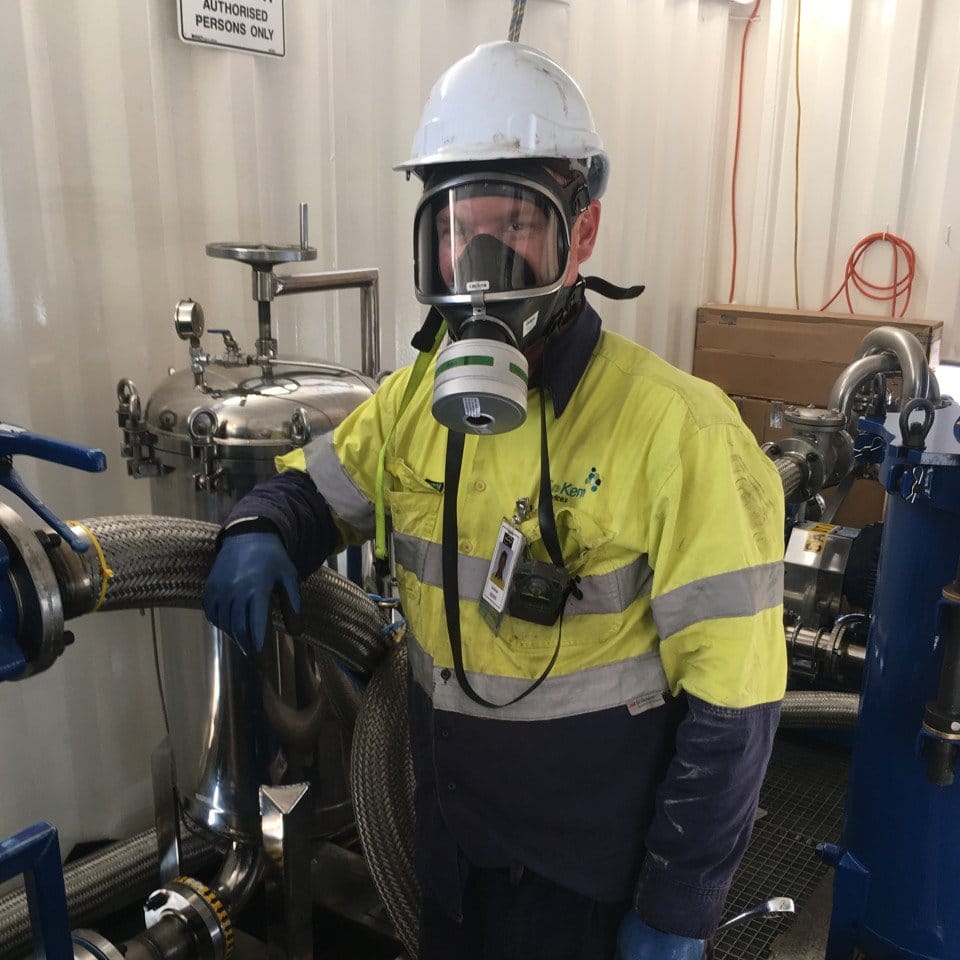
Hot Oil Flushing isn’t a routine maintenance expense; it’s a strategic insurance policy designed to protect the integrity of your most critical industrial infrastructure through high-velocity thermal physics. When you examine the merits of Hot Oil Flushing (HOF) – from the client’s perspective, it’s clear that this process is the only way to effectively combat unscheduled downtime and varnish-related valve sticking. We recognize the pressure of meeting stringent ISO 4406 cleanliness requirements while managing the lifecycle of complex assets. Adhering to these standards isn’t just about compliance; it’s about ensuring the operational health of your facility.
This article explores why high-velocity flushing is a critical investment for industrial reliability and risk mitigation. By utilizing turbulent flow with a Reynolds Number over 4,000, this method dislodges contaminants that standard filtration simply cannot reach. You’ll learn how HOF facilitates zero-failure commissioning, helps you adhere to AS/NZS 3788:2006 standards, and ultimately lowers your total cost of ownership through superior asset lifecycle management.
Key Takeaways
- Understand the merits of Hot Oil Flushing (HOF) – from the client’s perspective as a critical safeguard during pre-commissioning and post-overhaul phases to ensure zero-failure startups.
- Discover how the combination of high-velocity turbulent flow and thermal expansion removes deeply embedded contaminants that conventional filtration processes cannot reach.
- Evaluate the significant return on investment achieved by preventing catastrophic component failures and extending the operational lifespan of expensive industrial lubricants.
- Learn the optimal scheduling for flushing services and how to identify the technical capabilities and equipment quality required for effective system decontamination.
- Explore how integrating flushing with vacuum dehydration and varnish mitigation provides a holistic approach to long-term asset health and regional regulatory compliance.
The Strategic Business Case for Hot Oil Flushing (HOF)
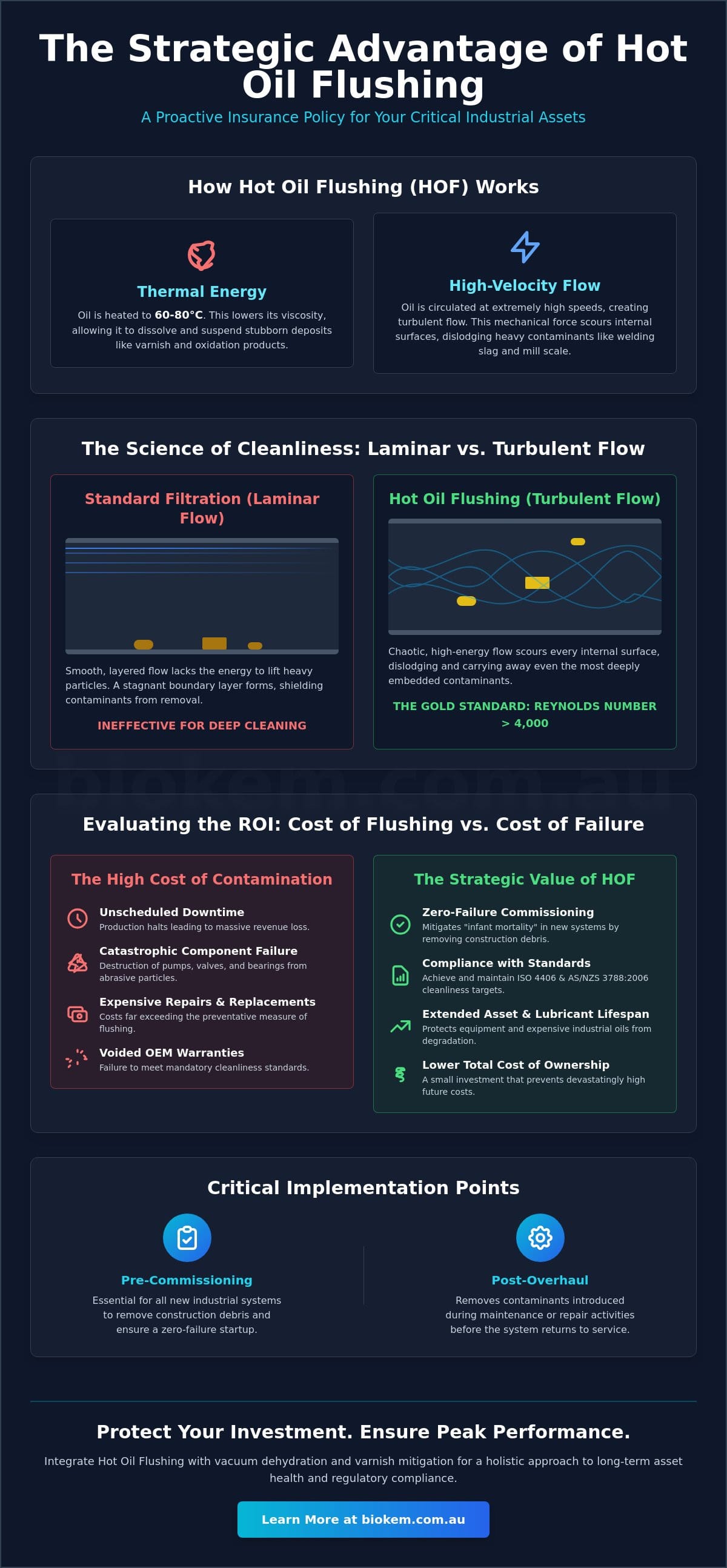
Hot Oil Flushing is a precision engineering process involving the high-velocity circulation of heated oil through industrial piping and lubrication systems. By maintaining temperatures typically between 60 and 80 degrees Celsius, the oil reduces in viscosity, allowing for the dislodgment of internal contaminants like welding slag and oxidation products. In 2026, the industrial sector has moved decisively away from reactive repair models. Today, BioKem Oil Services recognizes this procedure as the gold standard for pre-commissioning and post-overhaul maintenance, serving as a proactive safeguard for high-value assets.
When analyzing the merits of Hot Oil Flushing (HOF) – from the client’s perspective, the service functions as a strategic insurance policy. It isn’t merely a cleaning task; it’s a risk mitigation strategy that protects against catastrophic system failure. By ensuring that a system is chemically and physically clean before it ever enters a high-load state, operators avoid the financial devastation of a sudden outage. This shift toward asset preservation ensures infrastructure remains operational for its intended lifecycle without the interference of preventable mechanical degradation.
To better understand the technical execution of this process, watch this helpful video:
Protecting Critical Infrastructure
New industrial systems are paradoxically at their most vulnerable during initial startup. This “infant mortality” phase is often caused by construction debris left within the pipework. BioKem Oil Services mitigates this risk by purging the system before these particles can reach sensitive bearings or valves. For operators of turbines and compressors, this process is often a non-negotiable requirement to meet strict OEM warranty standards. Implementing a rigorous flushing protocol ensures high-stakes environments remain resilient against unscheduled outages.
The Cost of Contamination vs. The Value of Cleanliness
Precision hydraulic components are incredibly sensitive; even 4-micron particles can cause significant internal erosion or valve sticking. Residual mill scale and welding slag act as abrasive agents, effectively destroying pumps from the inside out if left untreated. By utilizing hot oil flushing and filtering, clients can achieve and maintain specific ISO 4406 cleanliness targets. These targets serve as a vital KPI for reliability teams, proving the system’s fluid is clean enough to support long-term, high-performance operation.
The Science of Merit: Why Heat and Velocity Matter
While the strategic benefits are clear, the true merits of Hot Oil Flushing (HOF) – from the client’s perspective are found in the physics of fluid dynamics. Standard oil changes and kidney-loop filtration systems don’t have the energy required to lift heavy solids from horizontal pipe runs. These methods typically operate under laminar flow conditions, where oil moves in smooth, parallel layers. In this state, a stagnant boundary layer forms against the pipe walls, shielding particles from the flow. Hot oil flushing breaks this layer through sheer mechanical force and thermal energy. It’s the difference between a gentle rinse and a high-pressure scrub that reaches every internal surface.
Relying on standard filtration alone leaves your system vulnerable to hidden debris. Integrating paddle flushing screens into the circuit allows our technicians to verify particle removal in real-time. This provides physical evidence of cleanliness that a laboratory report might miss, ensuring that the system is truly ready for high-stakes operation.
Understanding Reynolds Numbers in Oil Flushing
High velocity is non-negotiable for true decontamination. The effectiveness of a flush is determined by the Reynolds Number, a dimensionless value that predicts flow patterns. To achieve the necessary scouring action, the fluid must exceed a Reynolds Number of 4,000. This threshold marks the transition from laminar flow into turbulent flow. BioKem Oil Services calculates specific flow rates based on pipe diameter and fluid viscosity to ensure 100% internal surface cleaning. While laminar flow gently carries suspended particles, turbulent flow creates the chaotic energy needed to lift heavy debris, mill scale, and welding slag from the pipework. This ensures no hidden contaminants remain to threaten your pumps or bearings during startup.
The Role of Temperature in Contaminant Release
Temperature serves as the catalyst for this cleaning action. By heating the oil to between 60°C and 80°C, we drastically reduce its viscosity. Thinner oil moves with greater velocity and penetrates the system’s most intricate geometries, including tight bends and valve manifolds. This heat also triggers thermal expansion in the metal components. As the pipes expand, microscopic surface pores open, releasing trapped silt and silica that would otherwise remain dormant until the machine reached its full operating temperature. This thermal energy also softens varnish and oxidation by-products, making them easier to extract through specialised filtration. We balance this heat carefully to protect sensitive seals while maximising the scouring power of the fluid.
Evaluating the ROI: Cost of Flushing vs. Cost of Failure
The financial merit of Hot Oil Flushing is best measured against the extreme risk of catastrophic asset failure. While a comprehensive flush requires a planned window of approximately 48 hours, the alternative is often two weeks or more of emergency downtime following a major component breakdown. For a high-output facility, the cost of a single turbine bearing failure or a seized compressor far exceeds the investment in a professional flushing service. The merits of Hot Oil Flushing (HOF) – from the client’s perspective lie in this drastic reduction of financial exposure. By purging the system of contaminants before they cause damage, you’re effectively buying operational certainty and protecting your bottom line.
For organizations managing tight capital expenditure, utilizing industrial oil filtration equipment hire allows for flexible budget management. This approach enables reliability teams to deploy high-capacity flushing skids during critical maintenance turnarounds without the burden of long-term asset ownership. It’s a practical solution that ensures you have the right technology on-site exactly when the system demands it, ensuring that every dollar spent contributes directly to asset reliability.
Avoiding the ‘Varnish Trap’ in Hydraulic Systems
Varnish is a silent threat in modern hydraulic and lubrication systems. These thin, resinous films accumulate on internal surfaces, leading to valve sticking and erratic control responses. When a valve fails to shift, production cycles are lost, and the risk of a total system trip increases. There’s a powerful synergy between HOF and varnish mitigation. Understanding the merits of Hot Oil Flushing (HOF) – from the client’s perspective requires a focus on this long-term component health. While the flush removes physical particulates, integrated varnish removal ensures the fluid chemistry is stabilized, resulting in significant savings from reduced wear on sensitive actuators.
Oil Longevity and Environmental Stewardship
In 2026, the financial merit of cleaning oil versus buying new oil has become a primary driver for industrial decision-makers. Total oil replacement is expensive and environmentally taxing. By utilizing HOF and oil analysis, you can maintain oil chemistry through purification, extending the lubricant’s operational life. This strategy reduces waste disposal fees and aligns your maintenance program with modern sustainability goals. It’s a logical sequence: identify the contamination, apply the technical mechanism of flushing, and conclude with a lower total cost of ownership and a reduced carbon footprint.
Implementation Roadmap: Best Practices for Asset Owners
Successful implementation of a flushing project requires a structured approach to scheduling and verification. While pre-commissioning is the most common phase for HOF, asset owners should also consider it essential following a major component failure or as part of a periodic maintenance cycle aligned with AS/NZS 3788:2006. The merits of Hot Oil Flushing (HOF) – from the client’s perspective are only realized when the process is governed by strict technical standards. Choosing a partner based on equipment quality alone isn’t sufficient; they must demonstrate the technical capability to maintain the specific flow rates required to ensure turbulent flow across the entire circuit.
Validation is the final pillar of a successful roadmap. Relying on visual inspections isn’t enough for modern high-pressure systems. Implementing independent oil analysis provides the empirical data needed to confirm the system meets AS 4059 or ISO 4406 cleanliness codes. These protocols ensure the flushing process has achieved the desired particle count targets before the system is returned to service.
Defining the Scope of Your Flushing Project
A common pitfall in flushing projects is the presence of ‘dead ends’ where debris can settle. Asset owners must identify these areas and establish bypass requirements for sensitive components like bearings and control valves to prevent damage. BioKem Oil Services verifies that the pump and heater capacity is sufficient for the total system volume to maintain the required temperature and velocity. Establishing clear ‘Pass/Fail’ criteria based on real-time particle counting prevents project creep and ensures the team achieves the target ISO cleanliness level efficiently.
Post-Flush Preservation Strategies
The value of a successful flush is often lost if the system is re-contaminated during final assembly. High-performance Filters S.p.A. products should be installed immediately to maintain the fluid health achieved during the process. We recommend setting up a proactive monitoring schedule using patch test kits to track particulate levels over time. This ongoing vigilance ensures the merits of Hot Oil Flushing (HOF) – from the client’s perspective translate into years of reliable service.
To ensure your next maintenance turnaround meets these rigorous standards, contact our team to discuss specialist hot oil flushing services for your facility.
The BioKem Advantage: Authoritative HOF Solutions in Australia
BioKem provides a national response capability, deploying specialist technicians and high-flow flushing skids to industrial sites throughout Australia. Our methodology extends beyond basic cleaning by integrating HOF with vacuum dehydration and varnish mitigation. This multi-layered approach addresses the total health of the fluid system, ensuring that moisture and chemical degradation products are removed alongside physical particulates. When considering the merits of Hot Oil Flushing (HOF) – from the client’s perspective, this comprehensive service model offers a superior return on investment by addressing all potential failure modes in a single intervention. It’s a technical standard that ensures your system is not just clean, but chemically stable.
We maintain a firm commitment to sustainable industrial practices. By purifying existing oil rather than recommending total replacement, we help clients meet regional environmental standards and reduce their carbon footprint. Our technical authority is reinforced by our position as the sole Australian distributor for Filters S.p.A. products. This gives our clients direct access to world-class filtration hardware that meets the rigorous demands of the power generation and oil and gas sectors. We don’t just provide a service; we provide the precision components required to maintain that cleanliness long after our technicians have left the site.
Customised Technical Interventions
No two industrial systems are identical. We tailor our flow rates and temperatures to match your specific metallurgy and oil type, ensuring optimal scouring without risking seal integrity. Our onsite analysis and reporting provide immediate transparency, allowing for informed decision-making during critical turnarounds. For complex industrial plants, we integrate our heat transfer system expertise to manage the thermal requirements of large-scale flushing circuits effectively. This level of customisation ensures that every flush is engineered for the specific geometry and operational profile of your asset.
Partnering for Long-Term Reliability
Our goal is to move your operation beyond one-off cleaning events toward a proactive maintenance strategy. We provide training and support for onsite maintenance teams, empowering them to monitor system health between professional interventions. This partnership ensures that the merits of Hot Oil Flushing (HOF) – from the client’s perspective are sustained throughout the asset’s lifecycle, preventing the gradual accumulation of contaminants that leads to unscheduled downtime. By focusing on long-term reliability rather than immediate fixes, we help you lower the total cost of ownership for your most valuable infrastructure.
Contact BioKem today for a professional HOF consultation and secure the reliability of your critical infrastructure with our specialist flushing solutions.
Securing Industrial Reliability Through Advanced Flushing
Hot Oil Flushing represents a decisive shift from reactive maintenance to a sophisticated asset preservation strategy. By leveraging the physics of turbulent flow and thermal expansion, this process ensures that critical systems are free from the microscopic debris that causes infant mortality in new machinery. We’ve explored how maintaining a Reynolds Number over 4,000 and utilizing high-velocity heat are the only reliable ways to achieve verifiable ISO 4406 cleanliness. When you evaluate the merits of Hot Oil Flushing (HOF) – from the client’s perspective, it’s clear that the prevention of a single unscheduled outage justifies the strategic investment many times over.
BioKem provides the technical expertise and hardware required to execute these complex interventions. As the sole Australian distributor for Filters S.p.A., we combine world-class products with specialist onsite technicians available nationally. Every project includes documented, ISO 4406 compliant reporting to provide total transparency and operational confidence. Don’t leave your infrastructure’s health to chance. Request a Technical Consultation for Your Hot Oil Flushing Project today and take a proactive step toward long-term system integrity.
Frequently Asked Questions
What is the primary purpose of Hot Oil Flushing?
The primary purpose of Hot Oil Flushing is the total removal of internal contaminants from industrial piping and lubrication systems. By utilizing high-velocity, heated fluid, the process dislodges mill scale, welding slag, and fine particulate matter that normal operation cannot move. This ensures that the system is physically clean before startup, protecting sensitive components from abrasive wear.
How long does a typical industrial Hot Oil Flush take?
A comprehensive flush typically requires a planned maintenance window of approximately 48 hours. This timeframe allows the system to reach the necessary temperatures and maintain turbulent flow until the target particle counts are verified through onsite analysis. The exact duration depends on the system’s total volume and the complexity of the piping circuit.
Can Hot Oil Flushing be performed while the system is online?
No, Hot Oil Flushing is an offline procedure. Achieving the required Reynolds Number of over 4,000 necessitates bypassing sensitive components like bearings and control valves to prevent damage during the scouring process. Attempting to flush while online would risk injecting dislodged contaminants directly into the machine’s most vulnerable parts.
What is the difference between Hot Oil Flushing and standard filtration?
The difference lies in the physics of turbulent flow versus laminar flow. Standard filtration cleans the oil that passes through it during normal operation but lacks the energy to lift heavy solids sitting on pipe walls. HOF uses heat to lower oil viscosity and high velocity to create the chaotic energy needed to lift and remove stagnant debris from the entire system.
How do I know if my system requires a Hot Oil Flush?
You can determine the need for a flush through regular oil analysis or during specific asset milestones. High particulate counts, the presence of varnish, or recent invasive maintenance are all indicators that a system needs decontamination. Understanding the merits of Hot Oil Flushing (HOF) – from the client’s perspective involves recognizing these signs before they lead to unscheduled downtime or component failure.
What ISO cleanliness levels can be achieved with HOF?
Hot Oil Flushing can achieve stringent ISO 4406 cleanliness codes such as 14/12/9 or better, depending on the specific requirements of the equipment. These results are verified using digital particle counters and physical patch tests. Achieving these levels is often a mandatory requirement for validating OEM warranties on new or overhauled turbines and compressors.
Is Hot Oil Flushing safe for all types of industrial oils?
HOF is safe for most industrial lubricants, provided the temperature and flow parameters are tailored to the fluid’s specific chemistry. We conduct an initial review of the oil’s viscosity and additive package to ensure the heat doesn’t cause thermal degradation. This careful management protects the lubricant’s integrity while maximizing its ability to transport contaminants out of the system.
How often should Hot Oil Flushing be performed on critical assets?
Critical assets should undergo flushing during pre-commissioning, following a major component failure, or as part of a periodic maintenance strategy aligned with AS/NZS 3788:2006. The merits of Hot Oil Flushing (HOF) – from the client’s perspective are most evident when the process is used proactively to extend asset life. Regular oil analysis helps determine the optimal interval for your specific operational environment.