

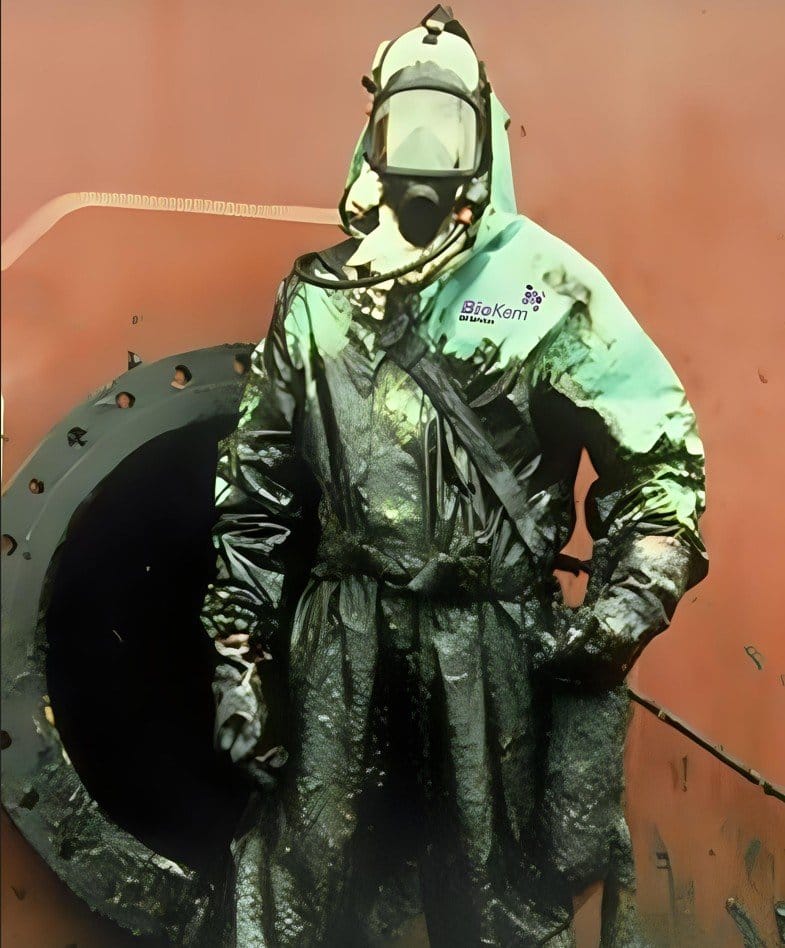
Did you know that atmospheric hazards account for up to 82% of fatalities in Australian confined spaces? Maintaining industrial tanks is a high-stakes responsibility where the margin for error is non-existent. You likely feel the constant pressure of balancing rigorous production schedules with the heavy burden of Australian WHS legislation. Navigating the specific confined space tank cleaning requirements 2026 is no longer just a matter of checking boxes. It’s a critical component of a sophisticated lubrication reliability strategy that protects both your personnel and your bottom line.
We understand that zero-incident maintenance cycles and regulatory compliance aren’t just goals; they’re operational necessities. This guide will help you master the latest 2026 safety regulations and technical standards to ensure total compliance and maximum asset reliability. We’ll examine the mandatory protocols of AS 2865-2009, the accelerating trend toward entry-free cleaning technologies, and how precise technical cleaning extends the life of your critical infrastructure. By aligning your maintenance with the November 2024 Code of Practice, you can transform a high-risk necessity into a streamlined, value-adding process.
Key Takeaways
- Understand the interaction between AS 2865-2009 and the Safe Work Australia 2024 Code of Practice to ensure your site remains compliant with national safety standards.
- Identify the mandatory confined space tank cleaning requirements 2026, focusing on non-negotiable entry permits and the strict 5% LEL limit for flammable gas concentrations.
- Implement technical cleaning protocols, including vacuum dehydration and varnish mitigation, to achieve superior internal surface cleanliness and ISO fluid standards.
- Mitigate specific chemical hazards like pyrophoric iron sulphides and volatile organic compounds (VOCs) through rigorous atmospheric testing and degassing procedures.
- Leverage professional oil analysis and filtration as part of a post-cleaning strategy to extend asset life and improve overall lubrication reliability.
The 2026 Regulatory Landscape for Confined Space Entry in Australia
The Australian industrial sector faces a tightening regulatory environment in 2026. Safe Work Australia’s November 2024 Code of Practice remains the definitive guide for managing risks, yet the application of these rules has become more stringent. Adhering to the confined space tank cleaning requirements 2026 is essential for any Person Conducting a Business or Undertaking (PCBU). These requirements are underpinned by AS 2865-2009, which serves as the technical benchmark for establishing safe systems of work. A Confined space is not merely a small area; it’s defined by its potential for a hazardous atmosphere, engulfment, or restricted entry and exit. Regulatory bodies now place a higher emphasis on the hierarchy of control, legally requiring that entry be eliminated whenever possible.
To better understand the practical application of these safety standards in a tank environment, watch this helpful video:
Key Legal Definitions and WHS Obligations
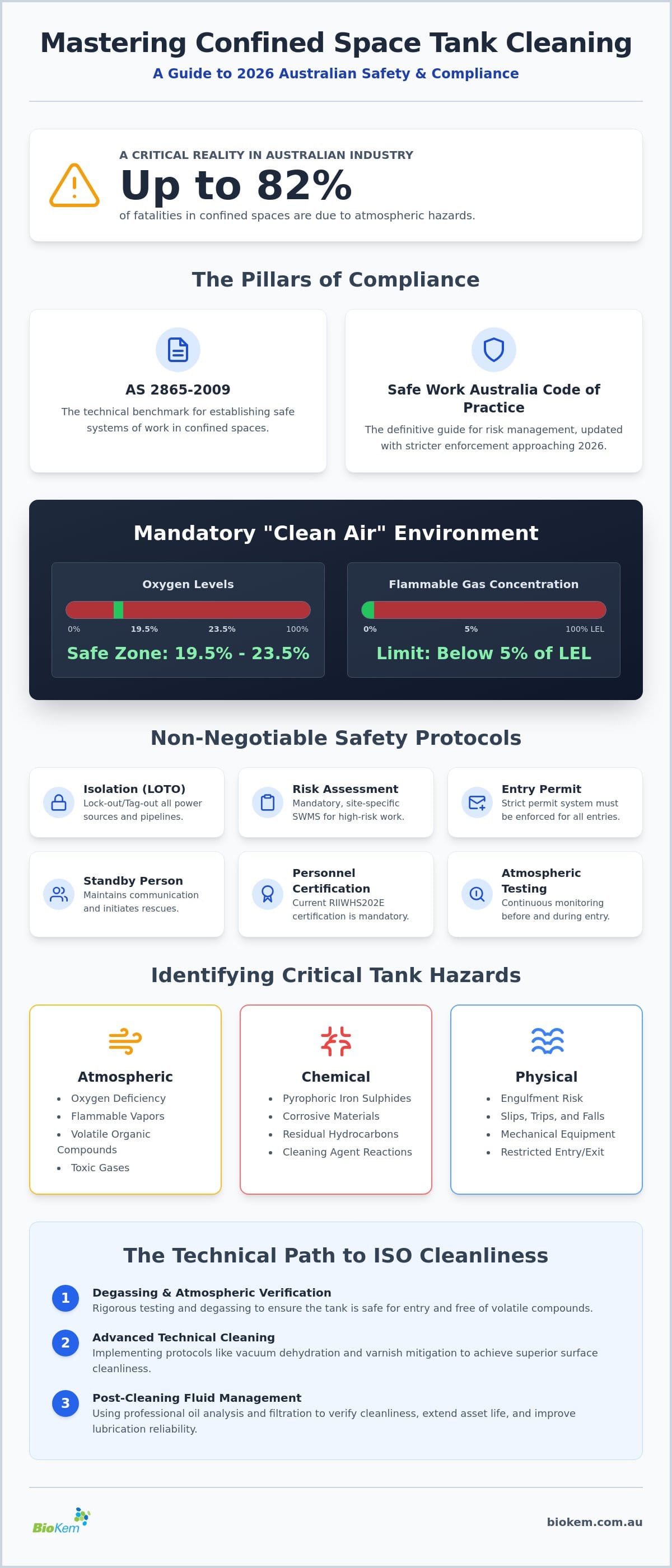
In fuel and oil systems, a storage tank is often a textbook example of a confined space. Under current WHS Regulations, PCBUs hold a non-delegable duty of care to ensure workers aren’t exposed to health and safety risks. This includes managing atmospheric hazards where oxygen levels must be maintained between 19.5% and 23.5%. You must also keep flammable gas concentrations below 5% of the Lower Explosive Limit (LEL). You must also account for the risk of engulfment from stored liquids or solids. Penalties for non-compliance in 2026 have increased; this reflects a national push toward industrial accountability. Failure to provide adequate training or specialized equipment can lead to significant fines and legal liability.
Mandatory Documentation and Risk Management
Compliance starts with a robust Safe Work Method Statement (SWMS). This document must outline the specific high-risk construction work being performed and the measures used to control those risks. A site-specific risk assessment is also mandatory. It shouldn’t be a generic template. It must address the unique configuration of your assets and the specific chemicals involved. All personnel entering the space or acting as a standby person must hold current RIIWHS202E certifications. The standby person plays a critical role, maintaining constant communication and initiating emergency rescue procedures if needed. This ensures everyone understands the technical nuances of the confined space tank cleaning requirements 2026. Proper documentation is the foundation of a zero-incident maintenance cycle. Integrating these safety steps with a comprehensive oil analysis program ensures that once the tank is clean, the fluid remains within ISO specifications.
Essential Requirements for Safe Tank Cleaning Operations
Safety in industrial tank maintenance isn’t a suggestion; it’s a rigid operational framework. To meet the confined space tank cleaning requirements 2026, your facility must implement a multi-layered defense strategy. This begins with physical isolation. You must ensure all pipelines, agitators, and power sources are locked out and tagged out (LOTO) to prevent accidental fluid ingress or mechanical movement. Mechanical isolation through blanking or blinding is the preferred method for high-risk fuel and oil systems. These steps eliminate the risk of a space becoming hazardous while workers are inside.
Atmospheric Testing and Gas Detection
Before any worker breaks the plane of the entry point, you must conduct comprehensive atmospheric testing. The 2026 standards emphasize a “Clean Air” environment. This means oxygen levels must sit between 19.5% and 23.5%. Any flammable gas or vapor concentration must remain below 5% of its Lower Explosive Limit (LEL). You shouldn’t rely on a single test at the start of the shift. Continuous monitoring is essential because atmospheric conditions can shift rapidly as sludge is disturbed or chemicals are applied. According to the Model Code of Practice: Confined Spaces, your gas detection equipment must be calibrated according to the manufacturer’s specifications to ensure accuracy. If you don’t have the necessary hardware on-site, utilizing professional equipment hire for specialized filtration and monitoring ensures your team uses the latest, most reliable technology.
The Entry Permit and Communication Log
A Confined Space Entry Permit is a non-negotiable legal requirement. It serves as a written record that all hazards have been identified and controlled. In the 2026 regulatory landscape, this permit must include:
- The specific names of the entrants and the appointed Standby Person.
- Current atmospheric test results and the time they were recorded.
- The duration of the permit and the specific scope of work.
- Clear emergency rescue protocols tailored to the site’s geometry.
The Standby Person, or Sentry, is the most critical safety link. They must remain outside the space at all times, maintaining constant communication with the entrants. They’re responsible for monitoring the environment and initiating a rescue if conditions deteriorate. Statistics show that approximately 25% of confined space deaths involve would-be rescuers who enter without proper gear. A trained sentry prevents this by strictly following the emergency plan. If the gas monitor alarms or communication is lost, the permit is immediately terminated and the space evacuated. This disciplined approach is the only way to achieve a zero-incident cycle while maintaining compliance with the confined space tank cleaning requirements 2026.
Identifying Hazards Specific to Oil and Fuel Tank Cleaning
While understanding the legal framework is essential, the physical reality of an industrial tank presents a unique set of dangers. In the context of confined space tank cleaning requirements 2026, identifying specific chemical and physical hazards is the first step toward a zero-incident cycle. Oil and fuel tanks aren’t just empty containers; they’re dynamic environments where residual fluids and sludge create volatile atmospheres. According to WorkSafe Victoria’s safety basics, a thorough risk assessment must account for these variables before any entry occurs. This is particularly true when dealing with volatile organic compounds (VOCs) that linger even after a tank is drained.
Managing Chemical and Explosive Risks
The primary concern in oil systems is the concentration of flammable vapors. You must manage the Lower Explosive Limit (LEL) with precision. If concentrations exceed 5% of the LEL, entry is prohibited. A hidden danger in crude and fuel tanks is the presence of pyrophoric iron sulphides. These compounds form when iron scale reacts with hydrogen sulphide in the absence of oxygen. When you open a tank for cleaning and introduce fresh air, these sulphides can spontaneously ignite. To mitigate this, you must use ventilation strategies like forced air dilution and ensure all tools are intrinsically safe. Using explosion-proof lighting and non-sparking equipment is a non-negotiable standard for 2026. If the oil quality has degraded, performing a comprehensive oil analysis beforehand can provide clues about the chemical state of the residues.
Physical and Structural Obstacles
Tanks often contain complex internal structures like baffles, heating coils, and support pillars. These create “dead zones” where vapors trap and sludge accumulates. Sludge itself presents a dual threat: it’s a slip hazard and a potential source of engulfment. If sludge “bridges” across a section of the tank, it can collapse unexpectedly on a worker. This is why the industry is shifting toward robotic cleaning for high-risk environments. Robots can navigate these structural obstacles without putting human lives at risk. Additionally, microbial growth, often called “fuel bugs”, can thrive at the fuel-water interface. These biological hazards cause skin irritation and respiratory issues if not handled with proper PPE. Addressing these hazards is a core part of the confined space tank cleaning requirements 2026, ensuring that asset longevity doesn’t come at the cost of personnel safety. Once the physical debris is removed, implementing a varnish removal system can further stabilize the internal environment for long-term reliability.
The Technical Tank Cleaning Process: Steps to ISO Cleanliness
Achieving ISO 4406 cleanliness standards requires a systematic approach that begins long before a technician enters the vessel. The confined space tank cleaning requirements 2026 mandate that the process must prioritize atmospheric stabilization and fluid recovery. This dual focus ensures personnel safety while preserving the value of the lubricant. A technical cleaning cycle transforms a contaminated asset into a high-performance component of your lubrication system. It’s the difference between a simple rinse and a precision engineering intervention.
Degassing and Fluid Recovery
The first step involves removing bulk fluid to minimize vapour generation and stabilize the atmosphere. Using specialized vacuum dehydration units allows you to reclaim usable oil by removing water and gases at the molecular level. This process is essential for reaching the Zero-LFL state required for safe entry. A Zero-LFL state refers to a condition where the atmosphere contains 0% of the Lower Flammable Limit; this ensures the environment is entirely safe for personnel entry and any required spark-generating work. Once the bulk fluid is recovered, the remaining sludge is vacuumed out and managed according to Australian environmental waste disposal protocols.
Varnish Removal and Surface Treatment
Internal tank surfaces often harbour varnish; a soft, sticky contaminant that traditional flushing cannot remove. Varnish leads to valve sticking, restricted flow, and reduced heat transfer efficiency in large storage assets. Effective varnish removal requires high-pressure technical cleaning and specialized chemical applications that break the molecular bond between the varnish and the metal. This treatment prepares the internal surfaces for the introduction of new, high-purity lubricants. By eliminating these sub-micron deposits, you prevent the immediate contamination of fresh oil and extend the service life of your downstream components.
Post-Cleaning Validation and Testing
Visual inspection is a necessary but insufficient standard for modern industrial tanks. To verify true surface cleanliness, you should use patch test kits to analyse residual particulates on the tank walls. This data-driven validation ensures that the asset meets the technical specifications required for your specific application. A clean tank is also the non-negotiable foundation for a successful hot oil flushing program. If the tank isn’t technically clean, the flushing process will simply circulate existing contaminants through your system. You can ensure your assets meet these rigorous standards by partnering with experts in specialist tank cleaning and oil maintenance.
BioKem’s Integrated Approach to Tank Maintenance and Oil Health
Compliance with confined space tank cleaning requirements 2026 provides the safety foundation, but operational excellence requires looking beyond the entry permit. We view tank cleaning as a high-precision engineering task rather than a simple maintenance chore. It’s the critical first step in a broader reliability journey. By removing the source of internal contamination, you protect your entire lubrication circuit from premature wear. Professional cleaning isn’t a cost; it’s a strategic investment in asset longevity that pays dividends through reduced downtime and extended oil life.
Beyond Cleaning: A Proactive Maintenance Strategy
Integrating tank cleaning into a proactive maintenance strategy is essential for modern industrial operations. A clean tank prevents the “contaminant reservoir” effect, where settled particulates and sludge re-enter the fluid stream during surges or temperature shifts. This protection is vital for downstream assets like high-speed turbines and compressors where even microscopic debris can cause catastrophic failure. As the sole Australian distributor for Filters S.p.A. products, we provide the technical hardware to maintain these ISO cleanliness levels long after the cleaning cycle concludes. We combine physical cleaning with advanced oil analysis to validate the health of your lubricants and ensure your system remains within technical specifications.
National Service and Technical Support
Our national reach allows us to deploy specialized technicians and equipment to any site across Australia. We understand the technical nuances of Australian WHS legislation and the specific confined space tank cleaning requirements 2026. This local expertise anchors our global scientific aspirations in a dependable, localized context. For facilities that don’t require permanent filtration infrastructure, our equipment hire service provides access to vacuum dehydration units and high-performance filtration systems. This allows you to execute complex cleaning projects with the best tools available. We provide customized solutions for the most challenging industrial environments, from remote mining sites to urban power generation plants. Contact BioKem today to schedule a 2026-compliant tank maintenance audit and secure your facility’s operational future. Our team will help you navigate the complexities of regulatory compliance while maximizing your asset reliability.
Securing Your Operational Future Through Compliance and Reliability
Maintaining industrial infrastructure requires a definitive transition from reactive repairs to precision engineering. Adhering to the confined space tank cleaning requirements 2026 is the baseline for personnel safety and legal protection. However, true asset reliability is only achieved when you combine these mandatory safety protocols with technical excellence. This involves achieving ISO 4406 cleanliness through targeted varnish mitigation and advanced fluid recovery. By viewing tank maintenance as the foundation of a proactive strategy, you protect your downstream assets from the hidden costs of contamination.
As the sole Australian distributor for Filters S.p.A. and specialists in hot oil flushing, we provide the technical authority required to solve complex industrial challenges. Our national onsite service capabilities ensure your facility remains compliant while significantly extending the service life of your critical lubricants. We’re committed to helping you bridge the gap between regulatory necessity and operational efficiency. Ensure your facility meets 2026 standards with BioKem’s professional tank cleaning and oil services.
We look forward to partnering with you to create a safer, cleaner, and more reliable industrial environment.
Frequently Asked Questions
What are the mandatory PPE requirements for confined space tank cleaning in 2026?
Mandatory PPE in 2026 includes chemical-resistant coveralls, nitrile or neoprene gloves, and static-dissipative safety boots. Depending on the atmospheric testing results, workers may also require self-contained breathing apparatus (SCBA) or supplied-air respirators. Every piece of equipment must be verified for compatibility with the specific hydrocarbons or chemicals identified during the pre-cleaning oil analysis to ensure maximum protection against dermal and respiratory hazards.
How often should industrial oil storage tanks be professionally cleaned?
Most industrial storage tanks require professional cleaning every three to five years. However, this interval varies based on the fluid’s degradation rate and the presence of varnish. If your regular oil analysis indicates rising particulate counts or oxidation products, you should schedule a cleaning sooner. Proactive maintenance prevents sludge from reaching critical levels that could compromise downstream pumps and valves in your lubrication circuit.
Can we clean a confined space tank without an entry permit if it’s empty?
You cannot enter a confined space without a permit simply because it’s empty. Hazards like oxygen deficiency or residual toxic vapors often persist even after a tank is drained. The 2024 Code of Practice clarifies that a space is defined by its potential risks rather than its current volume of liquid. A full risk assessment and entry permit remain non-negotiable legal requirements for any industrial vessel entry.
What is the difference between a standby person and a supervisor in tank cleaning?
The standby person is a dedicated safety role stationed outside the tank to maintain communication and initiate rescue procedures. In contrast, the supervisor manages the broader technical scope, including permit authorization and resource allocation. While the supervisor ensures the job meets technical standards, the standby person’s sole focus is the immediate safety of the entrants. They’re never permitted to enter the space during an emergency.
How do I manage the risk of LEL during the cleaning of fuel tanks?
Managing the Lower Explosive Limit (LEL) requires a combination of initial degassing and continuous mechanical ventilation. You must keep gas concentrations below 5% of the LEL to allow for safe entry. Technicians use calibrated multi-gas detectors to monitor the atmosphere in real-time. If the LEL exceeds this threshold, you must evacuate the space and increase ventilation before work resumes to prevent an explosive atmosphere from forming.
What documentation must be kept on-site during a confined space entry?
You must keep the Confined Space Entry Permit, the Safe Work Method Statement (SWMS), and atmospheric testing logs at the entry point. Additionally, workers must provide proof of their RIIWHS202E certifications. Maintaining these documents on-site is a core component of the confined space tank cleaning requirements 2026, ensuring that every safety control is transparent and verified. This documentation serves as a legal record of your site’s compliance.
Are there robotic alternatives for tank cleaning that avoid confined space entry?
Robotic tank cleaning is a rapidly growing alternative that eliminates the need for human entry. These systems use remote-controlled nozzles and vacuum attachments to remove sludge and varnish. By utilizing robotics, you follow the hierarchy of control to eliminate the risk of confined space accidents entirely. This technology is particularly effective for large crude or fuel tanks with complex internal structures where manual cleaning is high-risk.
How does tank cleanliness affect ISO 4406 oil cleanliness codes?
A dirty tank acts as a constant source of contamination, making it impossible to maintain low ISO 4406 oil cleanliness codes. Even if you install high-performance filters, particulates from the tank walls will continue to seed the fluid stream. Professional cleaning resets the internal environment. This allows your filtration systems to achieve and maintain the technical purity required for sensitive industrial machinery like turbines and compressors.