

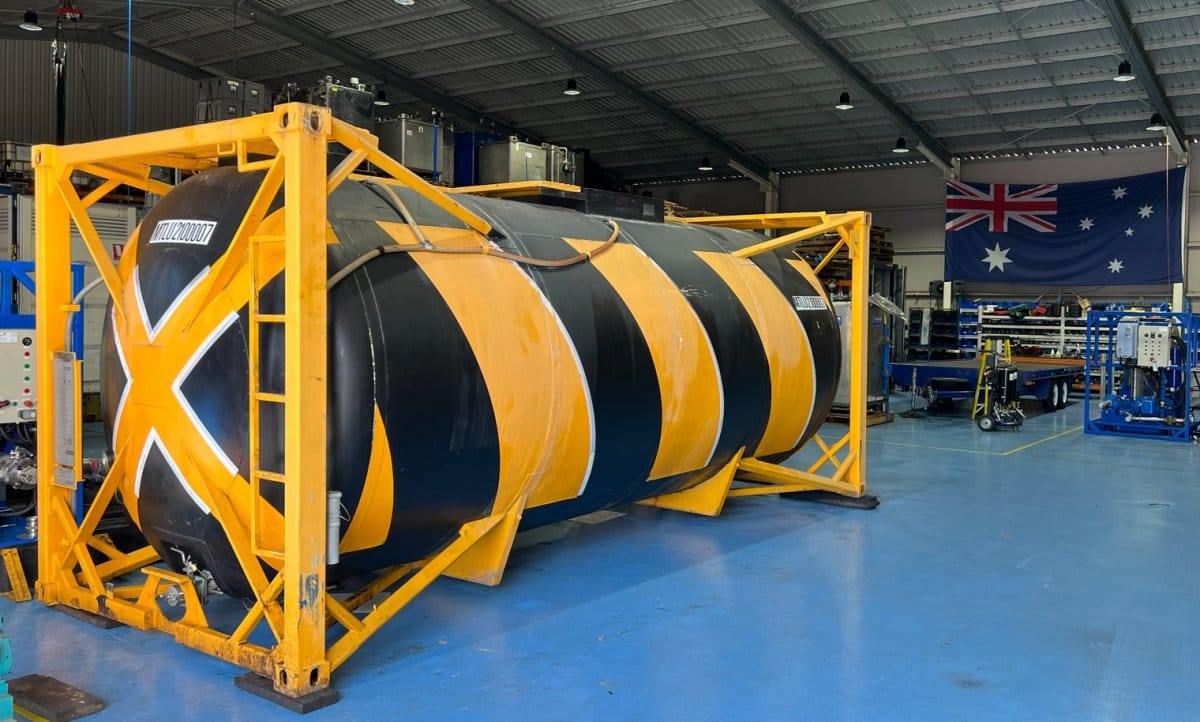
Did you know that approximately 80% of hydraulic system failures in Australian heavy industry are the direct result of particle contamination? You’re likely familiar with the immense pressure to maintain asset reliability while managing hazardous waste disposal fees, which have surged by up to 50% in early 2026. It’s a frustrating cycle to replace expensive lubricants, especially when new oil often arrives from the drum failing to meet the stringent ISO 4406 standards your machinery requires. Using a specialized approach like batchfiltration isn’t just a maintenance task; it’s a strategic asset recovery process that restores your fluids to like-new condition.
This guide explains how you can reclaim contaminated oil to meet OEM specifications, significantly reducing your environmental footprint and operational costs. We’ll examine the technical mechanisms of advanced purification and how improving your oil’s cleanliness code can extend the life of your pumps and bearings by 50% or more. You’ll also learn how to obtain the precise certification of cleanliness needed to satisfy regulatory audits and ESG targets in today’s circular oil economy.
Key Takeaways
- Understand how batchfiltration isolates specific fluid volumes to achieve rapid, high-efficiency purification that standard bypass systems cannot match.
- Learn the technical steps required to restore contaminated lubricants to OEM standards by utilizing ISO 4406 cleanliness analysis as a baseline.
- Identify the critical scenarios, such as system commissioning or post-repair recovery, where intense batch processing is the most effective choice for asset protection.
- Discover how a proactive fluid management strategy reduces hazardous waste disposal and supports your organization’s environmental sustainability targets.
- Access professional certification and audit-ready reports that verify your equipment meets specific cleanliness targets for long-term reliability.
What is Batch Filtration in Industrial Oil Management?
Industrial oil management relies on maintaining fluid integrity to prevent mechanical failure. Unlike continuous systems that treat a small percentage of flow during operation, batchfiltration involves isolating a fixed volume of lubricant within a reservoir or external tank. This fluid is then processed through high-efficiency filtration units in a closed loop. The primary objective is to circulate the oil repeatedly until it reaches a specific ISO 4406 cleanliness target. This method provides a level of intensity and control that standard inline systems cannot achieve, especially when dealing with high-viscosity fluids or heavily degraded systems.
The fundamental principle of Filtration in an industrial context is the removal of solid-liquid suspensions. For critical assets like steam turbines, centrifugal compressors, and high-pressure hydraulic systems, even microscopic particulates can cause catastrophic surface wear. By utilizing a dedicated batch process, operators can ensure that 100% of the fluid volume passes through the filter media multiple times. This ensures the removal of both large debris and ultra-fine silt that often bypasses standard maintenance filters.
To better understand how this process differs from continuous methods, watch this helpful video:
Batch systems differ from bypass or inline filtration primarily in their polishing capability. While inline filters protect components from immediate damage, they often lack the depth or efficiency to restore oil to its original OEM specifications once it has become significantly contaminated. Implementing batchfiltration allows for the use of specialized media, such as those provided by world-class manufacturers like Filters S.p.A., to achieve extreme purity levels without restricting the main system flow.
The Core Mechanism of Batch Purification
The process relies on precise pressure differentials to drive contaminated oil through specialized synthetic media. As the fluid moves through the loop, a multi-pass approach ensures that particles missed in the first cycle are captured in subsequent rotations. This is vital for achieving ultra-fine cleanliness. Common contaminants addressed during this cycle include metallic wear debris from gears, environmental dust from site operations, and even soft contaminants like varnish precursors.
Why Industrial Systems Require Targeted Batching
Targeted batching is essential for managing slugs of contamination that enter a system after a component failure or major overhaul. It’s also a critical step for commissioning new systems. It’s a common industry misconception that new oil is clean; in reality, fresh drums often contain particulate levels that exceed turbine manufacturer limits. In a 2026 reliability programme, the primary goal of batch filtration is to transform contaminated fluid into a high-performance asset while eliminating the environmental and financial costs of premature oil disposal.
The Technical Process: How Industrial Batch Filtration Works
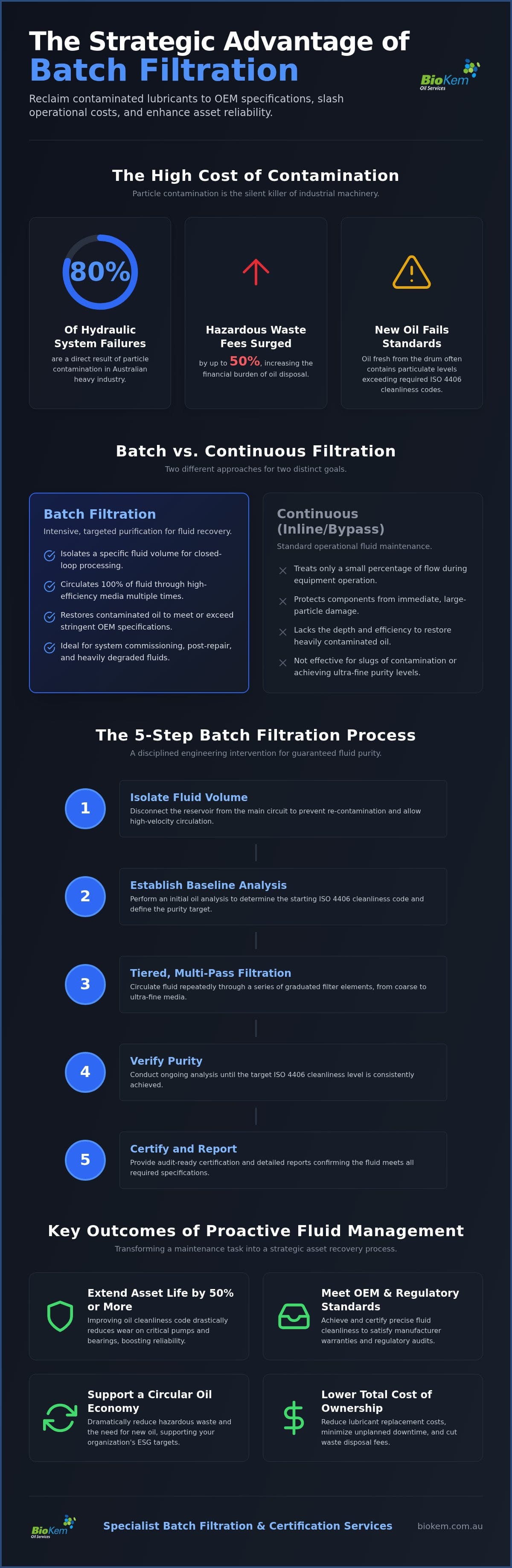
Executing batchfiltration requires a disciplined, five-step sequence to ensure that every litre of fluid meets stringent purity requirements. It isn’t a simple pass-through procedure. It’s a controlled engineering intervention. The process begins with the physical isolation of the fluid reservoir or tank. By disconnecting the volume from the main lubrication circuit, technicians prevent the migration of contaminants back into sensitive machine components while the cleaning cycle is active. This isolation allows for the high-velocity circulation necessary to dislodge settled particulates from the tank floor.
Once isolated, an initial oil analysis is performed to establish a baseline ISO 4406 cleanliness code. This data is vital. It identifies the specific concentration of microscopic debris that must be removed. The fluid is then circulated through a series of tiered filter elements, moving from coarse to fine media. This graduated approach prevents premature blinding of the high-efficiency finishing filters. Throughout the cycle, technicians use real-time laser particle counters to monitor the decline in particulate levels. Adhering to rigorous Standards for the Management of Used Oil ensures that the processed fluid remains a viable industrial asset rather than a hazardous waste liability. The cycle concludes only when the target cleanliness is achieved, followed by a final certification of the fluid’s condition.
Monitoring Oil Cleanliness ISO 4406 Codes
The ISO 4406:2017 standard uses a three-digit code to quantify particles at 4µm, 6µm, and 14µm per millilitre of fluid. Understanding these numbers is critical for asset longevity. For example, many high-performance systems require a target of 16/14/11, yet new oil often arrives at 21/19/16. Improving an oil’s ISO cleanliness code by just one step can extend the life of pumps, valves, and bearings by 50% or more. If you’re unsure of your current fluid health, on-site particle monitoring can provide an immediate baseline for your maintenance strategy.
The Role of Specialized Filtration Media
Achieving ultra-fine cleanliness depends on the quality of the filter media. Utilizing high-performance elements from Filters S.p.A. allows for superior dirt-holding capacity and precise Beta ratios. In a batch context, depth filtration is preferred over surface filtration because it captures contaminants throughout the entire thickness of the media. This is essential for removing the silt-sized particles that cause “sandblasting” wear in high-pressure hydraulic systems. High Beta ratios ensure that the filter remains efficient even as pressure differentials fluctuate during the high-velocity circulation phase.
Batch vs. Continuous Filtration: Which Should You Choose?
Selecting the appropriate filtration method depends on the specific contamination profile of your system and the operational phase of your assets. Continuous filtration, often referred to as bypass or kidney-loop filtration, operates at a steady state to maintain baseline cleanliness during normal production. It handles the daily ingress of environmental dust and internal wear particles. However, it lacks the hydraulic intensity required to remediate heavily degraded systems. In contrast, implementing a cycle of batchfiltration provides a high-velocity, dedicated cleaning process that treats the entire fluid volume as a single project. This method is the preferred choice for critical recovery efforts.
The necessity of high-purity standards is mirrored in other high-stakes industries. For example, the Federal Aviation Administration oil filter regulations demonstrate how stringent filtration requirements are fundamental to safety and mechanical reliability in aviation. In an industrial setting, batch processing is indispensable during system commissioning, following a major component failure, or when fluid analysis reveals a sudden spike in particulate matter. While continuous systems are excellent for preservation, they cannot match the rapid restoration capabilities of a dedicated batch loop. For many facilities, utilizing Equipment Hire for short-term batch projects offers a more flexible and cost-effective solution than installing permanent, high-capacity hardware on every asset.
Operational Impact and Downtime Considerations
Batch filtration is most effective when performed during planned shutdowns or turnarounds. By cleaning the oil offline, you eliminate the risk of circulating contaminated fluid through sensitive bearings or valves while the machine is stationary. This proactive approach ensures that when the system restarts, the lubricant is already at or above OEM cleanliness standards. For systems requiring a deeper level of decontamination, batch processes often work alongside Hot Oil Flushing to remove stubborn debris from internal pipework and galleries.
Cost Efficiency of Oil Reclamation
The financial argument for reclamation is compelling. With hazardous waste disposal fees increasing by up to 50% in 2026, the cost of discarding thousands of litres of oil has become a significant operational burden. Advanced fluid management practices can reduce oil waste by 50% to 80% through continuous purification and targeted batching. This supports a circular oil economy by extending the lifecycle of your lubricants indefinitely. The ROI of a one-week batch filtration project is significantly higher than a full oil change-out, as it avoids the capital expense of new synthetic fluid and the logistical costs of waste transport.
Implementation Strategy: Achieving ISO Cleanliness Targets
Successful implementation of batchfiltration requires a systematic integration into your broader maintenance framework. It’s not enough to treat filtration as an isolated event. It must be a core component of a proactive maintenance strategy. By shifting from reactive oil changes to a circular fluid economy, you address the rising costs of hazardous waste disposal while simultaneously improving asset reliability. This approach ensures that lubricants are treated as long-term assets rather than consumables. In the current economic climate of 2026, where disposal fees have reached record highs, the financial justification for this reclamation is as strong as the ecological one. Effective implementation starts with a clear understanding of your current fluid health and the specific ISO targets required by your machinery.
Adopting this strategy allows for the recovery of fluids that would otherwise be sent for incineration or low-grade recycling. By utilizing high-velocity circulation and tiered filtration media, you can restore oil to its original chemical and physical properties. This process is particularly vital for systems that have been compromised by environmental ingress or internal component degradation. Integrating these services into your planned shutdowns ensures that your assets restart with the highest possible fluid integrity, effectively resetting the wear clock on critical bearings and seals.
Sampling and Laboratory Verification
Precision is paramount when verifying the success of a filtration cycle. You must obtain representative samples before and after the process to validate the results. Onsite testing using laser particle counters provides immediate feedback, allowing technicians to track the decline of particulates in real-time. However, a comprehensive lubricant analysis report from a laboratory offers a deeper look into wear metals and chemical degradation. This dual-layered verification confirms that the batch process has successfully removed the microscopic silt that causes accelerated component wear. Ensuring the sample is taken from a turbulent zone of the system is essential for accuracy, as stagnant zones often provide misleading data.
Certification and Documentation for Compliance
In Australia, maintaining a clear audit trail is essential for both regulatory compliance and equipment warranty protection. A formal certificate of cleanliness serves as documented proof that your fluid meets or exceeds OEM specifications. This record is invaluable during insurance reviews or when assessing the resale value of industrial assets. It transforms a routine maintenance task into a verified engineering result. Documenting these purity levels also helps in meeting corporate ESG targets by proving a reduction in total oil consumption and waste generation. Maintaining a historical record of these certifications allows for trend analysis, helping you identify potential system failures before they result in unscheduled downtime. If you’re ready to secure your facility’s operational future, you can book a professional oil analysis and filtration service to establish a baseline for your critical assets.
BioKem’s Specialist Batch Filtration & Certification Services
BioKem provides specialized onsite deployment of high-flow filtration units and expert technicians throughout Australia. We don’t just supply equipment; we deliver a comprehensive engineering solution that restores lubricant performance while adhering to strict environmental standards. As the sole Australian distributor for Filters S.p.A., BioKem provides exclusive access to world-class filtration hardware specifically engineered for high-intensity batchfiltration projects. This partnership allows us to utilize media with superior dirt-holding capacities and precise Beta ratios, ensuring that even the most stubborn particulates are removed from the system.
Our expertise extends to the management of complex fluids, such as phosphate esters and EHC fluids, which require specialized handling and material compatibility. We provide detailed reporting and certification of cleanliness that meets the most stringent international standards, giving you an audit-ready trail of your asset’s fluid health. By choosing a professional partner, you ensure that your reclamation process is both technically sound and compliant with local regulatory requirements. This level of precision is essential for maintaining the operational integrity of high-value industrial machinery.
Why Partner with BioKem for Fluid Purification?
BioKem brings decades of experience serving the mining, power generation, and marine industries. We understand that oil purity is often part of a larger technical challenge. To address this, we can combine batchfiltration with varnish mitigation and vacuum dehydration to remove moisture and oxidation by-products simultaneously. This multi-faceted approach ensures that your lubricants aren’t just clean, but chemically stable. Our commitment to Australian environmental standards means we prioritize waste reduction, helping your facility transition toward a truly circular oil economy.
Equipment Hire and Flexible Onsite Solutions
Every industrial system has unique requirements based on oil viscosity and total volume. BioKem tailors equipment selection to these specific parameters, ensuring optimal flow rates and filtration efficiency. Our turnkey service delivery minimizes operational friction, allowing your team to focus on core maintenance tasks during shutdowns. Whether you need a short-term intervention or a long-term fluid management partnership, our flexible Equipment Hire options provide the right technology for the job. Contact BioKem today to schedule an onsite batch filtration assessment and secure the reliability of your critical assets.
Securing Your Operational Future with Advanced Purification
Adopting a proactive approach to fluid management is essential in a landscape of rising disposal costs and stricter environmental regulations. You’ve seen how batchfiltration transforms contaminated oil into a high-performance asset, effectively resetting the wear clock on your most critical turbines and hydraulic systems. By isolating fluid volumes and utilizing high-velocity circulation, you ensure that 100% of the lubricant meets the exact ISO 4406 cleanliness codes required for modern industrial reliability. This process doesn’t just clean oil; it protects the long-term health of your machinery.
BioKem brings over 15 years of industrial lubrication expertise to every project, serving as the sole Australian distributor for Filters S.p.A. products. We provide the technical precision and ISO 4406 compliant reporting necessary to protect your equipment warranties and satisfy audit requirements. It’s time to move beyond the cycle of premature oil replacement and embrace a more sustainable, cost-effective fluid strategy. Request a Batch Filtration Quote from BioKem to restore your assets to peak operational health. Your commitment to oil purity today ensures a more reliable and environmentally responsible facility tomorrow.
Frequently Asked Questions
What is the difference between batch filtration and continuous filtration?
Batch filtration involves isolating a specific volume of oil and circulating it through specialized media in a closed loop until it reaches a target purity. This method is highly intensive and designed for rapid restoration during shutdowns or after a component failure. In contrast, continuous or bypass filtration treats a small percentage of the oil during normal operation to maintain baseline cleanliness. While continuous systems are excellent for preservation, they lack the hydraulic velocity needed for the deep cleaning achieved by a dedicated batch cycle.
How long does a typical batch filtration process take for a large turbine?
The duration depends on the total fluid volume and the initial contamination level, but a typical cycle for a large turbine reservoir usually takes between 24 and 72 hours. High-velocity pumps and multi-pass filtration allow the entire volume to be processed several times within this window. This timeframe ensures that even microscopic particulates are successfully captured without causing extended downtime during a planned maintenance turnaround. BioKem technicians monitor the progress in real-time to ensure the process concludes as soon as the ISO targets are met.
Can batch filtration remove water and varnish as well as particulates?
Standard particulate filtration focuses on solid debris, but BioKem can integrate vacuum dehydration and varnish mitigation into the batchfiltration process to address moisture and soft contaminants. Water removal is critical because moisture can interfere with laser particle counters and cause chemical degradation of the oil. Combining these technologies provides a comprehensive purification solution that restores the lubricant’s chemical stability and physical purity in a single mobilization.
Is it cheaper to filter old oil or buy new oil in 2026?
It’s almost always more cost-effective to filter existing oil than to purchase new synthetic lubricants in 2026. With hazardous waste disposal fees increasing by up to 50% in some regions this year, the combined cost of new fluid and waste transport far exceeds the price of reclamation. Advanced fluid management can reduce oil waste by 50% to 80%, providing a significant return on investment while helping your facility meet its environmental ESG targets through the circular oil economy.
What ISO cleanliness code should I aim for in my hydraulic system?
Most high-performance hydraulic systems require a target cleanliness code of 16/14/11 or lower to protect sensitive servo valves and high-pressure pumps. While more rugged industrial gearboxes might tolerate higher levels like 19/17/14, cleaner oil always results in longer component life. It’s important to remember that new oil from a drum often arrives at 21/19/16, which is why filtering new oil before use is a vital part of a proactive maintenance strategy.
Does BioKem provide onsite certification after the filtration is complete?
BioKem provides onsite laboratory testing and formal certification of cleanliness once the purification cycle is finished. This documentation confirms that the oil meets specific ISO 4406 standards and OEM requirements, which is essential for maintaining equipment warranties and insurance compliance. These reports provide a clear, documented audit trail for your asset management records and corporate sustainability reporting.
Can I hire batch filtration equipment for my own maintenance team to use?
You can hire high-performance filtration equipment directly from BioKem for use by your onsite maintenance teams. We provide a range of specialized hardware, including units from Filters S.p.A., tailored to your specific oil viscosity and volume requirements. This equipment hire option allows facilities to manage their own proactive maintenance schedules while still accessing world-class purification technology and specialist filters.
What happens if my oil is too contaminated for batch filtration to be effective?
If oil is extremely contaminated, an initial oil analysis determines if the base fluid is still chemically viable. If the additives are severely depleted or the base oil has oxidized beyond recovery, replacement may be the only option. However, most particulate and moisture issues can be successfully remediated through intensive batch processing combined with tank cleaning or vacuum dehydration. BioKem’s technicians use these diagnostic results to advise whether reclamation or replacement is the most responsible path forward.

Article by
James McAllister
James McAllister is an industry professional with BioKem Oil Services, specialising in lubrication reliability, oil filtration, contamination control and asset performance. Drawing on BioKem's extensive field experience across turbines, compressors, hydraulic systems and critical rotating equipment, James writes practical, insight-driven articles that help maintenance and reliability teams improve equipment performance, extend asset life and reduce operational risk.