

Most lubrication failures stem from preventable process errors, not a lack of lubricant. Common lubrication mistakes to avoid include using oil or grease that does not meet equipment specifications, applying the wrong amount, and allowing contamination through poor storage or handling. Follow the manufacturer’s guidance for lubricant type, quantity and intervals, and keep products clean, sealed and clearly labelled.
Lubrication may seem like a routine task, but inconsistent practices can increase friction, wear and operating heat. A reliable program depends on matching the lubricant to the machine and its conditions, then applying and monitoring it consistently.
This guide outlines practical ways to prevent contamination, improve storage and select lubricants suited to your equipment. It also explains warning signs that can help maintenance teams respond before lubrication problems cause avoidable equipment damage.
Key Takeaways
- Rotate lubricant stock using first-in, first-out practices and keep storage areas clean, dry, sheltered and away from heat and steam.
- Use clean tools and dedicated, clearly identified equipment when transferring or applying lubricant to reduce the chance of introducing contaminants.
- Match lubricant viscosity and type to the machine’s load, temperature range and operating environment, and avoid mixing products unless they’re compatible.
- Use Oil Analysis to assess lubricant condition, and consider Hot Oil Flushing when system contamination calls for a flushing service.
1. Contamination control and lubricant storage
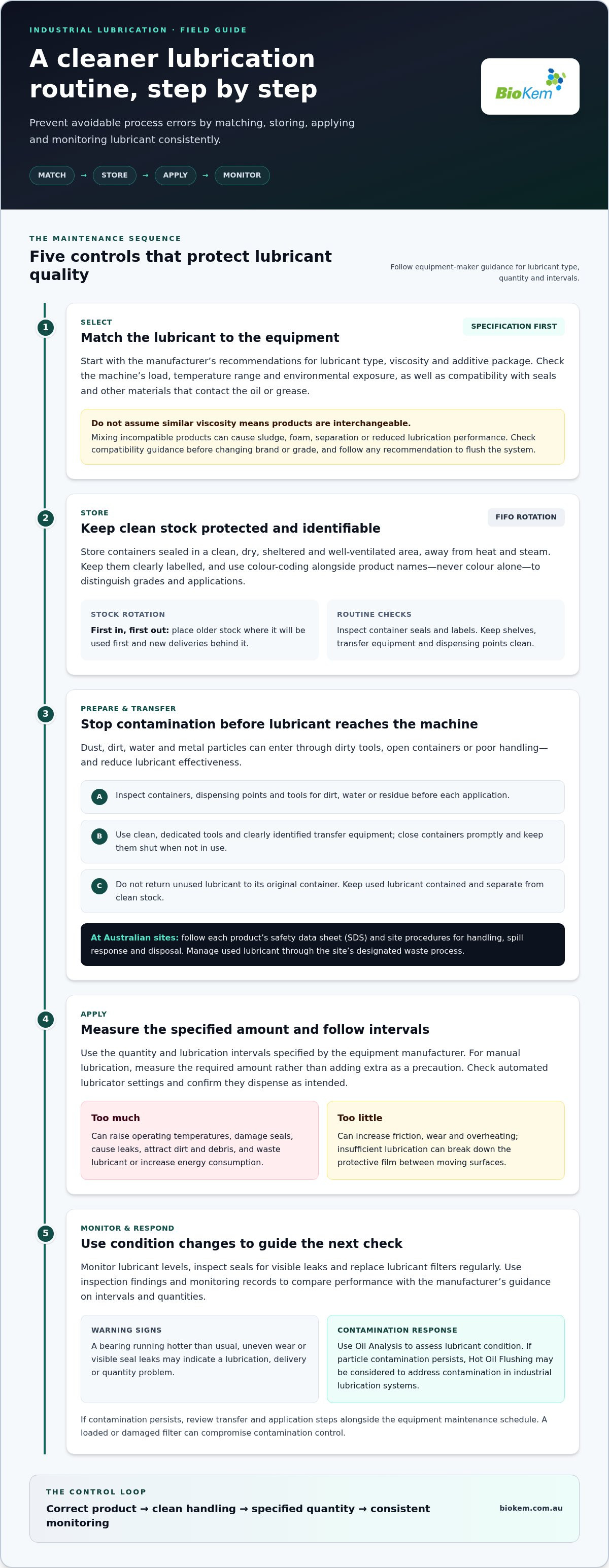
At Australian sites, follow each product’s safety data sheet (SDS) and site procedures for handling, spill response and disposal. Keep used lubricant contained and separate from clean stock, then manage it through the site’s designated waste process. Use clean, dedicated tools and close containers promptly. A dirty funnel or uncovered drum can introduce dust, water or metal particles before lubricant reaches operating equipment.
Store containers in a clean, dry, sheltered and well-ventilated area. Keep them sealed, clearly labelled and away from heat and steam, which can contribute to lubricant deterioration. Use a consistent colour-coding system alongside product names to help staff distinguish grades and avoid mix-ups. For example, label transfer containers with the lubricant type and the equipment or application they serve. Never rely on colour alone to identify a suitable lubricant.
Manage inventory using first-in, first-out rotation: place older stock where it will be used first and new deliveries behind it. This helps prevent products sitting unused while heat, oxidation and contamination gradually affect quality. Keep storage shelves, transfer equipment and dispensing points clean, and inspect container seals and labels during routine stock checks. Dust, dirt, water and metal particles can reduce lubricant effectiveness, increase friction and contribute to equipment damage. Controlled storage and documented handling procedures support correct lubrication, stable operating temperatures and productivity. These measures help maintain lubricant quality and a reliable lubrication program.
2. Preventing lubricant contamination
Apply the quantity specified by the equipment manufacturer and follow its lubrication intervals. The right amount and frequency depend on the machine, lubricant and operating conditions. Over-lubrication can raise temperatures, damage seals, cause leaks and waste lubricant. Under-lubrication increases friction, wear and overheating, potentially leading to equipment breakdown.
Dispensing is a key contamination risk. Before each application, inspect lubricant containers, dispensing points and tools for dirt, water or residue. Use clean, dedicated tools and keep transfer containers closed when not in use. Don’t return unused lubricant to its original container, as contact with a dispensing tool or machine can introduce contaminants. Clearly label each container to prevent lubricant mix-ups.
Use only lubricant approved for the specific machinery, and apply it according to the manufacturer’s guidelines. For manual lubrication, measure the required amount rather than adding extra as a precaution. Excess grease can leak past seals, attract dirt and debris, and increase operating temperatures and energy consumption. Automated lubricators also need correct settings and regular checks to confirm they dispense as intended.
Monitor lubricant levels and inspect seals for visible leaks. Replace lubricant filters regularly, as a loaded or damaged filter can compromise contamination control. If contamination persists, review the transfer and application steps alongside the equipment’s maintenance schedule. A consistent process helps protect lubricant performance and machinery lifespan. For help addressing an industrial oil-contamination concern, discuss your contamination-control needs.
Following the manufacturer’s guidance on lubricant quantity and frequency can help prevent over-lubrication. Apply the specified amount to manufacturing machinery to avoid seal damage, leaks, contamination, higher operating temperatures and increased energy consumption.
For manual application, use clean tools and follow the relevant quantity guidelines. Industrial maintenance teams can use automated lubrication systems to help avoid over-lubricating machinery. Visible leaks around machinery seals may indicate seal damage from over-lubrication, so check the amount being dispensed.
3. Selecting lubricants to match equipment specifications
Compatibility matters too. Check the lubricant against equipment materials, including seals and other components that contact the oil or grease. Mixing incompatible products can cause sludge, foam, separation or reduced lubrication performance. Before changing brands or grades, check compatibility guidance and follow any recommendation to flush the system. Similar viscosity on the label does not mean products are interchangeable.
Insufficient lubrication can break down the protective film between moving surfaces. Metal-to-metal contact then increases friction, heat and component wear. A bearing running hotter than usual or showing uneven wear may indicate inadequate lubrication, an unsuitable lubricant type or poor delivery to the contact area. Use monitoring records and inspections to identify changes, then compare findings with the manufacturer’s recommendations for lubrication intervals and quantities.
Label each lubricant and dispensing tool with its product type and intended application. For example, a dedicated, clearly marked dispenser helps prevent an incorrect grade reaching a hydraulic system. Include lubricant selection and application steps in the site lubrication program, so staff can follow the same process. For support with industrial lubrication needs, contact BioKem Oil Services.
BioKem Oil Services: Hot Oil Flushing
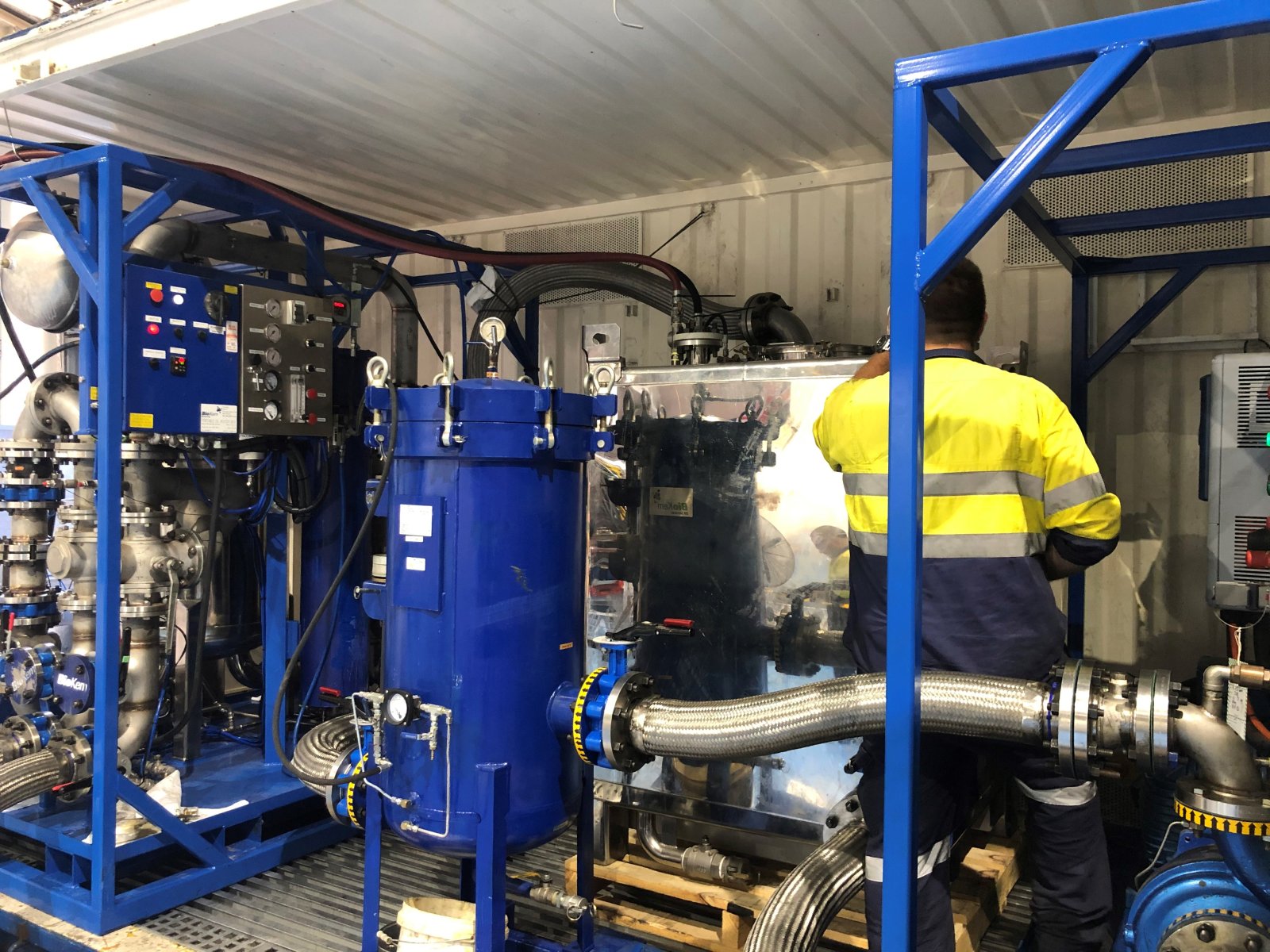
BioKem Oil Services provides Hot Oil Flushing to help address contamination in industrial lubrication systems. Consider this service when particle contamination persists or when a system needs cleaning during maintenance or commissioning. Flushing circulates oil through the system to carry contaminants towards filtration, supporting cleaner operating conditions for critical equipment.
If lubricant condition is also a concern, Oil Analysis can help assess contamination and wear, while Vacuum Dehydration addresses water contamination. Varnish Mitigation is another option for systems affected by varnish deposits. The appropriate approach depends on the contamination identified and the equipment involved.
To discuss Hot Oil Flushing for your equipment, contact BioKem Oil Services.
Build a more resilient lubrication program
Use common lubrication mistakes to avoid as a prompt to strengthen how your site makes and records maintenance decisions. Review a critical asset’s lubrication history, identify recurring changes in condition, and assign responsibility for tracking follow-up work. This provides a clearer basis for deciding whether routine maintenance is sufficient or specialist oil treatment is needed.
BioKem Oil Services provides Hot Oil Flushing, Varnish Mitigation and Vacuum Dehydration for industrial oil systems. These services support maintenance when contamination, varnish or water-related concerns need targeted attention. Choose the next action based on equipment condition and operating requirements, then record findings so future decisions are evidence-based.
Contact BioKem Oil Services today to discuss an appropriate next step and keep building a lubrication program that supports reliable operations.
Frequently Asked Questions
What are the most common lubrication mistakes?
Common lubrication mistakes to avoid include overlooking hard-to-reach lubrication points, missing scheduled checks and failing to update procedures when operating conditions change. A change in production duty, for example, can alter a component’s temperature or load. Review asset-specific lubrication records after equipment changes, and ensure maintenance instructions identify every lubrication point, including those that are difficult to access.
Can you mix different types or brands of lubricants?
Don’t mix lubricant types or brands unless their compatibility has been established. Similar appearance or viscosity does not guarantee that their base oils and additives will work together. If you need to top up but are unsure which lubricant is in the system, identify the existing product before adding anything. Record the product used during a changeover to help prevent accidental mixing during future maintenance.
What are the signs that a lubricant needs replacing?
Changes in lubricant condition or equipment behaviour can signal the need for inspection. Look for unusual noise, vibration, rising operating temperatures, a burning-oil smell or visible changes such as cloudiness. These signs can have different causes, so don’t rely on appearance alone. Oil Analysis can assess contamination, oxidation and wear, helping maintenance teams make replacement decisions using condition data alongside the equipment schedule.

Article by
James McAllister
James McAllister is an industry professional with BioKem Oil Services, specialising in lubrication reliability, oil filtration, contamination control and asset performance. Drawing on BioKem's extensive field experience across turbines, compressors, hydraulic systems and critical rotating equipment, James writes practical, insight-driven articles that help maintenance and reliability teams improve equipment performance, extend asset life and reduce operational risk.