

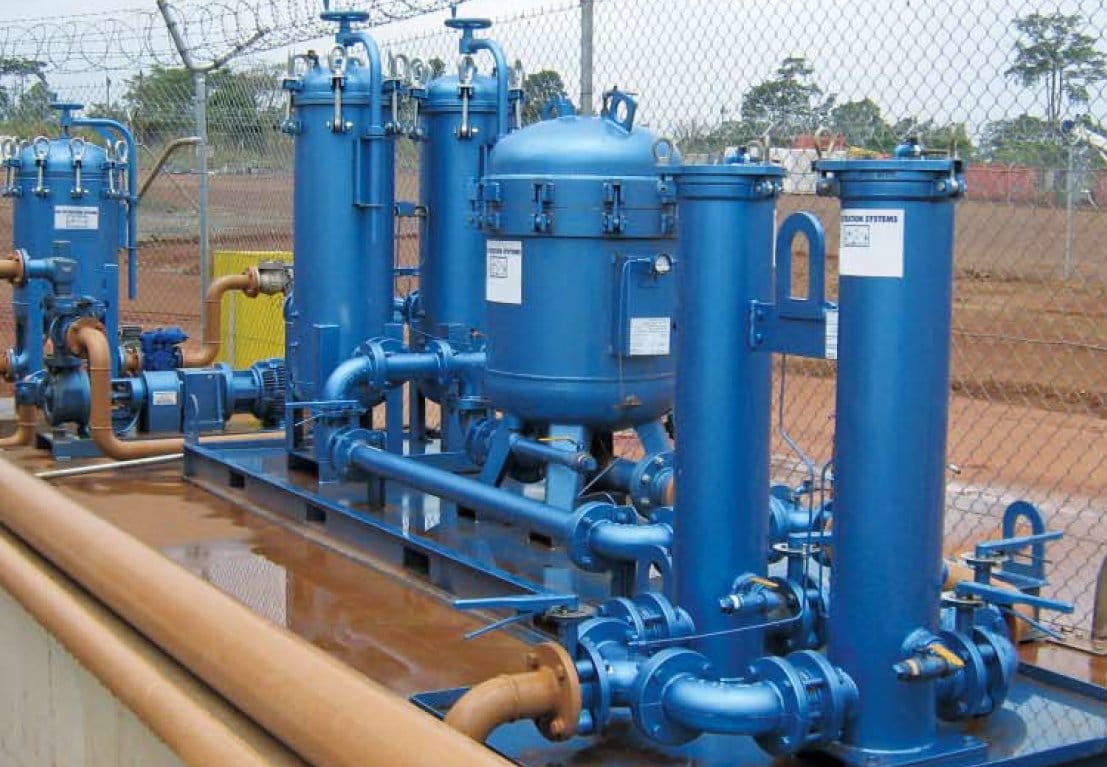
Treating oil filtration as a simple straining exercise is a recipe for catastrophic bearing failure in demanding Australian industrial environments. While many maintenance teams focus on particulate removal, ignoring the nuances of moisture separation often leads to the very unscheduled downtime you’re working to avoid. You already know that even trace amounts of water can trigger acid formation and accelerated wear, turning a reliable turbine or hydraulic system into a liability. It’s a frustrating cycle that compromises both operational efficiency and your commitment to sustainable asset management.
This guide provides a deep dive into the technical mechanics of how coalescing filters work to protect your critical assets from water and particulate contamination. We’ll move beyond the basics to explore the physics of droplet growth and surface tension that define high-performance filtration. By mastering these principles, you’ll learn to identify when to deploy coalescence versus vacuum dehydration. We’ll also preview how specific Filters S.p.A. technologies integrate into a proactive maintenance strategy to extend equipment longevity and reduce the environmental impact of premature oil changes.
Key Takeaways
- Gain a technical understanding of fluid separation and how coalescing filters work to transform microscopic water droplets into manageable masses for efficient removal.
- Distinguish between free, entrained, and emulsified water to determine if coalescence or vacuum dehydration is the most effective solution for your specific contamination profile.
- Master operational best practices by monitoring differential pressure and maintaining flow stability to ensure the structural integrity of your Filters S.p.A. elements.
- Integrate advanced coalescing technology into your hot oil flushing and varnish mitigation strategies to enhance the reliability of critical turbine and hydraulic systems.
- Implement a proactive maintenance framework that prioritizes oil purity, effectively reducing unscheduled downtime and supporting long-term environmental sustainability.
Understanding Coalescence: The Science of Fluid Separation
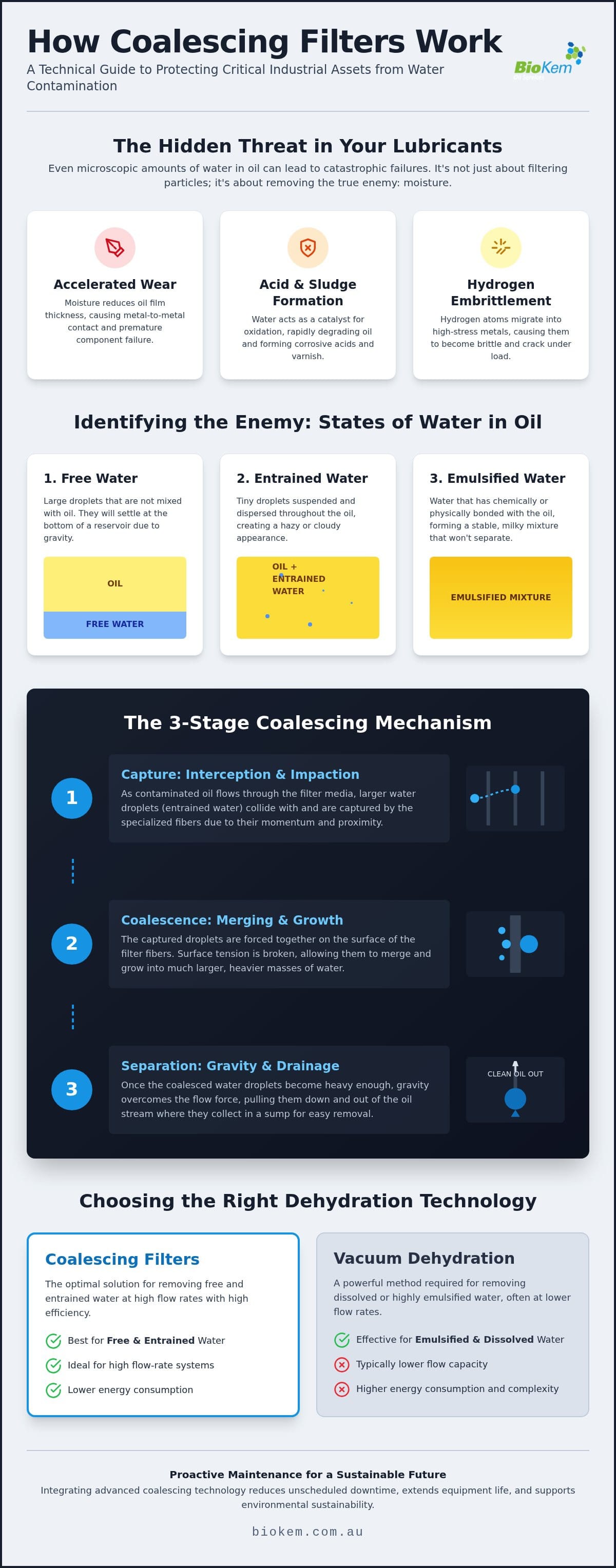
Coalescence is a precision mechanical process where microscopic liquid droplets collide and merge to form larger, more manageable masses. Unlike standard particulate filtration, which relies on physical sieving to trap solid contaminants, understanding how coalescing filters work requires a grasp of fluid dynamics and interfacial tension. In industrial lubrication, water doesn’t always exist in a single state. It typically presents as free water that settles at the bottom of a reservoir, entrained water that remains suspended as tiny droplets, or emulsified water that has physically or chemically bonded with the oil. Traditional particulate filters are designed to capture hard spheres; they’re largely ineffective against liquid contaminants that can deform and pass through standard media. The primary objective of this technology is achieving “bone dry” oil, ensuring that moisture levels remain well below the oil’s saturation point to prevent the onset of internal corrosion.
The Role of Surface Tension in Oil Purification
Surface tension acts as a physical barrier, keeping water droplets small and preventing them from naturally aggregating within the oil stream. High-performance filter media, such as those found in Filters S.p.A. products, are engineered with specific surface energies to “break” these stable emulsions. As oil flows through the specialized media, the fibers attract the water phase, forcing droplets to decelerate and accumulate until they reach a size sufficient for gravity to pull them from the stream. Critical velocity is the maximum fluid speed at which droplet growth can occur without the force of the flow shearing the newly formed masses back into the oil.
Why Industrial Systems Require Coalescing Filtration
In Australia’s demanding mining and power generation sectors, water contamination is a primary driver of mechanical failure. Moisture significantly reduces oil film thickness, leading to metal-to-metal contact and premature wear in critical bearings. Beyond physical wear, water triggers hydrogen embrittlement, a process where hydrogen atoms migrate into high-stress metal components, causing them to become brittle and crack under load. Additionally, water acts as a catalyst for oxidation, rapidly degrading the oil’s chemical stability and leading to the formation of sludge and varnish. Implementing a strategy that addresses how coalescing filters work within your maintenance cycle is essential for protecting these high-value industrial assets.
The Three-Stage Mechanism: How Coalescing Filters Function
Effective moisture removal isn’t a single event but a sequence of physical interactions occurring within the filter media. To grasp how coalescing filters work, it’s necessary to examine the three distinct stages that govern droplet capture. These mechanisms ensure that regardless of droplet size, the water phase is successfully isolated from the lubrication oil. High-efficiency systems, like those utilising Filters S.p.A. products, rely on these physics-based principles to maintain oil integrity in high-stress industrial applications.
Direct Interception and Inertial Impaction
The first two stages address larger and medium-sized droplets. Direct interception occurs when a droplet follows a streamline but passes close enough to a fiber to be captured. It’s a simple geometric collision. In contrast, inertial impaction relies on the momentum of larger droplets. As the oil navigates the tortuous path of the media, these droplets are too heavy to follow rapid changes in flow direction. They continue on their original path, colliding directly with the fibers. Flow velocity is a critical variable here. If the velocity is too high, it can shear droplets apart; if it’s too low, impaction efficiency drops. Filters S.p.A. designs optimise fiber density to maximise these collisions without creating excessive backpressure.
Brownian Diffusion and Droplet Growth
Sub-micron droplets don’t follow streamlines or possess enough mass for impaction. Instead, they exhibit Brownian diffusion, a random, zig-zag motion caused by collisions with oil molecules. This erratic movement increases the probability that these tiny aerosols will eventually contact a fiber. Once a droplet makes contact, it “wets” the fiber surface, creating a thin film. As more droplets arrive, they merge through surface tension, growing into macroscopic masses. This transition from a microscopic suspension to a visible liquid phase is the essence of coalescence. These heavy droplets eventually migrate to the outer surface of the media, where they become large enough for gravity to pull them into a collection sump at the bottom of the housing.
Managing these stages effectively requires precise equipment. If you’re dealing with high water ingress, considering specialist oil filtration equipment hire can provide the necessary capacity to restore system health without a permanent capital investment.
Coalescing vs. Other Dehydration Methods: A Performance Comparison
Selecting the right dehydration technology depends entirely on the state of water in your oil and the operational scale of your facility. While centrifugal separators use high-speed rotation to apply G-forces to fluids of different densities, they are mechanically complex and energy-intensive. Centrifuges excel at removing bulk water and heavy solids but often struggle with stable emulsions. In contrast, understanding how coalescing filters work reveals their efficiency in handling high flow rates where entrained water is the primary concern. They provide a passive, reliable alternative that requires less mechanical oversight than a centrifuge, making them a staple in proactive maintenance programs across Australian power and mining sectors.
For facilities that require the heavy-duty separation capabilities of a centrifuge, it is beneficial to explore Industrial Decanter Centrifuge Equipment Sales and Supply Fees to understand the investment required for permanent installations versus mobile filtration units.
When evaluating the cost-benefit ratio, maintenance managers must weigh the price of high-performance replacement elements against the operational costs of machinery. For many, specialist oil filtration equipment hire is the most sustainable path. It allows access to advanced Filters S.p.A. technology for specific decontamination events without the long-term capital expenditure of purchasing and maintaining complex separation hardware.
When to Choose Coalescence over Vacuum Dehydration
Coalescing filters are the superior choice for removing bulk free water and large volumes of entrained moisture quickly. They’re highly effective in high-flow systems where water ingress is constant but hasn’t yet reached a fully dissolved state. However, they cannot remove water that has moved into the dissolved phase at a molecular level. If your oil analysis indicates moisture levels above the saturation point but you need to reach extremely low parts-per-million (ppm) targets, you should consult a guide on Vacuum Dehydration vs Coalescing. Vacuum dehydration is essential for those “bone dry” requirements where even dissolved moisture poses a risk to sensitive EHC fluids or turbine bearings.
The Limitations of Mechanical Coalescence
The physics of how coalescing filters work relies on the ability of droplets to move and merge. High-viscosity oils, such as those with an ISO VG 460 rating or higher, create significant resistance that can impede droplet migration and growth. In these cases, the oil might require heating to reduce viscosity before effective coalescence can occur. Furthermore, certain additives and surfactants designed to keep engines clean can lower the interfacial tension of the oil. This makes it difficult for the filter media to “break” the emulsion. To prevent premature “blinding” or clogging of the expensive coalescing media, it is also mandatory to implement high-quality pre-filtration. Removing solid particulates first ensures the coalescer can focus entirely on fluid separation, extending the life of the element and maintaining system efficiency.
Operational Best Practices: Maintaining Coalescing Filter Efficiency
Maintaining the integrity of your lubrication system requires more than just installation. To ensure long-term reliability, operators must monitor the variables that dictate how coalescing filters work under real-world stress. The primary health indicator is differential pressure (ΔP). A consistent increase in ΔP suggests the media is successfully capturing solid contaminants, but a sudden decrease often signals a bypass or structural failure within the element. In high-demand Australian mining or power facilities, relying on fixed calendar replacement cycles is often inefficient. Instead, use ΔP gauges and downstream moisture sensors to dictate maintenance intervals based on actual contamination load.
Flow stability is equally vital. Coalescence is a velocity-sensitive process. Rapid surges in flow can create excessive shear forces, breaking apart large droplets before they can settle into the sump. This results in “breakthrough,” where water is re-entrained into the clean oil stream. Keeping flow rates within the manufacturer’s specified range prevents this mechanical failure and preserves the “quiet zone” required for gravity separation at the exit stage.
Troubleshooting Common Coalescer Failures
If your system isn’t hitting moisture targets, check for “channelling.” This occurs when the oil carves a direct path through the media, bypassing the fibrous network entirely. Temperature also plays a significant role in performance. Warmer oil, usually between 40°C and 50°C, typically coalesces more effectively because reduced viscosity allows water droplets to migrate and merge with less resistance. Use this checklist to identify saturated elements before they compromise your hardware:
- Downstream oil samples appear hazy or milky despite active filtration.
- Differential pressure remains static or drops unexpectedly under load.
- Free water is visible in the sight glass but the collection sump isn’t filling as expected.
Selecting the Right Filter Media
Performance varies significantly between borosilicate glass fibers and pleated synthetic media. While glass fibers offer exceptional surface area for droplet growth, synthetic options are often required for chemical compatibility with specialized fluids like Phosphate Esters in EHC systems. Choosing the wrong media can lead to element degradation or chemical leaching into the oil. For guidance on selecting the correct components for your facility, explore our range of Specialist Oil Filters for Industrial Systems.
Ready to optimise your filtration strategy? Contact BioKem Oil Services today to source high-performance Filters S.p.A. elements tailored to your specific industrial application.
Strategic Oil Management: Integrating Coalescers into Maintenance Programs
Integrating coalescence into a broader lubrication strategy transforms moisture removal from a reactive task into a core reliability function. Understanding how coalescing filters work allows maintenance teams to align filtration with high-impact activities like Hot Oil Flushing. During these projects, removing moisture in real-time prevents the formation of corrosive byproducts and ensures the system reaches target cleanliness levels faster. This synergy is equally critical for Varnish Mitigation. Because water acts as a catalyst for the oxidation that creates varnish, consistent coalescing filtration serves as a primary preventative measure. Validating these results through rigorous oil analysis provides the quantitative data needed to prove the ROI of your maintenance spend.
Coalescers in Turbine and Hydraulic Reliability
In precision hydraulic systems, even small amounts of entrained water can lead to servo valve sticking and governor instability. Maintaining oil to strict ISO 4406 standards requires a multi-layered approach where high-performance coalescers manage the moisture phase. This prevents the abrasive wear and chemical degradation that compromise high-stress components. By addressing the root cause of moisture-related failure, facilities can significantly extend the mean time between failures (MTBF) for critical turbine assets. For a comprehensive look at these dynamics, consult our Oil Contamination Control Guide.
The BioKem Oil Services Advantage: Expert Support and Distribution
As the sole Australian distributor for Filters S.p.A., BioKem Oil Services provides direct access to advanced filtration technology and specialized technical expertise. Our understanding of how coalescing filters work in the specific context of Australia’s resource and energy sectors ensures that your equipment is protected by genuine, high-performance parts. We offer onsite laboratory testing to determine if a coalescer is the optimal solution for your fluid’s current state. This localized service model ensures that technical recommendations are based on real-time data rather than generic assumptions. To develop a proactive management plan for your facility, consult with BioKem Oil Services for a custom filtration strategy.
Advancing Industrial Reliability Through Precision Filtration
Transitioning from reactive maintenance to a proactive reliability framework requires a technical grasp of how coalescing filters work. By mastering the three-stage mechanism of interception, impaction, and diffusion, you can effectively manage the threat of moisture in critical turbine and hydraulic systems. This technical expertise ensures that your oil remains “bone dry,” preventing the corrosion and varnish formation that lead to unscheduled downtime. Integrating these systems into your broader flushing and mitigation projects creates a robust defense against contamination.
BioKem Oil Services provides the necessary infrastructure to support these high standards across Australia. As the sole Australian distributor for Filters S.p.A., we deliver genuine high-performance elements backed by expert onsite technical support and comprehensive oil analysis services. Our team helps you validate filter performance and ROI through precise laboratory testing, ensuring your assets operate at peak efficiency while supporting your long-term sustainability goals. Optimise your system reliability with Filters S.p.A. solutions from BioKem Oil Services. You don’t have to navigate these technical challenges alone; the right partnership can transform your maintenance outcomes.
Frequently Asked Questions
What is the difference between a particulate filter and a coalescing filter?
A particulate filter is designed to remove solid contaminants like metal shavings and dust through physical sieving. In contrast, a coalescing filter addresses liquid-phase contamination by merging microscopic water droplets into larger masses. While both utilize fibrous media, the coalescer relies on surface tension and fluid dynamics to separate immiscible liquids rather than just trapping hard particles. It’s a specialized tool for fluid separation rather than simple debris removal.
Can a coalescing filter remove dissolved water from oil?
No, coalescing filters cannot remove water that has reached a dissolved state at the molecular level. They are highly efficient at removing free and entrained water. If your oil analysis indicates moisture levels below the saturation point but you still require “bone dry” oil, vacuum dehydration is the necessary technology. This method addresses the dissolved phase by lowering the pressure to evaporate moisture at lower temperatures.
How often should I replace my coalescing filter element?
Replacement should be dictated by differential pressure (ΔP) readings and moisture monitoring rather than a fixed calendar schedule. Typically, a rise in ΔP suggests the element is reaching capacity with particulates, while a sudden drop or moisture breakthrough suggests structural failure. In high-load Australian industrial environments, consistent oil analysis helps establish a predictable replacement cycle tailored to your specific contamination rates and operational demands.
What happens if the flow rate through the coalescer is too high?
Excessive flow rates create high shear forces that prevent the successful growth of water droplets. When the velocity exceeds the manufacturer’s specified limits, newly formed droplets are torn apart before they can settle via gravity. This leads to re-entrainment, where moisture passes through the filter and remains in the clean oil stream. Maintaining a stable flow is critical to ensuring the physics of how coalescing filters work remains effective.
Are coalescing filters suitable for high-viscosity gear oils?
Coalescing filters are generally less effective with high-viscosity fluids like ISO VG 460 gear oils. The thick oil creates significant resistance, making it difficult for microscopic water droplets to migrate and collide. While it’s possible to use them, the oil often requires heating to reduce viscosity to a range where how coalescing filters work can function efficiently. Without pre-heating, the pressure drop across the media often becomes unmanageable.
Do I need a pre-filter before my coalescing unit?
Yes, installing a high-quality particulate pre-filter is mandatory to protect the more expensive coalescing element. If solid contaminants reach the coalescing media, they can “blind” the fibers and block the sites where droplet growth occurs. Removing solids first ensures the coalescer can focus entirely on fluid separation. This strategy significantly extends the service life of the element and maintains the efficiency of your proactive maintenance program.
How do I know if my coalescing filter is saturated?
Saturation is typically identified through a combination of high differential pressure and the appearance of hazy or milky oil downstream. If the collection sump is no longer filling with water despite known ingress, or if your onsite laboratory testing shows rising moisture levels, the element has likely reached its limit. Regular monitoring of the sight glass and sump levels is a critical operational habit for any technician.
Can I use a coalescing filter for fuel as well as lubrication oil?
Coalescing technology is widely used for both diesel fuel and lubrication oil, though the filter media must be chemically compatible with the specific fluid. In fuel systems, the process is vital for removing water that causes microbial growth and injector corrosion. Always verify that the element’s seals and fibers are rated for the chemical profile of the fuel or lubricant being processed to avoid media degradation.