

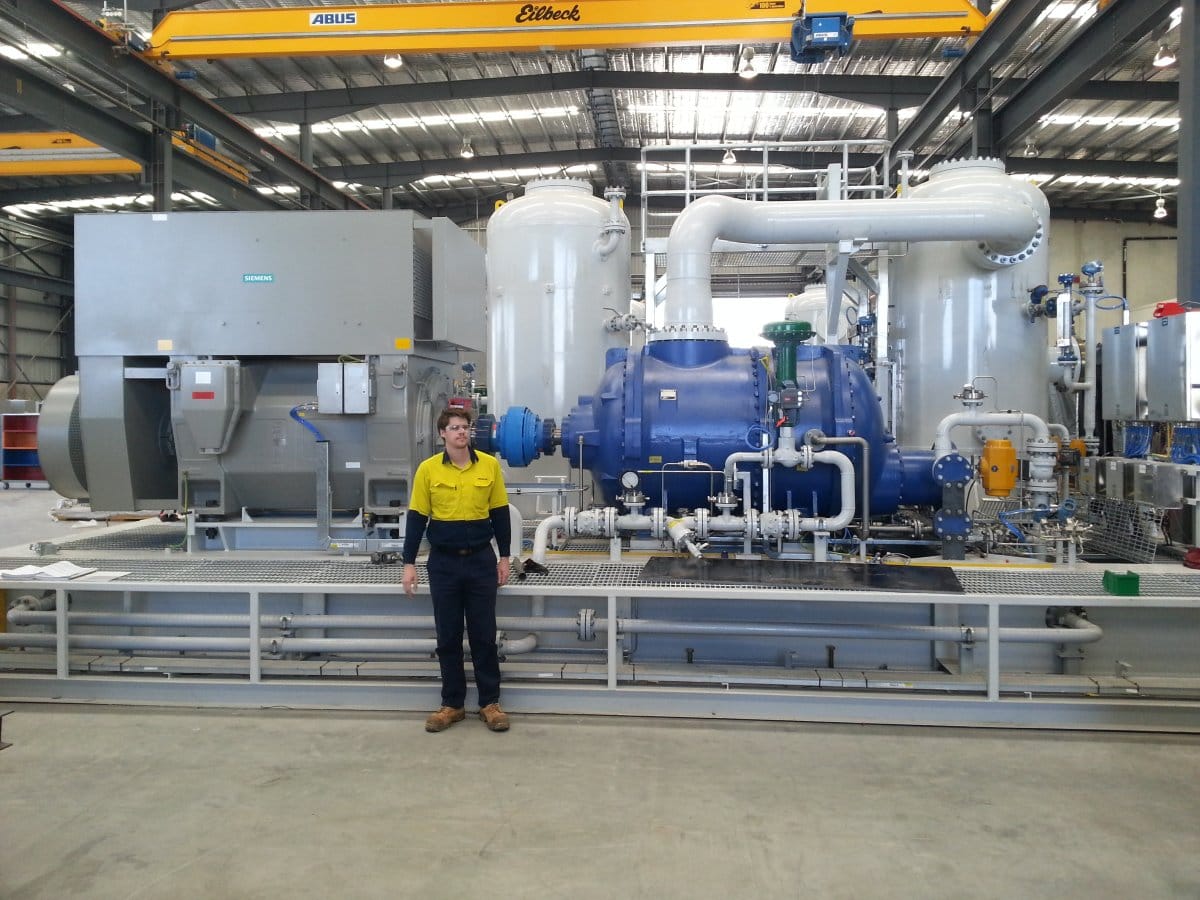
Why would a brand-new, multi-million dollar turbine be delivered with the seeds of its own destruction already inside? You’ve likely felt the immense pressure to meet tight commissioning timelines, and when an asset arrives from the OEM, it’s tempting to assume it’s ready for immediate startup. However, the reality is that “new” equipment is almost never truly clean. From welding slag and rust inhibitors to dust accumulated during transit, these hidden contaminants represent a significant risk of infant mortality for your most critical assets. A professional commissioning flush for new equipment isn’t just a box to tick; it’s a vital safeguard against catastrophic early-life failures.
We understand the challenge of balancing strict warranty requirements with the need for operational efficiency. This guide explains why high-velocity hot oil flushing is the industry standard for removing built-in debris and achieving precise ISO 4406 cleanliness targets. You’ll learn how a structured, technical approach to pre-operational cleaning verifies system integrity and protects your long-term investment. By prioritizing turbulent flow and specialized filtration, you can move from installation to full-load operation with absolute confidence in your system’s reliability.
Key Takeaways
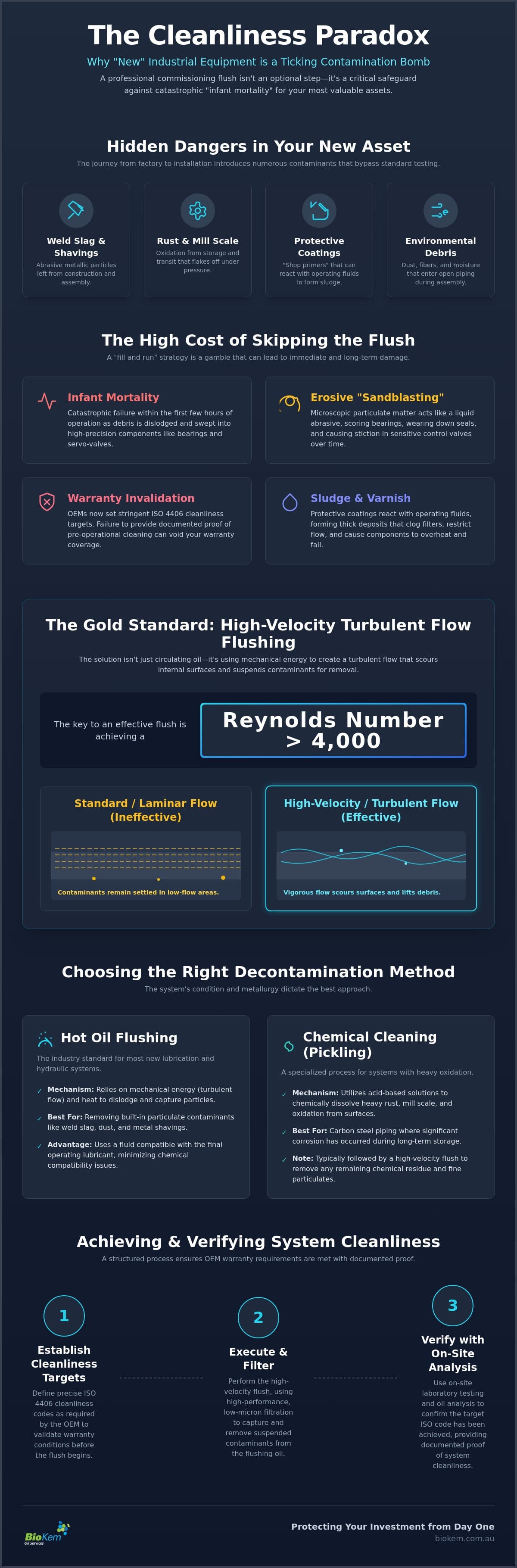
- Understand why a professional commissioning flush for new equipment is essential to remove built-in contaminants like welding slag and rust inhibitors that bypass standard factory testing.
- Identify the critical risks of skipping pre-operational cleaning, including “infant mortality” failures and the erosive “sandblasting” effect of microscopic debris on sensitive internal components.
- Learn to distinguish between chemical pickling and mechanical high-velocity flushing to select the most efficient decontamination method for your specific system architecture.
- Master the technical requirements for a successful flush, specifically the necessity of achieving a Reynolds Number greater than 4,000 to ensure turbulent flow for effective particle removal.
- Discover how onsite laboratory testing and high-performance Filters S.p.A. hardware can verify ISO 4406 cleanliness targets before your equipment’s first operational run.
Why New Industrial Equipment Requires a Commissioning Flush
A commissioning flush for new equipment is a rigorous pre-operational cleaning process designed to eliminate built-in debris before a system’s first run. It’s a common misconception that “new” equals “clean.” In reality, the journey from the manufacturing floor to the final installation site provides numerous opportunities for contamination. This process ensures that the internal surfaces of piping, reservoirs, and manifolds are free from the residues of construction and assembly.
The “Cleanliness Paradox” explains why brand-new assets are often at their most vulnerable. While individual components might meet factory standards, the process of onsite assembly introduces new risks. Open piping is exposed to the environment, and manual handling can introduce everything from dust to clothing fibers. This results in a system that looks pristine on the outside but carries a “contamination bomb” within its internal galleries.
To better understand this concept, watch this helpful video:
Common construction-related contaminants include weld slag, grinding dust, and metal shavings. Beyond these physical particles, manufacturers often apply protective coatings or “shop primers” to prevent corrosion during transit. While these prevent rust, they can chemically react with the final operating fluid, forming a thick sludge that clogs filters and restricts flow. In instances of heavy oxidation or mill scale, a chemical process like Pickling (metal) may be required to strip the surfaces before the high-velocity oil flush begins.
The Reality of Built-In Contamination
Debris often hides in dead legs, complex valve manifolds, and heat exchanger bundles where standard flow cannot reach it. These “hidden” contaminants remain dormant until the system reaches full operating temperature and pressure. At that point, they’re dislodged and swept into high-precision components. Particulate matter acts like an abrasive, scoring bearings and causing stiction in sensitive servo-valves. Without professional hot oil flushing, these built-in threats can cause catastrophic failure within the first few hours of operation.
Regulatory and Warranty Requirements
Original Equipment Manufacturers (OEMs) now set stringent ISO 4406 cleanliness targets as a prerequisite for warranty validation. They recognize that infant mortality in new assets is almost always tied to initial fluid quality. A “fill and run” strategy is no longer acceptable in modern industrial environments. Instead, operators must provide documented proof of cleanliness. Utilizing third-party verification and detailed oil analysis ensures that you’ve met these regulatory standards, protecting both your equipment and your capital investment from the start.
Hot Oil Flushing vs. Chemical Cleaning: Selecting the Right Method
Selecting the appropriate decontamination strategy is a critical decision during the pre-operational phase. While both chemical cleaning and mechanical flushing aim to achieve system cleanliness, their mechanisms differ significantly. Chemical cleaning, often referred to as pickling, utilizes acid-based solutions to dissolve heavy oxidation and mill scale from carbon steel piping. In contrast, a commissioning flush for new equipment using high-velocity oil relies on mechanical energy and heat to dislodge and capture particulate matter. The choice depends on the starting condition of the metallurgy.
For most modern lubrication and hydraulic systems, hot oil flushing is the superior choice. It aligns with the requirements of API Standard 614, which emphasizes the protection of rotating equipment through rigorous fluid cleanliness. Chemical methods, while effective for rust, introduce the risk of residual acids. If these aren’t perfectly neutralized, they can degrade the final operating fluid. From an environmental perspective, oil-based flushing is also more sustainable. The flushing fluid can often be reclaimed or recycled, whereas chemical cleaners generate hazardous waste streams that require complex disposal protocols. It’s a cleaner approach for the planet and the machine.
When to Choose Hot Oil Flushing
Hot oil flushing is the preferred method when the primary goal is removing debris like welding slag and atmospheric dust without risking chemical contamination. It’s vital to use a flushing oil that is chemically compatible with the system’s final lubricant. This prevents unwanted reactions that could compromise additive packages. BioKem provides specialized Hot Oil Flushing services that utilize high-performance filtration to reach ISO targets faster than traditional methods.
The Synergy of Flushing and Varnish Mitigation
A common oversight in industrial startups is failing to connect the initial flush with long-term varnish prevention. A thorough commissioning flush for new equipment does more than remove hard particles; it also extracts polar contaminants and soft debris that act as precursors to varnish. By removing these elements before the system experiences thermal stress, you significantly reduce the likelihood of future deposit formation on valves and heat exchangers. Integrating Varnish Removal Systems during or immediately after commissioning provides a proactive defense against the chemical degradation of your lubricants. If you’re managing your own project, exploring specialized equipment hire can provide the technical hardware needed to achieve these high-velocity standards.
The Risks of Skipping Pre-Commissioning Cleaning
Skipping a commissioning flush for new equipment is often framed as a time-saving measure, yet it frequently results in the opposite. The most dangerous period for any new industrial asset is the first 100 hours of operation. This window is where “infant mortality” failures are most prevalent. These failures aren’t typically due to design flaws; they’re the direct result of residual construction debris. When high-pressure oil carries microscopic particles through a system, they don’t just settle. They act like a high-velocity sandblasting medium, eroding turbine blades and scoring precision-ground surfaces.
Precision control is the first casualty of contamination. In modern hydraulic systems, servo-valves operate with clearances measured in microns. Even a small amount of particulate can cause these valves to stick or respond sluggishly, leading to erratic system behavior. Attempting to “clean with the machine” by relying on internal system filters is a high-risk strategy. These filters are designed for maintaining cleanliness, not for the massive dirt-loading capacity required to remediate a contaminated system. This approach simply transfers the cost of cleaning to the machine’s most sensitive components.
Catastrophic Component Failure
The damage to bearings and seals from built-in debris is often irreversible. Once a hard particle enters a bearing’s load zone, it creates surface indentations that lead to localized stress and eventual fatigue. The financial reality is stark. The cost of a professional flush is a small fraction of the expense required to replace a high-speed rotor or rebuild a primary compressor. For a deeper look at how these failure modes manifest and how to prevent them, consult our Oil Contamination Control guide. Protecting these components from day one is the only way to ensure they reach their full design life.
Operational Inefficiency and Unscheduled Downtime
Initial contamination forces a cycle of unscheduled maintenance that can paralyze a new project. You’ll find yourself performing frequent, costly filter changes as the internal elements clog within minutes of startup. This leads to “ghost issues,” where intermittent pressure drops or temperature spikes baffle operators and delay production. These troubleshooting efforts consume valuable man-hours during the critical ramp-up phase, delaying the point at which the asset becomes profitable. By failing to perform a commissioning flush for new equipment, you trade a controlled, proactive procedure for a chaotic and reactive startup environment.
Executing a High-Velocity Commissioning Flush Procedure
Executing a successful commissioning flush for new equipment requires a shift from standard operational thinking to an engineering-led cleaning strategy. It isn’t enough to simply circulate oil at operating speeds. To effectively remediate a system, the flushing process must utilize higher velocities and temperatures than the asset will ever experience during normal service. This ensures that any debris capable of being dislodged during extreme operational transients is captured and removed before the first official startup.
The procedure begins with system isolation. Sensitive components like bearings, servo-valves, and high-precision sensors are bypassed using temporary jumpers. This prevents the very contaminants you’re trying to remove from being pushed into the machine’s most vulnerable areas. Once the loops are established, an external high-flow flushing rig is connected. The oil is heated, typically between 60°C and 80°C, to reduce its viscosity. This reduction in viscosity is essential for achieving the high-energy flow patterns required to lift heavy particles from the bottom of horizontal piping runs.
The circulation phase involves progressive filtration, starting with coarser elements and moving toward high-efficiency filters. This staged approach prevents the premature blinding of expensive, fine-micron elements while steadily driving down the fluid’s particle count. During this phase, technicians may use pneumatic vibrators or manual hammers on pipe joints to help dislodge stubborn welding scale or trapped grit.
The Science of Turbulent Flow
The Reynolds Number is the ratio of inertial forces to viscous forces used to predict flow patterns. In a commissioning flush for new equipment, achieving a Reynolds Number greater than 4,000 is the critical threshold for turbulent flow. Laminar flow, which occurs at lower velocities, moves in smooth, parallel layers; this fails to lift heavy particulates because the fluid velocity at the pipe wall is effectively zero. Only turbulent flow creates the random, high-energy eddies needed to scrub the pipe’s internal diameter. Technicians often install paddle flushing screens at strategic points to visually verify when the system has stopped shedding large debris.
Verification and ISO Cleanliness Targets
Cleanliness cannot be assumed; it must be measured. Real-time monitoring using particle pal ranges allows the team to track the decline in particulate concentration without stopping the flush. Once the online sensors suggest the target is reached, physical samples are taken for final sign-off using patch test kits. This provides a visual record of the fluid’s condition. The goal is typically to meet or exceed ISO 4406 codes such as 16/14/11, ensuring the system is pristine before the bypasses are removed and the asset is energized. If you’re planning a startup, you can hire specialized flushing equipment to ensure your team has the technical hardware required to meet these rigorous standards.
Partnering with BioKem for Onsite Commissioning Services
BioKem Oil Services positions itself as the technical partner for critical asset startups across Australia. We provide turnkey hot oil flushing solutions that address the specific challenges of new equipment commissioning. Whether you require full-service onsite execution managed by our specialists or prefer equipment hire for your own project team, our approach remains rooted in engineering precision. We understand that a successful commissioning flush for new equipment isn’t just about meeting a deadline; it’s about establishing a foundation for long-term ecological and operational health.
Our expertise extends to navigating the regional regulatory landscape and meeting the strict warranty requirements set by global OEMs. By integrating high-performance filtration with real-time monitoring, we ensure that your system achieves its cleanliness targets with minimal environmental impact. This commitment to sustainability is mirrored in our choice of hardware and our focus on reclaiming flushing fluids wherever possible. We don’t just clean systems; we protect multi-million dollar investments.
In addition to protecting industrial assets, maintaining energy efficiency in commercial facilities is a key priority for many organizations. To that end, many facility managers explore Electric Heat Pumps to provide sustainable and reliable heating and cooling solutions.
Custom-Engineered Flushing Rigs
The effectiveness of a flush is dictated by the hardware’s ability to maintain turbulent flow across complex architectures. BioKem utilizes custom-engineered flushing rigs designed for high flow rates and precise temperature management. As the sole Australian distributor for Filters S.p.A. products, we equip our rigs with superior particle capture technology. This high-performance hardware allows for faster decontamination cycles and more reliable results. These specialized rigs handle the high-energy demands required to scrub internal surfaces clean, ensuring that every weld bead and particle of mill scale is captured before it can cause damage.
Comprehensive Oil Analysis and Reporting
A professional flush is incomplete without rigorous documentation. BioKem provides comprehensive laboratory reports that serve as vital handover documentation for project managers and OEMs. Our onsite testing capabilities allow for real-time ISO 4406 verification, but we go beyond simple particle counts. We utilize filter ferrogram analysis to identify the specific nature of any debris found. This level of scientific scrutiny helps identify potential wear patterns or material defects before the asset is even operational. By partnering with us, you ensure that your commissioning flush for new equipment delivers a verified, clean system that’s ready for a lifetime of reliable service.
Securing Your Asset’s Operational Future
A rigorous commissioning flush for new equipment is the only reliable method to neutralize the hidden contamination inherent in site-assembled industrial systems. By prioritizing high-velocity turbulent flow over a standard “fill and run” approach, you eliminate the abrasive particulates that cause infant mortality failures. This proactive strategy doesn’t just protect your hardware; it ensures compliance with strict OEM warranty requirements and establishes a benchmark for long-term lubrication health. Documented cleanliness is the foundation of a successful project handover and sustainable operation.
BioKem serves as your technical partner during this critical phase. As an authorized Filters S.p.A. distributor, we combine high-performance hardware with specialist onsite technicians to achieve precise ISO 4406 targets. Our comprehensive verification reporting provides the transparency needed to transition from commissioning to full-scale production with absolute confidence. Don’t leave your startup to chance when specialized expertise is available to safeguard your investment. Contact BioKem for a Professional Commissioning Flush Consultation. We’re ready to help you ensure your critical machinery starts clean and stays reliable for its entire design life.
Frequently Asked Questions
What is the target ISO cleanliness code for a commissioning flush?
Target ISO cleanliness codes are typically defined by the Original Equipment Manufacturer (OEM), but a common benchmark for a commissioning flush for new equipment is ISO 4406 16/14/11. This standard ensures the fluid contains a safe concentration of particles at the 4, 6, and 14-micron levels. Meeting these specific targets is a prerequisite for warranty validation and protects sensitive components like servo-valves from early-life erosion.
How long does a typical high-velocity hot oil flush take?
The duration of a high-velocity hot oil flush typically ranges from 24 hours to several days per circuit. Factors such as the total volume of the piping system, the initial contamination level, and the ability to maintain turbulent flow influence the timeline. Progress is measured by real-time particle counting rather than a fixed schedule to ensure the system is truly clean before the flush is terminated.
Can I use the final operating oil to perform the commissioning flush?
You can use the final operating oil if it is chemically compatible and the flushing rig can heat it sufficiently to reach the required Reynolds Number. However, many operators prefer a specialized, lower-viscosity flushing oil. This allows for easier achievement of turbulent flow at lower temperatures, which more effectively dislodges built-in debris from the pipe walls than the thicker operating fluid.
Is a commissioning flush necessary if the pipes were capped during transport?
A commissioning flush for new equipment remains necessary even if pipes were capped during transport. Capping only prevents external environmental ingress; it does not address internal contaminants like mill scale, weld slag, or rust inhibitors applied during manufacturing. Onsite assembly and welding also introduce new particles that must be removed before the first operational run to prevent infant mortality failures.
What is the difference between a static flush and a high-velocity flush?
A static flush involves filling and draining a system, which only removes loose, buoyant debris. In contrast, a high-velocity flush uses mechanical energy and heat to create turbulent flow. This turbulence actively scrubs the internal surfaces of the piping, dislodging heavy particles and scale that a static flush would leave behind in stagnant zones or dead legs.
How do I calculate the required flow rate for a turbulent commissioning flush?
To calculate the required flow rate, you must determine the Reynolds Number, which should exceed 4,000 to ensure turbulence. The formula considers the internal pipe diameter, the fluid velocity, and the kinematic viscosity of the oil at the flushing temperature. Achieving this threshold is critical because laminar flow lacks the energy to lift and transport heavy construction contaminants to the filtration system.
What documentation should I receive after a professional commissioning flush?
After a professional flush, you should receive a comprehensive report including real-time ISO 4406 particle count logs and laboratory-verified patch test results. Additional documentation often includes filter ferrogram analysis to identify the composition of captured debris. This technical record serves as essential proof for OEM warranty compliance and provides a baseline for your proactive maintenance program.