

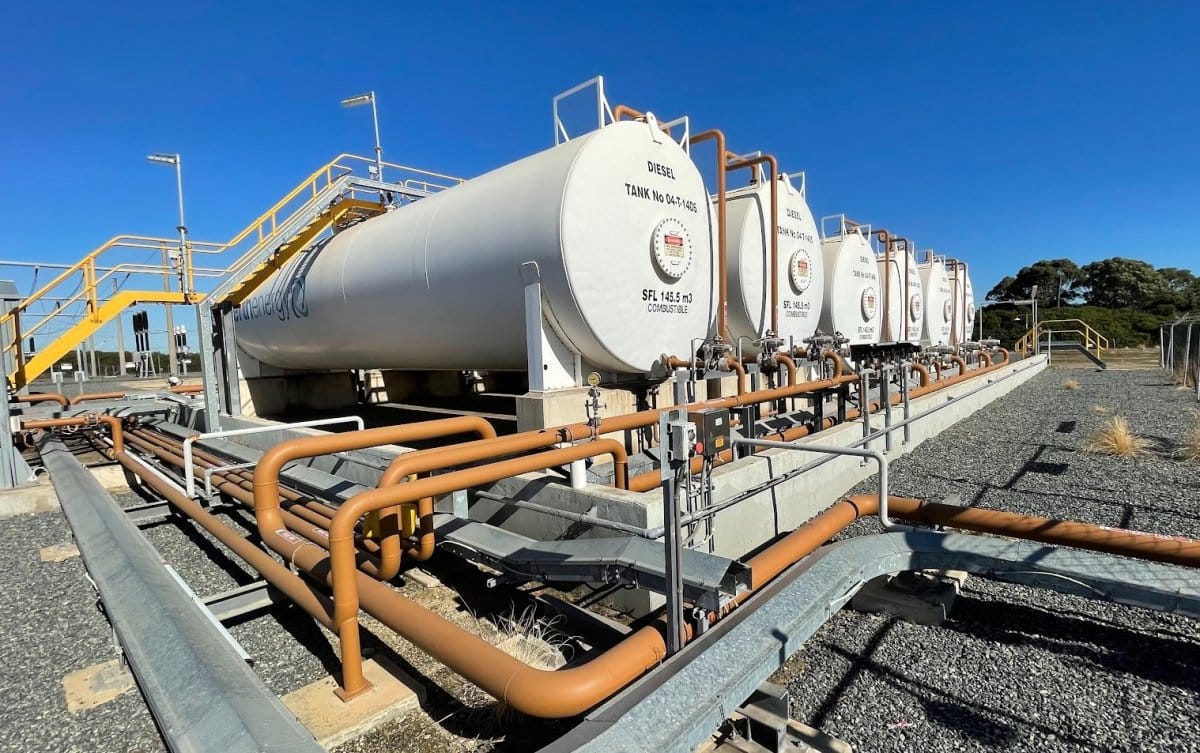
With OSHA serious violation penalties reaching $16,550 per citation as of January 2026, the margin for operational error has vanished. You likely recognize the frustration of unscheduled downtime caused by clogged filters or the slow loss of storage capacity as sludge accumulates. It’s easy to view maintenance as a disruption, yet delaying a deep clean often leads to the very safety risks and equipment failures you’re trying to avoid. Over 68% of industrial facilities now require professional cleaning at least once a year to maintain compliance and protect their infrastructure.
This commitment to hygiene often extends from the production floor to the front office. For facility managers who prioritize a clean environment throughout their entire property, you can discover Best Carpet Steam Cleaning Melbourne to handle the professional upkeep of your commercial spaces alongside your industrial maintenance schedule.
Investing in a professional chemical and mechanical reset provides significant industrial oil tank cleaning benefits that go far beyond simple housekeeping. By removing foundational contaminants, you can improve ISO 4406 cleanliness codes and extend the lifespan of your critical machinery. This strategic guide explores how modern cleaning methods recover lost capacity and ensure your facility meets the rigorous EPA and OSHA standards set for 2026. You’ll discover a logical path to enhancing asset reliability while fostering a safer, more sustainable working environment through technical expertise and regulatory diligence.
Key Takeaways
- Understand the “Iceberg Effect” and why visual oil clarity often masks the harmful sludge accumulating at the bottom of your storage assets.
- Learn how to reduce operational expenses by eliminating the primary source of rapid filter plugging and restoring 100% of your designed storage capacity.
- Identify the core industrial oil tank cleaning benefits, including enhanced ISO 4406 cleanliness codes and significantly extended equipment service life.
- Review the 2026 safety standards for confined space entry to ensure your facility remains compliant with updated gas detection and PPE requirements.
- Discover why professional tank cleaning should always precede hot oil flushing or the introduction of a new oil charge to prevent immediate fluid degradation.
The Strategic Value of Industrial Oil Tank Cleaning
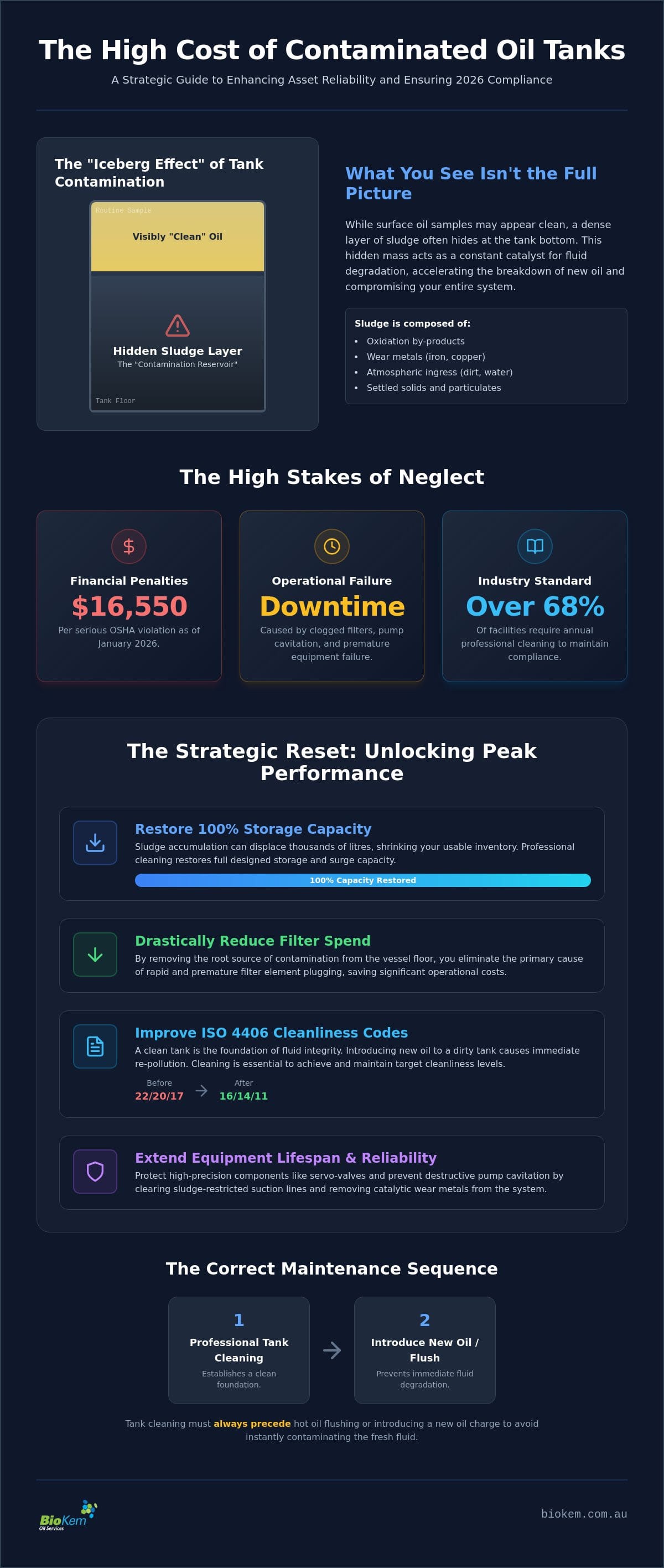
Industrial oil tank cleaning is the systematic mechanical and chemical removal of accumulated contaminants from storage vessels. In 2026, the industry has shifted from reactive, emergency cleaning toward scheduled asset management. This transition is driven by the need for higher reliability and stricter environmental oversight. One of the primary industrial oil tank cleaning benefits is the mitigation of the “Iceberg Effect.” While surface oil samples may appear within specification during routine analysis, the tank floor often hides a dense layer of sludge. This hidden mass consists of oxidation by-products, wear metals, and atmospheric ingress that have dropped out of the fluid stream over time.
To better understand this concept, watch this helpful video:
These settled solids act as a constant catalyst for fluid degradation, accelerating the chemical breakdown of fresh oil. To address these challenges, many operators now utilize automated tank cleaning machines to ensure a thorough reset. These systems provide a level of precision and safety that traditional manual methods can’t match, especially in complex industrial environments where precision is paramount.
Why Filtration Alone is Not Enough
Relying solely on filtration creates a false sense of security for many maintenance managers. Stagnant sludge at the tank bottom functions as a “contamination reservoir” that kidney-loop systems simply cannot reach. While standard filtration effectively manages suspended particles, it doesn’t address the heavy, settled solids that remain at the base of the vessel. Filtration becomes economically inefficient when the cost of replacing prematurely plugged elements exceeds the amortized cost of a professional tank reset.
The Impact on Oil ISO 4406 Cleanliness Codes
Tank hygiene is the foundation of fluid integrity. Without a clean vessel, even the highest quality lubricant is immediately re-polluted upon entry. Achieving and maintaining stringent target ISO 4406 cleanliness levels is nearly impossible when fresh oil is introduced to a contaminated environment. This relationship underscores the necessity of integrated oil contamination control to ensure long-term reliability and equipment health.
Operational and Financial Benefits of Regular Maintenance
Regular tank maintenance isn’t merely a line item in a budget. It’s a critical recovery of lost operational assets. Over time, sludge accumulation can displace thousands of litres of storage capacity, effectively shrinking your usable inventory. Professional cleaning restores 100% of the designed storage and surge capacity, ensuring that your facility operates at its intended scale. One of the most immediate industrial oil tank cleaning benefits is a significant reduction in “filter spend.” By removing the source of contamination at the vessel floor, you stop the cycle of rapid element plugging that plagues many industrial sites.
Operational reliability also depends on fluid dynamics. Sludge-restricted suction lines are a primary cause of pump cavitation. This mechanical stress can destroy pump internals in a very short timeframe. By clearing these obstructions, you maintain steady flow and protect expensive upstream components. Following established protocols, such as those found in API Standard 2015, ensures these cleaning operations are performed with the technical rigor required for high-risk environments. This approach preserves the oil’s additive package by removing catalytic wear metals like iron and copper that otherwise accelerate fluid oxidation and chemical breakdown.
Extending Asset Lifespan and Reliability
Tank cleanliness directly impacts high-precision components like servo-valves. Particulate matter migrating from the tank floor often causes servo-valve stiction, leading to erratic system behaviour and unscheduled downtime. Moisture-laden sludge also promotes internal tank corrosion and microbial growth. This localized pitting can compromise the vessel’s structural integrity over several years. Additionally, keeping the oil free of suspended solids prevents heat exchanger fouling, which ensures that thermal management systems remain efficient and don’t overheat critical machinery.
Hydrocarbon Recovery and Environmental ROI
Modern cleaning processes prioritize hydrocarbon recovery rather than simple waste disposal. Specialist technicians separate usable oil from waste sludge during the cleaning process, which significantly reduces the volume of material destined for hazardous waste facilities. This lowers environmental impact and provides a measurable return on investment. Integrating these steps into a proactive maintenance strategy shifts your facility’s focus from reactive waste management to resource preservation. For those looking to optimize their lubrication systems, reviewing professional tank cleaning and flushing solutions is a logical first step toward long-term reliability.
Safety and Compliance Checklist for Confined Space Entry
Safety is the primary metric of success in any tank maintenance project. Industrial oil tanks are inherently high-risk confined spaces because they trap toxic vapours, suffer from oxygen deficiency, and present significant slip hazards. As of January 2026, the maximum OSHA penalty for a serious violation is $16,550 per citation. This financial risk, combined with the ethical responsibility to protect workers, makes strict compliance essential. One of the most significant industrial oil tank cleaning benefits is the establishment of a controlled, documented environment that prevents workplace injuries and avoids costly regulatory fines.
Modern industrial standards for 2026 place a heavy emphasis on “Non-Entry” cleaning methods. By utilizing robotic systems or external high-pressure nozzles, companies can achieve a thorough clean without exposing personnel to the internal atmosphere. When entry is unavoidable, technicians must wear specialized Personal Protective Equipment (PPE), including chemical-resistant suits and supplied-air respirators. Rigorous documentation is mandatory. Every project requires a Job Safety and Environmental Analysis (JSEA) and a signed confined space entry permit before work begins. These documents serve as a technical roadmap for identifying hazards and outlining the specific controls used to mitigate them.
The Confined Space Preparation Checklist
Before any technician approaches a tank hatch, a strict preparation sequence must be followed. This ensures the physical and atmospheric safety of the site:
- Isolation and LOTO: All inlet and outlet valves, as well as internal heating coils, must be mechanically isolated and secured using Lock-Out Tag-Out procedures.
- Atmospheric Testing: Technicians must use calibrated gas detectors to measure Lower Explosive Limits (LEL), Oxygen (O2) levels, Hydrogen Sulfide (H2S), and Carbon Monoxide (CO).
- Continuous Ventilation: Mechanical blowers must provide a constant supply of fresh air to prevent the accumulation of hazardous fumes during the process.
- Emergency Rescue Plan: A trained “stand-by” person must remain outside the hatch at all times, equipped with a tripod, winch, and communication tools for immediate extraction if needed.
Mitigating Environmental and Fire Risks
Cleaning operations involving flammable hydrocarbons require specialized ignition control. Static electricity is a constant threat during the pumping of fluids, so all equipment must be properly grounded and bonded to the tank structure. Spill containment is also a critical requirement. Technicians must deploy bunding and absorbent materials around the work area to prevent any accidental release into the environment. Finally, all removed waste must be handled according to EPA regulations. This includes proper labelling and manifesting of materials to ensure they are tracked from the site to the final disposal or recycling facility, maintaining full regulatory transparency.
Integrating Tank Cleaning into a Proactive Maintenance Strategy
Maintenance managers often treat tank cleaning as an isolated task, but its true value emerges when integrated into a broader lubrication program. One of the primary industrial oil tank cleaning benefits is the foundation it provides for subsequent high-velocity hot oil flushing. Without a pristine tank, any flushing operation merely recirculates existing contaminants back into the pipework. Similarly, introducing a fresh oil charge into a vessel containing residual sludge is a recipe for immediate fluid degradation. The new oil’s detergent package will naturally lift settled contaminants, effectively “pre-polluting” the expensive new lubricant before the system even starts.
Proactive managers rely on routine oil analysis to identify the chemical markers of degradation before mechanical failure occurs. High varnish potential or rising acid numbers often indicate that the tank environment is contributing to fluid instability. Varnish mitigation systems also operate with much higher efficiency when the tank is free of bottom-sludge, as these systems don’t have to compete with a constant influx of settled oxidation by-products. By addressing the root cause of contamination at the source, you ensure that your secondary filtration and mitigation systems can perform their intended roles without being overwhelmed.
The Post-Cleaning Inspection
An empty tank offers a rare opportunity for a comprehensive internal audit. Technicians should conduct a visual inspection for structural integrity, looking specifically for coating delamination or localized pitting. In fuel storage systems, this is the time to check for microbial growth, commonly known as “diesel bug,” which can thrive at the fuel-water interface and cause rapid filter plugging. Verifying the functionality of internal components like heating coils and baffles ensures the entire system is ready for another multi-year service cycle without the risk of internal mechanical failure.
Scheduling: When is the Best Time to Clean?
Identifying the right time for a clean requires more than just a calendar. Utilizing Patch Test Kits allows on-site teams to visually identify heavy particulate loading that suggests sludge is reaching critical levels. Most facilities plan these interventions during major plant shutdowns to minimize operational impact. In 2026, data-driven maintenance platforms use historical analysis and sensor data to predict optimal cleaning intervals with high precision. These data-led industrial oil tank cleaning benefits allow for a more predictable maintenance budget and a significantly reduced risk of emergency interventions during peak production periods.
For technical support in planning your next maintenance cycle, explore BioKem’s specialist tank cleaning and flushing services to ensure your assets remain reliable.
Professional Oil Tank Solutions with BioKem
Our methodology focuses on the intersection of mechanical engineering and fluid chemistry. We don’t just remove waste; we reset the environment where your lubricants live. This process is essential for maintaining the performance of your machinery and preventing the chemistry of your oil from being compromised by legacy contaminants. By utilizing BioKem’s specialized services, you turn a standard maintenance task into a strategic advantage for your facility’s long-term operational health.
Our Technical Capabilities
BioKem’s onsite deployment involves technicians who are specifically trained for complex industrial projects and confined space entries. We don’t just clean; we validate. Every service is integrated with laboratory analysis to provide a full “cleanliness certificate” once the project is complete. This documentation confirms that the fluid and the vessel meet your specific target ISO 4406 codes. As the Australian partner for Filters S.p.A. Products, we also provide world-class hardware that ensures long-term fluid integrity and protection against future ingress.
Partnering for Long-Term Reliability
Transitioning from reactive repairs to proactive management requires the right tools and expertise. BioKem offers a comprehensive suite of solutions, including specialist oil filters and advanced filtration systems. For facilities that require temporary onsite filtration, our equipment hire options provide access to professional-grade hardware without the capital expenditure. Having a single provider for analysis, cleaning, and filtration streamlines communication and ensures a consistent standard of quality across your entire lubrication program. This holistic approach is one of the most effective industrial oil tank cleaning benefits, as it eliminates the gaps in reliability that often occur when using multiple vendors.
BioKem’s focus on sustainable, life-science-oriented alternatives ensures your operations remain efficient while minimizing their ecological footprint. Our team is ready to help you optimize your fluid systems and protect your most valuable assets. Contact BioKem today for a professional assessment of your industrial tank cleaning requirements and take the first step toward a more reliable, proactive maintenance future.
Securing Your Operational Future with Precision Maintenance
Transitioning from reactive cleaning to a proactive fluid management strategy is essential for any facility aiming for peak reliability in 2026. By addressing the “Iceberg Effect” of settled sludge, you restore lost storage capacity and protect your additive packages from catalytic degradation. These industrial oil tank cleaning benefits form the foundation of a robust maintenance cycle that ensures compliance with updated OSHA and EPA standards while extending the service life of your high-precision components.
BioKem brings over 15 years of industrial lubrication expertise to every project. As the sole Australian distributor for Filters S.p.A., we integrate world-class hardware with specialized technical services like hot oil flushing and varnish mitigation. Our team provides the transparency and technical rigor required to solve complex environmental and operational challenges. Request a Technical Consultation for Industrial Tank Cleaning today to evaluate your system’s needs. Investing in professional tank hygiene today guarantees a more efficient, safer, and reliable production environment for years to come.
Frequently Asked Questions
How often should an industrial oil tank be cleaned?
Over 68% of industrial facilities require scheduled cleaning at least once every 12 months to maintain compliance with safety regulations. While this is a standard benchmark, factors such as high fluid turnover or significant environmental ingress may necessitate more frequent intervals. Regular oil analysis and patch testing serve as the primary diagnostic tools for determining the optimal cleaning schedule for your specific assets.
Can I clean an oil tank while the system is still running?
No, the system must be fully isolated before cleaning begins. Technicians must apply Lock-Out Tag-Out (LOTO) procedures to all inlet and outlet valves, as well as internal heaters, to ensure a safe working environment. Attempting to clean during operation would bypass the primary industrial oil tank cleaning benefits by risking the circulation of dislodged sludge into sensitive downstream components.
What are the main signs that my tank has significant sludge build-up?
The most immediate indicators are rapid filter plugging and a sudden increase in “filter spend.” You may also observe erratic servo-valve behavior or pump cavitation caused by sludge-restricted suction lines. Because surface oil samples often look clean while the tank floor remains contaminated, a visual inspection or a patch test kit is the most reliable way to confirm heavy particulate loading.
Is confined space entry always necessary for industrial tank cleaning?
Confined space entry is not always mandatory in 2026. Modern industrial standards prioritize “Non-Entry” methods using automated robotic systems or external high-pressure nozzles to remove contaminants. These technologies mitigate human risk and can often complete cleaning cycles 40% to 60% faster than manual methods, though some complex tank geometries may still require a technician for final detailing.
How does sludge accumulation affect the chemical health of the oil?
Sludge acts as a contamination reservoir that serves as a catalyst for fluid oxidation. Settled wear metals, such as iron and copper, actively deplete the oil’s additive package and accelerate chemical breakdown. Additionally, moisture trapped within the sludge layer promotes microbial growth and internal vessel corrosion, which compromises both the fluid integrity and the structural health of the tank.
What happens to the waste oil and sludge removed during cleaning?
Professional cleaning focuses on hydrocarbon recovery to minimize environmental waste. The process involves separating usable oil from the waste sludge, which significantly reduces the volume of material destined for hazardous waste facilities. All remaining waste must be properly manifested and disposed of in accordance with EPA regulations and the Resource Conservation and Recovery Act (RCRA).
Can professional cleaning help with varnish issues in turbine systems?
Yes, professional cleaning is a critical step in a varnish mitigation strategy. By removing the bottom-sludge, you eliminate the source of oxidation by-products that otherwise saturate the fluid. This mechanical reset ensures that your varnish removal systems can operate efficiently without being constantly overwhelmed by legacy contaminants re-entering the fluid stream from the tank floor.
What safety certifications should I look for in a tank cleaning provider?
You should ensure your provider strictly adheres to OSHA 29 CFR 1910.146 for confined space entry and follows the guidelines set in API Standard 2015. These standards mandate rigorous gas detection, continuous ventilation, and the presence of a trained stand-by person. Verifying these safety protocols is essential to realizing the full industrial oil tank cleaning benefits while protecting your personnel and facility.