

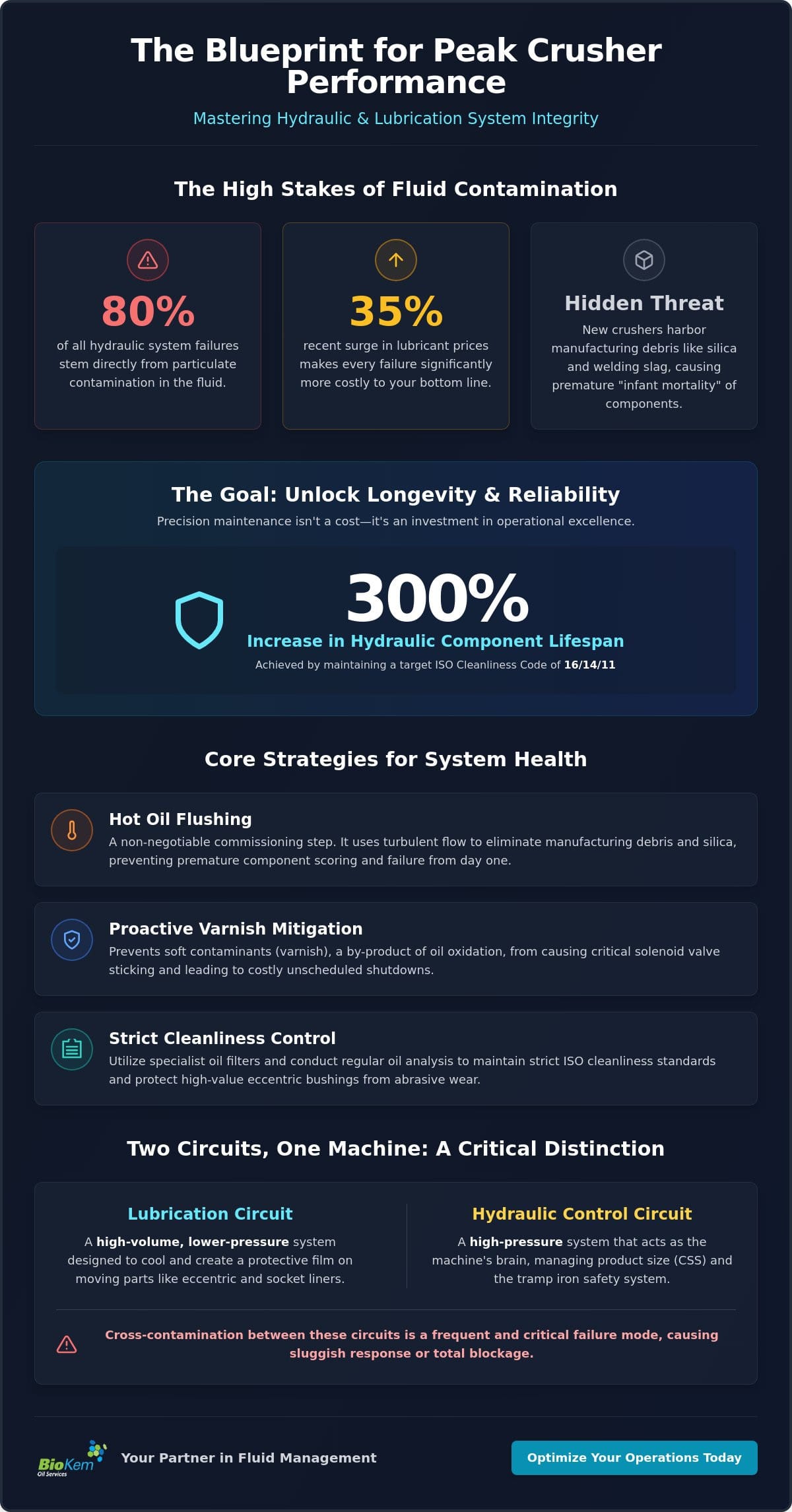
Did you know that up to 80% of all hydraulic system failures stem directly from particulate contamination in the fluid? For heavy-duty machinery, this isn’t just a minor technicality; it’s a significant operational risk. Mastering conical crusher hydraulic oil system commissioning and maintenance is your primary defense against the recent 35% surge in lubricant prices and the threat of unscheduled downtime. Maintaining a target cleanliness code of 16/14/11 under ISO 4406 can extend the life of your hydraulic components by up to 300%, making precision a matter of fiscal responsibility.
It’s frustrating when a seized valve or a worn eccentric bushing halts your production line right when you’re meeting peak demand. You deserve a system that operates with quiet confidence and technical reliability. This article outlines the rigorous protocols required to help you achieve zero failures during your first 1,000 hours of operation. We’ll explore the necessity of hot oil flushing, the implications of the latest ISO 18464 energy-efficiency standards, and how to build a predictive maintenance schedule that respects both your bottom line and emerging environmental regulations regarding PFAS and biodegradable fluids.
Key Takeaways
- Implement hot oil flushing during the commissioning phase to eliminate manufacturing debris and silica that often cause premature component failure.
- Master the protocols for conical crusher hydraulic oil system commissioning and maintenance to ensure the hydraulic control circuit manages product sizing with precision.
- Adopt proactive varnish mitigation strategies to prevent soft contaminants from causing critical solenoid valve sticking and unscheduled shutdowns.
- Utilize specialist oil filters and regular oil analysis to maintain strict ISO cleanliness standards and protect high-value eccentric bushings.
- Leverage professional equipment hire for periodic system decontamination to lower the total cost of ownership and enhance the sustainability of your mining operations.
The Critical Role of Hydraulic and Lubrication Systems in Cone Crushers
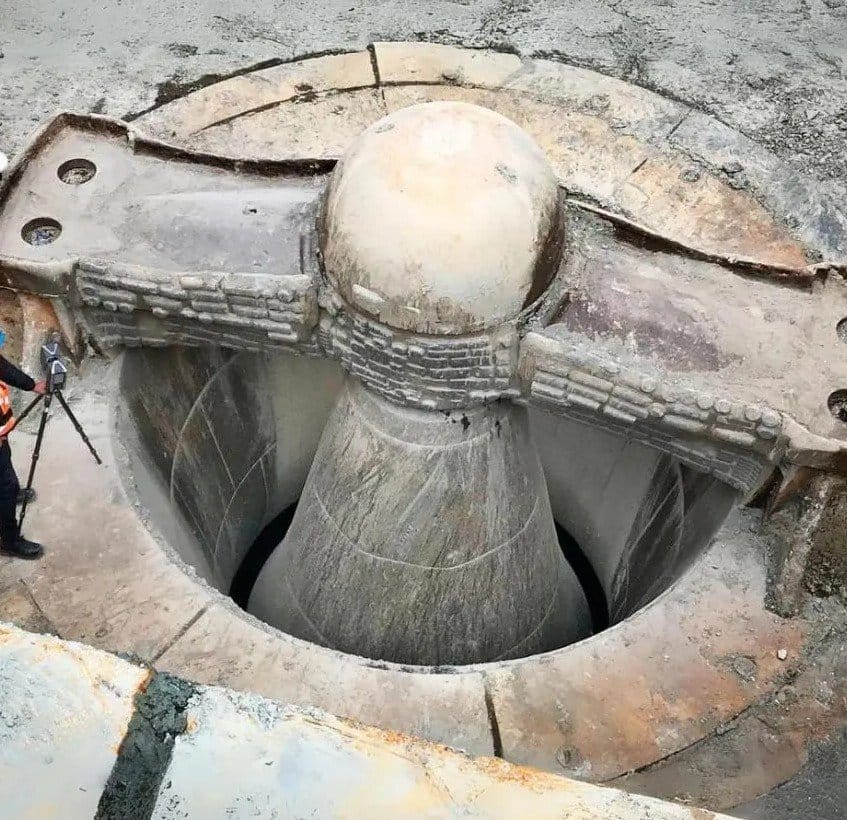
Cone crushers rely on high-pressure fluid power to maintain operational integrity and production consistency. Understanding the nuances of conical crusher hydraulic oil system commissioning and maintenance starts with recognizing that these machines utilize two distinct fluid circuits. While they often share a common reservoir or proximity, their mechanical objectives are entirely different. One circuit ensures the physical survival of moving parts, while the other governs the machine’s output and safety. The fundamental cone crusher operation involves a complex interplay between mechanical force and hydraulic precision.
To better understand this concept, watch this helpful video:
The hydraulic circuit is the brain of the machine. It manages the Closed Side Setting (CSS), which determines final product size by adjusting the main shaft position. It also acts as the primary safety mechanism through the tramp iron protection system. When an uncrushable object, like a piece of loader tooth, enters the chamber, hydraulic relief valves allow the bowl or shaft to move instantly, preventing catastrophic frame failure. However, these high-pressure circuits generate significant heat. This thermal stress accelerates oxidation, leading to the formation of varnish that can seize the very valves meant to protect the equipment. Effective conical crusher hydraulic oil system commissioning and maintenance requires a deep understanding of how these fluids degrade under pressure.
Lubrication vs. Hydraulic Circuits: Understanding the Difference
The lubrication circuit is a high-volume, lower-pressure system designed to cool and protect the eccentric, socket liner, and step bearings. In contrast, the hydraulic control circuit operates at much higher pressures to manage adjustment motors and clamping cylinders. Cross-contamination between these circuits is a frequent failure mode. If the thicker lubrication oil migrates into the high-precision hydraulic valves, it causes sluggish response times or total blockage. Proactive varnish mitigation is often necessary to keep these distinct circuits operating within their designed parameters.
The Impact of Oil Health on Crushing Efficiency
Fluid viscosity directly dictates the stability of the eccentric throw. If the oil is too thin due to heat or degradation, the protective film fails, leading to metal-on-metal contact. Cleanliness is equally vital. While oil might look clear to the naked eye, microscopic silt can still cause 70% to 80% of system failures. This is why hot oil flushing is a critical part of the initial commissioning process. Maintaining a specific ISO 4406 cleanliness code ensures that tramp release systems react in milliseconds, protecting your capital investment from sudden, destructive forces.
Best Practices for Commissioning: Why Hot Oil Flushing is Non-Negotiable
New cone crushers arrive with a hidden threat: manufacturing debris. Despite rigorous factory standards, internal surfaces often harbor silica, welding slag, and metallic shavings from the assembly process. If you skip a specialized cleaning phase, these particles cause “infant mortality” by scoring expensive eccentric bushings within days of start-up. A standard oil change is insufficient. It fails to dislodge contaminants trapped in dead-legs or adhering to pipe walls. This is why BioKem’s Hot Oil Flushing services are a non-negotiable step in professional conical crusher hydraulic oil system commissioning and maintenance.
The process relies on the physics of turbulent flow. In standard operation, fluid moves in a laminar fashion, which is smooth and efficient but leaves debris undisturbed. By heating the oil and utilizing high-capacity pumps, technicians achieve a high Reynolds number. This creates a chaotic, scouring effect that lifts particulates and carries them to high-efficiency filtration units. Following best practices in hydraulic filtration ensures that these contaminants are permanently removed before the first crushing cycle begins. Establishing a baseline oil analysis report at this stage is vital, as it provides a reference point for all future wear monitoring.
The Hot Oil Flushing Protocol for New Assets
Executing a successful flush requires a methodical approach to protect the machine’s most sensitive components. First, we install temporary jumpers to bypass control valves and cylinders. This prevents debris from damaging precision-machined surfaces during the cleaning cycle. Next, heating the oil reduces its viscosity, allowing the fluid to move faster and reach the velocities necessary for turbulent flow. Finally, we circulate the fluid at three to four times the normal operating flow rate. This mechanical energy effectively “scrubs” the internal piping clean, ensuring the system is ready for high-pressure service.
Verifying Cleanliness with Patch Test Kits
You can’t manage what you can’t see. Visual verification through patch test kits for onsite verification allows technicians to see the physical evidence of contamination. By drawing a fluid sample through a membrane, we can identify metallic flakes or silica that electronic counters might misinterpret. For a successful commissioning, we aim for an ISO 4406 target of 16/14/11. This level of cleanliness provides the necessary insurance for high-pressure hydraulic circuits. If your current commissioning plan lacks this level of detail, consider how specialized flushing services could safeguard your asset’s longevity.
Maintenance Strategies: Monitoring ISO Cleanliness and Oil Health
Effective management moves beyond simple time-based oil changes. Modern conical crusher hydraulic oil system commissioning and maintenance relies on condition-based monitoring centered on ISO 4406 cleanliness codes. While some operators wait for a specific hourly interval to pass before servicing, proactive teams use real-time data to intervene before wear becomes catastrophic. Maintaining your oil in the technical “sweet spot” between 40°C and 55°C is essential for asset longevity. Temperatures exceeding this range accelerate oxidation and varnish formation, while lower temperatures increase fluid viscosity and reduce the efficiency of the cone crusher hydraulic and lubrication systems.
Interpreting Oil Analysis for Cone Crushers
Regular oil analysis is your most powerful diagnostic tool. It’s not enough to check for visual clarity; you must monitor specific wear metals like Copper, Lead, and Tin. These elements provide a direct window into the health of your eccentric bushings and thrust plates. We recommend tracking the PQ Index and utilizing specialized ferrography to detect early-stage bearing fatigue that standard spectroscopy might miss. These methods identify larger ferrous particles that signal imminent mechanical failure. Additionally, always look for signs of water ingress. Whether it’s a pinhole leak in a cooler or atmospheric condensation, water destroys the load-carrying capacity of your lubricant. For a deeper dive into these protocols, read our guide on Advanced Fluid Management: A Strategic Guide to Industrial Lubrication Reliability.
Implementing High-Efficiency Filtration
Standard OEM filters often struggle in the high-dust environments typical of mining and quarrying sites. They’re typically designed for general use, not for the sub-micron silt that causes valve sticking and accelerated component wear. High-efficiency depth filtration is a superior alternative because it removes both solid particulates and soft contaminants. As the Australian distributor for Filters S.p.A. high-performance products, we provide specialized solutions that maintain hydraulic circuit integrity even under extreme duty cycles. Investing in superior filtration reduces the total volume of oil consumed and protects the delicate balance of your crusher’s internal components. This shift from reactive to proactive maintenance is the only way to ensure the 16/14/11 cleanliness target is consistently met throughout the machine’s life cycle.
Troubleshooting Common Failures: Varnish Mitigation and Blockage Prevention
Conical crusher hydraulic oil system commissioning and maintenance often focuses on mechanical alignment, yet chemical degradation is frequently the root cause of operational instability. Varnish, a byproduct of oil oxidation, acts as a silent contaminant that traditional filtration cannot address. It forms a sticky film on internal surfaces, leading to erratic solenoid valve behavior and sluggish response times in the hydraulic adjustment circuit. If your crusher exhibits a “spongy” response or fails to maintain its Closed Side Setting precisely, the culprit is likely a buildup of these soft contaminants within the precision control valves. Identifying these symptoms early prevents the total circuit blockages that lead to costly, unscheduled shutdowns.
Varnish Mitigation: Beyond Simple Filtration
Traditional mechanical filters are designed to capture hard particles, but varnish precursors are sub-micron in size and remain dissolved in the oil at operating temperatures. As the oil cools or reaches saturation, these precursors precipitate out, coating internal components with a resinous layer. Mechanical filters simply cannot trap these dissolved oxidation products. Specialized electrostatic or chemical cleaning methods are required to effectively strip these precursors from the fluid. By implementing BioKem’s Varnish Removal Systems, you can eliminate these contaminants before they bond to metal surfaces, ensuring the reliable operation of your tramp release and adjustment systems. This proactive approach is essential for maintaining the millisecond response times required for machine protection.
Water Contamination and Vacuum Dehydration
Moisture is a secondary but equally destructive factor in hydraulic health. Water ingress triggers oil hydrolysis, a chemical reaction that permanently depletes vital additive packages and reduces the fluid’s load-carrying capacity. This degradation often manifests as increased wear in the eccentric bushings, even if the oil appears visually clear. Vacuum dehydration is the gold standard for managing this risk. Unlike simple centrifugal separators, vacuum units remove both free and emulsified water by lowering the boiling point of the moisture within a vacuum chamber. This process restores the oil’s dielectric strength and chemical stability without damaging the base oil or additives. For a comprehensive look at managing these invisible threats, consult our Oil Contamination Control: The Definitive Guide to Industrial Lubrication Reliability.
To protect your assets from these complex failure modes, consider a technical review of your current fluid health. You can explore our varnish mitigation solutions to ensure your hydraulic circuits remain free of soft contaminants and fully responsive under load.
Optimising Crusher Longevity with Professional Oil Management Services
The final phase of a robust asset management plan involves shifting from periodic tasks to an integrated life-cycle strategy. Professional oil management services provide the technical oversight necessary to ensure that the rigorous standards established during the initial conical crusher hydraulic oil system commissioning and maintenance phases are upheld for the life of the machine. By focusing on the continuous health of the lubricant, mining operations can significantly reduce their total cost of ownership. This isn’t merely about preventing failure; it’s about maximizing the efficiency of every liter of oil and every mechanical component within the crusher’s dual circuits.
BioKem’s expertise allows for a seamless transition from installation to long-term reliability. We focus on the intersection of technical performance and environmental responsibility. Purifying existing oil stocks rather than opting for synthetic replacement reduces waste and aligns with modern ESG (Environmental, Social, and Governance) targets. This approach transforms a maintenance cost into a strategic asset preservation activity. It ensures that your operation remains compliant with evolving regional regulatory standards regarding fluid disposal and environmental safety, positioning your brand as a responsible leader in the industrial sector.
The Benefits of Onsite Oil Purification
Onsite oil purification offers a dual advantage of sustainability and operational efficiency. By removing contaminants while the oil is still in the system or during scheduled mechanical repairs, you eliminate the logistical burden of oil disposal and the high purchase price of new fluids. This is particularly critical in Australian mining conditions where remote locations make fluid transport expensive and logistically complex. Our customized programs focus on restoring fluid properties to “as-new” condition. This minimizes downtime and ensures the asset is ready for an immediate return to service with a clean bill of health, often exceeding the original ISO cleanliness targets.
Equipment Hire for Critical Maintenance Windows
Not every site requires permanent ownership of advanced filtration hardware. Equipment hire provides a flexible solution, allowing operators to access world-class technology like vacuum dehydration units and high-velocity flushing rigs without a significant capital expenditure. This is especially beneficial during critical maintenance windows or emergency recovery scenarios where rapid deployment is essential to mitigate production losses. Accessing specialized equipment on a project basis allows for periodic “polishing” of the system, removing the varnish and moisture that accumulate between major service intervals. For those planning their next major shutdown, our Industrial Oil Filtration Equipment Hire: The 2026 Buying Guide offers a detailed framework for selecting the right technology for your specific site requirements. Partnering with a specialist ensures that your conical crusher hydraulic oil system commissioning and maintenance strategy remains data-driven, efficient, and ecologically sound.
Securing the Future of Your Crushing Assets
Operating high-capacity cone crushers requires more than mechanical oversight; it demands a sophisticated approach to fluid chemistry and contamination control. Prioritizing hot oil flushing during the initial setup and maintaining strict ISO 4406 cleanliness codes safeguards your equipment against the most common causes of premature failure. Precision in conical crusher hydraulic oil system commissioning and maintenance is the only reliable way to protect your investment from the destructive effects of varnish and moisture ingress.
As the sole Australian distributor for Filters S.p.A., BioKem provides the technical expertise and specialist hardware needed to maintain peak operational reliability. Our team combines comprehensive onsite laboratory testing with advanced varnish mitigation and vacuum dehydration services to keep your assets running efficiently while meeting stringent environmental standards. We focus on restoring fluid health to “as-new” condition, reducing the need for synthetic replacements and lowering your total cost of ownership.
Contact BioKem for professional Hot Oil Flushing and onsite oil analysis to ensure your systems achieve maximum longevity and performance. With the right technical partner, your operation can move toward a zero-failure future with quiet confidence.
Frequently Asked Questions
How often should I perform oil analysis on my cone crusher?
Perform oil analysis monthly or every 250 to 500 operating hours to establish a reliable wear trend. This frequency allows for the early detection of copper or lead from eccentric bushings before catastrophic failure occurs. Consistent monitoring is a pillar of conical crusher hydraulic oil system commissioning and maintenance, ensuring that fluid health remains within OEM specifications throughout the asset’s life cycle.
What is the ideal ISO 4406 cleanliness code for cone crusher hydraulic oil?
The ideal target for high-pressure crusher hydraulics is an ISO 4406 code of 16/14/11. Achieving this level of cleanliness can extend component life by up to 300% compared to systems operating with higher particulate counts. Maintaining this standard requires high-efficiency filtration and regular verification through patch testing to identify microscopic silt that standard sensors might overlook.
Can I use standard hydraulic oil, or does it require specific additives for conical crushers?
Conical crushers require high-performance hydraulic oils, typically HM or HV grades, with specific anti-wear and anti-foam additives. Standard hydraulic oils often lack the shear stability and thermal resistance needed to handle the intense pressures and heat generated in the crushing chamber. Always consult the equipment manufacturer’s specifications to ensure the lubricant’s viscosity and additive package match the machine’s operational demands.
What are the first signs of varnish formation in my hydraulic circuit?
Sluggish valve response and “spongy” hydraulic adjustment controls are the primary indicators of varnish formation. You might also notice a brown, resinous film on internal valve components or a sudden increase in operating temperatures. Because varnish is a soft contaminant, it often goes undetected by standard particle counters, necessitating specialized oil analysis to identify the presence of oxidation precursors before they seize critical solenoids.
Is hot oil flushing necessary after a major component replacement, such as a main shaft?
Hot oil flushing is essential after replacing major components like the main shaft or eccentric to remove any debris introduced during the repair process. Even in a clean workshop, new parts and open circuits invite contaminants like metallic shavings or dust. A high-velocity flush ensures these particles are captured by external filters rather than being carried into the precision-machined surfaces of your new components.
How does water contamination affect the load-carrying capacity of crusher oil?
Water contamination triggers oil hydrolysis, which permanently depletes the lubricant’s additive package and destroys its load-carrying capacity. Even small amounts of moisture reduce the film strength necessary to prevent metal-on-metal contact in the step bearings and socket liners. This chemical degradation leads to accelerated wear and corrosive damage, making vacuum dehydration a necessary intervention for any system showing signs of emulsification.
What is the difference between mechanical filtration and vacuum dehydration?
Mechanical filtration uses physical media to remove solid particulates from the fluid, while vacuum dehydration removes dissolved water and gases through evaporation. While high-efficiency filters are vital for maintaining ISO cleanliness, they cannot remove the moisture that compromises oil chemistry. A comprehensive maintenance strategy utilizes both technologies to ensure the hydraulic fluid remains free of both abrasive solids and chemical contaminants.
How can I prevent oil circuit blockages in high-dust environments?
Utilize high-efficiency depth filtration and high-quality tank breathers to prevent oil circuit blockages in high-dust environments. Standard OEM filters often fail to capture the fine silica dust common in mining sites, leading to silt buildup in the hydraulic control circuit. Implementing a proactive schedule for conical crusher hydraulic oil system commissioning and maintenance that includes regular tank cleaning and air filtration will significantly reduce the risk of particulate-induced blockages.