

What if the traditional lifecycle of industrial machinery isn’t a fixed countdown, but a variable you can control? Most maintenance managers accept that bearing failures and unscheduled downtime are inevitable costs of doing business. You’ve likely felt the pressure of rising lubricant costs, which reached increases of up to 35% in early 2026, alongside the constant challenge of meeting stricter ESG targets for waste reduction. It leads to a fundamental question for any reliability engineer: Can equipment last indefinitely if lube oil is clean?
We understand that the goal isn’t just to survive the next shift; it’s to achieve predictable maintenance cycles and reduced consumption. While mechanical fatigue eventually claims every asset, maintaining pristine oil chemistry can push equipment toward its theoretical life limit, often extending service life by ten times. This article explores the technical reality of lubrication reliability and the impact of the ISO 4406 standard. We’ll examine how advanced purification methods provided by BioKem Oil Services, such as vacuum dehydration and hot oil flushing, transform oil from a consumable waste product into a permanent, manageable asset.
Key Takeaways
- Explore the metallurgical reality behind the question, “Can equipment last indefinitely if lube oil is clean?” by examining how fluid film thickness protects against surface fatigue.
- Learn how to apply the Life Extension Factor (LEF) as a metric to quantify the operational and financial benefits of superior oil cleanliness.
- Identify why standard kidney-loop filtration is often inadequate and how advanced methods like varnish mitigation address contaminants on internal system surfaces.
- Align your maintenance strategy with sustainability goals by adopting circular economy principles that minimize waste oil disposal and refining emissions.
- Establish a diagnostic foundation for asset longevity through professional oil analysis, enabling a transition from reactive repairs to proactive fluid management.
Table of Contents
-
The Theoretical Limit: Can Machinery Truly Last Indefinitely?
-
Beyond Filtration: Technical Interventions for Asset Immortality
The Theoretical Limit: Can Machinery Truly Last Indefinitely?
In metallurgy, the concept of the "Fatigue Limit" suggests that if the stress on a component remains below a specific threshold, it won’t fail from cyclic loading. In a lubricated environment, this threshold is heavily influenced by the presence of microscopic contaminants that disrupt the fluid film. Can equipment last indefinitely if lube oil is clean? While absolute immortality is a theoretical ideal, reducing mechanical wear to negligible levels is a practical possibility. By maintaining oil cleanliness at extreme levels, you move the asset into a state of "functional indefinite life." This is a condition where the rate of physical degradation is slower than the pace of the machinery’s technological replacement cycle.
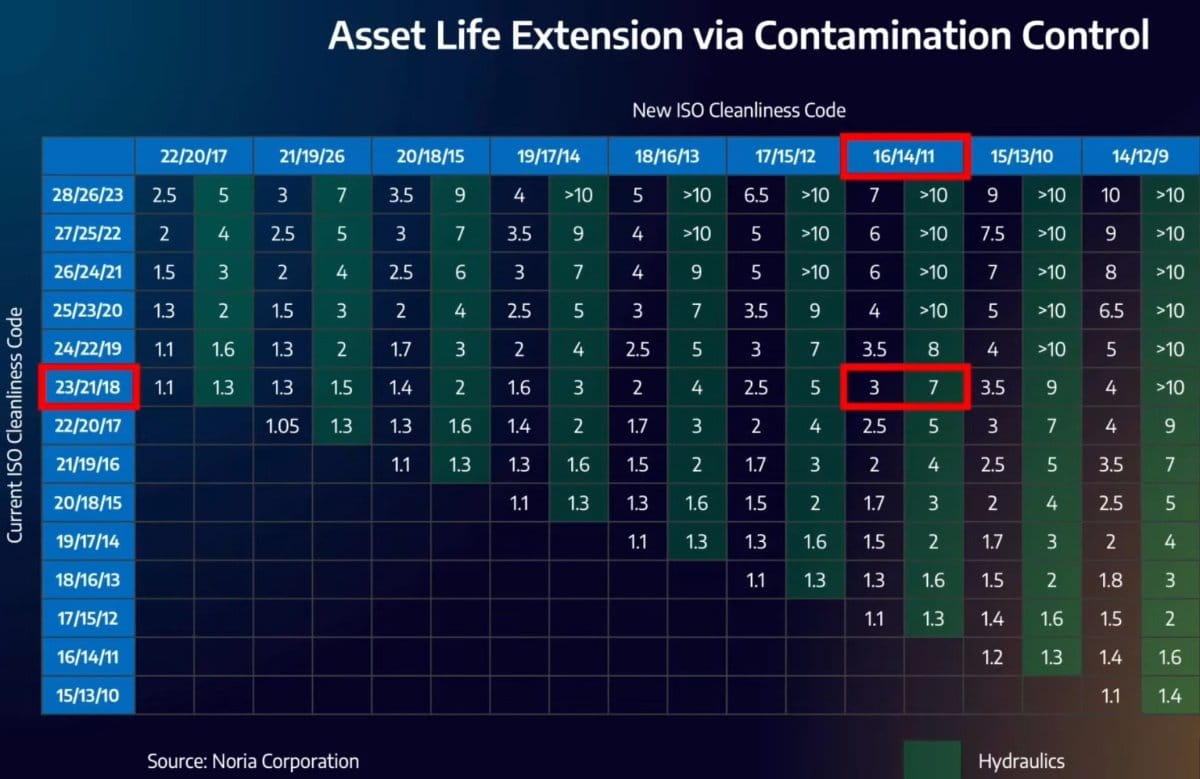
Cleanliness isn’t a subjective observation; it’s a measurable metric defined by ISO 4406. This international standard quantifies particle counts at three specific levels: 4, 6, and 14 microns. For high-pressure industrial systems, hitting a target cleanliness code like 16/14/11 is essential for reliability. Achieving these targets requires a shift in perspective. Longevity isn’t a byproduct of good luck. It’s a deliberate choice made through rigorous technical intervention and proactive fluid management, which is the core BioKem Oil Services perspective.
To better understand how cleanliness impacts your machinery’s lifespan, watch this technical overview:
The Role of the Lubricant Film
Elastohydrodynamic lubrication (EHL) creates a thin fluid barrier that prevents metal-to-metal contact between surface asperities under high pressure. This film is incredibly thin, typically measuring between 1 and 5 microns. When particles larger than this film thickness enter the load zone, they act as abrasive agents. They cause immediate surface fatigue, micro-pitting, and three-body abrasion. By removing these microscopic threats through advanced filtration, you preserve the integrity of the lubricant film. This prevents the initiation of the wear cycle and keeps the component’s surfaces in their original, machined state for significantly longer durations.
Why "New" Oil is Not the Answer
It’s a common industry misconception that fresh oil is pristine. Technical assessments conducted by BioKem Oil Services frequently show that new oil from drums or bulk deliveries contains 2 to 20 times the acceptable particle levels for sensitive equipment. Introducing unfiltered "new" oil actually resets the wear clock prematurely. It injects high concentrations of contaminants directly into the system’s most sensitive bearings and valves. As highlighted in the New Oil is not Clean Oil study, pre-filtering all lubricants before they reach the reservoir is a non-negotiable step. Without this intervention, the very act of an oil change could be shortening your equipment’s life rather than extending it.
The Three Pillars of Lubrication Longevity
Achieving asset immortality requires a transition from basic filtration to a holistic fluid management strategy. When engineers ask, "Can equipment last indefinitely if lube oil is clean?", they must look beyond simple particle removal. True longevity is built upon three technical pillars: physical purity, chemical stability, and environmental control. Reliability standards used by the U.S. Navy emphasize that rigorous quality testing is essential to promote healthy equipment life. BioKem Oil Services addresses these requirements through onsite services designed to implement a proactive maintenance strategy for Australian industrial sectors.
To quantify the return on investment for these interventions, we utilize the Life Extension Factor (LEF). This metric provides a multiplier for the expected service life of a component based on improvements in oil cleanliness. For example, moving a system from an ISO 21/19/16 to a 15/13/10 cleanliness level can result in an LEF of 4.0, effectively quadrupling the time between overhauls. This structured framework allows decision-makers to view oil purification as a capital preservation tool rather than a maintenance expense.
Physical Purity: Eliminating the Abrasives
Physical contaminants are the primary drivers of surface degradation. While many systems operate at ISO 18/16/13, high-pressure hydraulic systems require a gold standard of 14/12/11 to ensure maximum reliability. Particles in the 1 to 5 micron range cause three-body abrasion, where a hard particle becomes trapped between two moving surfaces and gouges both. This accelerates component failure exponentially. Maintenance teams can use patch test kits for immediate onsite verification to ensure these abrasive elements are kept below critical thresholds.
Chemical Stability: Managing Additives and Oxidation
Oil is a complex chemical solution that degrades under thermal and oxidative stress. As the additive package depletes, the base oil begins to break down, forming sub-micron soft contaminants known as varnish. Varnish is a silent killer of hydraulic valves and turbine bearings. It forms a sticky film that traps heat and causes mechanical seizing. Implementing varnish mitigation is a technical requirement for any operation aiming for true asset longevity. By maintaining the chemical equilibrium of the fluid, you prevent the formation of these damaging deposits.
Environmental Control: Moisture and Air
Environmental factors like moisture and air ingestion are often overlooked. Water is particularly destructive; it promotes rust and can accelerate oil oxidation by ten times. In the harsh Australian climate, humidity and fine dust are constant threats. Utilizing vacuum dehydration is the most effective method for removing both dissolved and free water from lubricants. Controlling the headspace in oil tanks prevents the ingestion of atmospheric contaminants, ensuring the internal environment remains stable and protected. If you’re concerned about your current fluid health, consult with BioKem Oil Services to identify specific wear patterns before they lead to failure.
Beyond Filtration: Technical Interventions for Asset Immortality
Standard kidney-loop filtration is a necessary defensive measure, but it’s often insufficient for achieving "indefinite" asset life. While these systems maintain fluid quality, they rarely address the contaminants adhering to the internal surfaces of pipes, reservoirs, and valve blocks. To truly address the question, Can equipment last indefinitely if lube oil is clean?, we must ensure the entire lubrication circuit is as pristine as the fluid itself. Professional organizations emphasize The value of lubricant cleanliness as a primary driver for reliability, yet many operators overlook the system’s internal hygiene. BioKem provides specialized interventions for critical Australian infrastructure that go beyond surface-level filtering to provide a deep system reset.
Hot Oil Flushing: The System Reset
A hot oil flushing procedure is the most effective way to remove built-up debris from complex piping networks. By heating the oil to 60-80 degrees Celsius and using high-capacity pumps, we achieve a Reynolds Number greater than 4000. This creates a high-velocity turbulent flow that physically dislodges scale, welding slag, and silica from pipe walls. During this process, we utilize paddle flushing screens to monitor the capture of debris in real-time. This mechanical scrubbing is essential during the commissioning of new assets or after a catastrophic component failure to prevent residual particles from destroying new parts.
Varnish Mitigation and EHC Fluid Maintenance
Standard mechanical filters are designed to capture solid particles, yet they are blind to the sub-micron precursors of varnish. Varnish forms when oil degrades chemically, creating soft contaminants that eventually bake onto hot surfaces. Resin-based varnish removal systems are required to chemically strip these precursors from the oil. This is particularly critical for Electro-Hydraulic Control (EHC) fluids used in power generation. These specialized fluids are prone to rapid degradation; without active chemical maintenance, they can cause governor valves to stick, leading to expensive downtime or safety risks.
Vacuum Dehydration for Total Water Removal
Moisture exists in lubricants in three states: free, emulsified, and dissolved. While centrifugal separators handle free water, they cannot touch dissolved moisture. Vacuum dehydration is the primary tool for total moisture removal. By lowering the atmospheric pressure inside a vacuum chamber, water boils off at temperatures as low as 50 degrees Celsius, leaving the oil’s additive package intact. Maintaining water levels below 100ppm is a critical reliability benchmark. Industry data suggests that reducing moisture to this level can double the service life of rolling-element bearings by preventing hydrogen embrittlement and surface pitting.
Sustainability and the Circular Economy of Lubrication
Adopting a circular economy model for industrial lubricants is no longer just an environmental ideal; it’s a strategic necessity. In the spring of 2026, the market experienced a compressed pricing cycle where synthetic lubricant prices rose by as much as 35%. These rising costs, combined with significant supply constraints expected to last until mid-2027, make the "drain and fill" approach unsustainable. When we ask, "Can equipment last indefinitely if lube oil is clean?", we’re also asking if the oil itself can last indefinitely. By treating oil as a manageable asset rather than a consumable waste product, Australian industries can significantly reduce their environmental impact while securing their supply chains.
BioKem’s technical interventions facilitate this shift by maintaining lubricants in a "like-new" state for years beyond their traditional service life. This "oil for life" strategy aligns perfectly with corporate ESG and net-zero targets. Instead of generating thousands of liters of waste oil that require hazardous transport and energy-intensive refining, companies can invest in onsite purification. This proactive stance ensures that the carbon footprint of your maintenance operations remains as low as possible while maximizing the functional life of your critical machinery.
Reducing the Carbon Footprint of Maintenance
The environmental cost of a standard oil change is substantial. It includes the carbon emissions from manufacturing the new fluid, the logistics of transporting heavy drums to remote Australian sites, and the eventual disposal of the used oil. Onsite purification interventions, such as vacuum dehydration, consume a fraction of the energy required to produce and transport new oil. Implementing advanced fluid management reduces total resource consumption by eliminating the need for frequent oil replacements. In remote mining and energy sectors, where logistics are complex and costly, keeping the oil in the machine is the most efficient path to sustainability.
The Economics of Longevity
Understanding the Total Cost of Ownership (TCO) for lubricants requires looking past the initial purchase price. When you extend the life of an oil charge from two years to ten years, the savings in procurement and disposal costs are massive. However, the real economic value lies in risk mitigation. Industry data suggests that the cost of maintaining high oil cleanliness is typically only 10% of the cost of a premature equipment failure. By prioritizing fluid purity, you’re not just saving on oil; you’re protecting millions of dollars in capital equipment. If you’re ready to transition toward a more sustainable and cost-effective maintenance model, explore our range of specialized filtration products to start your journey toward asset immortality.
Implementing a "Clean for Life" Strategy with BioKem
Transitioning from a reactive "fix-on-fail" model to a "Clean for Life" strategy requires a structured approach. To answer the core inquiry, Can equipment last indefinitely if lube oil is clean?, we must rely on empirical data. BioKem provides the technical expertise and hardware necessary to move Australian industrial operations toward this objective. By integrating advanced diagnostics with precision filtration, you can stop treating lubricants as a recurring expense and start managing them as a critical asset.
Establishing a diagnostic foundation is the first step. Professional oil analysis serves as the primary diagnostic foundation for any reliability program. We utilize Filter Ferrogram Analysis to identify specific wear particles, such as cutting wear or fatigue chunks, which reveal the active wear modes within your system. This data allows us to set realistic Target Cleanliness Levels based on your equipment’s specific sensitivities. For ongoing monitoring, the Particle Pal range offers real-time onsite data, ensuring your fluid remains within specification between laboratory tests.
Step 1: The Diagnostic Audit
The audit process goes beyond surface-level checks. It involves a deep dive into the system’s history and current contamination profile. By quantifying the exact nature of the debris, we can determine if the wear is normal or if a component is nearing a fatigue limit. This proactive identification allows for scheduled maintenance during planned shutdowns, avoiding the high costs of emergency repairs. Using sophisticated monitoring tools ensures that the oil cleanliness targets are not just met once, but maintained consistently throughout the asset’s service life.
Step 2: Technical Intervention and Hardware
Once the diagnostic phase is complete, we determine the most effective technical intervention. This might involve a one-off hot oil flush for a contaminated system or the installation of permanent bypass filtration for continuous protection. As the Australian distributor for Filters S.p.A., we supply high-performance hardware designed for the most demanding environments. For short-term purification projects or emergency moisture removal, our equipment hire service provides immediate access to vacuum dehydrators and specialized filter units. We also focus on training your staff on proper sampling protocols to ensure every diagnostic result is accurate and actionable.
Achieving asset longevity is a collaborative effort. While the question remains, Can equipment last indefinitely if lube oil is clean?, the practical reality is that we can extend the life of your machinery far beyond traditional industry norms. By combining our specialized services with your operational expertise, we can push your assets toward their theoretical life limits. Contact BioKem today to schedule a comprehensive system audit and discover how a proactive lubrication strategy can transform your maintenance outcomes.
Securing Your Assets for the Next Generation
Cleanliness is not merely a maintenance task; it’s a strategic investment in asset immortality. We’ve explored how physical purity, chemical stability, and environmental control work in unison to push machinery toward its theoretical life limit. By shifting from reactive oil changes to a circular management model, you reduce operational waste and protect your facility against the volatility of the lubricant market. While mechanical fatigue is a physical reality, the question "Can equipment last indefinitely if lube oil is clean?" serves as a practical roadmap for reliability engineers aiming for peak performance.
As the sole Australian distributor for Filters S.p.A. and specialists in high-velocity hot oil flushing and varnish mitigation, BioKem offers the technical expertise required for these advanced interventions. We deliver onsite technical support nationally across Australia to ensure your critical infrastructure remains operational and efficient. Contact BioKem for a Technical Consultation on Your Asset Longevity Strategy to transition your facility toward a proactive, sustainable future. Your machinery’s future depends on the cleanliness of its lifeblood today.
Frequently Asked Questions
Is it possible for industrial oil to never need changing?
It’s technically possible for industrial lubricants to achieve an "oil for life" status through rigorous, proactive maintenance. By preventing thermal degradation and using vacuum dehydration to remove moisture, the base oil remains chemically stable. You must also monitor and replenish depleted additives while removing sub-micron contaminants. This circular approach minimizes waste and supports sustainability targets while ensuring the fluid continues to protect internal components effectively for years.
How clean does oil actually need to be to stop mechanical wear?
To stop mechanical wear, oil must be cleaner than the fluid film thickness, which typically ranges from 1 to 5 microns. Particles larger than this gap cause immediate abrasive damage and surface pitting. High-pressure hydraulic systems generally target an ISO 4406 cleanliness code of 14/12/11. Reaching these levels significantly reduces surface fatigue and helps answer the question: can equipment last indefinitely if lube oil is clean?
Can filtration remove the chemical additives from my lube oil?
Standard mechanical filtration doesn’t remove dissolved chemical additives from your lubricant. These additives are part of the oil’s molecular structure and pass through traditional filter media easily. However, some specialty filters or reactive resins used in varnish mitigation must be selected carefully to ensure they don’t interact with specific additive packages. Regular oil analysis helps monitor these levels to ensure the fluid’s protective properties remain intact over time.
What is the difference between oil filtration and oil purification?
Oil filtration focuses primarily on removing solid particulate matter using mechanical media or mesh. Oil purification is a more comprehensive process that addresses multiple forms of contamination simultaneously. This includes removing dissolved water through vacuum dehydration and eliminating soft contaminants via varnish mitigation. Purification restores the oil to a state that supports long-term asset reliability and environmental responsibility, rather than just trapping dirt.
How do I know if my new oil is contaminated before I use it?
The only reliable way to verify new oil cleanliness is through laboratory oil analysis or an onsite patch test. Industry data shows that new oil in drums frequently contains 2 to 20 times the allowable particle count for sensitive machinery. Testing before use prevents the introduction of built-up contaminants into your system. This step is vital because "new" oil is rarely clean enough for immediate use in high-precision equipment.
Can varnish be removed by standard oil filters?
Standard oil filters are ineffective against varnish because the particles are often smaller than one micron. Varnish is a soft contaminant that remains in a dissolved or colloidal state until it plates out on hot metal surfaces. Removing it requires specialized varnish mitigation systems that use chemical or electrostatic principles to strip these precursors from the oil. This prevents the sticky deposits that cause valve sticking and bearing failures.
What are the most common signs that my equipment is suffering from dirty oil?
Sluggish hydraulic response, increased operating temperatures, and frequent component failures are primary indicators of oil contamination. You might also notice unusual pump noise or a rapid increase in filter pressure differentials. These signs suggest that abrasive particles or varnish are interfering with mechanical tolerances. Addressing these issues early through purification can prevent the catastrophic failure of expensive industrial assets and extend the functional life of the machinery.
How much does a hot oil flushing service typically cost in Australia?
The cost of a hot oil flushing service varies based on the total system volume and the complexity of the internal piping. Factors such as the required ISO cleanliness target and the geographic location of the site also influence the final investment. Because each industrial application is unique, operators should request a technical audit to evaluate the specific cleanliness requirements and scope for their critical infrastructure.