

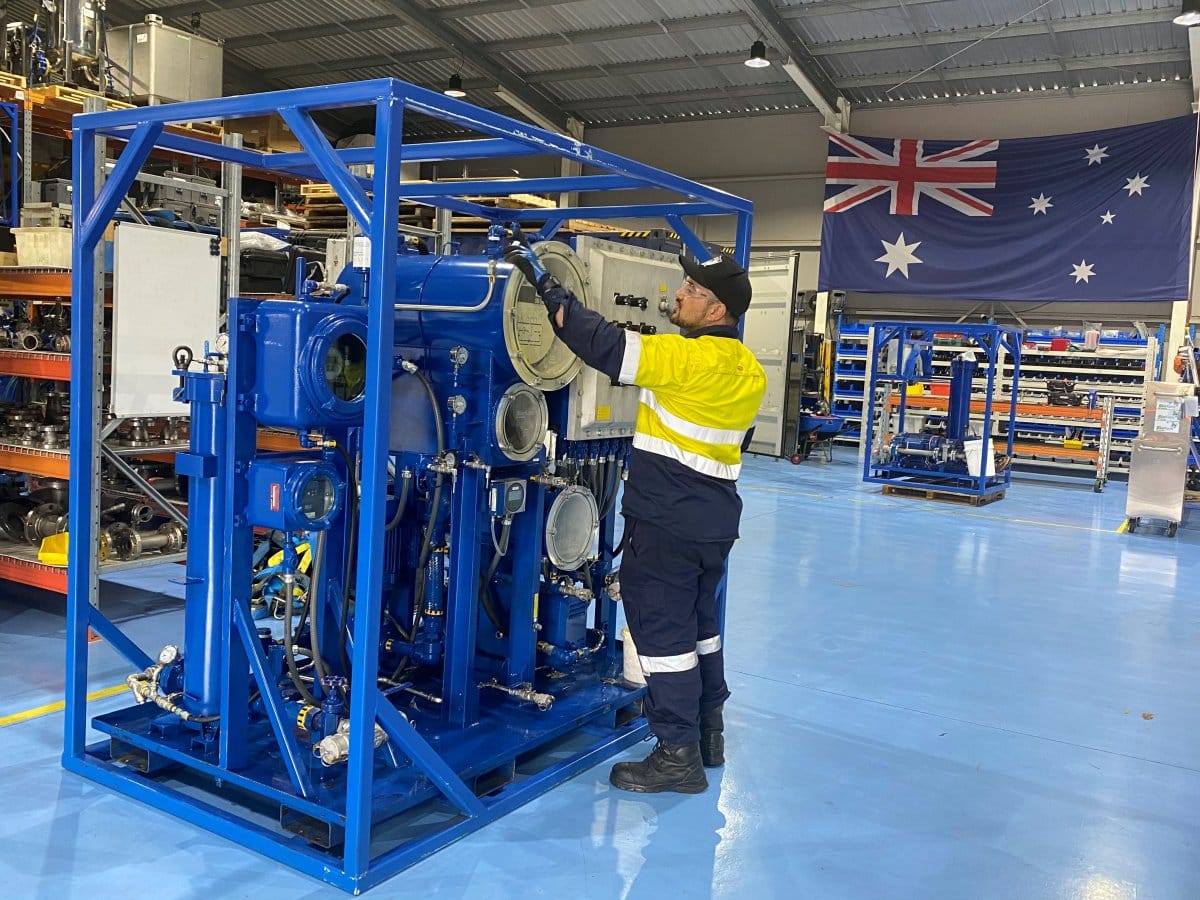
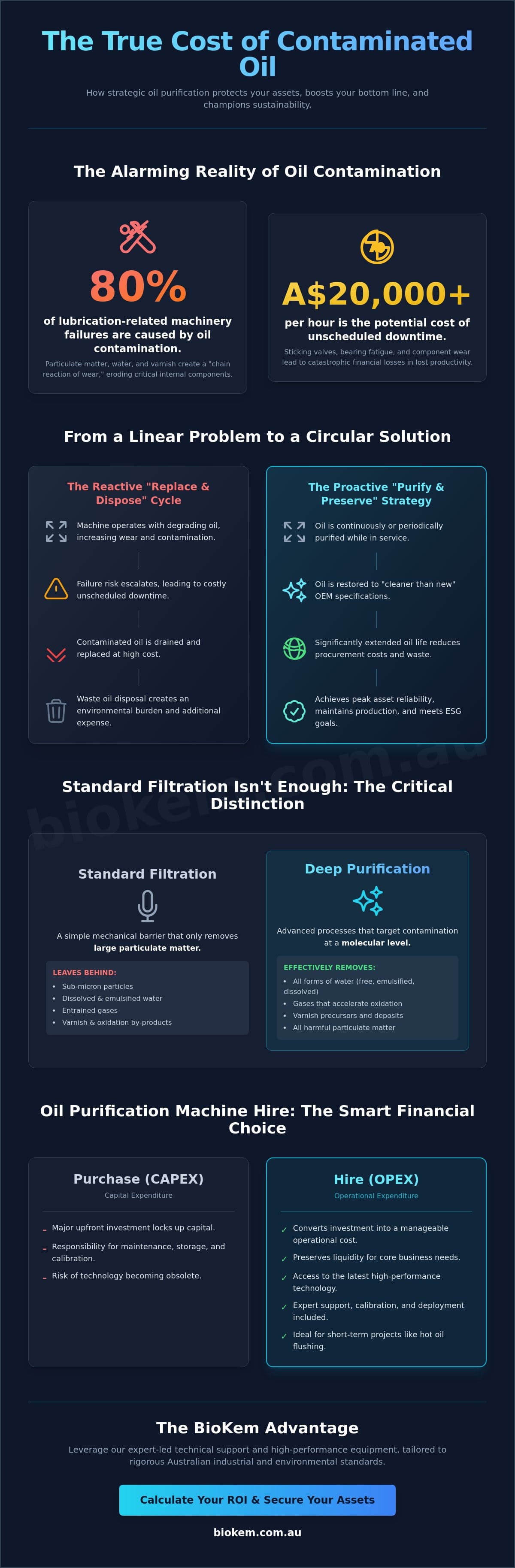
According to research from Noria Corporation, 80% of all lubrication-related machinery failures are the direct result of oil contamination. For Australian asset managers, unscheduled downtime from valve sticking or component wear isn’t just a technical frustration; it’s a financial burden that can exceed A$20,000 per hour in lost productivity. You already know that clean oil is the lifeblood of your operation, yet the costs of frequent oil replacement and hazardous waste disposal continue to climb. Strategic oil purification machine hire provides a technical solution that aligns operational efficiency with environmental responsibility.
This guide demonstrates how specialized purification equipment eliminates moisture and varnish to restore your lubricants to original OEM specifications. You’ll discover how to extend the intervals between oil changes and maintain production continuity with minimal intervention. We’ll outline the specific steps to achieve total fluid health, ensuring your critical turbines and hydraulic systems operate at peak reliability while reducing your site’s ecological footprint.
Key Takeaways
- Understand the critical distinction between standard filtration and deep purification to effectively eliminate sub-micron contaminants and prevent unscheduled downtime.
- Learn how to leverage professional oil analysis to match specific purification technologies with your industrial asset’s unique contamination profile.
- Calculate the significant ROI of oil purification machine hire by reducing the A$ “true cost” of lubricant procurement, labor, and environmental waste disposal.
- Follow a practical, step-by-step guide to determining flow rates and system requirements for a seamless equipment deployment on-site.
- Discover the BioKem advantage of accessing expert-led technical support and high-performance equipment tailored to Australian industrial and environmental standards.
Understanding the Role of Oil Purification Machine Hire
Industrial oil purification represents a shift from reactive repairs to a proactive maintenance strategy. While standard filtration removes large particulate matter, deep purification targets the root causes of lubricant degradation. This process involves the removal of dissolved water, entrained gases, and sub-micron oxidation by-products that traditional filters can’t capture. By utilizing Oil purification methods like vacuum dehydration and electrostatic separation, Australian operators can restore oil to a “cleaner than new” state.
Adopting a purification model supports critical ESG goals by fostering a circular economy within the plant. Instead of disposing of thousands of litres of degraded hydrocarbons, sites can recycle their existing inventory. This significantly reduces the carbon footprint associated with the production, transport, and disposal of industrial lubricants. It’s a sustainable approach that aligns with local environmental regulations and corporate responsibility targets.
To better understand the technical application of these systems in a factory environment, watch this helpful video:
Choosing oil purification machine hire allows facilities to access high-tier technology without the burden of asset ownership. This is particularly relevant for Australian mining and energy sectors where equipment must perform in harsh, remote conditions. Professional hire services ensure that the machinery is calibrated to current standards and ready for immediate deployment.
The Cost of Contamination in Critical Assets
Contamination is the primary driver of mechanical failure. Particulate matter, free and dissolved water, and varnish create a “chain reaction of wear” that erodes internal components. For a large-scale turbine or compressor, even minor moisture levels can lead to bearing fatigue and hydrogen embrittlement. Industry data suggests that 80% of hydraulic system failures stem directly from contaminated oil. In high-pressure systems, varnish buildup can cause valves to stick, leading to unplanned outages that cost Australian enterprises thousands of dollars per hour in lost productivity. Utilizing a varnish removal system through a hire agreement provides a targeted solution to these specific risks.
Hire vs. Purchase: A Strategic Overview
The decision between purchasing and oil purification machine hire often comes down to capital allocation. Opting for hire converts a major CAPEX investment into a manageable OPEX cost, preserving liquidity for other core business needs. Hire is the superior choice for short-term projects, such as hot oil flushing
Technologies Available for Hire: Matching Machines to Problems
Selecting the right hardware for fluid recovery requires a data-driven approach. Oil analysis results dictate whether a site requires a vacuum system, a high-speed centrifuge, or specialized chemical filtration. Our oil purification machine hire fleet incorporates high-performance Filters S.p.A. technology, ensuring that units meet rigorous Australian standards for fluid cleanliness. Efficiency isn’t just about flow rates; it’s about matching the machine’s physics to the specific contaminant profile of the asset.
Vacuum Dehydration Units (VDU)
These units operate by creating a vacuum to lower the boiling point of water, allowing it to evaporate at temperatures as low as 50°C. This process protects the oil’s chemical integrity while removing 100% of free and emulsified water. They’re essential for transformer oils, turbine lubrication, and EHC fluids where moisture causes catastrophic dielectric or mechanical failure. VDUs effectively eliminate dissolved water at the molecular level, a feat standard particulate filters cannot achieve.
Coalescing and Centrifugal Systems
Coalescing systems use specialized media to merge small water droplets into larger ones that settle out of the fluid. They’re highly effective for diesel and low-viscosity light oils. For high-volume particulate loads, centrifugal systems utilize G-force to separate solids and water based on density differences. While coalescers achieve 99.9% efficiency in diesel applications, centrifugal systems are often preferred for heavier hydraulic oils where rapid throughput is required. Adhering to environmental standards, such as EPA effluent guidelines, ensures that separated waste is managed responsibly during the purification process.
Varnish Mitigation Systems
Varnish is a soft contaminant that standard mechanical filters often miss because it remains in solution at operating temperatures. As oil cools, these sub-micron oxidation products precipitate, causing valve sticking and “lacquering” on critical metal surfaces. Specialized varnish removal systems use ion exchange or cellulose-based media to capture these polar molecules before they settle. Choosing the correct oil purification machine hire option for varnish prevents the 15% increase in energy consumption typically seen in fouled heat exchangers. Reviewing our full range of purification products can help identify the exact technical fit for your site’s specific contamination challenges.
Evaluating the ROI of Oil Life Extension
Calculating the true cost of an oil change involves far more than the invoice price of a new lubricant drum. Industrial operators must account for procurement logistics, the labor required for draining and refilling systems, and the rising costs of hazardous waste disposal. In many Australian jurisdictions, waste oil disposal fees can fluctuate between A$0.50 and A$2.00 per litre, adding a significant hidden tax to every oil change. By opting for oil purification machine hire, companies transform oil from a consumable expense into a managed asset.
Purification hire pays for itself by safely extending drain intervals by 300% or more. This isn’t just about saving on fluid costs; it’s about component longevity. Removing microscopic particulates and moisture significantly impacts the L10 life of bearings and hydraulic pumps. When fluid stays within optimal specifications, internal friction decreases and mechanical wear slows down. This proactive approach reduces the annual volume of waste oil generated, directly supporting environmental targets and lowering the site’s total carbon footprint.
Operational Continuity and Risk Mitigation
Unplanned downtime is the single greatest threat to industrial profitability. A 24-hour shutdown in a high-output facility can result in production losses exceeding A$100,000, making the weekly rate for an oil purification unit a negligible insurance premium. Maintaining specific oil cleanliness ISO 4406 codes is essential for preventing catastrophic component failure. By integrating oil purification machine hire into routine maintenance, technicians can clean the oil while the machinery remains operational, avoiding the risks associated with system restarts and air entrainment during full fluid replacements.
Regulatory Compliance and Sustainability
Australian industry faces increasing pressure to adhere to strict environmental standards, such as those outlined by state EPA guidelines and AS 1940:2017. Shifting toward a circular lubrication management model demonstrates a commitment to sustainable resource use. Documenting the consistent improvement of oil health through purification is also a critical requirement for insurance and warranty compliance. Most major component manufacturers require proof of fluid cleanliness to honour warranty claims; regular purification provides the verifiable data trail needed to protect these high-value investments. This structured flow of maintenance ensures that compliance isn’t just a hurdle, but a documented part of a high-performance reliability strategy.
The Practical Guide to Hiring and Deploying Equipment
Deploying an industrial solution requires a structured workflow to ensure the investment yields measurable reliability gains. The process begins with data, not hardware. Successful oil purification machine hire depends on four critical steps that align equipment capability with the specific needs of your lubricant system.
Step one involves conducting a professional oil analysis to identify specific contaminants. Knowing whether you’re fighting sub-micron varnish, emulsified water, or ferrous wear particles dictates the technology required. Step two is determining the flow rates and system volume. For effective kidney-loop purification, the unit should ideally circulate the total reservoir volume five to seven times. If you’re managing a 5,000-litre hydraulic system, a unit with a 40 LPM flow rate ensures the oil passes through the media frequently enough to capture fine particulates.
Step three requires an evaluation of site power and space. Large vacuum dehydrators often need a 415V 3-phase supply and significant floor space for skid placement near the asset. Finally, step four is establishing a monitoring plan. Without a clear baseline and regular intervals for testing, it’s impossible to verify the purification unit’s efficiency or determine when the target ISO cleanliness code has been reached.
Site Requirements and Logistics
Logistics often present the biggest hurdle on Australian mine sites or remote processing plants. Units range from portable hand-carts to heavy 2-tonne skids. You must ensure the site has adequate 240V or 415V power outlets near the asset. For hazardous environments, such as chemical processing or fuel farms, equipment must meet ATEX or IECEx standards to maintain safety compliance. Connection points typically utilize a kidney-loop configuration, requiring specific hydraulic fitting sizes to prevent leaks and maintain system pressure during the oil purification machine hire period.
Monitoring Success Onsite
Real-time verification provides the only proof of performance during a maintenance window. Using particle counters allows technicians to verify ISO 4406 codes every minute, ensuring the process doesn’t stop prematurely. While digital counters are precise, physical patch testing remains vital for identifying the nature of the silt and varnish. We recommend using patch test kits for visual onsite monitoring. This dual approach ensures the oil returns to a “fit-for-service” state, potentially reducing the risk of component failure by up to 80% based on industry reliability data.
The BioKem Advantage: Expert-Led Equipment Hire
BioKem maintains a fleet of “best of breed” purification systems specifically engineered for the rigorous demands of the Australian industrial sector. This isn’t a standard rental service. We provide a technical partnership where the equipment is supported by lubrication specialists who understand the chemistry of hydrocarbons. Our national reach allows us to support remote mining operations in the Pilbara and critical power assets in the Hunter Valley with equal efficiency. Standard delivery for most regional hubs occurs within 48 to 72 hours, ensuring that downtime remains a controlled metric rather than a spiraling cost.
An oil purification machine hire through BioKem includes more than just the primary unit. We supply customized hire packages that feature site-specific filters, high-pressure hoses, and calibrated analysis tools. Our fleet includes vacuum dehydrators capable of removing 100% of free and emulsified water, alongside high-flow particulate filters that consistently achieve ISO 4406 cleanliness targets like 16/14/11. This holistic approach eliminates the logistical burden of sourcing peripheral components from multiple vendors.
Comprehensive Support and Training
Effective contamination control requires more than just high-end hardware. BioKem provides detailed operator training to ensure your onsite team utilizes the machine safely and effectively. We focus on maximizing throughput while maintaining the integrity of the fluid. For long-term hire projects, we often integrate remote monitoring capabilities. These sensors provide real-time data on moisture levels and particle counts, allowing for proactive adjustments before a fault occurs. If your system requires a more intensive decontamination, we facilitate a seamless transition from equipment hire to professional hot oil flushing services to address deep-seated varnish and debris.
Partnering for Long-Term Reliability
BioKem doesn’t just provide a temporary fix. Our equipment hire integrates directly with your proactive maintenance strategy, turning a reactive cleaning task into a data-driven asset health audit. Every hire concludes with a comprehensive BioKem technical report. This document outlines the initial contamination state, the purification process used, and the final fluid analysis results. It’s a vital piece of documentation for compliance and warranty requirements.
Our commitment to sustainability means we focus on extending the life of your existing lubricants, reducing the environmental footprint associated with oil disposal and replacement. We’ve helped 92% of our long-term hire clients reduce their annual lubricant consumption by at least 15% through precision purification. Contact BioKem today for a technical consultation. We’ll help you select the right configuration for your specific asset and site conditions, ensuring your machinery operates at peak reliability.
Future-Proof Your Operations Through Strategic Fluid Management
Maximizing the operational life of industrial machinery requires a proactive approach to fluid cleanliness. Opting for oil purification machine hire gives your facility immediate access to advanced filtration technology without the heavy capital expenditure of a permanent installation. This strategy effectively removes moisture, particulates, and oxidation products that compromise system integrity. As the sole Australian distributor for Filters S.p.A., Biokem provides a fleet specifically engineered to withstand the 45°C temperatures and abrasive dust common in local mining and power generation sectors. You’ll receive technical support from qualified lubrication specialists who ensure the equipment integrates seamlessly with your maintenance schedules. Choosing specialized hire services allows for precise contamination control, reducing the risk of unplanned downtime. Industry data suggests that effective lubrication management can reduce mechanical failures by up to 75%. Implementing these precision-engineered solutions ensures your lubricants maintain their chemical properties, supporting both your operational efficiency and environmental compliance goals.
View our full range of industrial oil purification hire equipment
It’s time to transform your maintenance strategy into a competitive advantage for your business.
Frequently Asked Questions
What is the difference between oil filtration and oil purification?
Oil filtration primarily removes solid particulate matter through mechanical media, whereas oil purification utilizes vacuum dehydration to extract dissolved water and gases. Filtration targets specific ISO 4406 cleanliness codes by trapping debris. Purification addresses the chemical stability of the fluid by removing 99% of free and emulsified water, which prevents the formation of acids and sludge in your hydraulic systems.
How long does it take to purify a standard hydraulic reservoir?
A 1,000 litre hydraulic reservoir typically requires 6 to 10 hours for a complete purification cycle to reach optimal moisture levels. The exact duration depends on the initial water saturation and the flow rate of the specific oil purification machine hire unit. For instance, a 30 litre per minute system processes the total volume multiple times within two hours, but deep dehydration to levels below 100 ppm takes additional time.
Can I hire oil purification machines for hazardous or explosive environments?
You can hire specialized units designed for hazardous zones that comply with Australian AS/NZS 60079 standards. These explosion-proof machines feature IECEx certified components to ensure operational safety in Class 1 Zone 1 or Zone 2 environments. Biokem provides these high-specification systems for refineries and chemical processing plants where volatile hydrocarbons require stringent ignition controls.
Does the machine hire include all necessary filters and consumables?
The hire agreement covers the purification hardware, but technical filters and specialized consumables are typically billed based on actual consumption. High contamination levels in a system might require four or five 3-micron filter elements during the first 24 hours of operation. We provide an initial set of filters to start your project immediately and maintain a local stock of spares to ensure continuous asset reliability.
What technical support is provided during the hire period?
Technical support includes 24/7 remote assistance and on-site commissioning by qualified lubrication technicians. We offer detailed training for your maintenance team so they can monitor ISO cleanliness codes and moisture ppm levels effectively. Every hire is backed by Australian-based expertise to resolve mechanical challenges or interpret oil analysis results during the purification process.
Can these machines remove both water and solid particles simultaneously?
Vacuum dehydration units remove water, dissolved gases, and solid particles simultaneously through a multi-stage process. The machine first pulls the oil through a high-efficiency particulate filter before it enters the vacuum chamber. Inside the chamber, the system reduces the boiling point of water to approximately 45 degrees Celsius, allowing moisture to evaporate safely without thermal degradation of the oil.
Is it possible to purify oil while the industrial equipment is still running?
It’s standard practice to purify oil while your industrial equipment remains fully operational by using a kidney-loop configuration. This method draws oil from the reservoir, processes it through the oil purification machine hire unit, and returns it directly to the tank. Continuous processing eliminates the need for scheduled downtime and ensures that clean, dry oil is always available for critical components like servo valves.
How do I know which size of purification unit I need for my site?
The correct unit size is determined by your total oil volume and the required ISO 4406 cleanliness target. A reliable industry benchmark is to select a machine with a flow rate that can process the entire reservoir volume every 30 to 60 minutes. For a 5,000 litre system, a unit capable of 100 litres per minute ensures efficient moisture removal and particulate capture without over-stressing the fluid or the pump.