

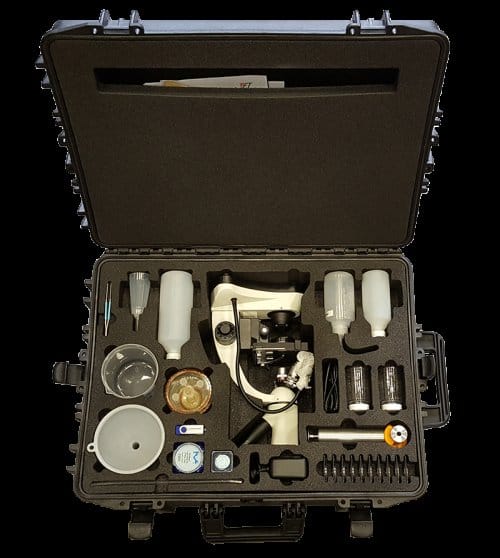
Approximately 80% of hydraulic system failures in heavy industry are the direct result of particle contamination. This statistic underscores a critical reality: your maintenance strategy is only as reliable as the samples you collect. It’s common to feel frustrated when lab results don’t align with actual machine performance, often due to accidental contamination during extraction. Mastering how to conduct an effective lube oil sample in the field is the only way to eliminate these external variables and protect your operational efficiency.
This guide provides a standardized, step-by-step methodology to ensure every sample is truly representative of your system’s health. By following these technical procedures, you’ll secure the accurate data required for ISO 4406:2021 compliance and proactive asset management. We’ll explore the specific tools and techniques that turn fluid collection into a precise scientific measurement. This approach supports long-term reliability and environmental sustainability across your site, ensuring your oil analysis serves as a dependable foundation for critical business decisions.
Key Takeaways
- Understand the technical definition of a representative sample and how to capture the true chemical state of your oil to protect predictive maintenance budgets.
- Master how to conduct an effective lube oil sample in the field using “Super Clean” rated bottles and specialized vacuum extraction pumps to eliminate external variables.
- Learn the essential field protocols, including sampling at operating temperatures, to ensure consistent particle distribution and reliable ISO 4406:2021 reporting.
- Implement environmental safeguards like sampling tents to protect fluid integrity from microscopic dust and moisture during the extraction process.
- Translate laboratory data into actionable asset strategies, recognizing when sample results indicate the need for corrective measures such as Hot Oil Flushing.
The Science of Representative Lube Oil Sampling
The Science of Representative Lube Oil Sampling dictates that a sample is not merely a volume of fluid; it’s a technical snapshot of a system’s internal environment. To understand how to conduct an effective lube oil sample in the field, one must first recognize that the laboratory can only analyze the specific molecules and particles present in the bottle. If the extraction process introduces external dust or fails to capture circulating debris, the resulting data is scientifically invalid. This “garbage in, garbage out” cycle often results in inflated predictive maintenance budgets where teams chase ghosts or, worse, ignore real threats.
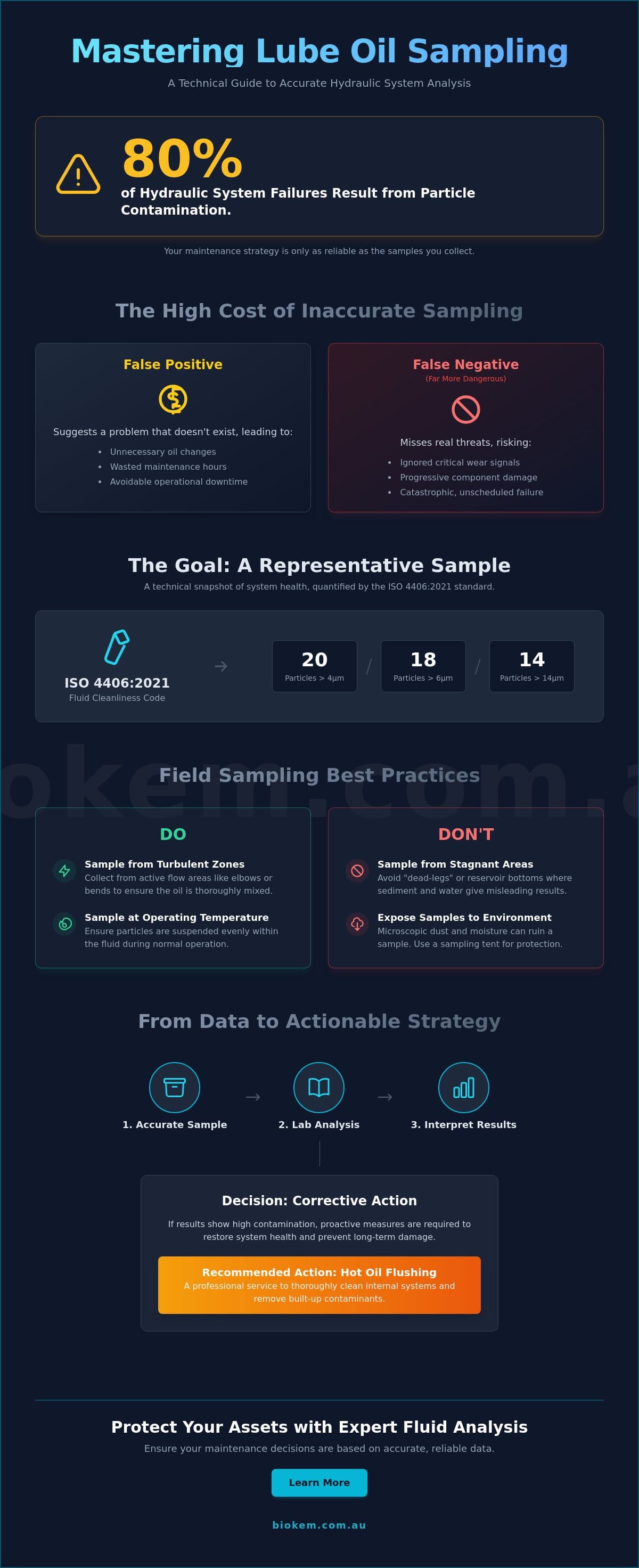
Effective sampling relies on the ISO 4406:2021 standard to quantify fluid cleanliness. This protocol provides a three-part code representing the number of particles larger than 4, 6, and 14 microns. Technicians must identify whether their primary goal is monitoring wear debris, detecting external contamination, or verifying additive health. Each objective requires a precise approach to ensure the sample accurately reflects the oil’s operational state.
To better understand this concept, watch this helpful video:
Understanding Fluid Dynamics in Sampling
Fluid behavior within a machine significantly impacts sample integrity. Laminar flow, characterized by smooth, parallel layers, often allows particles to settle or migrate toward the center of the pipe. For the most accurate results, samples should be taken from turbulent zones, such as elbows or bends in the piping, where the oil is thoroughly mixed. Avoiding “dead-legs” or stagnant zones is essential; these areas contain aged, non-representative oil that hasn’t circulated through the active components. Similarly, drawing from the bottom of a reservoir is a common failure. This area typically contains heavy sediment and water that doesn’t reflect the quality of the oil currently protecting your bearings and gears.
The Cost of Non-Representative Samples
Inaccurate sampling creates a significant financial burden through false positives and negatives. A false positive suggests a contamination problem that doesn’t exist, leading to unnecessary oil changes and downtime. Conversely, a false negative is far more dangerous. It occurs when a poorly taken sample misses critical wear signals, allowing a machine to move toward a catastrophic, unscheduled failure. Using tools like the Particle Pal range helps verify field data, but the technique remains the foundation of the process. A representative sample is the only valid data point that allows for meaningful trend analysis over the life of the asset. When samples consistently show high contamination, professional interventions like hot oil flushing may be required to restore system health and prevent long-term damage.
Essential Equipment and Field Preparation
Preparation serves as the critical bridge between the theoretical science of fluid dynamics and the physical reality of data collection. Mastering how to conduct an effective lube oil sample in the field begins with selecting hardware that matches the technical requirements of your system. You can’t rely on generic containers; you must use bottles with a “Super Clean” rating. This standard typically signifies fewer than 10 particles larger than 10 microns per milliliter. While PET bottles are suitable for most industrial oils, glass is preferred when testing for specific chemical properties or extreme temperatures.
Vacuum extraction pumps are the industry standard for non-pressurized reservoirs. These tools must be maintained with rigorous care to prevent cross-contamination between different machines. If you’re working with high-pressure hydraulic circuits, you’ll need specialized sampling valves, such as Minimess fittings, rather than simple gravity drains. These fittings allow for sampling under full operational load without the risk of external air ingestion, which is vital for maintaining the integrity of the fluid snapshot.
Documentation is just as vital as the fluid itself. Every bottle needs a label applied immediately after the sample is drawn. You must record the machine ID, the specific sampling point, the date, and the current operational hours of both the machine and the oil. Without this metadata, the laboratory cannot establish the trend lines necessary for predictive maintenance. A sample without context is merely a bottle of waste oil; it lacks the diagnostic power to inform your maintenance strategy.
Tool Cleanliness Standards
Hardware storage is often an overlooked source of contamination. Sampling pumps and reusable probes should be kept in sealed, lint-free bags when not in use to prevent “shelf contamination” from ambient dust. Many technicians utilize Patch Test Kits to verify the cleanliness of their equipment before beginning a large-scale sampling round. If you’re using reusable valves, flush them with at least five to ten times the dead-leg volume. This ensures you aren’t capturing stagnant debris or oxidation products from the valve body itself.
Safety Protocols for Field Sampling
Field sampling involves inherent risks that require strict adherence to safety protocols. High-pressure systems carry the threat of hydraulic injection injuries; these are medical emergencies that occur when fluid is forced under the skin. Always use proper PPE, including nitrile gloves and eye protection. Gloves aren’t just for your safety; they prevent skin oils and salts from contaminating the sample. When handling hot oil, remember that standard PET bottles can soften or deform at temperatures exceeding 70 degrees Celsius. If your system runs hotter, let the oil cool slightly in a secondary clean container or use heat-resistant glass. For those looking to deepen their diagnostic capabilities beyond basic particle counts, a professional Filter Ferrogram can provide a detailed analysis of wear morphology to pinpoint specific component degradation.
Step-by-Step Field Sampling Techniques
Executing a technical procedure in an industrial environment requires discipline. To understand how to conduct an effective lube oil sample in the field, you must view the process as a sequence of controlled actions designed to isolate the fluid from external contaminants. The first step is bringing the machine to its normal operating temperature. This ensures that particles are evenly distributed throughout the system rather than settled in low-flow areas. Once the machine is warm, you must clean the sampling point externally. Use a lint-free cloth and a compatible solvent to remove “ingested” dirt that could easily fall into your sample bottle during the extraction process.
The third step is the “Flush” phase, which is often where technicians fail to maintain accuracy. You must remove stagnant oil from the sampling line by flushing a volume equivalent to 5 to 10 times the capacity of the sampling hardware. This ensures the fluid in your bottle comes directly from the active circulation loop. During extraction, maintain a consistent flow rate. Rapid or erratic changes in pressure can cause aeration, which introduces air bubbles that may interfere with laboratory particle counters. Finally, seal the bottle immediately and place it in secondary containment for transport. This prevents leaks and protects the sample from ambient dust during its journey to the lab.
Sampling from Circulating Systems
In circulating systems, the location of the sampling valve determines the quality of your data. Primary sampling points should be located on the main return line before the fluid enters the reservoir. This captures a comprehensive look at the wear debris generated by all components. Secondary points are often placed after the pump but before the filter to monitor pump health and verify the efficiency of your filtration setup. For immediate feedback, technicians can use a Particle Pal for real-time field verification. This device allows you to see ISO cleanliness codes instantly, providing a benchmark before the sample is even sent for formal analysis.
Reservoir and Sump Sampling
Sampling from a reservoir requires a different strategy to avoid the sludge layer at the bottom. The “Short-Tube” method involves inserting a tube into the reservoir through a dedicated port, ensuring the tip remains in the middle of the fluid volume. Drop-tube sampling through a dipstick port is a last resort because the tube often scrapes against the sides of the port, picking up debris. If you must use this method, ensure the tube is new and inserted to the exact same depth every time. Consistency is the only way to compare historical data accurately. If a reservoir shows significant sediment accumulation, you may need to consider professional hot oil flushing or tank cleaning to restore the system’s baseline cleanliness. This proactive approach ensures your equipment operates within the tight tolerances required by modern industrial standards.
Overcoming Environmental Contamination Challenges
Environmental factors are often the primary cause of skewed lab reports that don’t match machine performance. Learning how to conduct an effective lube oil sample in the field requires an awareness of the “Invisible Enemy”, which refers to the microscopic dust particles omnipresent in industrial settings. In wind or rain, the risk of ambient contamination increases exponentially. Technicians should utilize portable shields or sampling tents to isolate the sampling point from the weather. These barriers prevent airborne debris from entering the bottle, ensuring that the laboratory analyzes the system’s condition rather than the surrounding atmosphere.
Precision during the extraction process depends on the “Cap Management” rule. This protocol dictates that the sample bottle must never remain open for longer than three seconds. You should remove the cap only when the oil flow is steady and replace it immediately once the bottle is filled to the shoulder. This brief window of exposure minimizes the opportunity for particulates to settle on the fluid surface, protecting the integrity of the ISO 4406:2021 data. It’s a simple habit that separates professional technicians from those who inadvertently contaminate their own work.
Controlling Airborne Particulates
Creating a “clean zone” around the sampling port is essential in high-dust environments like mines or mills. Nearby exhaust or cooling fans can drive concentrated streams of particulates toward your open bottle, rendering the sample non-representative. A single grain of dust can shift an ISO 4406 code by two levels. By temporarily shielding the area or using specialized sampling valves, you maintain the technical accuracy of the data. This level of care ensures that your predictive maintenance budget is spent on actual repairs rather than investigating false alarms caused by poor field technique.
Handling Moisture and Chemical Vapours
Managing humidity is a unique challenge for tropical or coastal Australian sites where moisture ingress can occur almost instantly. Signs of water contamination, such as a hazy or cloudy appearance in the fluid, should be noted immediately on the sample label. In chemically aggressive environments, you must ensure that vapours don’t react with the oil during the extraction process. Secure transport from remote locations is the final step; use rugged, sealed containers to prevent vibration-induced cap loosening during transit. If environmental ingress has already compromised your system’s baseline, professional hot oil flushing and filtering can restore fluid health to meet stringent cleanliness targets.
Integrating Sampling Data into Proactive Maintenance
The true value of technical data lies in its application to asset longevity. Understanding how to conduct an effective lube oil sample in the field is only the first step; the second is translating that data into a Proactive Maintenance strategy. When an accurate sample reveals high particulate counts, it serves as a definitive signal for intervention. This might indicate a requirement for Hot Oil Flushing to remove internal buildup that standard filtration can’t reach. If the oil appears clear but the machine behaves erratically, specialized Filtergram or Ferrogram analysis can identify microscopic varnish precursors or specific wear morphologies. In cases where samples show persistent water ingress, vacuum dehydration becomes necessary to prevent hydrogen embrittlement and additive dropout.
Technical precision in the field ensures that these high-level decisions are based on reality, not procedural errors. Even when you’ve mastered how to conduct an effective lube oil sample in the field, the data requires a prompt and structured response to be effective. This transition from simple data collection to active asset management is what separates reliable operations from those plagued by frequent, unscheduled downtime.
Interpreting Field Trends
Effective maintenance relies on recognizing the difference between “Normal” break-in wear and “Accelerated” failure modes. This distinction is impossible without a “Baseline” sample taken when a new oil charge is introduced. New oil isn’t necessarily clean oil; it often requires pre-filtration to meet system specifications. By correlating your sampling data with vibration analysis and thermography, you gain a 360-degree view of component health. This multi-technology approach allows you to detect a failing bearing through wear debris in the oil long before it generates enough heat to be caught by a thermal camera.
Advanced Remediation Solutions
When oil analysis indicates high Membrane Patch Colorimetry (MPC) values, it signals the presence of soft contaminants that lead to varnish. Implementing Varnish Removal Systems at this stage prevents the sticking of valves and the clogging of small orifices. BioKem Oil Services provides onsite technical interventions designed to turn “bad” samples into “clean” systems by addressing the root cause of contamination. By creating a closed-loop reliability program, you Sample, Analyze, Purify, and Verify. This cycle ensures that your fluid remains a technical asset rather than a liability, supporting both operational efficiency and environmental responsibility through extended oil service life.
Optimising Asset Longevity Through Precision Sampling
Standardising your sampling protocols is the most cost-effective way to protect industrial assets from the risks of particle contamination and fluid degradation. By implementing the rigorous standards discussed, from equipment preparation to environmental management, you ensure every lab report reflects the true state of your system. Mastering how to conduct an effective lube oil sample in the field transforms a routine maintenance task into a powerful diagnostic tool that supports both operational reliability and long-term sustainability.
BioKem Oil Services serves as the sole Australian distributor for Filters S.p.A. and specialises in high-complexity hot oil flushing. We provide the technical expertise required to turn sample data into actionable results. Our comprehensive lab testing and onsite analysis reports offer the clarity needed to maintain peak performance in challenging environments. Ensure your systems stay clean with BioKem Oil Services’ professional Oil Analysis and Onsite Services.
Taking control of your fluid health today builds a more resilient and efficient operation for the future.
Frequently Asked Questions
What is the best location to take an oil sample from a hydraulic system?
The main return line before the reservoir is the ideal location for a primary sample. This captures wear debris and contaminants from all system components before they settle or are removed by filters. If return line access is unavailable, you should sample from a turbulent zone in the pressure line after the pump to ensure the fluid is well-mixed.
How much oil should I flush through the valve before taking a sample?
You must flush a volume equivalent to 5 to 10 times the capacity of the sampling hardware and any dead-leg pipework. This process removes stagnant, oxidized oil and settled debris that doesn’t represent the active circulating fluid. Proper flushing is a fundamental step in how to conduct an effective lube oil sample in the field and prevents skewed data.
Can I take an oil sample while the machine is turned off?
No, you shouldn’t take a sample from a static machine if you require representative data. When the machine is off, particles settle to the bottom and water separates, leading to inaccurate results that don’t reflect operational reality. Always sample while the equipment is at normal operating temperature and the fluid is circulating through the system.
How soon should I send my lube oil sample to the lab after extraction?
You should dispatch the sample to the laboratory within 24 hours of extraction. Oil is chemically active and can continue to oxidize or react with captured moisture while in the bottle. Prompt shipping ensures the laboratory analyzes the fluid in a state that closely matches its true condition inside the machine at the time of collection.
What is the difference between a primary and secondary sampling point?
A primary sampling point is located on the main return line to monitor the overall health and wear of the entire system. Secondary points are placed after specific components, such as a pump or before a filter. These secondary locations help isolate individual component degradation or verify the efficiency of your filtration hardware during troubleshooting.
Why is my oil analysis showing high silicon levels after a field sample?
High silicon levels typically indicate external dust or dirt ingress during the sampling process. If the machine’s seals are intact and air breathers are functional, the contamination likely occurred because the sampling point wasn’t cleaned or the bottle was left open too long. This highlights the difficulty of how to conduct an effective lube oil sample in the field in high-dust environments.
How often should I conduct lube oil sampling for critical industrial assets?
Critical assets typically require sampling every 250 to 500 operating hours, or at least monthly. The specific frequency depends on the machine’s duty cycle, environmental severity, and the potential cost of failure. Establishing a consistent schedule allows for effective trend analysis and the early detection of accelerated wear modes before they cause downtime.
What information must be included on the oil sample bottle label?
The label must include the machine ID, the specific sampling point, the date, and the current operational hours of both the machine and the oil. You should also note any recent maintenance, such as filter changes or fluid top-ups. This technical metadata is essential for the laboratory to provide a meaningful diagnostic interpretation of the results.