

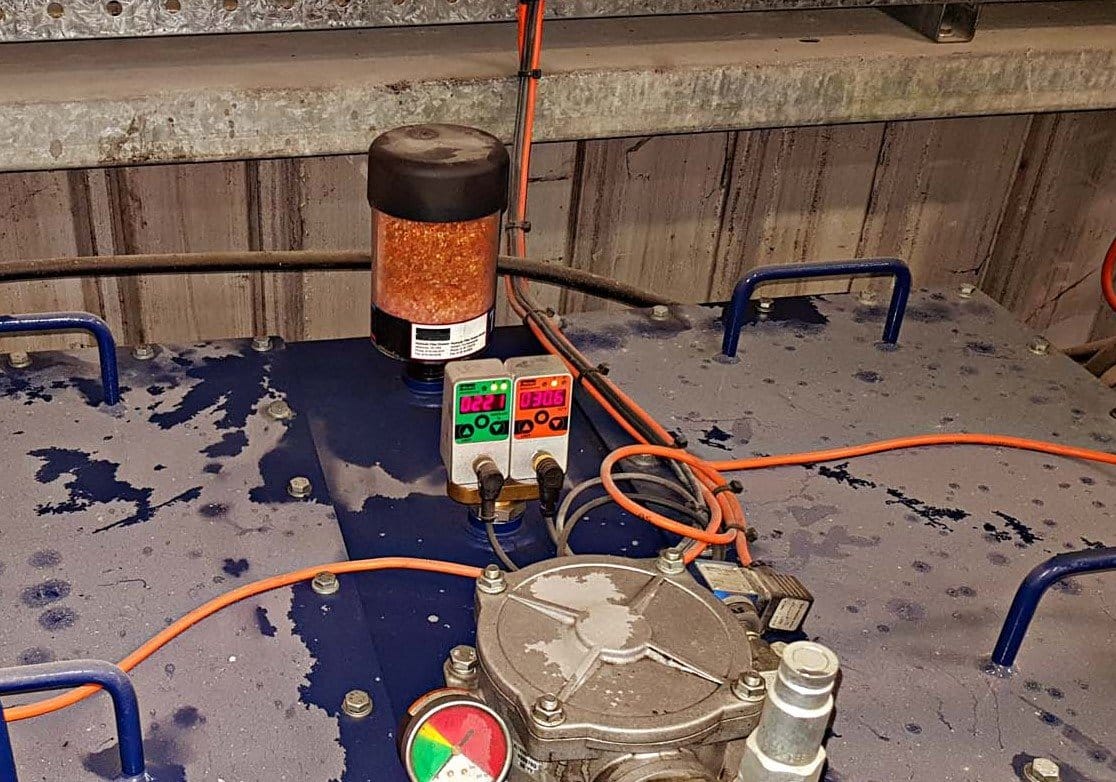
Could a single component upgrade save your facility $260,000 in a single hour? This figure represents the average cost of industrial downtime, often triggered by machinery failures linked directly to fluid contamination. You’re likely familiar with the frustration of recurring moisture in gearboxes or the high costs of frequent oil changes due to premature oxidation. Understanding the importance of installing and maintaining breathers on lube oil systems is the first step in moving from reactive repairs to a sophisticated, proactive maintenance strategy that prioritizes asset longevity.
Standard vent caps often fail to protect your machinery, serving as an open door for the 80% of contaminants that typically enter through the system headspace. We’ll show you how advanced breather technology prevents moisture entry, reduces varnish formation, and achieves lower ISO 4406 cleanliness codes. This guide examines the latest in IoT-enabled smart sensors and the February 2026 updates to IOGP S-744 standards, ensuring your lubrication systems remain compliant and operationally efficient. By adopting these technical solutions, you’ll extend the service life of your lubricants while supporting broader corporate sustainability goals through reduced waste.
Key Takeaways
- Identify how thermal expansion and fluid draw-down create a vacuum that pulls environmental contaminants into your system’s headspace.
- Understand the multi-stage filtration process that allows desiccant breathers to capture fine particulates and adsorb moisture more effectively than standard vent caps.
- Recognize the importance of installing and maintaining breathers on lube oil systems to prevent water from acting as a catalyst for oxidation and varnish.
- Learn the technical framework for sizing breathers by calculating airflow requirements based on pump GPM and thermal flux.
- Establish a proactive maintenance schedule using visual saturation indicators to ensure replacements occur before oil chemistry begins to degrade.
The Mechanics of Contamination: Why Lube Oil Systems Must Breathe
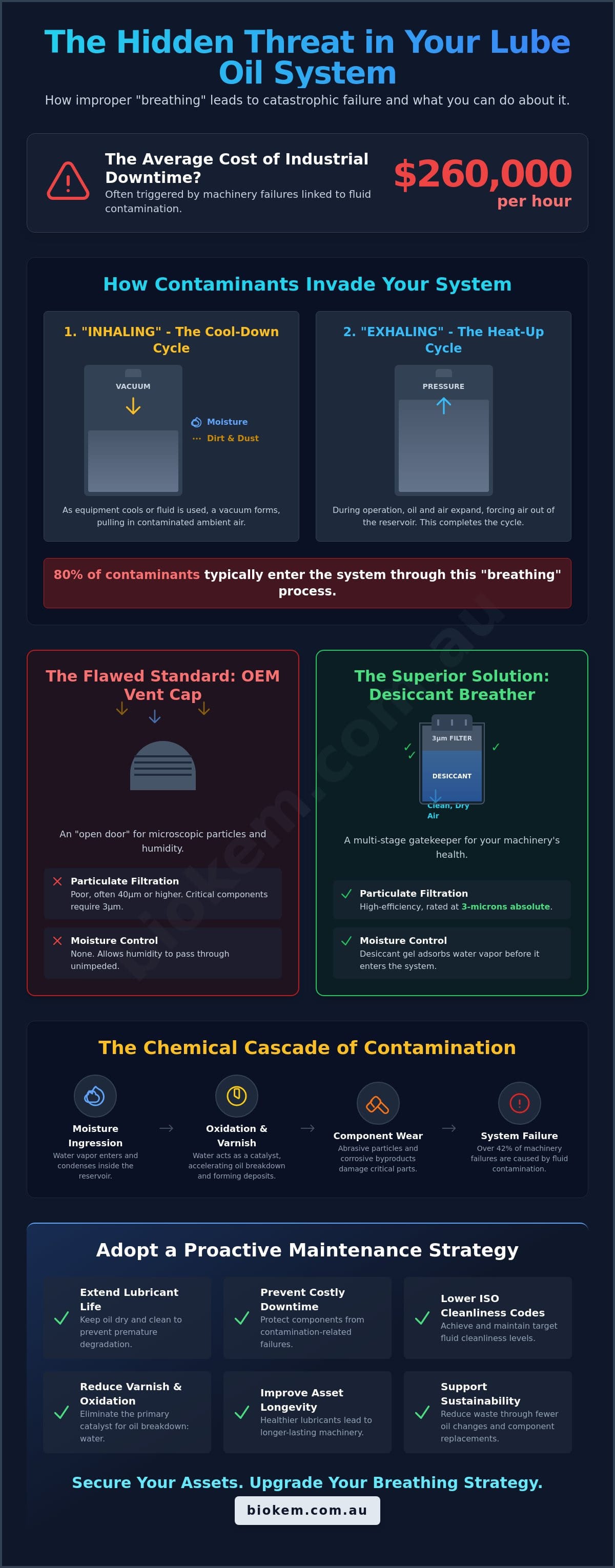
Every industrial reservoir behaves like a set of lungs. As internal temperatures rise during machine operation, the oil and the air above it expand, forcing air out of the system. When the equipment cools down or when fluid is pumped out to power actuators, a vacuum forms. This vacuum must be equalized by pulling in ambient air from the surrounding environment. This continuous exchange is known as the breathing process. The importance of installing and maintaining breathers on lube oil systems becomes evident when you realize that this intake air is the primary vehicle for dirt, silica, and moisture.
To better understand how lubrication flows through a system and where these atmospheric vulnerabilities exist, watch this technical circulation diagram:
Contaminants typically enter through two main events: suction during thermal cool-down and fluid draw-down. In high-humidity environments, the air pulled into the reservoir carries water vapor that interacts with the specific motor oil properties of modern synthetic lubricants. Many high-performance fluids are hygroscopic, meaning they actively attract and hold moisture. This water doesn’t just sit there; it initiates a chemical chain reaction that leads to additive depletion and base oil failure. Given that fluid contamination causes over 42% of machinery failures, managing this intake is a financial necessity.
Thermal Cycling and Headspace Dynamics
Temperature fluctuations create a relentless cycle of pressure changes within the tank. When warm, moisture-laden air is pulled into a cooling reservoir, it eventually reaches its dew point. This causes water to condense on the internal metal surfaces of the tank. Headspace is the volume of air above the oil level that is most susceptible to contamination. Without a proper barrier, this condensed water drops into the oil, creating an emulsion that is difficult to remove without specialized equipment like vacuum dehydration.
The Limitations of Standard OEM Vent Caps
Most industrial equipment is delivered with basic plastic or metal vent caps. These components are often “open doors” for microscopic particulates. While a standard cap might have a micron rating of 40µm or higher, critical hydraulic and lubrication components often require fluid cleanliness at the 3µm level. These basic vents lack any moisture-wicking capability, allowing humidity to pass through unimpeded. High ingression rates through these insufficient filters are the leading cause of “cloudy” oil and the rapid rise of ISO 4406 cleanliness codes. Transitioning to a dedicated breather system is the only way to effectively seal the headspace from the external environment.
Beyond Vent Caps: The Technical Superiority of Desiccant Breathers
Standard vent caps allow nearly unrestricted access to ambient moisture and fine dust. Desiccant breathers, by contrast, act as a sophisticated gatekeeper for your machinery. The importance of installing and maintaining breathers on lube oil systems lies in their ability to strip both solid and gaseous contaminants before they ever reach the reservoir. This technology doesn’t just block external debris; it maintains a dry, clean headspace to prevent the chemical breakdown of the lubricant. By replacing passive vents with active filtration, you transition from reactive maintenance to a state of controlled asset health.
Multi-Stage Filtration: Particulates and Vapour
Industrial-grade breathers employ a multi-layered defense strategy. As air is drawn into the system, it first passes through a high-efficiency particulate filter, typically rated at 3-microns absolute. This stage captures the microscopic debris that standard OEM caps frequently miss. Industry experts emphasize that following best practices for avoiding particle contamination is vital for long-term component reliability. After the particulate stage, the air moves through a column of silica gel. This material uses a physical process called adsorption to trap water molecules within its porous structure without an actual chemical reaction. For facilities requiring the highest standards of hardware, Filters S.p.A. products represent a benchmark in industrial-grade filtration and moisture control.
Visual Indicators and Performance Monitoring
The silica gel within the breather serves as a real-time diagnostic tool. It’s impregnated with a color-indicating dye that transitions, for example, from blue to pink or gold to green as it reaches saturation. While a partially saturated breather remains effective, once the color change reaches approximately 80% to 90% of the column height, the media is nearing its limit. In high-humidity environments, it’s beneficial to select breathers equipped with internal check-valves. These valves seal the unit when the system isn’t breathing, preventing the desiccant from absorbing ambient moisture from the warehouse or plant floor unnecessarily. Integrating these units with vacuum gauges allows operators to detect plugging before it restricts airflow and risks pump cavitation.
High-efficiency breathers are essential for maintaining strict ISO 4406 cleanliness targets. By consistently removing solids and reducing relative humidity in the headspace, you significantly extend the time between oil changes and reduce your environmental footprint. If you’re currently managing high water counts in your reservoirs, reviewing your specialist oil filters and breather hardware is a logical first step toward a more sustainable operation.
The Invisible Threat: How Poor Breathing Accelerates Varnish and Oxidation
Varnish isn’t just a byproduct; it’s a symptom of a system that can’t defend its own chemistry. While previous sections established how contaminants enter through the headspace, their long-term chemical impact is where the most significant financial damage occurs. Moisture ingression doesn’t just sit in the oil; it actively depletes the antioxidant additives designed to protect the fluid’s molecular structure. The importance of installing and maintaining breathers on lube oil systems is best understood by looking at the fluid’s chemical stability. Without this protection, your oil enters a state of rapid, irreversible oxidation that compromises every lubricated surface.
The Chemical Chain Reaction: Water, Heat, and Oxygen
Under the intense pressure and heat found in modern industrial machinery, water molecules can shear and release oxygen directly into the oil matrix. This accelerates the oxidation process significantly. This chemical shift leads to the formation of polar degradation products that are no longer soluble in the oil. These products eventually precipitate out and settle on cooler metal surfaces as a sticky, resinous film known as varnish. It’s a documented fact that even 500ppm of water can reduce bearing life by 50%. By adsorbing water vapour from the intake air, desiccant breathers effectively halt this chemical chain reaction at the threshold, preserving the integrity of the lubricant for a longer service life.
Protecting Critical Assets from Varnish-Related Failures
Varnish is particularly destructive to high-precision components such as servo valves, where it creates “stiction” that interferes with critical control signals. In turbine systems, this can lead to erratic performance or catastrophic system trips. A robust varnish mitigation strategy must be two-fold: removal of existing deposits and prevention of new formation. High-efficiency breathers serve as the preventative pillar of this strategy. They reduce the frequency and intensity of required secondary services, such as hot oil flushing, by keeping the system’s internal environment clean.
The importance of installing and maintaining breathers on lube oil systems cannot be overstated when considering the total cost of ownership for critical assets. Investing in source control is a logical step for any facility aiming for long-term ecological health and operational efficiency. It’s far more sustainable to keep your oil clean than to constantly manage the waste generated by premature fluid failure and frequent component replacements. By maintaining a dry headspace, you ensure that your secondary filtration systems can focus on removing wear debris rather than fighting a losing battle against atmospheric moisture.
Selection and Sizing: A Strategic Framework for Breather Installation
Selecting the correct breather hardware requires more than simply matching a thread size to a reservoir port. It involves a technical assessment of your system’s displacement rates and the environmental stressors present at your facility. The importance of installing and maintaining breathers on lube oil systems is magnified when equipment operates in extreme conditions, where an undersized unit can lead to structural failure. Proper selection ensures that the volume of air entering or exiting the reservoir doesn’t exceed the breather’s flow capacity, which would otherwise create dangerous pressure differentials within the tank.
Environmental Factors and Application Mapping
Your geographical location dictates the type of desiccant and housing required for optimal performance. Facilities in high-humidity coastal zones require breathers with higher moisture retention capacities compared to those in arid, high-dust inland sites. In heavy industrial environments where equipment is subject to physical impact or extreme vibration, “rebuildable” stainless steel breathers offer a more sustainable and durable alternative to disposable plastic units. These robust housings can be refilled with fresh desiccant, reducing long-term waste. For systems located in wash-down areas, selecting units with secondary check valves is essential to prevent liquid water entry during high-pressure cleaning cycles.
Calculating Airflow and Reservoir Volume
The primary metric for sizing is the required airflow rate, measured in Cubic Feet per Minute (CFM). A reliable industrial rule of thumb is to allow 1 CFM for every 7.5 Gallons per Minute (GPM) of fluid displacement. This calculation accounts for the rapid air intake required when large hydraulic cylinders extend or when high-volume pumps draw down the reservoir level. Undersizing a breather restricts this air exchange, which can lead to reservoir implosion or the blowing of shaft seals. Beyond pump flow, you must also consider thermal flux; large reservoirs in outdoor environments “breathe” significantly more due to day-night temperature swings.
After installation, it’s vital to verify that the breather is achieving the desired cleanliness outcomes. Utilizing patch test kits allows maintenance teams to visually confirm a reduction in particulate ingression and validate the hardware’s performance. If your system requires specialty media for caustic environments or high-temperature oil, ensure your mounting hardware includes the appropriate bayonet, threaded, or spin-on adapters to maintain a vacuum-tight seal. To ensure your system is equipped with the correct filtration technology, you can explore our range of industrial filtration products designed for critical asset protection.
Proactive Maintenance: Establishing a Breather Health Monitoring Program
Successful asset management relies on more than just hardware installation; it requires a disciplined approach to ongoing verification. Integrating breather inspections into weekly operator rounds is the most effective way to prevent atmospheric contamination from reaching critical levels. The importance of installing and maintaining breathers on lube oil systems becomes clear when you observe how quickly a neglected unit can lead to fluid degradation. Most premium breathers feature a clear replacement trigger based on colour change, typically when the desiccant reaches 80-90% saturation. Staff should be trained to recognize that saturated or neglected breathers are the primary drivers of premature oil disposal, an outcome that modern facilities must avoid to meet environmental and operational goals.
The Breather Health Audit Checklist
A structured audit ensures that no component of the filtration system is overlooked. Operators should prioritize these three primary checks during their routine inspections:
- Check 1: Visual colour inspection. Monitor the desiccant bed for the transition from the active colour to the saturated colour. If the change has reached the top 10% of the column, the unit is no longer providing adequate protection.
- Check 2: Physical integrity. Inspect the housing for cracks and ensure the seals are tight. A loose breather creates a path of least resistance, allowing unfiltered air to bypass the media entirely.
- Check 3: External dust accumulation. Look for heavy dust cake on the outer particulate filter. While the desiccant might still be active, a blocked particulate stage can restrict airflow and cause reservoir pressure issues.
Closing the Loop with Oil Analysis
Reliable oil analysis provides the ultimate validation of breather health. Sudden spikes in ISO 4406 cleanliness codes or Karl Fischer water ppm are often the first indicators of a breather bypass or a seal failure. If silicon levels rise alongside moisture content, it’s a definitive sign that the breather’s particulate stage is compromised. Utilizing advanced diagnostic tools like the particle pal allows for real-time validation of breather efficiency without waiting for laboratory lead times. This data-driven approach ensures that hardware is replaced based on actual performance rather than arbitrary schedules.
BioKem Oil Services serves as a strategic partner for both high-end hardware supply and the development of a comprehensive proactive maintenance strategy. By correlating breather life with fluid chemistry trends, facilities can significantly extend the service life of their lubricants. This doesn’t just lower operational costs; it reduces the environmental burden of frequent oil changes and component replacements. It’s a logical, scientific progression that transforms simple air filtration into a powerful tool for long-term asset longevity.
Securing Asset Longevity through Advanced Atmospheric Control
Transitioning from passive vent caps to high-performance desiccant technology is a fundamental shift in industrial maintenance. By sealing the reservoir headspace and controlling the intake of moisture and particulates, you effectively halt the chemical chain reaction that leads to varnish and premature oil oxidation. The importance of installing and maintaining breathers on lube oil systems cannot be overstated; it’s the most cost-effective method for maintaining ISO cleanliness targets and extending the service life of critical lubricants. Implementing a structured monitoring program ensures that these gateways remain active, protecting your internal components from the significant financial risks associated with industrial downtime.
BioKem Oil Services provides the technical expertise and hardware necessary to implement these proactive solutions. As the sole Australian distributor for Filters S.p.A. and specialists in onsite varnish mitigation and oil purification, we offer national technical support and equipment hire to optimize your facility’s performance. Consult with a BioKem Oil Services expert to audit your lube oil system breathing strategy today. Protecting your equipment through scientific filtration is a responsible step toward both operational efficiency and long-term ecological health.
Frequently Asked Questions
How long does a desiccant breather typically last before replacement?
A desiccant breather typically lasts between three and six months under standard operating conditions. This lifespan depends heavily on the ambient humidity levels and the frequency of the system’s thermal cycles. In high-airflow applications or coastal environments, saturation may occur faster. You should monitor the color-changing silica gel and initiate a replacement once it reaches 80-90% saturation.
Can I wash or regenerate the silica gel in an industrial breather?
You shouldn’t attempt to wash or regenerate silica gel in standard industrial breathers. While silica gel can technically be dried with heat, doing so in a breather assembly often damages the integrated 3-micron particulate filters and internal seals. For a sustainable approach, utilize rebuildable stainless steel housings where you can safely replace the spent desiccant with fresh media without discarding the entire unit.
What happens to the lube oil system if the breather becomes completely plugged?
A completely plugged breather creates a vacuum or pressure build-up that can lead to catastrophic structural failure. This restriction often causes blown shaft seals, reservoir implosion, or pump cavitation because the fluid cannot move against the internal pressure. Regular inspections highlight the importance of installing and maintaining breathers on lube oil systems to prevent these avoidable mechanical breakdowns.
Are desiccant breathers necessary for indoor systems with climate control?
Yes, desiccant breathers remain necessary in climate-controlled environments. Even with HVAC systems, the air still contains enough moisture to catalyze oil oxidation when it’s drawn into a cooling reservoir. A dedicated breather ensures the headspace remains at a consistently low relative humidity, providing a level of protection that general building climate control can’t achieve.
Do I need a different breather for hydraulic oil versus turbine oil?
The choice of breather depends on the system’s airflow requirements rather than the specific oil type. Hydraulic systems often involve rapid fluid displacement, requiring breathers with higher CFM ratings to prevent pressure spikes. Turbine systems might prioritize long-term moisture adsorption. You should size the hardware based on the maximum displacement rate and the environmental severity of the installation site.
How do I know if my breather is sized correctly for my reservoir?
You can verify sizing by matching the breather’s CFM capacity to your system’s maximum GPM displacement. Use the rule of thumb that 1 CFM is required for every 7.5 GPM of fluid movement. If a breather is undersized, you may hear air whistling through seals or notice the breather housing vibrating during high-flow events, indicating a dangerous restriction in air exchange.
Is it better to use a breather with a check valve or a standard open flow?
Breathers with check valves are generally the better choice for intermittent operations or high-humidity areas. These valves seal the breather when the system isn’t “inhaling,” which prevents the desiccant from adsorbing ambient moisture from the room unnecessarily. This feature significantly extends the service life of the desiccant compared to open-flow designs that are always exposed to the atmosphere.
Can a breather prevent varnish if the oil is already contaminated?
A breather is a preventative tool that stops the formation of new varnish by blocking moisture and particulates. It can’t remove varnish or sludge that has already precipitated out of the oil. Understanding the importance of installing and maintaining breathers on lube oil systems is critical for long-term prevention, but existing contamination requires active varnish mitigation or vacuum dehydration to restore the fluid.