

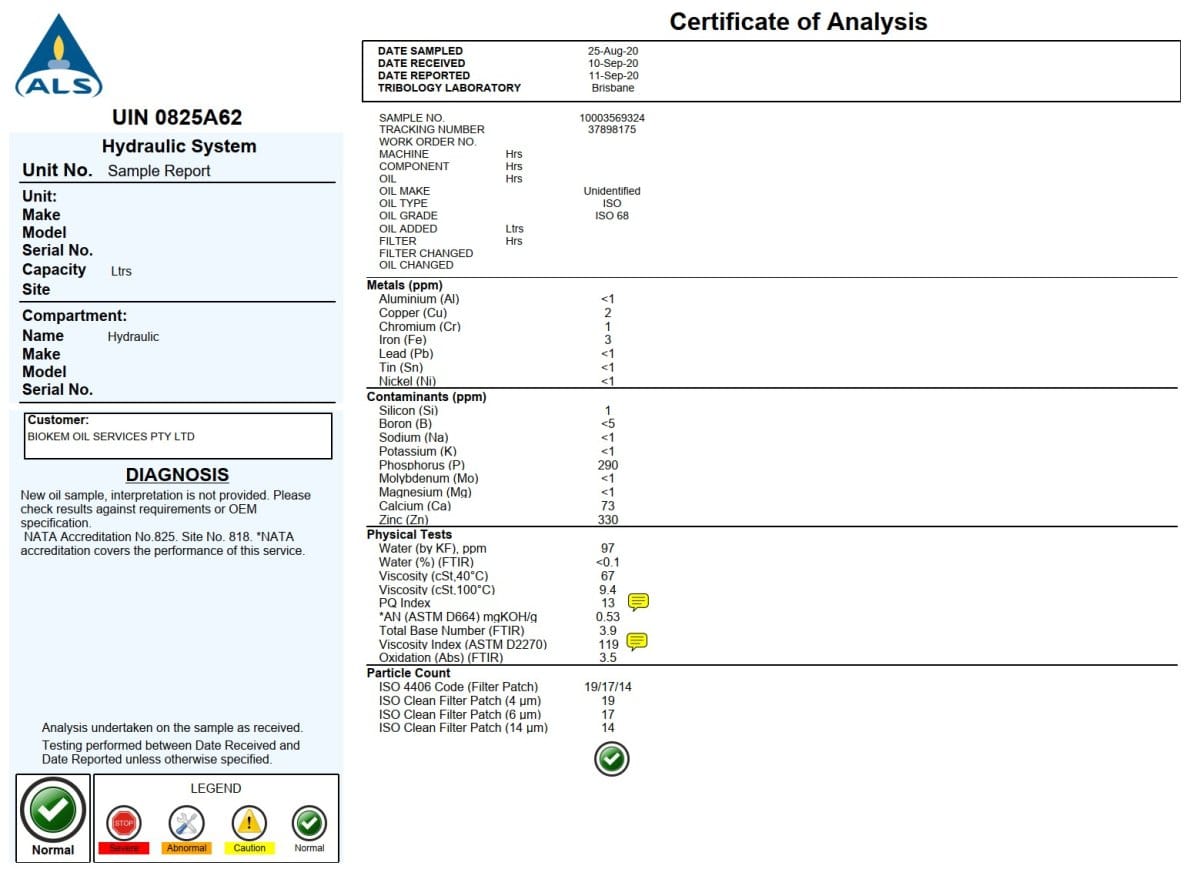
Inadequate lubrication causes up to 50% of all premature bearing failures in modern manufacturing plants. While most facilities receive regular data, many maintenance teams struggle with information overload, making it difficult to justify costs or prevent unscheduled downtime. It’s a common challenge to feel that your technical reports are more of a burden than a tool for operational excellence.
This article provides clarity by identifying the 5 Key Indicators to Check on Your Lube Oil Lab Reports to help you decode complex data and extend the life of your industrial machinery. By understanding specific metrics, such as the new ISO 24966:2026 flash point standards and the ASTM D2896-26 base number requirements, you can shift from costly, reactive oil changes to strategic fluid purification. We’ll examine how to prioritize critical wear metals and contamination levels to ensure your assets remain reliable and your maintenance program stays proactive and environmentally responsible.
Key Takeaways
- Understand how transitioning from time-based schedules to condition-based maintenance reduces unnecessary oil waste and lowers your environmental footprint.
- Identify the 5 Key Indicators to Check on Your Lube Oil Lab Reports to pinpoint issues like film strength loss or moisture ingress before they lead to catastrophic component wear.
- Learn why analyzing data trends over time is more effective for early fault detection than reacting to isolated threshold alerts.
- Discover how to match lab findings with specific remediation strategies, such as using vacuum dehydration for moisture or varnish mitigation for chemical degradation.
- Explore how integrating high-performance Filters S.p.A. products ensures your system maintains the fluid cleanliness standards required for long-term reliability.
The Strategic Importance of Lube Oil Analysis
Oil analysis serves as a vital diagnostic tool, functioning much like a blood test for industrial machinery. It provides a proactive health check that allows maintenance teams to identify potential failures before they occur. Transitioning from traditional time-based schedules to condition-based maintenance strategies ensures that resources are utilized efficiently. Instead of discarding oil based on a calendar date, operators can rely on real-world data to determine when intervention is truly necessary.
Understanding the 5 Key Indicators to Check on Your Lube Oil Lab Reports is essential for any facility aiming to reduce unscheduled downtime. Inadequate lubrication causes up to 50% of all premature bearing failures in manufacturing plants. By investing in regular analysis, companies can prevent approximately 70% of these lubrication-related failures. This shift not only protects critical hardware but also transforms oil from a disposable consumable into a valuable asset that can be managed and purified.
To better understand the fundamentals of this process, watch this clear explanation from a certified specialist:
Why ‘Normal’ Isn’t Always Safe
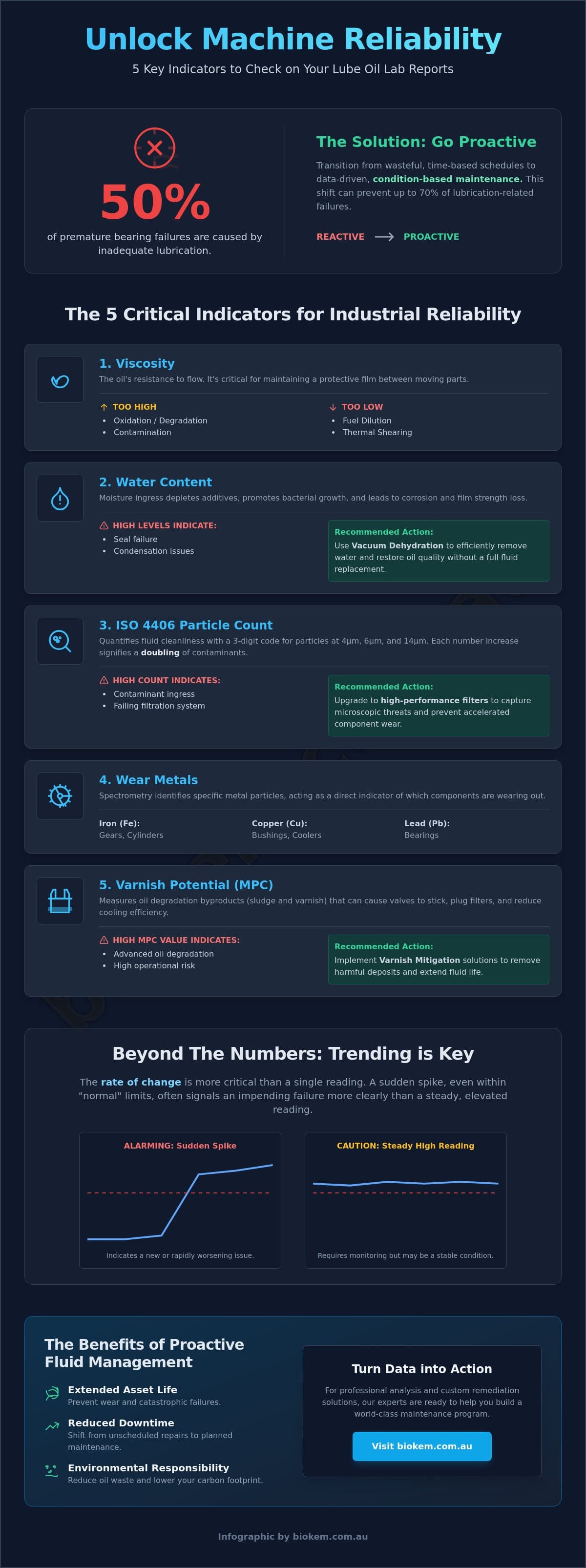
Many technicians make the mistake of looking only at “Caution” or “Critical” flags on a report. However, absolute limits can be misleading if you lack a baseline sample from the original new oil batch. Every lubricant has a unique chemical signature; without a starting point, you cannot accurately measure degradation. The rate of change, or trending, is often more important than the current value. A sudden spike in wear metals within a “normal” range often signals an impending failure more clearly than a steady, slightly elevated reading.
The Environmental Case for Oil Analysis
Modern industrial operations must balance productivity with ecological responsibility. Precise monitoring through professional analysis directly supports corporate sustainability goals by extending the service life of lubricants. This longevity reduces the volume of industrial waste generated and lowers the overall carbon footprint of the facility. Rather than defaulting to oil disposal, companies can opt for purification methods like vacuum dehydration or varnish mitigation. These approaches prioritize the long-term health of the environment alongside operational efficiency.
The 5 Critical Indicators for Industrial Reliability
To maintain a proactive maintenance strategy, you must look beyond the surface of your data. The technical results provided by an ISO 17025 accredited laboratory offer a deep look into your machine’s health. Identifying the 5 Key Indicators to Check on Your Lube Oil Lab Reports allows your team to prioritize interventions that prevent catastrophic failure before it begins.
Viscosity and Water: The Fundamentals
Viscosity is the most fundamental property of a lubricant, representing its resistance to flow and ability to maintain a protective film. If viscosity is too high, it might indicate oxidation or contamination; if it’s too low, fuel dilution or thermal shearing could be the cause. Water content is equally critical because moisture ingress depletes additives and promotes bacterial growth, eventually leading to corrosion. When moisture levels exceed acceptable limits, vacuum dehydration is the most effective method to restore oil quality without requiring a full fluid replacement.
ISO 4406 and Wear Metals: Tracking Contamination
Cleanliness is quantified using the ISO 4406 particle count, a three-digit code representing particles at the 4μm, 6μm, and 14μm levels. Each increase in these numbers signifies a doubling of the contaminant population. Spectrometry then identifies specific wear metals like Iron from gears, Copper from bushings, or Lead from bearings. High particle counts indicate that your system’s current filtration is failing to keep pace with ingress. Upgrading to specialist oil filters can capture these microscopic threats before they accelerate internal component wear.
MPC and Varnish: The Silent Killer
Varnish is often called the silent killer because it doesn’t always show up on standard viscosity or wear metal tests. Membrane Patch Colorimetry (MPC) is the specialized test used to measure varnish potential in turbine and hydraulic systems. As oil thermally degrades, it creates soft contaminants that plate out on cool surfaces, leading to sticking valves and lost production. Implementing varnish removal systems is essential for maintaining the precision required in modern industrial equipment. Monitoring these 5 Key Indicators to Check on Your Lube Oil Lab Reports ensures that your fluid remains an asset rather than a liability.
Scheduling a professional oil analysis review can help you determine the best path forward for your critical assets.
Beyond the Numbers: Interpreting Trending and Thresholds
Interpreting a lab report involves more than scanning for red “Critical” flags. A “Caution” alert indicates that a parameter is drifting outside the established baseline, signaling that you should increase monitoring frequency. Conversely, a “Critical” status demands immediate intervention to prevent asset failure. One of the most important nuances is the rate of change. A steady, slightly elevated reading in an older machine might be less concerning than a sudden spike in wear metals on a newer asset. Rapid shifts usually signal an active wear mode that requires an immediate investigation. Understanding the 5 Key Indicators to Check on Your Lube Oil Lab Reports is the first step, but interpreting the context of those numbers is what truly saves machinery.
Maintenance managers often question why they should trust a lab when the oil appears clear to the naked eye. Human vision can only detect particles down to approximately 40 microns. However, the most significant damage is caused by silt-sized particles in the 2 to 15 micron range, which are completely invisible. Relying on visual inspection is a reactive approach that ignores the microscopic reality of fluid degradation and chemical breakdown. Setting custom alarm limits based on the criticality of each specific asset ensures that your most vital machines receive the attention they deserve before a “normal” reading turns into a breakdown.
The Power of Data Trending
Effective fluid management relies on plotting results over a 6 to 12 month period to identify performance patterns. This long-term view reveals insights that a single snapshot misses. For example, you might notice seasonal variations where higher ambient humidity in summer correlates with increased water content in your reservoirs. Recognizing these cycles helps you adjust your maintenance intervals or hardware requirements, such as desiccant breathers, more effectively. For immediate onsite verification between lab cycles, using patch test kits provides a quick visual reference of particulate and varnish levels, bridging the gap between formal monthly reports.
Common Lab Reporting Errors
The accuracy of any analysis depends entirely on the quality of the sample provided. Poor sampling techniques are the primary cause of false positives or misleading “clean” results. If a sample is taken from a dead-leg pipe or a cold sump, it won’t represent the oil currently circulating through the system. This follows the “garbage in, garbage out” principle of industrial diagnostics. If you receive a critical result that doesn’t align with the machine’s actual performance, it’s prudent to conduct a second-opinion test. Ensuring the sample is taken from a live zone while the machine is at operating temperature is essential for valid data. This precision is vital when monitoring the 5 Key Indicators to Check on Your Lube Oil Lab Reports to ensure your maintenance decisions are based on accurate data rather than sampling errors.
From Diagnosis to Intervention: Turning Data into Action
Once you’ve identified the 5 Key Indicators to Check on Your Lube Oil Lab Reports, the focus must shift from observation to remediation. A report serves as a diagnostic roadmap. If the ISO 4406 code reveals high particle counts, your immediate path is enhanced filtration or a system-wide clean. If the Membrane Patch Colorimetry (MPC) results indicate high varnish potential, you require a specialized varnish removal system. Simply monitoring these numbers without a defined intervention strategy leaves your assets vulnerable to the very failures you’re trying to prevent.
Many operators default to a standard oil change when reports turn “red,” but this is often an insufficient and wasteful response. A simple drain and fill typically leaves behind a significant percentage of the old, contaminated fluid trapped in dead legs, heat exchangers, and internal piping. This residual contamination quickly degrades the new oil, shortening its service life and failing to address the root cause of the issue. For systems heavily laden with debris or sludge, hot oil flushing is the only way to ensure the entire circuit is restored to its original cleanliness specification.
When to Call the Specialists
There’s a critical “Point of No Return” where standard maintenance routines can’t keep up with the rate of degradation. When wear metal concentrations spike exponentially or water ingress becomes a recurring battle, onsite technical intervention is necessary. Attempting complex DIY flushing or dehydration without certified industrial equipment risks incomplete cleaning and potential safety hazards. Professional interventions use high-flow, temperature-controlled hardware designed to reach turbulent flow velocities, ensuring that contaminants are lifted and removed rather than just redistributed. This level of precision is vital for maintaining regulatory compliance and protecting high-value critical assets.
Maximising Equipment Life with Purification
Shifting your philosophy from fluid replacement to fluid purification significantly improves long-term ROI. Proper lubrication management can result in a 3-times longer component life by maintaining the oil’s physical and chemical integrity. Utilizing tools like the Particle Pal allows for real-time monitoring of fluid health between formal lab cycles, providing an extra layer of protection against sudden ingress. By keeping the “blood” of your machine clean, you don’t just prevent failure; you actively extend the operational lifespan of your hardware while supporting corporate sustainability goals by reducing oil waste.
If your latest report indicates a critical issue, contact BioKem to discuss a tailored fluid remediation plan for your facility.
The BioKem Advantage: Professional Analysis and Remediation
BioKem stands as a premier Australian leader in fluid management, bridging the gap between raw data and operational reliability. While identifying the 5 Key Indicators to Check on Your Lube Oil Lab Reports is vital, the true value lies in the technical interpretation of those results. Our specialists analyze the nuances of your fluid health to design bespoke onsite solutions that address root causes rather than just symptoms. Through our strategic partnership with Filters S.p.A., we provide world-class hardware that meets the rigorous demands of industrial environments. This combination of local expertise and international quality ensures your facility remains compliant with regional regulatory standards while maintaining peak efficiency.
Integrated Oil Management Services
We provide a seamless transition from diagnostic oil analysis to physical remediation. This integrated approach creates a clear synergy between lab findings and our extensive range of equipment hire options. By utilizing a single partner for both the diagnosis and the cure, you eliminate the communication gaps that often occur between third-party labs and maintenance contractors. Our technicians don’t just hand you a report; they provide a roadmap for restoration. We invite you to submit your latest laboratory results for a professional review to determine if your current filtration strategy is sufficient for your asset criticality.
Sustainability Through Technical Expertise
BioKem’s commitment to ecological health is central to every service we provide. By prioritizing purification methods like vacuum dehydration and varnish mitigation over fluid disposal, we help clients significantly reduce their industrial carbon footprint. These life-science-oriented alternatives to traditional synthetic interventions align with global sustainability goals while providing a clear operational result. Reducing oil waste is not just an environmental choice; it’s a strategic business decision that preserves resources and enhances long-term profitability. Contact BioKem for a Comprehensive Oil Analysis Strategy to ensure your facility masters the 5 Key Indicators to Check on Your Lube Oil Lab Reports and achieves total fluid reliability.
Mastering Fluid Reliability for Long-Term Asset Health
Effective lubrication management is the foundation of industrial reliability and environmental responsibility. By mastering the 5 Key Indicators to Check on Your Lube Oil Lab Reports, you move beyond simple monitoring and begin actively extending the lifespan of your critical machinery. This proactive approach reduces the volume of industrial waste and minimizes the risks associated with unscheduled downtime. Transitioning from reactive oil changes to strategic fluid purification ensures that your lubricants remain a high-performance asset rather than a costly consumable.
BioKem provides the technical expertise needed to turn complex data into actionable results. As the sole Australian distributor for Filters S.p.A. products, we offer world-class hardware alongside expert onsite technical interventions. Whether your facility requires specialized hot oil flushing or advanced varnish mitigation, our team delivers solutions that align with the highest regulatory standards. Don’t let invisible contaminants compromise your production efficiency or sustainability goals.
Book a Professional Oil Analysis and Report Review Today to secure the future of your industrial assets. Taking control of your fluid health today builds a more resilient and sustainable operation for tomorrow.
Frequently Asked Questions
What is the most important indicator on an oil analysis report?
Viscosity is the most critical property because it directly determines the oil’s ability to maintain a protective film between moving parts. While other metrics provide insight into contamination or chemical health, a significant shift in viscosity indicates that the lubricant can no longer perform its primary function. For specialized equipment like turbines, the MPC score becomes equally vital for assessing varnish potential.
How often should I send oil samples to the lab for analysis?
Best practice for industrial equipment is to sample critical assets monthly and standard machinery quarterly. Consistent scheduling allows you to establish a reliable baseline and detect subtle changes in wear patterns before they escalate. High-load or extreme-temperature environments may require more frequent testing to ensure the lubricant’s chemical integrity remains intact.
Can oil analysis detect a bearing failure before it happens?
Yes, spectrometry identifies microscopic wear metals that signal internal component degradation long before a physical breakdown occurs. By monitoring the concentration of metals such as iron, copper, and lead, technicians can pinpoint which specific component is wearing. This early detection allows for planned maintenance during scheduled downtime rather than reacting to a catastrophic failure.
What does a high MPC score mean for my turbine oil?
A high Membrane Patch Colorimetry (MPC) score indicates that your oil has a significant potential for varnish formation. This means the lubricant’s chemical breakdown products are no longer soluble and will likely deposit on cool surfaces like valves and heat exchangers. Addressing a high MPC score early through varnish mitigation prevents sticking actuators and lost production time.
How do I know if my oil needs a full flush or just filtration?
Filtration is appropriate when your lab report shows elevated particle counts but the system internals remain relatively clean. However, if your ISO 4406 codes don’t improve after filtration or if you observe sludge in the reservoir, a hot oil flush is necessary. Flushing uses high-velocity turbulent flow to lift and remove debris that standard side-stream filtration cannot reach.
Why is my ISO 4406 code different between two different labs?
Variations often stem from differences in laboratory equipment calibration or the specific test methods used. To ensure accuracy for the 5 Key Indicators to Check on Your Lube Oil Lab Reports, you should only utilize labs with ISO 17025 accreditation. This certification guarantees that the facility uses validated instruments and standardized procedures to provide consistent, repeatable data.
Is it possible to remove water from oil without changing the entire batch?
Yes, vacuum dehydration is a highly effective method for removing all three states of water: free, emulsified, and dissolved. This technical intervention restores the lubricant’s performance without the environmental impact or cost of a full oil change. It’s an ecologically responsible solution that extends fluid life while protecting your machinery from corrosion and hydrolysis.
What are the common signs of varnish buildup in a hydraulic system?
The most frequent symptoms include sluggish valve response, erratic actuator movement, and unexpectedly high operating temperatures. You might also notice a dark, sandpaper-like residue on internal components or filter elements. These signs indicate that the oil’s oxidation products have begun to plate out, necessitating immediate varnish mitigation to restore system precision.