

Did you know that 80% of all hydraulic and lubrication system failures stem directly from contaminated fluid? In the demanding Australian industrial sector, maintaining superior oil cleanliness isn’t just a maintenance preference; it’s a financial necessity. You’ve likely seen how the abrasive red dust of the Pilbara or the high humidity of our coastal regions can turn a high-performance lubricant into a destructive grinding paste in just a few weeks of operation.
Interpreting a laboratory analysis report shouldn’t feel like deciphering a dead language. We agree that managing component wear while balancing your environmental sustainability targets is a complex challenge for any site manager or engineer. This guide empowers you to master the technical nuances of ISO 4406 standards to eliminate unscheduled downtime and extend the functional life of your assets. We’ll examine how to set precise KPI targets, reduce failure rates, and adopt nature-based filtration strategies that protect both your bottom line and the local ecosystem.
Key Takeaways
- Understand why visual inspections are insufficient and how invisible micron-sized particles compromise asset reliability and performance.
- Learn to decode the ISO 4406 three-number reporting format to accurately monitor the health and contamination levels of your industrial fluids.
- Discover why new oil is rarely clean enough for high-precision systems and how mastering oil cleanliness can significantly extend the lifecycle of your assets.
- Identify practical strategies for maintaining fluid health, from utilizing specialized patch test kits to upgrading to high-performance filtration media.
- Explore how integrating world-class Filters S.p.A. hardware with expert technical services ensures your operations remain compliant with Australian industrial standards.
Understanding Oil Cleanliness: The Foundation of Asset Reliability
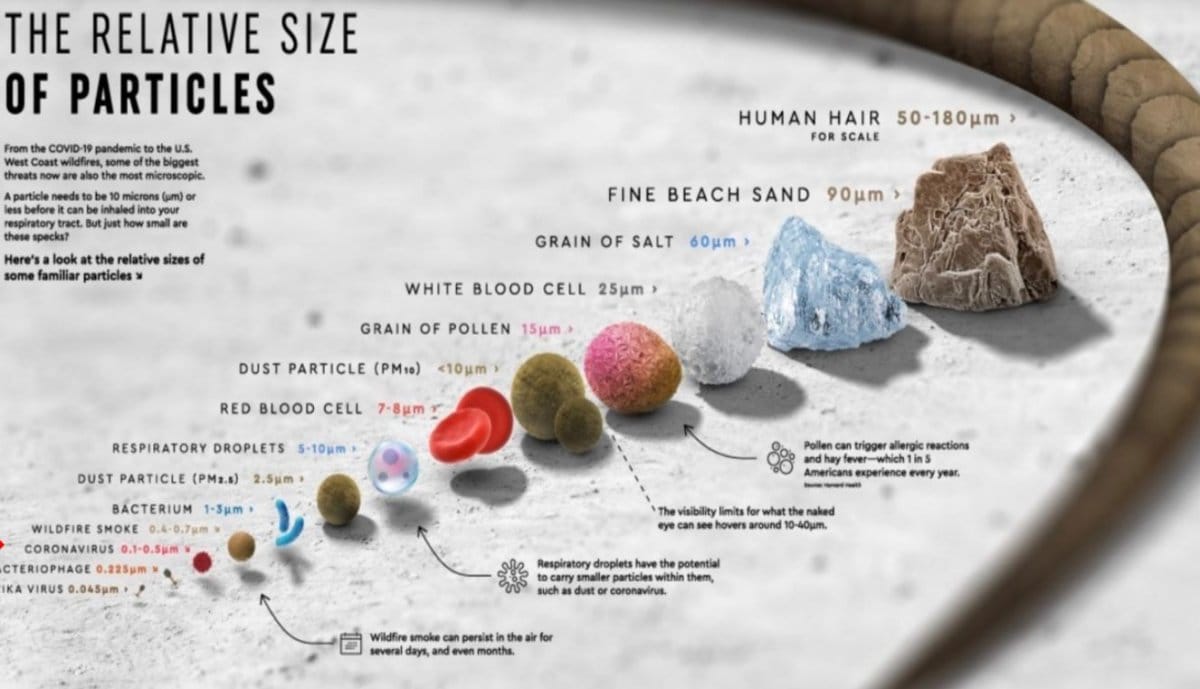
Oil cleanliness is the rigorous measurement of a fluid’s freedom from solid particles, moisture, and entrained gases. While many operators rely on a quick visual check, this method is fundamentally flawed. Human vision is typically limited to detecting particles larger than 40 microns. In contrast, the most destructive contaminants in hydraulic and turbine systems are often between 2 and 10 microns in size. These microscopic intruders bypass standard visual inspections and cause internal damage that remains invisible until a catastrophic failure occurs.
Effective asset management requires a shift toward the principles of contamination control. This approach recognizes that even a minor increase in particulate matter leads to a logarithmic acceleration in component fatigue. By adopting Total Fluid Management, Australian enterprises can transition from reactive maintenance to a proactive strategy where the fluid’s oil cleanliness is treated as a critical engineered specification rather than a simple consumable.
The Financial Impact of Fluid Contamination
The hidden costs of “silent” wear represent a significant drain on Australian industrial margins. When fluid purity is neglected, particle-induced abrasion creates a feedback loop of internal erosion. This leads to silt-sized particles lodging in tight-tolerance areas, which causes valve sticking and a measurable drop in pump efficiency. In a typical Australian mining or manufacturing facility, a 10% loss in hydraulic efficiency can result in thousands of dollars in wasted energy and lost productivity annually. A single point improvement in ISO cleanliness can double the life of critical components. Utilizing monitoring tools like the Particle Pal range allows teams to track these levels in real-time, preventing the A$50,000 to A$150,000 costs often associated with unplanned turbine overhauls.
Environmental Responsibility through Cleanliness
Maintaining high oil cleanliness standards is a direct contributor to corporate sustainability. Every litre of oil kept in service is a litre that doesn’t require disposal or recycling. This reduction in fluid consumption directly lowers a facility’s carbon footprint and aligns with Australian ESG (Environmental, Social, and Governance) goals. Modern industry is increasingly turning to nature-based solutions and bioremediation to manage hydrocarbon waste, yet the first line of defence is always life extension through precision filtration. By meeting strict cleanliness targets, companies ensure compliance with local environmental regulations and reduce the ecological risks associated with fluid transport and waste management. This proactive stance transforms fluid maintenance from a technical necessity into a core pillar of environmental stewardship.
Decoding ISO 4406: The Industry Standard for Fluid Health
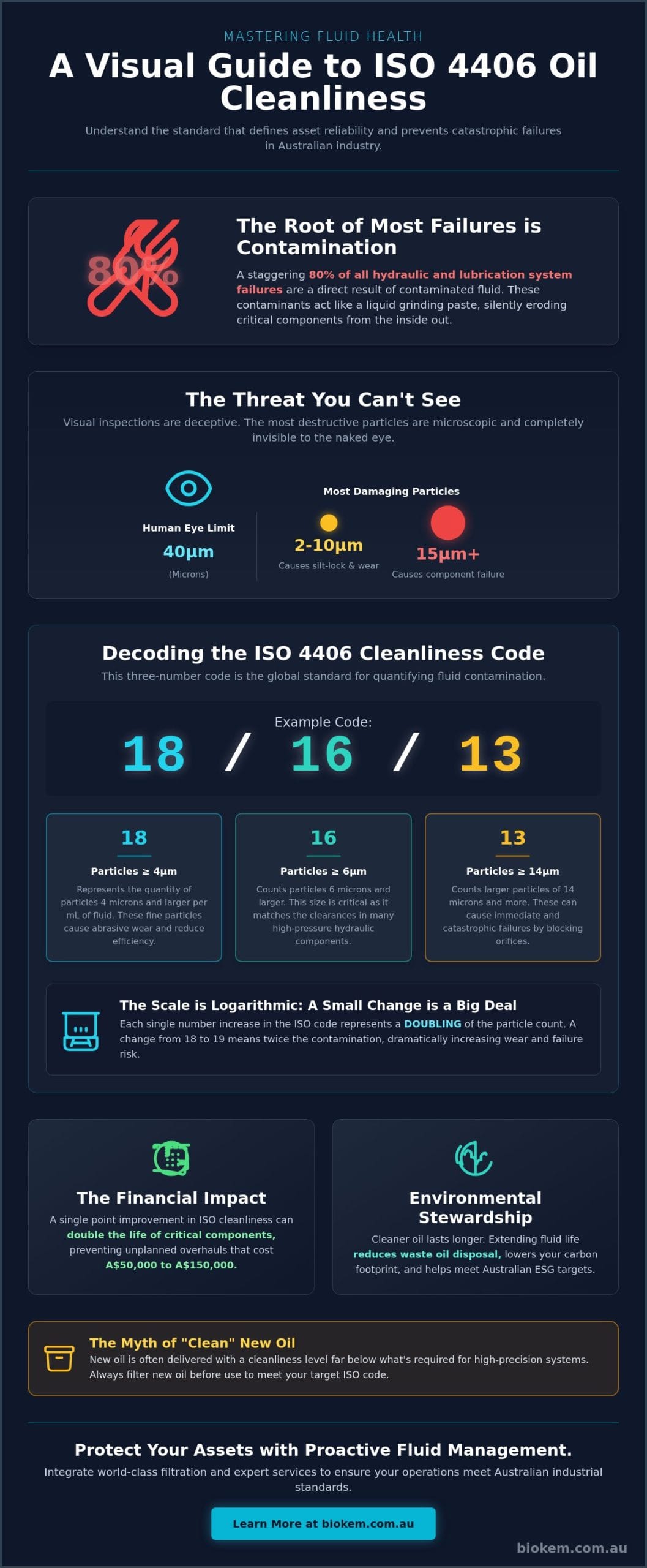
ISO 4406 serves as the primary global language for quantifying particulate contamination in lubricants. It uses a three-number code, such as 18/16/13, to represent the quantity of particles larger than 4, 6, and 14 microns (µm) per millilitre of fluid. These specific sizes are critical because they correlate to the internal clearances of most industrial machinery components. Achieving high levels of oil cleanliness isn’t just a technical preference; it’s a fundamental requirement for equipment longevity.
The reporting format is strictly defined by the ISO 4406:2021 standard. The first number represents particles >4µm, the second >6µm, and the third >14µm. This scale is logarithmic. Each increment in the code number represents a doubling of the contaminant level. For example, a shift from code 18 to code 19 means the particle count has effectively doubled. This exponential increase explains why a seemingly small numerical jump in a lab report indicates a significant risk to your assets.
To ensure accuracy across different laboratories and field equipment, Automatic Particle Counters (APC) must follow the ISO 11171 calibration standard. This protocol ensures that the sensors correctly identify particle sizes despite variations in fluid opacity or viscosity. Without this rigorous calibration, data from different sites across Australia wouldn’t be comparable, making it difficult to maintain fleet-wide standards.
How to Read an ISO Cleanliness Code
Interpreting a code requires matching the “Range Number” to a specific quantity of particles. If your report shows a 19/17/14, the first number (19) indicates between 2,500 and 5,000 particles per millilitre. You can gain deeper insights by reviewing a Filter Ferrogram, which provides a visual analysis of the wear debris alongside the raw numbers. The middle number (>6µm) is particularly vital for silt-sensitive components. Particles in this size range often match the dynamic clearances in hydraulic servo valves, leading to stiction and erratic control response.
Setting Target Cleanliness Levels (TCL)
Setting a TCL depends on the system pressure and the most sensitive component in the circuit. A high-pressure hydraulic system operating at 210 bar requires much cleaner oil than a low-pressure splash-lubricated gearbox. Use the following typical targets as a baseline for your maintenance strategy:
- High-Pressure Hydraulics: 15/13/10
- Steam Turbines: 16/14/11
- Industrial Gearboxes: 18/16/13
- Diesel Fuel Systems: 18/16/13
Establishing a “Target Alarm” is a proactive maintenance best practice. When oil cleanliness levels exceed your set TCL, it triggers an immediate investigation or a filtration intervention. If you’re struggling to maintain these levels due to oxidation by-products, integrating a varnish removal system can help restore fluid stability and protect sensitive internal surfaces.
The Myth of Clean New Oil and Common Contamination Sources
Many Australian plant managers believe that oil arriving in a sealed 205-litre drum or via bulk delivery is pristine. This is a dangerous assumption. In reality, the refining, blending, and packaging process introduces significant particulate matter. New oil is rarely “clean” by the standards required for modern, high-precision machinery. Understanding where these contaminants originate is the first step in maintaining oil cleanliness and protecting your capital investment.
Contamination generally falls into three categories:
- Built-in Contamination: This occurs during the manufacturing or repair of the machinery. It includes welding slag, casting sand, metal shavings, and lint from cleaning rags left inside reservoirs or piping.
- Ingressed Contamination: These are external pollutants that enter the system during operation. Common entry points include faulty seals and standard breather caps that pull in dust and moisture from the ambient air. In harsh Australian environments, such as mining sites in the Pilbara, airborne silica is a constant threat.
- Generated Contamination: This is a byproduct of the system’s own operation. As components move, metal-on-metal contact creates microscopic wear particles. Additionally, chemical degradation of the fluid creates sludge and acids that further attack internal surfaces.
Why New Oil Requires Pre-Filtration
Typical drum oil often measures at an ISO 4406 code of 21/19/16 or even higher. This level of contamination is dozens of times dirtier than what a modern, high-pressure hydraulic system requires for reliable performance. Adding this fluid directly to your machine introduces a “slug” of contaminants that triggers immediate abrasive wear. It’s essential to use dedicated filtration carts for all oil transfers. This practice ensures that oil cleanliness levels are brought within specification before the fluid ever touches a sensitive valve or pump.
Varnish: The Invisible Contaminant
Varnish is a soft, resinous contaminant that often evades standard 10-micron mechanical filters. It forms when oil undergoes thermal or oxidative stress, leading to the precipitation of degradation by-products. These deposits coat internal surfaces, causing sticking valves, clogged orifices, and reduced heat transfer in turbines. Because varnish is polar, it clings to metal surfaces and forms a “sandpaper” finish that accelerates wear. To combat this, specialized varnish removal systems are necessary to achieve sub-micron purification. Addressing these soluble contaminants is vital for long-term turbine reliability and maintaining precise valve responsiveness in demanding industrial applications.
Practical Strategies for Achieving and Maintaining ISO Targets
Achieving consistent oil cleanliness targets involves a shift from passive observation to proactive technical intervention. It’s not enough to simply change filters when a gauge indicates high differential pressure. Maintaining fluid integrity requires a structured framework that identifies contaminants before they cause component fatigue. By integrating advanced filtration with precise monitoring, Australian operators can extend component life by up to 200% in high-pressure hydraulic systems.
- Establish a baseline using patch test kits to provide immediate visual confirmation of particulate types.
- Replace standard cellulose filters with high-performance glass media elements to achieve higher beta ratings and stable pore structures.
- Deploy vacuum dehydration for systems where water ingression is a recurring issue, as this removes dissolved moisture that standard filters cannot capture.
- Execute technical interventions like high-velocity flushing during commissioning to ensure the system is clean from day one.
The Role of Hot Oil Flushing
Hot oil flushing is the most effective method for removing “built-in” contaminants. By heating the fluid and increasing flow rates, technicians create a turbulent flow with a Reynolds number exceeding 4,000. This turbulence dislodges stubborn debris, scale, and welding slag from internal pipe walls. This process is essential after a major overhaul or a catastrophic pump failure. To verify the results in real-time, we utilize paddle flushing screens. These screens capture remaining particles, providing a physical snapshot of the system’s internal state before it’s returned to service.
Equipment Hire vs. Managed Service
Deciding between equipment hire and a managed service depends on the complexity of the asset and the available onsite expertise. For routine maintenance or short-term decontamination, hiring specialized filtration units is a cost-effective way to manage oil cleanliness without a permanent capital investment. This flexibility allows teams to address temporary spikes in contamination or moisture. However, complex systems often benefit from a managed service where technical experts handle the entire intervention. Integrating onsite monitoring tools, such as the particle pal range, provides technicians with live ISO 4406 data. This ensures that every litre of oil meets the required specification before the project is signed off.
Contact Biokem today to schedule a technical oil flushing intervention for your critical assets.
Integrating BioKem Solutions into Your Cleanliness Strategy
BioKem serves as the authorized distributor for Filters S.p.A. products, bringing world-class Italian engineering to the Australian industrial landscape. We focus on the critical intersection of high-end hardware and expert onsite technical services. Achieving optimal oil cleanliness isn’t just about purchasing a filter; it’s about implementing a system that handles the specific rigors of Australian mining, power generation, and manufacturing. By combining precision hardware with our technical expertise, we help operators mitigate the risks of fluid degradation and mechanical wear. This integrated approach ensures that your purification strategy is both scientifically sound and practically executable.
Our commitment to Australian regulatory standards means every solution we provide is built for regional reliability. We understand that a site in the Pilbara has different environmental stressors than one in Melbourne. This localized knowledge, backed by global technology, allows us to transition assets from a state of contamination to one of sustained purification. This path protects long-term asset health and ensures compliance with environmental and safety mandates. Research indicates that up to 80% of hydraulic system failures are directly related to fluid contamination, making this integration a vital financial safeguard.
Accessing Global Filtration Technology in Australia
BioKem provides direct access to Swift Filters and bespoke housing solutions designed for high-performance applications. These components are essential for systems where standard filtration cannot meet the required ISO cleanliness codes. We also provide specialized technical support for heat transfer systems, helping to prevent the fluid cracking and carbon build-up that leads to system inefficiencies. Our “one-stop-shop” approach means you get the consumables you need along with the biological and technical expertise to use them effectively. This reduces downtime and simplifies the procurement process for maintenance departments across the country.
Next Steps for Maintenance Leaders
Proactive fluid management is a strategic necessity for modern industrial operations. To improve your oil cleanliness protocols, start with a clear assessment of your current infrastructure. Use this checklist to guide your initial audit:
- Compare current ISO 4406 particle counts against the manufacturer’s recommended limits.
- Inspect all air breathers and seals to ensure they prevent external ingress.
- Evaluate the Beta ratio of your current filter elements to ensure they capture particles at the correct micron rating.
- Review the moisture content in your reservoirs, as water is a primary catalyst for oxidation and acid formation.
Requesting a site-specific oil analysis and cleanliness audit is the most effective way to identify hidden risks before they lead to expensive downtime. Our team provides the data-driven insights required to optimize your fluid life and machine reliability. Contact BioKem for a comprehensive fluid management consultation to begin your transition toward a more sustainable and efficient maintenance strategy.
Securing Your Industrial Future Through Precision Fluid Management
Maintaining rigorous oil cleanliness standards is a fundamental requirement for operational longevity. Achieving ISO 4406 targets requires a shift from reactive repairs to proactive fluid management. Industry research indicates that 80% of hydraulic system failures stem directly from contaminated fluids. By addressing the myth of clean new oil and implementing structured filtration strategies, Australian enterprises can significantly reduce unplanned downtime and extend component life.
BioKem provides the technical framework to meet these demanding industrial requirements. As the sole Australian distributor for Filters S.p.A., we offer world-class filtration technology backed by comprehensive national onsite technical support across all states. Our specialists deliver targeted hot oil flushing and varnish mitigation services designed to restore system integrity. It’s time to move beyond guesswork and rely on proven technical expertise to protect your capital investments.
Optimise your fluid reliability with BioKem’s expert oil services
Your journey toward total asset reliability starts with a single, data-driven step.
Frequently Asked Questions
What is the most common cause of oil contamination in Australian industry?
Ingress of atmospheric dust and moisture is the primary cause of contamination in Australian industrial environments. Mining operations in the Pilbara or Hunter Valley face high levels of abrasive silica, which accounts for approximately 80% of mechanical wear. These particles enter through breathers and worn seals. Maintaining high standards of oil cleanliness requires robust exclusion methods like desiccant breathers to prevent these contaminants from entering the system initially.
Can I achieve ISO 4406 targets using only standard on-board filters?
Standard on-board filters are rarely sufficient to reach the stringent ISO 4406 targets required for high-pressure hydraulic systems. Most factory-fitted filters focus on protecting components from large debris rather than fine silt. To achieve a target like 16/14/11, you often need off-line kidney loop systems with a Beta ratio of 1000 or higher. This secondary filtration ensures the lubricant remains within specification throughout its service life.
How often should I sample my oil for particle counting analysis?
You should sample critical hydraulic and turbine systems every 500 operating hours or on a strict monthly schedule. For less critical gearboxes, a quarterly interval is often sufficient under Australian AS 3548 standards. Regular sampling allows you to track trends in oil cleanliness and identify spikes in wear metals before they lead to a functional failure. Consistency in sampling technique is vital for accurate data.
What is the difference between a particle count and a ferrogram?
A particle count quantifies the number of contaminants in specific size ranges, while a ferrogram provides a visual analysis of the particle’s shape and composition. ISO 4406 particle counting uses laser sensors to give you a numerical cleanliness code. Conversely, analytical ferrography uses microscopy to identify if the debris is fatigue wear, cutting wear, or copper alloy. This helps maintenance teams determine the exact root cause of internal damage.
Is vacuum dehydration necessary if my oil looks clear?
Vacuum dehydration is essential because mineral oil can hold up to 500 ppm of dissolved water while still appearing clear to the naked eye. Once water exceeds its saturation point, it turns emulsified, leading to hydrogen embrittlement and rapid oxidation. Removing dissolved moisture protects bearing surfaces and prevents the formation of acidic sludge. It’s a proactive step that extends both lubricant and component longevity significantly.
How much does poor oil cleanliness actually cost in terms of asset life?
Improving oil cleanliness can extend the service life of hydraulic components by 200% to 300% according to the Noria Life Extension Tables. If you improve your ISO code from 21/18/15 to 16/13/10, you effectively triple the life of your pumps and valves. For a large-scale Australian mining fleet, this translates to savings of hundreds of thousands of dollars in annual replacement costs and unplanned downtime.
What are the benefits of hiring filtration equipment for a one-off clean?
Hiring filtration equipment allows you to achieve rapid oil reclamation without the significant capital expenditure of purchasing permanent rigs. This is particularly useful for commissioning new systems or recovering from a major contamination event. You gain access to industrial-grade flow rates and high-efficiency elements that can process thousands of litres in a single shift. It’s a sustainable choice that reduces waste by avoiding premature oil changes.
Does BioKem provide onsite oil analysis services across Australia?
BioKem provides comprehensive onsite oil analysis and filtration services across all Australian states and territories. Our technicians travel to remote sites in Western Australia, Queensland, and the Northern Territory to perform ISO 4406 particle counting and moisture testing. We use calibrated portable equipment to deliver immediate results. This local expertise ensures your operations remain compliant with both environmental regulations and OEM warranty requirements.