

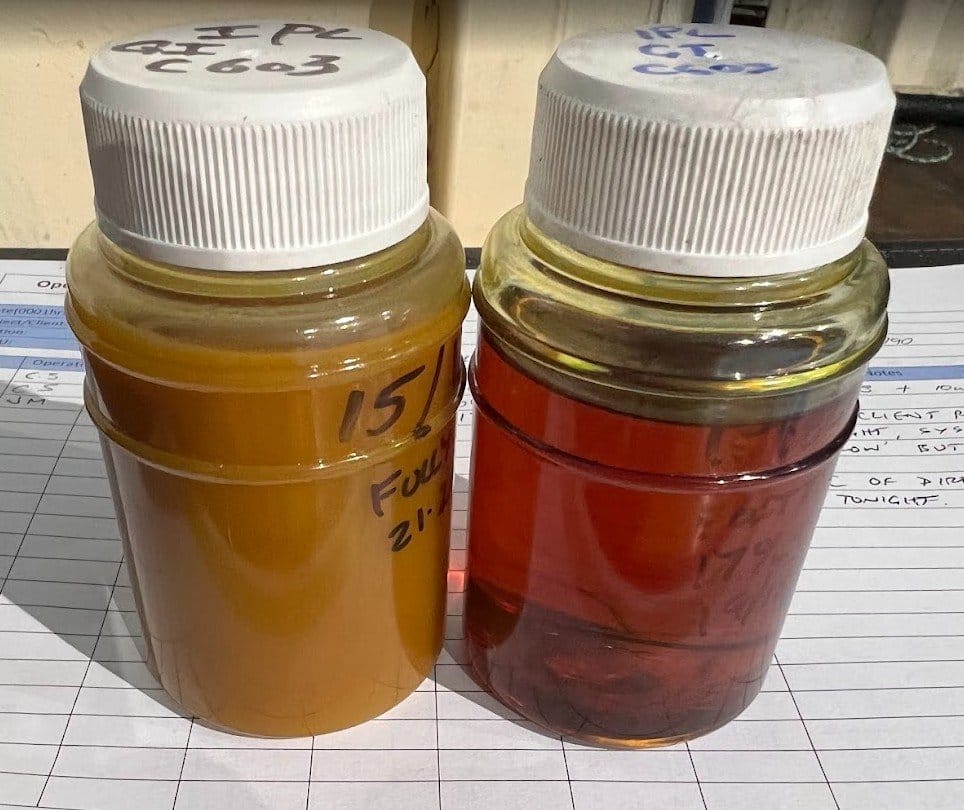
Research suggests that water contamination is responsible for approximately 75% of hydraulic component failures across Australian industrial sites. It’s a silent operational hazard that often goes unnoticed until a critical pump seizes or a valve sticks. You’ve likely experienced the stress of unscheduled downtime and the difficult task of explaining to stakeholders why a system requires a total oil flush. Identifying the early signs of water in hydraulic oil is essential for maintaining both mechanical integrity and your site’s environmental compliance standards.
We understand that managing fluid health is about more than just avoiding repairs; it’s about operational efficiency and reducing your ecological footprint. This guide provides the clear criteria you need to detect moisture in all its forms, including the “invisible” dissolved water that eludes basic visual checks. You’ll learn how to distinguish between free, emulsified, and dissolved states to make informed decisions about purification. We’ll outline professional restoration methods that extend oil life and keep your systems running within Australian regulatory frameworks without generating unnecessary waste.
Key Takeaways
- Identify the common visual signs of water in hydraulic oil, such as a milky appearance or excessive foaming, before they compromise your system’s integrity.
- Understand why moisture levels as low as 100 ppm can trigger additive depletion and sub-surface corrosion long before contamination becomes visible to the naked eye.
- Discover how Australian temperature fluctuations drive “tank breathing” and condensation, the primary culprits behind industrial oil contamination.
- Compare professional remediation techniques like vacuum dehydration and coalescing filtration to restore oil purity and extend component life.
- Learn how proactive moisture management reduces operational downtime and aligns your maintenance strategy with sustainable industrial practices.
Understanding the Three States of Water in Hydraulic Oil
Water contamination is a leading cause of component failure in Australian industrial machinery. Identifying the signs of water in hydraulic oil requires a technical understanding of how moisture interacts with hydrocarbons at a molecular level. Hydraulic fluid serves as both a power transmission medium and a lubricant; however, its ability to perform these vital roles degrades significantly when moisture enters the system. This contamination doesn’t just happen in one way; it evolves through three distinct chemical states that dictate the severity of the risk to your equipment.
To better understand this concept, watch this helpful video:
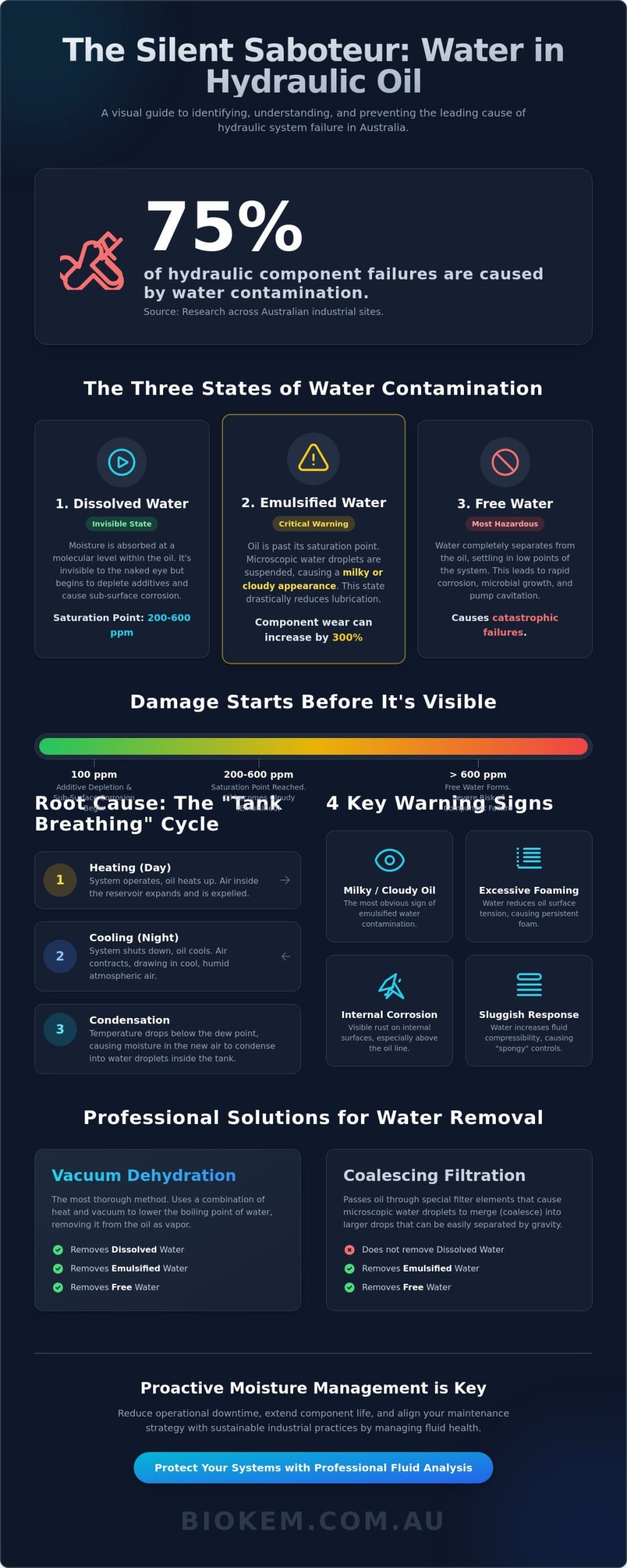
Water exists in hydraulic systems as dissolved, emulsified, or free water. Dissolved water is the initial stage, where moisture is held within the oil’s molecular structure, remaining invisible to the naked eye. Emulsified water occurs once the oil surpasses its saturation point, resulting in a cloudy or milky appearance. Finally, free water represents the most hazardous stage. This occurs when water separates completely from the oil, settling at the bottom of reservoirs or low points in the circuit where it can trigger rapid corrosion and pump cavitation.
The Saturation Point: When Invisible Becomes Visible
The saturation point is the maximum concentration of dissolved water a specific oil can hold before it manifests physically. This threshold isn’t fixed; it varies based on the oil type and operating conditions. For example, standard mineral oils typically reach saturation between 200 and 600 ppm (0.02% to 0.06%), while certain synthetic fluids can hold much higher volumes. Temperature plays a decisive role in this balance. “A rise in temperature increases oil saturation capacity, potentially hiding high water levels that will drop out as free water once the system cools.” This phenomenon often leads to hidden rust and additive dropout during machine downtime.
Why Emulsified Water is a Critical Warning
A milky or hazy appearance is one of the most reliable signs of water in hydraulic oil. This visual change indicates that the oil’s chemistry is fundamentally compromised. When water emulsifies, it creates microscopic droplets that interfere with the fluid’s ability to maintain a lubricating film. This leads to metal-on-metal contact, which can increase component wear by as much as 300% in high-pressure systems. In Australian environments where humidity and temperature fluctuations are common, managing this state is vital. Addressing these issues often requires professional hot oil flushing and filtering to remove the moisture before it causes permanent damage to pumps and valves.
Visual and Physical Signs of Water in Hydraulic Oil
Identifying the signs of water in hydraulic oil early prevents catastrophic component failure and unplanned downtime. The most immediate indicator is a change in the fluid’s clarity. When water emulsifies with oil, the mixture scatters light, resulting in a milky or cloudy appearance. This usually happens when water content exceeds the saturation point, which for most mineral oils is between 200 and 600 ppm at 38°C. If the oil looks opaque, it’s likely that moisture has already begun to compromise the lubricant’s integrity.
- Excessive Foaming: Water reduces the oil’s surface tension, leading to persistent foam in the reservoir. Air bubbles don’t collapse as they should, which can cause pump cavitation and accelerated oxidation.
- Internal Corrosion: Visible rust on the internal surfaces of the reservoir, especially above the oil line, indicates high humidity and condensation issues within the system.
- Sluggish Response: Water increases the fluid’s compressibility. Operators often report “spongy” controls or a lack of precision in hydraulic actuators as the first physical symptom of contamination.
The Crackle Test: A Rapid Field Assessment
The crackle test provides a quick way to estimate water concentration on-site without waiting for laboratory results. To perform this, heat a professional-grade hot plate to 160°C. Place a small oil sample on the surface and listen closely. If the oil remains silent, water content is likely below 500 ppm. Small bubbles that quickly disappear indicate 500 to 1,000 ppm. Distinct “popping” or “crackling” sounds signify concentrations well above 2,000 ppm. This method won’t detect dissolved water below the 500 ppm threshold, so it’s best used as a preliminary screening tool rather than a final diagnostic.
Monitoring Reservoir Settling and Drain Plugs
Free water is heavier than oil and naturally settles at the bottom of the tank. During routine maintenance, open the drain plug slightly to check for water discharge. For deep reservoirs where visual inspection is difficult, apply water-finding paste to a dipstick. The paste changes colour instantly upon contact with water, revealing the exact depth of the settled layer. To gain a deeper understanding of how moisture interacts with solid contaminants, many Australian maintenance teams use patch test kits to evaluate fluid health before scheduling a full system flush. Maintaining clean fluid is essential for meeting ISO 4406 cleanliness standards and extending the lifespan of expensive pumps. For more comprehensive protection, consider a professional filtration solution to remove moisture before it causes permanent damage.
The Invisible Impact: Why ppm Matters Before It Gets Cloudy
Many operators wait for the oil to turn milky before they acknowledge the signs of water in hydraulic oil. This is a costly mistake. For most mineral-based hydraulic fluids, saturation levels occur around 200 to 600 ppm depending on the operating temperature. However, chemical damage begins much earlier. At levels as low as 100 to 200 ppm, water acts as a catalyst for degradation. It doesn’t just sit in the reservoir; it attacks the oil’s molecular structure. Biokem views water as the primary driver for nearly all industrial oil failures. It triggers a chain reaction of oxidation that can shorten fluid life by 50% or more.
Corrosion starts at the molecular level long before visible rust appears on cylinder rods or internal housing surfaces. By the time you spot orange oxidation on a component, the internal tolerances of your pumps and valves have likely already been compromised. This microscopic pitting increases friction and heat, creating a self-sustaining cycle of wear.
Additive Washout and Chemical Instability
Water reacts aggressively with Zinc Dialkyldithiophosphate (ZDDP), which is the most common anti-wear additive in Australian industrial oils. This hydrolysis process strips the oil of its protective capabilities and forms corrosive sulfuric and phosphoric acids. These acids attack yellow metals and steel surfaces. You won’t see this on a cylinder rod immediately, but the damage is permanent.
When additives react with water, they often undergo additive precipitation. The essential chemicals fall out of the solution as solid particles. These solids quickly clog fine filters, leading to frequent element changes and increased maintenance costs. Water also increases the surface tension of the oil. This makes it harder for air bubbles to escape. The resulting air entrainment leads to pump cavitation, which can destroy a high-pressure pump in a matter of hours.
The Link Between Water and Varnish Formation
Moisture-driven oxidation is the precursor to varnish. As water accelerates the breakdown of the base oil, it creates soft, polar contaminants. These sub-micron particles are soluble when the oil is hot but solidify as it cools. They eventually bake onto hot metal surfaces, forming a hard, resinous layer that’s difficult to remove.
In Australia’s high-temperature industrial environments, this process is rapid. Varnish causes stiction in sensitive servo valves and turbine control systems. A valve that sticks by even a fraction of a millimetre can shut down an entire production line. Implementing a varnish mitigation strategy must always start with water removal. Without addressing the moisture, you’re only treating the symptom. Effective fluid management requires keeping water levels well below the saturation point to maintain chemical stability and equipment reliability.
Root Causes of Water Ingress in Industrial Systems
Identifying the signs of water in hydraulic oil is only half the battle; operators must isolate how the moisture entered the circuit to prevent recurrence. In Australia’s varied climate, condensation is the primary offender. Systems operating in regions like the Hunter Valley or the Pilbara experience temperature swings exceeding 20°C between day and night. This thermal cycling causes the reservoir to “breathe,” drawing in humid air that cools and settles as liquid water on the internal walls of the tank.
Internal failures in water-cooled heat exchangers represent a more aggressive threat. A pinhole leak or a perished gasket in the cooling core can dump litres of water directly into the oil in minutes. Unlike the slow accumulation of condensation, cooler failures often lead to immediate oil emulsification and rapid component wear. Maintenance teams should monitor pressure differentials across coolers, as a drop in oil pressure relative to water pressure can invite massive ingress.
Mechanical entry points are equally common. Worn rod seals act as a pump, dragging rain or high-pressure wash-down water into the cylinder with every stroke. Poor storage habits also contribute to contamination. Oil drums stored upright outdoors collect water on the lid. As the drum heats and cools, the bungs “breathe,” sucking rainwater past the threads and into the virgin oil before it even reaches the machine.
Identifying Entry Points During Inspection
Routine inspections should focus on the hardware designed to keep moisture out. Use this checklist to harden your system against ingress:
- Desiccant Breathers: Check for colour changes indicating the media is saturated and no longer stripping moisture from incoming air.
- Cylinder Rods: Look for “tenting” or pitting on the chrome, which suggests seals aren’t wiping the rod clean.
- Cooler Gaskets: Inspect for external weeping that may indicate internal seal degradation.
For large reservoirs, headspace dehumidification is an effective solution. This involves circulating dry air through the top of the tank to strip moisture before it can settle into the fluid. This is vital because hydraulic fluids are hygroscopic, meaning they possess a natural tendency to absorb and retain moisture from the surrounding atmosphere.
The Importance of Professional Oil Analysis
Visual signs of water in hydraulic oil only appear after significant damage has started. Karl Fischer Titration is the industry gold standard for detection, providing an exact moisture measurement in parts per million (ppm). Routine oil analysis is a high-yield investment. A professional laboratory test typically costs between A$80 and A$150, whereas a catastrophic pump failure on a 300-tonne excavator can exceed A$45,000 in parts and lost production.
To get accurate results, don’t take fluid from the bottom of the tank where water and sediment settle. Always take a representative sample from the middle of the fluid stream while the system is at operating temperature. This ensures the data reflects the actual working condition of the oil rather than a concentrated pocket of contaminants.
Professional Solutions for Water Removal and Prevention
When you identify the signs of water in hydraulic oil, immediate remediation is essential to prevent permanent component damage. Industrial operators have several technical options to restore fluid integrity. The choice of method depends on whether the water is free, emulsified, or dissolved. BioKem provides a specialized approach that prioritizes onsite restoration, ensuring your operations remain compliant with Australian environmental and safety standards.
- Vacuum Dehydration: This is the most comprehensive method. It removes 100% of free and emulsified water and up to 90% of dissolved water. It’s particularly effective for sensitive systems where even trace moisture causes valve stiction.
- Coalescing Filtration: Best for high-flow systems with large volumes of free water. These systems use specialized media to merge small water droplets into larger ones that settle out of the oil via gravity.
- Centrifugal Separation: This process uses high-speed rotation to create G-forces. It separates contaminants based on density, making it highly effective for removing both heavy particulates and bulk water simultaneously.
BioKem’s onsite fluid purification services focus on ecological health by extending the lifecycle of existing oil. Instead of costly oil replacements, we restore your fluid to ISO 4406 cleanliness standards, often doubling or tripling the service life of the lubricant.
Vacuum Dehydration vs. Standard Filtration
Standard particulate filters are designed to capture solid contaminants like silica or metal shavings. They can’t remove dissolved water because those molecules are chemically integrated into the oil. Vacuum dehydration utilizes a phase-change process to solve this. By lowering the internal chamber pressure, the boiling point of water is reduced to approximately 50°C. This allows moisture to evaporate at temperatures that don’t cause thermal degradation or oxidation of the hydraulic oil. You can access this technology through hot oil flushing and filtering services for rapid onsite remediation.
Implementing a Proactive Fluid Management Program
Shifting from reactive maintenance to a proactive strategy can reduce unplanned downtime by as much as 50% in Australian industrial sectors. This transition requires a combination of regular oil analysis and high-performance hardware. Using Filters S.p.A. products provides a robust technical defense against moisture ingress. These components are engineered for durability in harsh environments, ensuring that once you’ve cleared the signs of water in hydraulic oil, the system stays clean. BioKem acts as a reliable partner in this process, offering the expertise needed to maintain asset longevity through scientific fluid management. For professional oil analysis and onsite purification, explore our range of industrial fluid products to secure your critical infrastructure.
Secure Your System’s Longevity Through Proactive Fluid Management
Identifying the early signs of water in hydraulic oil is the first step in preventing catastrophic component failure and expensive downtime. While visible cloudiness indicates advanced contamination, significant damage often occurs at the molecular level before any visual change appears. Maintaining moisture levels below 100 ppm is critical for protecting high-pressure pumps and sensitive servo valves from corrosion and hydrogen embrittlement.
BioKem offers specialized solutions to maintain your system’s health across all Australian states and territories. Our onsite vacuum dehydration services are available nationally, effectively removing 100% of free and emulsified water along with 90% of dissolved moisture. We’re an authorized distributor for Filters S.p.A. and Swift Filters, ensuring your equipment uses industry-leading filtration technology. Our team provides expert laboratory analysis with detailed technical reporting to verify that your oil meets strict cleanliness standards.
Restore your hydraulic oil reliability with BioKem’s specialized purification services.
Take control of your maintenance schedule today to ensure your industrial assets perform at their peak for years to come.
Frequently Asked Questions
Is it normal for hydraulic oil to have a little bit of water?
Most new hydraulic oils contain between 100 and 300 ppm of dissolved water from the manufacturing process. While a trace amount is inevitable, it’s vital to keep levels below the oil’s saturation point. Maintaining low moisture levels ensures your system operates at peak efficiency and prevents the early signs of water in hydraulic oil from developing into mechanical failure.
How much water in hydraulic oil is too much?
Water content exceeding 500 ppm, or 0.05%, typically indicates a problem that requires immediate attention. Once moisture levels surpass the saturation point, which varies between 200 and 1000 ppm depending on the oil type, the fluid becomes cloudy. At this stage, the risk of component corrosion and reduced load-carrying capacity increases by 40% or more.
Can I just boil the water out of my hydraulic oil?
Heating hydraulic oil to 100°C to boil off moisture is dangerous and destroys the fluid’s chemical integrity. Excessive heat causes rapid oxidation and thermal degradation, which can reduce the oil’s service life by 50% or more. Professional vacuum dehydration is the preferred industrial method because it removes water at lower temperatures without damaging the eco-friendly additive packages.
Will a standard hydraulic filter remove water?
Standard particulate filters are designed to catch solid contaminants and won’t remove dissolved or emulsified water. To address moisture, you must use specialised water-absorbing filters or coalescing systems. These dedicated units use super-absorbent polymers to capture free water that standard 10-micron filters simply ignore as the fluid passes through the system.
How does water get into a sealed hydraulic system?
Condensation is the primary source of moisture ingress in most Australian industrial environments. As a reservoir “breathes” during temperature fluctuations, it pulls in humid air that condenses into liquid water on the internal tank walls. Worn cylinder wiper seals and high-pressure wash-down procedures contribute to another 25% of water contamination cases in mobile plant equipment.
What happens if I ignore milky hydraulic oil?
Ignoring the visible signs of water in hydraulic oil leads to pump cavitation and a 300% increase in component wear rates. The water reacts with additives to form acidic sludge, which corrodes yellow metal components like brass and bronze. In the long term, this neglect results in catastrophic system failure and potential environmental compliance issues due to fluid leaks.
What is the best way to remove dissolved water from oil?
Vacuum dehydration is the most effective industrial solution for removing dissolved, emulsified, and free water. This process lowers the boiling point of water to approximately 50°C, allowing moisture to evaporate without scorching the oil. It’s a highly efficient, nature-based approach to fluid reclamation that can restore moisture levels to below 100 ppm.
How often should I test my hydraulic oil for moisture?
Stationary industrial systems should undergo professional laboratory analysis every 3 to 6 months. For mobile equipment operating in humid or coastal Australian regions, monthly onsite testing is recommended. Using a simple crackle test or a digital moisture sensor provides a quick baseline, ensuring you catch contamination before it requires an expensive, full-system flush.