

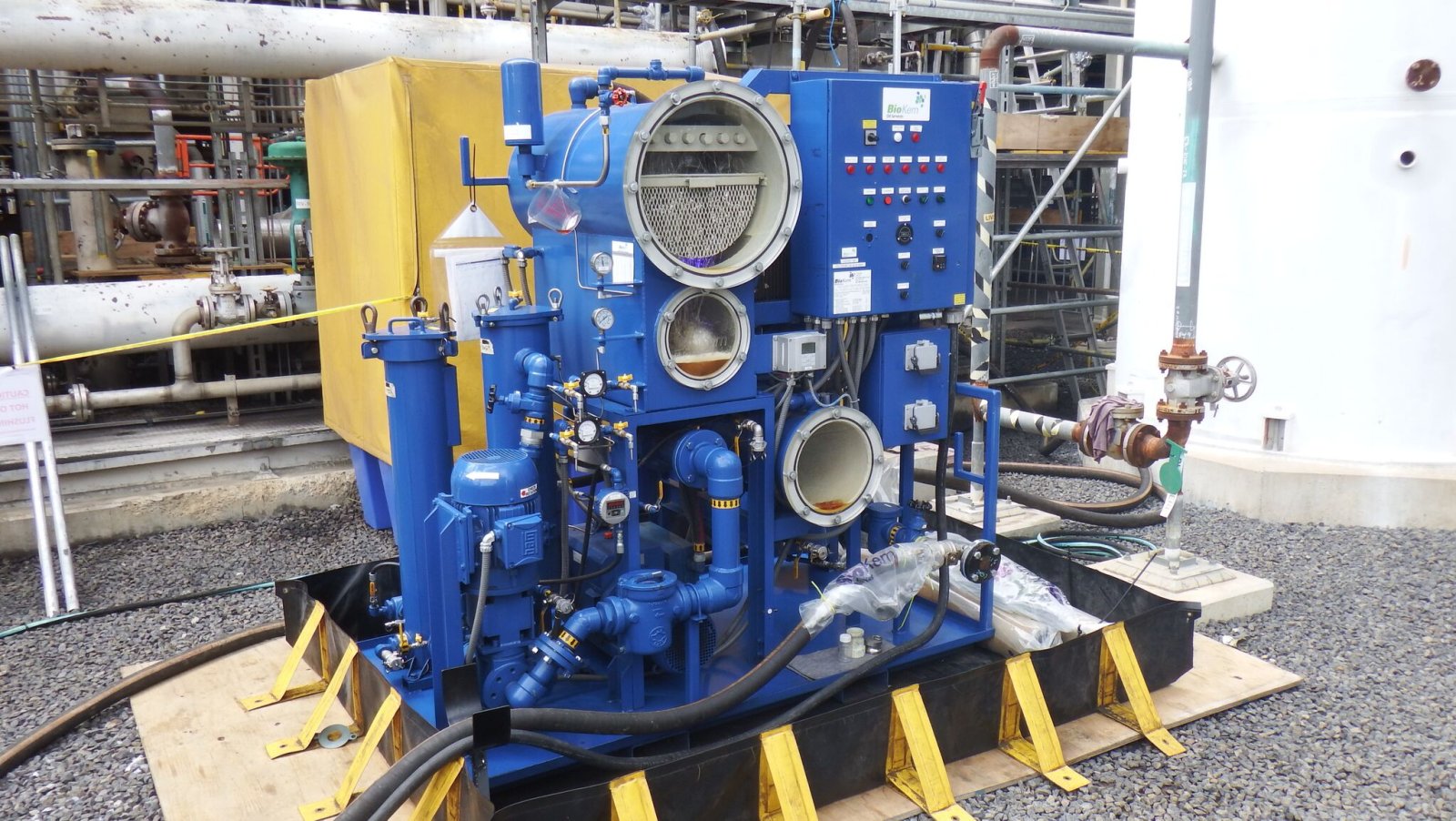
Contamination can turn a suitable lubricant into a source of wear, heat and unreliable machine operation. Effective lubrication management best practices keep lubricant clean from storage through transfer and application, match it to the equipment, and monitor its condition.
Lubricant selection and application schedules matter, but clean handling is just as important. Dust, moisture, residue from other oils and unclean transfer equipment can compromise lubricant before it reaches a machine.
This guide explains how cross-contamination affects equipment and how consistent storage, identification, handling and condition monitoring support reliability. It also shows how a structured lubrication strategy can help maintenance teams spot problems early and make informed decisions about lubricant cleanliness.
Key Takeaways
- Keep lubricant clean through storage, transfer and application, and use filtration or dehydration when contamination affects its condition.
- Match lubricant type and properties to equipment temperature, load, speed and operating environment.
- Use consistent identification, clean tools and condition monitoring to help catch contamination and wear before they affect reliability.
- When oil-system contamination calls for a flushing solution, BioKem Oil Services provides Hot Oil Flushing alongside related oil maintenance services.
What is lubricant cross-contamination, and how does this affect the equipment?
Cross-contamination occurs when water, dirt or another lubricant enters an oil or grease system. Even new lubricant may arrive contaminated, increasing wear and the risk of machine failure and downtime. A reliable program controls contamination during storage, transfer and application, not only while equipment is operating.
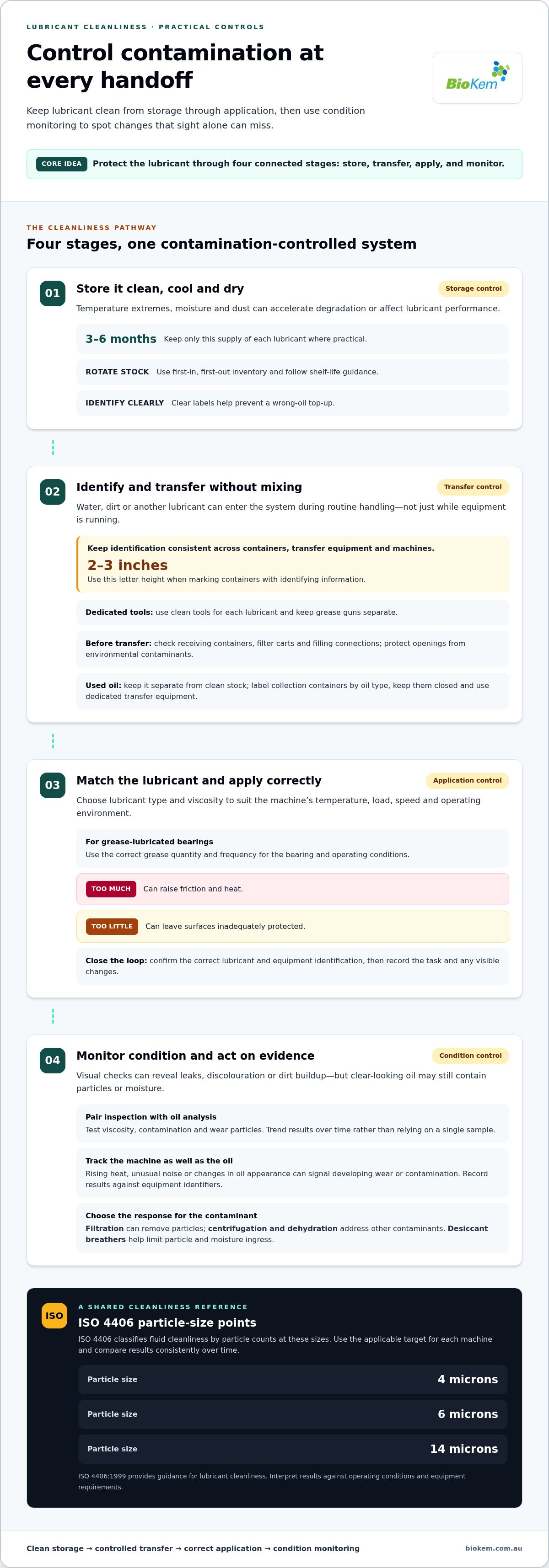
Store lubricant in clean, cool, dry conditions. Temperature extremes, moisture and dust can accelerate degradation or affect performance. Keep only a 3-to-6-month supply of each lubricant where practical, use first-in, first-out inventory, and follow its shelf-life guidance. Clear labels help prevent a wrong-oil top-up.
For a practical look at grease quantity and bearing care, watch this video:
Keep lubricant identification consistent across containers, transfer equipment and machines. Mark containers with identifying information in letters 2 to 3 inches high. Use dedicated, clean tools for each lubricant, and keep grease guns separate to reduce cross-contamination. Apply the correct grease quantity and frequency for the bearing and operating conditions. Too much grease can raise friction and heat; too little can leave surfaces inadequately protected.
When oil is contaminated, filtration can remove particles, while centrifugation and dehydration address other contaminants. Desiccant breathers help limit particle and moisture ingress. Oil analysis can reveal contamination or degradation that isn’t obvious visually. If viscosity has shifted, viscosity correction and oil reconditioning can help restore lubricant properties where appropriate.
Keep used oil separate from clean stock. Label collection containers by oil type, keep them closed and use dedicated transfer equipment. Mixing used oils can complicate assessment and recovery, while clear identification supports responsible handling and accurate maintenance records.
A New Lubrication Management Strategy to Reclaim Machine Reliability?
A dependable lubrication program connects lubricant choice and monitoring to each machine’s operating conditions. Automatic delivery can improve consistency; manual lubrication avoids installing an automated system but depends on accurate, regular application.
Selecting Lubricants for Operating Conditions
Lubricant selection matches viscosity and lubricant type to machine temperature, load, speed and environment. This matters because the wrong specification can compromise lubrication under actual operating conditions. Enclosed gearboxes commonly use ISO VG 150-460 gear oil, while hydraulic systems use ISO VG 32-68 fluid. A plant may stock up to 20 types, and some operations can reduce that range by 50% or more through careful standardisation.
Monitoring Lubricant and Equipment Condition
Condition monitoring combines lubricant checks with observations of machine performance. Rising heat, unusual noise or changes in oil appearance can signal developing wear or contamination. Track viscosity, moisture, contamination and additive depletion against the lubricant’s specifications. Ultrasound can detect friction, while infrared thermography can reveal abnormal heat patterns. Record results against equipment identifiers to inform maintenance decisions and compliance reviews.
Lubricant Analysis and Condition Monitoring
Lubricant analysis evaluates oil properties and wear evidence to help assess equipment condition. A sample can reveal changes that routine visual checks miss. Oil analysis can test viscosity, contamination and wear particles; trend results over time rather than relying on a single sample. For critical machinery, use consistent sampling points and intervals, then relate findings to operating conditions. This gives the lubrication program useful evidence for setting maintenance priorities.
Automatic and Manual Lubrication Systems
Automatic systems deliver lubricant at set points and intervals, while manual systems depend on technicians following routes. Automation can improve consistency at frequent or difficult-to-access points, but installation and upkeep add costs. Manual lubrication avoids that equipment investment, yet missed routes or incorrect amounts can reduce reliability. Compare access, application frequency, labour, and maintenance demands for each machine. For support interpreting oil-analysis findings, discuss lubrication analysis needs.
Maintaining lubricant cleanliness
Effective lubrication management best practices control contamination at every point between storage and application. Visual inspections can reveal leaks, discolouration or dirt buildup, but clear-looking oil may still contain particles or moisture. Treat inspection as one layer of monitoring, then use oil analysis to assess contamination that sight alone can miss. This supports equipment reliability without treating appearance as proof of cleanliness.
ISO 4406 classifies fluid cleanliness by particle counts at 4-, 6- and 14-micron sizes. These particle-size points help teams express and compare oil cleanliness consistently. Use the applicable cleanliness target for each machine, then interpret results against its operating conditions and equipment requirements. ISO 4406:1999 provides guidance for lubricant cleanliness; consistent reporting makes changes easier to identify over time.
At every transfer point, use clean, dedicated equipment and protect openings from environmental contaminants. Check receiving containers, filter carts and filling connections before use. During application, confirm the correct lubricant and equipment identification, then record the task and any visible changes. These practical lubrication management best practices reduce the risk of dirt or water entering the system during routine handling.
Build cleanliness checks into existing maintenance schedules. Compare oil analysis results over time and investigate rising particle counts or moisture before they affect a machine. Pair results with inspections for leaks, discolouration and dirt around equipment. Consistent records link contamination trends to specific assets and operating conditions, giving maintenance teams a clearer basis for action.
For support interpreting lubricant cleanliness and analysis results, discuss your oil monitoring needs.
BioKem Oil Services: Hot Oil Flushing
BioKem Oil Services provides Hot Oil Flushing for industrial systems where contamination or deposits need attention beyond routine filtration. The process circulates heated oil through equipment to help dislodge and carry contaminants from internal surfaces, supporting cleaner system operation. It can be used during commissioning or shutdown work, or when contamination affects critical assets such as turbines, compressors and hydraulic systems.
When oil condition points to other issues, Vacuum Dehydration addresses moisture, Varnish Mitigation targets varnish-related concerns, and Oil Analysis helps assess lubricant condition. The right approach depends on the contaminant and the equipment’s operating requirements, allowing maintenance teams to align treatment with reliability priorities.
For information about Hot Oil Flushing and related oil services, contact BioKem Oil Services.
Turn Lubrication Insights Into a Reliability Plan
Make cleanliness and condition data part of routine maintenance decisions. Assign responsibility for reviewing results, recording corrective actions and updating procedures as operating conditions change. A consistent feedback loop helps teams respond to emerging issues and keep lubrication management best practices relevant to the assets they maintain. Review trends over time, rather than isolated observations, to refine maintenance priorities. For energy and industrial enterprises, communicating these reliability benchmarks and technical standards to industry stakeholders can be effectively supported by specialist firms like BCM Public Relations.
When oil-system condition calls for specialist support, BioKem Oil Services offers Hot Oil Flushing, Varnish Mitigation and Vacuum Dehydration. The appropriate service depends on the condition identified and the system’s requirements, so findings can guide the next maintenance action.
Contact BioKem Oil Services to discuss a lubrication challenge or plan a suitable next step. Clear, condition-led decisions give your maintenance team a practical foundation for pursuing reliable equipment operation.
Frequently Asked Questions
How can environmental factors impact effective lubrication?
Environmental conditions can affect lubricant performance through heat stress, moisture and airborne dust. For example, a hydraulic unit near washdown activity faces moisture exposure, while an exposed gearbox may collect dust through seals or breathers. Assess temperature changes, humidity, airborne particles and water exposure around each asset. Use this site-specific picture to focus inspections and sampling where contamination risks are greatest.
Is over- or under-lubrication harmful?
Yes. Both can damage equipment. Too much grease can increase churning and heat, while too little may leave moving surfaces without adequate protection. A bearing that runs hotter after greasing may have received too much lubricant; recurring dry noise can indicate inadequate application. Match the amount and method to the component, then record the task so recurring problems can be traced.
What standards or regulations apply to lubrication management?
ISO 6743 classifies lubricants, while ISO 4406:1999 provides fluid-cleanliness guidance using particle sizes of 4, 6 and 14 microns. These standards help align identification and cleanliness reporting, but they don’t describe every site’s legal duties. Australian operators should map applicable workplace, environmental and storage obligations to their facility procedures and the substances handled.
What are the key steps in an industrial lubrication management program?
Start by auditing lubrication assets and creating a master lubricant list during days 1-10. Standardise lubricant choices and define interval logic during days 11-20, then build routes and assign technician ownership during days 21-30. Collect the plant’s previous three years of lubricant purchase history to understand current use. Appoint a program leader to oversee reviews and continuous improvement.
How do you select the correct lubricant for equipment and operating conditions?
Use the equipment specification alongside its temperature, load, speed and environment. Oil suits high-speed applications where flow and heat dissipation matter; grease can suit components that need lasting lubrication and contaminant protection. Dry lubricants such as graphite may suit dusty or high-temperature conditions. Compare operating demands with OEM requirements, then document the selected lubricant and its intended application.

Article by
James McAllister
James McAllister is an industry professional with BioKem Oil Services, specialising in lubrication reliability, oil filtration, contamination control and asset performance. Drawing on BioKem's extensive field experience across turbines, compressors, hydraulic systems and critical rotating equipment, James writes practical, insight-driven articles that help maintenance and reliability teams improve equipment performance, extend asset life and reduce operational risk.