

A high wear-metal reading doesn’t automatically mean a component is failing. If oil analysis shows high wear metals, the next step is to determine whether the result reflects dissolved metals, fine suspended material or larger wear particles. Spectrometric results alone can’t show the full picture because particle size affects what the instrument detects.
An elevated result deserves attention, but a metal reading needs context before it informs a maintenance decision. This article explains how to interpret metal levels and trends, and how filter patch inspection and analytical ferrography can reveal particle size, composition and wear characteristics. You’ll learn what evidence helps distinguish dissolved metals from particulate wear, and what that difference means for choosing the next analysis.
Key Takeaways
- Read elevated metal results in context, including equipment history, oil condition and changes across samples.
- Remember that spectrometric analysis can miss larger wear particles, so a low reading may not tell the whole story.
- Use filter patch inspection and analytical ferrography to investigate particle size, composition and evidence of how wear formed.
- When results remain unclear or indicate particulate wear, professional wear debris analysis can help guide the next maintenance decision.
Filter patch inspection and analytical ferrography
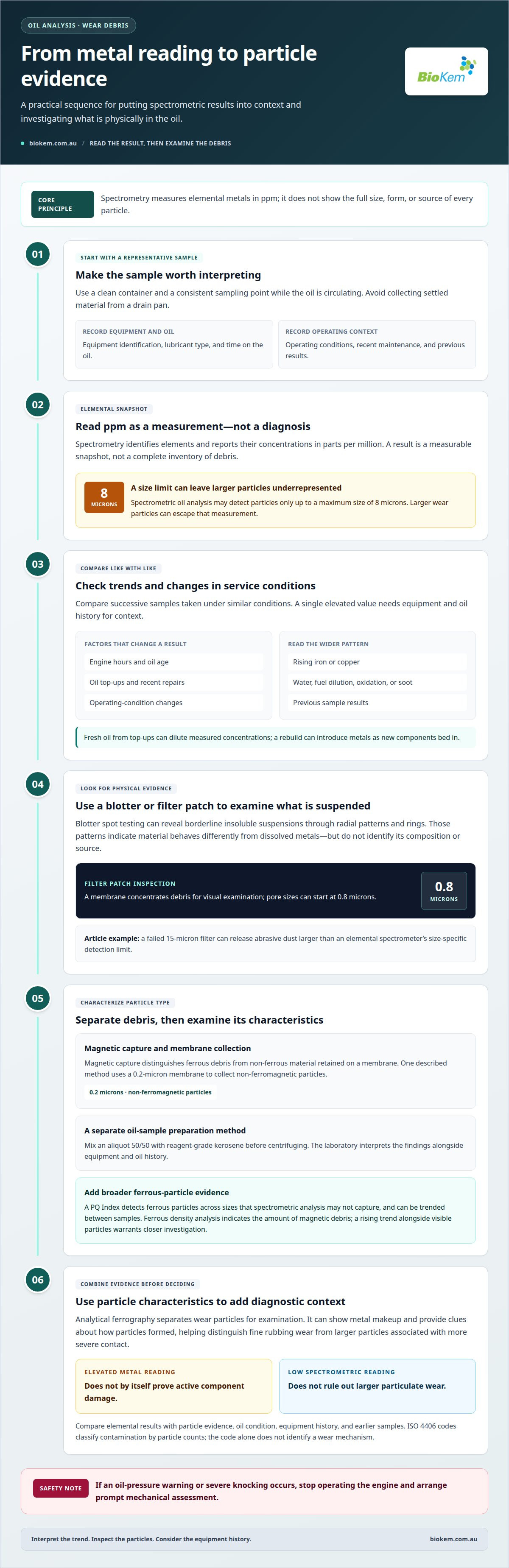
A filter patch concentrates debris on a membrane for visual examination. Membrane pore sizes can start at 0.8 microns, helping reveal particles that spectrometric analysis may miss. A failed 15-micron filter, for example, can release abrasive dust larger than an elemental spectrometer’s size-specific detection limit.
To separate particle types, magnetic capture distinguishes ferrous debris from non-ferrous material retained on a membrane. One described method uses a 0.2-micron membrane to collect non-ferromagnetic particles. A separate oil-sample method mixes an aliquot 50/50 with reagent-grade kerosene before centrifuging. These approaches help characterise debris, but the laboratory interprets the results alongside the equipment and oil history.
A PQ Index detects ferrous particles across sizes that spectrometric analysis may not capture. PQI readings can be trended between samples to follow relative changes in ferrous wear material. Ferrous density analysis adds an indication of the amount of magnetic debris in a sample; a rising trend alongside visible particles warrants closer investigation. Oil filter debris analysis can help assess the physical material.
For a representative sample, use a clean container and a consistent sampling point while the oil is circulating, rather than collecting settled material from a drain pan. Record the equipment identification, lubricant type, time on the oil, operating conditions, recent maintenance and previous results. Analysis and mechanical diagnosis costs in Australia depend on the test scope and diagnostic work; pricing is provided after a quote request.
In Australia, particle-count results can use ISO 4406 cleanliness codes, which classify contamination by particle counts. Local oil analysis and wear-debris interpretation can connect those results with filter patches and ferrography; the code alone does not identify a wear mechanism.
Spectrometric detection and interpretation of wear metals
Spectrometry reports elemental metals in parts per million (ppm), but the result needs to be considered alongside equipment and oil history. Assess the metal pattern, contamination indicators and operating changes together.
Spectrometric Wear-Metal Readings
Spectrometry identifies elements in an oil sample and reports their concentrations in ppm. Its value is a measurable snapshot, not a complete inventory of debris: spectrometric oil analysis may detect particles only up to a maximum size of 8 microns. Larger particles can therefore be underrepresented. Interpret the result alongside particle evidence and earlier samples, rather than treating one metal value as a diagnosis.
Copper, Rust, and Metal Combinations
A combination of metals can suggest a wear pattern or contamination source that one elevated element cannot explain. In a locomotive diesel example, soluble copper pointed to cooler-core leaching, while iron rust indicated water-related corrosion associated with a coolant leak. Elevated copper alone does not establish component wear. Compare the full metal pattern with the equipment’s materials and condition before interpreting the result.
Wear Trends and Contamination
A wear trend compares results from successive samples taken under similar conditions. Rising iron or copper alongside water, fuel dilution, oxidation or soot may point to changing wear or oil condition. Different operating conditions make direct comparisons harder. For more context on particle evidence, discuss an oil-analysis result with a specialist.
Factors Affecting Wear-Metal Results
Engine hours, oil age, top-ups and recent repairs affect the amount of metal in a sample. A longer service period can allow more wear material to accumulate, while fresh oil added during top-ups can dilute measured concentrations. A rebuild may also introduce metals as new components bed in. Include these changes when interpreting the result. Stop operating the engine if an oil-pressure warning or severe knocking occurs, and arrange prompt mechanical assessment.
Distinguishing dissolved from particulate wear metals
A spectrometric result identifies elements, but it doesn’t show whether metal is dissolved or present as solid debris. Emission spectroscopy may not capture larger particles, so some debris can escape its measurement. A high elemental reading can therefore describe fine material without revealing whether damaging particles are also circulating in the lubricant.
Interpret the result alongside evidence of the oil’s physical contents. Blotter spot testing can reveal borderline insoluble suspensions through radial patterns and rings. These marks indicate material that behaves differently from dissolved metals, but a blotter pattern alone does not identify the particles’ composition or source. A metal concentration and a visible particle pattern answer different diagnostic questions.
Analytical ferrography adds detail by separating wear particles for examination. It can show their metal makeup and provide clues about how they formed, helping distinguish fine rubbing wear from larger particles associated with more severe contact. For example, when a spectrometric metal increase coincides with visible particles, examine both the elemental result and particle characteristics rather than relying on either finding alone.
The practical takeaway is to treat spectrometry as an elemental measurement, not a complete debris assessment. Compare the reading with blotter evidence, particle characteristics and equipment history; discordant results can be informative. A low spectrometric result doesn’t rule out larger particulate wear, while an elevated result doesn’t by itself prove active component damage. Discuss dissolved and particulate wear evidence with a specialist when the findings point in different directions.
BioKem Oil Services: Wear Debris Analysis & Ferrography Testing
BioKem Oil Services provides Wear Debris Analysis & Ferrography Testing when an elevated metal result needs physical particle evidence. This is useful when spectrometric readings and other findings do not align, or when a report indicates possible particulate wear. Analytical ferrography examines particles’ metal makeup and characteristics, helping clarify how they formed. This additional evidence supports a more informed maintenance assessment without treating one metal reading as a diagnosis.
Share the oil-analysis results and relevant equipment and maintenance history so the findings can be interpreted in context. If the assessment identifies a separate oil-condition issue, Hot Oil Flushing, Varnish Mitigation or Vacuum Dehydration may also be relevant.
Contact BioKem Oil Services to discuss wear debris analysis and ferrography testing.
Turn the finding into a considered maintenance decision
If oil analysis shows high wear metals, use the result to guide an investigation, not as a diagnosis on its own. The next decision should reflect how the evidence fits the equipment’s operating history and current condition. If the findings suggest different explanations, further specialist interpretation can help clarify what needs attention and what should be monitored.
This distinction supports more targeted maintenance planning. It can help avoid replacing components based on an isolated reading while keeping attention on evidence that may indicate developing wear. BioKem Oil Services also offers Hot Oil Flushing, Varnish Mitigation and Vacuum Dehydration when oil-condition issues call for these services.
Contact BioKem Oil Services to discuss the oil-analysis findings and a suitable next step. A clear assessment can help you move forward with greater confidence.
Frequently Asked Questions
Which oil wear metals indicate abnormal engine wear, and what are typical levels?
Iron, copper, aluminium, lead and chromium can indicate wear, but no single level applies to every engine. Interpret ppm against the engine’s previous results, oil-service interval, operating conditions and component materials. A result above a laboratory reference range deserves attention, especially when several metals rise together. Ask the laboratory to interpret the pattern, not just compare it with a generic threshold.
What follow-up tests confirm high wear metals, such as a repeat sample, filter inspection, or used-oil analysis?
If oil analysis shows high wear metals, what should I do next? Arrange a repeat sample under comparable operating conditions and assess physical evidence alongside the result. A laboratory can compare it with earlier readings, while filter inspection may reveal retained debris. Analytical ferrography can further examine particle characteristics. If a repeat reading falls but the filter contains substantial debris, that difference matters.
What common causes produce high iron, copper, aluminium, lead, or chromium in engine oil?
Iron can come from wear involving cylinder walls or piston rings; rust can also raise iron when water causes corrosion. Soluble copper can result from cooler-core leaching, while copper alongside iron rust may point to a coolant leak and water-related corrosion. Aluminium, lead and chromium readings depend on component materials and wear sources, so interpret them alongside the engine’s parts and combined metal pattern.
What should I ask an oil-analysis laboratory or mechanic to check after a high-wear result?
When oil analysis shows high wear metals, first establish whether the result fits the engine’s history and sampling conditions. Ask for interpretation of the combined metal pattern and contamination indicators, including water, fuel dilution or soot. If the filter contains debris, ask whether particle examination or ferrography would add useful evidence. Include recent maintenance when discussing the findings.

Article by
James McAllister
James McAllister is an industry professional with BioKem Oil Services, specialising in lubrication reliability, oil filtration, contamination control and asset performance. Drawing on BioKem's extensive field experience across turbines, compressors, hydraulic systems and critical rotating equipment, James writes practical, insight-driven articles that help maintenance and reliability teams improve equipment performance, extend asset life and reduce operational risk.