

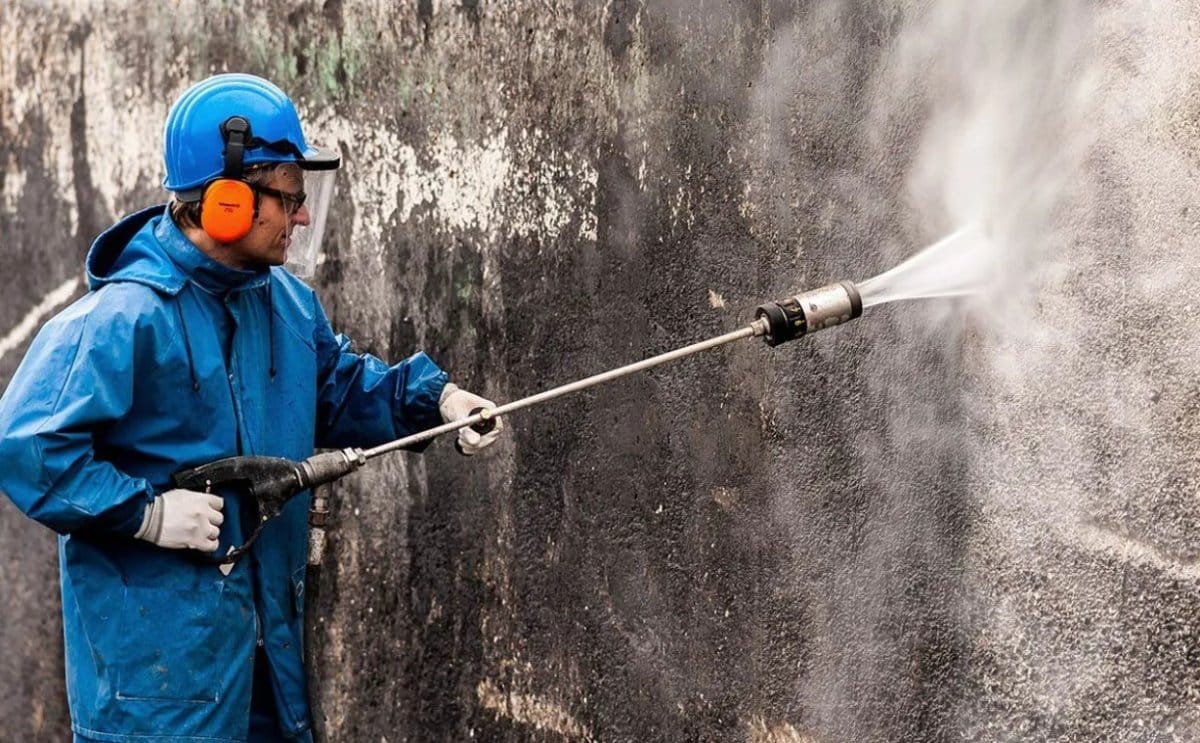
Did you know that a microscopic puncture from a water jet can cause a life-altering injection injury before an operator even feels significant pain? Managing the safety procedures for High Pressure & Ultra-high pressure water blasting of bulk tanks requires a sophisticated understanding of both mechanical force and atmospheric hazards. You’re likely already aware of the complexities involved in confined space entry and the pressure to maintain an efficient tank turnaround without compromising on site safety.
This guide provides the technical expertise you need to master critical safety protocols and meet rigorous regulatory requirements for industrial maintenance. We’ll explore the latest industry standards, including the updated WJTA “Orange Book” best practices and the shift toward automated hydro-demolition robots that keep personnel out of the line of fire. By the end of this article, you’ll have a clear roadmap for achieving zero-harm operations while ensuring your facility remains compliant with the most recent Australian standards and global safety benchmarks for asset health management.
Key Takeaways
- Differentiate between HP and UHP parameters to select the most effective method for removing stubborn industrial scale and varnish from bulk storage systems.
- Implement rigorous Safety procedures for High Pressure & Ultra-high pressure water blasting of bulk tanks including specialized JHA development and UHP-rated PPE selection.
- Establish plant-specific competency protocols that go beyond standard certifications to manage pump RPM limits and valve positions with precision.
- Navigate complex Confined Space Entry requirements through continuous atmospheric monitoring and strict adherence to permit systems.
- Align your cleaning schedule with broader lubrication management strategies to enhance overall asset reliability and operational efficiency.
Understanding HP and UHP Water Blasting in Bulk Tank Environments
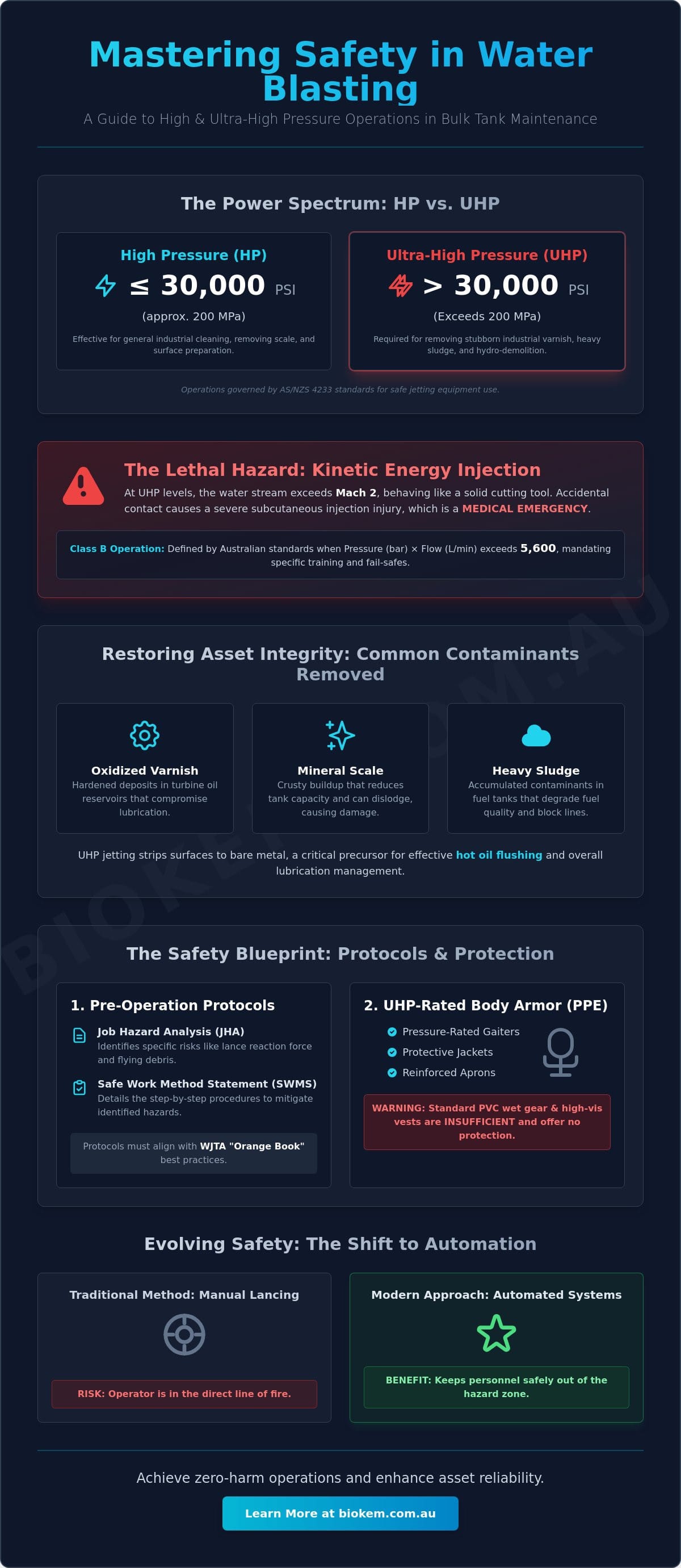
High-pressure water jetting is a sophisticated industrial process where kinetic energy is harnessed to perform mechanical work. In the context of bulk tanks, we distinguish between High Pressure (HP), which typically operates up to 30,000 psi (approx. 200 MPa), and Ultra-High Pressure (UHP), which exceeds this threshold. These parameters are governed by the AS/NZS 4233 series in Australia, which provides a rigorous framework for the safe operation of jetting equipment. Understanding these distinctions is the first step in implementing robust Safety procedures for High Pressure & Ultra-high pressure water blasting of bulk tanks. The lethality of these systems stems from the sheer velocity of the water stream, which can reach speeds exceeding Mach 2. This creates a focused point of impact capable of eroding industrial coatings and metal alike.
To better understand this concept, watch this helpful video:
The Kinetic Energy Hazard
At UHP levels, water behaves less like a liquid and more like a solid cutting tool. This phenomenon is why industrial water jet cutters can slice through steel or reinforced concrete. The velocity of the stream is so extreme that any accidental contact with human tissue leads to a subcutaneous injection injury. These are severe medical emergencies because the water, along with any dislodged contaminants, is forced deep into the body, often causing internal damage that isn’t immediately visible on the skin’s surface. According to Australian standards, water jetting is classified as a “Class B” operation when the system’s pressure multiplied by the flow rate exceeds 5,600 bar litres per minute. This classification necessitates specific training and equipment fail-safes to protect operators from the inherent risks of high-velocity water streams.
Bulk Tank Specifics: Scale, Sludge, and Varnish
Industrial bulk tanks used for fuel or lubrication storage often accumulate stubborn layers of oxidized varnish and mineral scale. Traditional chemical cleaning or low-pressure washing frequently fails to penetrate these hardened deposits. UHP jetting provides the mechanical force necessary to strip surfaces back to bare metal, which is a critical precursor for successful hot oil flushing. Removing these contaminants ensures that subsequent lubrication management efforts aren’t compromised by residual debris. Common targets for this high-intensity cleaning include heavy sludge in fuel tanks and polymerized varnish in turbine oil reservoirs. By integrating these Safety procedures for High Pressure & Ultra-high pressure water blasting of bulk tanks, operators can restore asset integrity while minimizing the environmental footprint associated with harsh chemical solvents.
Pre-Operational Safety: Risk Assessment and PPE
Effective Safety procedures for High Pressure & Ultra-high pressure water blasting of bulk tanks begin long before the first pump is engaged. Rigorous site preparation is underpinned by a Job Hazard Analysis (JHA) and a Safe Work Method Statement (SWMS) that specifically address the unique dynamics of water jetting. These documents aren’t mere administrative hurdles; they’re vital tools for identifying the reaction force of the lance and the potential for flying debris. Every onsite technician must verify these protocols to ensure that high-velocity hazards are managed through engineering and administrative controls rather than luck. Aligning your site protocols with the Waterjet Technology Association Best Practices ensures a standardized approach to risk mitigation during complex industrial maintenance cycles.
Specialized PPE for UHP Operations
Standard high-vis vests and PVC wet weather gear are entirely insufficient for UHP environments. When implementing Safety procedures for High Pressure & Ultra-high pressure water blasting of bulk tanks, operators must wear pressure-rated body armour. This includes gaiters, jackets, and aprons specifically tested to withstand accidental strikes from water jets up to 3000 bar (43,500 psi). High-decibel noise is another critical factor; jetting operations often exceed 110 dB, necessitating double hearing protection in the form of internal plugs and external muffs. If the tank contains residual hydrocarbons or toxic scale, respiratory protection must be integrated into the PPE matrix to prevent the inhalation of atomized contaminants. Selecting the correct specialized equipment hire and protective gear is a fundamental step in achieving a zero-harm workplace.
Site Preparation and Exclusion Zones
Establishing a physical barrier between the operation and uninvolved personnel is a mandatory safety requirement. The “line of fire” must be calculated based on the maximum reach of the jet and the potential for ricochet within the confined geometry of a bulk tank. Exclusion zones should be clearly demarcated with blast-resistant barriers or high-strength safety tape, accompanied by explicit warning signage. Within this zone, the primary operator must maintain constant access to a “dead man” control device. This fail-safe ensures that the water flow stops instantly if the operator loses their grip or becomes incapacitated. These physical safeguards, combined with continuous communication between the pump operator and the nozzle technician, form a redundant safety system that prevents catastrophic incidents during high-intensity cleaning tasks.
Technical Controls and Equipment-Specific Competency
Technical reliability in industrial cleaning depends on more than high-quality hardware. It requires a precise alignment between operator skill and the specific machinery utilized on site. While many technicians hold general industry “jetting tickets,” these certifications often fail to cover the nuances of specific pump units or specialized vacuum trucks. Regulatory bodies, such as Resources Safety & Health Queensland, have documented incidents where qualified operators lacked plant-specific competency, leading to avoidable mechanical failures. Establishing rigorous Safety procedures for High Pressure & Ultra-high pressure water blasting of bulk tanks means moving beyond generic qualifications to a model of verified, equipment-specific mastery.
The Importance of Plant-Specific Induction
Every operator must undergo a site-specific induction for the exact equipment in use. This training focuses on the specific pump unit or recycling truck being deployed. Technicians must demonstrate a clear understanding of pressure-to-RPM (revolutions per minute) ratios unique to that pump’s configuration. Over-pressurizing a system because of unfamiliarity with the control interface is a leading cause of component failure. Documenting these competency checks ensures that only qualified personnel manage the controls. This level of detail is a cornerstone of a proactive maintenance strategy, ensuring that bulk tank preparation leads directly into reliable hot oil flushing operations without unscheduled downtime.
Equipment Integrity and Maintenance
Pre-start inspections must be methodical and documented. Technicians should examine hoses for kinking, external abrasions, or expired service dates. A hose dragged over sharp tank edges may have a compromised outer sheath, which can lead to a catastrophic burst under UHP conditions. Nozzle selection is equally critical; the orifice size must precisely match the pump specifications to prevent dangerous back-pressure surges. Standardizing equipment labelling also prevents accidental pressure spikes by clearly identifying valve positions. Modern UHP safety systems rely on the “dead man” handle as a primary technical control. This trigger-actuated valve ensures the jet is only active when the operator is in full control, providing an immediate shut-off if the technician becomes incapacitated. Integrating these checks into the daily workflow is essential for maintaining the Safety procedures for High Pressure & Ultra-high pressure water blasting of bulk tanks.
Confined Space Entry and Environmental Safeguards
Entry into bulk tanks for high-pressure maintenance represents one of the most hazardous environments in industrial cleaning. The process of water jetting isn’t just a mechanical action; it’s an atmospheric event. High-velocity streams striking hardened sludge can rapidly liberate trapped volatile organic compounds (VOCs) or hydrogen sulfide, fundamentally altering the air quality within minutes. This dynamic risk makes continuous atmospheric monitoring for Lower Explosive Limits (LEL), oxygen levels, and toxic gases a non-negotiable component of Safety procedures for High Pressure & Ultra-high pressure water blasting of bulk tanks. A valid Confined Space Entry (CSE) permit must be active, with all engineering controls like forced ventilation verified before any technician breaks the plane of the manway.
The generation of mist and aerosols is a specific byproduct of UHP jetting that requires careful management. These fine droplets can carry atomized contaminants and significantly reduce visibility for the operator. Effective safety protocols utilize high-volume extraction fans to clear the air, paired with simultaneous vacuum recovery to prevent the accumulation of contaminated water on the tank floor. This dual approach ensures the technician maintains a clear line of sight while preventing the spread of hazardous residues through the facility’s drainage systems.
Confined Space Safety Protocols
A dedicated Standby Person, or Hole Watch, must be stationed outside the tank at all times during the operation. This individual is responsible for maintaining a constant communication link with the technician inside. Because the high-decibel noise of UHP jetting makes verbal communication impossible, teams must utilize intrinsically safe radio headsets or standardized hand signals. Every entry requires a pre-rigged rescue plan where extraction tripods and retrieval lines are already in place. In an emergency, there’s no time to rig equipment; the system must be ready for immediate activation to ensure a safe extraction.
Waste Stream Management
Sustainability in industrial maintenance is achieved through the precise recovery of waste. Simultaneous vacuum systems capture blasting water and dislodged debris at the source, preventing toxic runoff from contaminating the site. Integrating high-efficiency oil water separators is essential for managing tank runoff and ensuring that recovered fluids meet environmental discharge standards. This structured approach to waste management prevents ecological harm while preparing the asset for subsequent maintenance phases. If your facility requires a higher standard of environmental compliance, BioKem provides specialized tank cleaning and industrial flushing solutions tailored to your specific asset requirements.
The BioKem Approach: Safe Tank Cleaning for Asset Reliability
BioKem views industrial maintenance as a strategic integration of safety, technical precision, and long-term asset health. While the Safety procedures for High Pressure & Ultra-high pressure water blasting of bulk tanks are primarily designed to protect personnel, they also serve as the critical foundation for lubrication reliability. A tank that hasn’t been stripped of its internal varnish and scale will inevitably contaminate new fluids, regardless of the oil’s initial quality. By adhering to rigorous technical standards during the cleaning phase, we prevent the unscheduled downtime that often follows substandard maintenance. This holistic methodology ensures that professional UHP blasting directly supports advanced fluid management strategies by providing a pristine environment for high-value industrial lubricants.
Post-cleaning inspections are vital for verifying surface cleanliness and ensuring fluid longevity. We don’t consider a project complete until the internal surfaces of the bulk tank are free of microscopic particulates that could catalyze oil oxidation. This commitment to technical excellence bridges the gap between simple “tank washing” and comprehensive asset reliability management. When safety protocols and technical controls are executed with precision, the result is an asset that is ready to perform at peak efficiency from the moment it’s returned to service.
From Clean Tanks to Clean Oil
The transition from a cleaned tank to a refilled system is a high-risk window for contamination. Even a minute amount of residual debris can prevent a system from meeting its ISO 4406 oil cleanliness targets, leading to premature component wear. BioKem ensures this transition is seamless by utilizing post-clean verification processes. We recommend a comprehensive oil analysis and ferrogram review to confirm that the system integrity has been restored to optimal levels. This proactive approach eliminates the risk of “built-in” contamination, ensuring that your new oil remains clean and effective for its entire intended service life.
Partnering for Industrial Safety
BioKem is committed to upholding the highest national Australian safety and environmental standards in every project we undertake. Our role extends beyond providing specialized equipment hire; we offer a technical partnership anchored in local expertise and a deep understanding of biotechnology. Our strict adherence to Safety procedures for High Pressure & Ultra-high pressure water blasting of bulk tanks ensures that complex industrial challenges are solved without compromising operator wellbeing or ecological health. For organizations seeking to enhance their maintenance outcomes, BioKem provides expert industrial tank cleaning services and integrated flushing solutions. By choosing a specialist that values regulatory compliance and technical precision, you secure the future of your industrial infrastructure.
Securing Asset Longevity Through Technical Precision
Mastery of UHP safety isn’t just about avoiding injury; it’s about the systematic removal of contaminants that compromise industrial efficiency. By prioritizing plant-specific competency and continuous atmospheric monitoring, you ensure a zero-harm environment that transitions smoothly into operational reliability. Implementing rigorous Safety procedures for High Pressure & Ultra-high pressure water blasting of bulk tanks is the only way to protect your personnel while achieving the surface cleanliness required for high-performance lubrication systems.
Since 2011, BioKem has specialized in national onsite technical interventions, ensuring full AS/NZS 4233 compliance across complex industrial sectors. As the sole Australian distributor for Filters S.p.A. products, we combine world-class hardware with localized expertise to deliver zero-harm outcomes. Contact BioKem for Professional Tank Cleaning & Oil Services to discuss your next maintenance cycle. Your commitment to technical safety standards today is the most effective safeguard for your facility’s long-term ecological and operational health.
Frequently Asked Questions
What is the difference between Class A and Class B water jetting in Australia?
Class A and Class B classifications are determined by the system’s output measured in bar litres per minute. Under the AS/NZS 4233 standard, Class A systems are lower-risk units that operate below 5,600 bar litres per minute. Class B systems exceed this threshold and require mandatory certified training, medical surveillance, and specific administrative controls to manage the increased kinetic energy effectively.
What are the mandatory PPE requirements for UHP water blasting?
Mandatory PPE for UHP operations includes pressure-rated body armour specifically tested to withstand accidental strikes at pressures up to 3,000 bar. Operators must utilize UHP-rated gaiters, jackets, and aprons, paired with full-face shields and double hearing protection. These items are essential Safety procedures for High Pressure & Ultra-high pressure water blasting of bulk tanks to protect against kinetic impact and atomized contaminants.
How often should high-pressure hoses be inspected and pressure tested?
High-pressure hoses must undergo a visual inspection before every shift and a formal pressure test at least annually. Technicians check for external abrasions, kinking, or exposed wire reinforcement that could signal a pending failure. Any hose that has been subjected to an over-pressure event or shows signs of mechanical degradation must be retired immediately to prevent catastrophic bursts during operation.
Can high-pressure water blasting cause damage to bulk tank internal linings?
High-pressure water jetting can damage internal linings if the pressure parameters or nozzle stand-off distances aren’t correctly calibrated for the specific substrate. While UHP is highly effective for removing hardened varnish, it can strip protective epoxy coatings if the mechanical force exceeds the lining’s bond strength. Precision nozzle selection and pressure modulation are critical to ensuring the tank’s structural integrity remains intact.
Is a Confined Space Entry permit always required for tank cleaning?
A Confined Space Entry (CSE) permit is mandatory whenever a technician must enter a tank that meets the regulatory definition of a confined space. Even if the cleaning is performed using remote-controlled tools from the exterior, the area is often classified as a hazardous zone. Proper atmospheric monitoring and a documented rescue plan are vital components of the Safety procedures for High Pressure & Ultra-high pressure water blasting of bulk tanks.
What should I do if a worker sustains a high-pressure water injection injury?
Immediate medical evaluation at an emergency department is the only acceptable response to a suspected high-pressure injection injury. These are surgical emergencies because water and contaminants are driven deep into tissue, often causing internal damage that isn’t visible on the surface. You must inform medical staff specifically that it’s a high-pressure water injury to ensure they follow the correct surgical debridement protocols.
How does water jetting impact the environmental sustainability of tank maintenance?
Water jetting enhances environmental sustainability by eliminating the need for harsh chemical solvents and synthetic cleaning agents during the maintenance cycle. This method reduces the volume of hazardous waste and allows for the efficient recovery of dislodged solids through simultaneous vacuum systems. When paired with advanced filtration, the blasting water can often be treated, significantly lowering the ecological footprint of the cleaning process.
What qualifications do operators need for UHP water blasting in Australia?
Operators in Australia require a Statement of Attainment in National Units of Competency, typically from the MSMPROPS series, to operate Class B equipment legally. These qualifications ensure the technician understands the physics of high-pressure streams and the necessary safety fail-safes. BioKem further mandates plant-specific competency checks to ensure operators are fully proficient with the specific pump units and technical controls utilized on each site.