

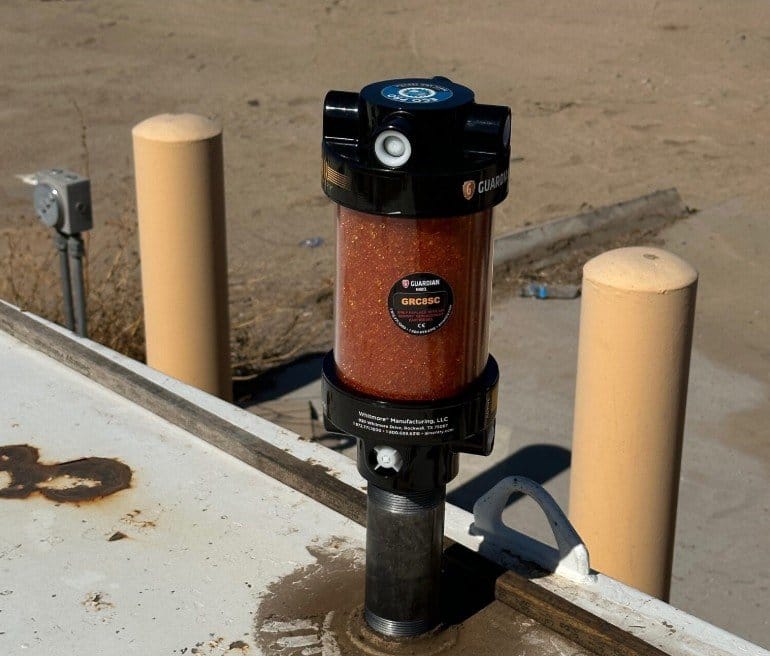
Approximately 80% of hydraulic system failures are the direct result of particle contamination. While many operators view air filters as simple hardware, reactive maintenance caused by these failures can cost up to 10 times more than a proactive strategy. Establishing a rigorous routine for desiccant breather maintenance is the most effective way to block moisture and particulates before they reach your oil. It’s a small investment that prevents the catastrophic oxidation and premature component wear that often lead to unscheduled downtime.
You’re likely aware that even new oil from a drum often exceeds acceptable ISO 4406 cleanliness levels. We understand the pressure to maintain zero moisture-related failures while managing evolving standards like the EU Packaging and Packaging Waste Regulation arriving in August 2026. This article provides a technical checklist to help you master breather saturation indicators and optimize your maintenance intervals. You’ll learn how to interpret color changes accurately and implement condition-based protocols that ensure your lubricants achieve their full operational lifespan.
Key Takeaways
- Understand the multi-stage filtration mechanisms that capture airborne particulates down to 2 microns before they compromise your fluid systems.
- Master the visual indicators of silica gel adsorption to ensure components are replaced before total moisture saturation occurs.
- Follow a technical desiccant breather maintenance checklist that incorporates safety protocols and detailed mounting adapter inspections.
- Identify and resolve complex failure modes such as oil misting and rapid saturation caused by improper sizing or extreme environmental conditions.
- Learn how effective breather management supports your broader lubrication strategy, potentially reducing the required frequency of services like hot oil flushing.
Table of Contents
-
The Engineering Logic: Why Desiccant Breather Maintenance is Non-Negotiable
-
Monitoring and Inspection: Identifying When a Breather Requires Service
-
Step-by-Step Maintenance Procedures: Replacement and Recharging Protocols
-
Troubleshooting Common Breather Failures and Maintenance Pitfalls
-
Integrating Breather Maintenance into a Proactive Lubrication Strategy
The Engineering Logic: Why Desiccant Breather Maintenance is Non-Negotiable
Industrial reservoirs are dynamic environments that interact with their surroundings through a process known as system breathing. As hydraulic fluid levels fluctuate or internal temperatures shift, the head space within a tank expands and contracts. This cycle forces the equipment to pull in ambient air from the surrounding environment. Without a robust barrier, this intake introduces humidity and fine particulates directly into the lubricant, compromising its chemical integrity. Consistent desiccant breather maintenance transforms this vulnerability into a controlled filtration point, ensuring that every cubic inch of air entering the system is chemically dried and mechanically scrubbed.
The primary mechanism of moisture removal relies on a hygroscopic substance, typically silica gel, which utilizes the principle of adsorption. Unlike absorption, where a substance is soaked up into a bulk material, adsorption holds water molecules on the surface of the desiccant beads. This chemical process is highly efficient, but it’s finite. Once the surface area of the beads is saturated, the breather can no longer protect the oil. To better understand the mechanical logic behind these devices, watch this technical overview:
Beyond the Vent Cap: Advanced Moisture Protection
Standard equipment often features basic vent caps with a 100-mesh screen. While these prevent large debris from entering the reservoir, they offer zero protection against moisture or microscopic silt. In high-precision turbine systems, even trace amounts of water catalyze oil oxidation and rapid additive depletion. This chemical breakdown creates acidic byproducts and insoluble contaminants that eventually manifest as varnish. Implementing a proactive strategy often reduces the need for emergency varnish removal systems by maintaining the "clean and dry" foundation necessary for asset longevity. It’s much more efficient to block moisture at the source than to remove it after it has already damaged the fluid.
Stage-by-Stage Filtration Process
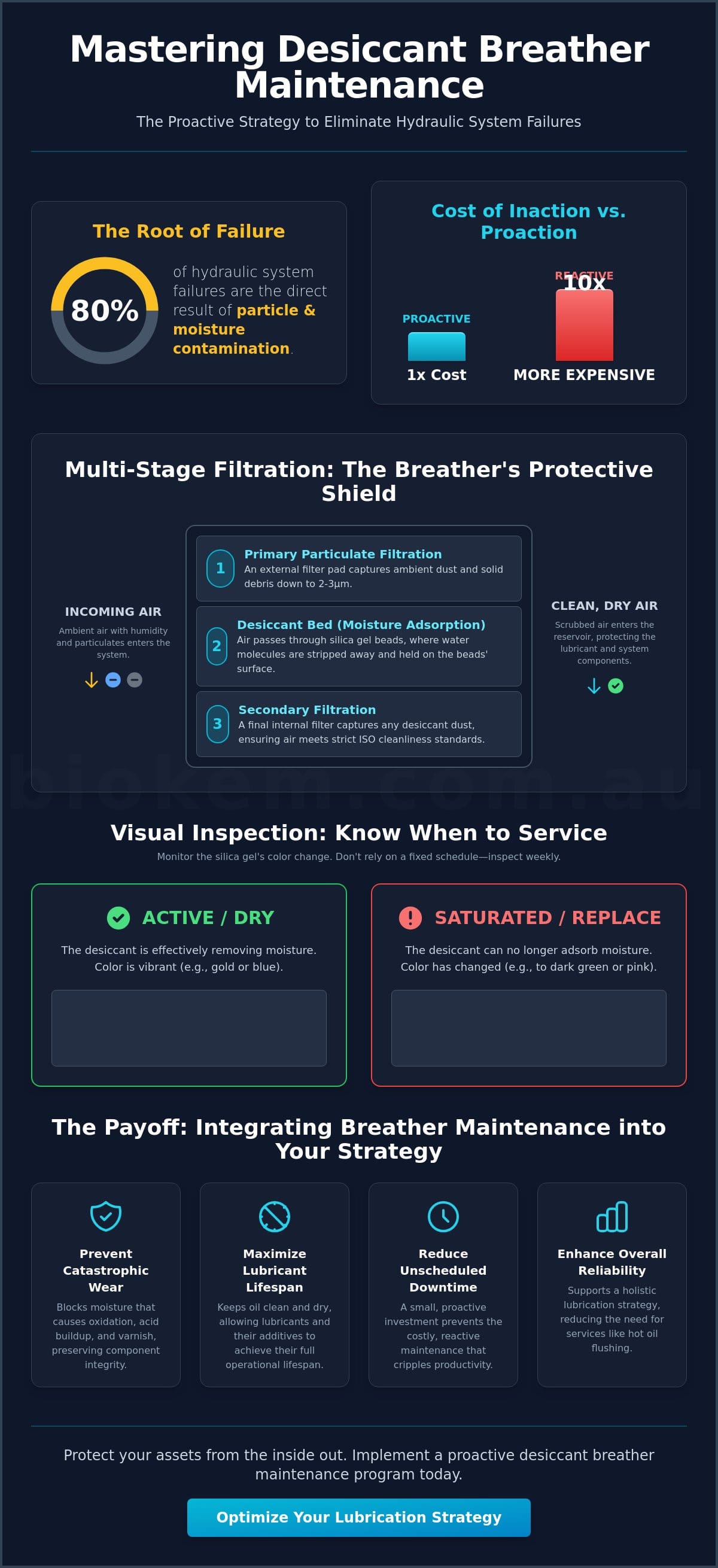
A high-quality breather operates as a multi-stage laboratory to protect your critical assets. By adhering to a strict schedule for desiccant breather maintenance, you ensure each of these layers remains functional:
-
Primary Particulate Filtration: An external filter pad captures ambient dust and solid debris before it reaches the desiccant, typically rated to remove particles as small as 2-3 µm.
-
The Desiccant Bed: The air passes through the silica gel beads, where moisture is stripped away through molecular attraction.
-
Secondary Filtration: A final internal filter captures any desiccant dust and ensures the air entering the reservoir meets strict ISO 4406 standards.
This sequential approach prevents the ingress of the 80% of contaminants that typically lead to mechanical wear and hydraulic system failure. When these stages are managed correctly, the lifespan of the lubricant is significantly extended, and the risk of component fatigue is minimized.
Monitoring and Inspection: Identifying When a Breather Requires Service
Effective desiccant breather maintenance relies on consistent visual inspections rather than fixed calendar dates. Because environmental conditions fluctuate, a breather might last six months in a climate-controlled room but only three weeks in a high-humidity wash-down area. Technicians should inspect units weekly to track the progression of the desiccant’s colour change. Beyond the media itself, the physical integrity of the breather head and any integrated pressure relief valves must be verified. If these valves become clogged with heavy dust or frozen by salt spray, the system may pull unfiltered air through weaker points like shaft seals or reservoir gaskets.
During your walkthrough, pay close attention to the "breather head" for signs of oil misting. If the desiccant beads appear coated in a dark, oily film, it indicates that internal pressure is pushing lubricant into the breather. This "blinding" of the desiccant prevents air from reaching the silica gel, rendered the unit useless despite any remaining unreacted colour. Identifying these issues early allows for the installation of check-valve adapters or stand-off pipes before the oil is compromised. For precise tracking of how these contaminants affect your system, integrating regular particle pal monitoring can provide the real-time data needed to validate your inspection intervals.
Decoding Colour Change Indicators
Most industrial breathers use either blue (cobalt chloride) or amber (environmentally friendly) silica gel beads. As they adsorb moisture, blue beads transition to pink, while amber beads turn to a distinct dark green. Total saturation is obvious, but partial saturation provides the most critical diagnostic data. The direction of the colour change is a primary indicator of system health. A change starting from the top and moving down signifies the breather is correctly scrubbing moisture from the ambient air. Conversely, a bottom-up colour change suggests that moisture is migrating from the reservoir itself, possibly due to a heat exchanger leak or water-contaminated top-up oil. Replace the desiccant breather when the colour change reaches two-thirds of the total bed height to ensure a safety margin against sudden humidity spikes.
Environmental Stressors in Australian Industry
Australian operations face unique challenges that accelerate the need for desiccant breather maintenance. In the high-humidity regions of Queensland or the Northern Territory, breathers reach saturation significantly faster than in arid zones. In mining applications across the Pilbara, heavy dust loads can prematurely blind the particulate filter stage, even if the desiccant remains active. You should also watch for "short-cycling" in coastal areas where rapid temperature fluctuations between day and night cause the reservoir to "breathe" more frequently than standard calculations might suggest. In these extreme environments, increasing the inspection frequency is the only way to prevent moisture-related additive depletion.
Step-by-Step Maintenance Procedures: Replacement and Recharging Protocols
Executing effective desiccant breather maintenance requires more than a simple swap of hardware. It’s a technical procedure that begins with rigorous safety protocols. Before approaching the asset, confirm that the system is isolated through Lock Out Tag Out (LOTO) procedures. If the reservoir is part of a pressurized system, you must depressurize the head space completely. A sudden release of compressed air during removal can eject oil mist or cause physical injury. Once the unit is safely removed, take a moment to inspect the mounting adapter for physical damage, thread fatigue, or accumulated debris that could prevent a vacuum-tight seal.
The mounting surface must be wiped clean with a lint-free cloth before the new unit is introduced. Any grit left on the adapter can bypass the gasket, allowing unfiltered air to enter the reservoir. This is also the ideal time to check for oil splash in the adapter pipe. If you notice significant oil accumulation, it may indicate a need for a stand-off pipe or a different breather model designed for high-vibration or high-splash environments. Ensuring a clean interface is the first step in protecting the integrity of your oil filtration systems.
Standard Replacement Procedure for Disposable Units
Disposable breathers are designed for efficiency, but their installation is often rushed. Start by removing all shipping plugs or adhesive tabs from the base and the top of the unit. These plugs protect the desiccant during transport, but leaving them in place will starve the system of air; this can cause reservoir implosion or seal failure under vacuum. Align the breather with the threads and rotate until the gasket makes contact with the mounting surface. Tighten the unit by hand until it’s snug. Avoid using wrenches or heavy tools, as excessive torque can crush the gasket and create a leak path for moisture.
Recharging Rebuildable Desiccant Breathers
For larger assets, rebuildable housings offer a more sustainable alternative to disposable units. When the media reaches the two-thirds saturation point discussed previously, the internal desiccant must be replaced. Carefully empty the spent silica gel into a dedicated waste container. While uncontaminated silica is generally non-toxic, spent media in industrial environments may contain trace amounts of oil. Use this opportunity to clean the internal particulate filters and inspect all O-rings for signs of brittleness. Refill the housing with fresh media from a sealed container to prevent pre-saturation. Reassemble the housing, ensuring the seals are seated correctly to maintain the chemical integrity of the air path.
Final verification is the last step in the desiccant breather maintenance process. Check that the unit is vertical and stable. If the breather features a mechanical indicator, reset it according to the manufacturer’s instructions. This structured approach ensures that your maintenance efforts result in a truly closed and protected system.
Troubleshooting Common Breather Failures and Maintenance Pitfalls
Troubleshooting desiccant breather maintenance requires a clear understanding of the mechanical forces at play within your reservoir. It’s not enough to simply watch for colour changes; you must also identify mechanical failures before they compromise your asset. One of the most dangerous failure modes is the "vacuum pull" caused by a completely blocked breather. If a breather becomes obstructed by heavy particulate matter or oil mist, the resulting internal vacuum can cause the reservoir to implode or draw contaminants through shaft seals. This often happens when technicians forget to remove shipping plugs during installation or ignore a unit that has been "blinded" by oil spray.
Mismatched thread types represent another frequent maintenance pitfall. Using an NPT breather on a BSP adapter might seem to fit initially, but the slight difference in pitch often leads to hairline fractures in the plastic base. These cracks allow humid, ambient air to bypass the desiccant bed entirely, rendering the protection useless. If you’re experiencing recurring saturation issues despite proper sizing, it’s time to evaluate your hardware compatibility. For high-performance environments where standard units fail, we recommend consulting our Filters S.p.A. specialist product range to find a correctly matched technical solution.
Sizing Errors and Airflow Restrictions
Correct sizing is determined by the maximum airflow required during your system’s peak demand. To calculate the required capacity, remember that for every gallon of fluid pumped out, an equal volume of air must enter. A standard rule of thumb is that 1 GPM of pump flow equals approximately 0.134 CFM of required airflow. If your breather is undersized, the high differential pressure will lead to "short-cycling," where air is forced through the media too quickly for effective moisture adsorption. The required breather capacity is directly proportional to the maximum pump flow rate, as the system must replace discharged fluid with filtered air in real-time. High-viscosity oils in cold-start conditions can further increase this pressure differential, necessitating a larger breather than standard calculations might suggest. For maintenance teams who find themselves dealing with the mess of these heavy lubricants on their gear, check out The Laundry for professional cleaning and wash-and-fold options.
Managing Oil Mist and Internal Contamination
Oil misting is a common challenge in high-speed gearboxes and reservoirs with high internal turbulence. When lubricant is pushed into the breather, it coats the desiccant beads, creating a barrier that prevents moisture from being adsorbed. In these scenarios, the desiccant may still look "fresh" (blue or amber), but it’s functionally dead. You can mitigate this by installing stand-off pipes to raise the breather above the splash zone or by using check-valve breathers that only open during air exchange. In the high-vibration environments typical of Australian mining, such as on vibrating screens or crushers, ensure you use breathers with reinforced housings and internal dampening to prevent desiccant attrition and housing fatigue.
Integrating Breather Maintenance into a Proactive Lubrication Strategy
Desiccant breather maintenance is the cornerstone of a proactive contamination control program. It shouldn’t be treated as a standalone task. Instead, view it as a critical variable that influences your overall fluid health. When you effectively block the ingress of moisture and silt, you protect the chemical stability of your lubricants. Regular oil analysis provides the empirical evidence of your breather’s performance. If lab results show rising water content or silica-based particulates, it’s a clear signal that your breather protocols are insufficient or that the unit has reached premature saturation.
Effective breather management directly reduces the operational burden on your system. By preventing ingress, you significantly extend the intervals between intensive services like hot oil flushing. It’s much simpler to manage a breather than to perform a full system decontamination. For high-performance assets, BioKem Oil Services often deploys Filters S.p.A. products. These components offer the precision required to maintain strict ISO cleanliness codes in challenging industrial environments where standard hardware often fails to provide adequate protection.
Condition Monitoring and Data-Driven Maintenance
Data drives every successful maintenance decision. You should track desiccant breather maintenance change-out frequencies as a Key Performance Indicator (KPI) for your environmental sealing. If a unit saturates faster than expected, it may indicate a failing reservoir seal or a process leak. Onsite verification is equally vital. Using patch test kits allows your team to visually confirm the effectiveness of your breathers between scheduled lab tests. You can find these diagnostic tools and other specialized hardware on BioKem Oil Services’ products page to help build a more resilient monitoring program.
The BioKem Oil Services Advantage: Expert Fluid Management
BioKem Oil Services provides the technical expertise to bridge the gap between daily inspections and long-term asset reliability. Our onsite services complement your routine breather maintenance by identifying the root causes of rapid contamination. If breathers have been neglected, moisture ingress often leads to advanced oxidation. In these cases, professional varnish mitigation becomes necessary to restore system performance. We don’t just supply parts; we partner with you to establish a sustainable ecosystem for your critical fluids. This approach ensures regulatory compliance and maximizes the return on your lubricant investment. Contact BioKem Oil Services for a comprehensive lubrication audit to evaluate your current protocols and secure your system’s future.
Securing Your Assets Through Proactive Contamination Control
Implementing a disciplined approach to desiccant breather maintenance shifts your operation from reactive fire-fighting to a state of technical stability. By verifying color indicators and addressing root causes like oil misting or improper sizing, you eliminate the primary vectors for moisture and silt ingress. These technical adjustments safeguard the chemical integrity of your lubricants and ensure that high-pressure systems maintain their target ISO 4406 cleanliness codes over the long term. It’s a fundamental step that prevents the oxidation and additive depletion discussed throughout this guide.
BioKem Oil Services serves as the sole Australian distributor for Filters S.p.A. products, offering the specialized hardware needed to thrive in extreme local environments. Our expertise in hot oil flushing and varnish mitigation ensures that even if your systems have suffered from past neglect, we can restore them to peak efficiency. With comprehensive onsite technical support across Australia, we provide the localized knowledge required to anchor global scientific standards in your facility. Consult with BioKem Oil Services for specialised filtration and breather solutions to secure your critical assets. A commitment to clean and dry air today is the most effective way to prevent catastrophic mechanical wear tomorrow.
Frequently Asked Questions
How often should I replace my desiccant breather?
You should replace your desiccant breather when the color change indicator reaches approximately two-thirds of the desiccant bed height. While some units in climate-controlled environments last six months, those in high-humidity or high-dust areas may require a swap every few weeks. Consistent desiccant breather maintenance involves weekly visual inspections to ensure you don’t exceed this saturation threshold and lose protection.
Can I recharge the silica gel in my desiccant breather myself?
You can only recharge the media if you’re using a rebuildable breather housing designed for serviceability. Disposable units are factory-sealed and must be replaced entirely once the desiccant is saturated. When refilling rebuildable models, it’s vital to clean the internal particulate filters and dispose of spent silica gel according to local environmental regulations, especially if it’s been contaminated by oil mist.
What happens if I leave a saturated breather on my equipment?
Leaving a saturated breather on your asset allows humid, unfiltered air to enter the reservoir freely during every breathing cycle. This leads to accelerated oil oxidation, rapid additive depletion, and the eventual formation of varnish. If the particulate filter also becomes blocked, the resulting vacuum can cause reservoir implosion or draw contaminants through shaft seals and gaskets.
Why is my desiccant breather turning colour so quickly?
Rapid saturation is usually a sign that the breather is undersized for the system’s airflow requirements or the environment is exceptionally humid. If the color change starts from the bottom of the unit and moves up, it often indicates that moisture is migrating from the oil itself, possibly due to a leaking heat exchanger. Proper desiccant breather maintenance helps you identify these patterns to determine if a larger unit or mechanical repair is necessary.
Is a desiccant breather necessary for indoor hydraulic systems?
Yes, indoor systems require breathers because factory air still contains humidity and fine particulates that compromise oil integrity. Even in temperature-controlled plants, the "breathing" caused by fluid level changes pulls in ambient moisture that catalyzes chemical breakdown. Installing a breather ensures the foundation of your lubrication strategy remains "clean and dry" regardless of the machine’s location.
What is the difference between blue and amber indicating silica gel?
Blue indicating silica gel contains cobalt chloride and transitions to pink as it adsorbs moisture. Amber silica gel is a non-toxic, cobalt-free alternative that turns dark green when saturated. Many modern industrial facilities prefer amber media to comply with stricter environmental standards and simplify the disposal process for spent desiccant materials.
How do I choose the right size breather for my gearbox?
You must choose a breather based on the maximum airflow required during your system’s peak demand, measured in Cubic Feet per Minute (CFM). A standard calculation is that 1 GPM of pump flow requires roughly 0.134 CFM of air exchange. Selecting a unit that matches or exceeds this rate prevents high differential pressure and ensures the desiccant has enough contact time to strip moisture effectively.
Can desiccant breathers be used in wash-down environments?
Desiccant breathers are suitable for wash-down environments if they feature integrated check valves or protective spray shields. These mechanical barriers prevent direct water ingress during high-pressure cleaning while still allowing the system to breathe during operation. Standard breathers without these features will saturate almost immediately if they’re exposed to direct liquid spray.