

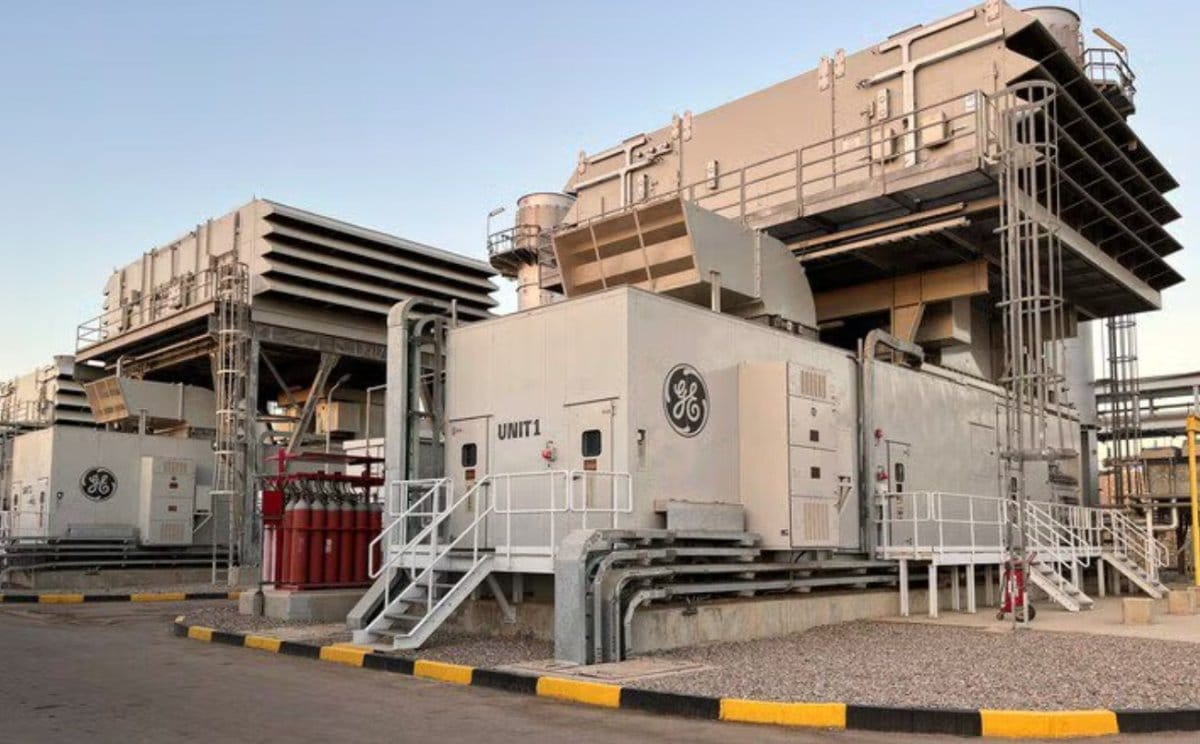
Treating GEK 25560G compliance as a simple administrative checkbox is the fastest way to invite catastrophic servo valve failure during your next turbine startup. In high-precision power generation, even minor contamination in your phosphate ester fluid can lead to unscheduled downtime that compromises both your budget and your operational reputation. We recognize that managing fluid health while adhering to strict OEM requirements is a technical burden that requires absolute precision. By mastering the commissioning and maintenance of the GE LM600 series gas turbine EHC systems using GEK 25560G, you’re doing more than following a protocol; you’re securing the long-term reliability of your critical infrastructure.
You probably agree that standard maintenance routines aren’t enough to prevent the chemical degradation and varnish that plague LM6000 series assets. This article provides the technical roadmap you need to achieve full compliance and ensure zero contamination-related failures during startup. We’ll examine the essential mechanics of high-velocity hot oil flushing, the role of vacuum dehydration in fluid recovery, and how specialized varnish mitigation protects sensitive EHC components. You’ll learn how to implement a maintenance strategy that balances technical excellence with environmental responsibility, ensuring your turbine operates at peak efficiency for years to come.
Key Takeaways
- Understand why GEK 25560G is the essential technical specification for maintaining the operational integrity of LM600 and LM6000 series turbine control systems.
- Learn the precise technical steps for the commissioning and maintenance of the GE LM600 series gas turbine EHC systems using GEK 25560G to achieve turbulent flow and total system cleanliness.
- Discover how to manage the chemical degradation pathways of fire-resistant phosphate ester fluids, specifically targeting hydrolysis and thermal oxidation.
- Identify why standard filtration often fails to prevent valve sticking and how varnish mitigation technologies protect sensitive electro-hydraulic components.
- Explore advanced operational strategies, including high-velocity flushing and vacuum dehydration, to ensure zero contamination-related failures during turbine startup.
Understanding the GEK 25560G Standard for LM600 Series EHC Systems
GEK 25560G serves as the authoritative technical specification for GE’s Electro-Hydraulic Control (EHC) systems. It’s the standard that governs the General Electric LM6000 and LM600 series. These turbines are sophisticated machines. They require fluid purity levels that far exceed standard lubrication systems. While lube oil manages heat and friction, EHC fluid is the lifeblood of the control architecture. Any contamination here isn’t just a maintenance issue; it’s a direct threat to the machine’s ability to follow load commands. Precision is the priority.
To better understand the mechanics behind these power generation assets, watch this helpful video:
Why EHC System Cleanliness is Critical
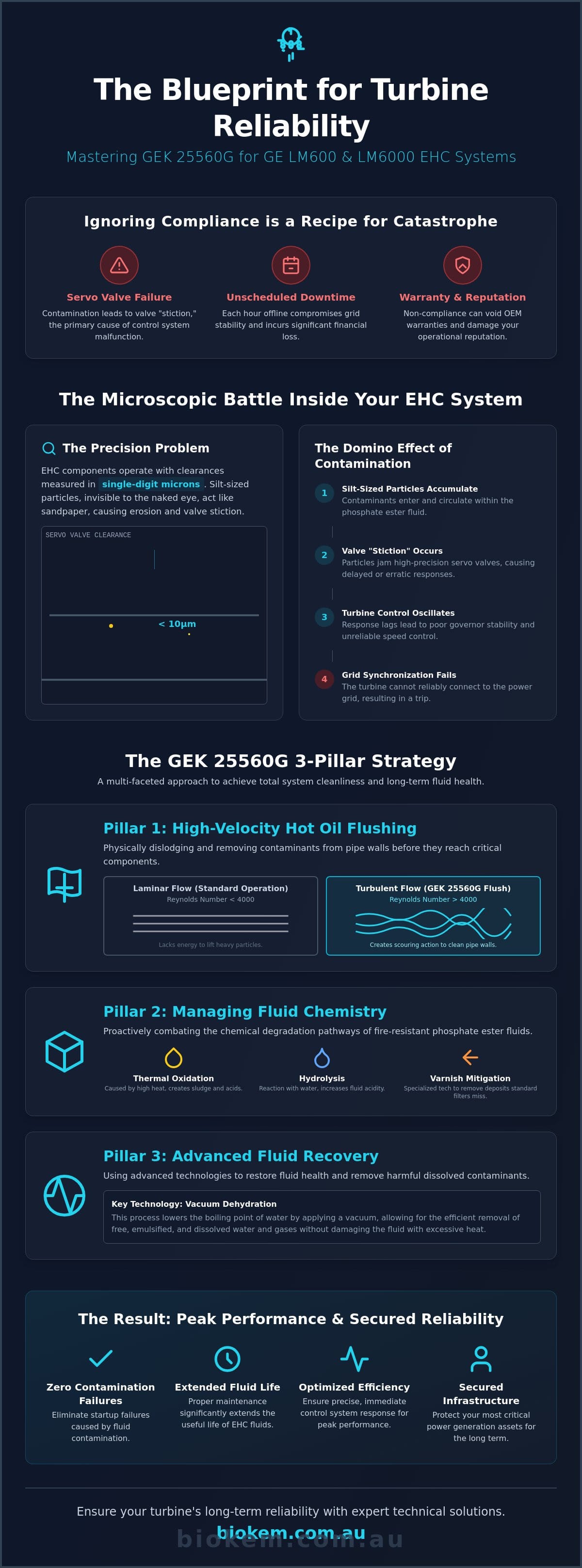
EHC components operate with clearances often measured in single-digit microns. This level of precision is absolute. Silt-sized particles can accumulate in these tight spaces, leading to “stiction” in high-precision servo valves. When a valve sticks, response times lag. This lag causes oscillations in turbine speed. For operators, this leads to poor governor stability and unreliable grid synchronization. Successful commissioning and maintenance of the GE LM600 series gas turbine EHC systems using GEK 25560G ensures these critical tolerances remain clear of harmful debris.
Core Objectives of the GEK 25560G Instruction
The core objective of GEK 25560G is to establish a rigorous baseline of cleanliness during the initial phase of a turbine’s life. It mandates a hot oil flushing protocol that achieves turbulent flow. This movement is necessary to physically dislodge internal scale and manufacturing residue from the intricate piping networks. Adhering to these instructions is essential for preserving OEM warranty coverage. It also prevents “infant mortality” failures during the initial startup phase. Reliability starts with strict compliance. By establishing this baseline, operators can extend the life of their EHC fluids and minimize the risk of unscheduled downtime due to component erosion or valve failure.
Key Commissioning Procedures: High-Velocity Oil Flushing
Commissioning is the most critical phase for the long-term health of an LM6000 asset. It’s during this window that manufacturing debris, welding scale, and atmospheric moisture are most prevalent within the system’s stainless steel piping. A successful startup depends entirely on the physical removal of these contaminants before they reach the control architecture. Pre-flush inspections must verify the integrity of the reservoir and ensure all piping runs are correctly configured for high-velocity circulation. Skipping these initial checks often leads to recurring contamination issues that plague the turbine for years.
The defining requirement of the GEK 25560G standard is the achievement of turbulent flow. In technical terms, this requires a Reynolds Number greater than 4000. Laminar flow, which is typical during standard operation, lacks the kinetic energy to lift heavy particulates from pipe walls. By forcing fluid through the system at high velocities, you create the turbulence necessary to dislodge stubborn debris. This process is essential for the hot oil flushing phase, as it ensures that the system is truly clean rather than just superficially filtered.
Sensitive components, particularly high-precision servo valves, must never be subjected to the flushing fluid. We utilize specialized bypass blocks to isolate these components while maintaining a continuous loop. Verification of the flush’s success involves a combination of real-time particle counting and terminal screens. For a deeper look at how these procedures impact overall system longevity, the EPRI EHC Maintenance Guide provides extensive data on the correlation between commissioning cleanliness and valve reliability.
Step-by-Step Flushing Sequence
The sequence begins by isolating all instrumentation and installing external high-flow pump skids. We then initiate a thermal cycling process. By rapidly varying the fluid temperature, we induce microscopic expansion and contraction in the piping, which helps release embedded scale. Throughout this cycle, we monitor ISO 4406 particle counts. The flush isn’t complete until the fluid meets the specific patch test requirements outlined in the GEK 25560G standard, typically requiring a 100-mesh screen to remain free of visible debris for a set duration.
Equipment Requirements for GEK Compliance
Standard onboard pumps are designed for steady-state operation, not for the high-velocity demands of a commissioning flush. They simply cannot generate the flow rates needed to reach a Reynolds Number above 4000 in larger pipe diameters. Compliance requires specialized high-flow filtration units equipped with absolute-rated filter elements. If you’re preparing for a new installation, engaging professional hot oil flushing services ensures your equipment meets these rigorous OEM specifications from day one. Using the right equipment prevents the “infant mortality” of components that often follows an inadequate cleaning cycle.
Maintenance Protocols for Phosphate Ester Fluids
Phosphate ester fluids are the industry standard for LM600 series EHC systems due to their excellent fire-resistant properties. However, these synthetic fluids present unique chemical challenges that differ significantly from mineral-based oils. While commissioning focuses on physical debris, the ongoing commissioning and maintenance of the GE LM600 series gas turbine EHC systems using GEK 25560G requires a deep focus on fluid chemistry. Neglecting chemical health leads to irreversible fluid degradation and component damage. It’s a risk that most power generation facilities simply can’t afford.
The primary degradation pathways for these fluids are hydrolysis and thermal oxidation. Hydrolysis occurs when water ingress reacts with the phosphate ester molecule, creating acidic byproducts. Thermal oxidation happens when the fluid is exposed to localized high temperatures, often near hot turbine surfaces or through micro-dieseling in high-pressure zones. GE recommends a rigorous sampling frequency for LM600 series assets, typically every quarter, to monitor these changes. The most critical metric in these reports is the Acid Number (AN). An increasing AN indicates that the fluid is actively breaking down, which can lead to accelerated seal wear and servo valve corrosion.
Managing Acid Number and Fluid Life
Water is the catalyst for acidification. Even small amounts of moisture trigger a chain reaction that lowers the fluid’s resistivity and increases its acidity. To combat this, operators must utilize specialized EHC fluid maintenance hardware designed for acid removal. Technologies like ion-exchange resins or activated alumina are effective at neutralizing acids and extending the fluid’s service life. Unlike simple mechanical filtration, these chemical treatments address the molecular health of the fluid, preventing the need for costly full-system flushes or premature fluid replacement. Maintaining low water levels is the first line of defense against chemical instability.
The Role of Patch Testing and Particle Counting
Relying on a “clear and bright” visual assessment is a dangerous practice in EHC maintenance. Modern ISO 4406 laser particle counters provide high-accuracy data on hard particulates, but they often miss the soft contaminants and silt that lead to valve sticking. Manual patch testing remains an essential diagnostic tool. It allows technicians to physically observe the color and nature of the contaminants trapped on a 0.8-micron membrane. We recommend using professional patch test kits for immediate onsite verification. This dual-monitoring approach ensures that both hard particles and chemical degradation products are identified before they impact turbine governor stability.
Troubleshooting EHC Failures: Varnish and Acidification
A common frustration for turbine operators is the discovery of sticking valves despite maintaining clean oil filters. You might see perfect ISO 4406 particle counts on your laboratory reports, yet the turbine still suffers from erratic governor behavior or failed starts. This paradox occurs because standard mechanical filters are designed to capture hard, abrasive particulates. They are largely ineffective against varnish, which consists of sub-micron, soft contaminants that remain in a soluble state while the fluid is at operating temperature. These precursors bypass traditional filtration and eventually precipitate onto the coolest surfaces of your control system.
Varnish is particularly problematic for the LM6000 series because of its high-speed response requirements. These aero-derivative machines rely on rapid, precise movements of the fuel control valves to maintain stability. Even a microscopic layer of varnish on a servo valve spool increases friction, leading to “stiction” and delayed response times. Effective commissioning and maintenance of the GE LM600 series gas turbine EHC systems using GEK 25560G must address these chemical contaminants to ensure the machine meets its performance specifications. Without a dedicated strategy for varnish removal, your EHC system remains vulnerable to unscheduled trips.
Identifying Varnish in GE Turbines
Detecting varnish requires specialized testing beyond the standard oil analysis suite. The Membrane Patch Colorimetry (MPC) test is the industry standard for assessing varnish potential. It works by filtering a sample through a fine membrane and measuring the color change. A high Delta E value indicates a high concentration of soluble varnish precursors. It’s also vital to understand that varnish is temperature-dependent. When the turbine shuts down or fluid enters a stagnant, cooler pipe run, these precursors “plate out” onto metal surfaces. You can find a deeper analysis of these chemical triggers in our guide to varnish mitigation for turbines.
Advanced Mitigation Strategies
Removing varnish does not necessarily require a full fluid change-out, which is both expensive and environmentally taxing. Instead, operators can utilize technologies like Electrostatically Assisted Filtration or Soluble Varnish Removal (SVR). These systems work by shifting the chemical equilibrium of the fluid, forcing the varnish back into a state where it can be captured and removed. These units are designed to be integrated into a running LM600 series system, providing continuous purification without requiring a machine outage. To ensure long-term reliability, we recommend reviewing our comprehensive guide on oil contamination control to establish a proactive defense against acidification. If you are observing increased valve lag or rising MPC values, implementing professional varnish mitigation is the most efficient way to restore system precision and prevent catastrophic valve failure.
BioKem Oil Services’ Technical Solutions for GE Turbine Reliability
BioKem Oil Services is the national leader in delivering GEK 25560G compliant service execution. We recognize that the commissioning and maintenance of the GE LM600 series gas turbine EHC systems using GEK 25560G requires more than standard filtration. It demands a specialized fleet of equipment and a deep understanding of fluid chemistry. Our approach balances technical precision with a firm commitment to environmental responsibility. We prioritize the restoration and preservation of your existing fluid assets, avoiding the unnecessary disposal of high-value synthetic fluids. This philosophy ensures your operations remain both reliable and sustainable.
Specialised Equipment for LM600 Series Support
Our technical interventions utilize a high-performance fleet specifically engineered for the rigors of turbine commissioning. BioKem Oil Services deploys high-flow filtration skids capable of maintaining the turbulent flow necessary to dislodge embedded debris from complex piping networks. For moisture-contaminated systems, our vacuum dehydration units efficiently remove water at the molecular level without altering the fluid’s essential chemical structure. As the Australian distributor for Filters S.p.A. products, we provide OEM-grade replacements that meet exact GE specifications for the LM6000 series.
These onsite solutions provide immediate results. BioKem Oil Services supports our equipment with laboratory-grade oil analysis conducted in the field. This allows your team to make critical decisions during a commissioning window based on real-time ISO 4406 counts and moisture data. Our project-based interventions are tailored to the specific geometry and contamination profile of your asset. This ensures every flush loop is optimized for maximum debris removal and total system cleanliness.
Proactive Partnership and Asset Longevity
Long-term reliability is built on a foundation of proactive maintenance and expert partnership. BioKem Oil Services integrates seamlessly with plant maintenance schedules, aligning our services with scheduled outages and turnarounds to minimize operational impact. We don’t just solve immediate contamination issues; we work to extend the operational life of your EHC fluids and mechanical components. By utilizing varnish mitigation and specialized hot oil flushing, we reduce the risk of infant mortality failures in new or overhauled turbines.
This focus on fluid recovery reduces your environmental footprint and lowers long-term procurement costs. Whether you require a full-scale commissioning flush or specialized equipment hire for ongoing fluid health, our team provides the technical expertise necessary to maintain strict OEM compliance. We help you transition from reactive repairs to a state of quiet confidence in your turbine’s control system. Contact BioKem Oil Services for GEK 25560G compliant flushing and maintenance solutions.
Securing Long-Term Reliability for Your LM600 Series Assets
Implementing a rigorous strategy for the commissioning and maintenance of the GE LM600 series gas turbine EHC systems using GEK 25560G is the only way to safeguard your asset against the hidden risks of varnish and acidification. We’ve explored how turbulent flow establishes a foundation of cleanliness and why chemical monitoring of phosphate ester fluids prevents long-term component erosion. By prioritizing these precision standards, you ensure your turbine remains a reliable pillar of your power generation infrastructure.
BioKem Oil Services stands as the sole Australian distributor for Filters S.p.A. and specializes in the high-velocity flushing and varnish mitigation services critical to power generation reliability. Our national presence ensures that your facility has access to lab-grade analysis and OEM-compliant equipment when it matters most. Ensure your GE turbine meets GEK 25560G standards with BioKem Oil Services’ expert flushing services.
Take control of your turbine’s performance today. With the right technical partnership, your EHC system will provide years of stable, efficient service and total operational peace of mind. For those looking to achieve similar efficiency in residential or commercial climate systems, you can read more about expert HVAC solutions that ensure long-term comfort and reliability.
Frequently Asked Questions
What is the primary difference between GEK 25560G and standard turbine maintenance?
GEK 25560G mandates high-velocity turbulent flow with a Reynolds Number exceeding 4000 during commissioning, whereas standard maintenance often relies on laminar flow filtration. This specific velocity is required to physically dislodge manufacturing debris and scale that standard circulation cannot move. It establishes a baseline of cleanliness that protects high-precision servo valves from premature failure during the machine’s initial operating hours.
How often should EHC fluid be sampled in a GE LM6000 turbine?
GE recommends sampling EHC fluid every three months for LM6000 turbine assets to monitor chemical stability and particulate levels. This quarterly cadence allows operators to track the Acid Number and moisture content before they trigger a cascade of fluid degradation. Regular oil analysis is essential for the successful commissioning and maintenance of the GE LM600 series gas turbine EHC systems using GEK 25560G.
Can standard hydraulic oil filters be used in a phosphate ester EHC system?
No, standard hydraulic oil filters are typically incompatible with phosphate ester fluids because the seals and adhesives will dissolve or swell. Phosphate ester requires specialized filter media and Viton or EPDM seals to prevent system leaks and media migration. Using the wrong filter can lead to catastrophic contamination and component damage within the sensitive control circuit.
What are the specific ISO 4406 cleanliness targets for GE LM600 series commissioning?
GEK 25560G typically targets an ISO 4406 cleanliness level of 14/11 or better before the commissioning flush is considered complete. This stringent requirement ensures that even silt-sized particles are removed from the piping network. Achieving these numbers requires high-flow filtration units and absolute-rated filter elements capable of capturing sub-micron contaminants that standard filters often miss.
How do I know if my EHC system is suffering from varnish build-up?
The most common indicators of varnish are increased servo valve stiction and erratic governor response during load changes. If you observe failed turbine starts or oscillations in fuel flow despite having clean filters, your system likely has varnish precipitation on valve spools. You should use Membrane Patch Colorimetry (MPC) testing to confirm the presence of soluble varnish precursors before they cause a trip.
What is high-velocity oil flushing, and why is it required for new installations?
High-velocity oil flushing involves circulating fluid at flow rates high enough to achieve turbulent flow throughout the entire piping system. It’s required for new installations because it’s the only effective method for removing welding slag, atmospheric rust, and manufacturing debris left behind during construction. This process ensures the commissioning and maintenance of the GE LM600 series gas turbine EHC systems using GEK 25560G meets OEM requirements for long-term reliability.
What happens if the Acid Number (AN) in my EHC fluid exceeds OEM limits?
When the Acid Number exceeds OEM limits, the phosphate ester fluid becomes chemically unstable and begins to attack system seals and metal surfaces. High acidity accelerates the degradation process through an autocatalytic reaction, leading to costly component corrosion and reduced fluid resistivity. At this stage, operators must implement ion-exchange or activated alumina treatments to neutralize acids and restore fluid health.
Does BioKem Oil Services provide onsite technical support for GE turbine outages across Australia?
BioKem Oil Services provides comprehensive onsite technical support for GE turbine outages and turnarounds across all Australian states and territories. Our team deploys specialized equipment, including high-flow flushing skids and vacuum dehydration units, directly to your facility for immediate intervention. This national coverage ensures that critical power generation assets receive expert EHC maintenance and GEK 25560G compliance regardless of their location.